
By AI Landscape Design Team · Editorial policy
Garden Ornament Ideas with Fewer Clearer Visual Roles
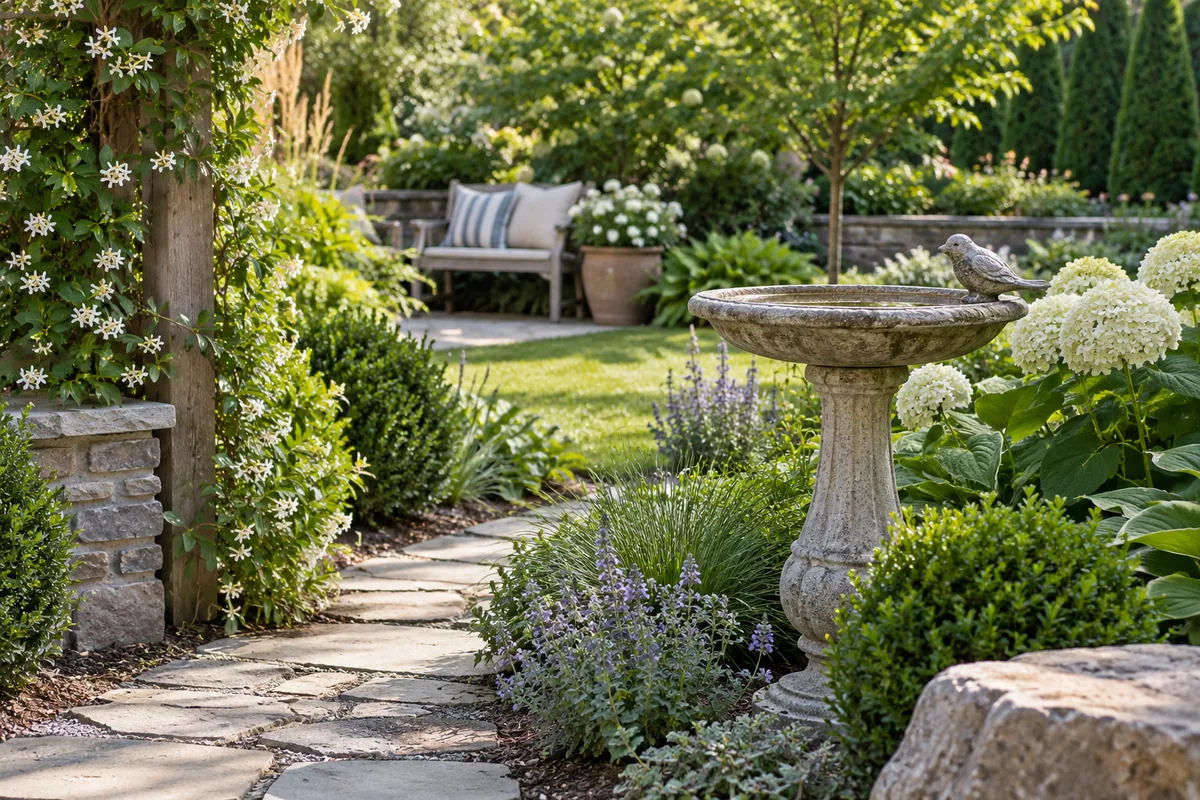
Garden ornament ideas are strongest when a few objects have clear visual roles rather than being scattered throughout every bed. Decide whether an ornament marks an entrance, ends a view, or adds a quiet detail beside seating, then compare scale, background, material, and care. Keep passage and inspection access available. A decorative appearance does not establish stable placement or suitability for the local weather and household.
Published · 6 min read
Key takeaways
- Give each object a specific role in the view.
- Use a limited number with a coherent material relationship.
- Check stability and maintenance alongside appearance.
What counts as a useful garden ornament?
An ornament can be a decorative vessel, a small object, or another nonliving detail used to clarify a scene. Its usefulness comes from the relationship with the garden rather than its novelty alone. Look at the yard without accessories and identify whether a particular view needs a destination or whether planting already provides enough interest. An empty-looking area is not automatically a reason to add an object.
The focal-point definition helps distinguish a deliberate visual destination from general decoration. Choose one main role for each proposed piece: entrance marker, endpoint, seating detail, or an accent within planting. If several objects all demand the same attention, remove some before changing the landscape around them. Restraint should be assessed through the whole view rather than an arbitrary ornament count.
How should types and materials be compared?
Compare the actual product’s material, finish, weight, weather suitability, and care information. Ceramic, metal, timber, and stone-like products can create different relationships with planting, but material names do not establish durability. Some objects are intended only for protected or seasonal display. Follow supplier information instead of assuming that anything sold as a garden ornament can remain outside in every condition.
Look at real surfaces and joins, including the underside and any supporting components. A hollow vessel behaves differently from a heavy solid piece, and a painted finish may need different care from an uncoated one. Avoid purchasing several unrelated textures merely because each is appealing individually. A coherent background and repeated material can connect a modest ornament with the surrounding house and garden.
What scale and placement checks help?
View a simple physical marker at the proposed location from the house, entrance, path, and seating. Compare both close and distant positions. A small object can disappear within growing plants, while a large one may dominate a view that was intended to feel calm. Use the trial to decide whether the object is visible enough for its assigned role without blocking ordinary movement.
Keep objects away from doors, steps, active routes, equipment, and places where they create handling problems. Have heavy, elevated, attached, or otherwise uncertain installations assessed appropriately. A stable-looking base in a concept is not proof of safe support. Review how children, pets, visitors, and gardeners may interact with the object rather than evaluating it only from the camera position.
How does the ornament relate to style?
A cottage garden may suit a limited weathered-looking detail beside a planted edge, while a zen garden can use a more restrained object with space around it. These are visual relationships, not rules demanding specific symbols or products. Avoid using a style label as a reason to add several stereotyped accessories that compete with the garden’s existing character.
Compare the ornament with house materials, paving, containers, and furniture already present. A piece can contrast with the background when the difference is deliberate and readable. Leave enough visual quiet for the object to serve its role. Where planting frames it, verify mature spread and local suitability, and keep any required access for pruning and cleaning available.
What drives cost and maintenance?
Include delivery, handling, any suitable support or assessed attachment, finishing, seasonal storage, and future replacement. A low purchase price can become less attractive if the piece needs difficult handling every season or an expensive base. Ask suppliers what care is required and whether individual parts can be repaired. Do not add improvised supports simply to make a chosen object fit the photograph.
Care should follow the product and finish information. Keep access to inspect it, remove accumulated debris appropriately, and refer instability or damage to the relevant provider. Observe how plant growth changes visibility throughout the year. If the ornament becomes hidden, reconsider the placement or planting relationship rather than repeatedly cutting unsuitable plants into a shape they cannot comfortably maintain.
What should be avoided?
Do not distribute objects through every bed as a substitute for a coherent planting and route arrangement. A collection can be enjoyable, but it needs a clear display relationship and manageable care. Group selected pieces deliberately or rotate suitable seasonal items instead of enlarging the collection until the garden has no quiet background.
Avoid fragile, sharp, loose, or accessible pieces that create concerns for the actual household. Pets may interact with objects differently from people admiring them; children and visitors also change the practical assessment. Keep ornament selection separate from garden-product storage. If placement involves digging or a permanent support, follow the applicable 811 locating process and obtain qualified installation advice.
How can a visual comparison help?
Compare cottage front-yard ideas for an entrance detail and zen backyard ideas for a quiet endpoint. How to choose a landscape style can help explain the broader material direction before a decorative purchase. Include the proposed object and its physical trial in the discussion.
A photo concept can show whether the ornament is visible against its background and whether several pieces compete. It cannot verify product durability, support, household suitability, or installation. Choose a few plausible objects, compare real materials and care information, and let the preferred view remain simple enough to maintain.
Frequently asked questions
How many garden ornaments should I use?
There is no universal count. Assign clear roles and compare the whole view from ordinary positions. If several pieces compete with planting or one another, remove some or group them deliberately. A smaller coherent selection can be easier to appreciate and maintain than scattered accessories.
Must ornaments match the garden style exactly?
Use style as a way to compare relationships with planting, house materials, and visual quiet. It does not require stereotyped symbols or a complete matching set. A contrasting object can work when its role is deliberate and the surrounding view gives it enough space.
Can a heavy ornament stand directly on the soil?
Have the actual object, ground, support, and exposure assessed appropriately rather than assuming weight ensures stability. Follow supplier information and qualified installation advice. Consider inspection and maintenance access as well as the desired appearance, especially for elevated or attached pieces.
Sources
Related reading
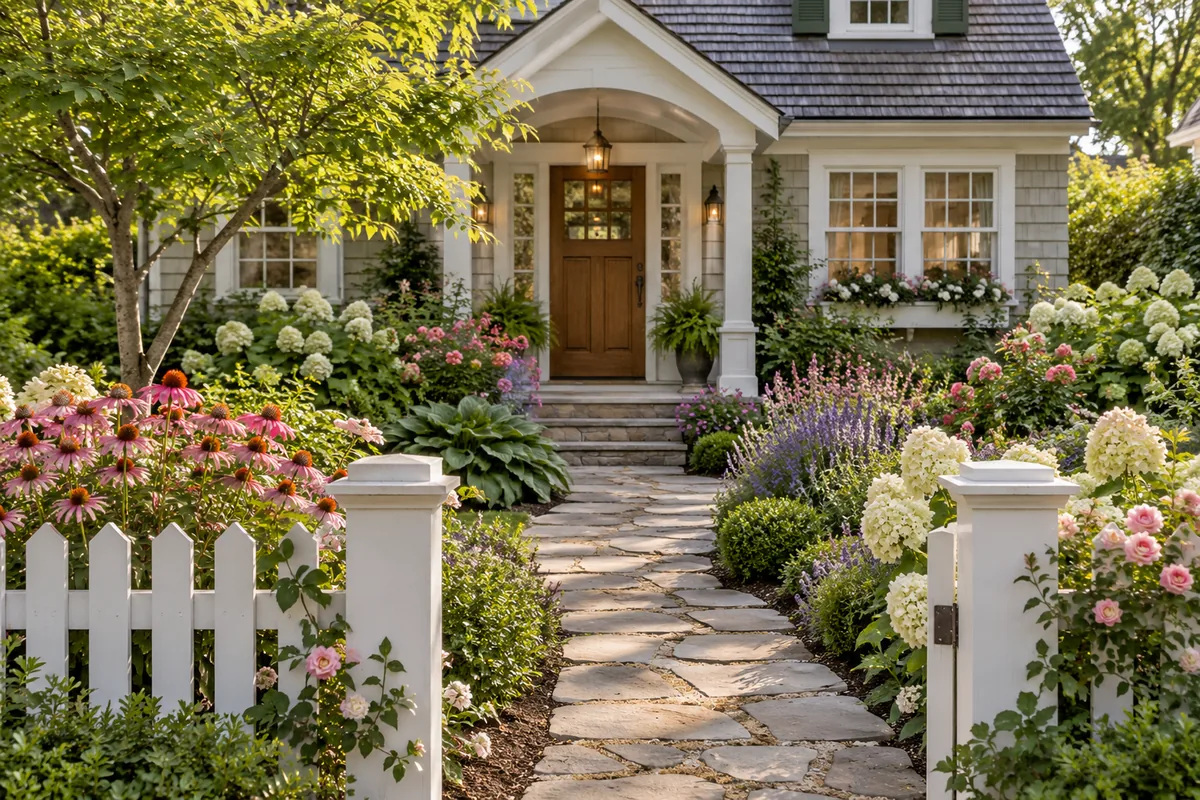
Cottage front yard ideas that welcome visitors through flowers
Find cottage front yard ideas for layered borders, useful gates, brick details, seasonal flower groups, and a welcoming entrance that stays easy to reach.
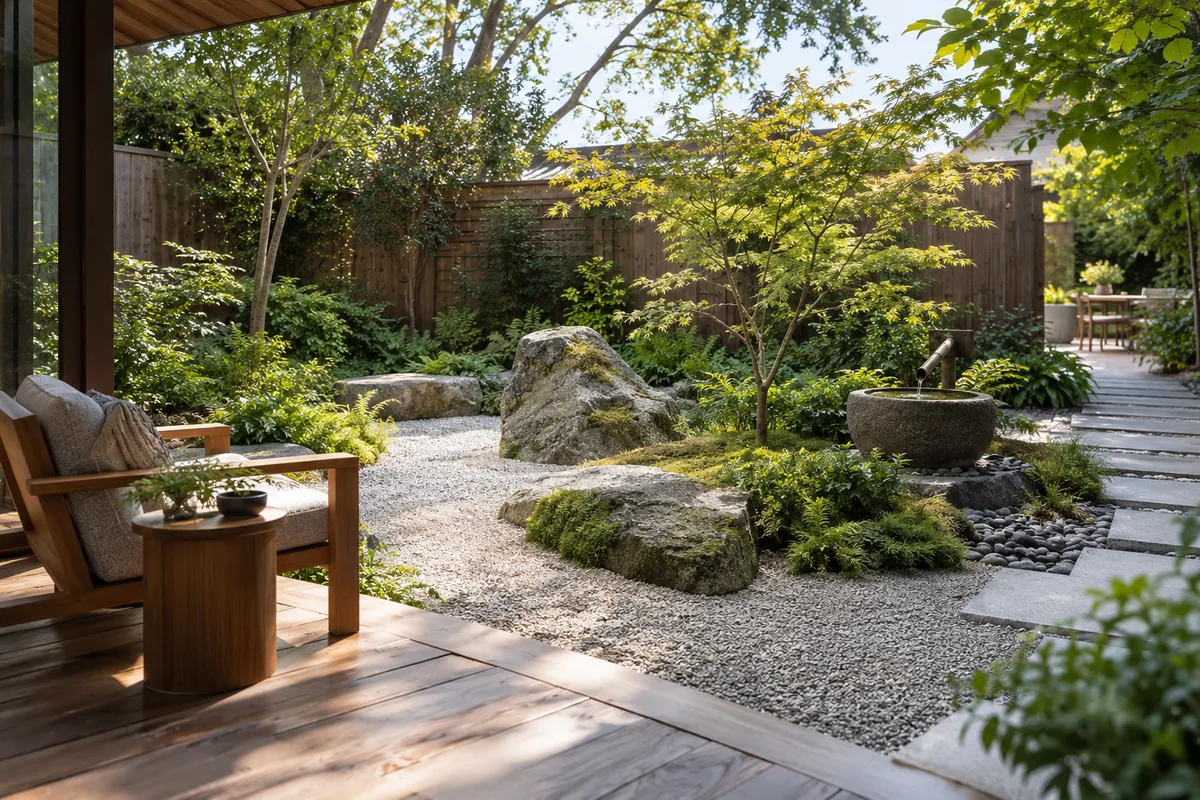
Zen backyard ideas that reserve a quiet place to look
Explore zen backyard ideas for a chosen viewpoint, contained gravel, composed stones, quiet planting, and separation from dining, play, and service routes.
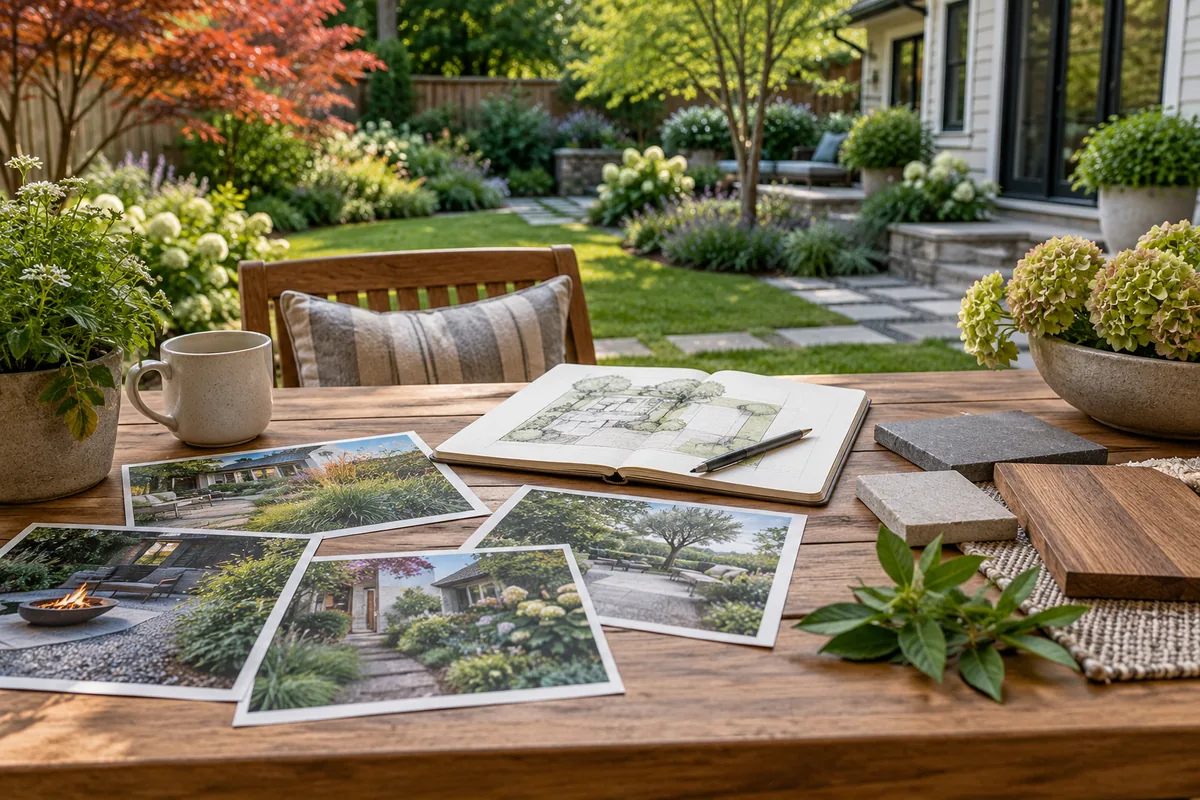
How to Choose a Landscape Style That Fits Your Yard
Choose a landscape style by comparing house lines, everyday uses, maintenance preferences, and local conditions before testing a few visual directions.
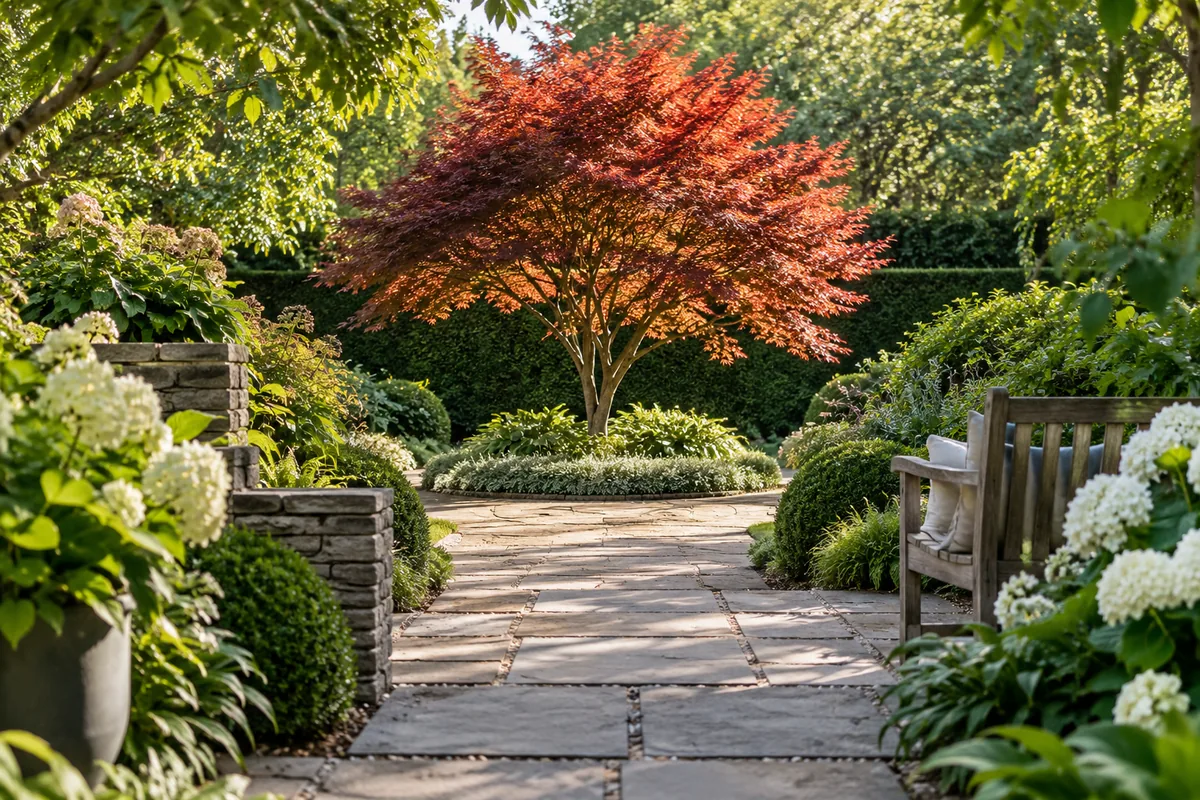
What Is Focal Point in Landscape Design?
Learn what focal point means in landscape design, with a practical yard example, related terms, and the site decisions to check before making changes.
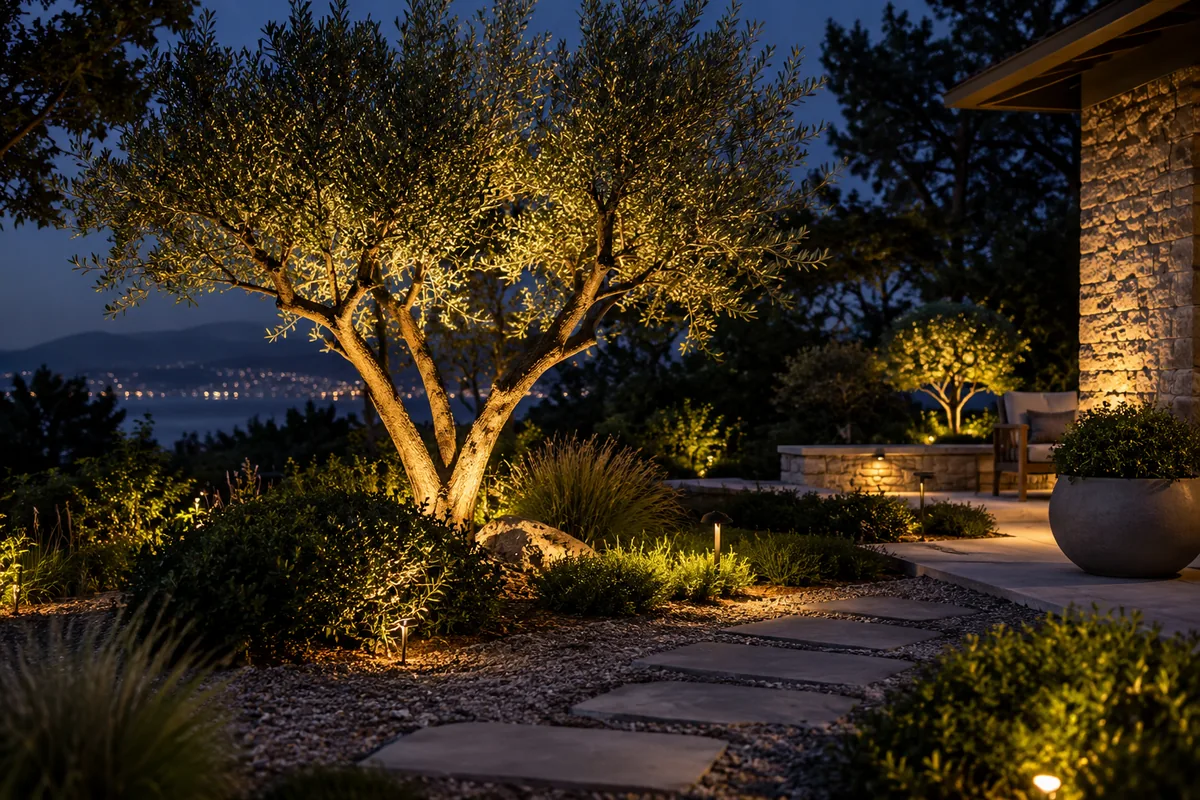
Landscape Accent Lighting That Respects the Night View
Plan landscape accent lighting around selected features, controlled glare, useful viewing positions, appropriate fixtures, and professional electrical review.
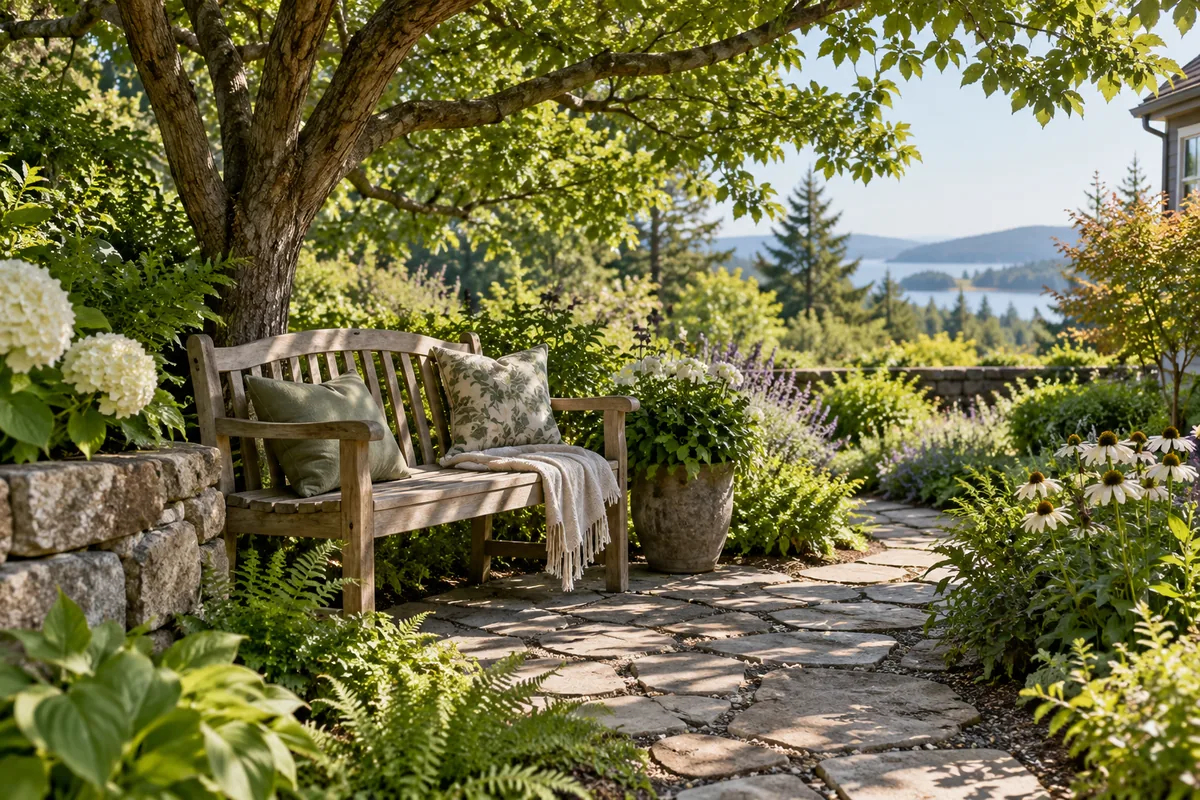
Garden Bench Ideas That Give People a Reason to Sit
Find garden bench ideas for shade, views, and everyday pauses, with practical guidance on seat fit, materials, access, maintenance, and stable placement.