
By AI Landscape Design Team · Editorial policy
Landscape Accent Lighting That Respects the Night View
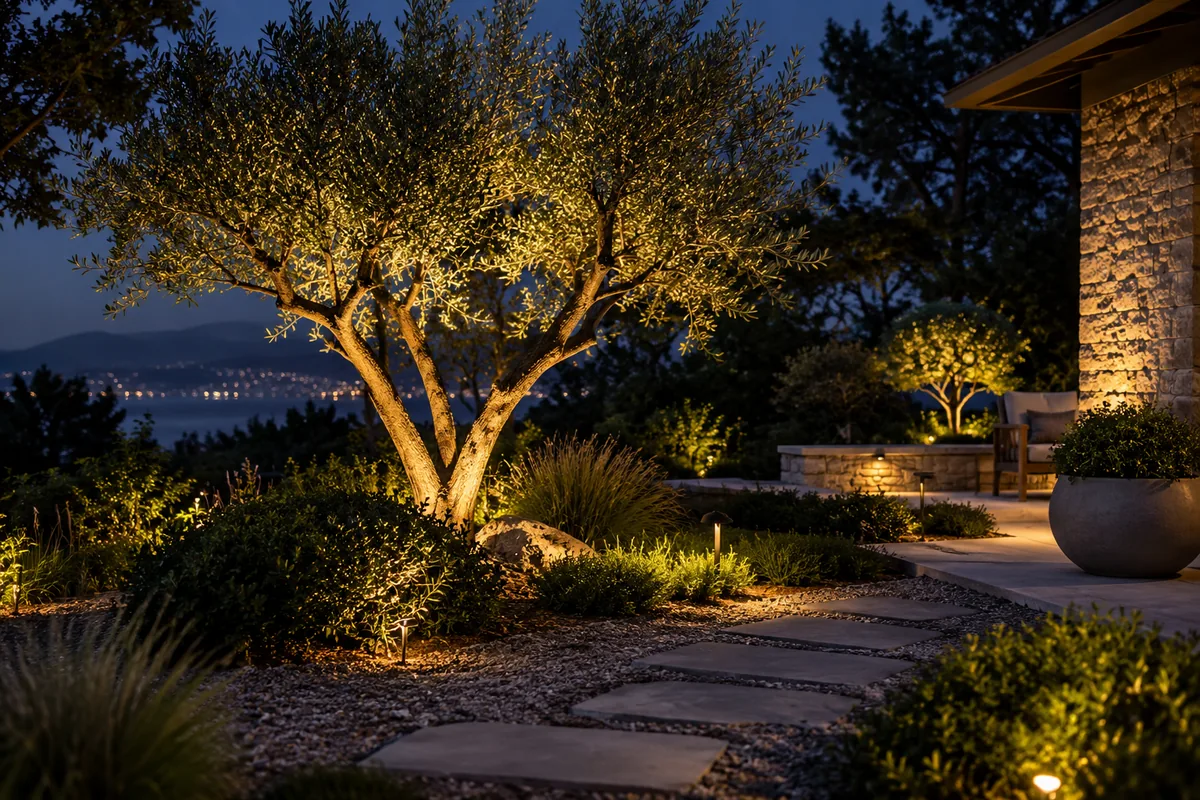
Landscape accent lighting highlights a selected tree, surface, or object while leaving the surrounding night scene quieter. Choose the feature and viewing position before selecting a fixture. Compare uplighting, downlighting, wall washing, and silhouette effects through a small nighttime trial, then have a licensed electrician confirm the equipment and installation. More illuminated objects do not automatically create a more comfortable garden.
Last updated · 6 min read
Key takeaways
- Select a focal feature before choosing the beam.
- Judge glare from seats, windows, paths, and neighboring views.
- Limit brightness, operating time, and unnecessary upward spill.
Which feature deserves attention after dark?
Walk outside after sunset and look from the places people actually occupy: the kitchen window, a patio chair, and the route to the gate. Pick one feature that would make that view easier to understand. A textured wall, a sculptural trunk, or a garden object can each provide a focus, but lighting all of them at the same strength can flatten the scene. Mark the chosen viewing direction on a sketch.
Ask what the light contributes beyond decoration. An object near a route may still need a separate functional lighting assessment. A dramatic beam does not establish safe movement or reveal every change in level. Begin with the desired visual relationship, then keep practical route requirements in a separate brief for the lighting professional.
How do the main accent techniques differ?
Uplighting places the source below a feature and directs attention toward its upper form. It can reveal bark or branches, but needs careful review of upward spill and the fixture seen from nearby seats. Downlighting approaches from above and can emphasize a surface or create a pattern below; the support, access, and relationship to living trees require specialist assessment.
Wall washing aims for a broader reading of a surface, while a grazing effect can emphasize texture and its shadows. Silhouette lighting instead illuminates a background so a darker object becomes readable in front of it. Compare these methods on the actual feature. Uneven masonry, a dense canopy, and a pale wall respond differently, so a diagram should not stand in for an on-site nighttime trial.
Where should the fixture be tested?
Use a temporary demonstration arranged by the supplier or qualified lighting professional before choosing permanent locations. Observe the result from seated eye level, the house, neighboring boundaries, and the route past the fixture. If the source itself is the brightest object in the view, reconsider its shielding or position. An attractive photograph taken from one angle can miss uncomfortable glare from another.
Move the demonstration rather than accepting the first arrangement. Beam width, mounting orientation, and the distance to the target interact. A fixture close to a wall can reveal irregularities strongly; a broader wash may read differently. Ask how future growth, cleaning, and access will affect the placement, especially where planting might later obscure the light or prevent service work.
What should guide color temperature and controls?
According to DarkSky International, responsible outdoor lighting considers purpose, direction, brightness, timing, and color together. Favor a restrained, warmer visual character where appropriate, rather than assuming a cooler appearance makes every feature more legible. Compare the actual product against house lighting, paving, and foliage at night; the label alone does not show the complete scene.
Discuss dimming and operating schedules with the electrician. Decorative emphasis need not remain at full output when the space is unused. Controls must fit the actual equipment, and security or movement requirements should be assessed independently. Avoid using brightness to compensate for a poorly aimed beam. A smaller, well-controlled contribution can be easier to live with than a conspicuous source that is switched off because it bothers occupants.
Which garden styles suit restrained accent lighting?
A modern landscape may use a deliberate wall or sculptural form as its evening anchor. A Zen-inspired garden may benefit from a quieter reading of a stone or selected canopy. Neither style requires a uniform line of dramatic uplights. Carry the daytime composition into the night through a limited hierarchy of attention.
If the target is a living plant, verify its regional suitability, USDA hardiness zone, mature growth, and local invasive status independently of the lighting effect. Do not choose a tree merely because an illuminated canopy looks appealing in a concept. Plan access so installation and later maintenance avoid damage to roots or branches; involve suitable local tree professionals where attachments or work near established trees are proposed.
Which costs belong in the lighting comparison?
Compare the complete proposal, including fixtures, compatible controls, wiring, power equipment, access, installation, and restoration of affected surfaces. A small fixture price can hide substantial work when the target lies beyond an existing paved route or a difficult planting bed. Ask which components are replaceable and how a technician reaches them later.
Product finish, weather exposure, water conditions, and availability of replacement parts influence the maintenance decision. Discuss cleaning lenses, adjusting aim as planting changes, and inspecting equipment with the responsible professional. A sealed-looking housing does not prove compatibility with every location. Obtain product-specific installation and care instructions rather than grouping all outdoor fittings under one general durability claim.
What needs professional confirmation?
A licensed electrician should review the electrical system, outdoor product suitability, connections, controls, and applicable requirements. Where mounting involves a building, tree, or structure, seek appropriate assessment of the proposed attachment. Keep fixtures and associated equipment out of ordinary maintenance routes and avoid arrangements that invite contact with mowing or gardening tools.
For excavation in the United States, contact 811 before digging and establish how private services must be located separately. A visible socket or existing cable does not establish the suitability of the new system. Record who will verify the work and supply operating instructions. Avoid improvised buried wiring or structural attachments copied from a photograph, even when the desired effect appears simple.
How can a concept support the nighttime brief?
Read how to plan outdoor lighting before combining accent effects with functional light. Compare the backyard lighting ideas with the selected focal object, and explain which view matters most. Keep daytime photos, a site sketch, and nighttime observations together so the professional can distinguish appearance preferences from verified conditions.
AILandscape can suggest a broad visual direction from a yard photo. Its image cannot establish illumination levels, glare control, circuit design, mounting strength, or electrical compliance. Use the result to discuss emphasis and atmosphere, then assess real fittings on site. A convincing illuminated tree in a rendering is a visual reference rather than a lighting calculation or a planting specification.
Frequently asked questions
Should every tree receive an uplight?
Choose trees according to the intended night view and local lighting assessment rather than lighting each one identically. Too many competing features can make the scene harder to read. Check glare, upward spill, plant care, and the practical installation independently.
Can accent lighting replace path lighting?
The two tasks have different purposes. A beam that emphasizes a wall or canopy may leave walking surfaces and level changes difficult to understand. Have the actual route assessed separately, then coordinate the visual focus with appropriate functional lighting.
Does a warm-colored fixture remove all light pollution?
Color is one consideration alongside aiming, shielding, output, and operating time. Check the complete arrangement from the property and its surroundings. A warmer label does not justify excessive brightness or a beam aimed beyond the feature it is intended to reveal.
Sources
Related reading
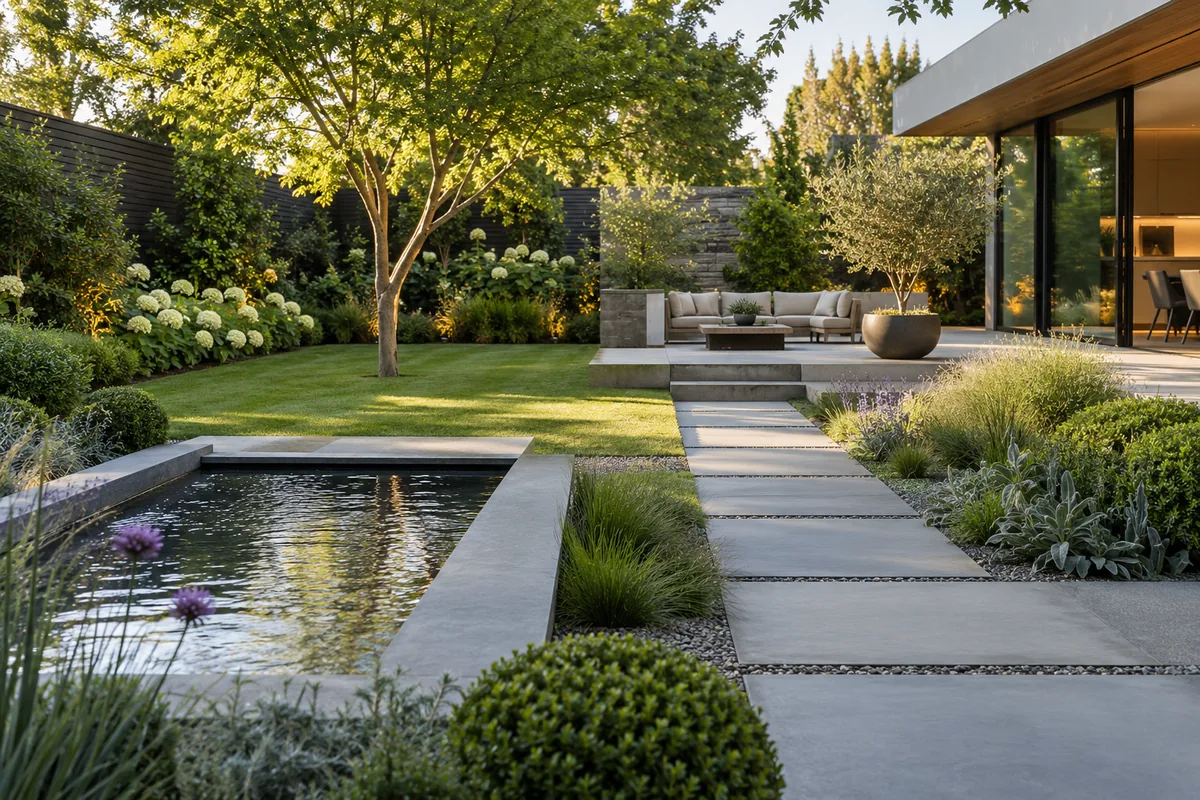
Modern landscape style: lines, space, and materials
Understand modern landscape style through clean lines, restrained materials, planting structure, and practical connections to contemporary architecture.
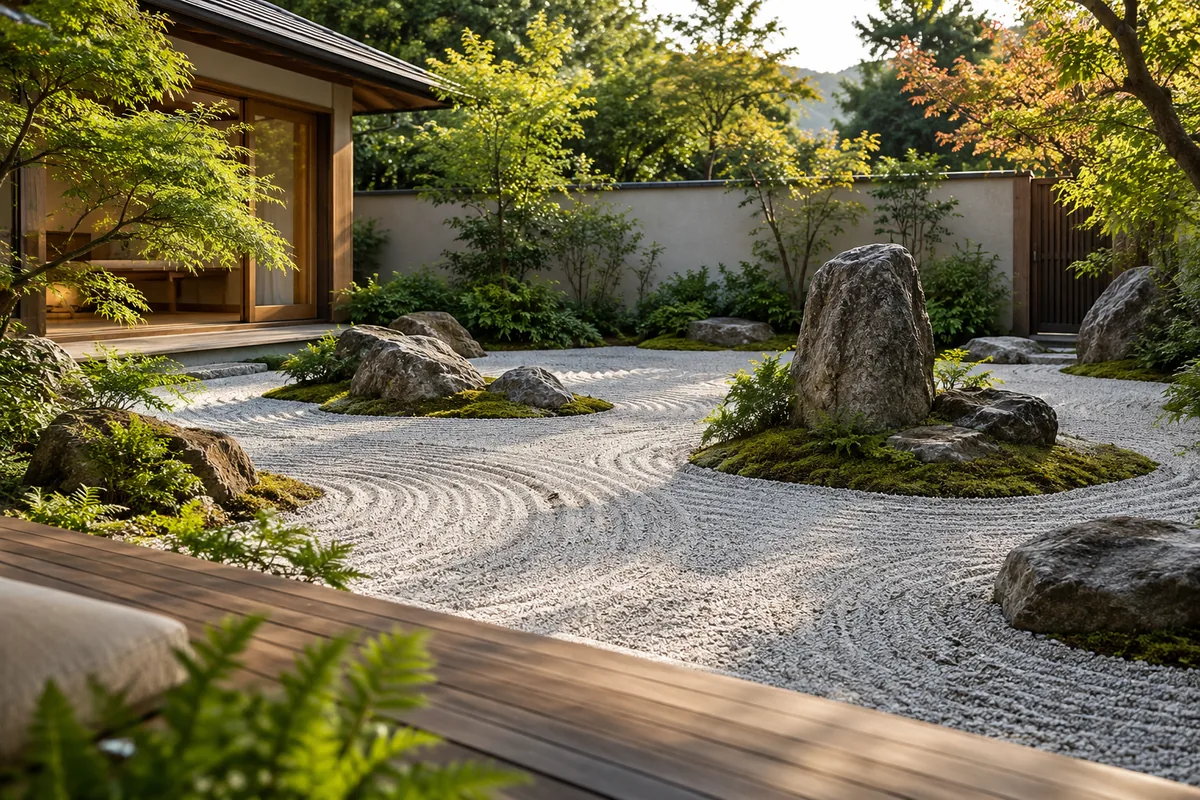
Zen garden style: stones, gravel, and deliberate space
Learn how zen garden style uses composed stones, raked gravel, restrained planting, and a chosen viewpoint, with practical limits for residential gardens.
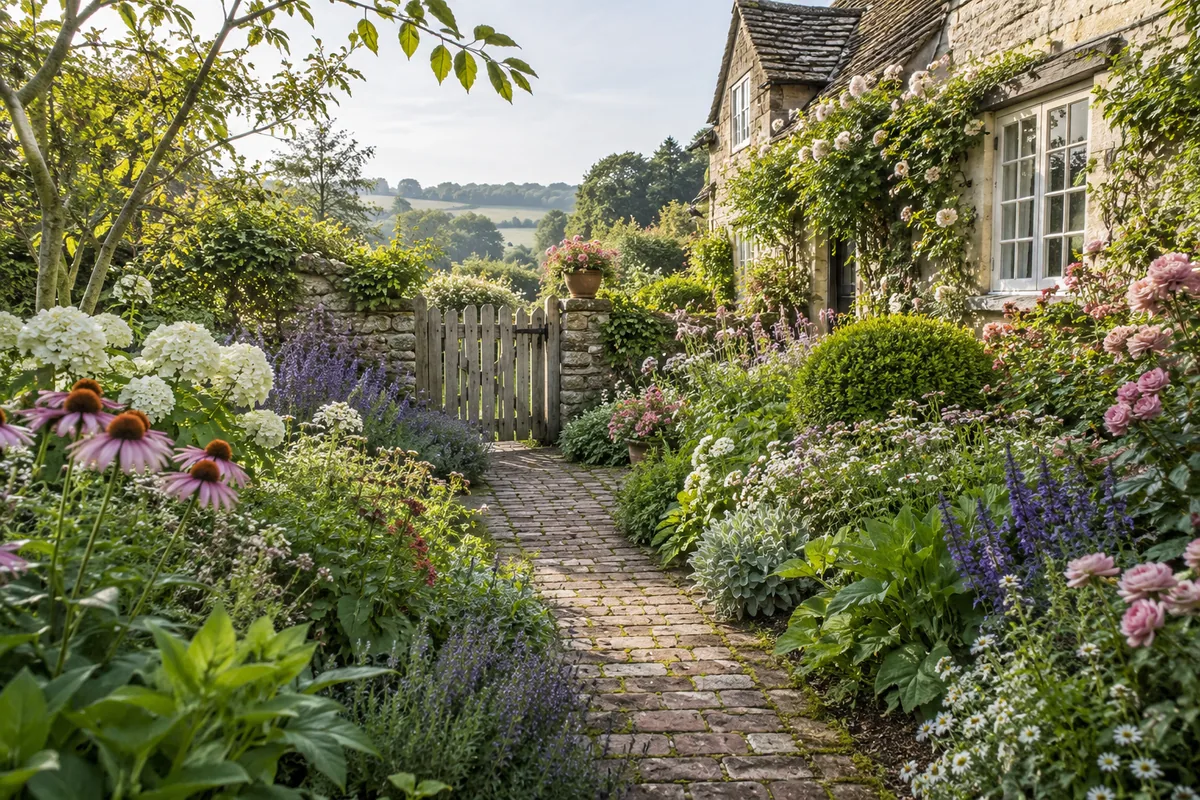
Cottage garden style: flowers with a working framework
Explore cottage garden style through layered flowers, selective self-seeding, clear paths, seasonal care, and the framework that makes informal planting usable.
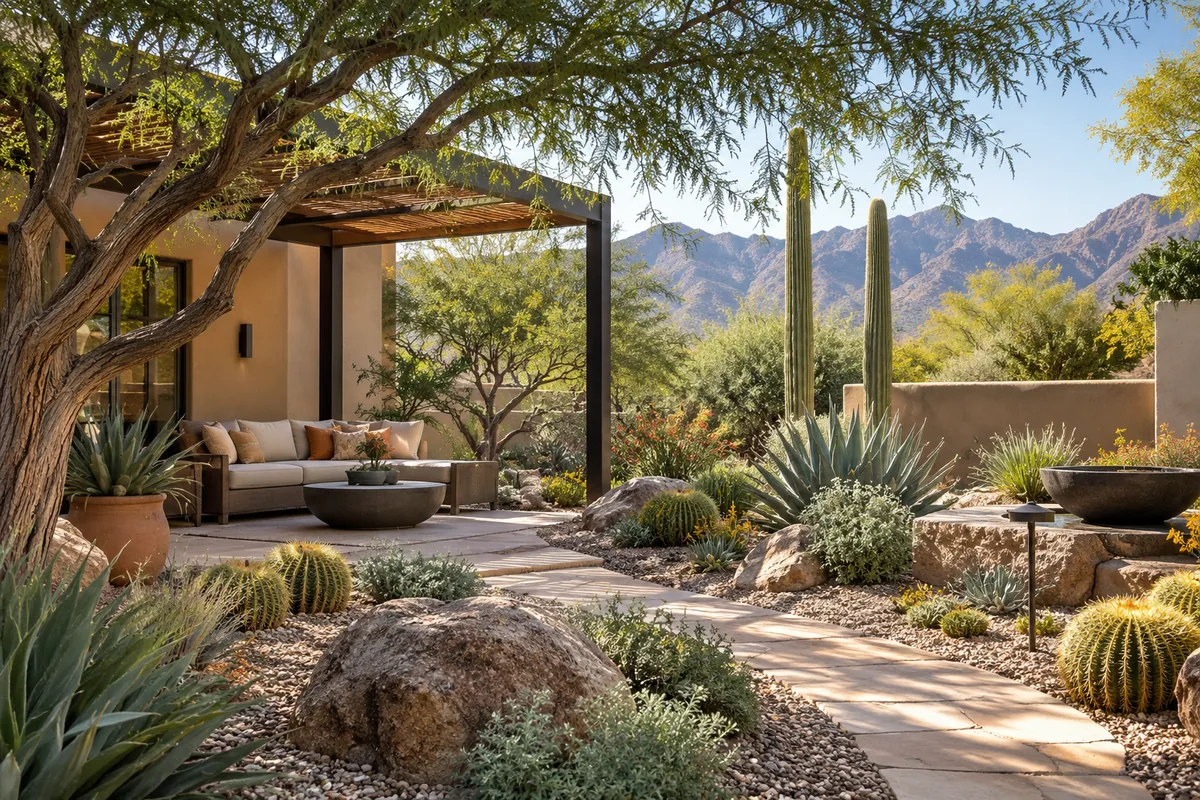
Desert landscape style: shade, stone, and plant form
Understand desert landscape style through plant form, mineral surfaces, useful shade, and heat-aware layouts, while separating its appearance from xeriscaping.
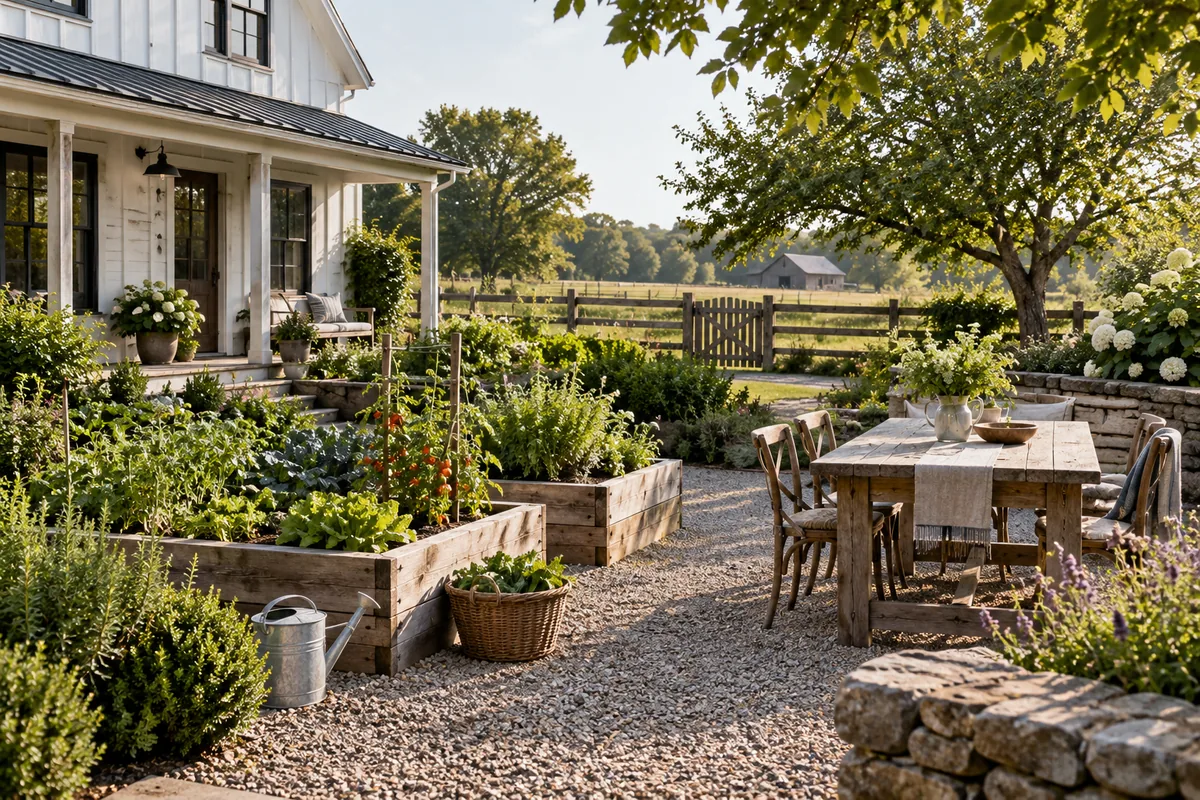
Farmhouse landscape style: useful spaces and honest materials
Discover farmhouse landscape style through practical fences, productive beds, wood and stone, and useful outdoor spaces that support everyday garden routines.
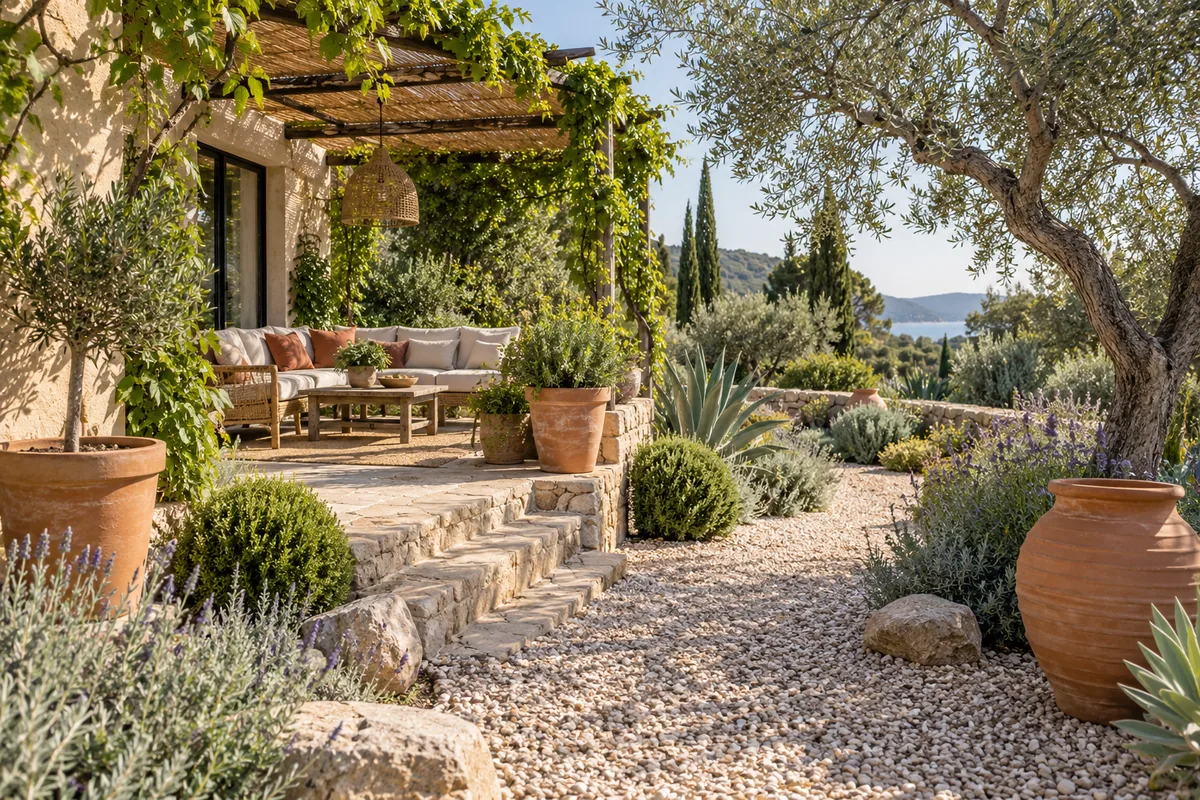
Mediterranean garden style: shade, gravel, and warm color
Understand Mediterranean garden style through shade, gravel, clay pots, and silver foliage, with practical ways to adapt the visual language to local climates.