
By AI Landscape Design Team · Editorial policy
How to Plan Outdoor Lighting Before Choosing Fixtures
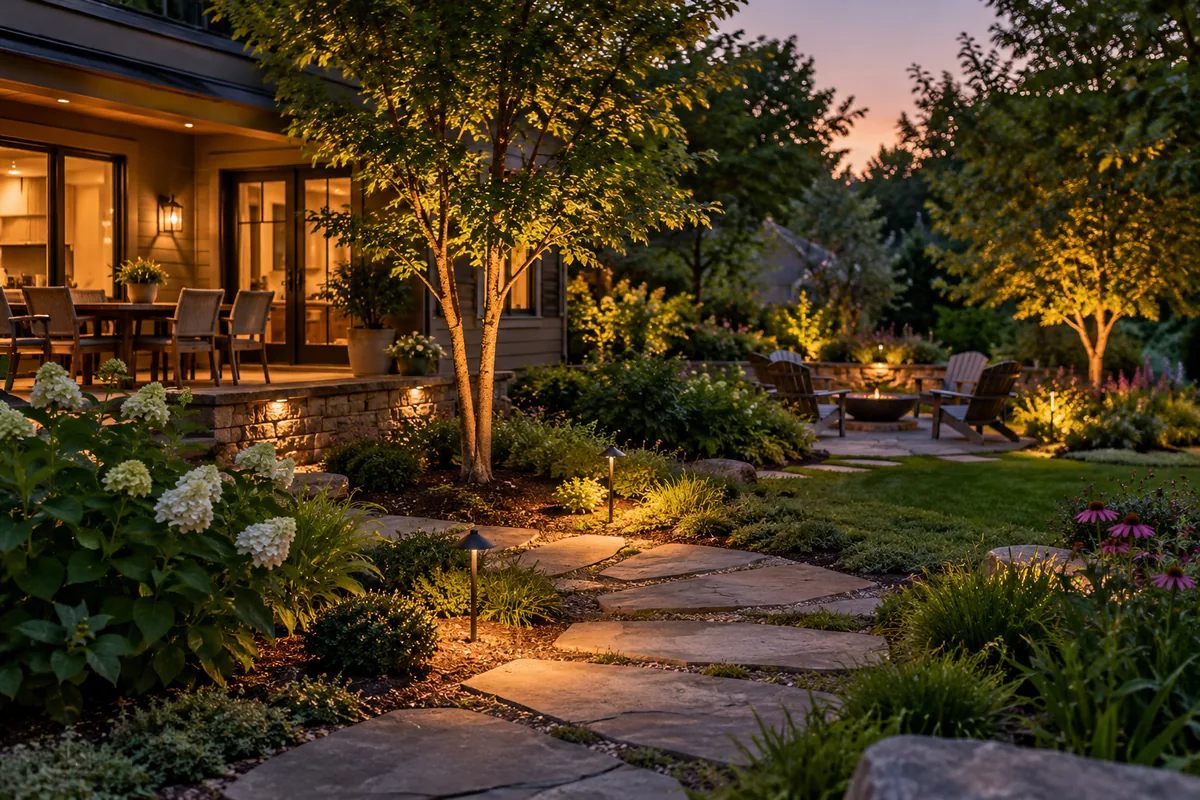
Plan outdoor lighting by reviewing the yard at night, identifying the routes and activities that need visibility, and separating useful illumination from decorative emphasis. Consider controls, glare, neighbors, and maintenance before selecting fixtures. A lighting concept should communicate the intended experience; electrical design, installation, permits, and safety require qualified local professionals rather than wiring instructions or assumptions from a rendered nighttime image.
Published · 6 min read
Key takeaways
- Start with real nighttime routes and activities.
- Separate task lighting from decorative emphasis.
- Use qualified professionals for electrical decisions.
Planning steps
Walk the site after dark and record tasks
Observe the yard at the times when people actually use it, taking appropriate care around poorly visible routes. Record entrances, steps, gates, furniture, and transitions that are hard to understand. Note existing lights and where their brightness creates discomfort or hides adjacent areas in contrast.
Rank functional needs before visual accents
Separate arrival, circulation, working tasks, and decorative highlights in the brief. A route that must remain readable deserves different consideration from a tree selected as a visual accent. Review each item with the actual users and the qualified lighting or electrical professional. More fixtures do not automatically produce better visibility; brightness, contrast, position, and the setting need appropriate assessment.
Review glare and the important views
Check proposed directions of light from the usual viewing positions: a chair, a window, the entry route, and neighboring spaces where relevant. A source that looks unobtrusive from above may be directly visible at seated height. Describe the problem to the professional rather than prescribing a fixture angle or output from an image.
Discuss controls and maintenance with an electrician
Describe when each activity happens and which areas are used together. This helps a qualified electrician or lighting professional discuss suitable controls and zoning for the actual system. A decorative feature may not need the same operating pattern as an entrance. Do not prescribe circuits, cable routes, supply requirements, or outdoor connections in a homeowner concept brief; those decisions need professional assessment and applicable permits.
Test the visual priorities and confirm the installation
Prepare a short plan that labels tasks, preferred visual emphasis, viewing concerns, and the expected operating times. Keep product references separate from the professional technical design. If visual concepts are used, mark them as inspiration and list any features they invented or changed. AI concepts can compare atmosphere and hierarchy but cannot verify electrical safety, output, installation, or code compliance.
Walk the site after dark and record tasks
Observe the yard at the times when people actually use it, taking appropriate care around poorly visible routes. Record entrances, steps, gates, furniture, and transitions that are hard to understand. Note existing lights and where their brightness creates discomfort or hides adjacent areas in contrast. Do not begin by placing a fixture at every border edge; first establish what the light needs to help someone do.
Look from inside the house as well as from the outdoor route. A bright object can dominate a window view even when the surrounding garden remains visually dark. Record neighboring windows and boundaries so the proposal considers other people’s views. This review is an initial planning exercise, not an electrical or safety inspection. Ask qualified local professionals about defects, wiring, equipment, or hazards. Do not open fixtures or investigate circuits yourself. Keep the notes tied to actual activities, such as finding a gate or reaching a seat, so the later design can be evaluated against something more useful than a glowing inspiration photograph.
Rank functional needs before visual accents
Separate arrival, circulation, working tasks, and decorative highlights in the brief. A route that must remain readable deserves different consideration from a tree selected as a visual accent. Review each item with the actual users and the qualified lighting or electrical professional. More fixtures do not automatically produce better visibility; brightness, contrast, position, and the setting need appropriate assessment.
Choose a limited set of visual priorities after the functional needs are understood. Repeated illumination of every feature can remove hierarchy and create unnecessary glare. Consider whether a path light, an accent light, or another professionally selected treatment addresses the actual task. The product category alone does not establish a safe design. Record what should remain visually quiet as well as what should stand out. A successful brief explains which routes and objects matter, then leaves technical decisions to those qualified to assess the site and installed system.
Review glare and the important views
Check proposed directions of light from the usual viewing positions: a chair, a window, the entry route, and neighboring spaces where relevant. A source that looks unobtrusive from above may be directly visible at seated height. Describe the problem to the professional rather than prescribing a fixture angle or output from an image. Local rules and ecological considerations may also affect the approach.
Use sightlines to explain why viewing position matters. Keep the visual emphasis consistent with the daytime layout rather than inventing a separate set of competing focal points for night. Avoid promises that a decorative concept makes the property secure or proves adequate safety lighting. Those claims require different assessments. AI nighttime images can exaggerate brightness or create unrealistic light patterns; judge them only as visual references. Confirm real illumination and the effect on people, boundaries, and vegetation through appropriate professional design and testing instead of treating the image as a photometric specification.
Discuss controls and maintenance with an electrician
Describe when each activity happens and which areas are used together. This helps a qualified electrician or lighting professional discuss suitable controls and zoning for the actual system. A decorative feature may not need the same operating pattern as an entrance. Do not prescribe circuits, cable routes, supply requirements, or outdoor connections in a homeowner concept brief; those decisions need professional assessment and applicable permits.
Include access for inspection, cleaning, adjustment, and future replacement. Plant growth may change how a fixture is seen or reached, so consider the eventual border rather than only the installation-day view. Ask how controls and equipment will be documented for ordinary use. Review excavation and utilities before any work involving the ground; in the United States, contact 811 and arrange private-service locating where necessary. The planning document should make responsibilities and unresolved questions clear. Selecting attractive fixtures is only one part of the project, and an image cannot reveal the concealed electrical or installation requirements.
Test the visual priorities and confirm the installation
Prepare a short plan that labels tasks, preferred visual emphasis, viewing concerns, and the expected operating times. Keep product references separate from the professional technical design. If visual concepts are used, mark them as inspiration and list any features they invented or changed. AI concepts can compare atmosphere and hierarchy but cannot verify electrical safety, output, installation, or code compliance.
Ask the responsible professionals how the actual result will be checked and adjusted after installation. Walk the relevant routes again and review ordinary seating and indoor views rather than judging only from a distant photo. Keep the maintenance and control information with the project records. Use how to phase a landscaping project to coordinate lighting with other work before surfaces and planting make access harder. Revise the visual plan when technical or site constraints require it. The goal is a useful, maintainable lighting arrangement supported by qualified installation, not a literal reproduction of a glowing garden image. Retain the approved task notes so later changes to fixtures or planting can be reviewed against the original reasons for illuminating each area.
Frequently asked questions
Can more lighting always improve visibility?
More fixtures or brighter sources do not automatically solve every visibility problem. Glare, contrast, placement, and the actual tasks need assessment. Explain the routes and activities to qualified professionals, then review the installed result from the positions people normally use.
Can I choose wiring from a concept image?
A concept image cannot establish electrical supply, wiring routes, outdoor connections, or safe installation. Use it only to discuss visual priorities. Qualified local professionals must assess the actual system, relevant permits, and installation requirements before electrical work begins.
Should decorative lights run at the same time as entrance lights?
The appropriate controls depend on use, local conditions, and the installed system. Describe when different areas need illumination and ask the qualified professional to recommend suitable zoning and controls. Avoid treating a decorative reference as a complete operating plan.
Sources
Related reading
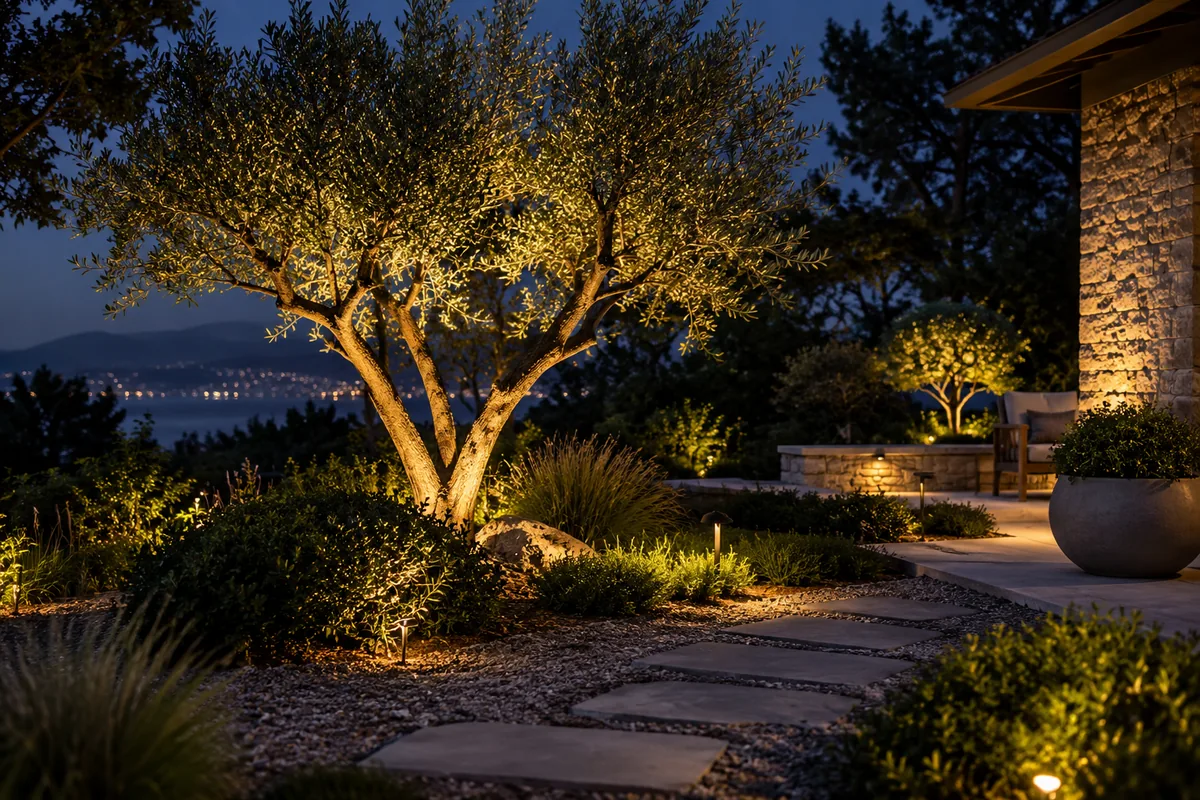
Landscape Accent Lighting That Respects the Night View
Plan landscape accent lighting around selected features, controlled glare, useful viewing positions, appropriate fixtures, and professional electrical review.

What Is Sightline in Landscape Design?
Learn what sightline means in landscape design, with a practical yard example, related terms, and the site decisions to check before making changes.
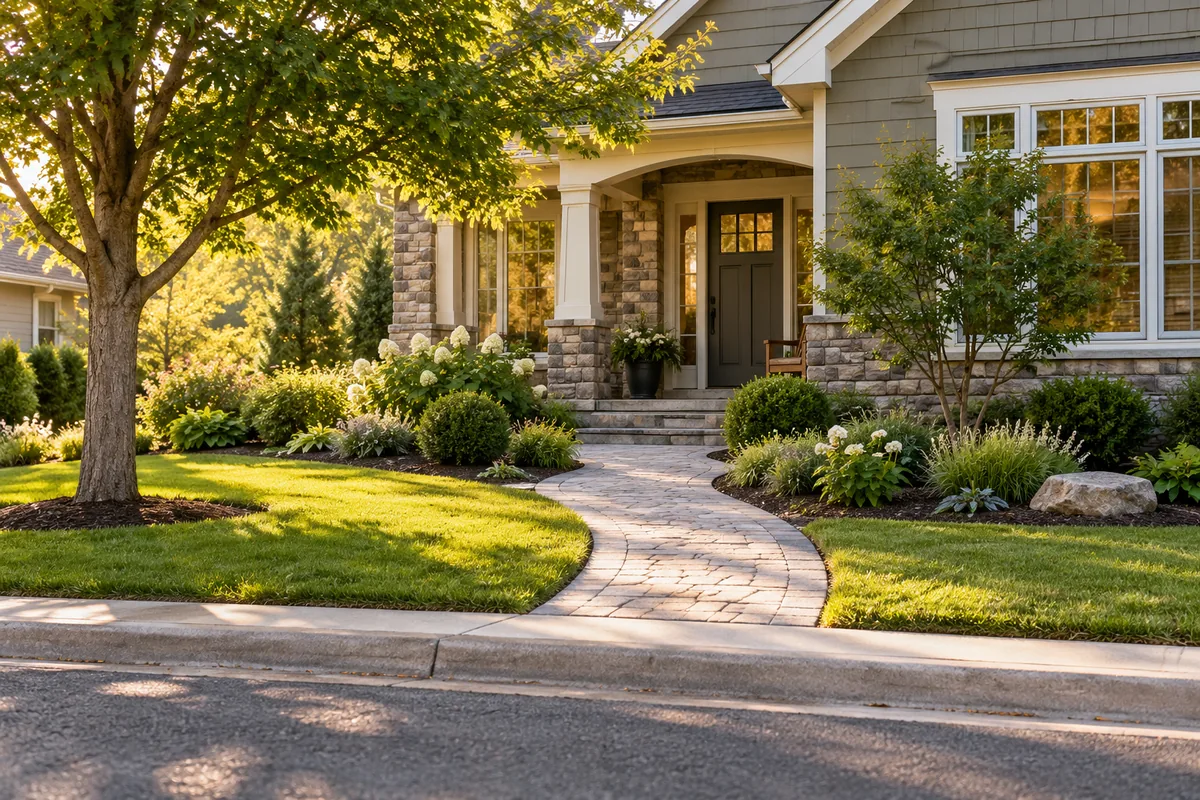
What Is Curb Appeal in Landscape Design?
Learn what curb appeal means in landscape design, with a practical yard example, related terms, and the site decisions to check before making changes.
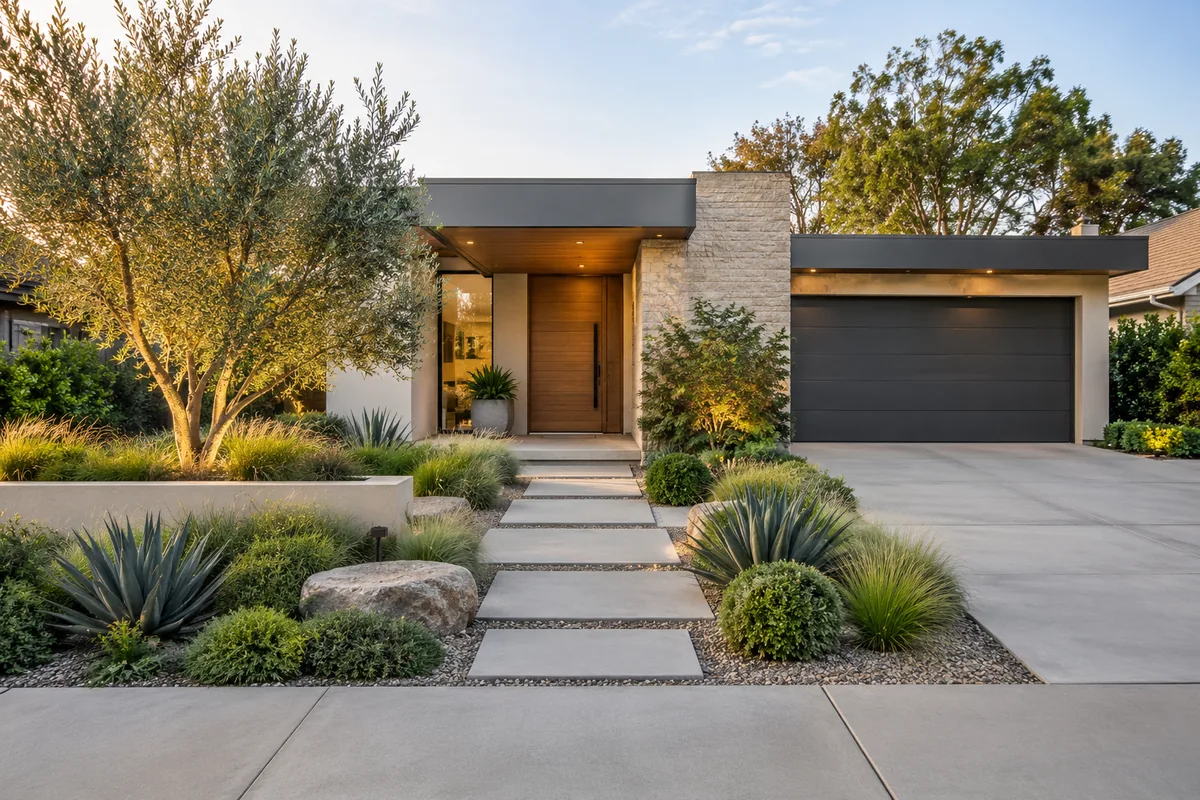
Modern front yard ideas for a clear, composed entrance
Explore modern front yard ideas for clear entrances, repeated planting, restrained materials, readable house numbers, and practical maintenance from the street.
Modern side yard ideas that make service space deliberate
Explore modern side yard ideas for coherent surfaces, reachable equipment, restrained planting, practical storage, and a clear passage between garden spaces.