
By AI Landscape Design Team · Editorial policy
What Is Sightline in Landscape Design?
A sightline is an unobstructed line of view between a viewing position and a feature or area, used in landscape design to assess visibility and visual connections. Viewing position matters: seated and standing views can differ, and a route may reveal different features as someone moves. Plant growth and movable objects can change the view later. Safety-related visibility must be assessed separately from decorative composition.
Published · 2 min read

Key takeaways
- A sightline concerns visibility rather than movement.
- Check seated and standing views.
- Treat safety visibility as a separate local requirement.
How is sightline used in landscape design?
Mark the viewing position and the feature you want to see before adjusting planting. Check from windows, seats, gates, and arrival points rather than relying on a plan alone. Mature plant spread may interrupt a view that is clear on installation day. A decorative view toward a pot does not establish safe visibility at a driveway or street corner.
What does sightline look like in a yard?
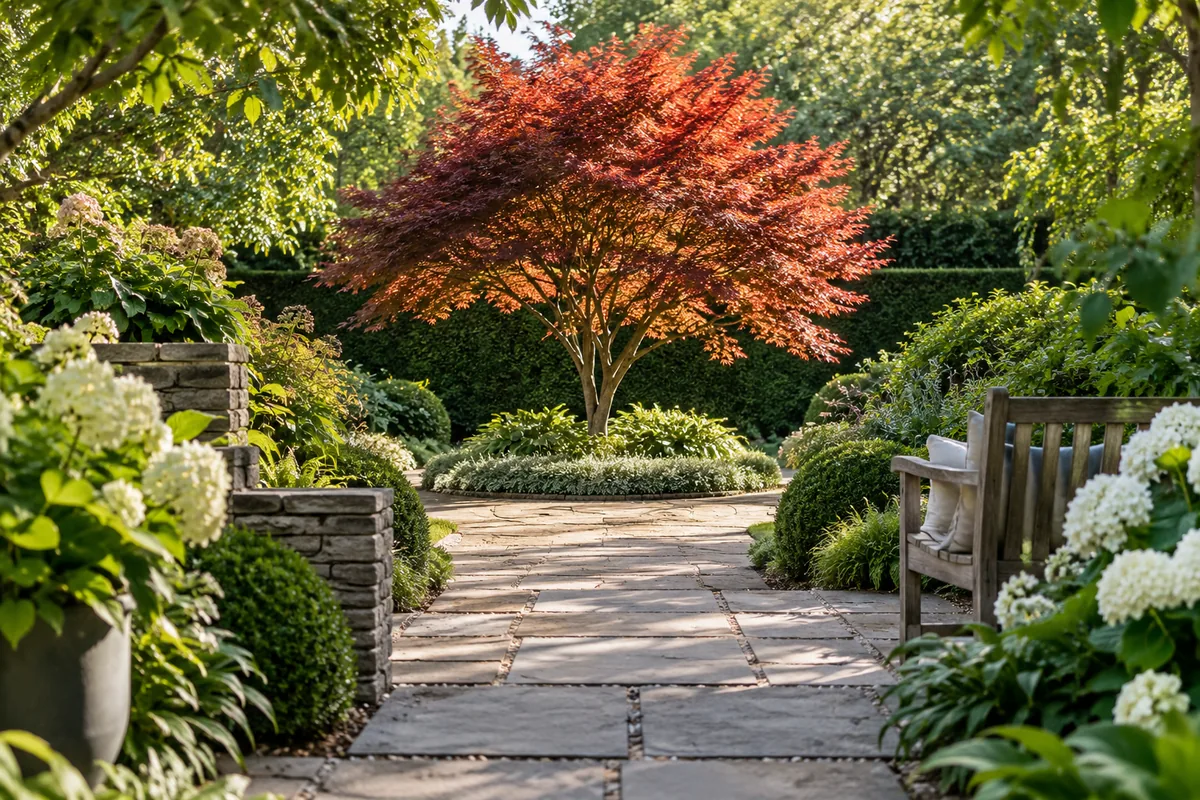
From a patio chair, a planted border might hide the lower part of a garden seat that is visible when standing. Moving the seat or adjusting the foreground can change that composition. Keep actual walking routes clear while experimenting. If a view concerns traffic, a boundary, or public access, obtain appropriate local guidance instead of using a visual preference as a safety rule.
Which terms help explain sightline?
A focal point gives the view a destination; an axis describes alignment. Borrowed scenery uses a view beyond the property. A photo concept can compare these relationships, although it cannot confirm clearances or future growth. Verify the actual view and all safety-sensitive conditions in person before changing the site.
Frequently asked questions
Are sightlines only straight paths?
A sightline describes a view, not necessarily a walking route. Someone may see across planting to a seat without being able to walk directly there. Keep the visual connection and the accessible route separate when discussing the layout.
Can plants improve a sightline?
Planting can frame a view or conceal distractions, but it can also obstruct visibility as it grows. Check mature size and seasonal foliage rather than considering only young plants. Road and driveway visibility requires the relevant local safety guidance.
Why check sightlines from a chair?
A seated eye position changes what foreground plants, walls, and furniture conceal. Check the view where people actually spend time. A layout that looks clear from a standing photograph may present a different experience during ordinary patio use.
Related reading
What Is Focal Point in Landscape Design?
Learn what focal point means in landscape design, with a practical yard example, related terms, and the site decisions to check before making changes.

Garden Bench Ideas That Give People a Reason to Sit
Find garden bench ideas for shade, views, and everyday pauses, with practical guidance on seat fit, materials, access, maintenance, and stable placement.