
By AI Landscape Design Team · Editorial policy
Zen garden style: stones, gravel, and deliberate space
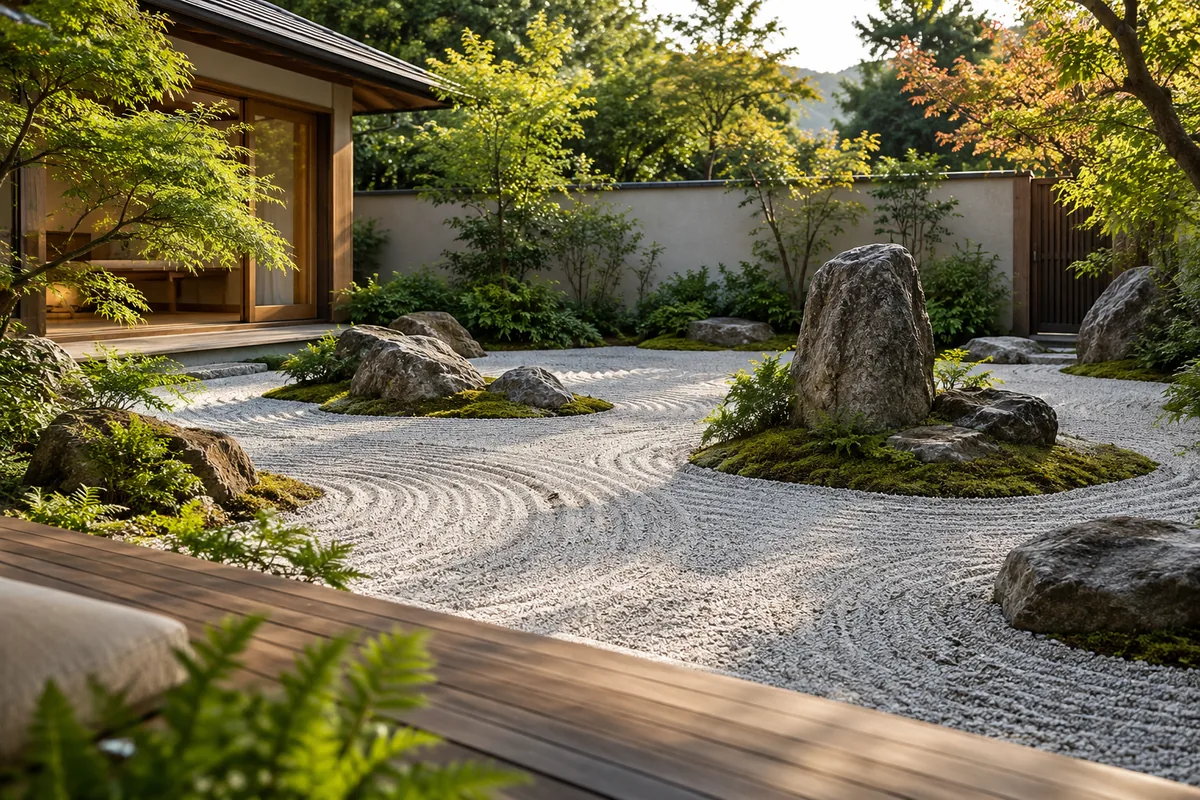
Zen garden style commonly refers to a Japanese dry garden composition using stones, gravel, sparse planting, and deliberate empty space. Raked gravel can suggest water without a pond, while carefully positioned stones provide visual anchors. A residential interpretation works best when it establishes a quiet viewpoint and respects daily access, rather than relying on decorative objects to make a garden appear Japanese.
Last updated · 8 min read
Key takeaways
- Choose the viewing position before placing the main stones.
- Separate an ornamental gravel composition from everyday circulation.
- Borrow design principles without treating ornaments as cultural authenticity.
- Expect raking, leaf removal, and selective plant care.
What does the style actually describe?
The dry garden vocabulary associated with zen gardens is often called karesansui. It belongs within the wider range of Japanese garden traditions, not above or outside them. Japanese gardens also include many compositions with ponds, walking routes, and substantial planting. A small gravel arrangement at home should therefore be described as an interpretation rather than a reproduction of a temple garden.
Begin with the relationship between solid objects and open ground. A stone group gains emphasis from the area around it; filling that area with numerous lanterns and ornaments can weaken the composition. Symbolic readings of stones and gravel vary by garden and context. You do not need to assign a universal meaning to every stone. A coherent view and respectful use of the vocabulary are more useful than a list of supposed mandatory symbols.
Why does the viewing position come first?
Choose where the composition will be seen most often: an indoor window, a covered seat, or the edge of a patio. Observe the view from a seated position as well as standing. A stone that appears prominent from above may disappear behind planting from the intended viewpoint. Use temporary objects to test broad placement before selecting heavy materials.
Consider what lies behind the garden. A plain fence or a quiet planting backdrop can make the stones easier to read, while a busy storage area can interrupt the intended focus. Keep bins and equipment accessible even if they are screened from the main view. Do not force the household to cross an ornamental raked surface to reach a gate. Separate the contemplation area from the route used for practical movement.
How should stones be selected and arranged?
Look at shape, texture, and the way each stone appears to sit on the ground. A stable-looking composition usually feels more convincing than a group of unrelated boulders balanced for novelty. Photograph possible arrangements from the chosen viewpoint and compare the spaces between the stones, not just the stones themselves. Grouping does not require symmetry.
Stone placement is also a physical task. Heavy pieces need safe handling and a suitable foundation assessed by experienced professionals. Do not describe a photograph as evidence of stability. Smaller stones can still trip someone when placed beside a walking route, so preserve a distinct path edge. If the work involves excavation, follow the US 811 process before breaking ground and arrange separate locating for private utilities where needed. The visual guide cannot establish installation methods for a particular site.
What makes raked gravel useful, and where does it fail?
Gravel offers a field in which lines and shadows remain visible. The color should support the stones and the surrounding architecture rather than demand attention by itself. Inspect a sample in sun and shade. Very pale aggregate can produce an uncomfortable glare on an exposed site, while a dark surface may change the mood of an enclosed courtyard.
Raking requires an accessible surface and a place to store the rake. Leaves, pet activity, and routine foot traffic will disturb the pattern. That disturbance is not a design failure, but it should be accepted before committing to the material. Loose gravel is not suitable for every essential route or mobility need. Discuss accessible circulation and drainage with a qualified local professional, and reserve the ornamental treatment for an area where its upkeep fits daily life.
How can planting support the stones without taking over?
Use plants to frame, soften, or establish a quiet backdrop. A restrained shrub group may be more useful than a long list of plants associated with Japan. Moss can contribute a continuous texture where conditions support it, but a sunny, dry courtyard should not be forced to imitate a shaded moss garden. Select a different locally suitable ground layer while preserving the intended visual role.
Check the USDA hardiness zone and the actual light, water, soil, and wind conditions before choosing plants. Seek regional advice on mature growth and invasive status. Avoid plants selected only for cultural association, particularly aggressive spreading candidates. A clipped form needs ongoing attention; a naturally compact plant may offer a different maintenance approach. Leave enough room to reach the stones and gravel without repeatedly stepping through the planting.
How do color and texture create restraint?
A quiet palette makes small differences visible. The rough face of a stone can contrast with fine gravel, and a glossy leaf can stand out against a matte fence. Limit the number of strong contrasts so the composition remains understandable from the intended seat. A burst of seasonal color can be included deliberately without making the entire view depend on flowers.
Review the house materials too. A fence stain that looks neutral indoors may appear strongly orange beside gray aggregate. Compare samples together and remove one finish if it competes with the main stone group. Artificial turf, brightly colored ornaments, and highly patterned paving can be difficult to reconcile with a restrained dry garden view. They are not prohibited by a universal rule; they simply need a clear reason for occupying the same composition.
What maintenance should a homeowner expect?
Raked surfaces need regular editing rather than a single installation visit. Fallen leaves should be removed before they become embedded, weeds need attention, and displaced gravel may need returning to its intended area. Test a small gravel patch near the proposed location to learn how wind and nearby trees affect the workload. Store maintenance tools close enough that routine care is convenient.
Planting may need selective pruning to preserve the view, while stone surfaces require inspection without assuming every stain or moss patch must be removed. Choose a maintenance standard you actually want to maintain. Electrical lighting should be designed and installed by licensed professionals, with equipment reachable for service. Resist adding a fountain merely because it seems tranquil: pumps, water quality, power, and cleaning introduce another set of obligations that a dry composition was intended to avoid.
How to use zen style in a front yard, backyard, side yard, or patio
A zen front yard can frame the entry with a small composed area while leaving the approach obvious. It should not require visitors to interpret an ornamental field as a path. A zen backyard can establish a separate viewing corner beside an ordinary usable terrace.
In a zen side yard, the view from a window may justify a narrow composition, but service access remains essential. A zen patio can use a contained gravel area outside the furniture footprint, paired with a simple boundary and limited planting. Begin with the smallest composition that serves the chosen view. The value comes from the relationship of the elements, not from covering the greatest possible area with gravel.
What should you avoid when adapting the style?
A collection of imported-looking accessories is not a substitute for spatial composition. Start with ground, stones, plants, and a backdrop before deciding if any additional object is needed. Compare zen and Japanese garden approaches to keep the terminology clear. Respect existing site constraints instead of removing practical features solely to match a reference photograph.
AILandscape can visualize a restrained zen direction on a yard image, allowing you to discuss broad placement and visual balance. Treat the result as an exploration of appearance; it cannot establish stone stability, accurate dimensions, regional planting suitability, or drainage performance. Have those matters reviewed locally. If a generated scene adds a water feature, alters the building, or removes essential access, discard that detail rather than assuming it belongs in the actual proposal.
Frequently asked questions
Does a zen garden have to include water?
A dry garden can suggest water through gravel and stone composition without a pond. A real water feature is optional and brings separate maintenance, electrical, and safety considerations. Decide whether it serves the intended view and daily use before adding it.
Can I use zen garden principles without Japanese ornaments?
Yes. Deliberate empty space, a chosen viewpoint, restrained planting, and thoughtful stone arrangement can guide a residential interpretation. Decorative objects are not necessary for those relationships to work. Describe the design accurately rather than claiming historical authenticity from a set of accessories.
Is raked gravel practical around pets or children?
It depends on use and the material. Frequent running or play will disturb patterns, and loose aggregate can create access or safety concerns. Keep ornamental gravel separate from important walking and play routes, and evaluate plant toxicity through the ASPCA list where pets can reach planting.
Sources
Related reading
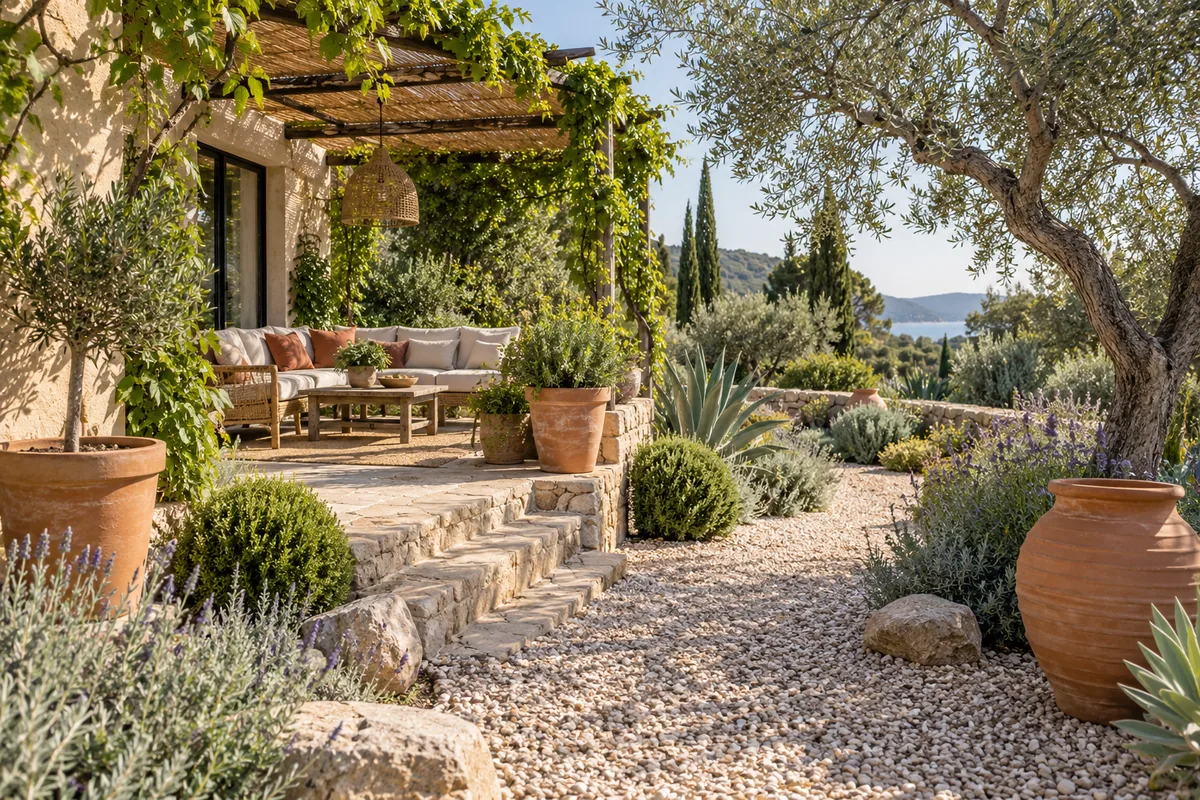
Mediterranean garden style: shade, gravel, and warm color
Understand Mediterranean garden style through shade, gravel, clay pots, and silver foliage, with practical ways to adapt the visual language to local climates.
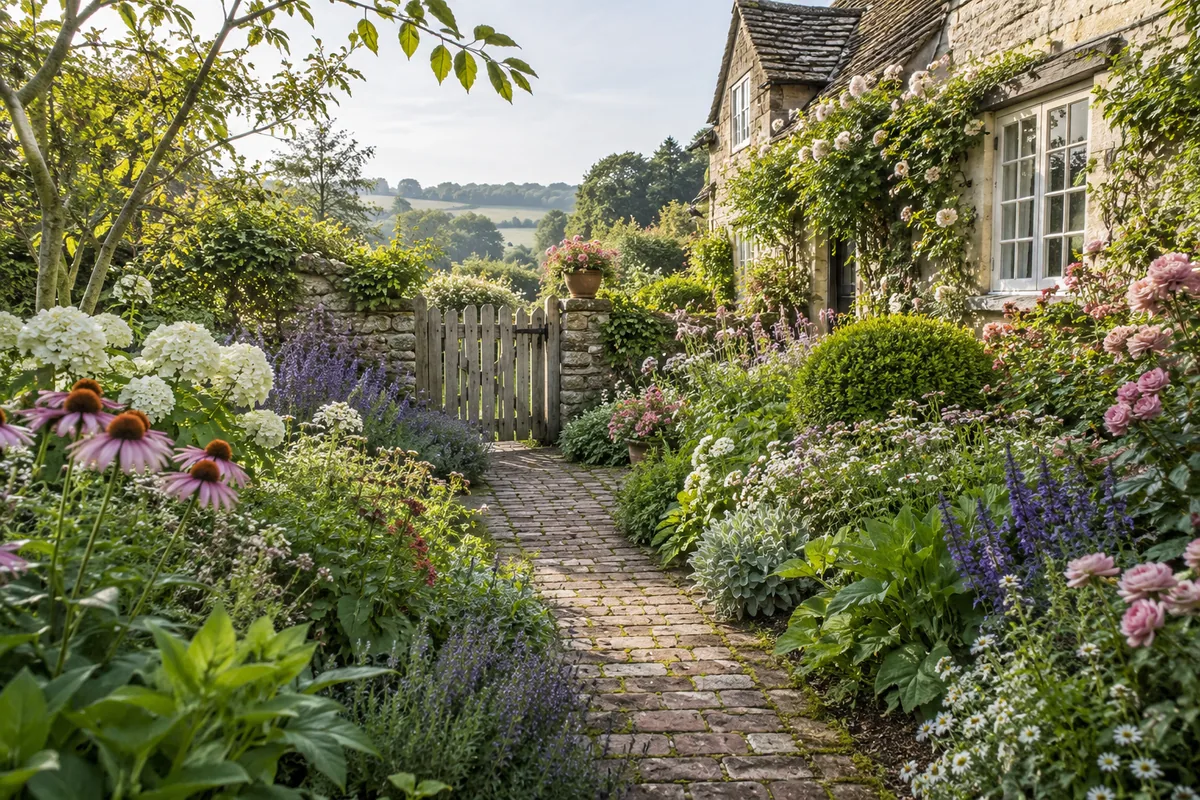
Cottage garden style: flowers with a working framework
Explore cottage garden style through layered flowers, selective self-seeding, clear paths, seasonal care, and the framework that makes informal planting usable.
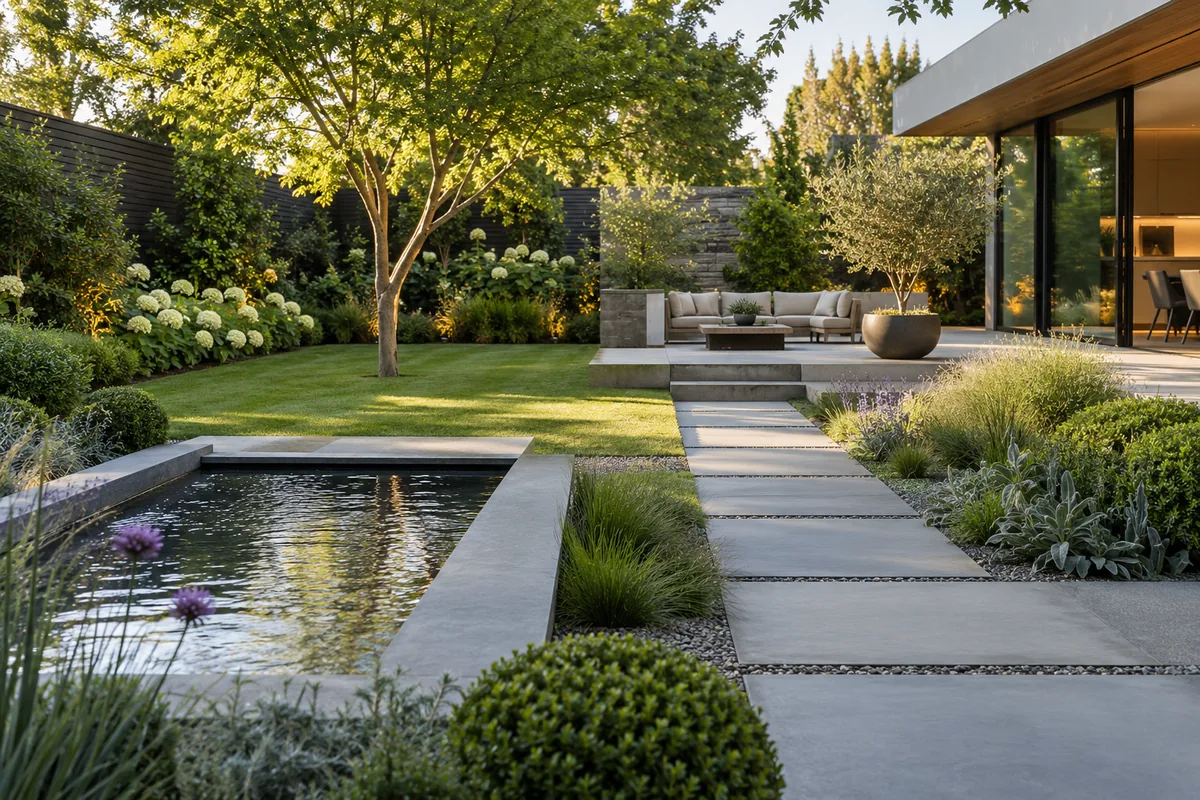
Modern landscape style: lines, space, and materials
Understand modern landscape style through clean lines, restrained materials, planting structure, and practical connections to contemporary architecture.