
By AI Landscape Design Team · Editorial policy
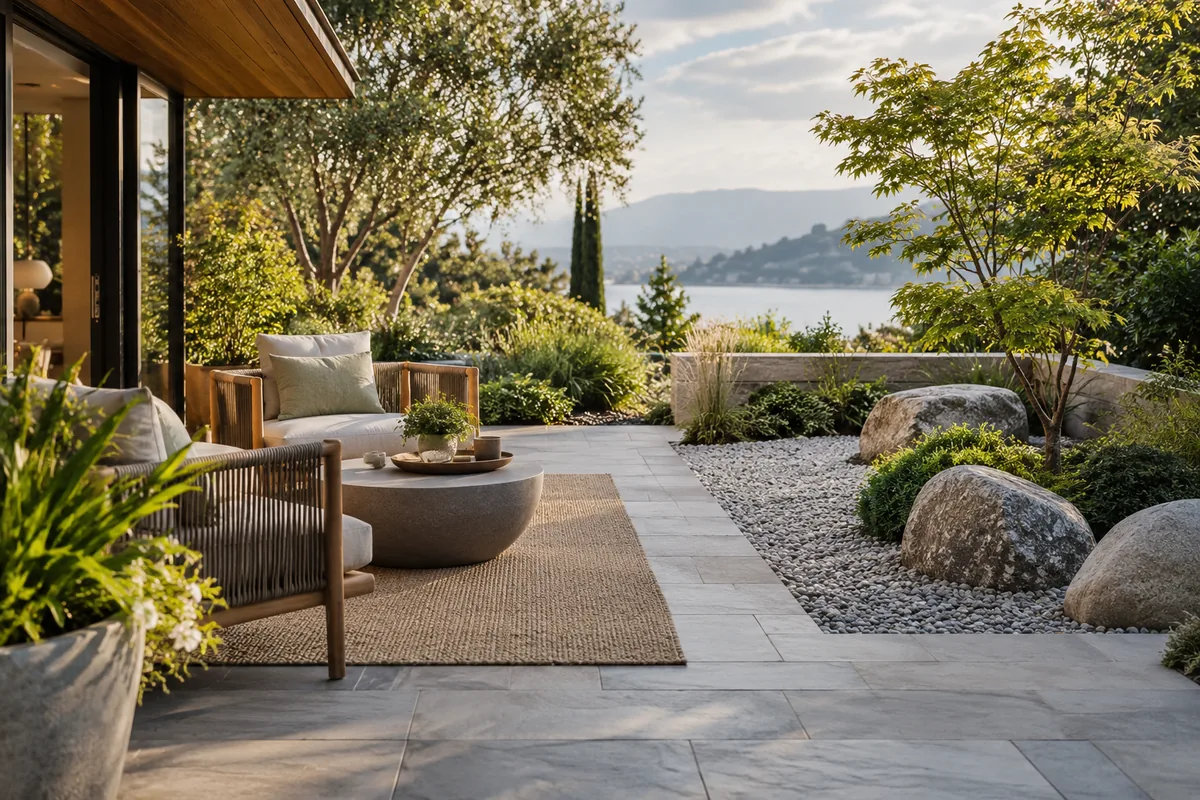
Zen patio ideas for a considered view around comfortable seats
Zen patio ideas should establish a considered view from comfortable furniture while leaving the terrace usable. Place a contained stone or gravel composition outside the route to doors and chairs, supported by quiet locally suitable planting. The room can borrow restraint and deliberate empty space without requiring every surface to remain ornamental or every object to suggest a Japanese garden.
Published · 6 min read
Key takeaways
- Choose the seated viewpoint before decorative placement.
- Keep ornamental surfaces outside practical circulation.
- Use a modest composed area rather than filling the terrace with symbols.
What will make the room quiet while it is actually occupied?
Set a chair in the intended position and study the view at seated height. Note the background, door movement, table footprint, and route back inside. The ornamental area should support that experience without becoming the only usable ground. A patio still needs ordinary movement for meals, watering, and cleaning, even when its visual language is restrained.
Keep existing sound surfaces where they suit access. If the terrace is on a roof or balcony, obtain professional structural and waterproofing review before adding heavy stones, filled pots, or new fixtures. Review boundaries and neighbors' windows before changing the backdrop. A residential interpretation can use composed ground and planting respectfully without claiming to replicate a historical dry garden or adding a prescribed collection of cultural ornaments.
Eight ways to compose the view around a real patio room
- Orient one seat toward the deliberate view. Let the main chair face a quiet planted or stone area rather than automatically aligning with the door. It suits a terrace used for looking into the garden. Keep room to pass behind or beside it and test actual shade. A pleasing empty-room axis is less valuable if the occupied chair blocks circulation.
- Contain a small gravel composition off the route. Use a readable boundary where loose material can be maintained without interfering with furniture. This works for a ground-level area beside the main surface. Assess access, debris, and drainage professionally. Gravel through the chair footprint is a counterexample: the ornamental effect should not make every ordinary movement disturb or cross the field.
- Compare stone shapes from seated height. Position a limited grouping where space around the objects can remain visible. It fits a quiet backdrop and a locally reviewed installation. Heavy handling, stability, and elevated loading need professional assessment. A small terrace does not gain restraint by filling each available gap with another rock.
- Use a locally suitable plant frame. A quiet shrub or low-layer role can connect the composition to the room edge. This suits a view needing softness without many accessories. Check mature growth and actual conditions. Moss or culturally associated plants are references rather than obligatory selections, and a container has different care conditions from an open garden bed.
- Quiet the furniture palette. Simple lounge furniture can give stone and leaf differences room to be noticed. It works where patterned surfaces and textiles currently compete. Choose comfort and usable footprints first. Matching every object is unnecessary, but unrelated strong colors may weaken a considered view that depends on small contrasts rather than numerous focal points.
- Keep a plain dependable foreground. An appropriate surface between door and seat can provide visual rest and practical movement. It suits a terrace where ornamental elements already carry emphasis. Have grip, levels, drainage, and repair questions reviewed. Open space is useful when it enables circulation; it is not an instruction to remove all furniture or planting.
- Limit additional ornaments to a clear role. Assess whether any object improves the selected view before adding it. This fits a room where accessories have accumulated without purpose. A lantern-like object or water feature is optional and may bring separate support, safety, or maintenance issues. Cultural appearance is not proof that an item belongs in the actual composition.
- Preserve quiet evening orientation. Light the door and necessary route before considering an ornamental accent. It works for a sitting room used after dusk. Licensed professionals should review electrical installation and requirements. Check glare from the seat and neighboring windows, keeping fixtures reachable. A dramatic shadow is not useful if the viewer must look directly into the source.
Which plant and site questions need independent answers?
Verify plants through regional advice on USDA hardiness zone, exposure, soil, water, mature form, and invasive information. Plant roles can be adapted to local conditions without losing the composition principle. Use ASPCA toxicity information for pet-reachable containers and review sharp growth or unstable objects where children move. Quiet appearance is not evidence of safety.
The zen style guide clarifies terminology, while lounge furniture considerations help frame the room's use. Drainage, grades, foundations, supports, electrical work, roof loading, and waterproofing need qualified licensed assessment. Contact 811 before US excavation and identify private services through appropriate locating. A visual composition cannot establish dimensions or safe stone placement. Let those checks determine the physical scope of the intended view.
How can restraint remain comfortable rather than restrictive?
Clean and inspect the ornamental area without making maintenance access depend on moving heavy furniture. Observe how wind and nearby trees affect any gravel and start modestly if the workload is uncertain. Keep the practical terrace room usable after plants mature. If the arrangement requires visitors to avoid ordinary movement, reconsider its position instead of treating inconvenience as part of the style.
AILandscape's patio tool can compare zen-inspired visual concepts on your photo. Discuss the seated viewpoint and relationship between ornament and circulation, then verify measurements, actual plants, water behavior, structural conditions, and construction locally. The image is for exploration. Reject unintended changes to doors or a building and assess any added fountain separately. A convincing quiet patio provides an enjoyable view while still accommodating the ordinary furniture and routines that make it a room.
Frequently asked questions
Does a zen patio need sand or gravel across the whole surface?
A contained ornamental area can provide the reference while the practical room uses a suitable dependable surface. Keep doors, chairs, and circulation in the decision. Loose material is optional and should be chosen only where care, access, and site conditions support it.
Can dining furniture fit a zen-inspired room?
Use furniture with a practical footprint and preserve its service route. Quiet colors and a deliberate viewed edge can support restraint without removing the table. The composition should be assessed with chairs occupied rather than assuming an empty patio represents everyday use.
Are heavy stones appropriate on a balcony terrace?
Loading, waterproofing, stability, and handling need assessment by qualified structural and construction professionals before installation. A concept image cannot establish those conditions. Do not choose heavy ornamental pieces or filled containers for an elevated terrace solely from their visual scale.
Sources
Related reading
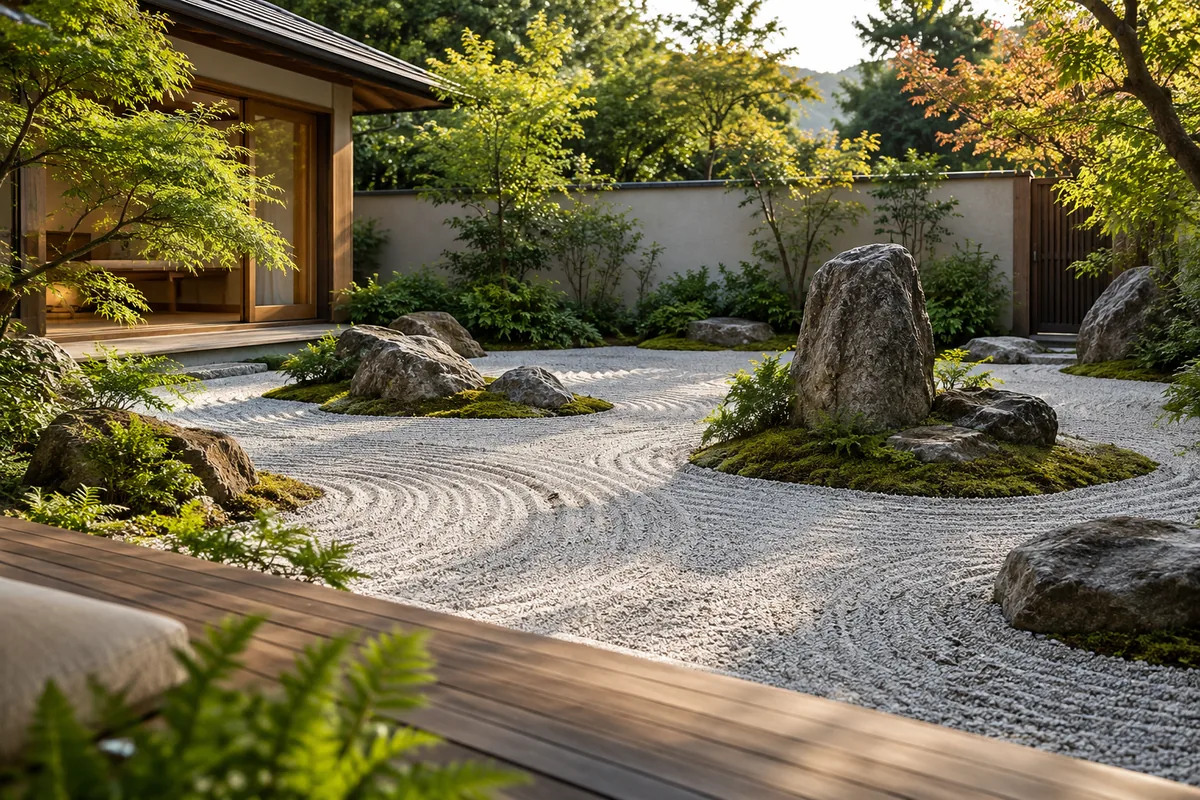
Zen garden style: stones, gravel, and deliberate space
Learn how zen garden style uses composed stones, raked gravel, restrained planting, and a chosen viewpoint, with practical limits for residential gardens.
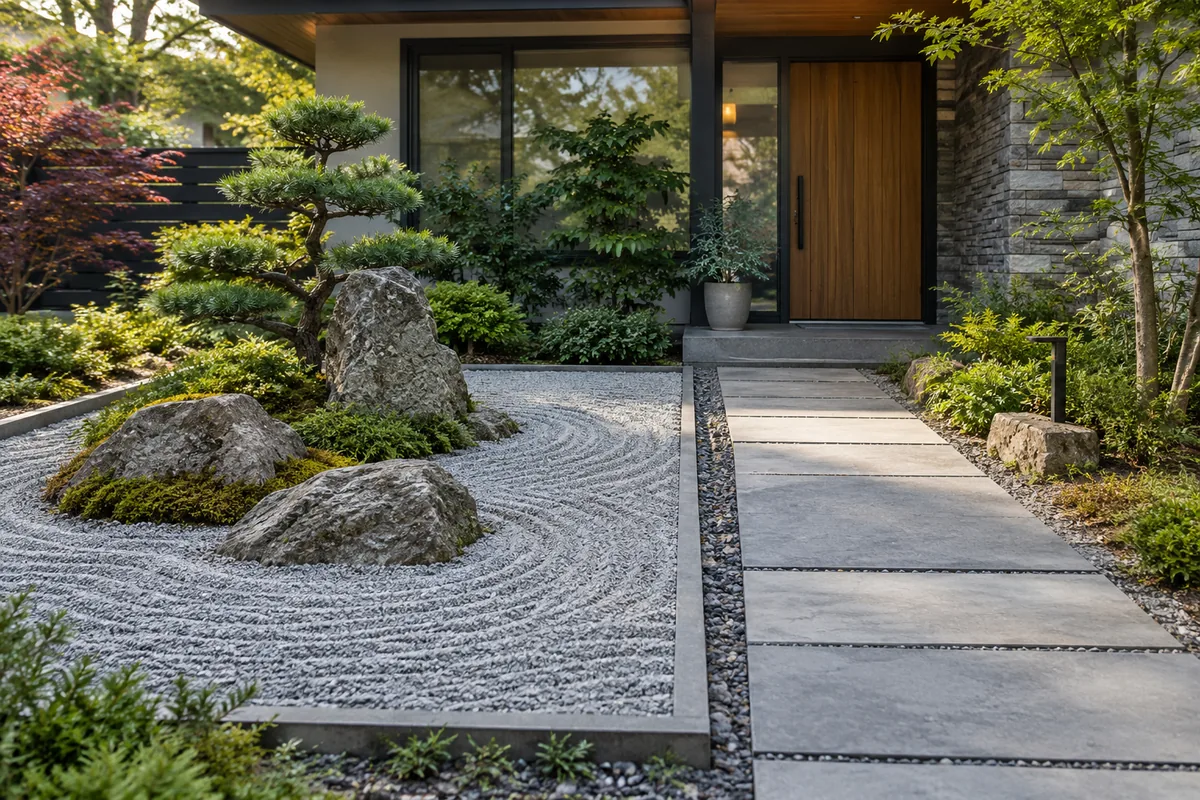
Zen front yard ideas: a quiet view beside a usable entrance
Explore zen front yard ideas using a composed stone view, restrained gravel, simple planting, and clear arrival routes beside a usable entrance.
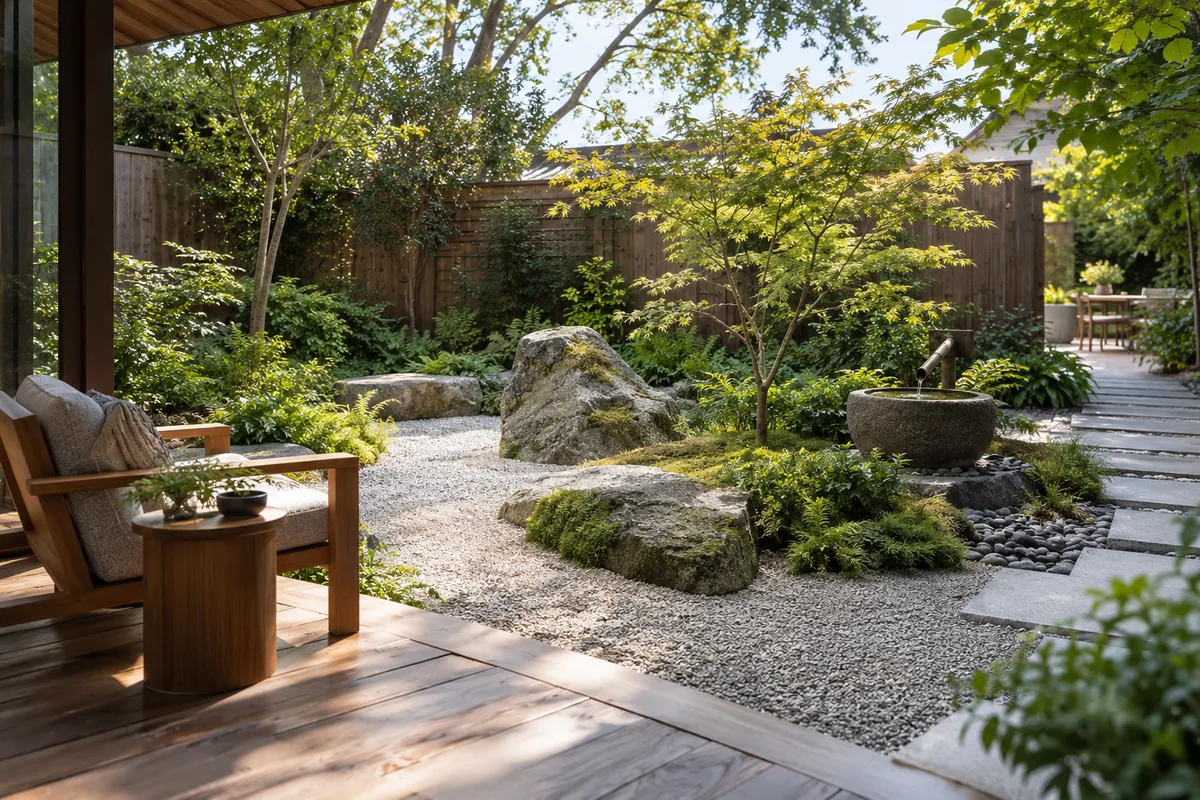
Zen backyard ideas that reserve a quiet place to look
Explore zen backyard ideas for a chosen viewpoint, contained gravel, composed stones, quiet planting, and separation from dining, play, and service routes.
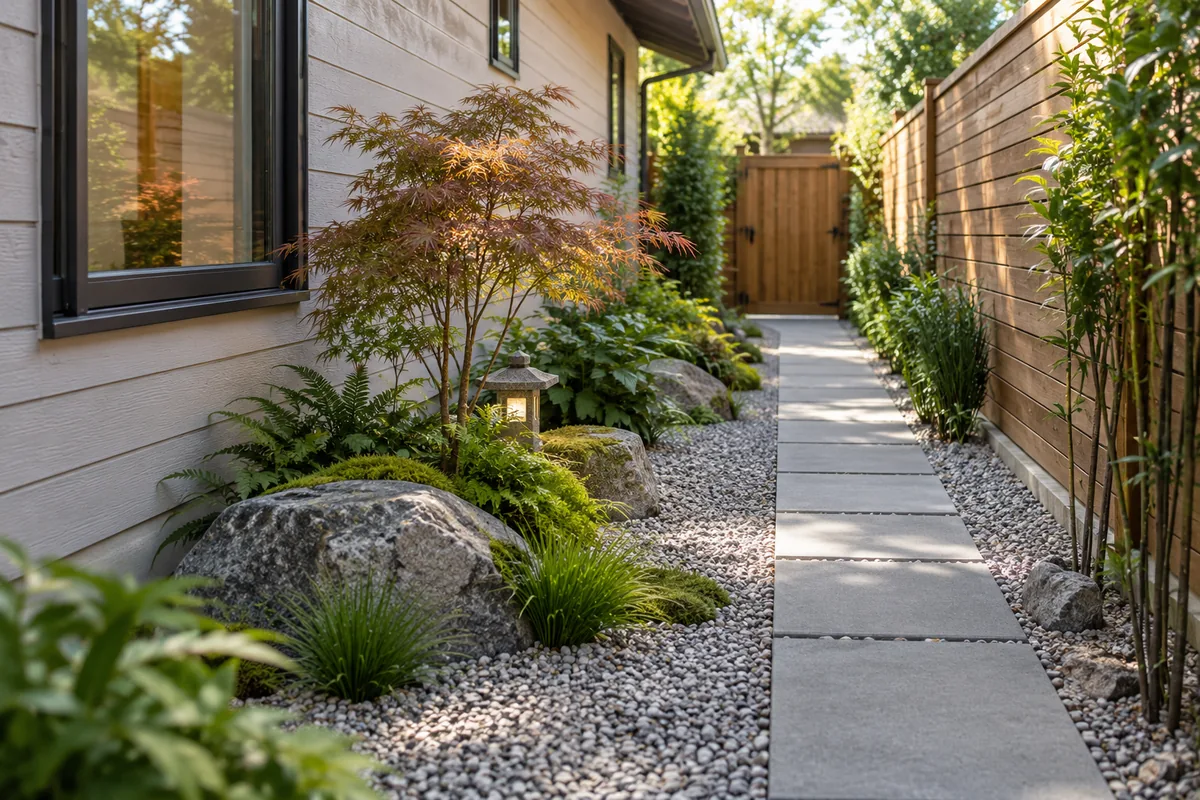
Zen side yard ideas for a viewed composition beside the route
Explore zen side yard ideas for a deliberate window view, contained gravel, quiet planting, and composed stones placed beside essential service circulation.
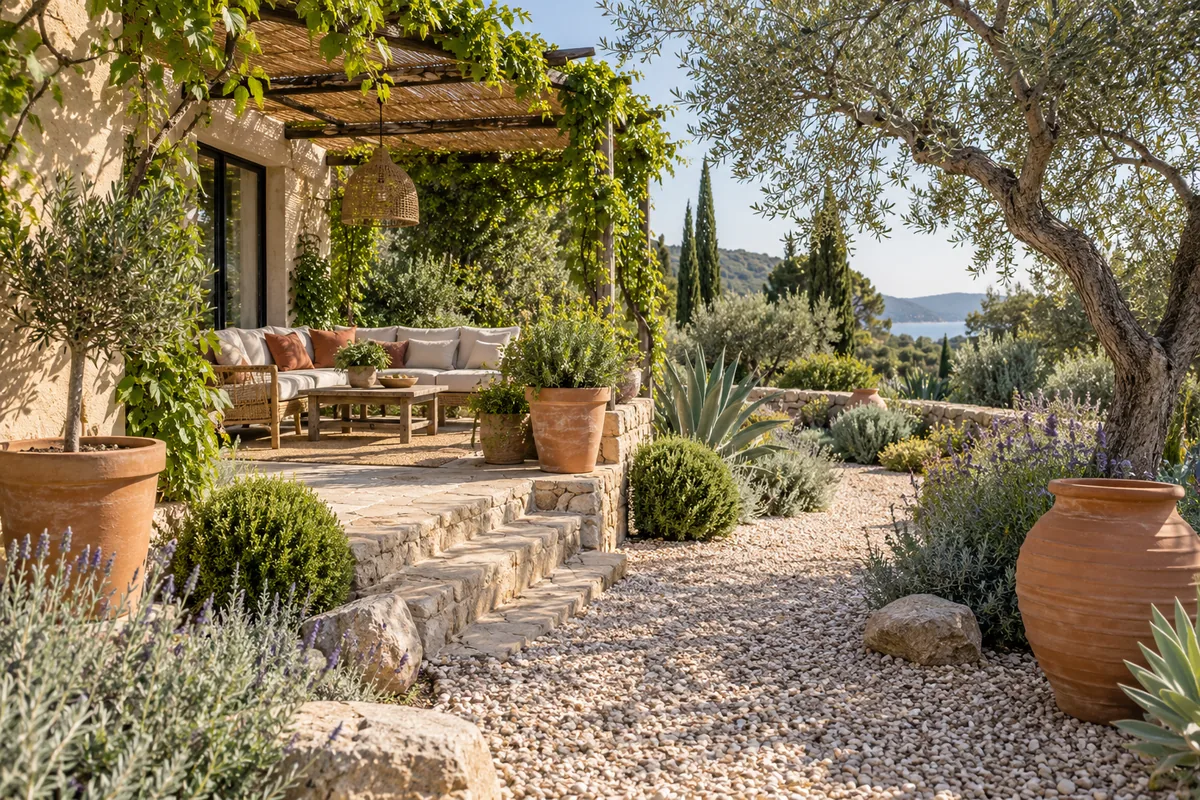
Mediterranean garden style: shade, gravel, and warm color
Understand Mediterranean garden style through shade, gravel, clay pots, and silver foliage, with practical ways to adapt the visual language to local climates.
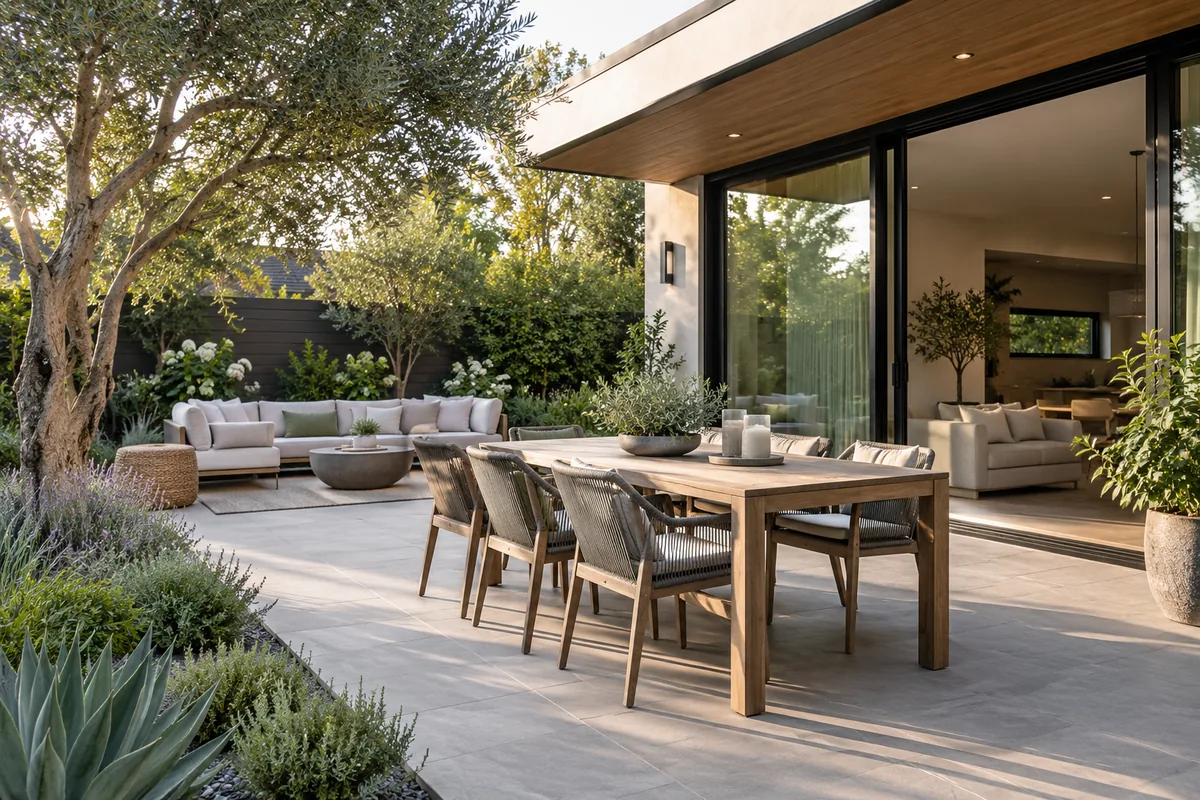
Modern patio ideas for clear furniture layouts and calm materials
Explore modern patio ideas for restrained surfaces, usable furniture, clear door connections, suitable containers, and deliberate shade and evening light.