
By AI Landscape Design Team · Editorial policy
Zen backyard ideas that reserve a quiet place to look
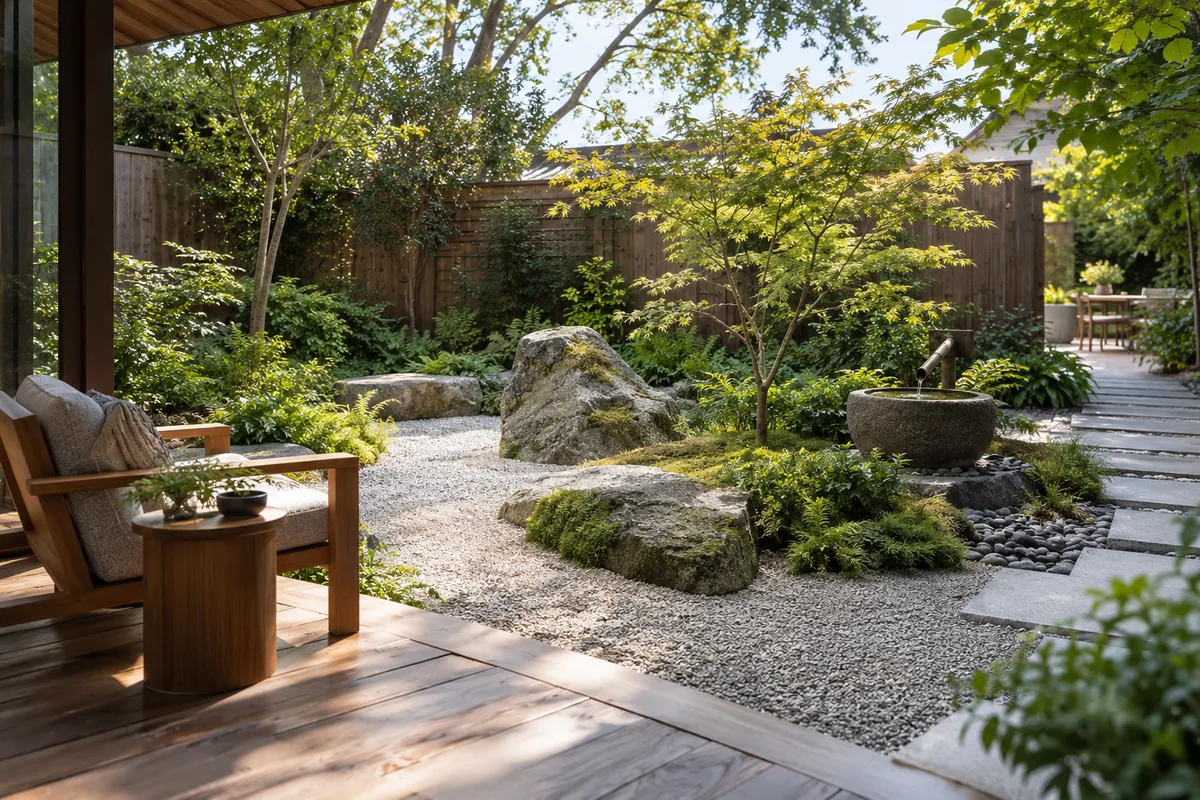
Zen backyard ideas work best as a deliberate quiet view within a garden that still supports everyday activities. Position stones, gravel, and restrained planting around a chosen seat or window, then keep dining, play, and service movement outside the ornamental composition. A smaller coherent arrangement is usually more useful than converting all usable ground into a surface that must remain undisturbed.
Published · 6 min read
Key takeaways
- Choose the view before selecting decorative elements.
- Keep ornamental ground separate from active circulation.
- Adapt plant roles locally rather than copying a cultural plant list.
How can a quiet composition coexist with daily backyard use?
Pick the moment and place where the household wants a quieter view. A seat near the house may be used often, while a remote corner may look appealing but rarely be visited. Observe the background from that seat and identify equipment, bright surfaces, or active routes that interrupt it. Keep those practical functions accessible even if their position is adjusted.
The garden can borrow principles of composed stone, open ground, and restraint without pretending to reproduce a historic Japanese dry garden. Start with one clearly defined area beside a functioning outdoor room. Plan a normal route for carrying food and reaching storage so ornamental gravel does not become a shortcut. If children or pets use the backyard, their activity should be included from the start.
Eight ways to reserve a considered view
- Select a seat before composing stones. Place temporary furniture where you expect to sit, then test the garden from eye level. It works when the property offers a useful background beside an existing room. Observe how furniture and plants affect the view as well as the ornamental area itself. A stone group arranged only from above may not read from the intended seat.
- Give dining a separate working surface. Keep the table on a dependable surface with clear circulation rather than in the center of the raked area. This suits a household that wants both meals and a quiet view. Relate the finishes without making them identical. The distinction protects the composition while allowing ordinary movement to continue without special instructions.
- Contain gravel outside the main route. Use a readable boundary around an ornamental field where it can be maintained comfortably. It fits a backyard with enough room beside seating for a viewed composition. Assess material glare, debris, and drainage locally. Keep loose aggregate away from routes where accessibility or active play requires a different surface.
- Compare stone groups against empty ground. Choose relationships among shapes rather than a collection of accent rocks. This works with a quiet wall or planting backdrop. Heavy installation and stable placement require experienced professional review. Preserve enough surrounding space for the grouping to be read and do not use ornamental stones as an informal retaining system.
- Use a suitable plant frame. A restrained locally appropriate shrub group can support the edge of the view without filling all the open ground. It fits sites where planting also needs to relate the composition to the broader yard. Check mature width and access for pruning. Moss and Japanese-associated foliage are references, not proof of suitability in the actual light and soil.
- Simplify the background material. A plain existing fence or carefully chosen finish can make stone and planting differences more visible. This suits a yard where many competing boundary colors interrupt the view. Check property rules before changing shared or regulated elements. Storage should remain reachable; an attractive screen that makes daily tasks awkward usually fails as part of the complete garden.
- Plan an ordinary activity zone nearby. Keep play or pets on an appropriate surface with room for their real movement. It works when the household will not keep the entire yard quiet. Do not rely on asking children or animals to preserve a raked pattern. A calm viewed area and an active open space can coexist when their boundaries are understandable.
- Use evening light sparingly. Illuminate the path back to the house and any essential level change before considering an ornamental accent. It fits a sitting area used after dusk. Licensed professionals must review wiring and code requirements. Check the view from the seat so glare does not overwhelm the stone composition or disturb neighboring windows.
Which local checks should accompany the quiet palette?
Plant candidates need USDA hardiness-zone, sun, soil, moisture, wind, and regional invasive review. A regional nursery can help identify a suitable low layer or background form. Check ASPCA toxicity information where pets have access and keep sharp growth outside children's routes. A plant that looks calm in a photograph can still outgrow the chosen space or need unsuitable care.
Read the zen style guide for terminology and the gravel path guide for material questions. Site drainage, grading, walls, heavy stones, structural work, and electrical installations require licensed local assessment. Contact 811 before digging in the United States and arrange additional private utility locating when necessary. The composition's visual balance cannot establish physical stability, construction details, or water behavior on the property.
How do you keep the view quiet without making care difficult?
Locate maintenance tools where they are convenient and set a manageable expectation for leaf removal and raking. Nearby trees, pets, and wind may disturb the surface; learn from a modest test area before expanding it. Keep plant access open and review the composition after mature growth changes what can be seen from the seat.
AILandscape's backyard tool can explore a zen-inspired visual arrangement from your property photo. Use it to compare the quiet area's position relative to dining and movement, then verify measurements, plants, drainage, and installation with local specialists. The generated image is a discussion reference. A lantern, pond, or altered building in the result is not a requirement and may add work the household never wanted. Preserve the daily garden first, then refine the considered view within it.
Frequently asked questions
Can a zen-inspired backyard also support active play?
Yes, when the quiet ornamental area and active space have clear roles. Keep raked or delicate surfaces outside play routes and choose appropriate surfaces for everyday movement. The viewed composition can remain part of a useful family garden without requiring the whole yard to stay undisturbed.
Do I need a remote meditation corner?
Choose a place the household will actually use. A seat or window near the house may provide a better regular view than a distant corner. Test the position and background before buying stones or building a separate area with no clear connection to daily life.
Is a water feature necessary for the quiet effect?
Water is optional. A dry composition can use gravel, stone, planting, and open space without pumps or a pond. Consider maintenance, safety, power, and local construction requirements separately before adding water simply because it appears in an inspiration image.
Sources
Related reading
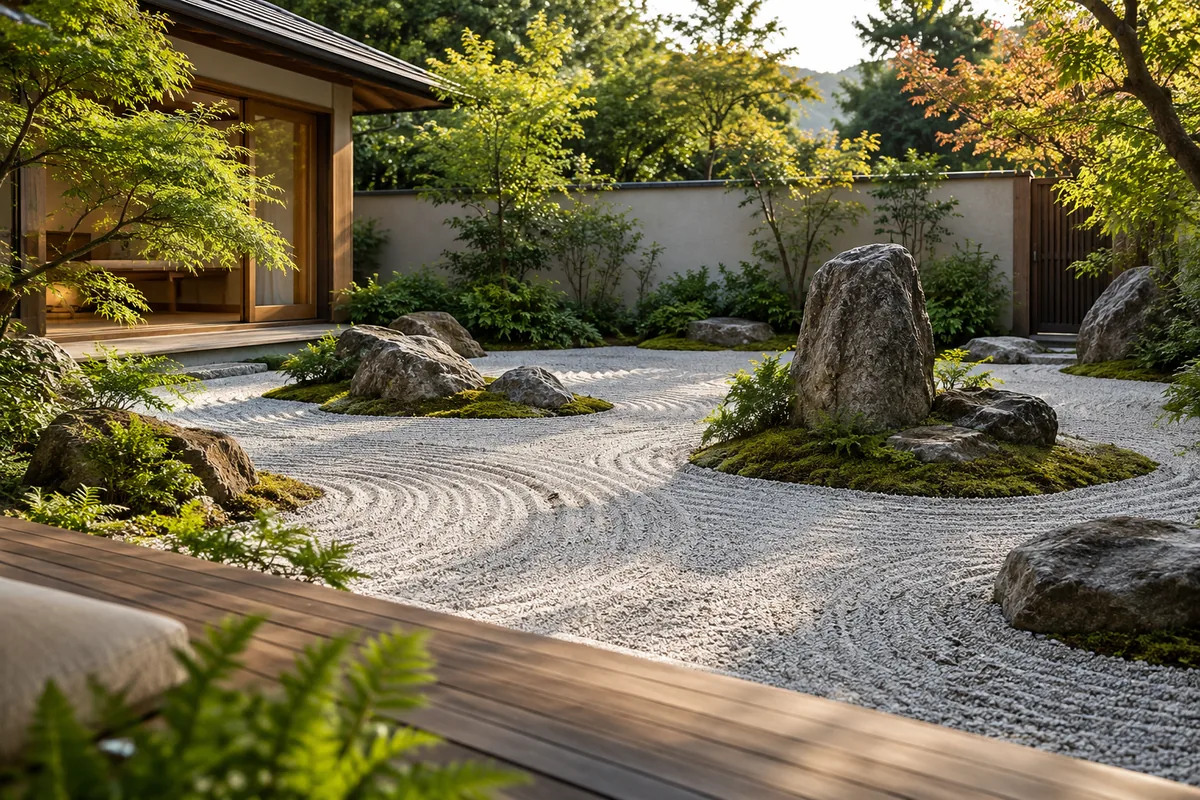
Zen garden style: stones, gravel, and deliberate space
Learn how zen garden style uses composed stones, raked gravel, restrained planting, and a chosen viewpoint, with practical limits for residential gardens.
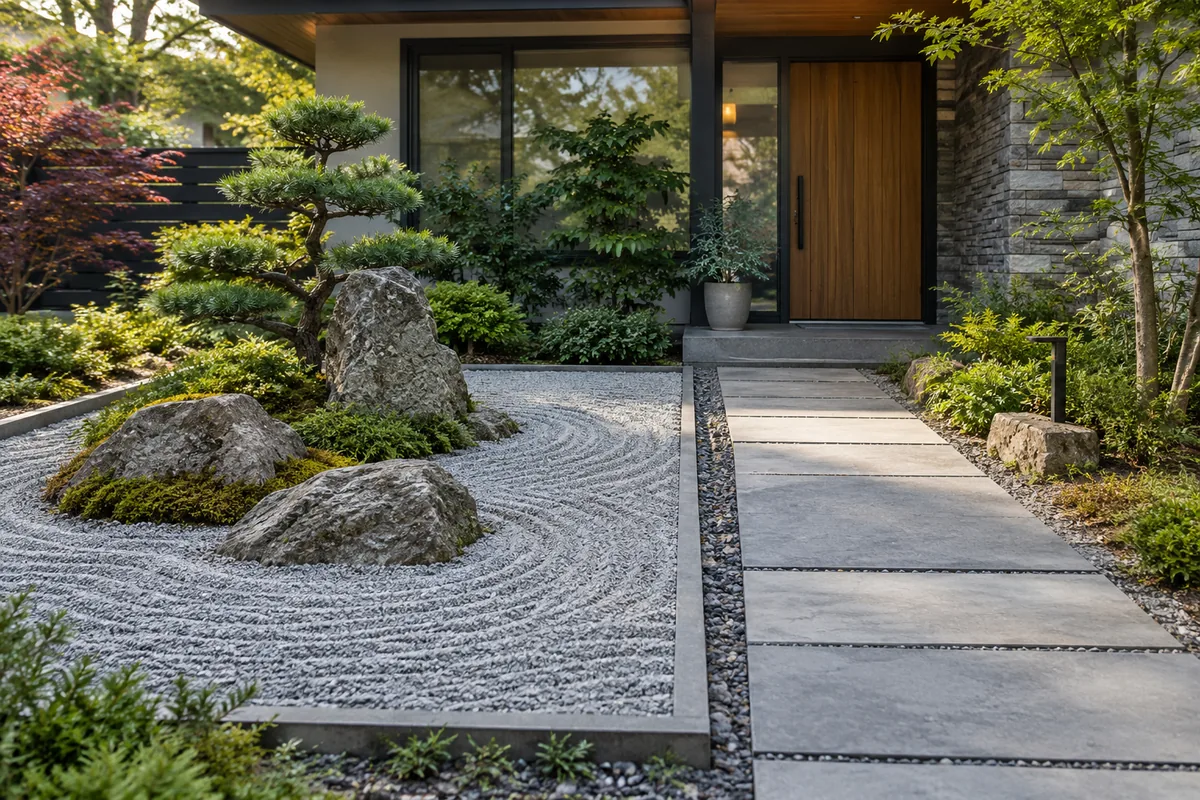
Zen front yard ideas: a quiet view beside a usable entrance
Explore zen front yard ideas using a composed stone view, restrained gravel, simple planting, and clear arrival routes beside a usable entrance.
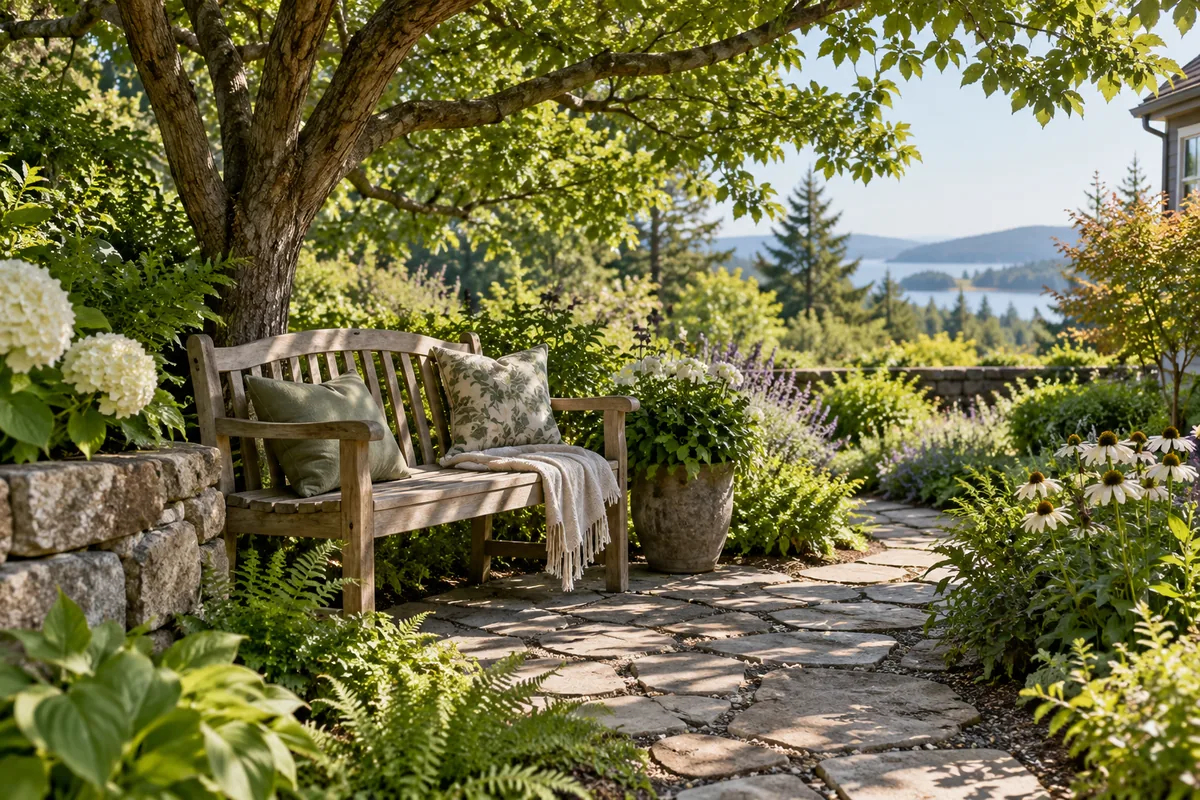
Garden Bench Ideas That Give People a Reason to Sit
Find garden bench ideas for shade, views, and everyday pauses, with practical guidance on seat fit, materials, access, maintenance, and stable placement.
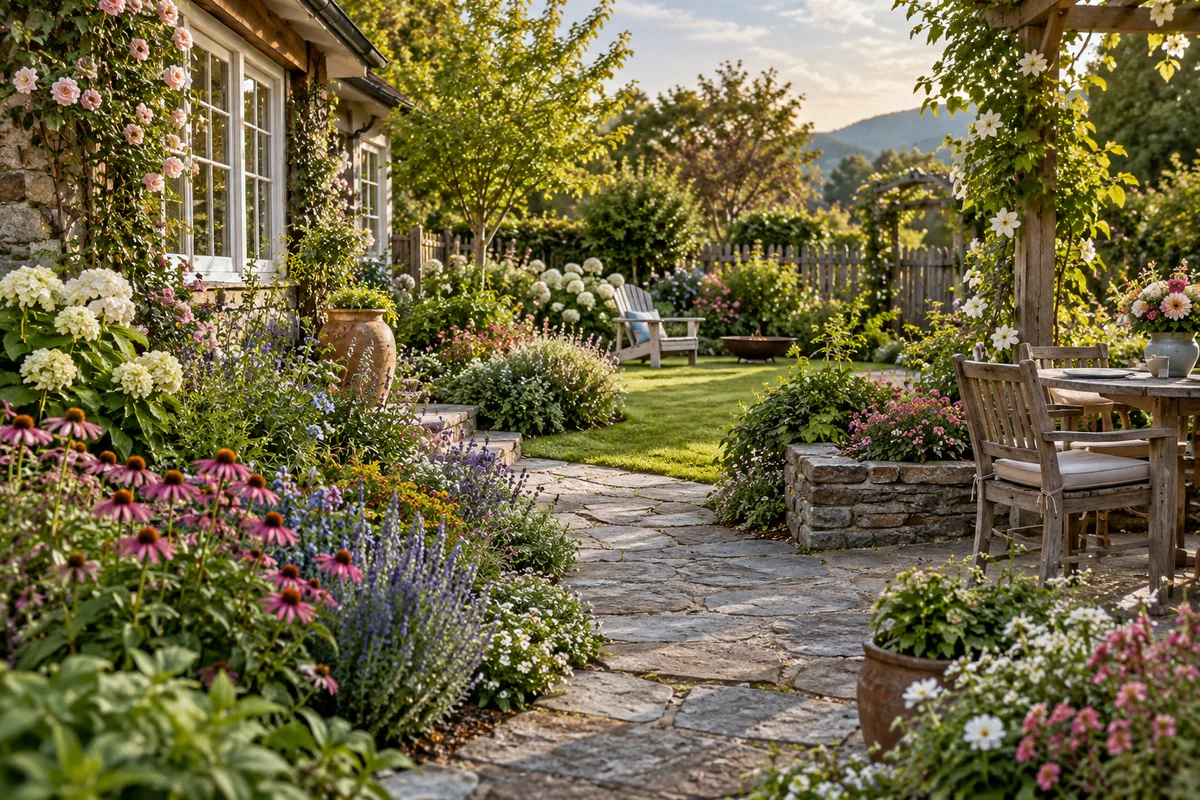
Cottage backyard ideas for flowers, seats, and seasonal life
Explore cottage backyard ideas for layered flowers, comfortable seats, connected borders, productive corners, and practical access through seasonal planting.
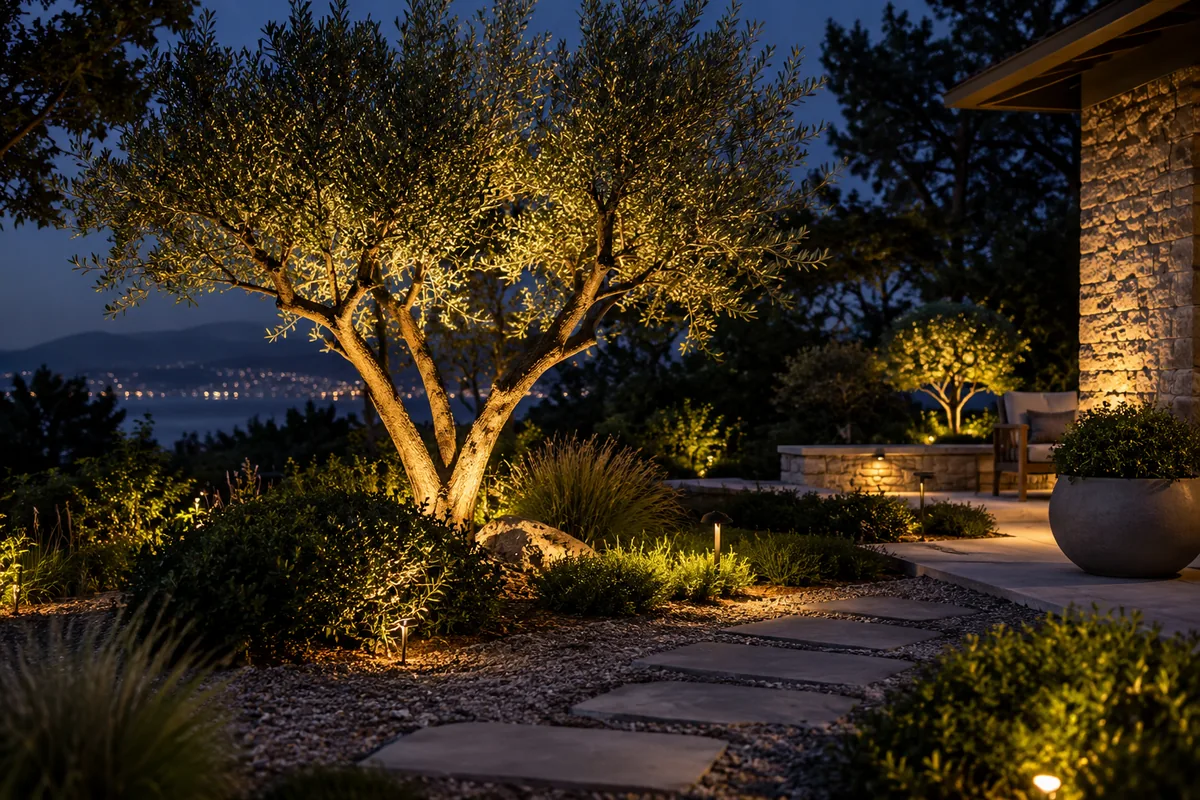
Landscape Accent Lighting That Respects the Night View
Plan landscape accent lighting around selected features, controlled glare, useful viewing positions, appropriate fixtures, and professional electrical review.
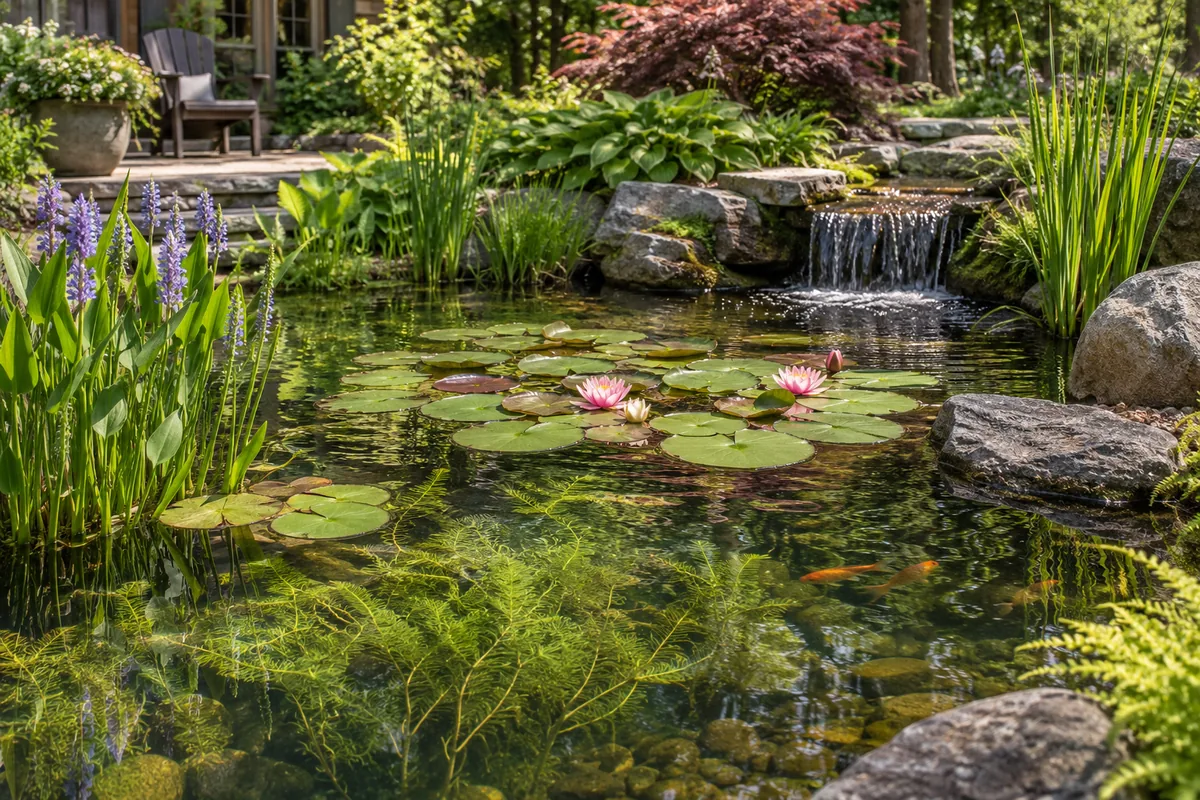
Pond Plants Selected for Roles and Local Conditions
Learn how pond plants fit your yard, with practical material, placement, upkeep, and safety questions to review before choosing a visual direction.