
By AI Landscape Design Team · Editorial policy
Zen front yard ideas: a quiet view beside a usable entrance
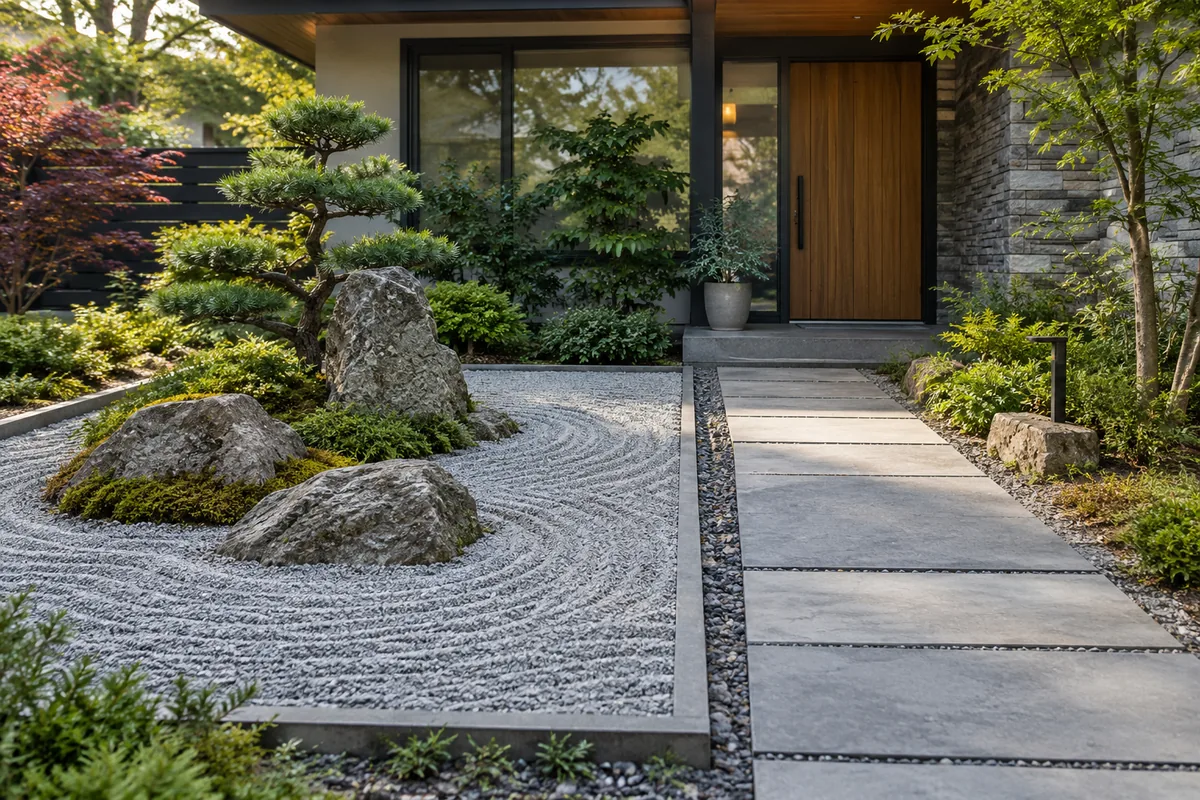
Zen front yard ideas should separate a quiet ornamental view from the practical route to the door. A contained gravel area, deliberate stone grouping, and restrained planting can establish that view while visitors, deliveries, and parked cars remain easy to accommodate. Choose the viewpoint first and keep essential movement outside any surface intended for raking.
Published · 6 min read
Key takeaways
- Place the composed view beside the arrival route.
- Test stone relationships from the house and the sidewalk.
- Reserve ornamental gravel for a maintainable area with clear boundaries.
How does a front entrance change the dry-garden approach?
A front yard is seen by passing people as well as from inside. It also has jobs a secluded ornamental garden may not have: showing the address, accommodating deliveries, and preserving driveway visibility. Select one principal view, then make sure the secondary views remain legible. A composition that looks quiet through a window should not cause confusion for a first-time visitor.
Check existing trees, service covers, and the gate before choosing the ornamental area. Local rules may affect fence treatment and street-facing changes. Avoid spreading a raked field across the route to a mailbox or front door. The frontage can borrow the relationship between stone, space, and planting without claiming to reproduce a historical temple garden or filling the site with decorative symbols.
Eight restrained ways to compose the frontage
- Choose a window as the primary viewpoint. Place the ornamental composition where it will be seen from a frequently used room. It suits a frontage with a clear indoor view and usable space beside the approach. Test the view at seated height. The front door route still needs its own obvious surface so a pleasing window composition does not confuse arrivals.
- Contain a gravel field beside the route. Use a defined edge to distinguish decorative gravel from the walking surface. This works where raking and leaf collection can be done without crossing fragile planting. Check aggregate glare outdoors and discuss drainage and access with local professionals. A contained composition can express the idea without covering the whole front yard.
- Group stones by their relationship. Compare a small set of shapes against the open ground and facade instead of buying unrelated accent rocks. It suits a quiet background where the stones can be read from the intended position. Heavy placement and stability require experienced handling and professional assessment. Keep stones away from door swings, vehicle movement, and emergency access.
- Provide a plain planting backdrop. A locally suitable shrub mass can quiet a busy fence or wall behind the main view. This fits a frontage where the background currently competes with the composition. Check mature size and leave inspection access. Plants should perform that visual role without being selected solely for an association with Japan.
- Use ground texture selectively. A suitable low ground layer can contrast with stone where its growing conditions are verified. This is useful at the edge of the composition rather than across a dry, exposed site by default. Moss is a reference, not an obligatory purchase. Ask regional horticultural advice which alternatives fit the actual light and moisture.
- Make the house number part of the quiet background. A simple visible address treatment can keep the view uncluttered while supporting arrivals. It suits a frontage whose ornaments currently hide practical information. Review local requirements and test visibility with a car parked. Do not sacrifice legibility at dusk for a subtle tone-on-tone effect.
- Keep the gate visually uncomplicated. A plain boundary can frame the composition without several competing ornamental forms. It works where a functioning gate or fence already exists. Preserve its opening and check neighborhood restrictions before replacement. A decorative screen should not hide utilities or make the actual entrance seem like a secondary service route.
- Limit night lighting to useful cues. Highlight the approach and any necessary level change rather than flooding the gravel and stones. It suits a frontage that should feel calm after dark. Licensed installers must assess wiring and local requirements. Observe the lights from the road and interior so a dramatic stone shadow does not come with unwanted glare.
Which living and built elements need verification?
Check the USDA hardiness zone along with soil, exposure, moisture, and regional invasive guidance when selecting the background and ground layer. Mature growth can change the carefully composed view, so allow space rather than relying on continual cutting. Pet-accessible planting needs separate ASPCA toxicity screening. A plant's visual association with a style does not establish suitability or safety.
Discuss stone handling, surface access, grades, and drainage with licensed local professionals. Contact 811 before excavating in the United States, and identify private service lines through the appropriate process. The zen style guide explains the viewing principle; gravel path considerations help distinguish ornamental aggregate from a working route. Neither reference can establish construction specifications for the front of your particular house.
How do you maintain a calm view on a busy frontage?
Street-facing gravel catches ordinary evidence of use: leaves, windblown debris, and marks from animals or visitors. Plan how those will be removed and where the rake will be stored. If repeated disturbance makes the ornamental field frustrating, reduce its size or change its position rather than demanding that all household movement adapt to it.
You can use AILandscape's front yard tool to explore a zen-inspired visual arrangement on a property photo. Review the output for entrance clarity before considering decorative balance. It is a visual concept; confirm stone stability, measurements, planting, water movement, and construction locally. A generated lantern or fountain is optional imagery, not a requirement. The useful outcome is an understandable entrance with a deliberate quiet view beside it.
Frequently asked questions
Must a zen front yard have raked gravel?
Raked gravel is one possible reference, not an obligation. A restrained stone view with locally suitable planting can use the same emphasis on space and viewpoint. Choose gravel only where its maintenance, drainage, and separation from the essential entrance route fit the household.
Can visitors walk through the ornamental area?
An essential route should be clearly designed for its users rather than inferred from a stone-and-gravel composition. Keep ornamental areas beside that route when possible. Review access needs and surface stability locally, particularly where visitors may have difficulty with loose or uneven material.
Should I add Japanese-looking ornaments?
Additional objects are optional and can distract from the relationship between ground, stones, and planting. Establish the main composition first and assess whether anything else has a useful role. Describe the garden as a residential interpretation rather than assuming accessories establish cultural authenticity.
Sources
Related reading
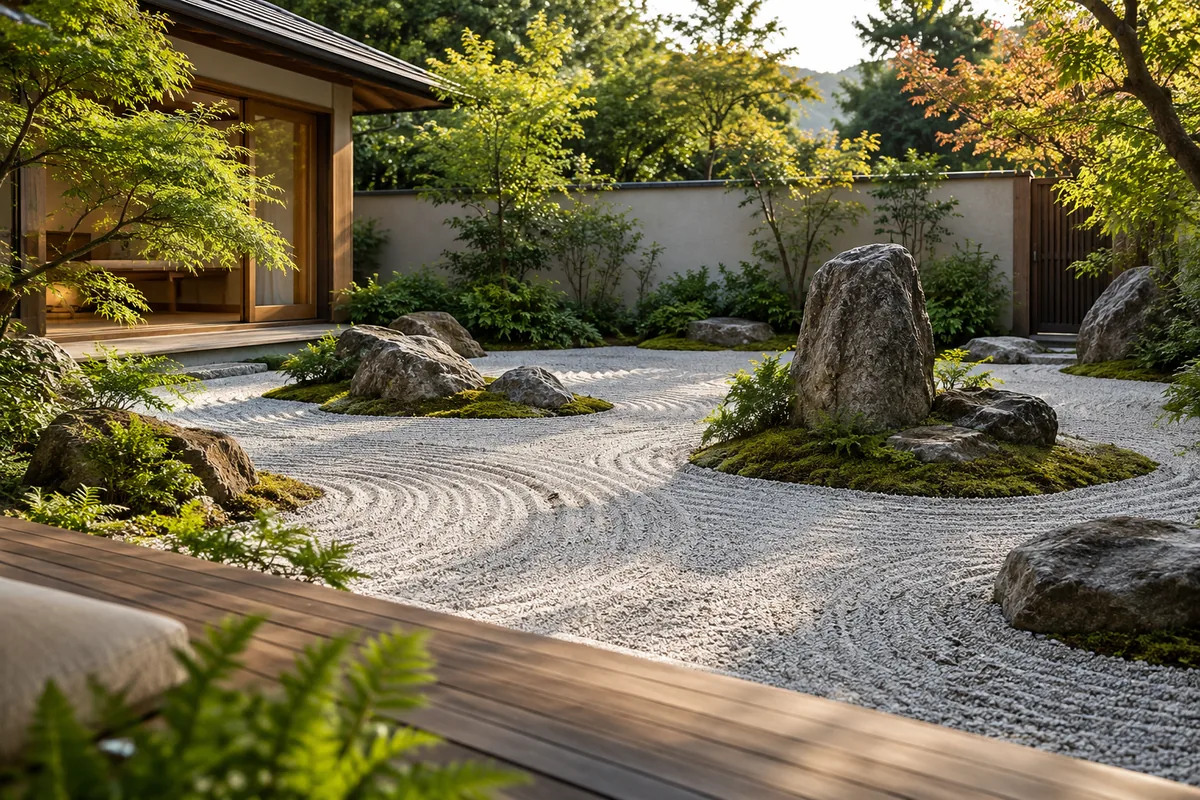
Zen garden style: stones, gravel, and deliberate space
Learn how zen garden style uses composed stones, raked gravel, restrained planting, and a chosen viewpoint, with practical limits for residential gardens.
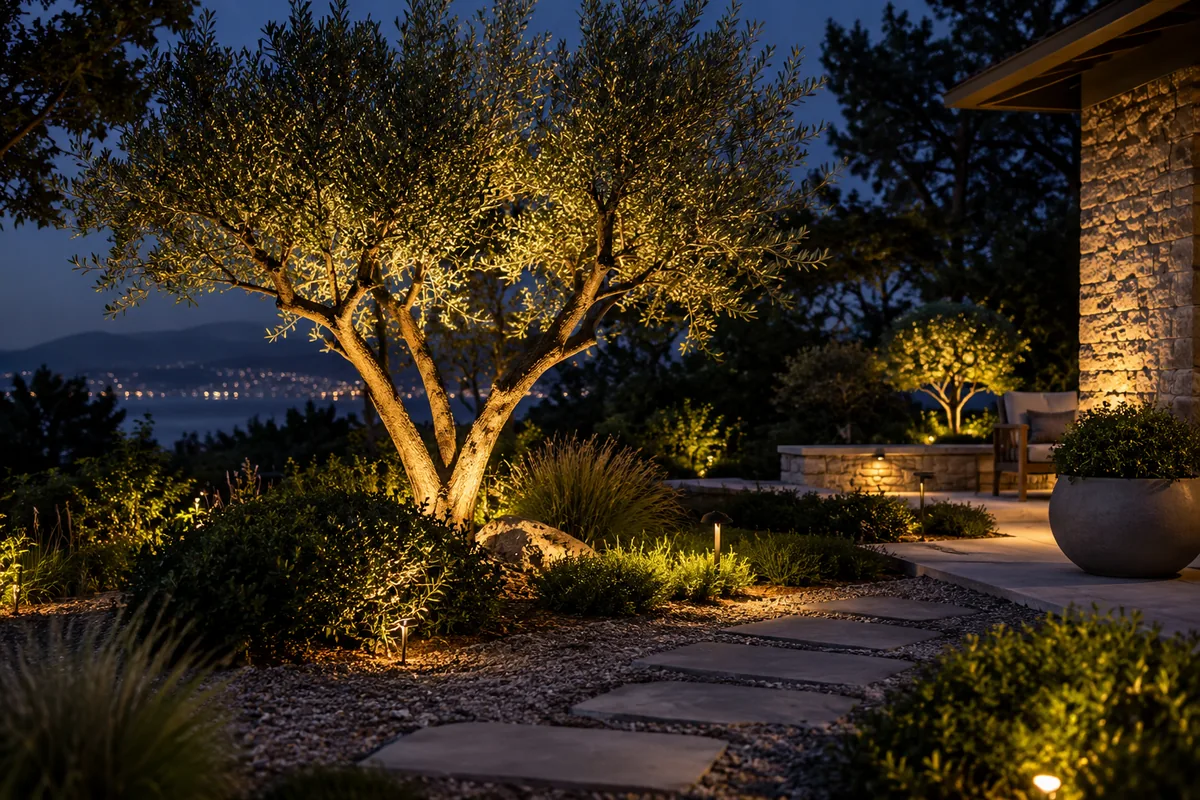
Landscape Accent Lighting That Respects the Night View
Plan landscape accent lighting around selected features, controlled glare, useful viewing positions, appropriate fixtures, and professional electrical review.
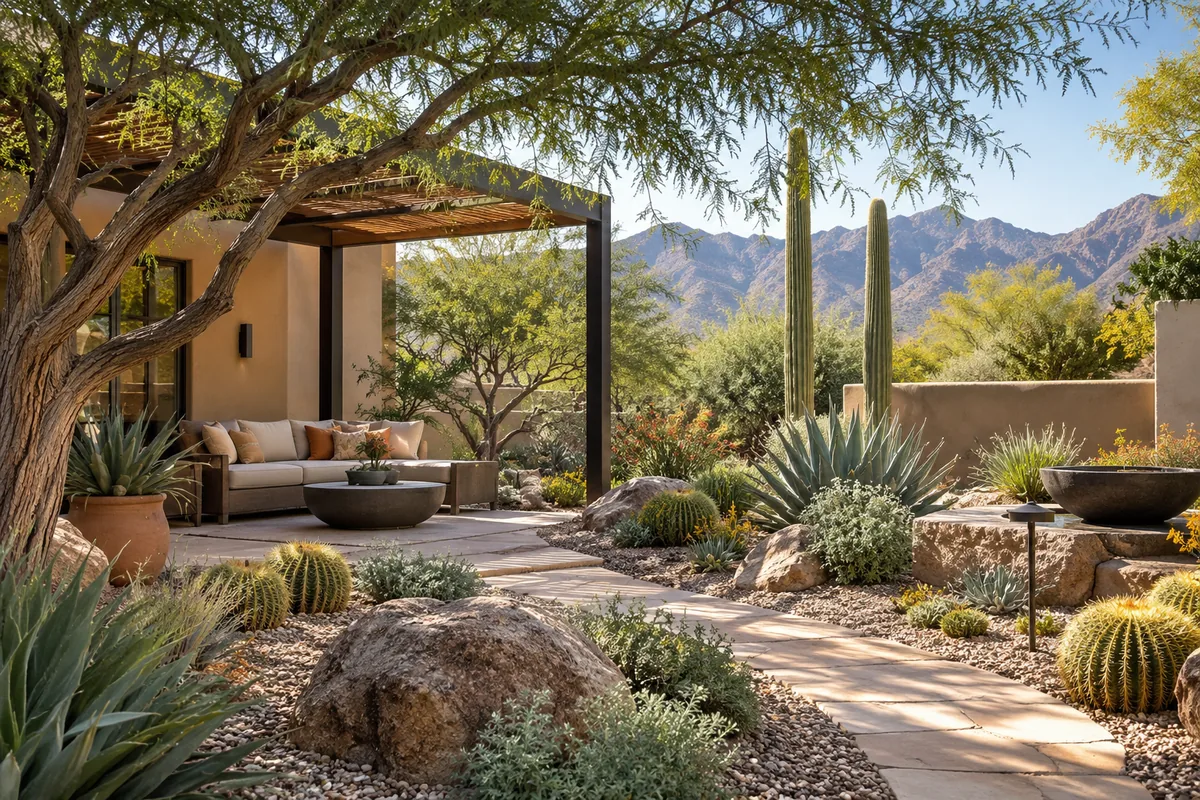
Desert landscape style: shade, stone, and plant form
Understand desert landscape style through plant form, mineral surfaces, useful shade, and heat-aware layouts, while separating its appearance from xeriscaping.
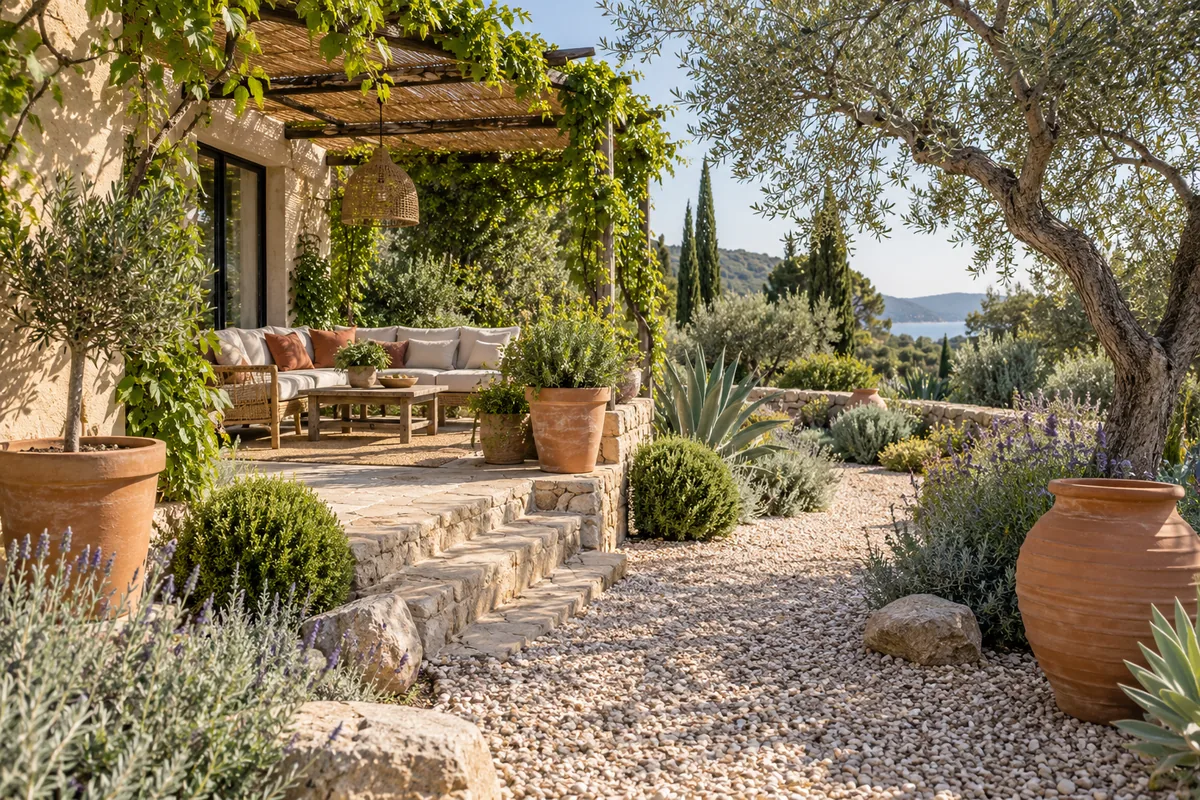
Mediterranean garden style: shade, gravel, and warm color
Understand Mediterranean garden style through shade, gravel, clay pots, and silver foliage, with practical ways to adapt the visual language to local climates.
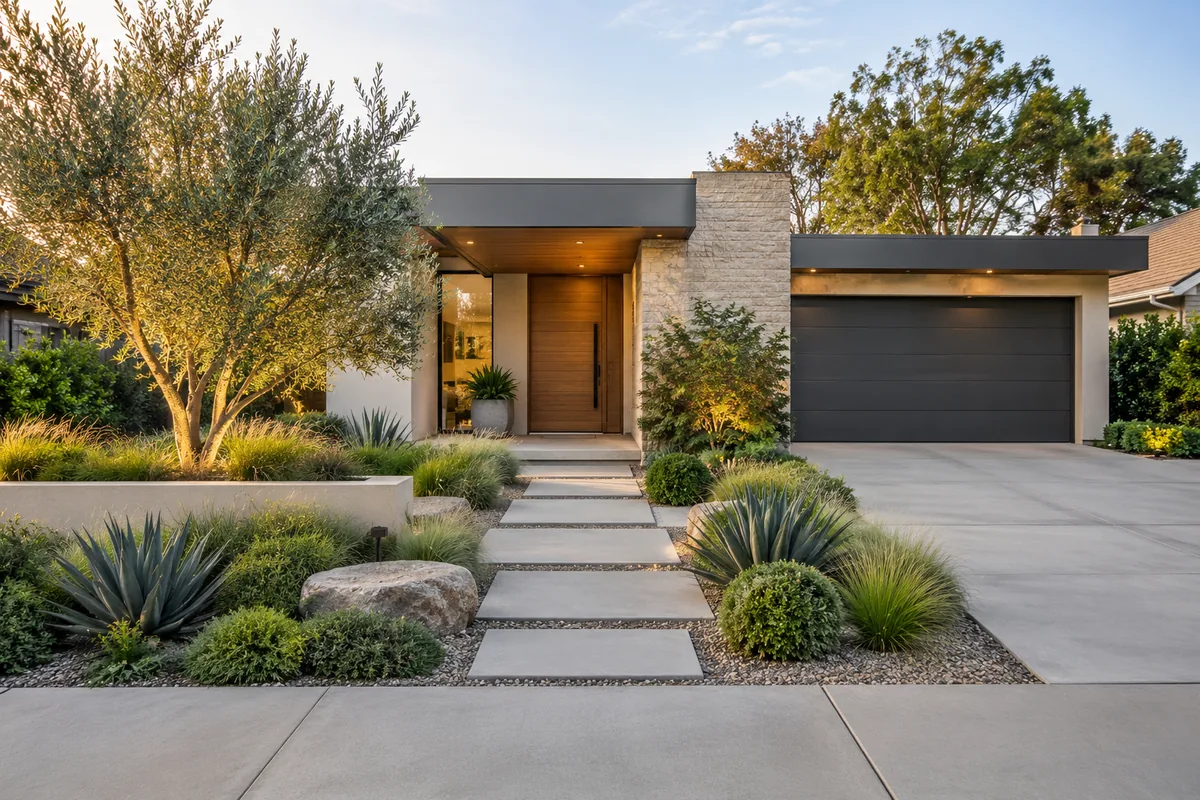
Modern front yard ideas for a clear, composed entrance
Explore modern front yard ideas for clear entrances, repeated planting, restrained materials, readable house numbers, and practical maintenance from the street.
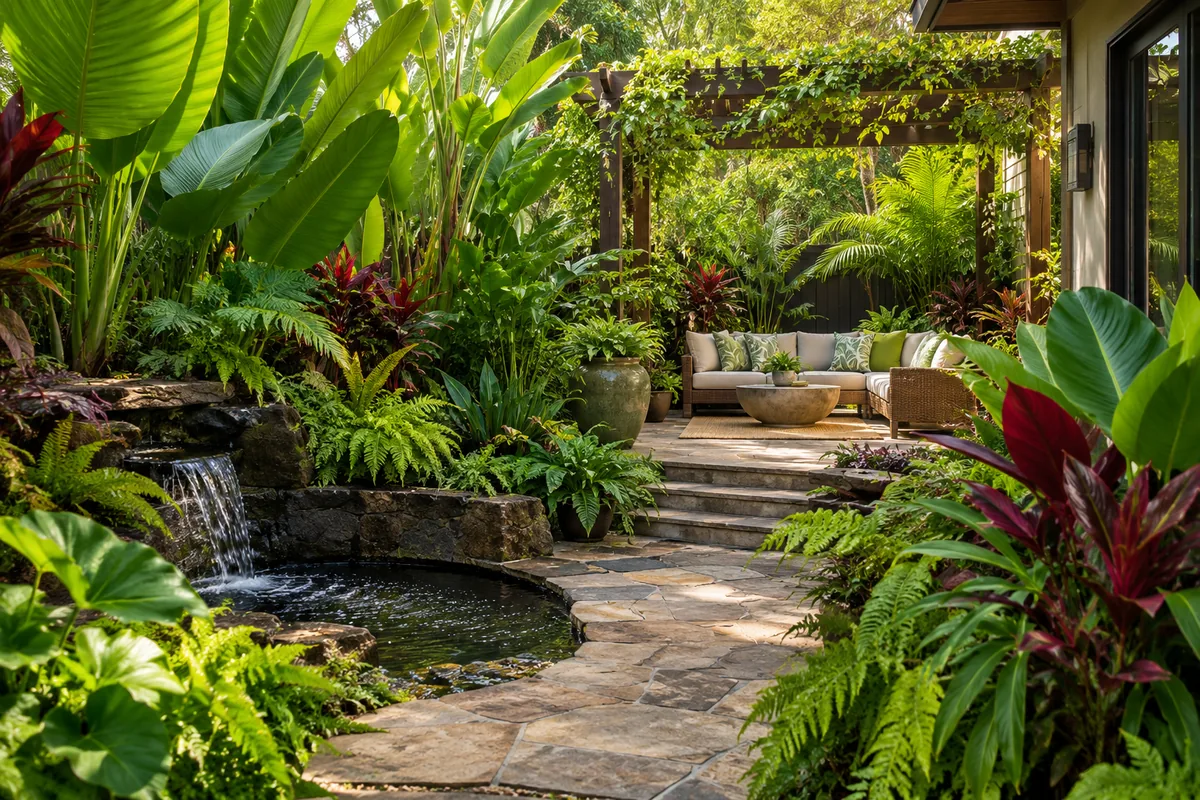
Tropical landscape style: foliage, layers, and shelter
Explore tropical landscape style using large leaves, layered greenery, sheltered seating, and container strategies adapted to local weather and care routines.