
By AI Landscape Design Team · Editorial policy
Modern patio ideas for clear furniture layouts and calm materials
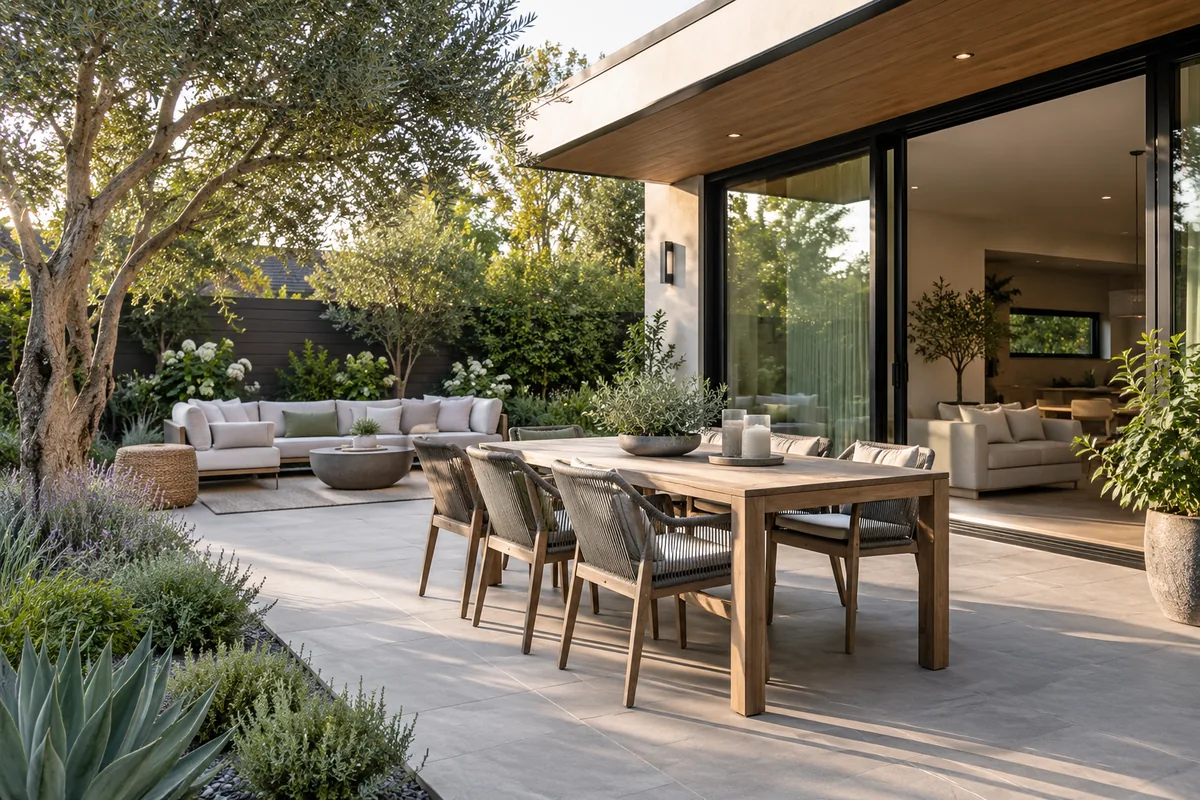
Modern patio ideas should make furniture, circulation, and the connection to the house feel deliberate. Use a restrained surface palette, clear open areas, and a few suitable planting roles around the occupied room. Test the table, chairs, doors, and shade before adding ornamental details; a clean-looking terrace still needs space for ordinary use and practical maintenance.
Last updated · 6 min read
Key takeaways
- Test furniture and door movement before fixing the room outline.
- Connect surface choices to the house without assuming equal performance.
- Keep containers and shade outside useful circulation.
What needs to fit before the visual palette?
Set out the furniture the household actually uses. Pull chairs back, open doors, and carry a tray between the house and seat. Mark where the route becomes awkward and where someone can pause without blocking it. Those observations should guide the arrangement more than an empty architectural photograph. Clear modern space has to remain useful after the furniture arrives.
Look at the interior floor and facade as material cues rather than products to duplicate automatically outdoors. Slip, weather, level changes, and water movement need their own review. A roof or balcony terrace also needs structural loading and waterproofing assessment from qualified professionals before heavy pots or fixtures are proposed. Decide what can remain from the sound existing terrace before specifying a completely new finish.
Eight ways to make a modern terrace work
- Arrange the main table around a real route. Put dining where chairs can move and food can arrive without crossing the lounge footprint. It suits a patio used regularly for meals. Test actual furniture before defining a geometric surface. A centered table that blocks the only door is less useful than an offset arrangement that makes circulation clear.
- Keep one deliberate open area. Preserve space for turning, passing, or changing furniture rather than filling every gap with a pot. This works with a strong rectangular room or several access points. Confirm dimensions directly. Open space is part of the composition when it enables an ordinary task; it should not become extra pavement without a household purpose.
- Use a quiet paving relationship. Suitable concrete pavers or another restrained finish can relate the terrace to the facade. It fits a house whose material palette is already expressive. Compare wet and dry samples, grip, repair, and maintenance with a qualified installer. A visual link to the indoor floor does not mean the same material or level detail works outdoors.
- Repeat a limited container form. A coherent group of stable planters can mark the room edge outside circulation. This suits a terrace where planting must remain above ground. Verify planted weight, drainage, mature plant growth, and watering access. On elevated terraces, have structural and waterproofing conditions assessed before selecting heavy containers from a visual concept.
- Use plant texture as the contrast. A locally suitable grass or shrub role can soften a rigid surface without many decorative objects. It works when the room needs a planted edge. Check mature form, care, and seasonal appearance locally. A narrow container planted with a large candidate will not remain controlled simply because the initial image looks restrained.
- Place shade according to actual use. An appropriate umbrella or professionally reviewed pergola can improve comfort where the household sits at relevant times. It fits an exposed room with verified need. Test furniture placement and account for wind and anchoring. An overhead grid in a photograph is not proof of structural adequacy or useful shelter.
- Give lounge furniture its own orientation. A seat may face a planted view while the table aligns with the house. This works where both activities deserve room without duplicating surfaces. Preserve passage between them and choose furniture based on actual footprint. Modern order can accommodate different orientations when their relationship is clear rather than forcing every item onto the same axis.
- Make light support the occupied room. Illuminate doors and useful circulation before adding a planting accent. It fits evening dining or sitting. Licensed professionals must review electricity and requirements, with glare checked from seated positions and neighboring windows. Keep fixtures and any power connections serviceable rather than hiding them permanently inside the planted edge.
Which site and plant checks belong before purchasing?
Select actual plants with regional advice on USDA hardiness zone, light, soil, moisture, mature size, and invasive status. Containers change growing conditions and may require a separate seasonal plan. Check ASPCA toxicity information when animals can reach them, and review sharp leaves or unstable pots near children's movement. The container form and plant role must both fit the actual room.
The modern style guide explains composition, and concrete paver considerations support material review. Drainage, levels, structures, gas, electricity, elevated loading, and waterproofing need qualified licensed assessment. Contact 811 before US excavation and arrange private service locating where relevant. A terrace concept cannot supply dimensions or construction details. Practical findings should guide the visual choices before the layout is treated as a proposal to install.
How do you keep the modern room useful after installation?
Inspect surface edges, clean joints, and keep the door route clear as plants mature. Check shade at actual sitting times and store seasonal objects in a defined place. Furniture should not need moving every time someone waters a pot or opens a service access point. If the room only looks ordered when empty, revisit the layout.
AILandscape's patio tool can compare modern visual concepts on your photo. Use the image to discuss furniture relationships and planted boundaries, then confirm measurements, species, drainage, structural requirements, and construction locally. It is a visual exploration rather than evidence that depicted products fit or can be installed safely. Reject changes to doors or the building that were not intended. The successful modern patio keeps its clear organization during an ordinary meal, not only before the chairs are used.
Frequently asked questions
Should outdoor paving match the indoor floor?
A visual relationship can connect the spaces, but outdoor conditions need separate material and construction review. Grip, weather, drainage, levels, and repairs may require a different product or detail. Assess practical performance before treating a matching color as a complete decision.
How many containers belong on a modern patio?
There is no fixed count. Put containers where they define a useful edge or view without compromising furniture, doors, watering, or service access. A coherent modest group can contribute more than filling every gap, particularly when planted weight or elevated loading requires review.
Does a modern patio need symmetrical furniture?
Use symmetry only where it fits actual circulation and activities. An offset table or differently oriented seat may be more practical around doors and views. Clear relationships between furniture, open space, and planting matter more than forcing every item onto one centered arrangement.
Sources
Related reading
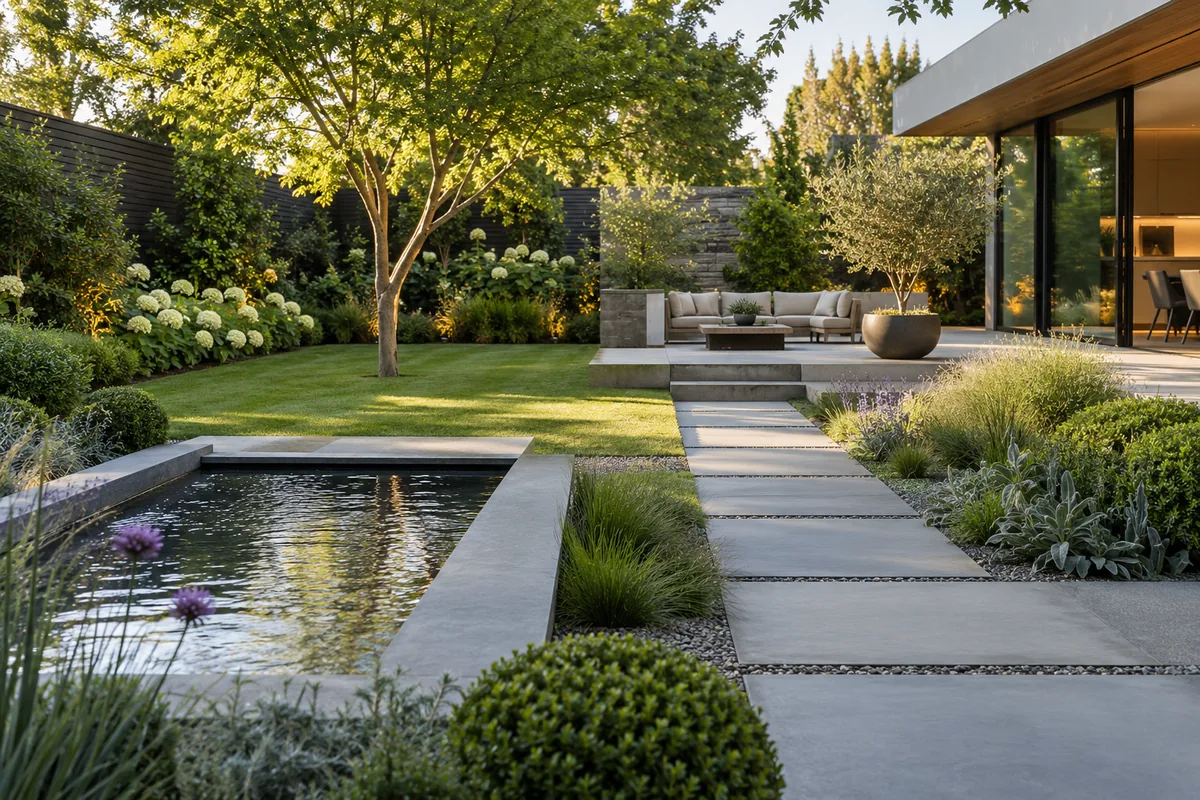
Modern landscape style: lines, space, and materials
Understand modern landscape style through clean lines, restrained materials, planting structure, and practical connections to contemporary architecture.
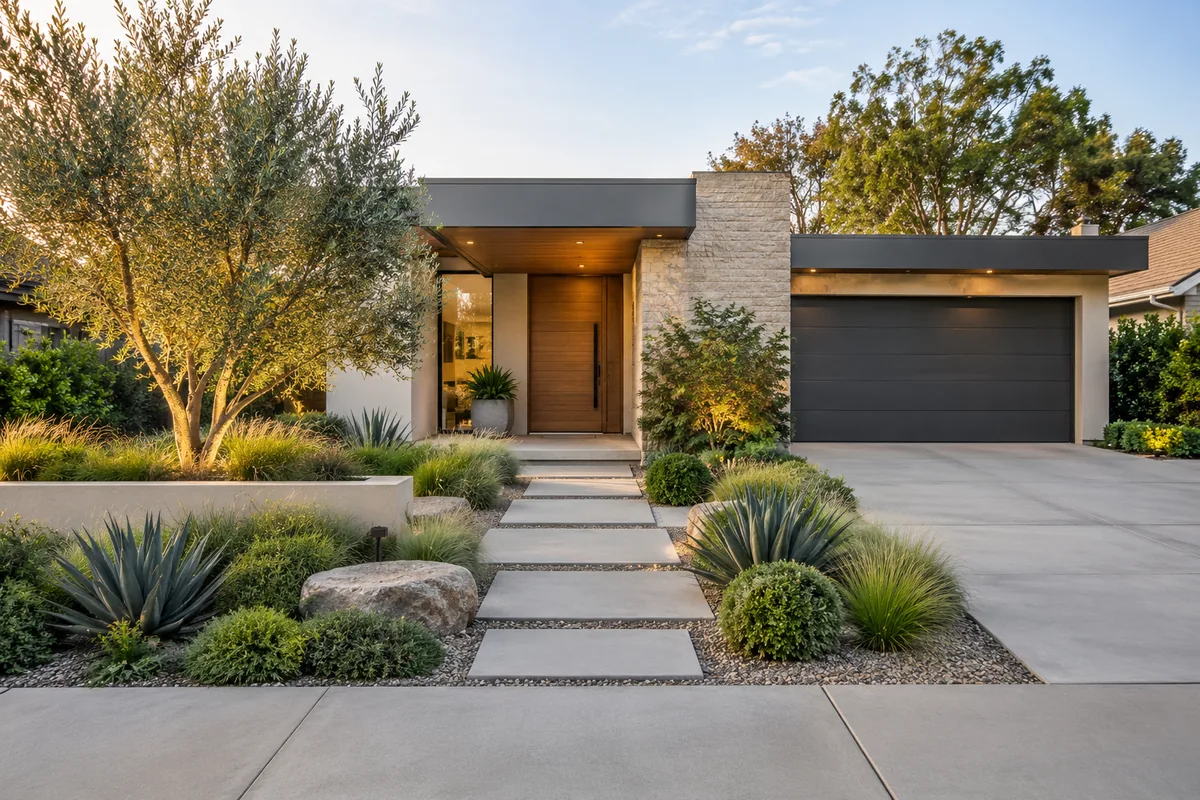
Modern front yard ideas for a clear, composed entrance
Explore modern front yard ideas for clear entrances, repeated planting, restrained materials, readable house numbers, and practical maintenance from the street.
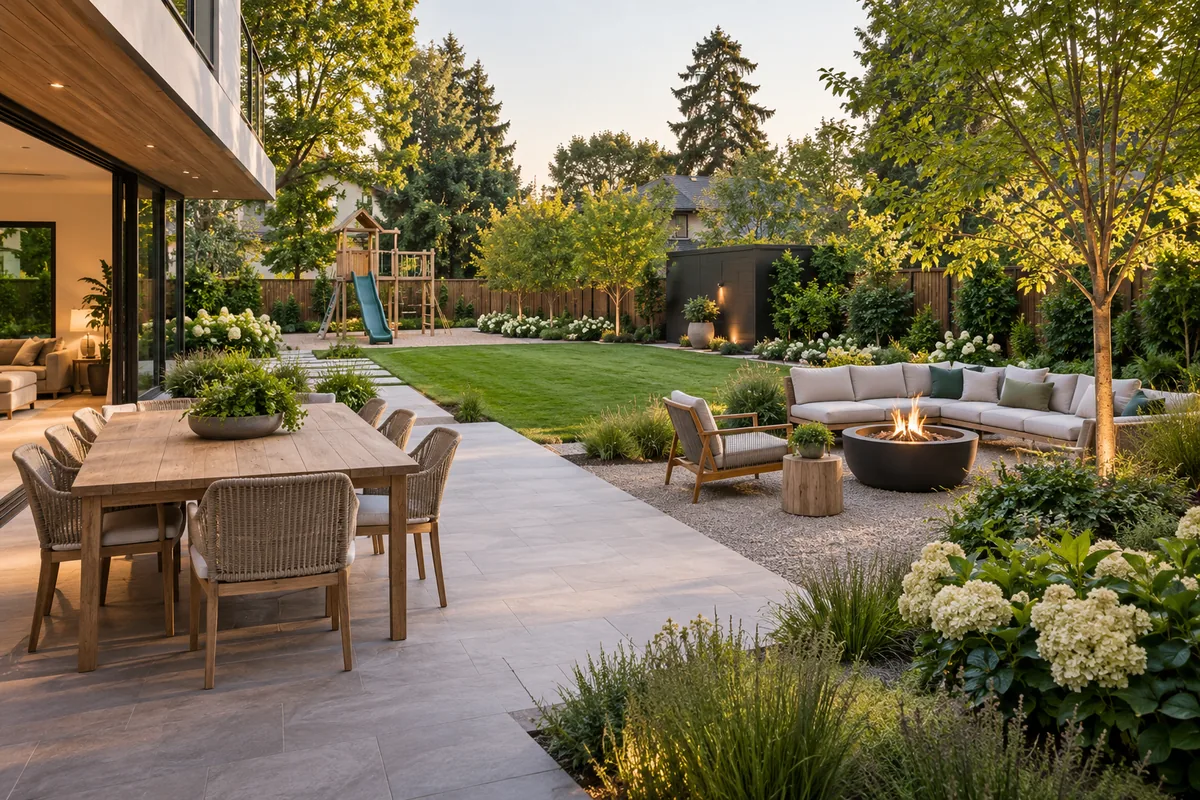
Modern backyard ideas organized around the way you live
Explore modern backyard ideas for activity zones, clean material connections, repeated planting, usable furniture layouts, and careful evening lighting.
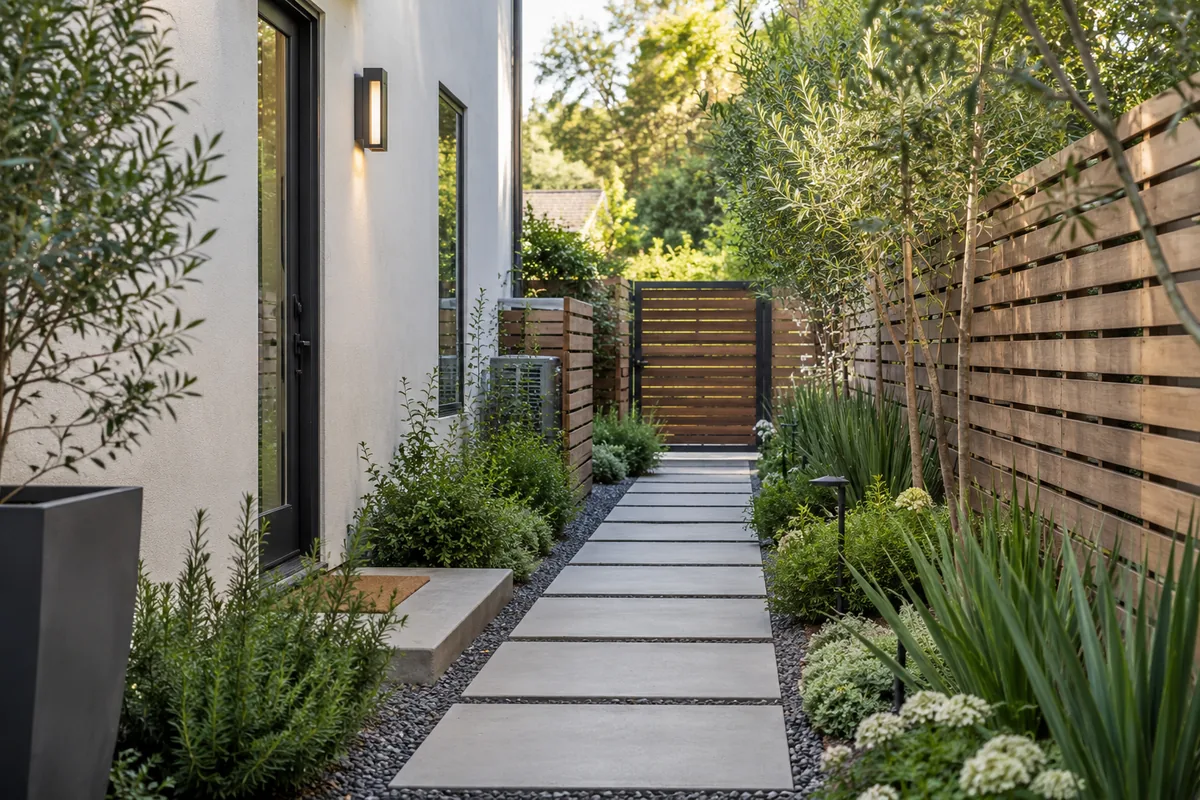
Modern side yard ideas that make service space deliberate
Explore modern side yard ideas for coherent surfaces, reachable equipment, restrained planting, practical storage, and a clear passage between garden spaces.
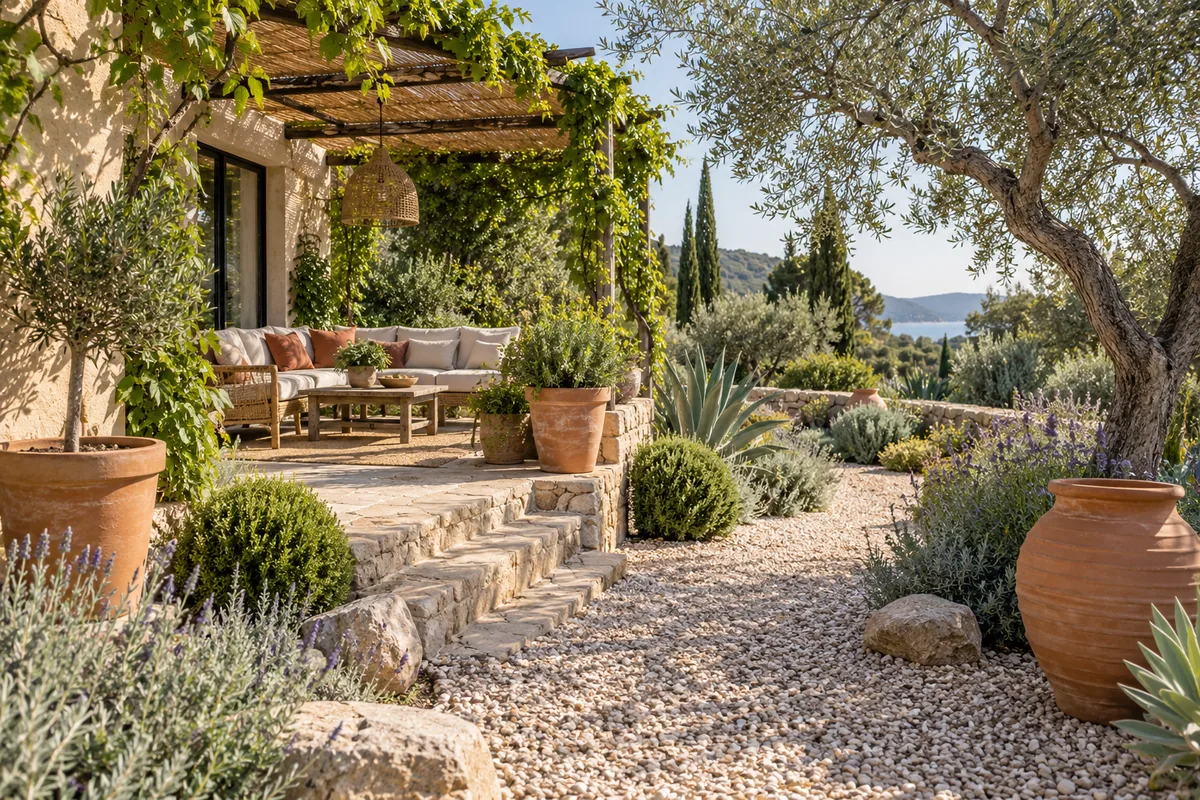
Mediterranean garden style: shade, gravel, and warm color
Understand Mediterranean garden style through shade, gravel, clay pots, and silver foliage, with practical ways to adapt the visual language to local climates.
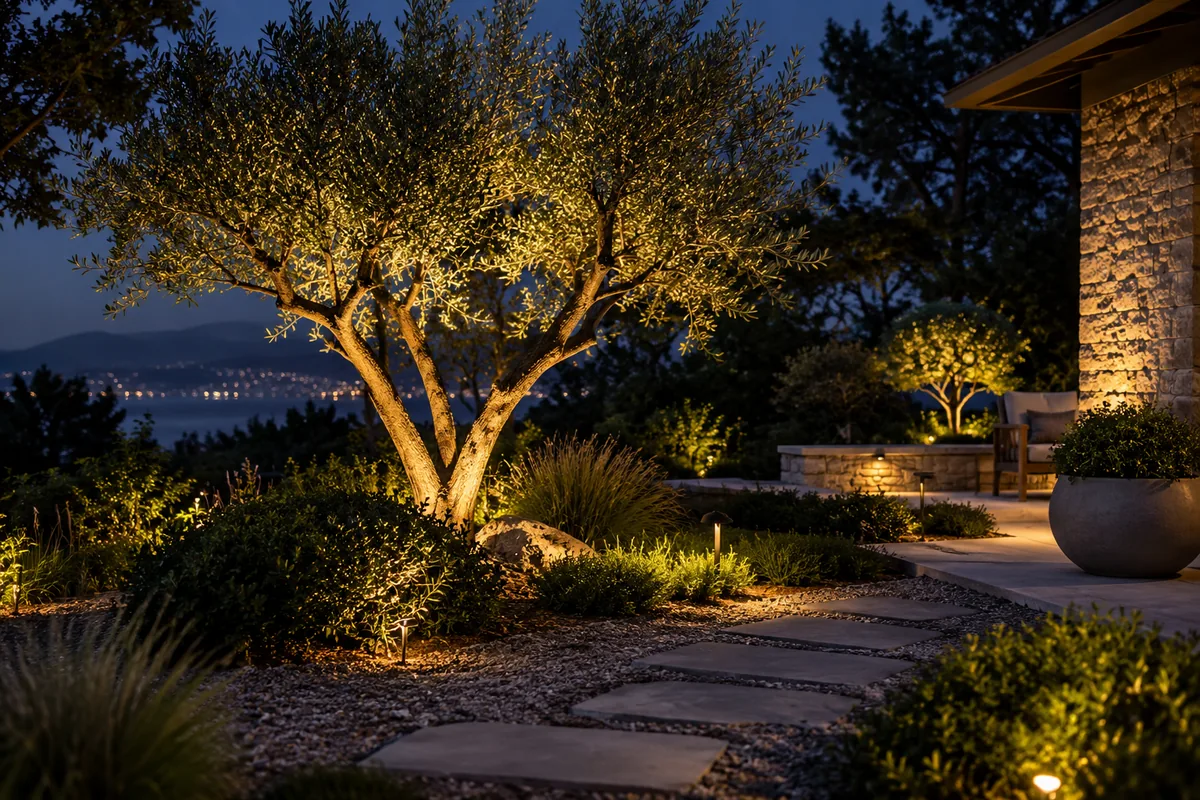
Landscape Accent Lighting That Respects the Night View
Plan landscape accent lighting around selected features, controlled glare, useful viewing positions, appropriate fixtures, and professional electrical review.