
By AI Landscape Design Team · Editorial policy
What Is Borrowed Scenery in Landscape Design?
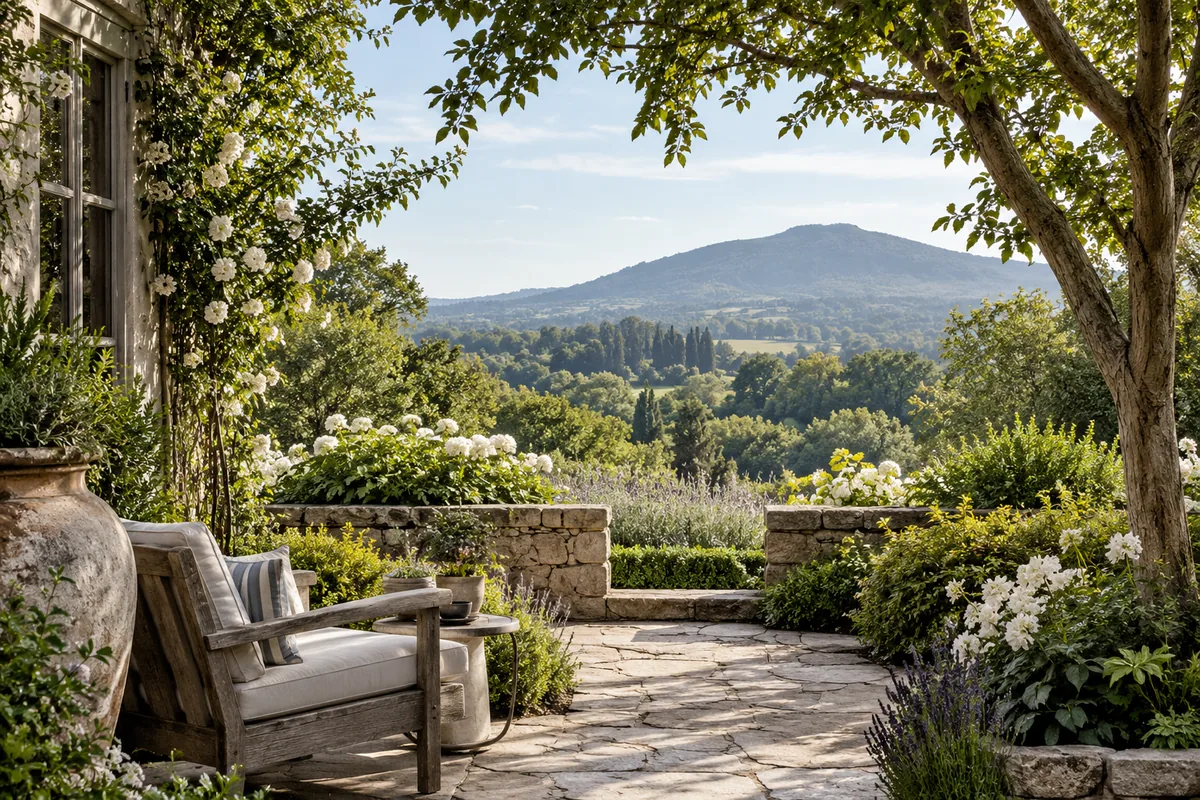
Borrowed scenery is the use of a view beyond a garden’s boundary as part of its composition, visually connecting the garden with an existing landscape outside it. A distant tree canopy, hillside, or other visible feature can contribute to the view without being inside the property. The design works with that existing background. Ownership, future changes, and seasonal visibility still limit how much the view can be relied upon.
Published · 3 min read
Key takeaways
- Frame an existing external view deliberately.
- Expect seasonal or ownership changes to affect the view.
- Keep an internal composition that works independently.
How is borrowed scenery used in landscape design?
Look outward before placing tall foreground planting. An attractive external view may already contribute more than another object inside the garden. Frame the background with a deliberate gap or a lower edge rather than pretending it belongs to the property. The opening should relate to the surrounding planting rather than appear accidental; evaluate the view from the actual position where someone will sit or stand.
What does borrowed scenery look like in a yard?
In a backyard facing a distant tree canopy, a low planting foreground may allow the trees to form the visual background to a sitting area. Check the view from the seat, not only from the house. The trees may shed leaves or be removed later. Preserve an appealing internal composition so the garden is not wholly dependent on land outside your control.
Which terms help explain borrowed scenery?
This approach uses a sightline but does not require a central axis. A focal point may remain inside the garden while the distant view provides context. Visual concepts can test framing ideas; confirm actual views and plant growth locally. Do not infer permission to trim neighboring trees or alter a boundary from an attractive image.
Frequently asked questions
Is borrowed scenery the same as a view?
A view becomes borrowed scenery when the garden composition deliberately relates to it. Simply seeing a distant object is not the whole design decision. Foreground planting, openings, and the viewing position help connect the outside feature with the garden.
Can borrowed scenery work in an urban yard?
An urban yard may borrow a tree canopy or another appropriate background beyond its boundary. Evaluate privacy and the likelihood of future changes. A view that is attractive today may not remain available, so retain a coherent internal layout.
Does borrowed scenery require ownership of the view?
The visible feature can be outside the property, which is why its continued presence cannot be promised. The idea does not create access rights or permission to alter neighboring land. Discuss boundary and tree decisions with the appropriate owners and local professionals.
Related reading
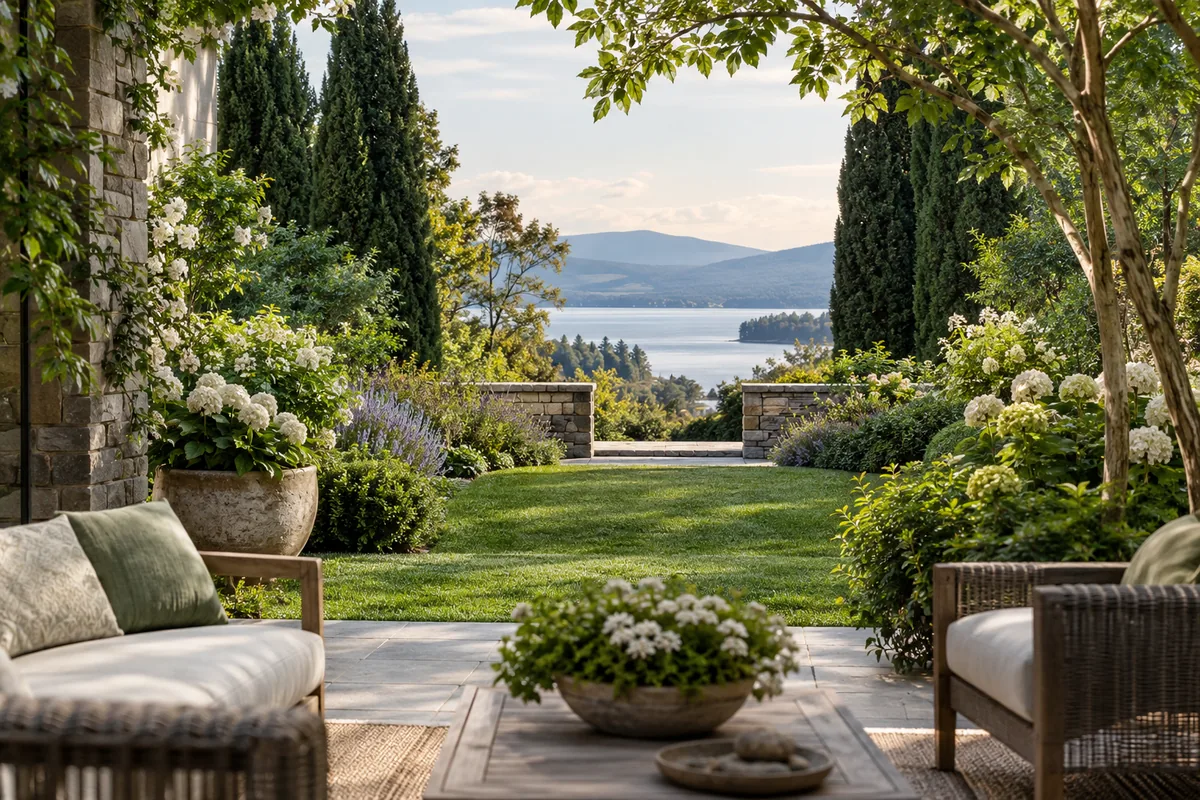
What Is Sightline in Landscape Design?
Learn what sightline means in landscape design, with a practical yard example, related terms, and the site decisions to check before making changes.
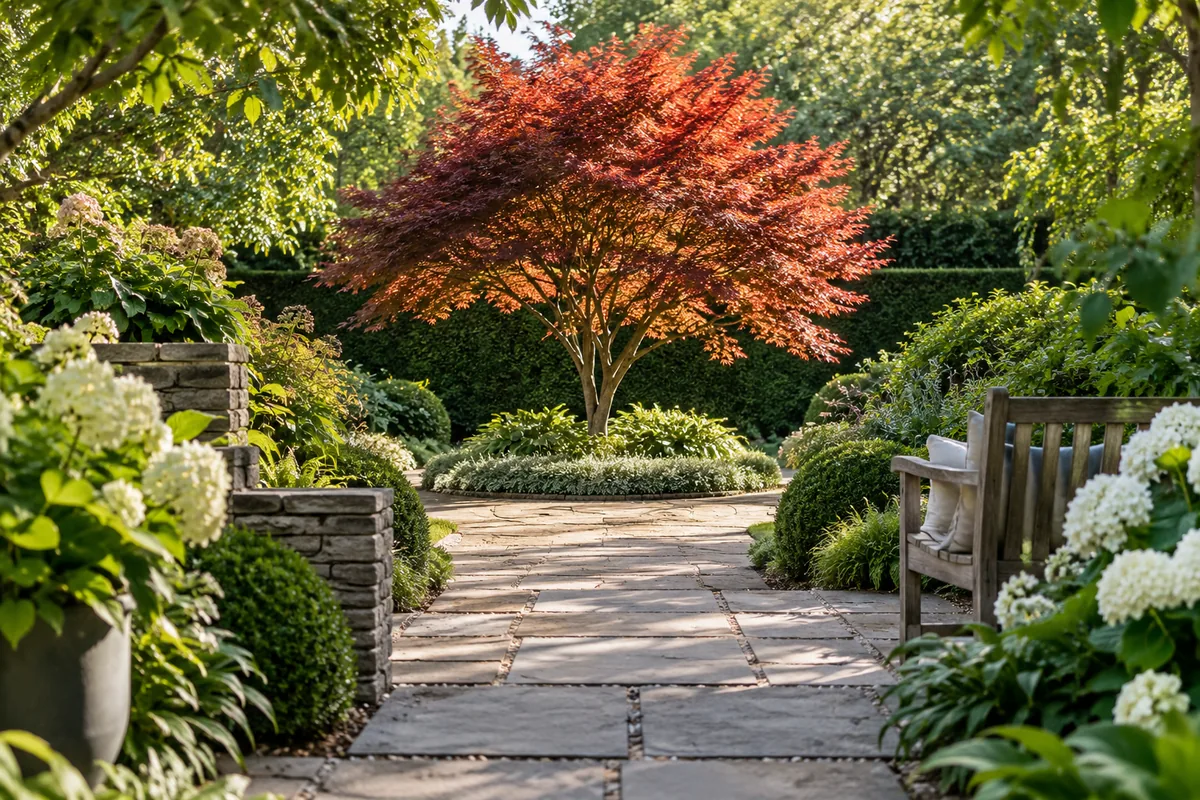
What Is Focal Point in Landscape Design?
Learn what focal point means in landscape design, with a practical yard example, related terms, and the site decisions to check before making changes.
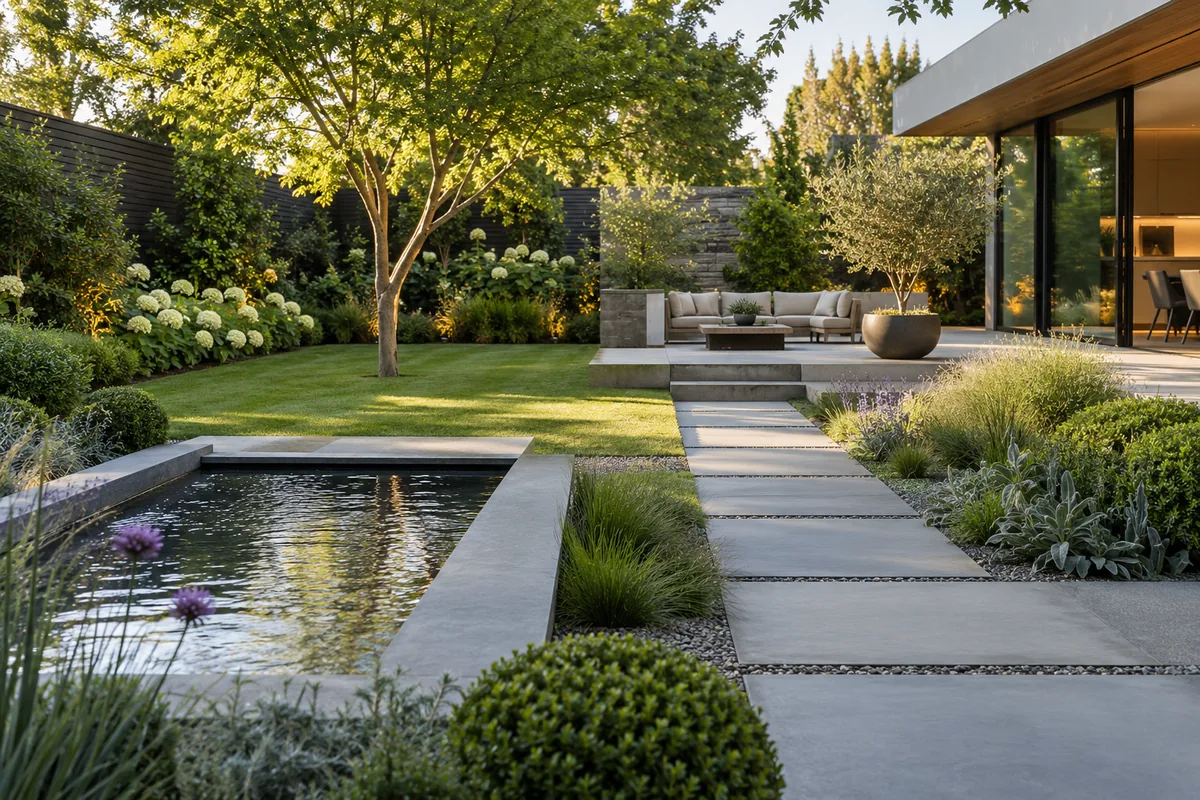
Modern landscape style: lines, space, and materials
Understand modern landscape style through clean lines, restrained materials, planting structure, and practical connections to contemporary architecture.
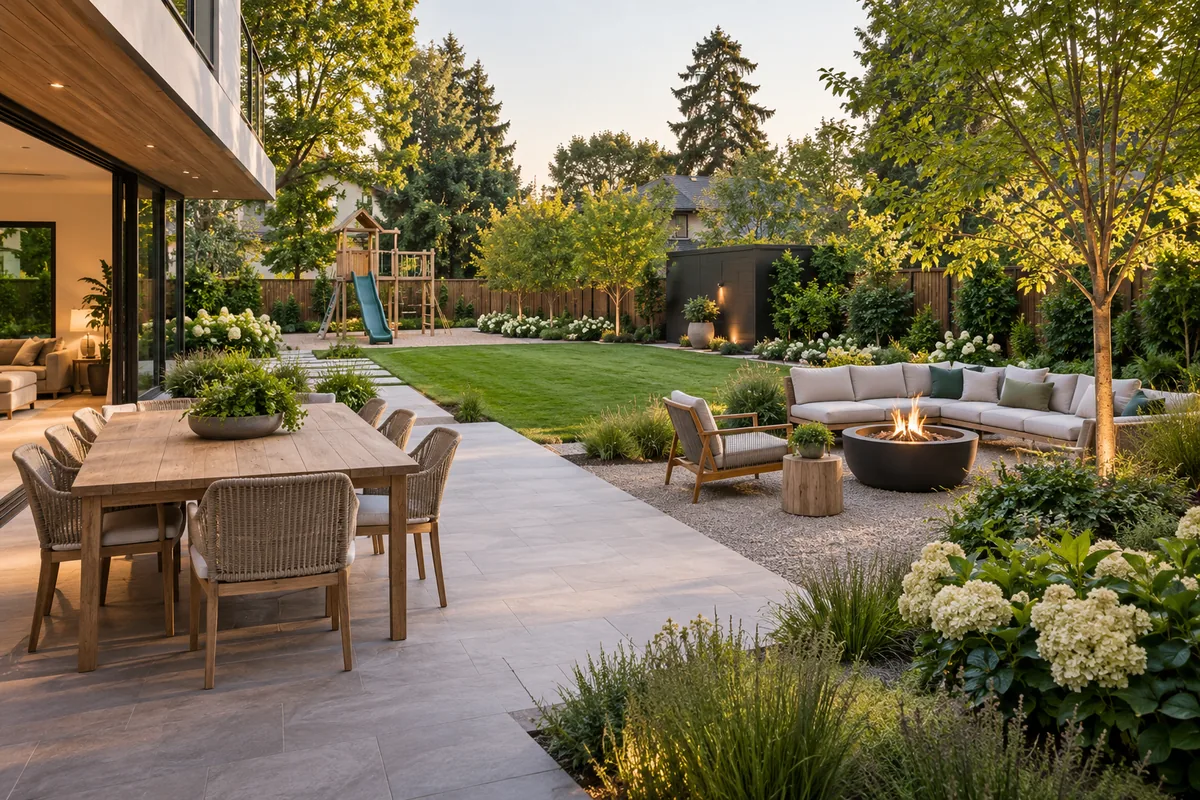
Modern backyard ideas organized around the way you live
Explore modern backyard ideas for activity zones, clean material connections, repeated planting, usable furniture layouts, and careful evening lighting.
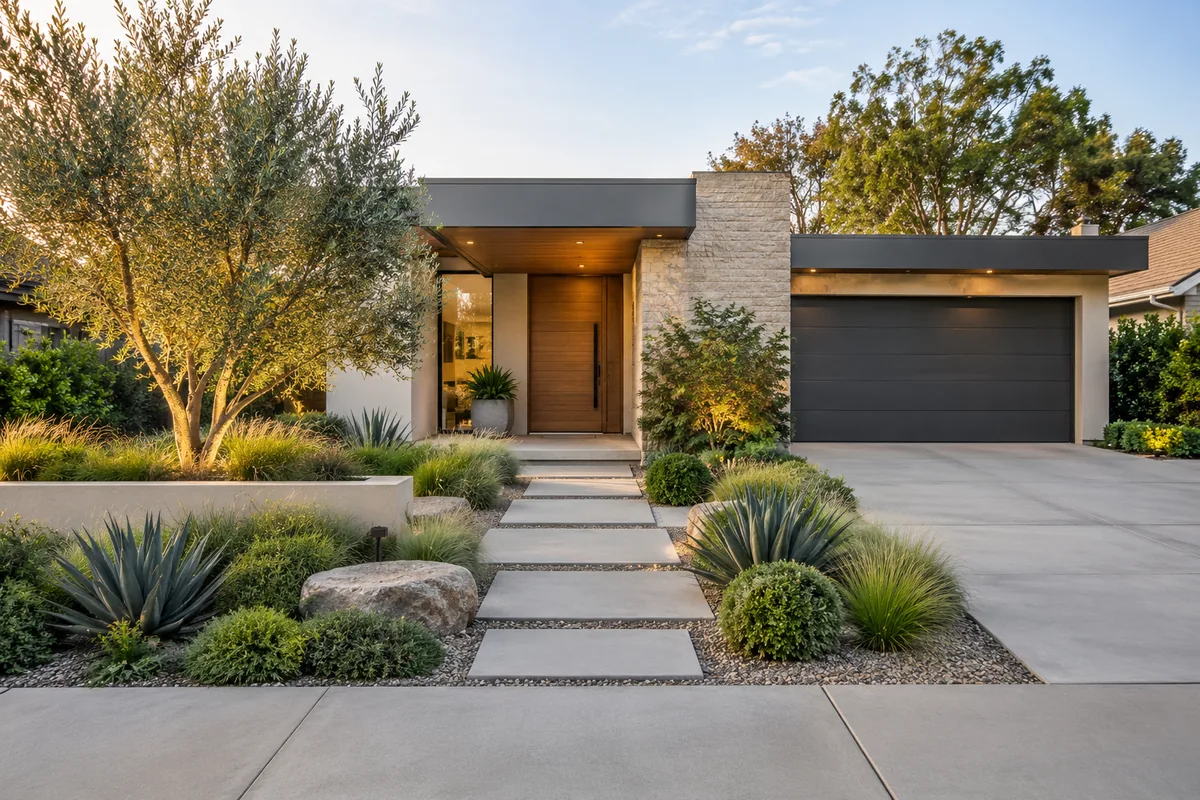
Modern front yard ideas for a clear, composed entrance
Explore modern front yard ideas for clear entrances, repeated planting, restrained materials, readable house numbers, and practical maintenance from the street.
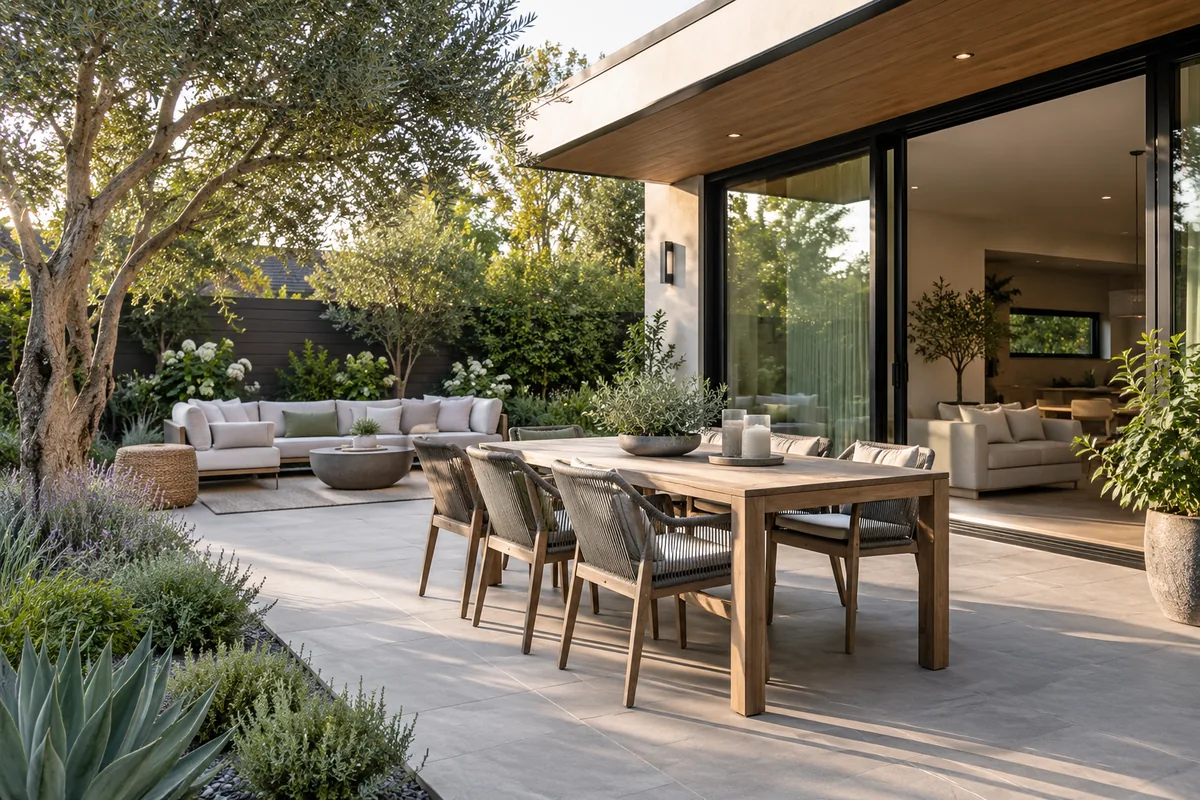
Modern patio ideas for clear furniture layouts and calm materials
Explore modern patio ideas for restrained surfaces, usable furniture, clear door connections, suitable containers, and deliberate shade and evening light.