
By AI Landscape Design Team · Editorial policy
Zen garden vs Japanese garden: Which Fits Your Yard?
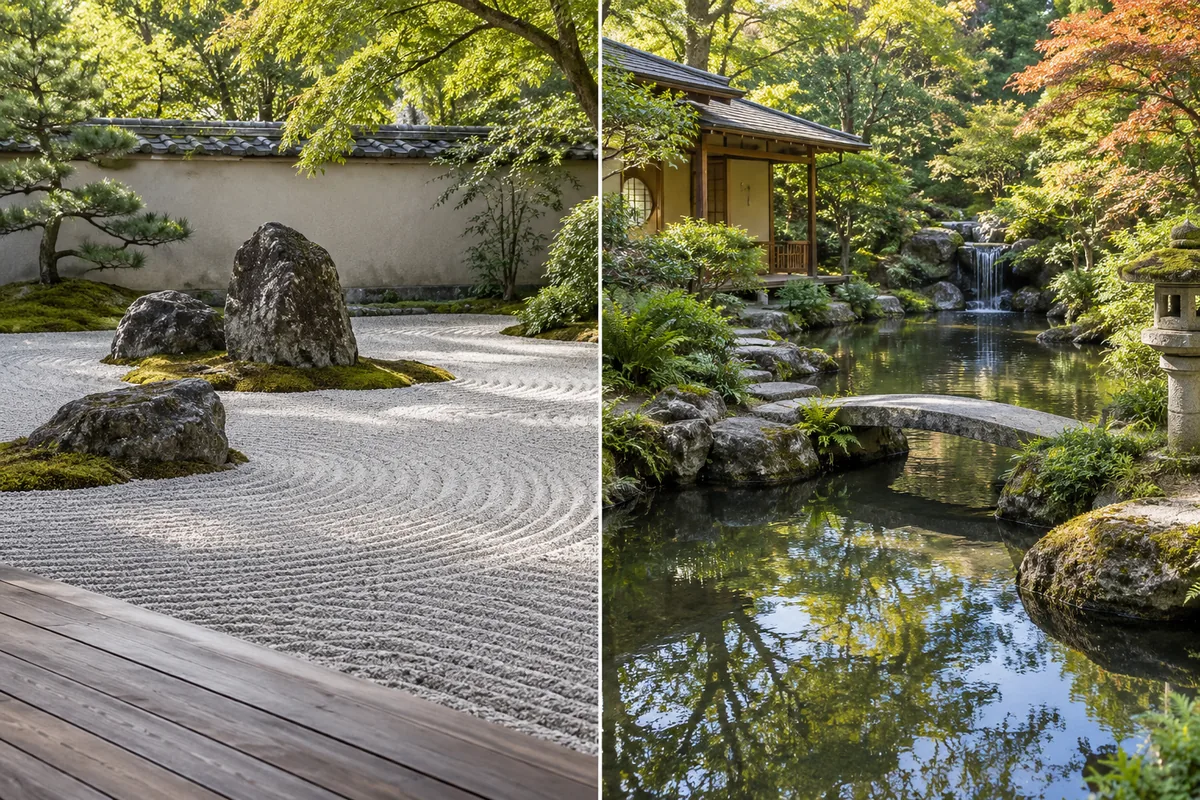
Choose a Zen dry landscape garden when a composed view of stones and raked gravel is the main purpose; choose other Japanese garden approaches when water, walking, or a tea-garden sequence should lead. Zen gardens are one category within Japanese garden design. A pond garden or tea garden is Japanese without needing to imitate a dry landscape.
Last updated · 6 min read
Key takeaways
- Category: One dry landscape approach; Broad family of garden approaches.
- Main purpose: Composed view from a chosen position; Viewing walking or tea sequences.
- Water: Represented through a dry composition; May include actual water.
| Dimension | Zen garden | Japanese garden |
|---|---|---|
| Category | One dry landscape approach | Broad family of garden approaches |
| Main purpose | Composed view from a chosen position | Viewing walking or tea sequences |
| Water | Represented through a dry composition | May include actual water |
| Surface | Raked gravel with arranged stones | Planting paving and optional ponds |
| Care | Raking and debris management | Depends on planting and water features |
| Suitable adaptation | A defined quiet viewing zone | A sequence suited to daily routes |
Why is Zen not a separate national style?
The popular phrase Zen garden usually points to karesansui, a dry landscape composition associated with particular Japanese garden traditions. Japanese garden is the broader category and includes gardens organized around ponds, paths, tea settings, and other relationships with buildings and landscape. Treating the two labels as equivalent hides choices that matter to a homeowner. Decide whether you want to look at a composed scene from a seat or move through a series of spaces. A raked-gravel surface intended for viewing has different demands from a route used to reach the shed. Calling both areas Japanese does not resolve how they function or what cultural references you intend to use.
Where should a dry landscape be viewed from?
Begin with the viewing position before arranging rocks. A seat beneath a covered porch or a large window may provide a stable relationship between viewer, stones, gravel, and boundary planting. Try paper cutouts on a photograph to explore balance, then examine the real space for glare, falling leaves, and access. A dry scene placed beneath a tree may receive more litter than the visual reference suggests. Keep the viewing area distinct from routine circulation so the gravel is not constantly crossed. The surface should not become the required accessible route to a gate or door. A small composition can be convincing when its limits and viewpoint are intentional.
When is a pond or strolling layout more useful?
A path-based garden suits someone who wants changing viewpoints and places to pause. Rather than collecting symbolic objects, plan what each turn reveals: a tree, a seating place, or a planted edge. A pond can become a focal point where the site, maintenance commitment, and safety requirements support it. Water introduces obligations involving containment, access, cleaning, and equipment; consult appropriate local professionals before construction. There is no need to add a pond merely to qualify as Japanese garden inspiration. On a narrow site, a quiet planted route and a sheltered end seat may serve the household better than a water feature that consumes the usable ground.
How can materials support restraint?
Select stones, gravel, paving, and timber for their roles rather than trying to accumulate a recognizable checklist. In a dry composition, stone placement and the open gravel field do much of the visual work, so unrelated paving patterns can distract. A walking garden may need stable paving with a quieter texture than the adjacent planting. Examine samples outdoors because pale aggregate can produce glare and wet stone can change appearance. Avoid assigning spiritual meaning to a random arrangement as if it were established historical practice. If cultural interpretation matters to the project, work with a designer who can explain the particular references instead of relying on a generic mood board.
Which plants belong in the comparison?
Planting can frame a dry landscape, soften a path, or create a seasonal event within a broader garden. None of these jobs requires importing species unsuited to your climate. Check the USDA hardiness zone, soil conditions, light, and regional invasive lists before choosing individual plants. Use locally suitable forms to provide the desired texture where a reference species would struggle. Do not assume that bamboo is essential; avoid recommending running bamboo and investigate invasiveness before any purchase. Reserve enough room to reach and prune boundary plants without disturbing the gravel field. The decision should reflect mature size and care needs, not only the outline shown in an image.
What does maintenance look like in practice?
A dry landscape still accumulates leaves, windblown debris, and weeds. Raking and restoring a clear surface take access and time; gravel does not make an area maintenance-free. Mark where you would stand to tend it and where tools could be stored without entering the principal view. A planted strolling garden shifts attention toward pruning, seasonal clearance, and path inspection. If water is included, its equipment and cleaning requirements add another work stream. Compare these tasks honestly with the amount of attention available at home. A smaller, well-positioned scene may remain legible more reliably than a large gravel expanse that the household cannot keep in the intended condition.
Can a residential garden combine both?
Keep the dry scene as a viewing destination and let a stable path reach a separate sitting area. That distinction allows gravel to remain visually composed without forcing all activity onto it. A screen or planted transition can separate the two experiences while maintaining a common material palette. Be cautious with heavy stones near slopes, utilities, or structures; placement can involve lifting, stability, and foundation issues beyond decoration. Obtain licensed local advice for retaining elements, drainage changes, and electrical installations. In the United States, contact 811 before digging and review private utility locating as well. A visually quiet garden still depends on safe, site-specific construction decisions.
What should you evaluate in a photo concept?
Ask whether the concept shows a view or a route, then compare that answer with how the yard is used. A dramatic gravel composition may be unsuitable across the only exit, while a pond scene may conceal the cleaning access it would require. AILandscape can offer a visual discussion reference from your photo; it cannot establish cultural authenticity, plant suitability, structural support, or drainage performance. Use the image to record questions rather than to extract measurements. Remove decorative lanterns and other accessories mentally: the layout should still have a clear purpose. Choose the version whose viewpoint and everyday movement can coexist without constant conflict.
Frequently asked questions
Does a Japanese garden need raked gravel?
No. Raked gravel is associated with dry landscape garden compositions, but Japanese gardens also include pond, strolling, and tea-garden approaches. Start with the intended experience and use of the space instead of assuming that gravel is the defining material.
Can I walk through a Zen gravel area?
A dry composition can be designed with access for maintenance, but its raked field is usually treated as a viewed surface rather than ordinary circulation. Provide a stable separate route for everyday movement and assess accessibility requirements with a qualified local professional.
Are bamboo and maple required?
Neither plant is mandatory. Visual references do not establish plant suitability. Check local climate, mature size, and invasive status, and use appropriate alternatives where necessary. Running bamboo should not be treated as a default choice for achieving Japanese garden character.
Related reading
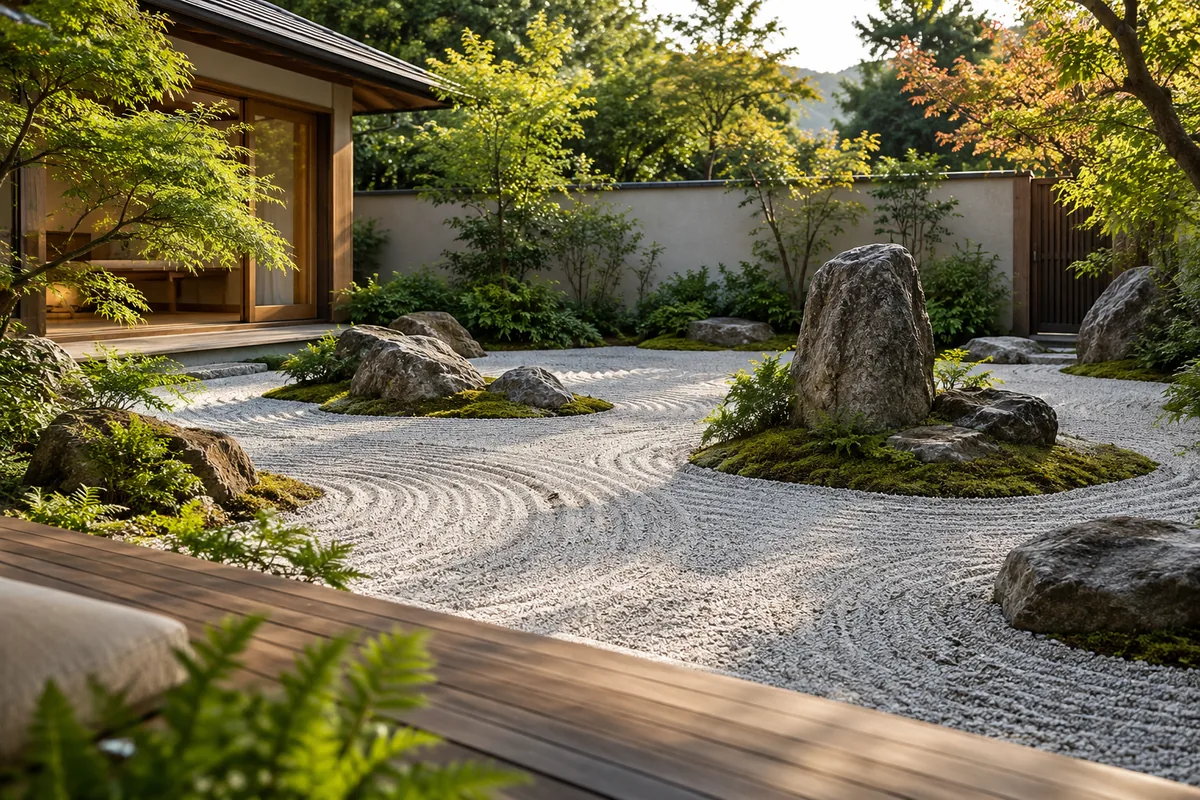
Zen garden style: stones, gravel, and deliberate space
Learn how zen garden style uses composed stones, raked gravel, restrained planting, and a chosen viewpoint, with practical limits for residential gardens.
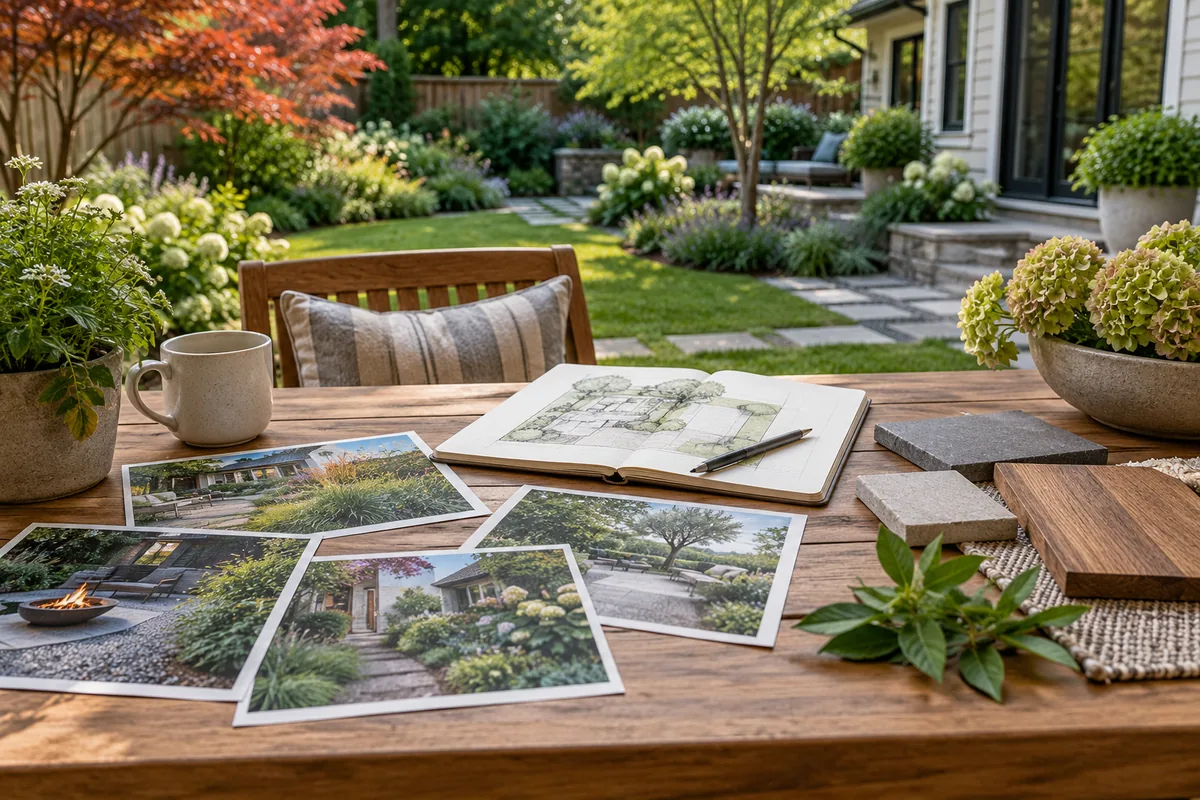
How to Choose a Landscape Style That Fits Your Yard
Choose a landscape style by comparing house lines, everyday uses, maintenance preferences, and local conditions before testing a few visual directions.
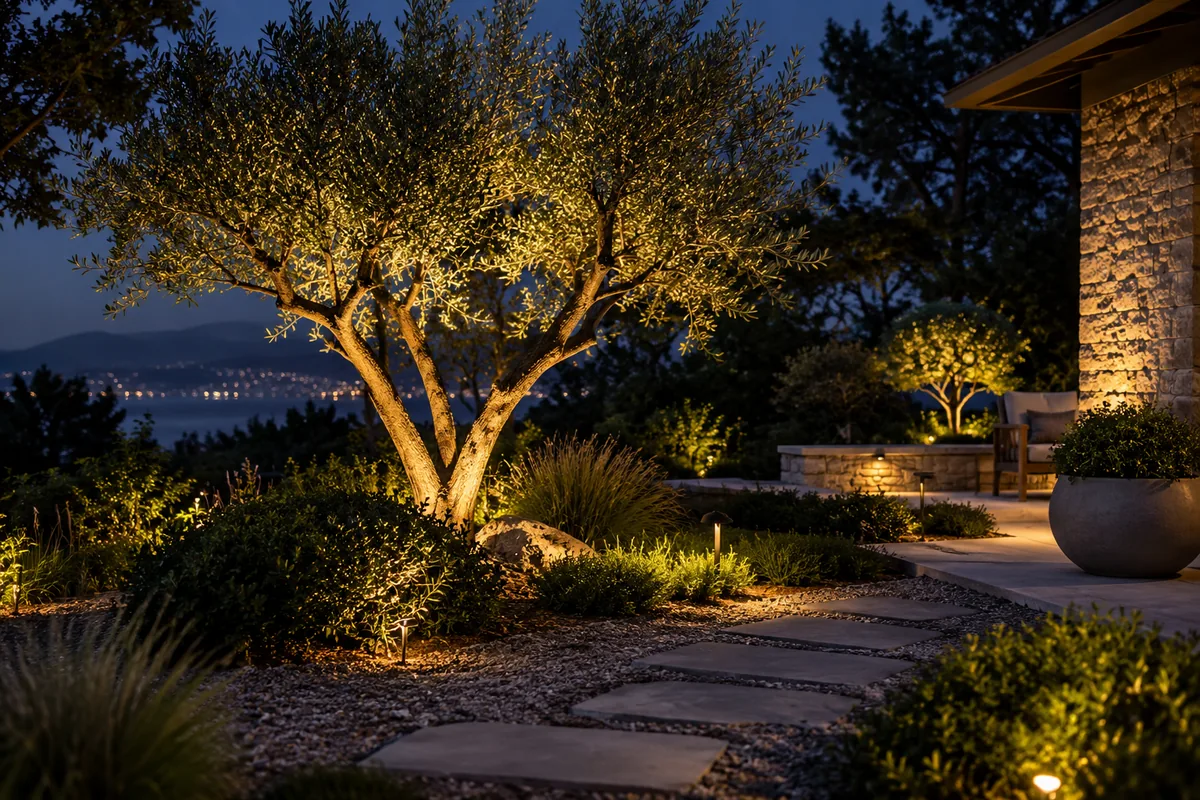
Landscape Accent Lighting That Respects the Night View
Plan landscape accent lighting around selected features, controlled glare, useful viewing positions, appropriate fixtures, and professional electrical review.
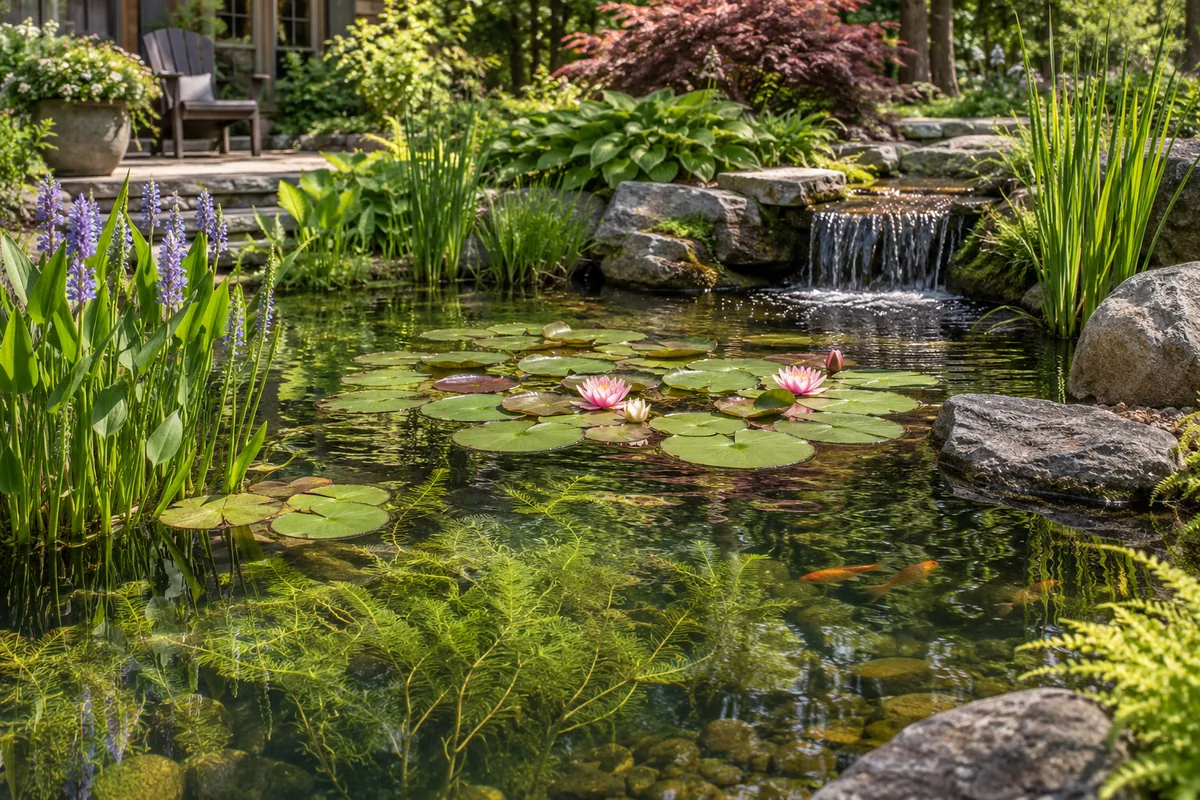
Pond Plants Selected for Roles and Local Conditions
Learn how pond plants fit your yard, with practical material, placement, upkeep, and safety questions to review before choosing a visual direction.