
By AI Landscape Design Team · Editorial policy
Cottage garden style: flowers with a working framework
Cottage garden style combines abundant, layered planting with a practical framework of paths, boundaries, and useful garden spaces. Flowers may mingle and some plants may self-seed, but the apparent informality depends on clear access and selective editing. The style favors variety and seasonal change; it is best understood as managed abundance rather than a garden that can be planted once and left alone.
Last updated · 8 min read
Key takeaways
- Establish paths and working access before filling the borders.
- Mix heights and flowering periods while leaving room for mature growth.
- Allow self-seeding selectively rather than accepting every seedling.
- Plan for regular editing, support, and seasonal cutting back.
What gives a cottage garden its character?
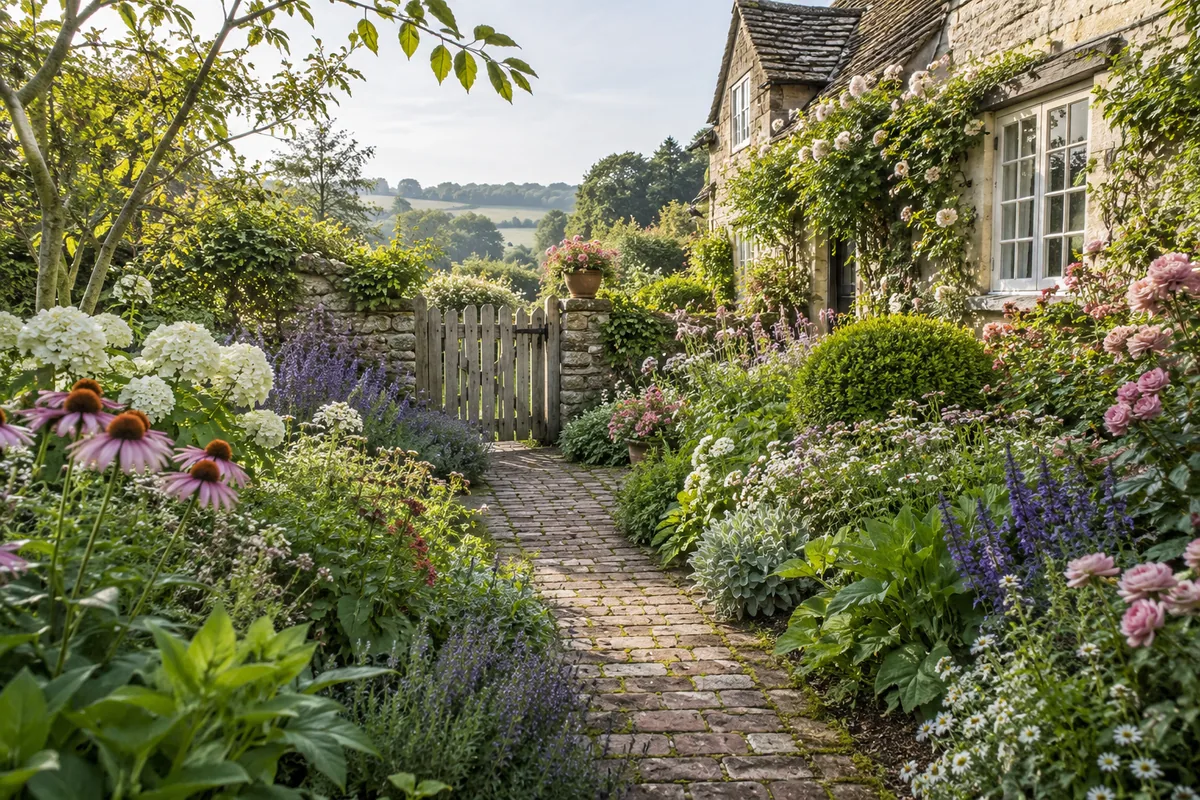
The recognizable feature is planting that appears generous and loosely arranged. Flowers lean into one another, shrubs form a backdrop, and occasional climbing plants pull the eye upward. A useful path and an identifiable entrance hold that mixture together. Without those organizing elements, the same plants can look like an unfinished collection instead of an intentional garden.
The style does not require an old cottage. A modest suburban house can support a cottage border when the planting relates to its scale and the doorway stays visible. Start with one connected bed rather than scattering flower islands across the lawn. Include plants that provide foliage after flowers fade. Dense visual layering should not mean planting everything too close: the eventual spread of each plant matters more than the size of the nursery pot.
How can informal planting keep a strong structure?
Decide where feet, tools, and wheelbarrows need to go. A brick approach, a compact gravel route, or existing paving can supply that structure. Keep essential routes visibly continuous so plants do not force people into muddy shortcuts. A simple fence or hedge can define the outer edge while the planting inside remains relaxed. Use repeated gate posts, edging, or a familiar plant group to make the layout readable.
Leave enough working space to reach the back of a border. It is difficult to weed, divide, or stake plants that are trapped behind an uninterrupted mass. A discreet access gap can solve that problem without making the garden look rigid. Before changing paths or excavating new beds in the United States, contact 811 and discuss buried services. Drainage changes and new structural work deserve assessment by licensed local professionals.
Which materials belong with cottage planting?
Brick, weathered wood, stone, and plain gravel often sit comfortably beside mixed foliage. Choose materials that already appear on the property when their condition permits. Reusing an intact approach can give the border a convincing connection to the house and reduce unnecessary replacement. A single sturdy bench may offer more value than numerous decorative accessories.
Check practical performance before selecting a rustic finish. Uneven reclaimed stone may be unsuitable for an essential walking route, and loose gravel needs containment. Timber elements need a plan for inspection and repair. Do not assume an aged appearance means a component is structurally sound. Group pots near a useful destination, such as a seat or door, rather than putting one beside every plant. Their placement should reinforce how the garden is used.
How do you build layers without overcrowding?
Think in plant roles. Shrubs or small trees supply the lasting outline, perennial flowers form recurring groups, and annuals can occupy selected seasonal openings. Climbers may occupy a supported vertical plane instead of taking more ground space. Repeat a few dependable groups through the border so the eye can find connections among the variety.
Evaluate every candidate against the USDA hardiness zone, actual exposure, soil, moisture, and local invasive status. A local nursery or extension office can help distinguish an attractive photograph from a suitable plant choice. Do not treat a national cottage plant list as applicable everywhere. Where pets reach the borders, consult the ASPCA toxicity list separately; cold tolerance and pet safety are different questions. Keep thorny growth and sprawling stems away from the route children use to reach the door.
What role should self-seeding plants play?
Self-seeding can make the border feel less arranged, but it transfers some design decisions to later maintenance. Keep seedlings where they improve a gap or soften a repeated pattern. Remove them where they obscure a path, crowd a slower plant, or create an unwanted concentration. Identify young plants before allowing them to establish, especially when the garden is new to you.
Let selected seed heads remain when they contribute texture and their behavior is acceptable locally. Cut others before seed dispersal when control matters. A garden notebook can record where volunteers appear and which choices caused problems. Do not equate self-seeding with invasive status, and do not assume either label can be settled without regional context. The aim is a border whose variation remains intentional, not a permanent obligation to tolerate every plant that arrives.
How should color change through the season?
Cottage planting can carry many colors, but the arrangement benefits from a recurring thread. Repeat a quiet flower color or foliage tone across the bed, then allow a contrasting patch to create emphasis near a seat. Avoid buying one of every flowering plant simply because each looks attractive on its own. That approach often creates isolated dots rather than connected planting.
Study the border when it is not flowering. Leaf shape, branching, and seed heads should still explain the composition. Leave some seasonal gaps if they are part of the plants' natural cycle; immediately filling every gap can crowd the bed later. Keep photographs from several points in the year and note when a support, division, or replacement would help. Continuous bloom is an ambition to evaluate locally, not a promise attached to the style.
Where does cottage style work, and what maintenance follows?
It works especially well where someone enjoys close contact with plants and accepts seasonal change. A cottage border beside a frequently used path invites that attention. In a site exposed to wind or intense reflected heat, the plant palette must adapt rather than imitate a cooler garden photograph. Borrow the layered composition and change the individual species with local advice.
Expect regular weeding while plants establish, selective deadheading, staking where needed, and cutting back according to plant behavior. Some plants require division or replacement as the border develops. Keep a place for tools and compostable garden waste before adding more beds. If you travel often, begin with a smaller planted area and expand only after observing the workload. Abundance can be satisfying, but maintenance is the mechanism that keeps it coherent.
How to use cottage style in a front yard, backyard, side yard, or patio
A cottage front yard needs a legible doorway and a border that welcomes rather than blocks visitors. Repeat flowers near the approach while keeping foliage clear of driveway sightlines. In a cottage backyard, place a seat where the border can be enjoyed and leave practical access for tending its interior.
A cottage side yard can use restrained vertical planting and a continuous route without trying to fit a deep border into a passage. On a cottage patio, containers can supply layered color while the furniture remains usable. Group pots by care needs and leave access for watering. Each space should borrow the cottage vocabulary at an appropriate scale; the front entrance and the service passage have different jobs.
Which decisions stop the garden from becoming cluttered?
Give decorative objects a reason to be present. A pot can frame an entrance and a bench can establish a destination, but unrelated ornaments spread through every opening dilute the planting. Preserve a clear edge where the border meets the route. That simple cue makes mixed growth easier to read as a deliberate design.
Farmhouse style shares some materials but usually emphasizes productive and practical spaces more strongly; cottage style places the mixed ornamental border closer to the center of the composition. AILandscape can help compare the visual density of a cottage concept on a yard photo. Use that image to discuss planting roles, not to identify species or determine installation quantities. Confirm regional suitability, water movement, and building details before purchasing or construction. The most useful concept is one you can maintain through ordinary seasons, not only photograph in bloom.
Frequently asked questions
Can cottage garden style work without a cottage house?
The planting approach can fit many houses when paths, boundaries, and material choices relate to the building. Keep the entrance easy to find and use connected borders rather than scattered decorative patches. Adjust the amount of planting to the space and the care you can provide.
Are self-seeding flowers essential to a cottage garden?
They are optional. Self-seeding can add informal variation, but it also requires identifying and editing seedlings. A border made from locally suitable perennial groups can still feel like a cottage garden through layered heights, overlapping foliage, and relaxed seasonal change.
Is cottage planting easier to maintain after it fills in?
Established cover may reduce some bare-soil weeding, but other tasks remain. Plants may need dividing, support, deadheading, or selective removal as the composition changes. Observe the actual workload in a modest border before assuming that a larger, denser garden will be easier to manage.
Sources
Related reading
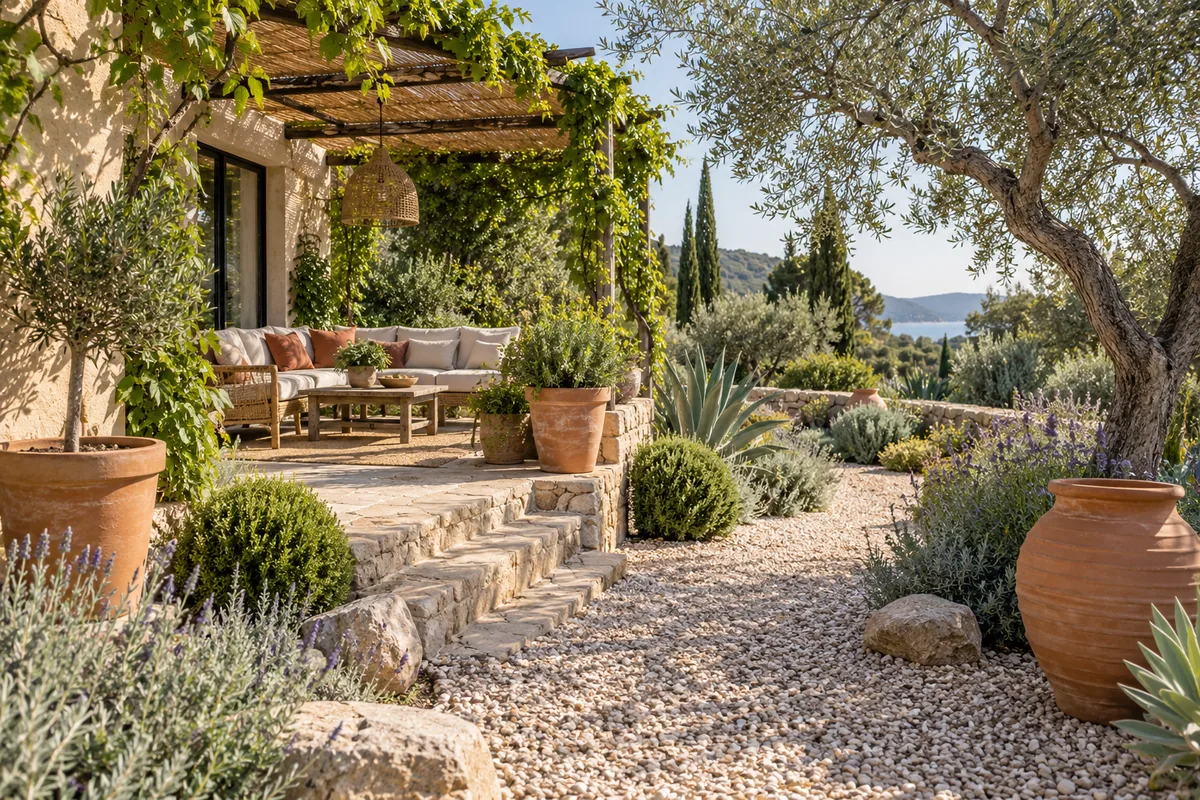
Mediterranean garden style: shade, gravel, and warm color
Understand Mediterranean garden style through shade, gravel, clay pots, and silver foliage, with practical ways to adapt the visual language to local climates.
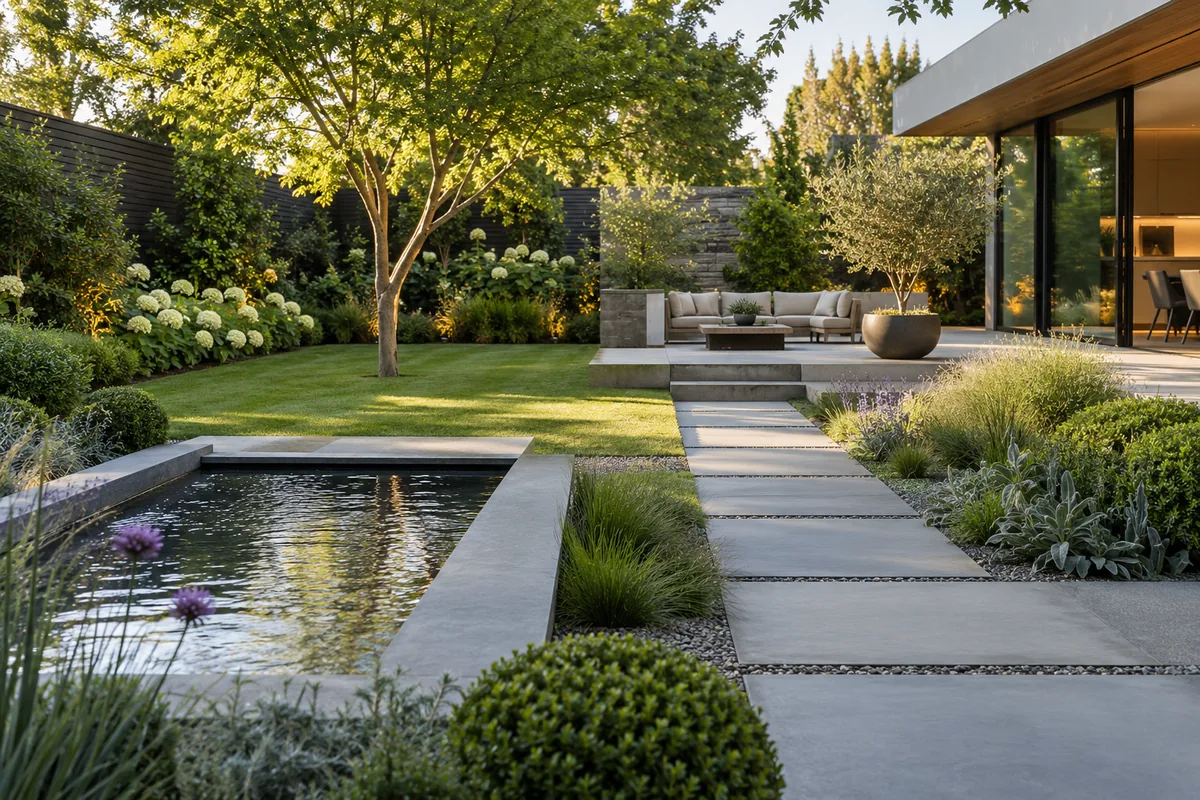
Modern landscape style: lines, space, and materials
Understand modern landscape style through clean lines, restrained materials, planting structure, and practical connections to contemporary architecture.
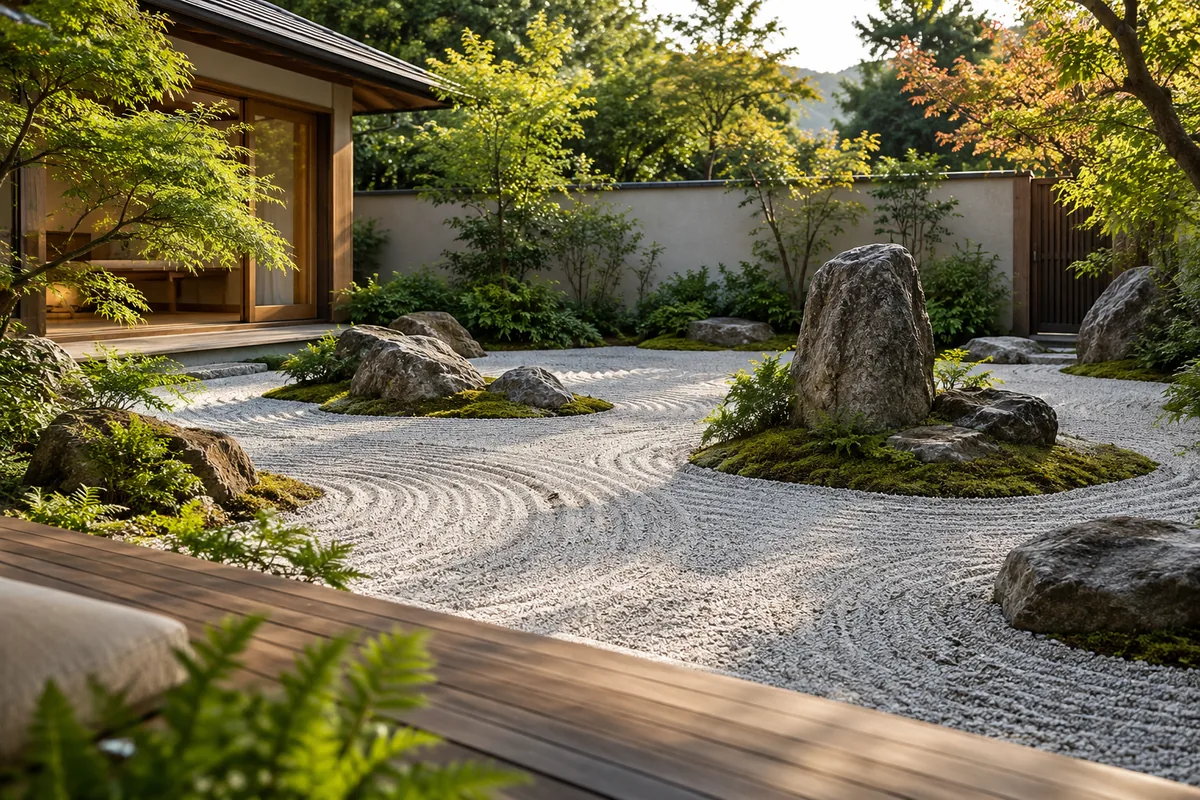
Zen garden style: stones, gravel, and deliberate space
Learn how zen garden style uses composed stones, raked gravel, restrained planting, and a chosen viewpoint, with practical limits for residential gardens.