
By AI Landscape Design Team · Editorial policy
Cottage garden vs English landscape garden: Which Fits Your Yard?
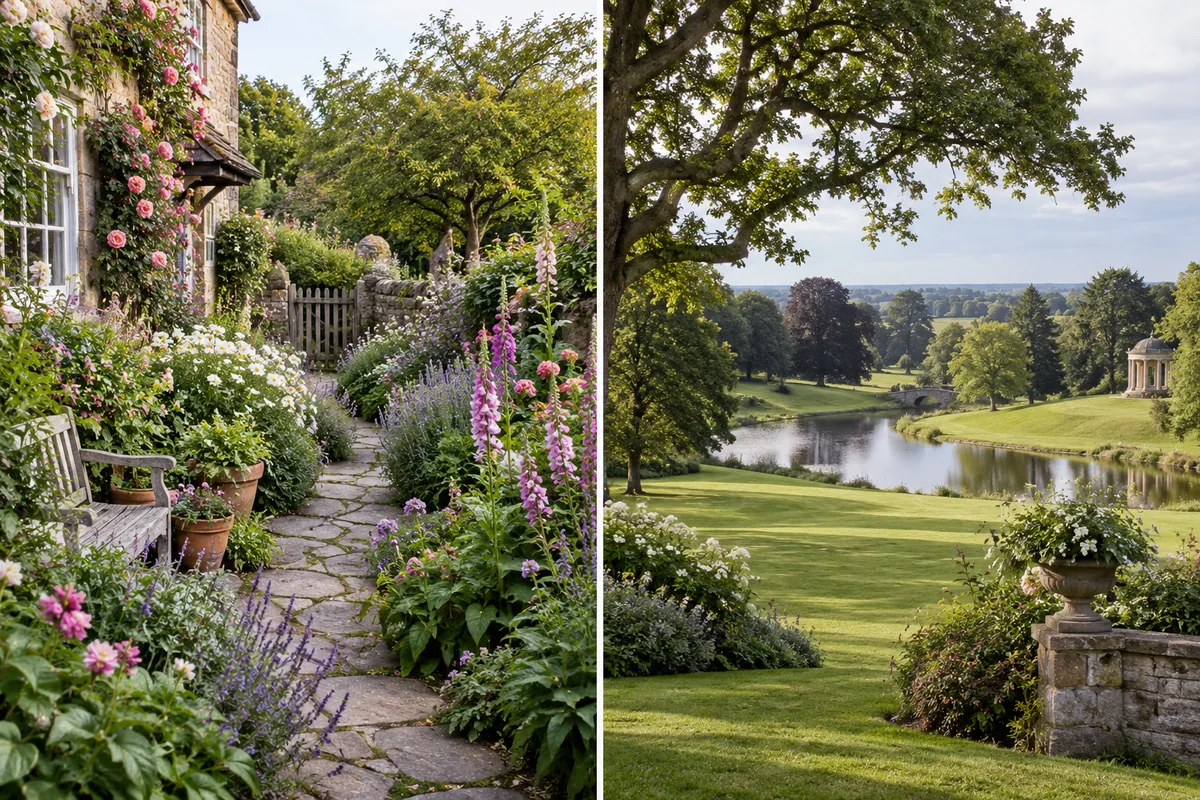
Choose a cottage garden for intimate, densely planted borders around everyday paths; choose English landscape garden principles for broader views, open ground, and a sequence of scenery. An English landscape garden is a specific historical landscape tradition, not a synonym for any English flower garden. A small yard can borrow its viewing ideas without attempting to reproduce an estate.
Last updated · 6 min read
Key takeaways
- Scale: Close borders and daily paths; Broader composed scenery.
- Planting: Mixed abundant planting; Masses framing open views.
- Movement: Useful intimate destinations; Sequence of changing views.
| Dimension | Cottage garden | English landscape garden |
|---|---|---|
| Scale | Close borders and daily paths | Broader composed scenery |
| Planting | Mixed abundant planting | Masses framing open views |
| Movement | Useful intimate destinations | Sequence of changing views |
| Structure | Paths edges and gates | Open ground and focal scenes |
| Maintenance | Detailed border tending | Lawn tree and view management |
| Small-yard adaptation | Selective layered beds | Borrowed views and open foreground |
Are these terms describing the same tradition?
The terms overlap in casual conversation, which can make a design brief confusing. A cottage garden usually suggests informal planting, flowers mixed with useful crops, and a close relationship with a dwelling. An English landscape garden refers to the eighteenth-century tradition of composing more extensive ground as an apparently natural scene. The contrast is not simply flowers versus lawn; it is a change in scale and how the visitor reads space. According to the Royal Horticultural Society, cottage gardens originated as productive plots mixing fruit, vegetables, and flowers. That practical connection remains a useful starting point even when the modern garden contains mostly ornamental planting.
What happens to the view from the house?
In a cottage layout, the view may be filled by the textures of nearby borders and framed by an arbor or a garden gate. The eye travels through plants at close range. In a landscape-garden approach, open ground can lead toward a tree group or a distant focal point, with foreground planting helping to frame rather than consume the view. Test the choice from the room where you actually spend time. A deep, crowded border immediately outside a low window can be delightful or oppressive depending on its height and distance. Sketch the visible layers and mark which existing features you want the foreground to reveal.
How should paths behave?
Cottage paths can serve a tight sequence of practical destinations: door, bench, vegetable bed, and compost access. Curves are useful when they follow those movements, but adding bends purely for effect can consume a compact site. Landscape-garden routes often make sense as a journey between views, with planting concealing and revealing what lies ahead. On a residential lot, borrow that sequence through a modest change in perspective rather than a long artificial circuit. Walk the proposed route carrying a watering can and consider where another person passes. Path surfaces, visibility, and reliable access matter more than making the plan resemble a historic illustration.
What kind of planting makes each approach legible?
A cottage border can use overlapping flowering forms with recurring structural plants so the abundance remains readable. English landscape principles may place greater emphasis on the outline of trees, open foregrounds, and planting masses viewed from a distance. This distinction concerns composition rather than an approved list of species. Check plant choices against the USDA hardiness zone, soil moisture, sun exposure, and local invasive guidance. Reserve room for mature canopies and maintenance access before adding seasonal flowers. A flowering group near the terrace can coexist with a broader tree-framed outlook farther away, provided the two roles are clear and the nearby border does not obstruct the intended view.
Which interpretation fits a modest property?
A cottage scheme can translate well into a small front border because its interest comes from close observation. Keep the entrance route clear and choose a few repeating plant groups instead of squeezing in every favorite flower. For landscape-garden inspiration, identify the longest available view and simplify what interrupts it. A neighbor's established tree may contribute to that view without being within your control; do not base the entire composition on an assumption that it will remain unchanged. Open space is a design resource, not wasted ground. A restrained lawn or planted opening may be more convincing than a tiny ornamental lake or miniature estate feature forced into an unsuitable footprint.
How do the upkeep demands differ?
Mixed cottage borders can involve deadheading, division, staking, and decisions about self-seeded plants. An open landscape composition may shift work toward mowing, leaf collection, and professional tree inspection. Both can have demanding and simpler versions. Consider how you will move tools through the site and reach the back of borders without compacting planting soil. Seasonal gaps may be acceptable in a cottage border if the path and structural forms still hold it together. A damaged tree or bare area can affect a long view disproportionately. Compare the maintenance of the actual proposed features instead of assuming that informality means less work.
Can the two approaches share one garden?
Use a transition between the intimate and the expansive. Near the kitchen, a productive cottage border and a small sitting place can support daily activity; beyond it, a more open view can frame a tree group or a boundary. Avoid putting every zone into a dense flower border if the aim is to preserve depth. A change in plant height or the position of a gate can mark the shift without adding another paving material. Keep any water feature separate from historical imitation: ponds require safety, water quality, and site assessment. Consult qualified local professionals about grading or structures, and contact 811 before excavation in the United States.
What belongs in the design brief?
Replace a vague request for an English garden with observations about what you want to experience. Write down close flower detail, a usable vegetable patch, a long view from the living room, or a route that reveals a shaded seat. Rank those experiences before choosing ornaments. AILandscape can help compare visual concepts on a photograph, while local checks must establish plant suitability, drainage, and construction feasibility. Its images provide discussion references rather than measured deliverables. If the available ground cannot support a broad scenic composition, keep the viewing principle and reduce the scale of the features. A clear brief is more useful than insisting on a label that means different things to different people.
Frequently asked questions
Is every garden in England an English landscape garden?
No. English landscape garden names a particular historical design tradition associated with composed scenery and extensive ground. A garden located in England might instead be formal, cottage, contemporary, or another type. Describe the layout qualities you mean when briefing a designer.
Can a cottage garden include lawn?
Yes. Lawn can provide a useful opening between densely planted borders, a route for daily activities, or a place to sit. The cottage character can come from the surrounding planting and practical relationship with the house; flowers do not need to occupy every surface.
How can I borrow landscape-garden ideas in a small yard?
Work with a framed view, a clear foreground, and a focal point visible from a chosen position. Avoid miniature copies of estate features. Keeping part of the garden open and arranging planting around the view can convey depth without requiring a large property.
Sources
Related reading
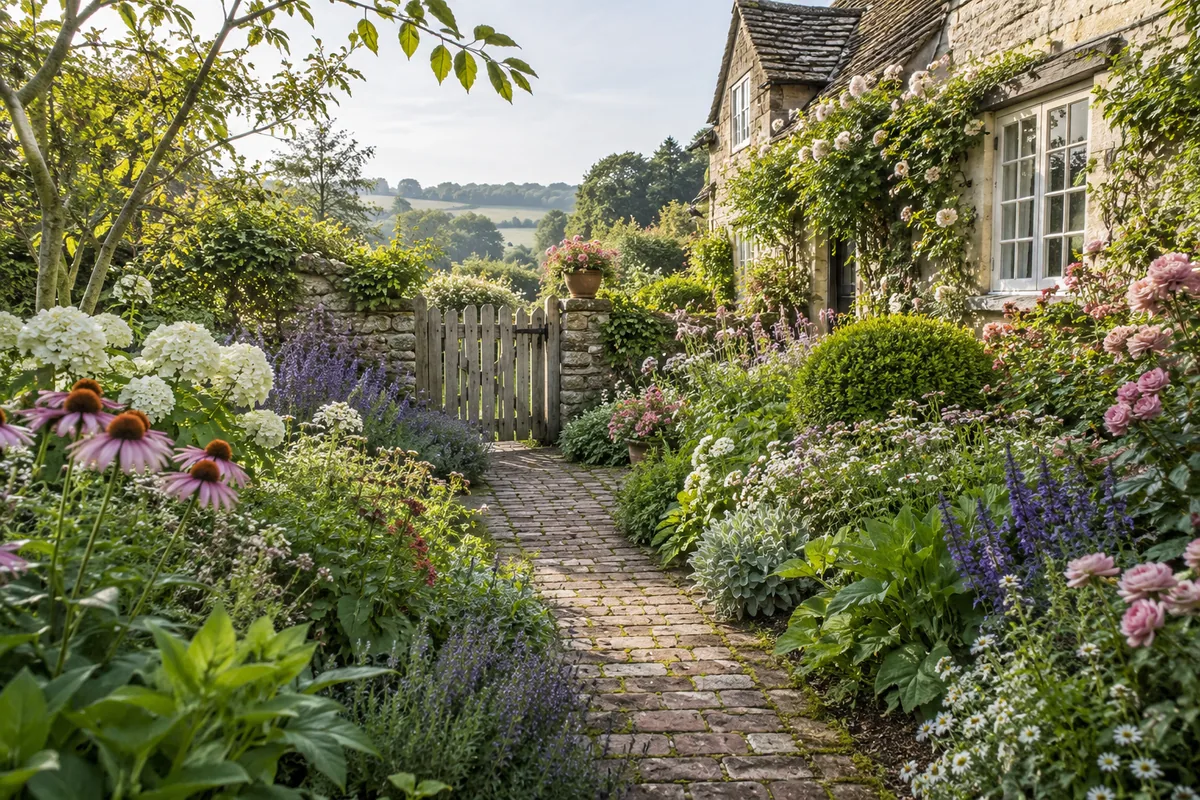
Cottage garden style: flowers with a working framework
Explore cottage garden style through layered flowers, selective self-seeding, clear paths, seasonal care, and the framework that makes informal planting usable.
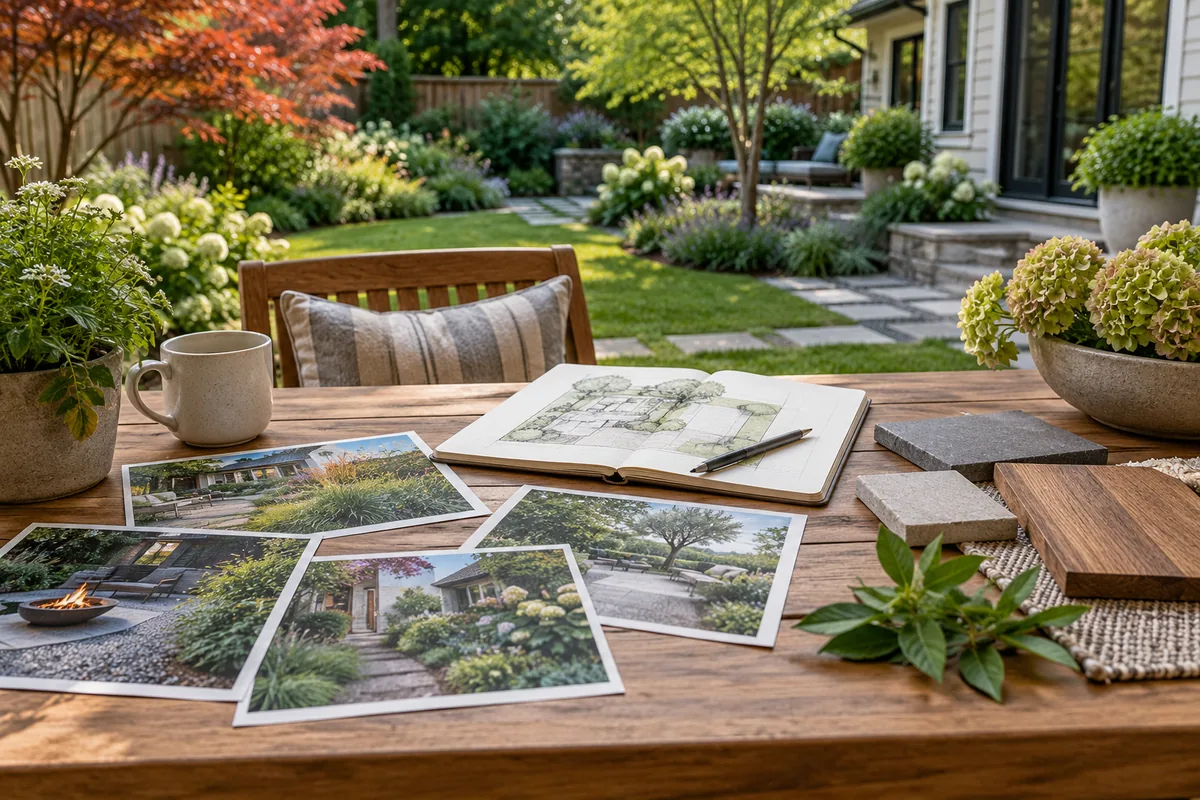
How to Choose a Landscape Style That Fits Your Yard
Choose a landscape style by comparing house lines, everyday uses, maintenance preferences, and local conditions before testing a few visual directions.
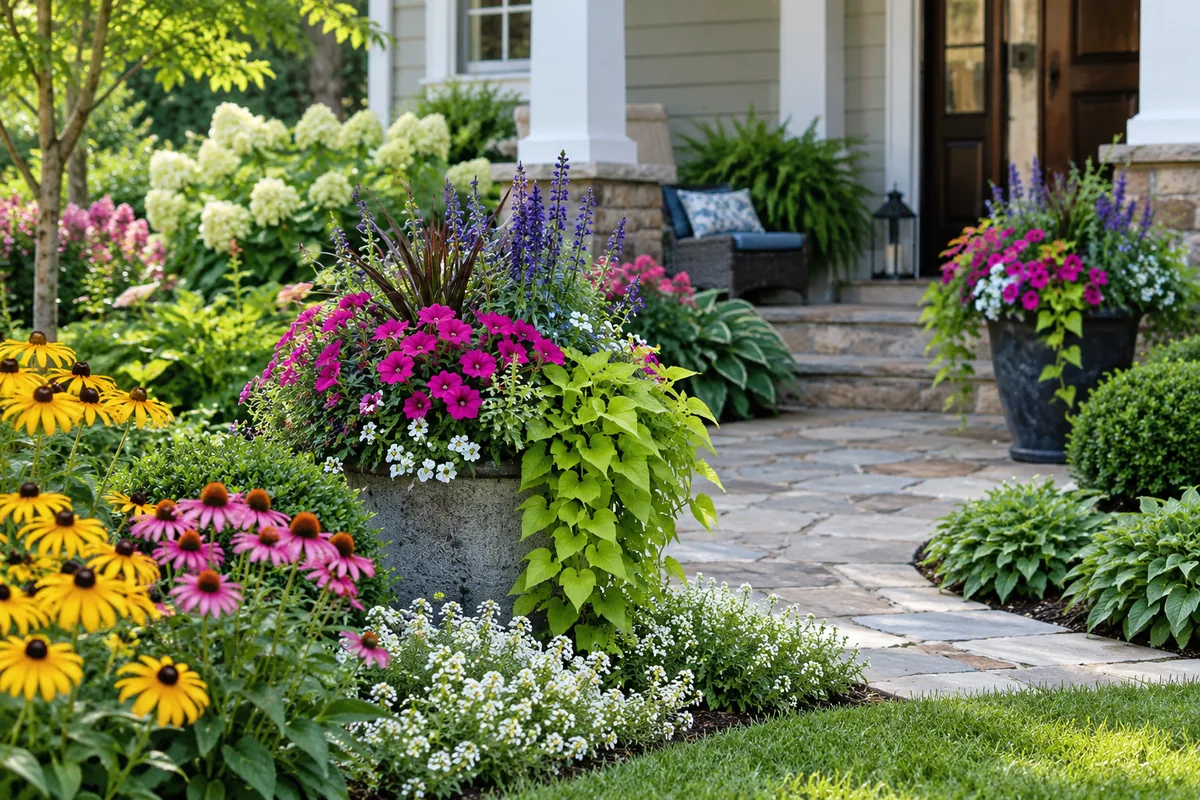
Annual Flowers for Seasonal Borders and Garden Containers
Annual Flowers: Seasonal Color and Containers: explore placement, upkeep, and local safety questions before deciding how this feature fits your yard.