
By AI Landscape Design Team · Editorial policy
Cottage patio ideas that place flowers around a usable room
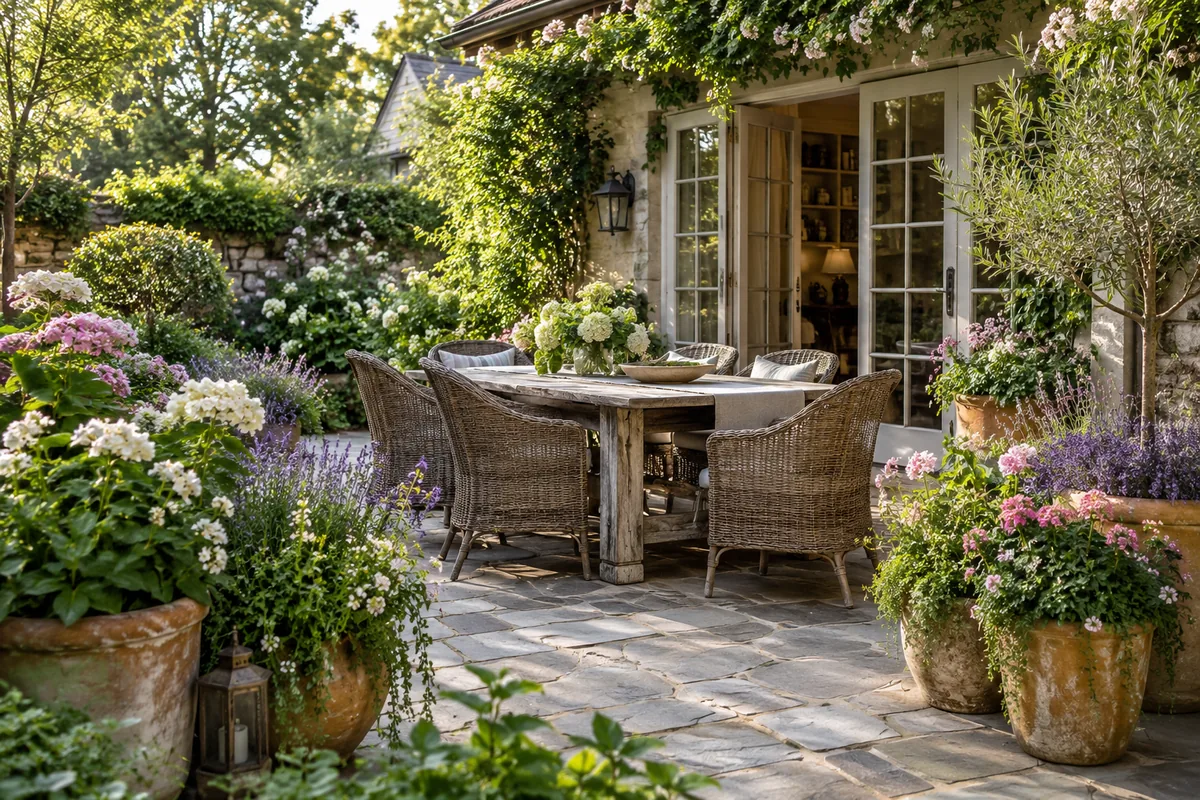
Cottage patio ideas should put seasonal flowers and informal foliage around a usable sitting or dining room rather than fill the furniture space. Group stable containers, connect them with a few repeated plant roles, and keep doors and watering access clear. The generous effect depends on selective care and suitable local plants, not on buying a different pot for every gap.
Published · 6 min read
Key takeaways
- Let chairs and doors establish the usable room first.
- Group flowers by visual role and actual care needs.
- Keep seasonal editing and container access manageable.
Where can flowers be enjoyed without becoming obstacles?
Sit at the planned table or chair and identify the edges that deserve planting. The best position may be close enough to appreciate foliage but outside chair movement. Open the door fully and check the ordinary route from indoors with furniture present. A patio can look full from a photograph while leaving no comfortable place to sit.
Review sound existing paving before deciding it must change. Cottage character can come from planting and a warm material cue without uneven surfaces on essential routes. Elevated terraces require appropriate professional assessment of loading and waterproofing before substantial pots or supports are added. Decide how seasonal pots will be moved or stored, and keep access to drainage openings and service points available.
Eight flower-rich ideas with usable space
- Group pots beside the main seat. Put a coherent collection where flowers can be seen without brushing across the occupied chair. It fits a terrace with room outside the circulation footprint. Verify stability, drainage, planted weight, and mature growth. Grouping by appearance is only part of the decision; plants with incompatible care may need different positions despite matching colors.
- Repeat one recurring flower role. Connect containers or adjacent borders through a locally suitable plant group rather than many isolated novelty purchases. This works where the patio feels visually scattered. Consider foliage between bloom periods and actual seasonal care. A repeated role can supply continuity without promising flowers at every time of the year.
- Let an existing warm surface anchor the room. Sound brick or another suitable finish can support informal flowers without additional decoration. It suits a house already using warm masonry. Have surface condition, access, and drainage assessed before changes. An aged-looking but uneven route is not a necessary part of cottage character and may be unsuitable for the actual users.
- Use vertical planting on a reviewed support. A locally appropriate climber can add texture at an edge when attachment and maintenance are feasible. It fits a patio with a useful boundary rather than extra floor room. Check mature weight, invasive status, and structural needs. Do not drape an unknown vigorous plant over doors, service fittings, or a support selected only for appearance.
- Keep the table edge open for service. Frame one side with planting while preserving movement to chairs and food. This suits regular outdoor meals. Review thorns, toxicity, fallen material, and unstable pots near occupied areas. A complete ring of containers can look generous but fail when people cannot move comfortably between the house and table.
- Use one quiet pause point. A plain bench or lounge position can sit beside the floral edge without several competing accessories. It fits a terrace where garden viewing is an actual activity. Test its footprint and shade, then keep the route clear. Decorative furniture placed where nobody can reach it comfortably adds clutter instead of a useful cottage destination.
- Allow seasonal gaps deliberately. Leave room for growth and change rather than filling every temporary opening immediately. This works for an owner willing to observe the planting through the year. Identify any volunteers before accepting them and edit those that crowd pots or routes. Informality is selective management, not permission for every seedling or sprawling stem to remain.
- Make evening light practical and modest. Give doors and the route between seats enough useful visibility before adding floral accents. It suits a room used after dusk. Licensed professionals should review wiring and any hanging installation. String lights need appropriate support and actual product assessment; an attractive overhead line is not evidence of safe attachment or weather performance.
How should plant and construction choices be checked?
Use local horticultural advice to verify USDA hardiness zone, exposure, soil, moisture, mature size, and invasive information for actual candidates. Container growth differs from beds and needs its own watering and winter plan. Check ASPCA toxicity information for pets and assess sharp growth and tripping objects around children. A cottage image is not a validated species or care list.
The cottage style guide explains the planted framework, while planter considerations support container decisions. New grades, drainage, foundations, structures, electrical work, and elevated loading or waterproofing need qualified licensed review. Contact 811 before digging in the United States and clarify private locating when needed. Avoid deriving dimensions or support methods from the visual arrangement. Those practical decisions determine which flower-rich interpretation the patio can actually support.
What care keeps the room welcoming through seasons?
Inspect pots and supports, clear the door route, and keep a convenient watering position. Review the terrace outside its brightest flower period so foliage and material relationships still make sense. A growing collection can create substantial work; expand only after learning how the first group behaves. If plants must be moved every time a chair is used, reduce or relocate the collection.
AILandscape's patio tool can compare a cottage visual direction on your own photo. Discuss flowers around the room and the balance of pots and open space, then confirm measurements, local plants, water behavior, structural limits, and construction independently. The concept is for visual discussion. Revise images that obstruct doors or invent supports you do not intend to build. An enjoyable cottage patio leaves room both to sit among flowers and to care for them.
Frequently asked questions
Can cottage patio style work with modern furniture?
Simple furniture can provide a quiet framework for informal planting. Keep the palette related and use connected flower groups rather than many unrelated objects. Judge the room with chairs occupied and doors open so the planting supports comfort instead of relying on a styled photograph.
Should every container flower at once?
A mix of periods can add seasonal variety, but actual behavior needs local review. Consider foliage between blooms and avoid promising continuous flowers. Observe the collection before adding more plants to every temporary gap, especially where mature growth will reduce circulation.
Are string lights necessary for cottage character?
They are optional. Useful lighting and an appropriate planted edge can provide a welcoming evening room without overhead decoration. Any electrical or hanging installation needs suitable products, safe support, and professional review where required; appearance alone does not establish a safe arrangement.
Sources
Related reading
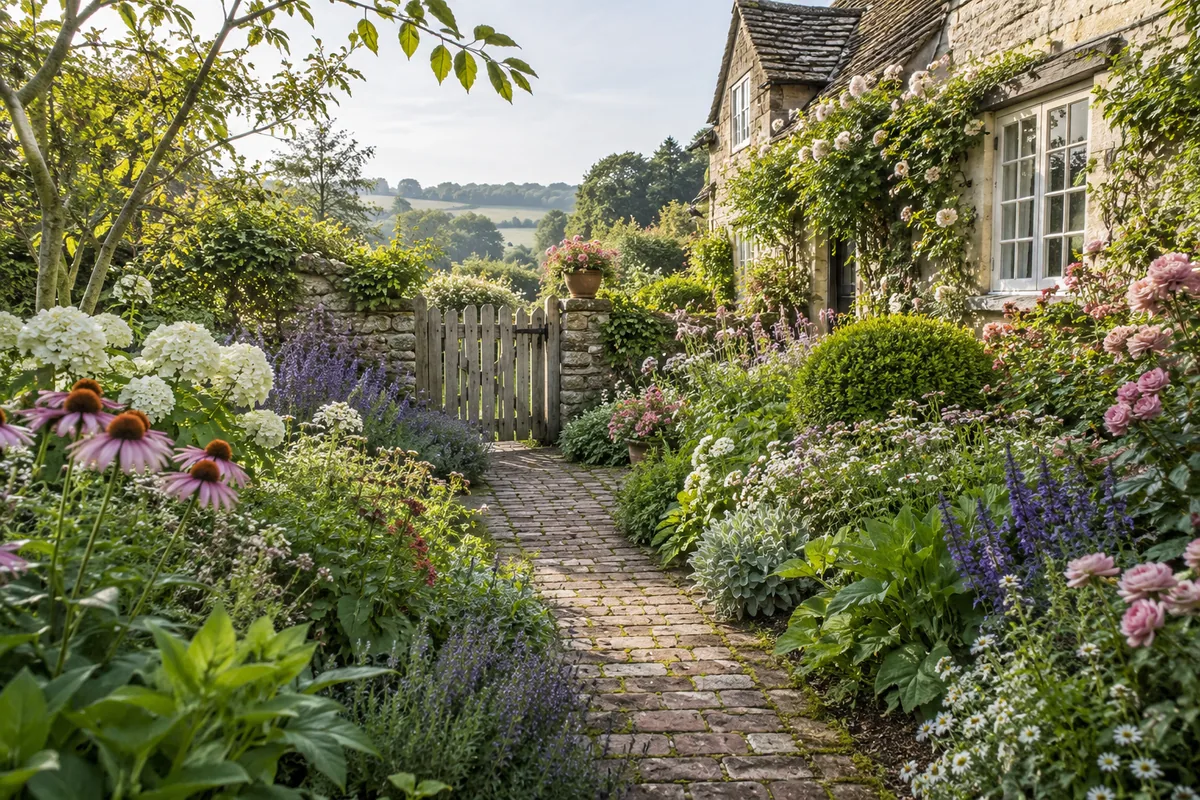
Cottage garden style: flowers with a working framework
Explore cottage garden style through layered flowers, selective self-seeding, clear paths, seasonal care, and the framework that makes informal planting usable.
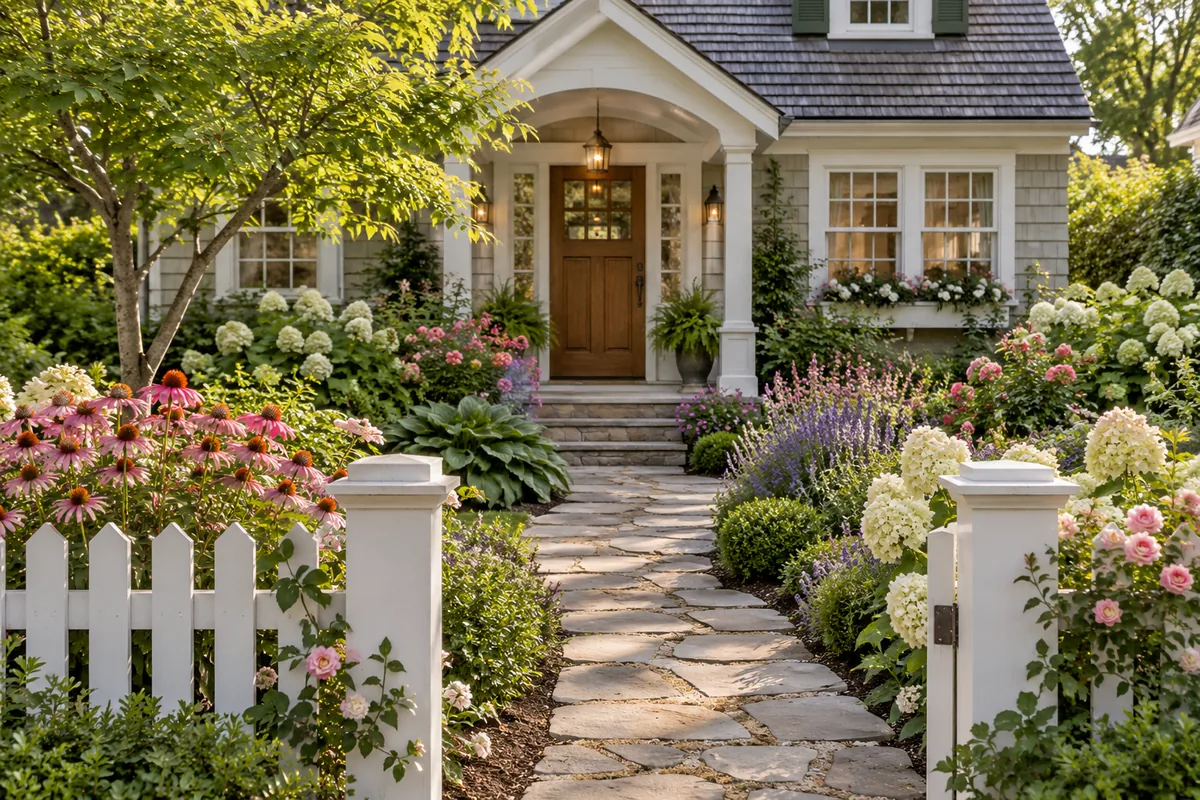
Cottage front yard ideas that welcome visitors through flowers
Find cottage front yard ideas for layered borders, useful gates, brick details, seasonal flower groups, and a welcoming entrance that stays easy to reach.
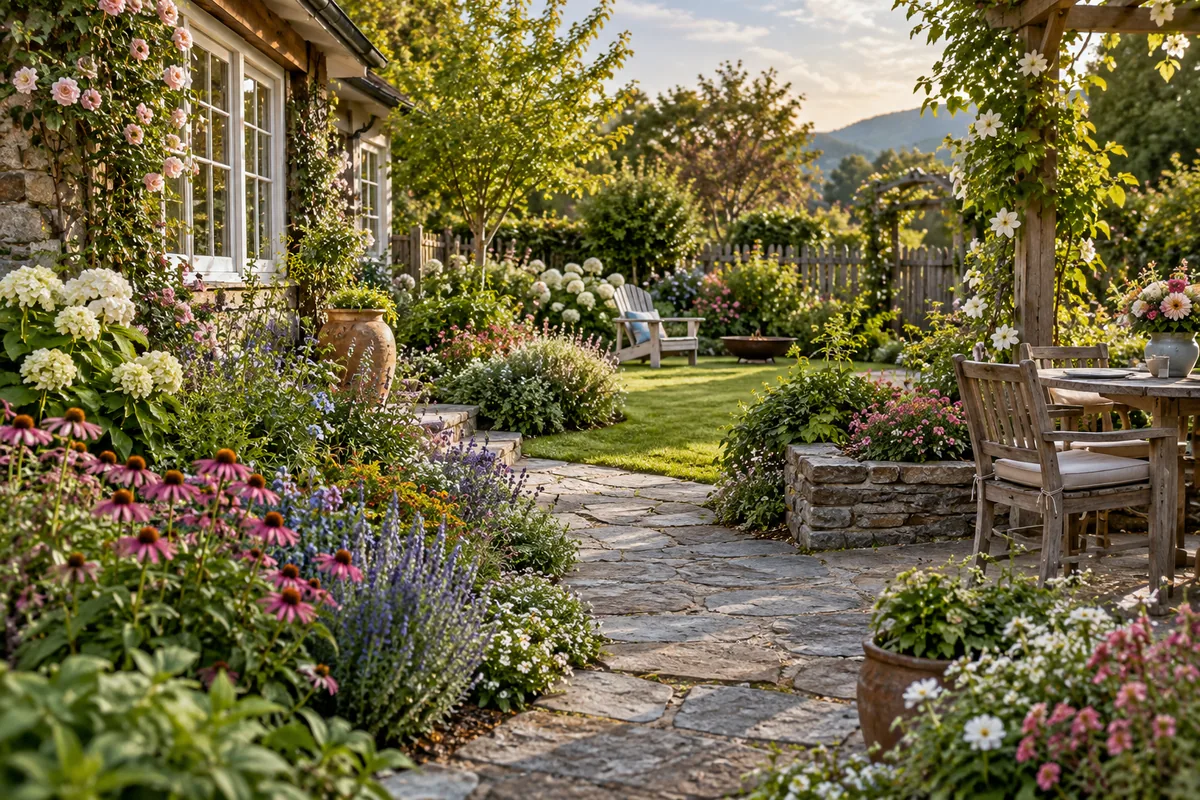
Cottage backyard ideas for flowers, seats, and seasonal life
Explore cottage backyard ideas for layered flowers, comfortable seats, connected borders, productive corners, and practical access through seasonal planting.
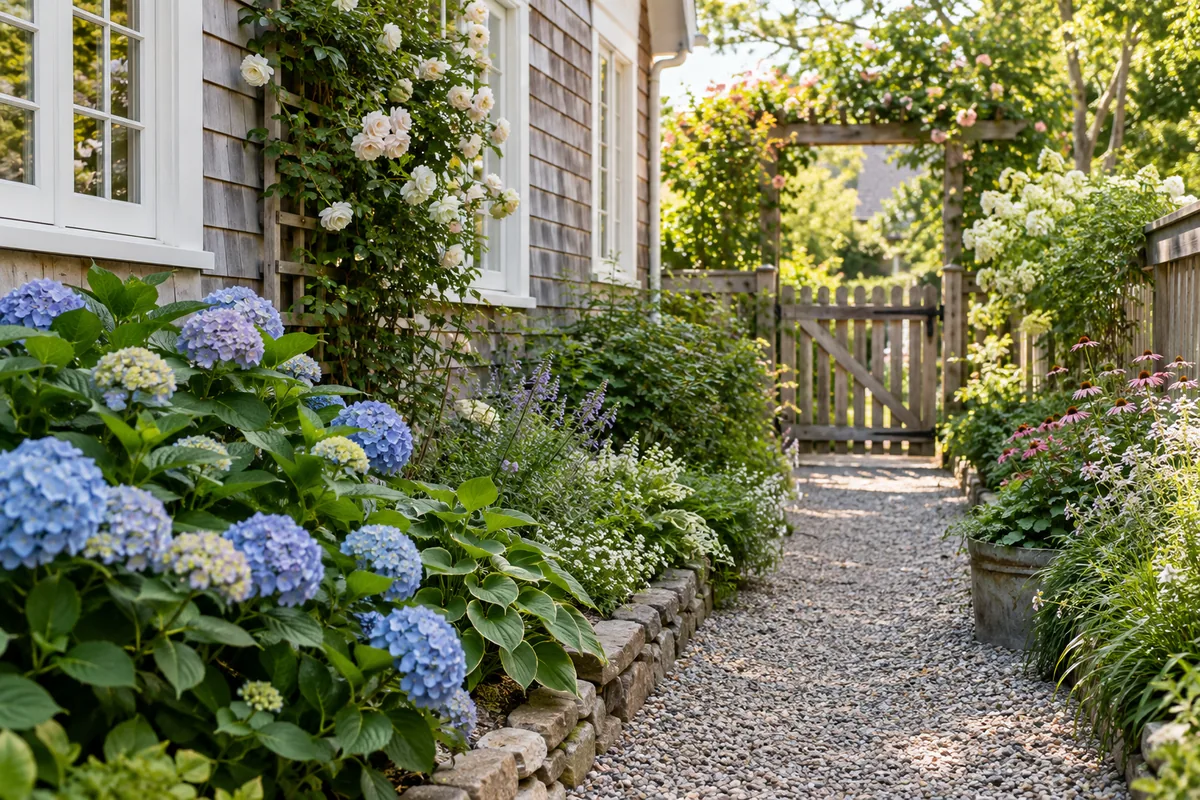
Cottage side yard ideas for flowers beside a working route
Find cottage side yard ideas for connected flowers, appropriate climbers, stable pots, readable gates, and a working route that stays comfortable to use.
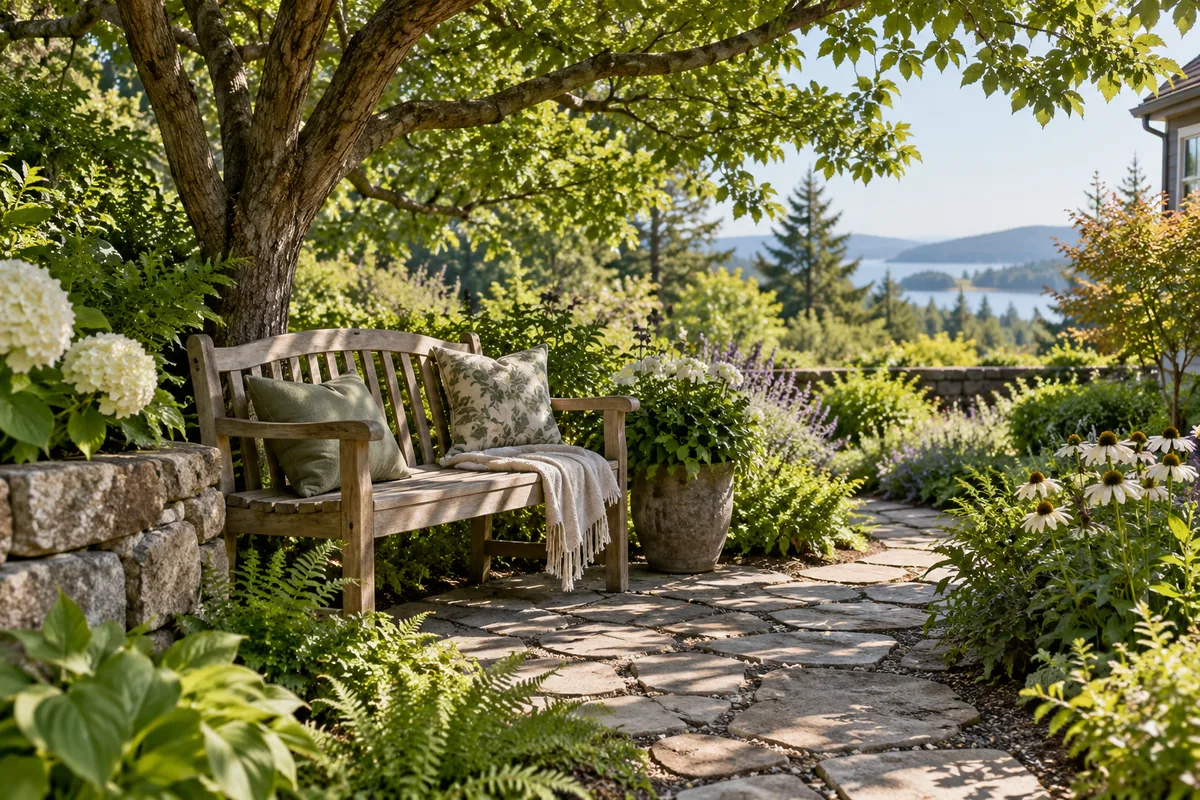
Garden Bench Ideas That Give People a Reason to Sit
Find garden bench ideas for shade, views, and everyday pauses, with practical guidance on seat fit, materials, access, maintenance, and stable placement.
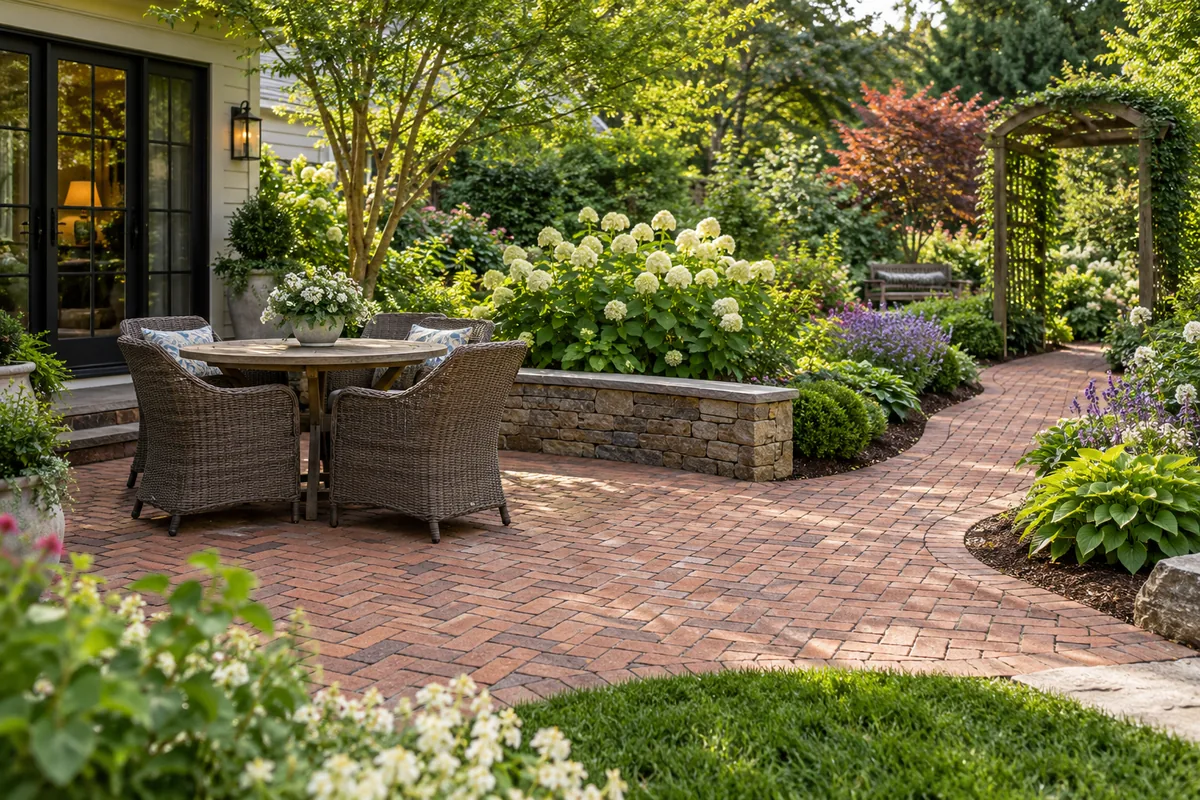
Brick Pavers for Useful Patios and Garden Paths
Brick Pavers for Patios and Paths: explore materials, placement, upkeep, and local safety questions before deciding how this feature fits your yard.