
By AI Landscape Design Team · Editorial policy
Outdoor Dining Set Ideas Based on the Occupied Table
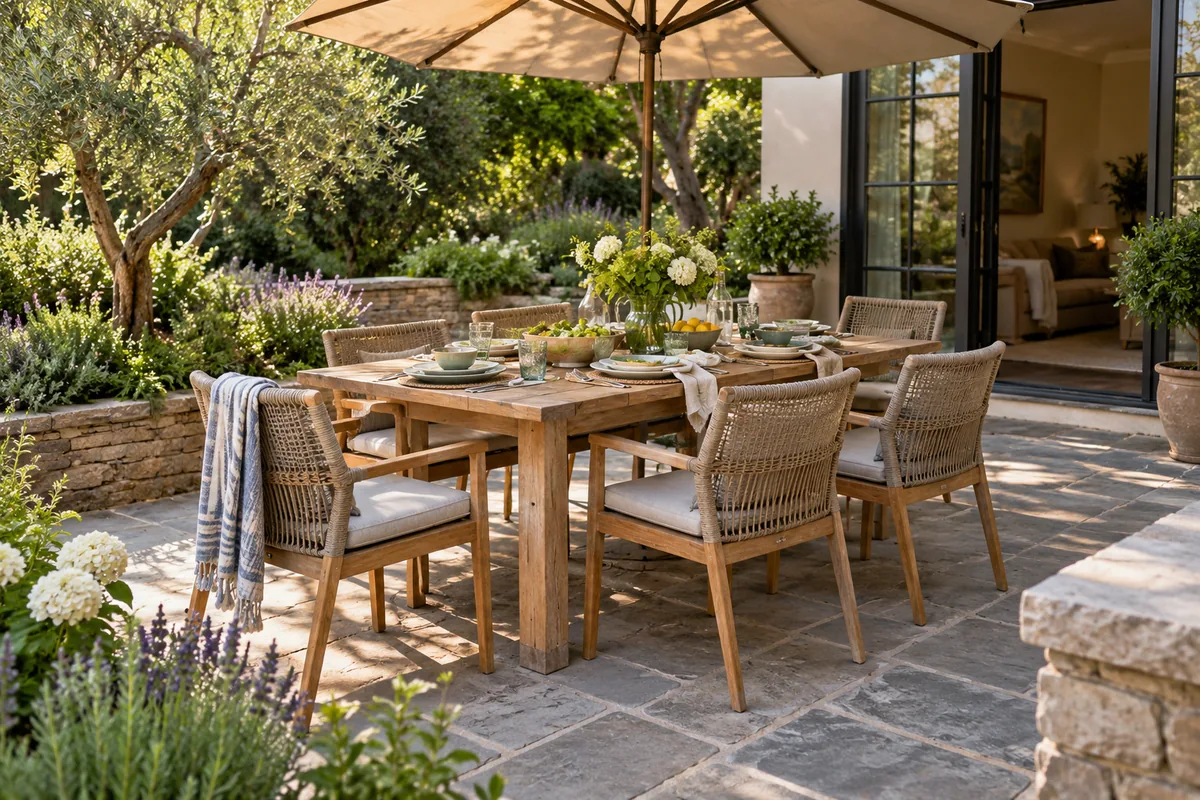
Outdoor dining set ideas should be tested with the table occupied and chairs moving, not just with furniture pushed neatly underneath. Choose the usual group size, compare table shapes, and mark the real arrangement on the patio. Add serving access and shade before selecting materials. The suitable paved area comes from the measured furniture and circulation needs, with site and accessibility requirements verified independently.
Published · 6 min read
Key takeaways
- Mark the occupied setting and pull chairs out during the trial.
- Match table shape to the routine group and serving route.
- Check shade, storage, material care, and the whole usable surface.
How many people does the table usually serve?
Begin with the ordinary meal rather than the largest event the property might host. Write down the usual number of diners, whether children or mobility needs affect the arrangement, and how food reaches the table. A household that normally seats four people may value a compact setting and a separate occasional-event plan more than a permanently crowded terrace.
Decide whether the furniture needs to support dining only or also outdoor work and games. These uses can change the preferred chair support, table surface, and shade position. Keep flexibility practical: extra chairs still need somewhere to be stored and a route into the occupied setting. An impressive guest count in a product listing does not prove the arrangement fits the property or the people using it.
When do round rectangular and extending tables fit?
A round table can create a compact gathering relationship, but its chairs occupy space all around the perimeter. A rectangular table may align well with a long terrace or house wall, yet end chairs and serving movement need attention. An extending table changes the occupied footprint, so test it in both ordinary and extended configurations before relying on that feature.
For a four-chair example, mark each pulled-out chair rather than imagining a circle or rectangle with all seats tucked in. For a larger group, compare the whole arrangement again; simply adding places along an edge can alter circulation and comfort. Table shape is a layout decision rather than a reliable capacity guarantee. Use actual product measurements and a physical trial instead of choosing a universal patio size for each table category.
What is a useful rule for the surface footprint?
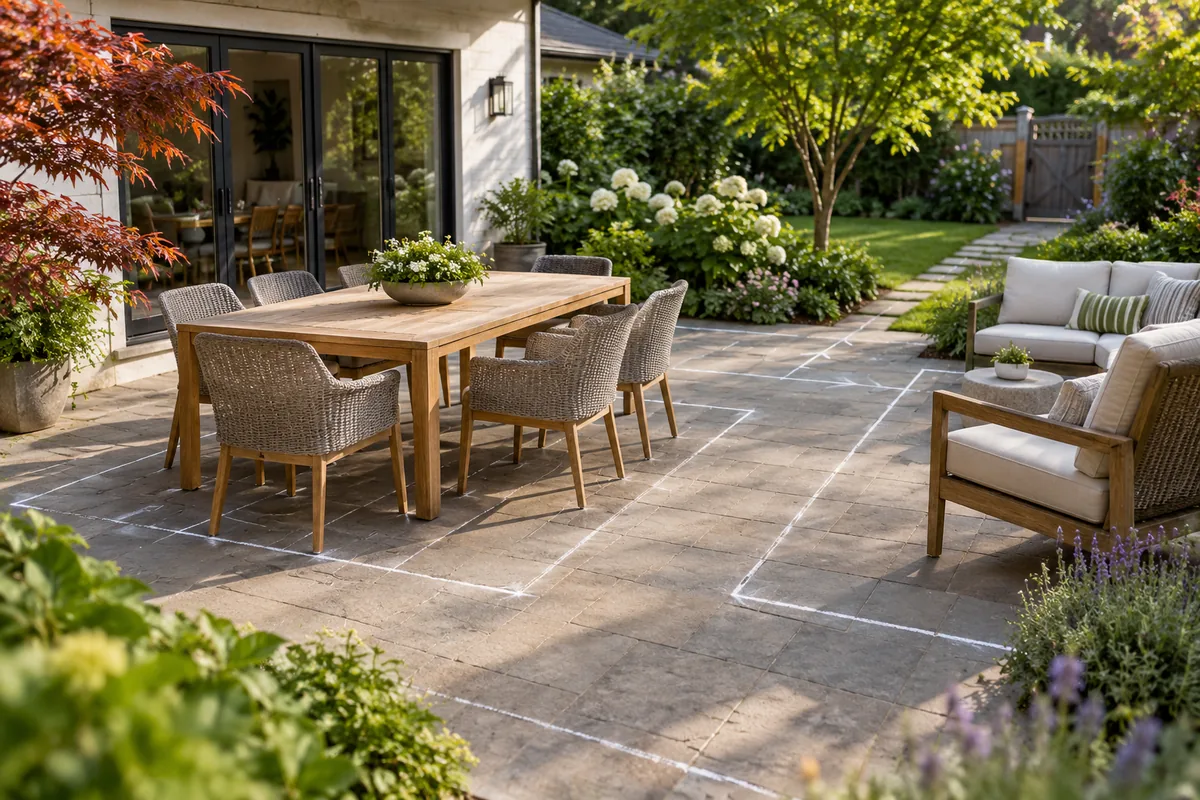
Start with the measured table, add the actual chair movement on every occupied side, and then assess the connecting route that must remain usable. Mark these areas on the ground using a reversible method appropriate to the surface. Walk through while another person sits and stands. This occupied-footprint rule is more useful than judging the table's empty outline.
Have relevant accessibility and route requirements assessed locally. Do not treat a casual trial as a compliance check or infer clearances from a generated image. Watch for a chair backing toward a planting edge, step, door, or unstable surface. How to size a patio provides a planning framework for comparing these relationships before any proposed paving dimensions are finalized by appropriate professionals.
How should shade fit the table?
Observe the site during the times meals are likely to happen. Building shade, a suitable umbrella, and a professionally assessed shade structure offer different arrangements. A pole through the table or a separate umbrella base may interfere with knees, serving, or the route between chairs. Test the actual shade equipment rather than counting only the open canopy in the plan.
Wind exposure, supports, product instructions, and safe operation need independent review. A pergola that looks attractive above the table does not prove useful shade or structural suitability. Consider how shade changes through the season and whether furniture can be moved when necessary. Match the table location to comfortable use first, then discuss the appropriate support system with qualified local professionals.
Which materials suit the care routine?
Timber, coated metal, plastic-based systems, and other outdoor products each have specific care and repair requirements. Examine how the surface feels, how joints collect debris, and whether chairs can be moved comfortably. A heavy table may remain stable in an assessed setting but be inconvenient to store or reposition. A light product needs its own exposure and stability review.
Ask about cleaning, finishes, cushions, covers, and replacement components for the actual model. Avoid ranking every product from a material name alone. Local weather and storage conditions influence the decision. A smooth tabletop may be convenient for meals, but appearance should be compared with product instructions and the way the household actually uses and maintains the furniture.
Which style pairings keep the table coherent?
In a Mediterranean patio, the setting can relate to a warm surface and restrained surrounding containers. A modern patio may use a simpler table form to preserve a clear terrace edge. Carry a selected material or color relationship through the space without requiring furniture to imitate every architectural detail.
Keep pots and plants outside the occupied chair movement. Mature growth, pruning access, USDA hardiness, and local suitability still need to be checked for new planting. A decorative border beside the meal should not create an inaccessible maintenance strip. Review the setting from indoors and from the serving approach; the useful composition includes people, carried dishes, and chairs in use rather than only the empty product photograph.
What costs and maintenance should be compared?
Include chairs, cushions where relevant, shade equipment, storage, delivery, and any required surface assessment in the proposal. Buying a table first can leave the household with chairs that do not fit or an umbrella whose base interrupts the route. Compare the entire occupied setting and ask which components can be repaired or replaced later.
Surface changes, foundations, levels, drainage, or structures need qualified local review. If excavation is planned in the United States, contact 811 and establish any separate private-service locating needs. Furniture does not resolve site defects beneath it. Plan where cushions and removable items go when the table is not in use, and keep product care instructions available so cleaning methods do not inadvertently damage the finish.
How can the concept and physical layout work together?
Use backyard outdoor dining ideas to compare the relationship between a meal, planting, and the house. Bring the measured furniture trial and outdoor-room terminology into the discussion with a designer or installer. Distinguish the preferred visual atmosphere from dimensions and site conditions that still need verification.
AILandscape can explore a dining arrangement on a patio photo. The concept cannot establish real table capacity, chair clearances, accessible movement, shade performance, or surface support. Select actual products and review them against the physical setting before purchase. The image is useful when it helps explain the mood of a meal outdoors, while the occupied trial and qualified assessment determine whether that meal can happen comfortably.
Frequently asked questions
Does a round table always need less patio space?
Not necessarily. Chairs occupy space around the whole perimeter, and the connecting route still needs assessment. Compare actual products with chairs pulled out and diners seated. The empty tabletop shape does not establish the total usable area required for the setting.
Can an extending table solve occasional extra seating?
It can provide flexibility when both configurations fit the property. Test the extended arrangement with its extra chairs, serving movement, and shade equipment. Decide where unused chairs are stored so the occasional-event plan does not obstruct ordinary patio use.
Should I buy furniture before deciding the paving size?
Furniture measurements can inform a provisional layout, but avoid purchases that depend on unverified site changes. Test the occupied arrangement and have relevant surfaces, routes, drainage, and support assessed. Use those findings together before finalizing either the installation or furniture selection.
Sources
Related reading
How to Size a Patio Around Furniture and Circulation
Size a patio with actual furniture footprints, chair movement, circulation, and site constraints before professionally confirming the final dimensions.
What Is Outdoor Room in Landscape Design?
Learn what outdoor room means in landscape design, with a practical yard example, related terms, and the site decisions to check before making changes.
Concrete Pavers for Patios, Paths, and Yard Routes
Learn how concrete pavers fit your yard, with practical material, placement, upkeep, and safety questions to review before choosing a visual direction.
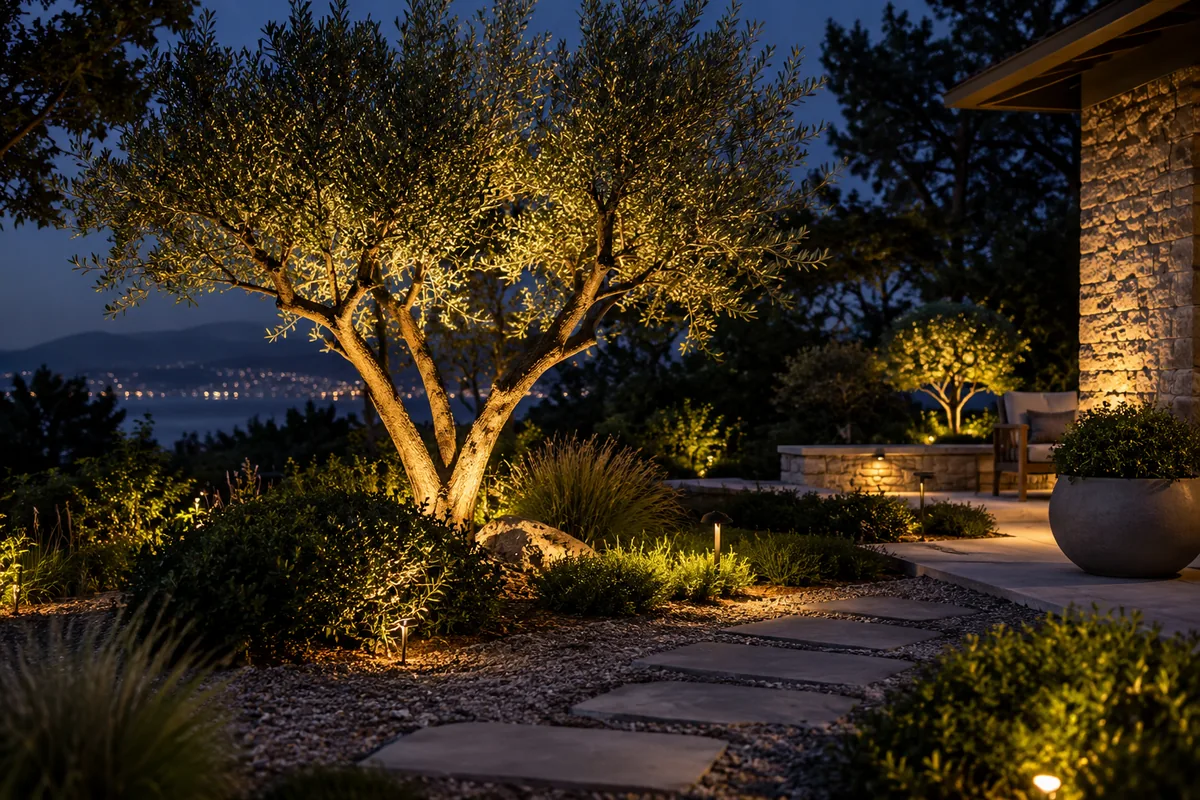
Landscape Accent Lighting That Respects the Night View
Plan landscape accent lighting around selected features, controlled glare, useful viewing positions, appropriate fixtures, and professional electrical review.
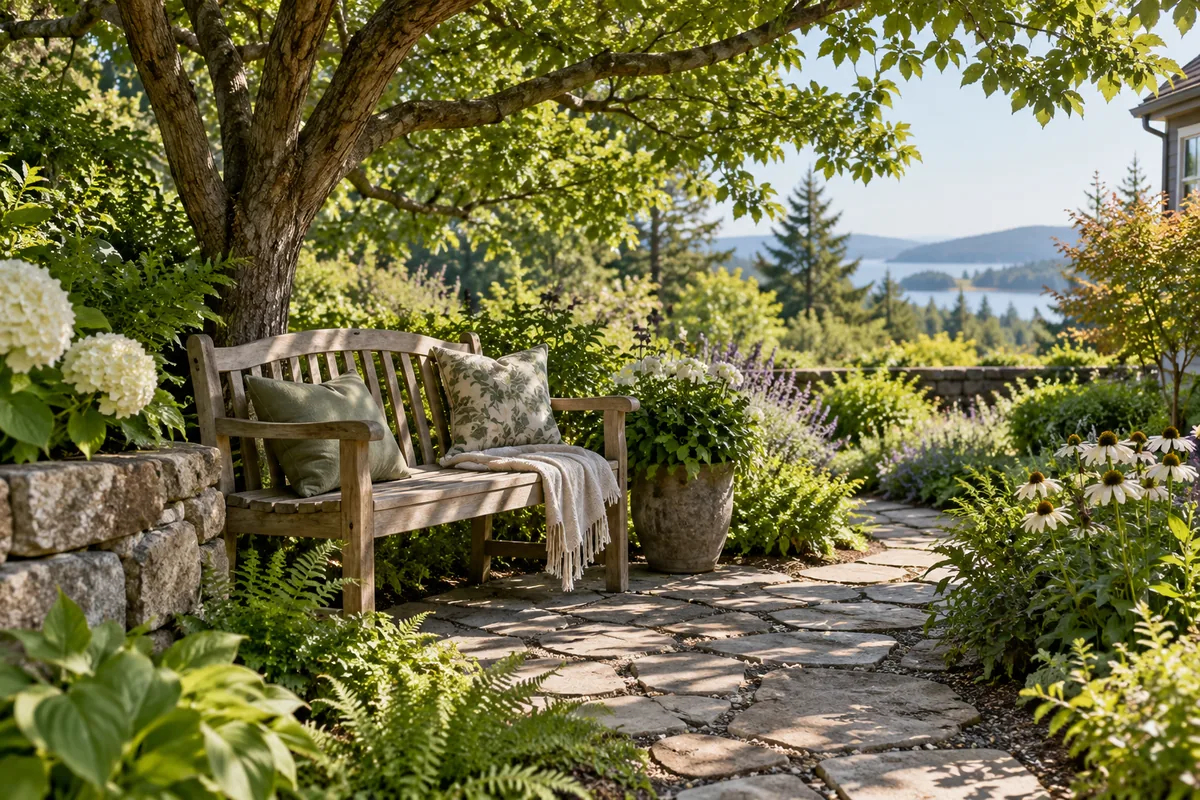
Garden Bench Ideas That Give People a Reason to Sit
Find garden bench ideas for shade, views, and everyday pauses, with practical guidance on seat fit, materials, access, maintenance, and stable placement.
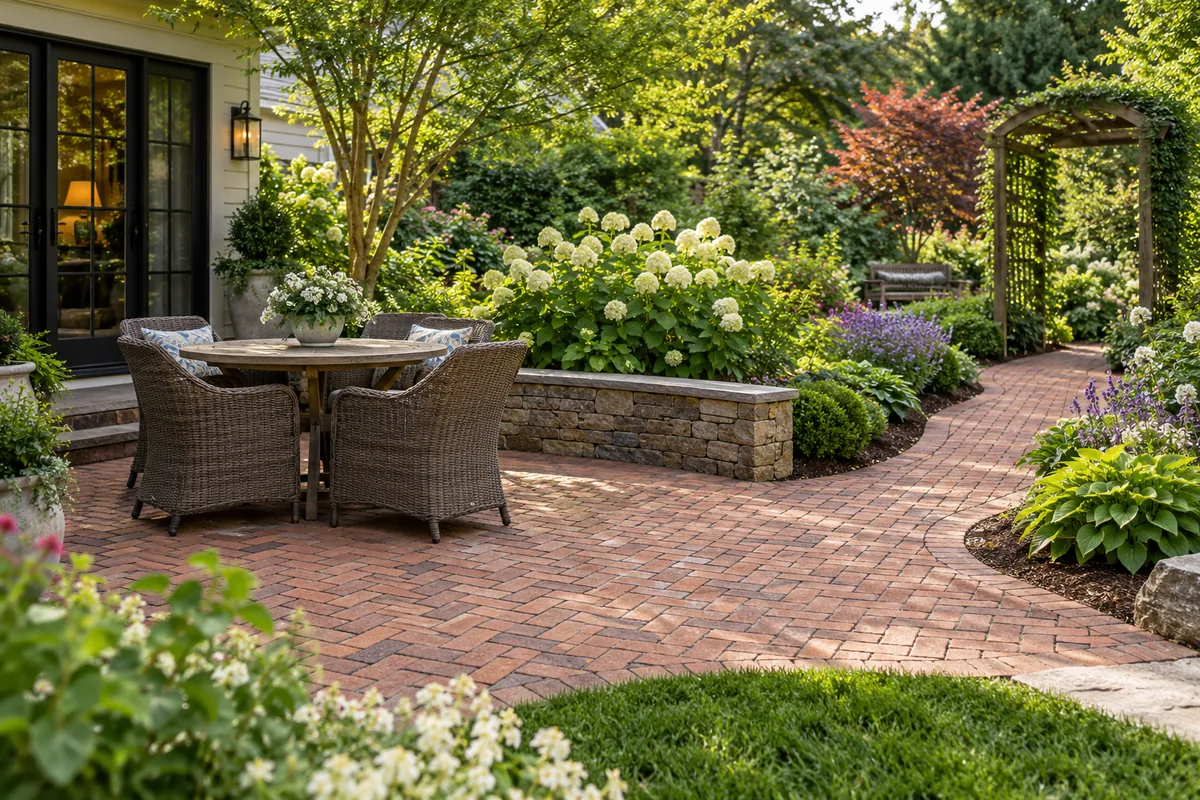
Brick Pavers for Useful Patios and Garden Paths
Brick Pavers for Patios and Paths: explore materials, placement, upkeep, and local safety questions before deciding how this feature fits your yard.