
By AI Landscape Design Team · Editorial policy
Mediterranean side yard ideas using clay, texture, and light
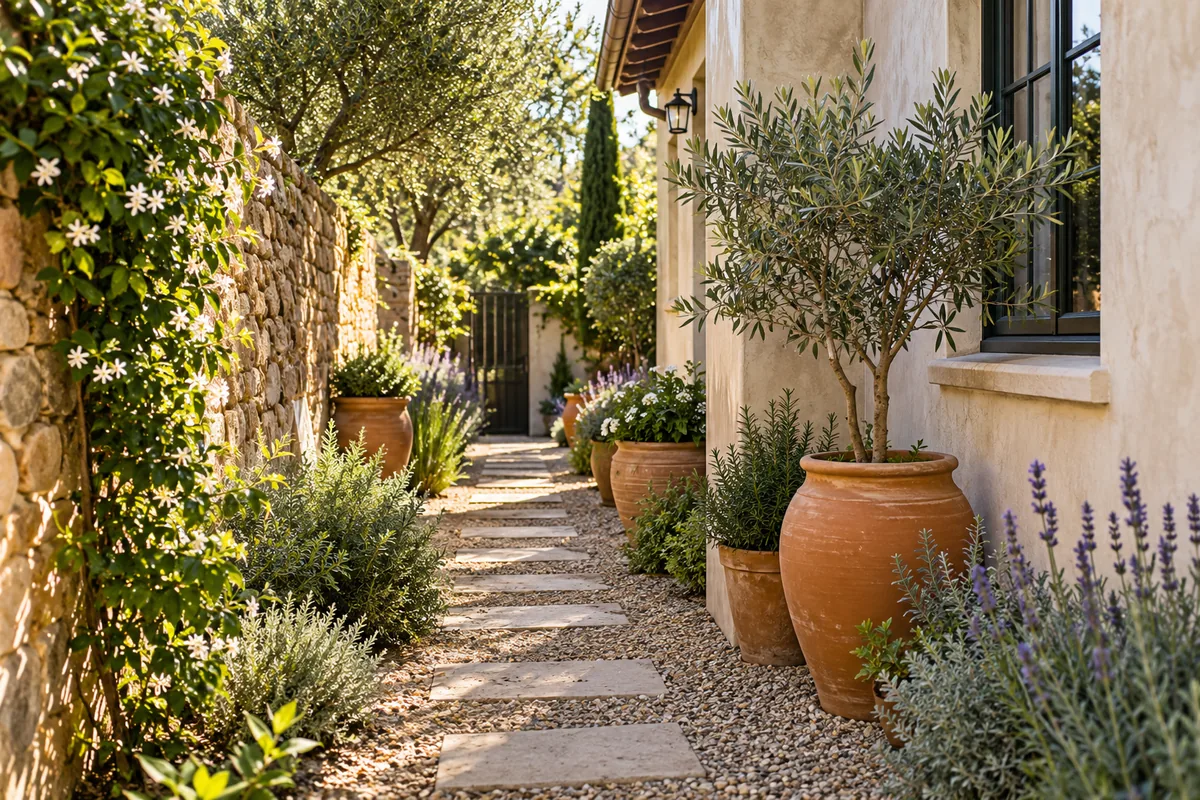
Mediterranean side yard ideas can use clay containers, warm mineral colors, and textured foliage to connect garden spaces without crowding the service route. Assess the real sunlight and equipment access before copying a dry-summer reference. A few suitable visual roles can carry the style even where building shade or local weather requires different plants and materials.
Published · 6 min read
Key takeaways
- Use warm materials to connect the ends of the passage.
- Put pots only where their care and gate movement are practical.
- Adapt familiar foliage references to actual side-yard exposure.
What changes when the Mediterranean reference meets a side passage?
A sheltered courtyard image may not resemble the space beside a house. Building shade, reflected light, nearby windows, and working equipment all influence what can fit. Observe the passage at different times and identify which sections are actually sunny. Check utility and manufacturer instructions for required service access, and review applicable local rules before enclosing or screening equipment.
Decide whether there is a genuine pause point or simply a connection between front and back. Warm colors and a quiet planted edge can make that connection deliberate without installing a sitting room. Keep gates and doors functional and consider neighboring views before changing boundary finishes. Drainage and grade issues need local professional assessment; gravel and clay pots are visual choices rather than remedies for those conditions.
Eight warm-material ideas that leave the route usable
- Connect a house finish to the passage. Use a restrained stone, brick, or other suitable material relationship where the main route can support it. This fits a property whose garden ends currently feel disconnected. Check condition, grip, repairs, and levels with qualified advice. Warm appearance should not lead to an uneven essential surface chosen simply because it looks old.
- Group clay pots at a real opening. Place stable containers near a widened transition, beyond gate and door movement. It works when there is genuine room outside circulation. Ask about drainage and climate durability and plan planted weight. A pot collection running through the center is a counterexample: repeated clay forms cannot justify obstructing bins or service access.
- Use muted foliage where the site supports it. A locally suitable textured group can supply the visual connection without a national plant prescription. This suits sections with adequate mature space and verified exposure. Familiar silver leaves may not fit building shade or wet soil. Ask regional horticultural sources for the actual role rather than forcing a dry-summer species into the passage.
- Keep gravel in a defined supporting area. A contained mineral edge may relate planting to the route without replacing the main surface. It fits a place where loose material can be collected and maintained. Assess glare and water movement locally. Gravel spread against equipment, steps, or a gate can interfere with use and should not be treated as an automatic drainage improvement.
- Let a quiet boundary carry the color palette. A compatible existing wall or permitted fence treatment can support warm containers without extra objects. This works where the backdrop currently contains several competing finishes. Check shared boundaries and neighboring windows before changes. A screen that blocks service inspection or required airflow is unsuitable despite its visual contribution.
- Use a small accent at the destination. A selected pot or seasonal flower group can mark the transition into the backyard. It suits a passage whose purpose is connection rather than lingering. Keep the route calm so the accent is legible. Strong color repeated on every surface can turn the side yard into a decorated corridor without improving its practical role.
- Locate watering supplies deliberately. Keep a hose or other care equipment reachable without crossing delicate planting or moving heavy pots. This fits owners who want containers beside the route. Confirm that stored items do not occupy service clearances. Mediterranean character depends on maintained planting, so a convenient care position is more useful than hiding every working object.
- Light the useful openings after dark. Make gates and necessary transitions clear rather than illuminating all the clay and gravel. This works for a route used in the evening. Licensed professionals must review wiring and local requirements. Observe light through nearby windows and keep fittings accessible. A warm night appearance should not produce glare or require dismantling pots to repair equipment.
Which local checks decide the actual plant and finish choices?
Check USDA hardiness zone, light, soil, moisture, summer conditions, mature size, and regional invasive information before buying plants. The style can remain recognizable even when familiar Mediterranean candidates are unsuitable. Use ASPCA toxicity information separately for pet-accessible planting. Containers bring different conditions from the ground and may need a specific winter plan based on real products and plants.
The Mediterranean style guide explains adaptation, and planter considerations help frame care questions. Have licensed local professionals assess water concerns, grading, structures, foundations, and electrical work. Contact 811 before digging in the United States and review private locating needs. No image can establish drainage behavior or required equipment clearance. Resolve those matters independently before interpreting the desired warm palette as an installation proposal.
What makes the connected passage pleasant over time?
Check pots for stability, clear debris from material edges, and keep stems outside the service route. Observe whether containers receive the light and care expected in each position. If moving heavy pots is part of regular gate use, change their location rather than treating the inconvenience as unavoidable. The passage should connect garden rooms through ordinary use, not only look related when empty.
AILandscape's side yard tool can explore a Mediterranean visual direction on your own photo. Compare surfaces, pots, and planting roles, then verify dimensions, actual species, utility access, water movement, and construction locally. The concept is an appearance reference. Revise versions that hide equipment or alter the building. A convincing adaptation uses a manageable warm-material vocabulary while respecting the real light, weather, and work beside the house.
Frequently asked questions
Can the style work in a mostly shaded side yard?
Borrow warm material and container relationships while plants are chosen for the actual exposure. Familiar dry-summer foliage may be unsuitable in building shade. Observe seasonal light and consult local horticultural advice rather than selecting a Mediterranean list from a sunny courtyard photograph.
Where should clay containers go?
Use an actual opening outside door, gate, movement, and service requirements. Check planted weight, drainage, climate durability, and watering access. Containers should reinforce a transition or view, not become objects that need moving every time bins or equipment pass.
Is loose gravel essential to the Mediterranean look?
It is optional. Warm masonry, restrained containers, and suitable textured foliage can supply the character. Decide surface roles from access and maintenance first, and have drainage concerns assessed independently rather than assuming gravel resolves them.
Sources
Related reading
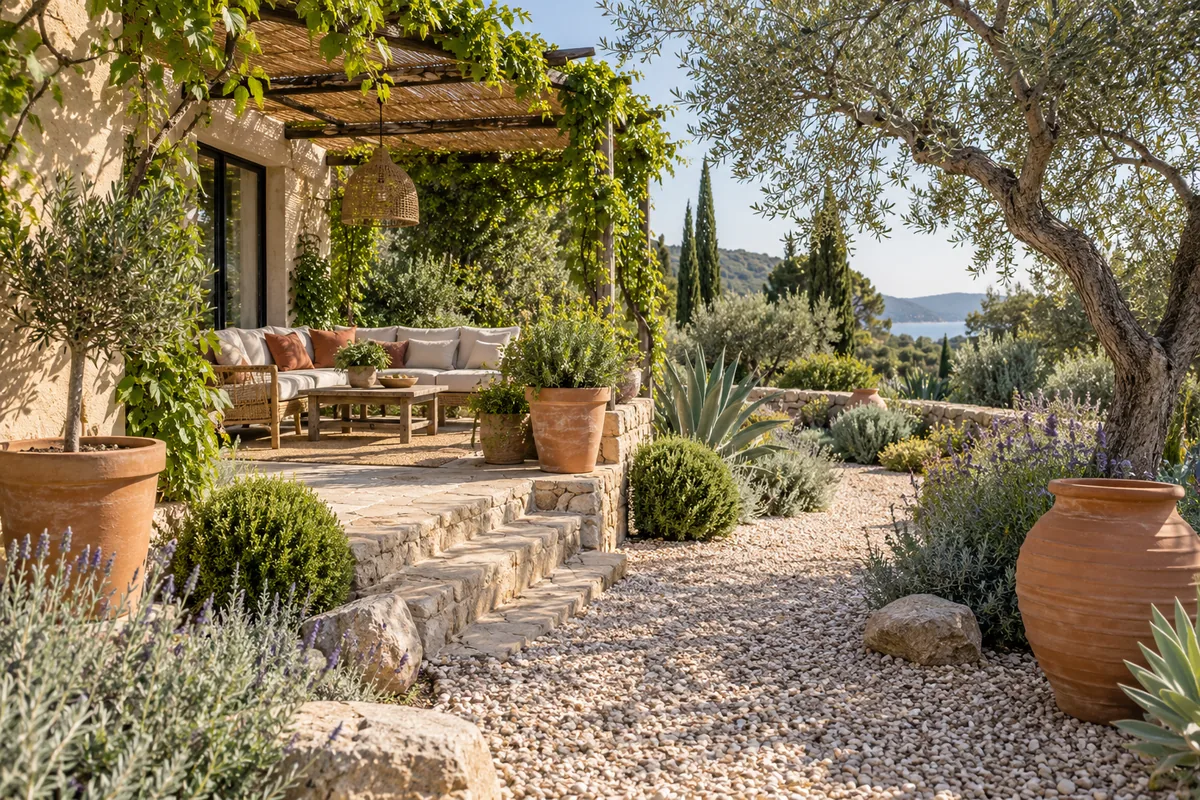
Mediterranean garden style: shade, gravel, and warm color
Understand Mediterranean garden style through shade, gravel, clay pots, and silver foliage, with practical ways to adapt the visual language to local climates.
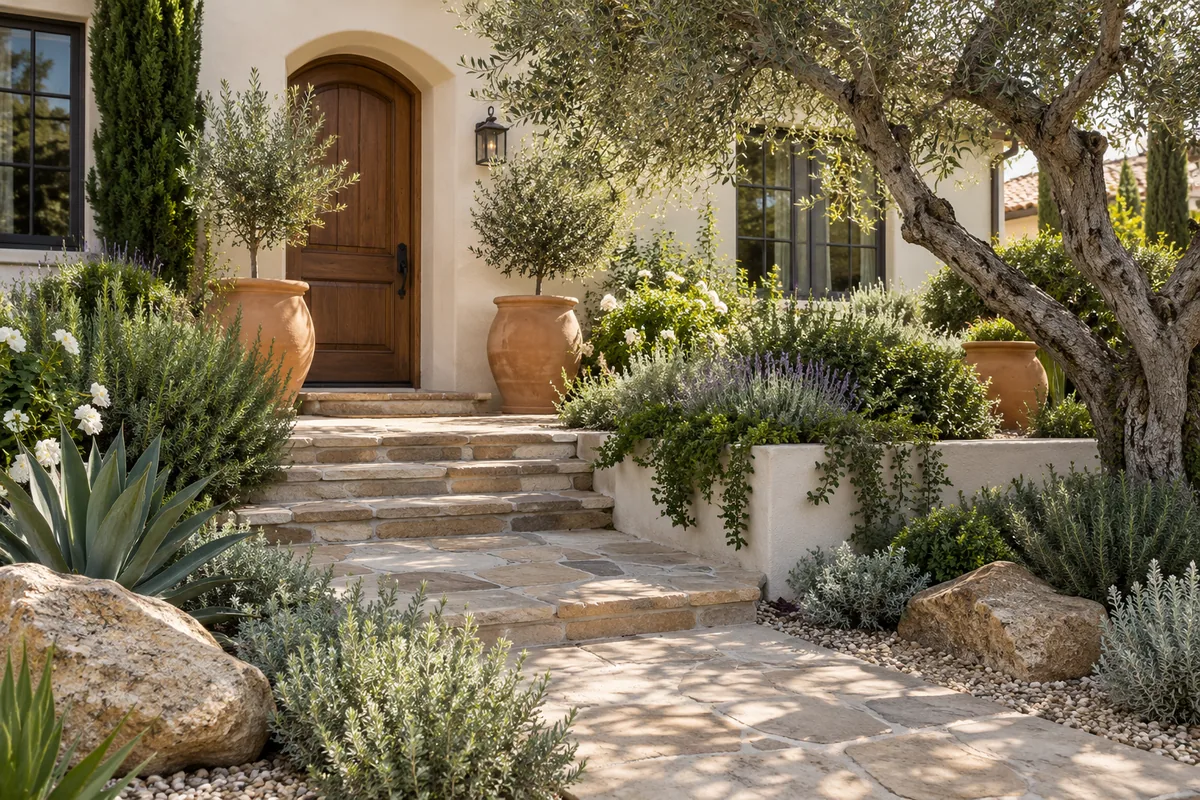
Mediterranean front yard ideas with clay, shade, and texture
Find Mediterranean front yard ideas using clay pots, muted foliage, pale materials, sheltered entry details, and suitable planting beside a clear approach.
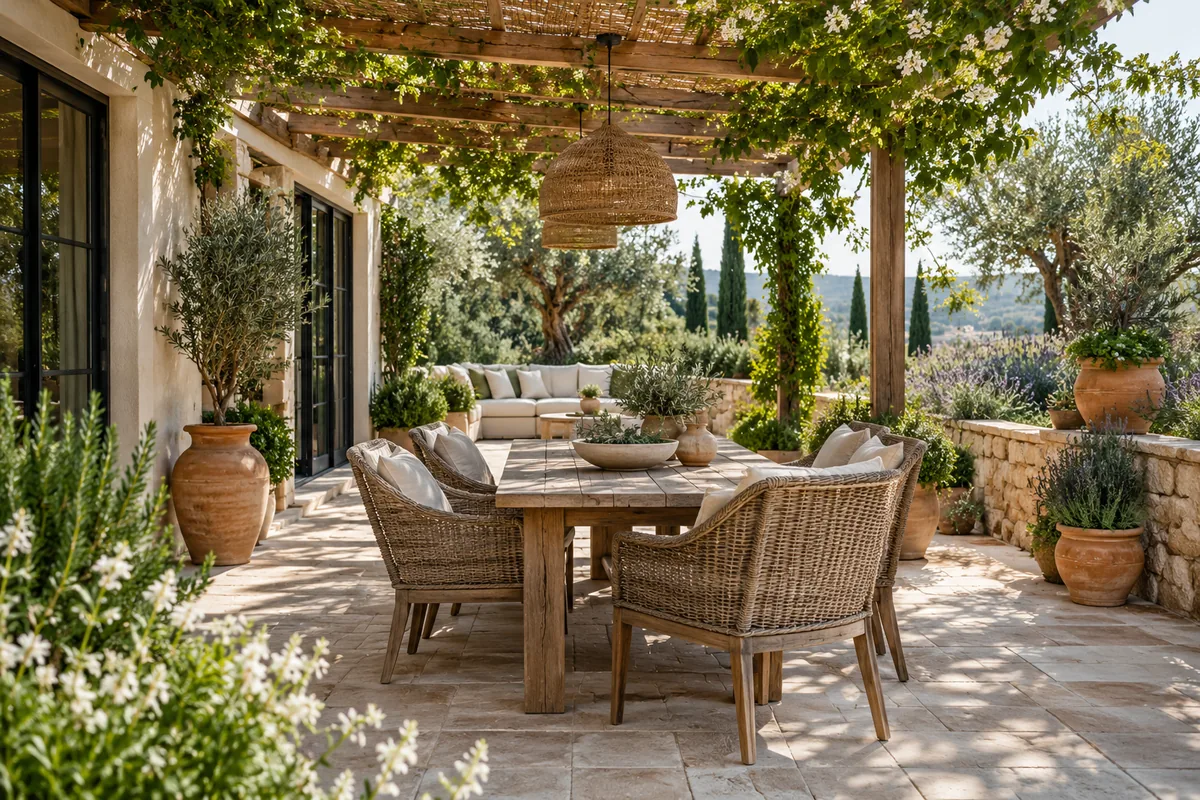
Mediterranean backyard ideas for shaded outdoor living
Find Mediterranean backyard ideas for shaded meals, clay containers, mineral surfaces, textured planting, and comfortable garden rooms adapted to local weather.
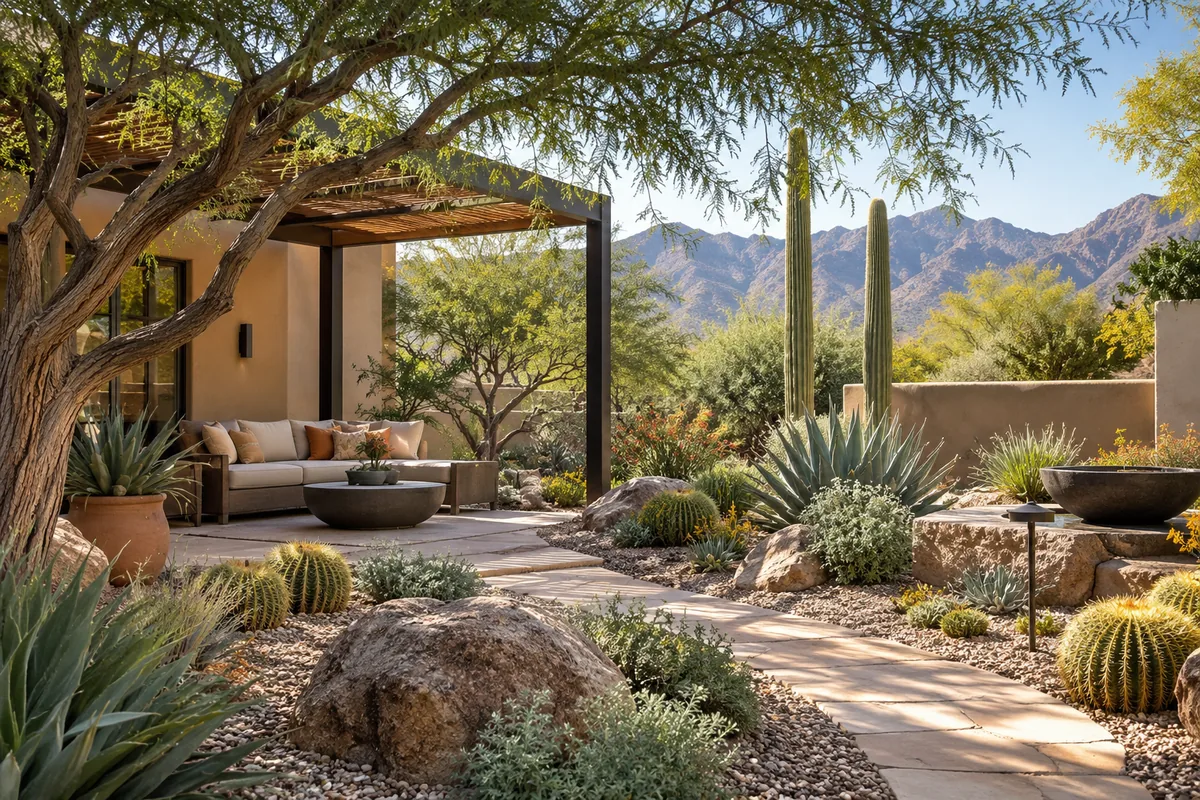
Desert landscape style: shade, stone, and plant form
Understand desert landscape style through plant form, mineral surfaces, useful shade, and heat-aware layouts, while separating its appearance from xeriscaping.
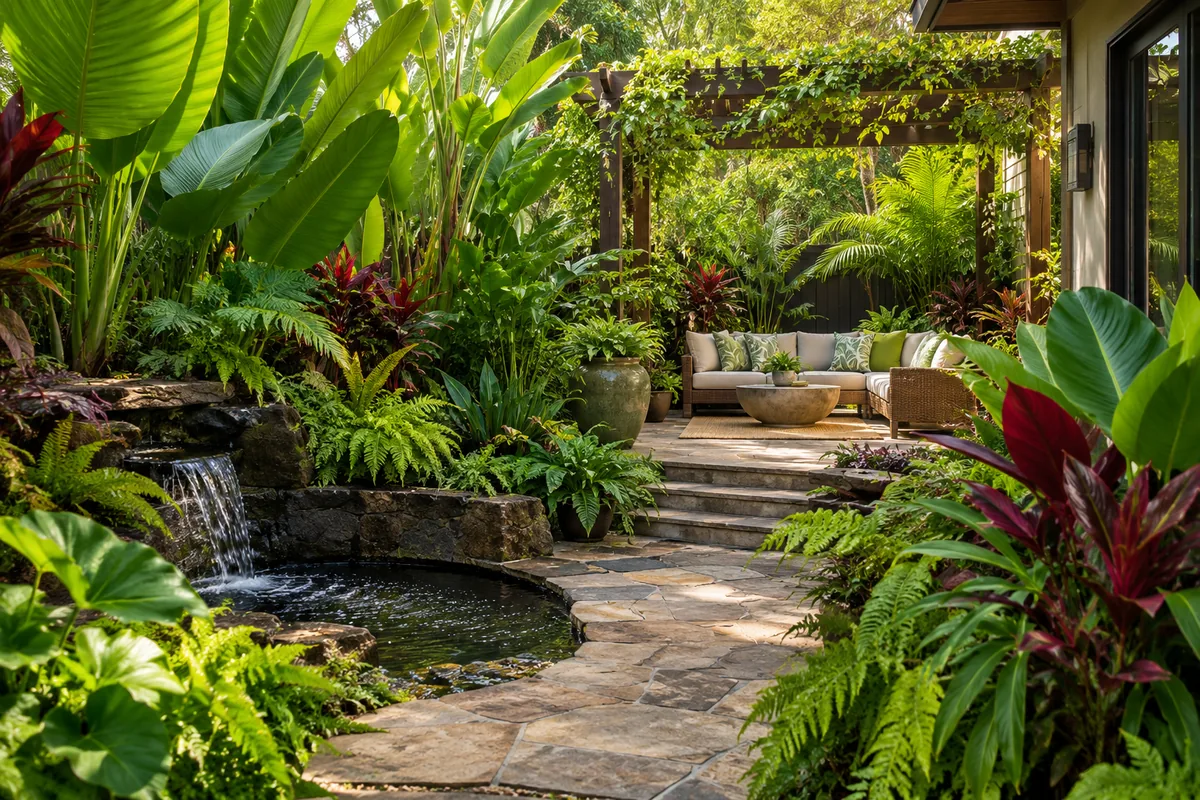
Tropical landscape style: foliage, layers, and shelter
Explore tropical landscape style using large leaves, layered greenery, sheltered seating, and container strategies adapted to local weather and care routines.
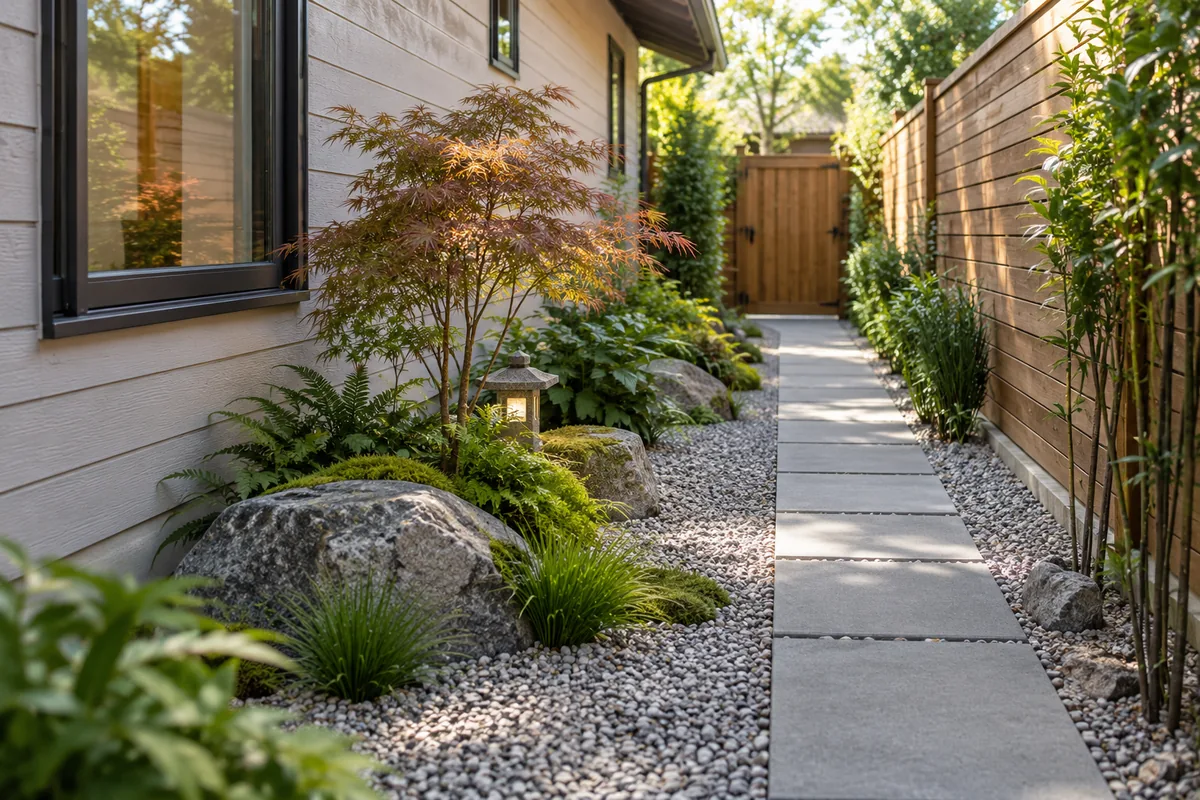
Zen side yard ideas for a viewed composition beside the route
Explore zen side yard ideas for a deliberate window view, contained gravel, quiet planting, and composed stones placed beside essential service circulation.