
By AI Landscape Design Team · Editorial policy
Mediterranean front yard ideas with clay, shade, and texture
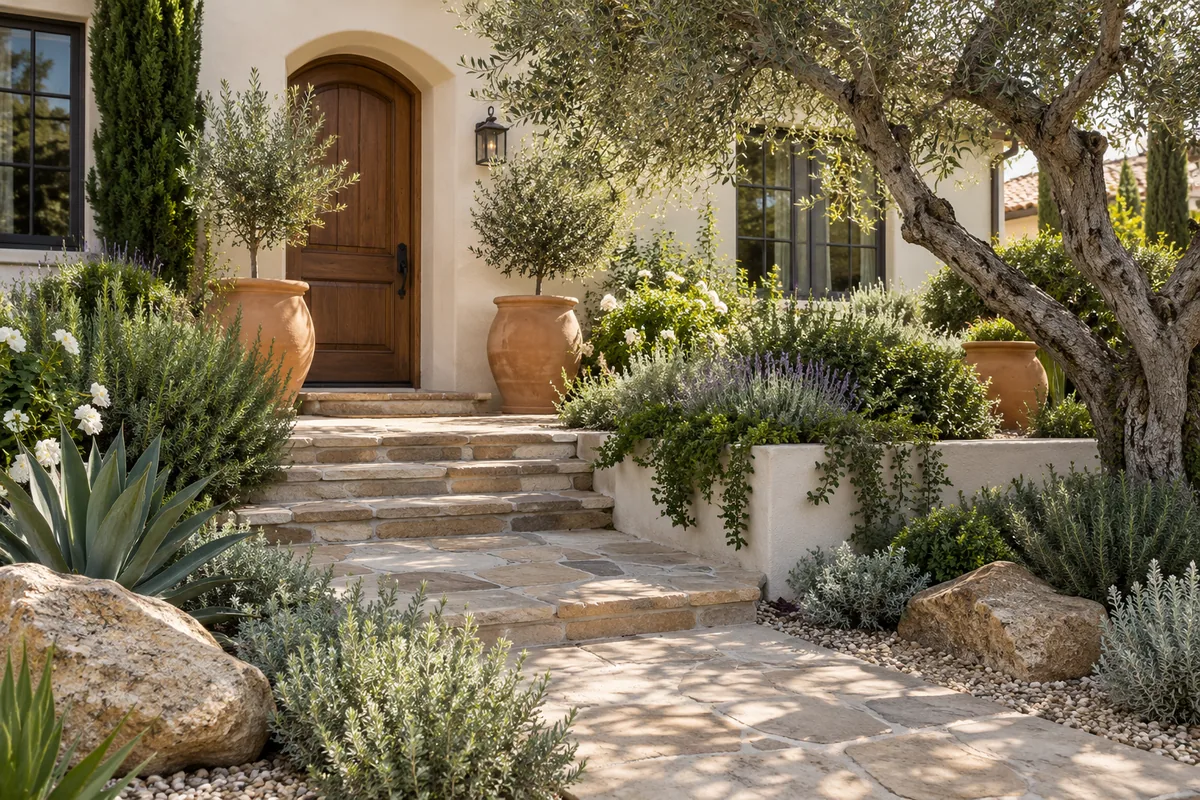
Mediterranean front yard ideas can connect a house to the street through warm clay containers, quiet mineral surfaces, and textured planting. Keep the doorway readable and the approach comfortable before choosing familiar silver foliage or decorative gravel. Outside dry-summer climates, borrow the color and structure while selecting plants and construction details for the actual local weather.
Published · 6 min read
Key takeaways
- Use warm materials to connect the entry and facade.
- Place containers where doors, deliveries, and watering stay practical.
- Adapt familiar foliage roles to the real climate.
Which arrival conditions matter most?
An exposed front door, reflected light from a wall, and a large driveway can create a different environment from a sheltered backyard. Observe the approach at the time people arrive and note glare, heat, and shade. The frontage should feel usable from the car to the door, not just attractive from across the street.
Review the house colors and retain finishes that already work. Adding terra-cotta, several gravel colors, patterned tile, and bright paint all at once can make the entry harder to read. Check neighborhood or local restrictions before modifying a front boundary or shade structure. Keep house numbers, mailbox access, and utility equipment visible or reachable. The visual reference is a starting point for the entrance, not permission to copy a climate-specific plant collection.
Eight ideas for a warm, legible entrance
- Group clay pots where visitors pause. Place a coherent container group beside the porch rather than along every part of the approach. It suits a doorway with room outside the swing and arrival route. Ask about climate durability and drainage before filling the pots. Leave watering access and enough open ground that deliveries do not need to be carried through foliage.
- Use a pale material that relates to the house. A muted stone or paving color can connect a warm facade to the front garden. This works when the existing surface feels disconnected from the building. Compare samples in direct sun because glare may be uncomfortable. Have a qualified installer assess condition, grip, edge details, and access before choosing a finish by color alone.
- Repeat a silver-foliage role. A locally suitable muted foliage group can connect several planting areas without relying on constant bloom. It suits a frontage where texture matters more than strong flower color. Familiar Mediterranean plants are references only; verify cold, humidity, light, moisture, and invasive status. A similar-looking regional choice may perform differently and needs its own care plan.
- Give the porch shade where it is used. Consider an appropriate canopy or professionally reviewed structure if the entry is exposed when people arrive. It suits a facade where shelter improves an actual daily task. Avoid assuming a decorative pergola provides enough protection. Check foundations, wind, permits, and the way shade changes plant conditions with qualified local advice.
- Keep gravel contained beside planting. A quiet mineral edge can support the foliage without replacing the dependable approach. It works where loose aggregate can be maintained and kept away from steps. Discuss drainage rather than assuming gravel resolves water problems. Containment and access matter more than recreating a large gravel courtyard on a frontage that needs frequent delivery movement.
- Use a darker background to clarify clay. A restrained existing fence or shrub group can make warm pots easier to read. This fits a frontage with an otherwise busy backdrop. Check mature plant growth and boundary rules before changing the screen. Avoid enclosing the approach so tightly that the door disappears from the street or the driveway loses necessary visibility.
- Limit the strong accent to one point. A painted door or a modest seasonal flower group can supply emphasis without repeating saturated color everywhere. It suits an entry that needs a clear destination. Compare the accent with the house number and light fittings. Too many competing focal objects can make the front garden feel decorated instead of organized.
- Make the address work after dusk. Position readable numbers and appropriate entry lighting to support visitors from the road or driveway. It fits the style when practical details remain simple. Have electrical work reviewed and installed by licensed professionals. Check light from neighboring properties as well as the doorstep so a welcoming entrance does not create glare.
How can planting and materials be adapted outside a dry-summer climate?
Select the plant role first and then evaluate regional candidates. The USDA hardiness zone is one check; actual moisture, sunlight, soil, summer weather, and mature size also matter. Clay containers may need a winter handling plan, and a wet bed needs assessment rather than an automatic gravel dressing. Use the ASPCA list for pet-accessible plants and verify local invasive restrictions independently.
The Mediterranean style guide explains the broader palette, while planter considerations help organize container questions. New structural shade, level changes, or drainage work needs licensed local review. Contact 811 before digging in the United States and check separate private utility locating. A front garden can borrow warm surfaces and textured foliage even when none of the familiar regional plant examples fits the actual conditions.
What care should be visible from the street?
Inspect pots for stability, collect debris at gravel edges, and keep growth clear of the entry. Containers need their own watering routine, especially when exposure differs between the porch and the curb. Do not assume a mineral surface reduces every maintenance task. Seasonal plant losses and damaged pots can quickly dominate a frontage with a restrained palette.
AILandscape's front yard tool can help compare a Mediterranean visual idea on your own photograph. Treat the output as a reference for color and arrangement, then check the actual plant choices, dimensions, water movement, and construction locally. If the concept adds a structure or changes the facade, review that separately before considering the planting. The most convincing interpretation keeps the warm character while making everyday arrivals comfortable in the real climate.
Frequently asked questions
Can Mediterranean front yard ideas work in cold winters?
The material palette and entry arrangement can be borrowed while plants are selected for local conditions. Containers may need protection or seasonal handling, depending on their materials and contents. Confirm the winter plan before purchasing pots or tender plants from a warm-climate reference.
Should every container match?
A relationship in color, form, or material is more useful than identical containers. Group them where they have a real role and leave the arrival route clear. Check planted weight, drainage, and watering needs before creating a collection that is difficult to maintain.
Are silver-leaved plants required?
They are a familiar visual reference but not essential. Shade, clay pots, mineral colors, and a clear outdoor-room relationship can express the style. Ask local horticultural sources which foliage roles fit the site instead of selecting plants only for their appearance in a photograph.
Sources
Related reading
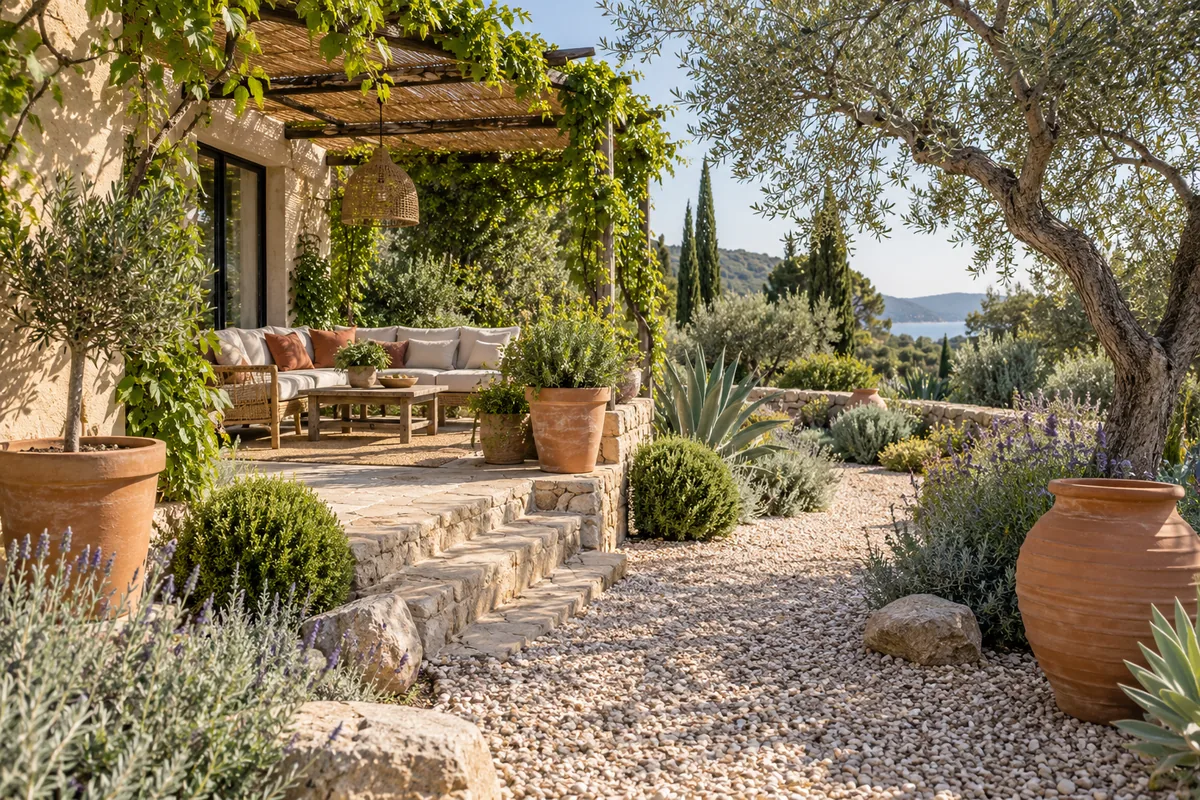
Mediterranean garden style: shade, gravel, and warm color
Understand Mediterranean garden style through shade, gravel, clay pots, and silver foliage, with practical ways to adapt the visual language to local climates.
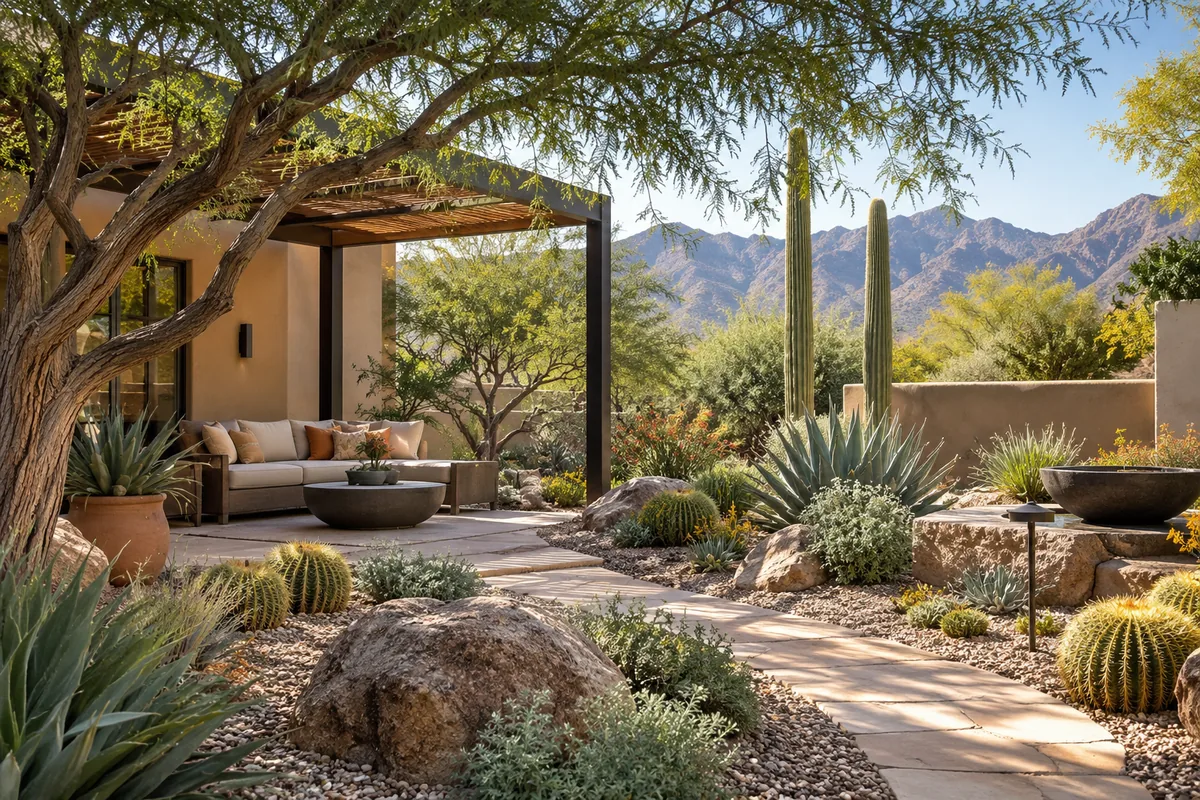
Desert landscape style: shade, stone, and plant form
Understand desert landscape style through plant form, mineral surfaces, useful shade, and heat-aware layouts, while separating its appearance from xeriscaping.
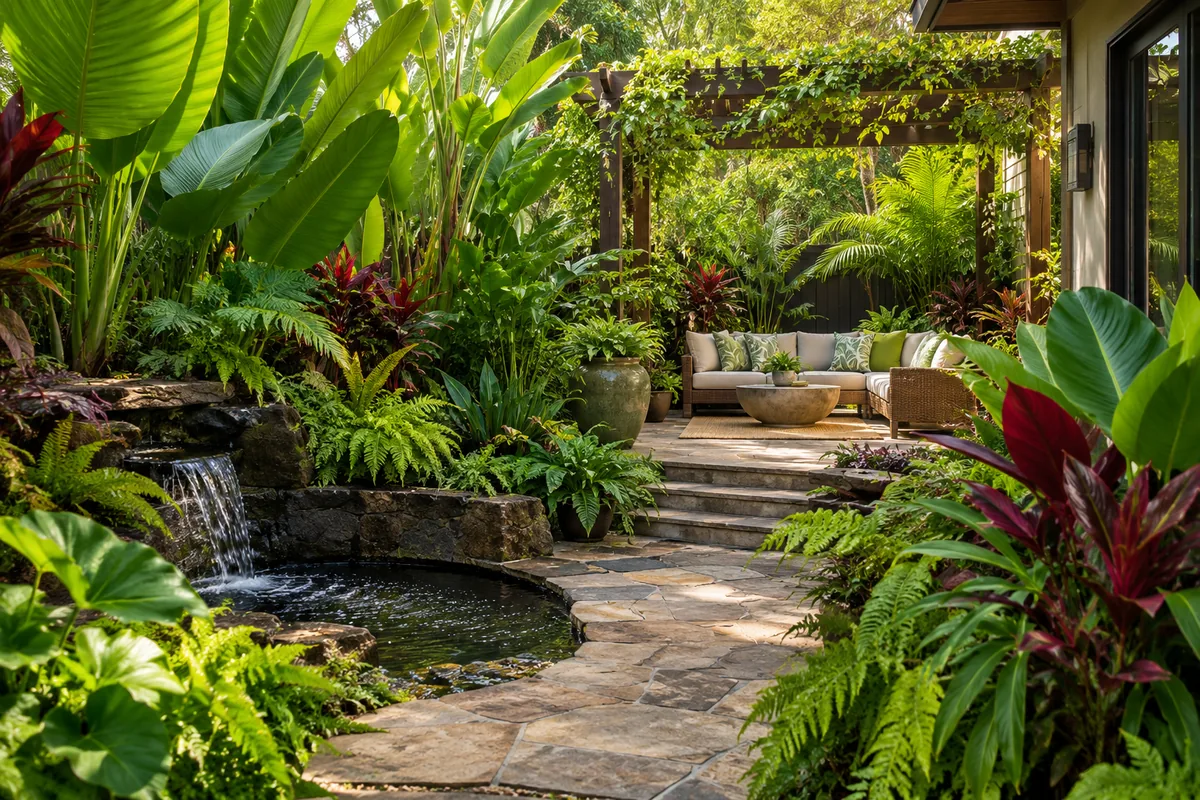
Tropical landscape style: foliage, layers, and shelter
Explore tropical landscape style using large leaves, layered greenery, sheltered seating, and container strategies adapted to local weather and care routines.
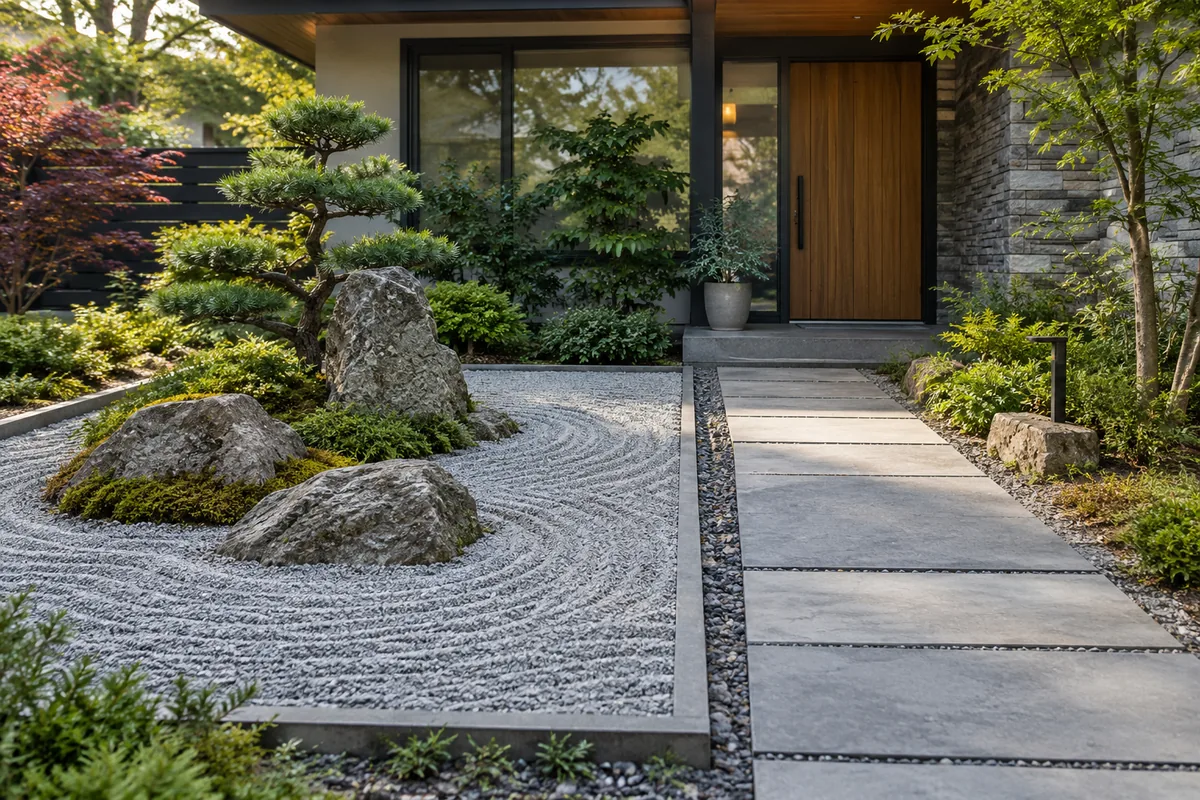
Zen front yard ideas: a quiet view beside a usable entrance
Explore zen front yard ideas using a composed stone view, restrained gravel, simple planting, and clear arrival routes beside a usable entrance.
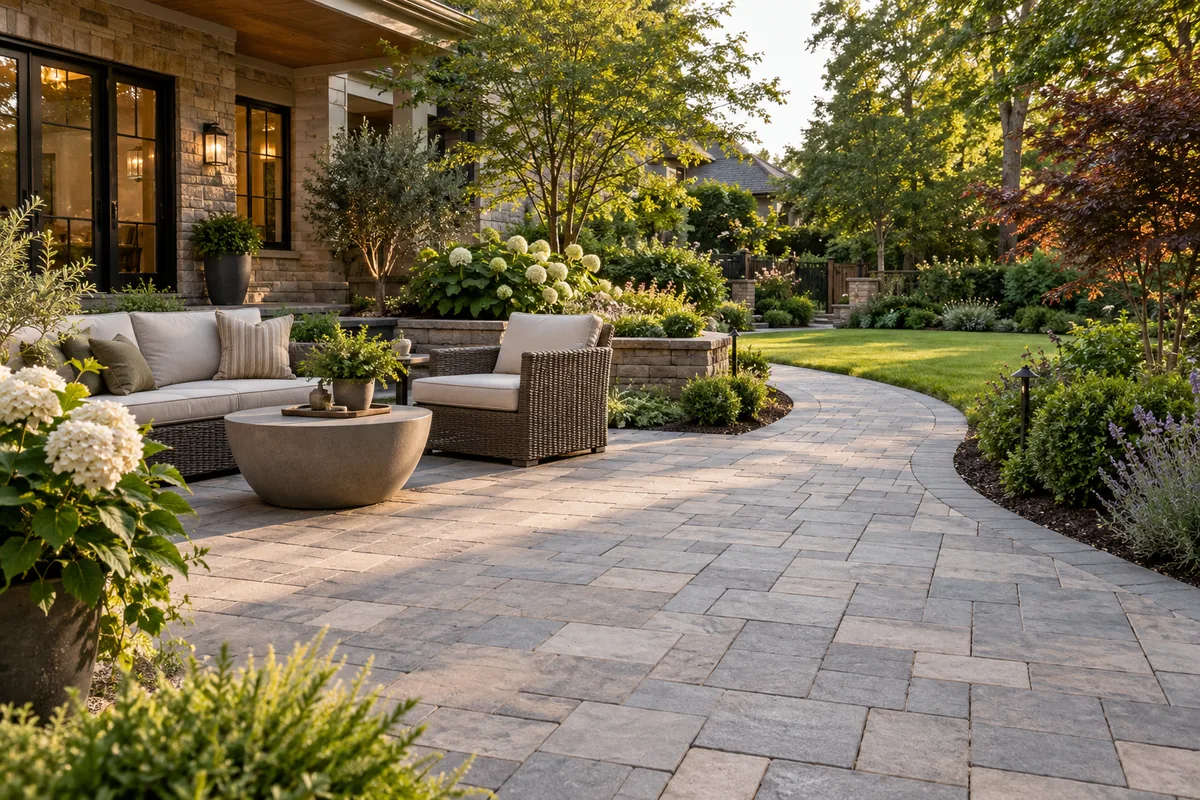
Concrete Pavers for Patios, Paths, and Yard Routes
Learn how concrete pavers fit your yard, with practical material, placement, upkeep, and safety questions to review before choosing a visual direction.
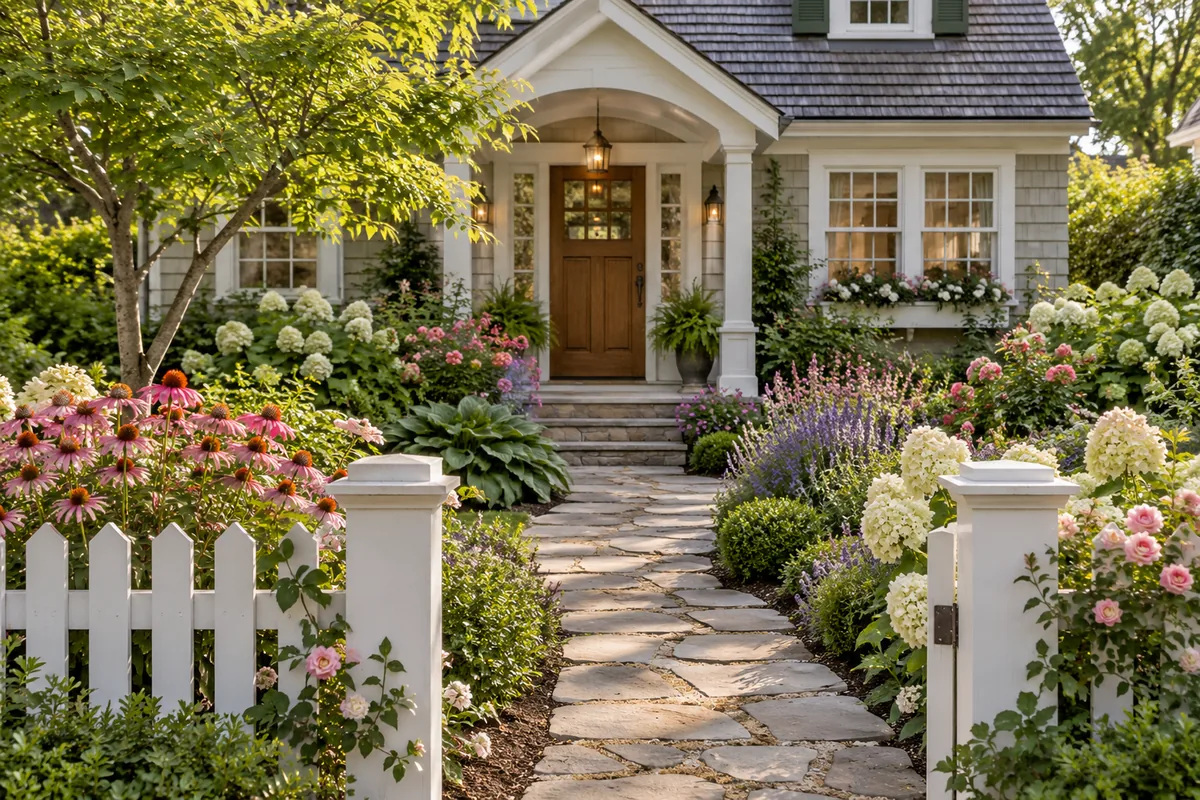
Cottage front yard ideas that welcome visitors through flowers
Find cottage front yard ideas for layered borders, useful gates, brick details, seasonal flower groups, and a welcoming entrance that stays easy to reach.