
By AI Landscape Design Team · Editorial policy
Mediterranean backyard ideas for shaded outdoor living
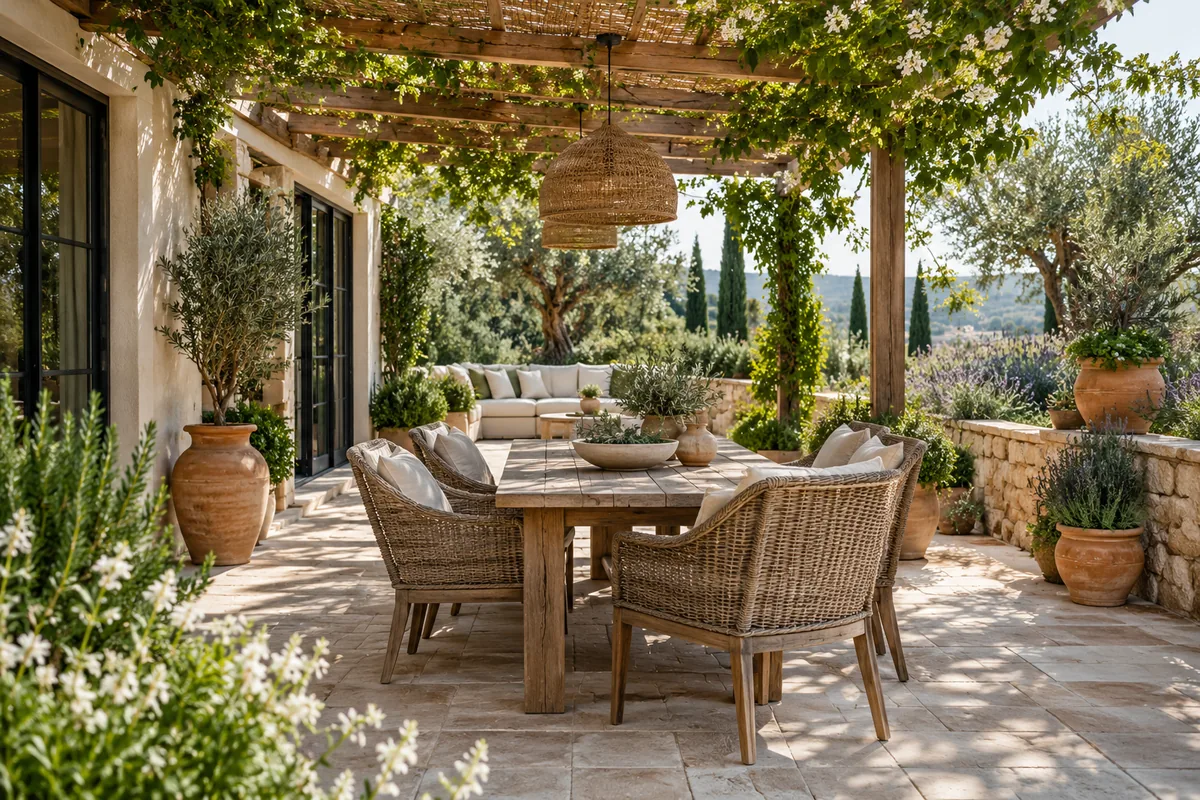
Mediterranean backyard ideas should begin with comfortable outdoor living: shade when it is needed, a useful dining position, and clear movement from the house. Clay pots, pale mineral finishes, and textured foliage can support that room. Adapt the planting and maintenance to local conditions rather than assuming a warm-looking terrace has the climate, drainage, or plant suitability of a Mediterranean reference.
Published · 6 min read
Key takeaways
- Make shade and meals the main spatial decisions.
- Group containers where watering and winter handling are possible.
- Borrow visual roles while verifying local plants and materials.
Where will the household actually use the outdoor room?
Observe the yard during the intended meal or sitting times. The best-looking corner in a morning photograph may be exposed or uncomfortable later. Identify existing shelter and the practical route from the kitchen before deciding where the table belongs. A Mediterranean interpretation can use the ordinary rhythms of outdoor living without making the entire site a decorative courtyard.
Consider how the room looks from inside when chairs, pots, and watering equipment are present. Retain useful trees and sound surfaces where they support the arrangement. Check local rules for structures and boundaries. A change in level or drainage belongs with qualified site assessment, not a visual assumption that the garden should become flat and paved. The colors and textures should follow the useful layout.
Eight ideas for a comfortable Mediterranean backyard
- Put dining in useful shade. Choose a position protected during the hours meals are usually served. It fits a household that regularly eats outside. Test the route from the kitchen with furniture present and observe actual sun movement. A decorative pergola is not automatically enough shelter, and structures or retained-tree conflicts need professional review before construction.
- Connect the terrace with a quiet mineral finish. A suitable stone or paver tone can relate the outdoor room to the house. This works where the current surface feels visually separate from the facade. Inspect samples in strong light and wet weather, then ask about grip, repair, and cleaning. Material continuity should not obscure changes in level or essential access.
- Group clay containers near the seat. Put stable pots where their form and foliage can be enjoyed without obstructing chairs. It suits a terrace with a manageable watering route. Ask suppliers about climate durability and drainage, and consider planted weight. Pots that cannot be moved comfortably need a realistic winter and maintenance plan before being filled.
- Use gravel as a supporting edge. A contained area beside planting can soften the connection between a paved room and foliage. This fits yards where loose material will not interfere with essential movement. Assess glare and debris, and consult professionals about water behavior. Gravel appearance alone does not mean a bed drains adequately or that the garden uses water efficiently.
- Repeat a muted foliage role. Locally suitable silver, gray-green, or other quiet foliage can connect the patio to a planted boundary. It suits a house whose material palette is already strong. Verify real plants against climate, soil, and exposure instead of copying familiar regional species. Similar foliage colors can come with different mature forms and care needs.
- Create one deliberate accent. A colored door, modest textile group, or seasonal flowers can mark the outdoor room. It works when the rest of the palette remains restrained. Avoid adding intense color to every pot, tile, cushion, and bed. Inspect the complete view from indoors and remove an accent if it competes with the room's useful focal point.
- Keep a flexible area beyond the terrace. Retain appropriate open ground for play or changing household uses when those activities matter. It suits a backyard that must serve more than dining. The Mediterranean character can come from the terrace and planting relationship without covering everything in stone. Keep sharp containers and unstable objects outside children's movement and evaluate pet access.
- Make evening service straightforward. Illuminate the route between the house and table, with useful light for actual activity. This fits a terrace used after sunset. Licensed professionals should assess wiring and code requirements. Check seated glare and neighbors' views before adding decorative fixtures. Lighting can reinforce comfort without outlining every pot or flooding the entire yard.
How do you adapt the plant and construction choices?
Describe the intended foliage, shade, and seasonal roles first, then verify candidates with regional horticultural advice. USDA hardiness zone, moisture, sunlight, soil, mature size, and invasive information all matter. Familiar lavender, rosemary, or olive references do not establish suitability. Where pets reach planting, consult ASPCA toxicity information separately from the climate assessment.
The Mediterranean style guide explains adaptation, while planter considerations help compare container obligations. In wetter climates, mineral decoration does not replace a drainage assessment; colder climates may change the winter plan. Licensed professionals should review structures, foundations, grading, gas, and electricity. Contact 811 before US excavation and address private utilities separately where required. A comfortable-looking image cannot settle those site-specific questions.
What maintenance makes outdoor living easy?
Group pots so care is convenient without crowding furniture. Inspect drainage openings, clean surface edges, and collect debris where gravel meets the terrace. Review the actual shade as plants grow and seasons change. A relaxed visual effect can still depend on attentive watering and timely repairs, so keep access to hoses and service equipment practical.
AILandscape's backyard tool can explore Mediterranean visual concepts on your property photo. Compare the location of the shaded room, planted boundaries, and containers before settling on a direction. The image is for discussion; confirm dimensions, plants, water movement, and construction with local specialists. A result that changes the house or removes useful shelter needs revision. The worthwhile interpretation keeps the outdoor-living purpose while responding to the real site's weather and everyday routines.
Frequently asked questions
Does the backyard need a completely paved courtyard?
A shaded terrace can express the outdoor-living character without paving the entire yard. Retain open or planted areas according to actual household needs. Assess access, glare, water movement, and maintenance before enlarging mineral surfaces solely to resemble an inspiration courtyard.
Can clay containers remain outdoors through winter?
That depends on the container material, drainage, climate, and planting. Ask the supplier and local horticultural sources about the actual products and conditions. Establish a handling or protection plan before filling heavy pots rather than assuming all clay containers behave alike.
How can the garden look Mediterranean without unsuitable plants?
Borrow the relationship between shade, warm containers, quiet surfaces, and textured foliage. Then choose locally suitable plants for the intended roles. A coherent adaptation can retain the visual language even when its species differ from those shown in a dry-summer reference.
Sources
Related reading
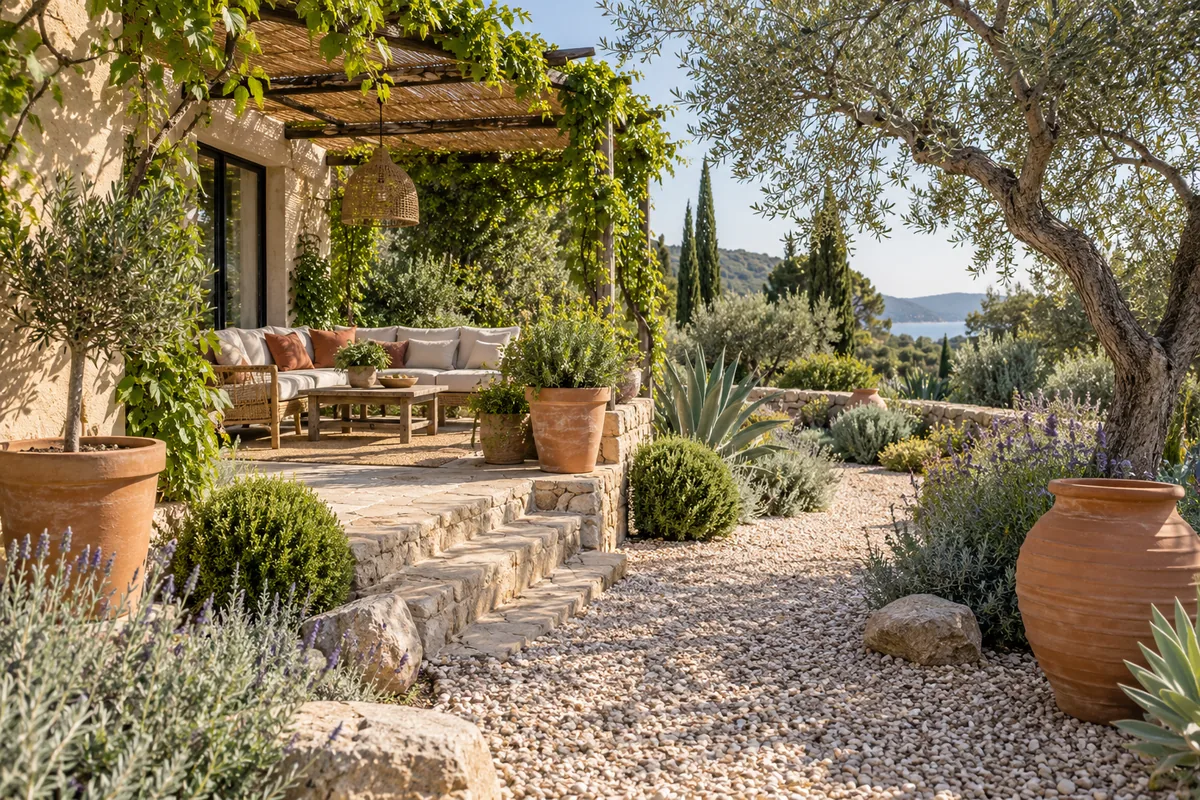
Mediterranean garden style: shade, gravel, and warm color
Understand Mediterranean garden style through shade, gravel, clay pots, and silver foliage, with practical ways to adapt the visual language to local climates.
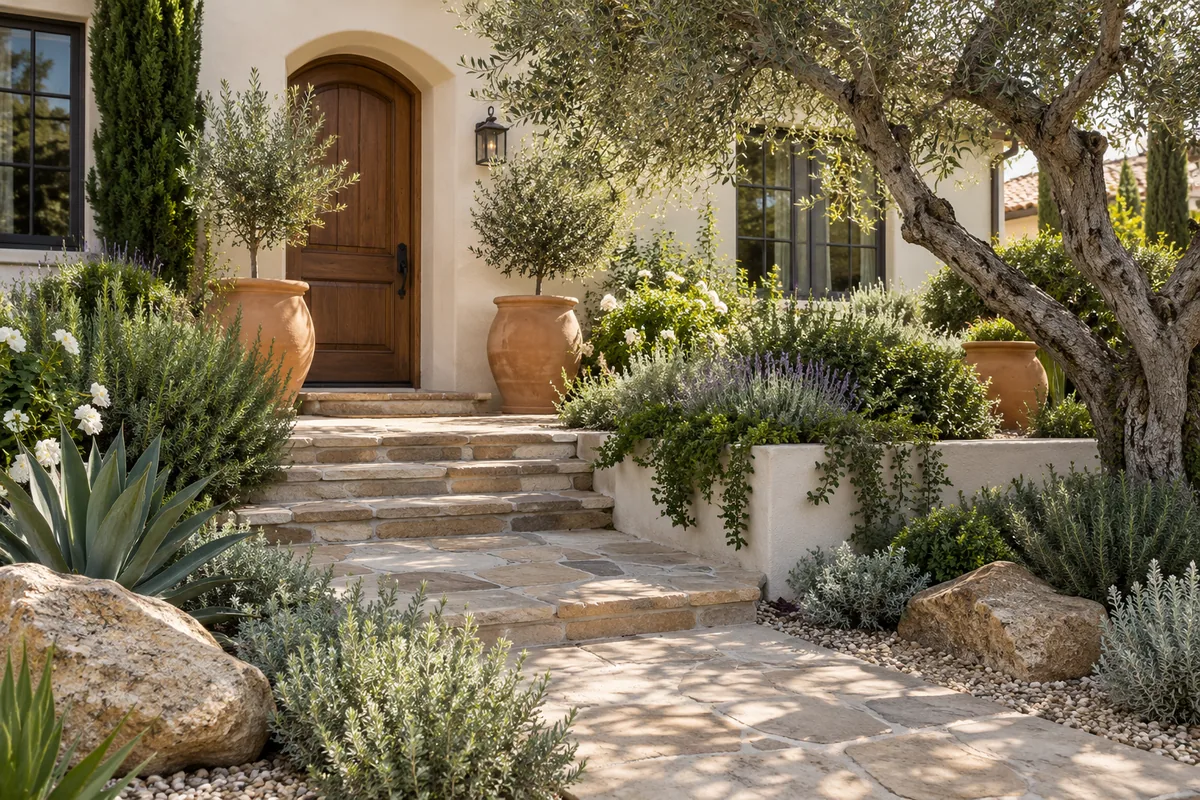
Mediterranean front yard ideas with clay, shade, and texture
Find Mediterranean front yard ideas using clay pots, muted foliage, pale materials, sheltered entry details, and suitable planting beside a clear approach.
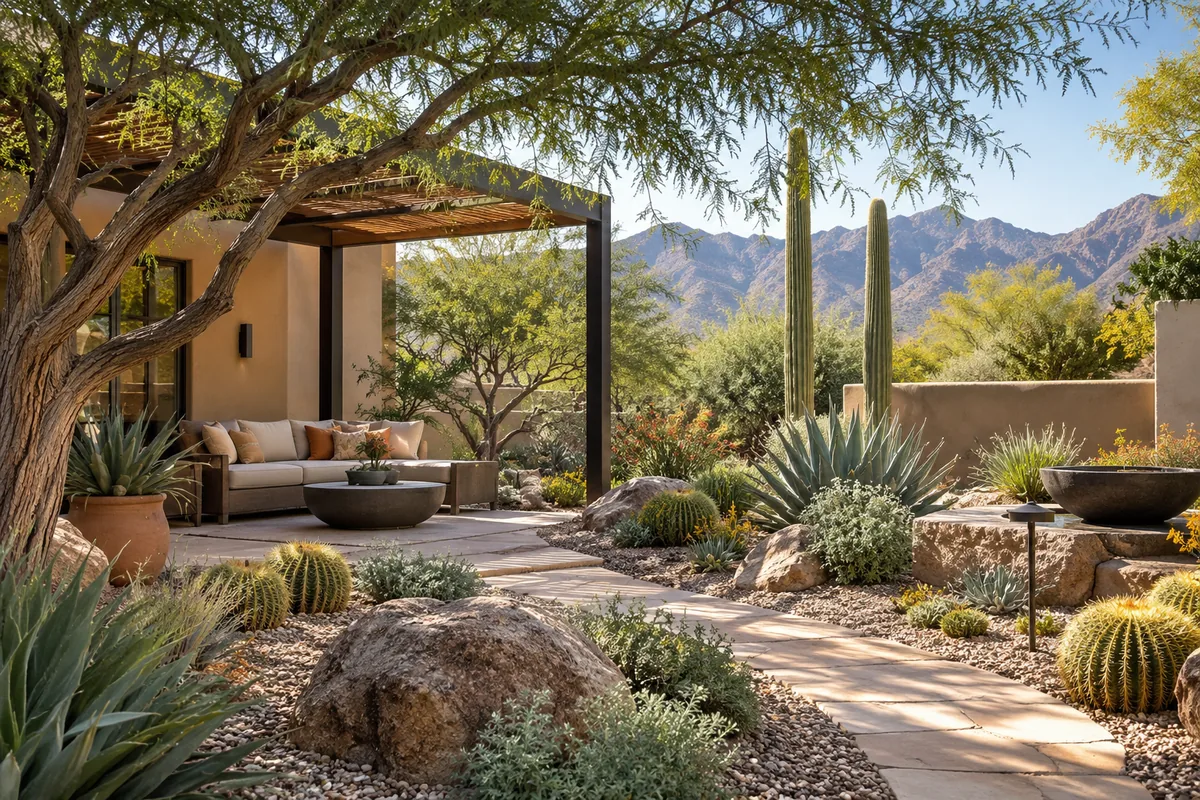
Desert landscape style: shade, stone, and plant form
Understand desert landscape style through plant form, mineral surfaces, useful shade, and heat-aware layouts, while separating its appearance from xeriscaping.
Outdoor Dining Set Ideas Based on the Occupied Table
Choose outdoor dining sets using table shape, real chair movement, serving routes, shade, material care, and the usable patio area rather than empty furniture.
Modern backyard ideas organized around the way you live
Explore modern backyard ideas for activity zones, clean material connections, repeated planting, usable furniture layouts, and careful evening lighting.
Modern patio ideas for clear furniture layouts and calm materials
Explore modern patio ideas for restrained surfaces, usable furniture, clear door connections, suitable containers, and deliberate shade and evening light.