
By AI Landscape Design Team · Editorial policy
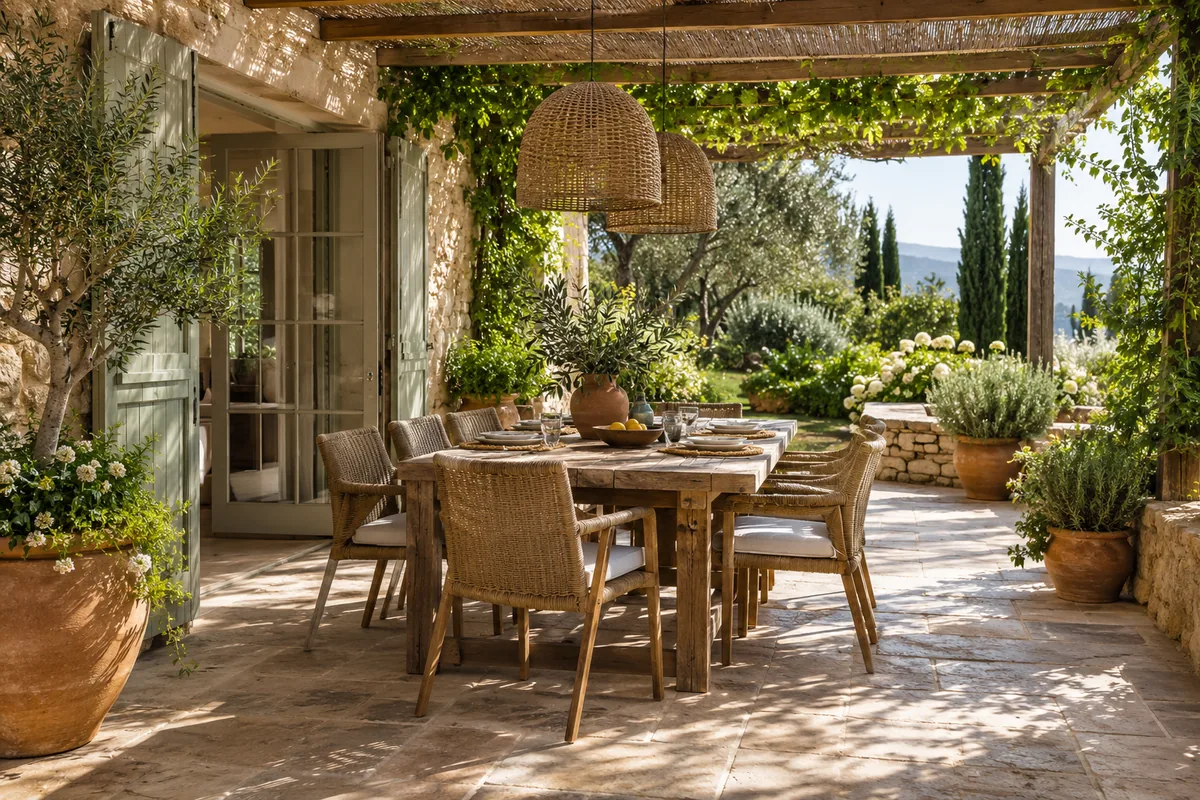
Mediterranean patio ideas for shaded meals and warm materials
Mediterranean patio ideas should connect shaded dining, warm containers, and quiet mineral finishes around a comfortable outdoor room. Test doors and chairs before arranging pots, then choose plant roles for the actual climate and exposure. The familiar dry-summer palette can be adapted through color and texture without assuming Mediterranean plants or construction details suit every terrace.
Published · 6 min read
Key takeaways
- Make meal service and useful shade the primary arrangement.
- Group clay containers outside chair and door movement.
- Verify local conditions before selecting familiar regional foliage.
Where should the room begin and end?
Choose the time of day the patio is intended for meals or sitting and observe exposure then. Furniture that looks well centered may place diners in sun while a nearby position benefits from existing shelter. Test the route from the kitchen and the space needed when chairs are pulled out. Those practical boundaries give the material palette a purpose.
See existing masonry and paving as possible connections rather than surfaces that must all be replaced. Check weather performance separately from color. If this is a roof or balcony terrace, consult qualified structural and waterproofing professionals before proposing heavy clay pots or shade supports. Review local restrictions and neighboring windows when changing boundaries. The useful room should be resolved before the scene is decorated with regional references.
Eight ways to create a warm, comfortable patio
- Place dining in actual shade. Choose a position that offers shelter during ordinary meal times or evaluate an appropriate shade strategy. It suits households that eat outside regularly. Test chairs and food-service movement first. An overhead structure must be professionally reviewed for wind, foundations, and requirements, and a decorative grid is not evidence of useful protection.
- Relate a quiet surface to the house. A suitable stone or paver tone can connect the terrace with warm masonry. This fits a facade whose existing materials offer clear cues. Inspect glare, wet appearance, grip, cleaning, and repair with qualified advice. Pale mineral color can support the style, but practical outdoor performance matters more than matching a sunny photograph.
- Group clay pots where care is convenient. Put stable containers beside a useful view, beyond door swings and occupied chairs. It works where watering can happen without rearranging furniture. Ask about container climate durability, drainage, and planted weight. A line of heavy pots around every edge can become a difficult care obligation rather than a coherent regional reference.
- Use muted foliage as a linking role. Choose actual plants locally for texture and form rather than buying a standard Mediterranean list. It suits a terrace whose material colors already provide warmth. Silver foliage may be one reference, but light, moisture, winter, and summer conditions determine candidates. Similar appearance does not establish the same maintenance or container behavior.
- Keep one strong color accent. A selected textile, door, or modest flower group can clarify the room's emphasis. This works when the rest of the palette remains quiet. Compare it with pots and house finishes before adding another saturated object. Strong color on every tile, cushion, and container can fragment a room intended for relaxed everyday use.
- Soften an edge without enclosing the furniture. A suitable planted border or container group can connect the occupied terrace to the garden. It fits a table or seat that has space beyond circulation. Check mature width and contact concerns. Dense growth around all sides may look sheltered but leave no comfortable passage for service or maintenance.
- Choose a shade element at the room's scale. An appropriate umbrella or reviewed pergola can relate to the table or lounge area without dominating the facade. This suits an exposed terrace where shade is genuinely needed. Assess anchoring, wind, support, and any elevated loading professionally. The attractive silhouette in an image cannot determine safe installation.
- Make the evening room useful. Light the route from the house and necessary activity positions before adding decorative accents. It works for meals after dusk. Licensed professionals should assess outdoor electricity and supports, with glare checked from chairs and neighboring windows. Keep fittings reachable for service and avoid treating a warm glow as proof that the installation meets local requirements.
How should containers and construction be verified?
Check plant candidates with regional horticultural advice on USDA hardiness zone, sunlight, soil, water, mature growth, and invasive status. Containers may need a winter plan and distinct watering from ground beds. Consult ASPCA toxicity information where pets can reach foliage, and keep thorns or unstable pots outside children's movement. A warm clay palette does not establish safe or suitable planting.
The Mediterranean style guide explains adaptation, and planter considerations frame container choices. Drainage, levels, supports, foundations, electrical work, roof loading, and waterproofing require appropriate licensed review. Contact 811 before US excavation and address private locating separately where applicable. Do not infer a terrace's capacity or dimensions from the visual concept. Practical findings should decide which interpretation can be built and maintained.
What makes the warm room easy to use through seasons?
Keep watering access clear, inspect pots and drainage openings, and review shelter as seasons change. Store movable shade and textiles according to their actual products and conditions. A container collection should remain manageable when flowers are absent or tender plants move indoors. If every task requires shifting chairs or heavy pots, simplify the arrangement.
AILandscape's patio tool can compare Mediterranean visual concepts using your own photo. Discuss shade, furniture, clay, and planted edges with the image, then verify dimensions, species, water movement, structural conditions, and construction locally. The result is an appearance exploration rather than confirmation of regional performance. Revise concepts that alter doors or add unsuitable structures. The useful Mediterranean interpretation remains a comfortable room in the real climate, not a staged collection of pots around a table.
Frequently asked questions
Does the patio need Mediterranean plants to express the style?
Shade, warm containers, quiet mineral finishes, and suitable foliage roles can provide the visual language. Select actual plants for the local site rather than assuming a regional name proves performance. Adaptation is preferable to repeatedly replacing unsuitable species from a reference image.
Can clay pots be too heavy for a roof terrace?
Planted weight and structural capacity require professional assessment on elevated terraces. Waterproofing, drainage, stability, and handling also need review. Do not use the apparent scale of a container in a concept image to decide whether the actual product can be installed safely.
Should shade cover the entire terrace?
Choose shade according to actual use, sun exposure, and practical installation. The dining or lounge position may need shelter while other areas serve different functions. Test the relevant hours and have structures or anchoring reviewed before deciding coverage from appearance alone.
Sources
Related reading
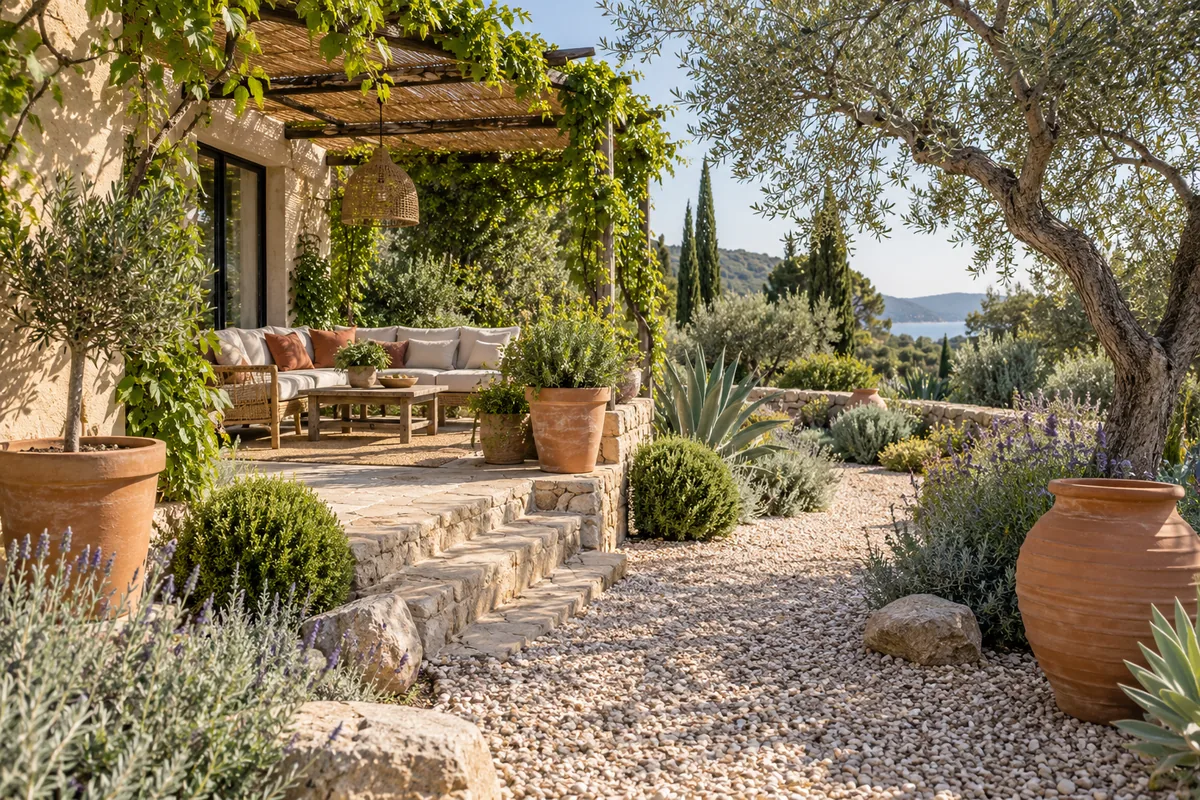
Mediterranean garden style: shade, gravel, and warm color
Understand Mediterranean garden style through shade, gravel, clay pots, and silver foliage, with practical ways to adapt the visual language to local climates.
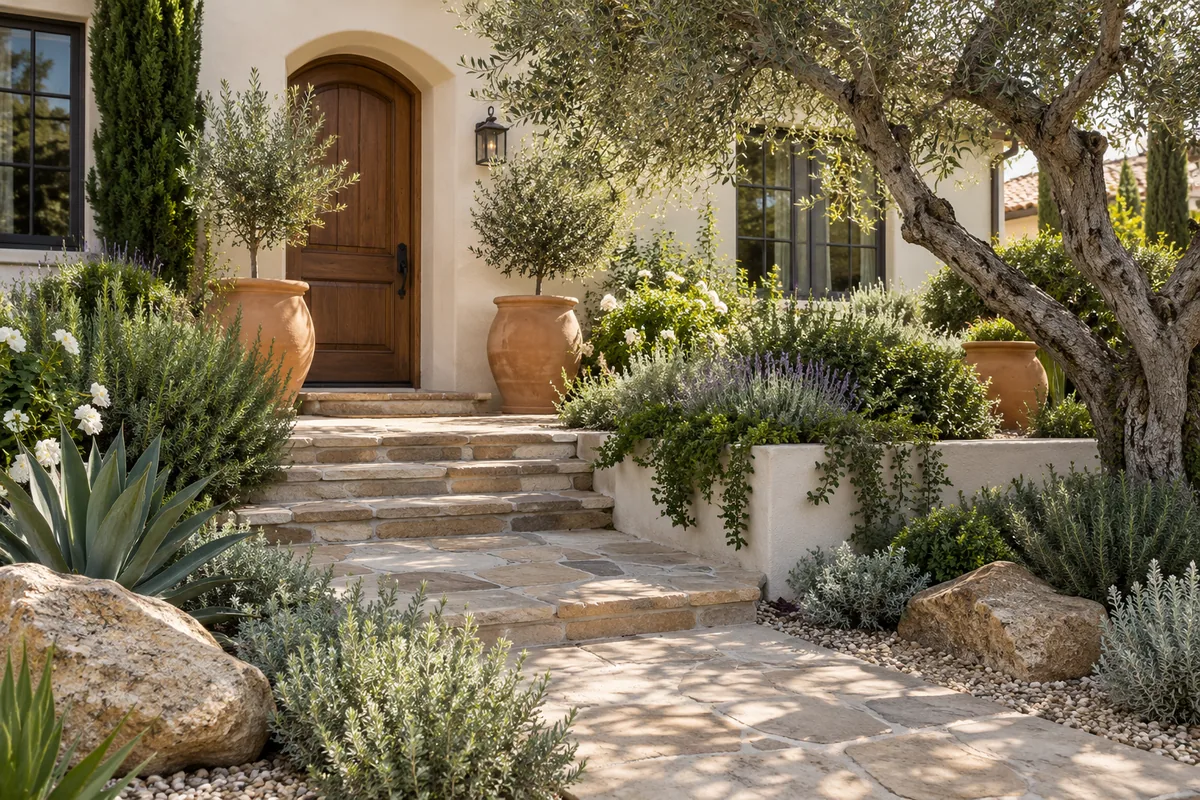
Mediterranean front yard ideas with clay, shade, and texture
Find Mediterranean front yard ideas using clay pots, muted foliage, pale materials, sheltered entry details, and suitable planting beside a clear approach.
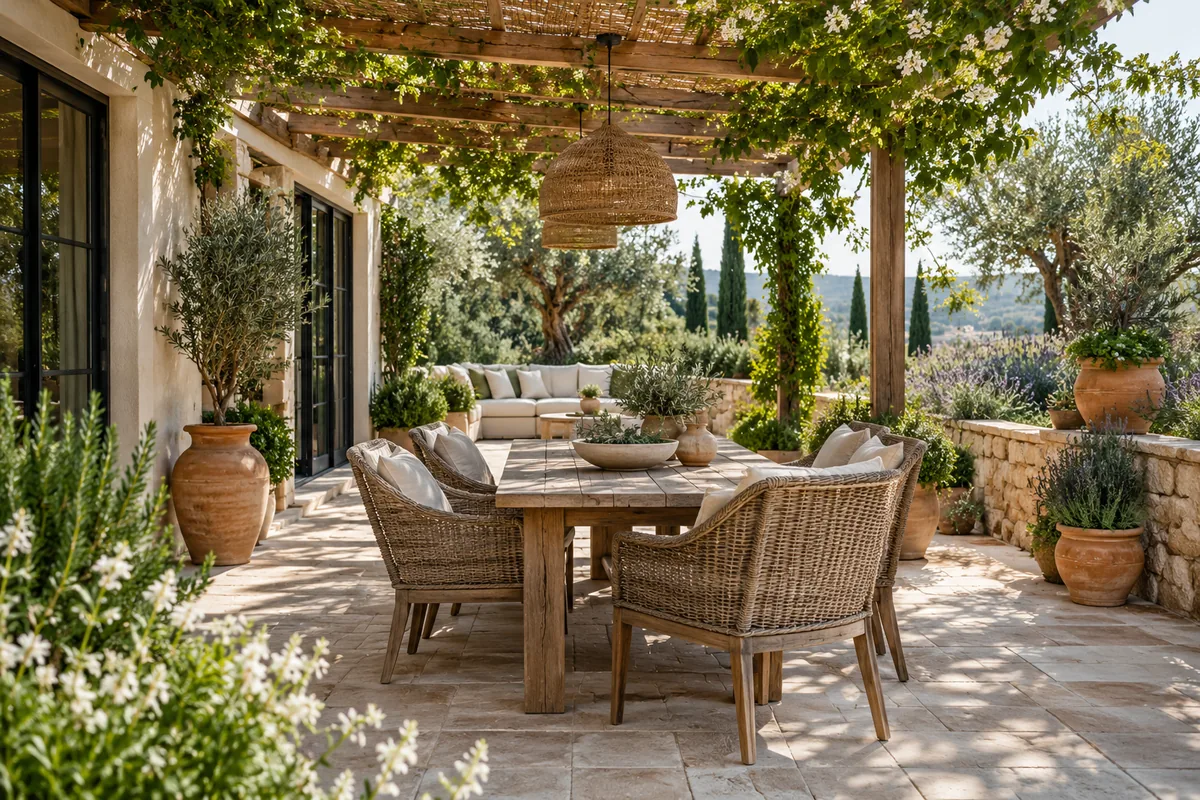
Mediterranean backyard ideas for shaded outdoor living
Find Mediterranean backyard ideas for shaded meals, clay containers, mineral surfaces, textured planting, and comfortable garden rooms adapted to local weather.
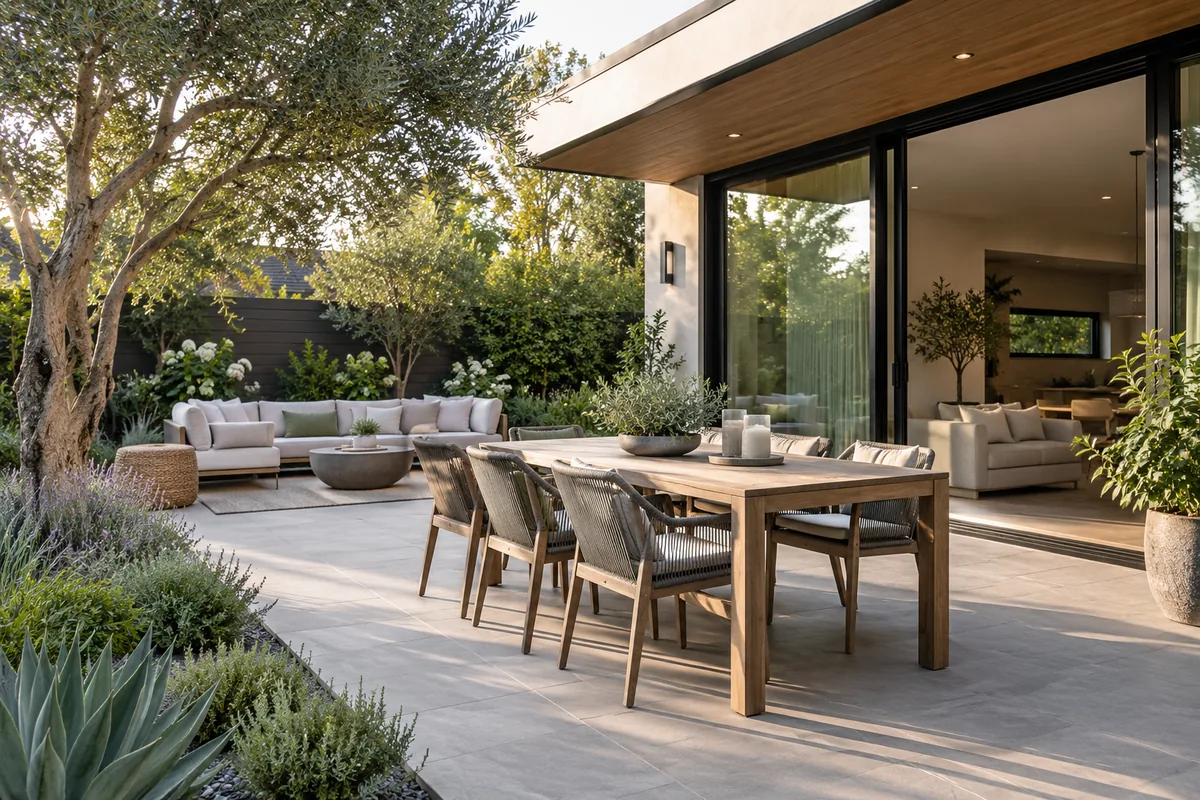
Modern patio ideas for clear furniture layouts and calm materials
Explore modern patio ideas for restrained surfaces, usable furniture, clear door connections, suitable containers, and deliberate shade and evening light.
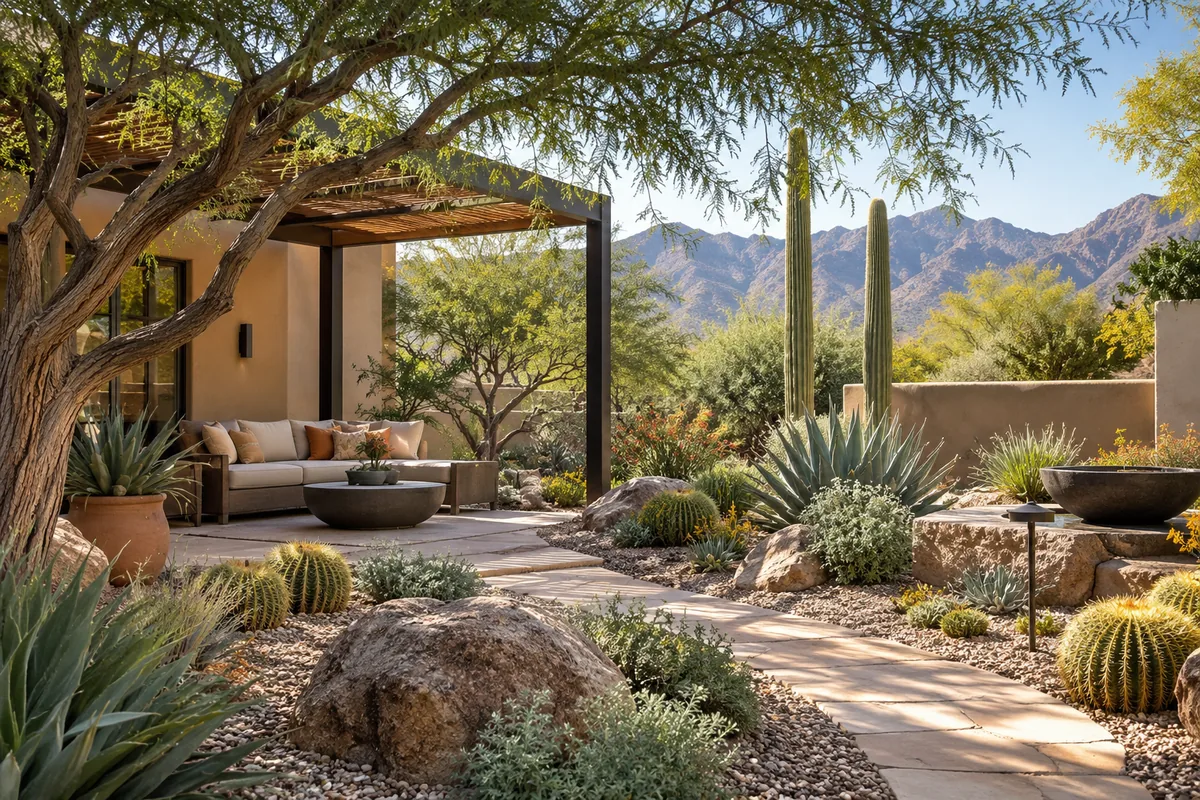
Desert landscape style: shade, stone, and plant form
Understand desert landscape style through plant form, mineral surfaces, useful shade, and heat-aware layouts, while separating its appearance from xeriscaping.
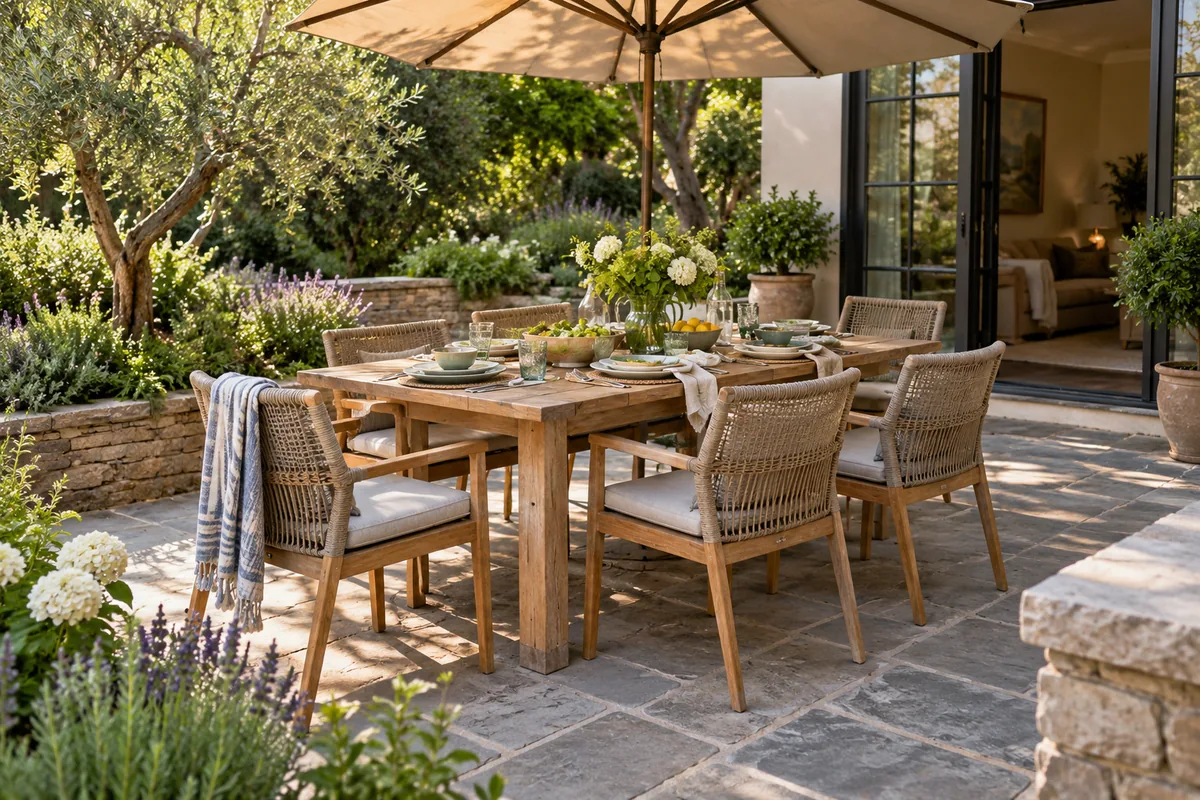
Outdoor Dining Set Ideas Based on the Occupied Table
Choose outdoor dining sets using table shape, real chair movement, serving routes, shade, material care, and the usable patio area rather than empty furniture.