
By AI Landscape Design Team · Editorial policy
Farmhouse front yard ideas with a useful, welcoming framework
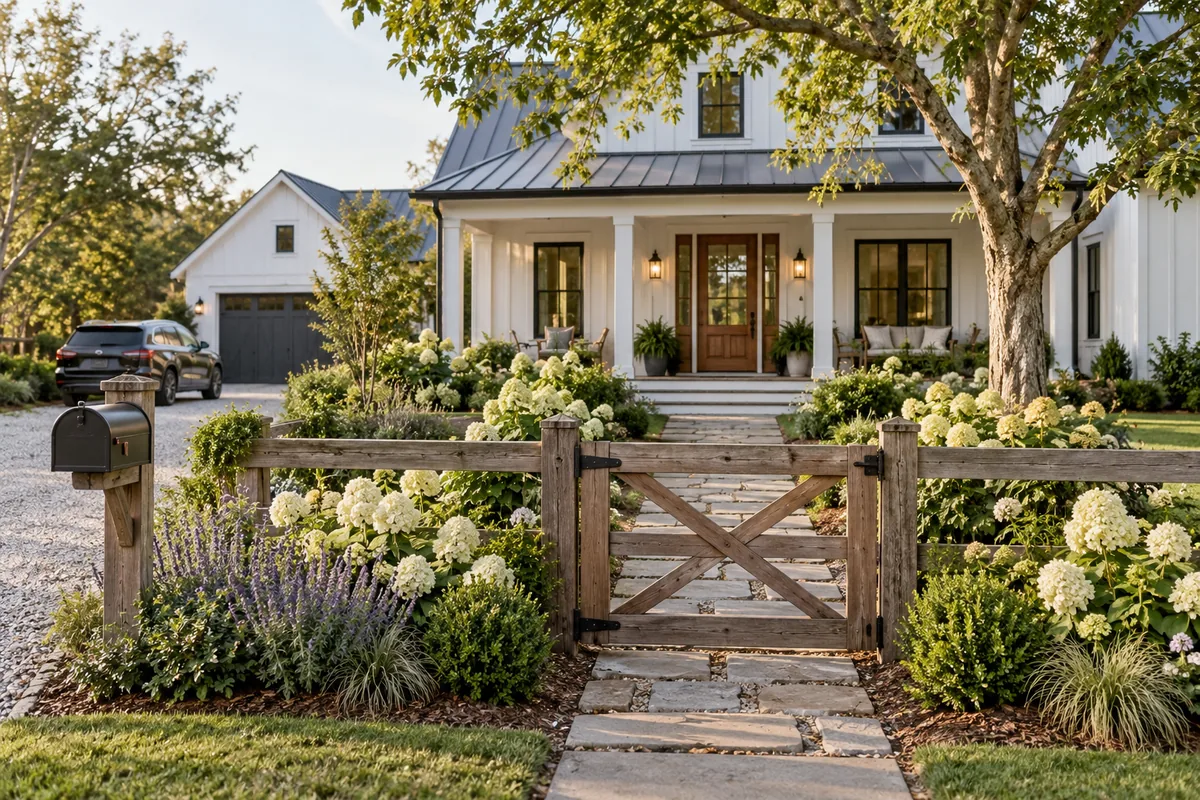
Farmhouse front yard ideas should make the entrance feel useful, straightforward, and connected to the house. A working gate, familiar materials, repeated planting, and a practical porch can create that character without decorative farm props. Keep parking, mailbox access, and the public view in the layout, and add productive planting only where the actual site and care routine support it.
Published · 6 min read
Key takeaways
- Give fences, gates, and seats a real function.
- Use materials that connect to the existing building.
- Balance productive or seasonal planting with a dependable arrival route.
What does practical character mean on a frontage?
The front of a house handles arrivals rather than the full range of garden work. Begin with the gate people use, the place parcels are delivered, and the route between parking and the door. Those activities can support a farmhouse character through simple, durable details. Artificially aged objects cannot compensate for a confusing entrance.
Look at the house before choosing a fence or finish. Warm masonry, timber trim, or an existing porch may offer enough material direction. Review local rules, boundary restrictions, and visibility requirements before altering street-facing elements. Leave space for bins and utility inspection without making them the central view. A convincing farmhouse frontage should be comfortable in everyday weather and readable when the usual car is parked, not only when the garden has been cleared for a picture.
Eight working details for a farmhouse entrance
- Make the gate open onto the real route. A plain working gate can establish the arrival point when a boundary is needed. It suits a house with a clear fence line and a useful opening. Check swing space, latches, local rules, and actual containment needs. Avoid installing a scenic gate away from the approach simply because it looks familiar in rural photographs.
- Repeat a modest fence detail. Let a functional boundary supply rhythm across the frontage rather than filling each section with a different ornament. This fits a house whose facade already has warm practical materials. Review safety and maintenance with a qualified installer. A visual boundary and an animal barrier have different requirements, even when both use timber.
- Use brick or stone as a connecting finish. Relate a new detail to existing sound masonry instead of selecting a completely separate palette. It works where the approach and house currently feel disconnected. Ask about surface condition, grip, repair pieces, and drainage. Reclaimed-looking material should be assessed for its actual use, not chosen solely for an aged appearance.
- Plant a recurring shrub group near the house. Repetition can give seasonal flowers a useful framework without creating a dense cottage border everywhere. It suits a facade that needs a clearer base. Verify mature size and leave windows, vents, and inspection points accessible. Plants close to a building need local site review rather than a universal spacing prescription.
- Add a manageable productive detail. A suitable container or defined growing patch can express everyday usefulness when sunlight and care support it. It fits owners who will actually visit and tend the planting. Check local restrictions, soil suitability, and harvest access. Avoid making edible plants the visual centerpiece if the household does not want the ongoing work or street-facing seasonal gaps.
- Place a porch seat for actual use. A simple bench can provide a stopping place near the entry when there is room beyond the circulation route. It suits a sheltered porch that people already spend time on. Keep the door and delivery area clear. Decorative furniture that cannot be reached comfortably adds clutter instead of the practical gathering character associated with the style.
- Keep the mailbox and address uncomplicated. Match practical arrival details to the house palette while making them readable. It works where competing signs and ornaments currently distract from the entrance. Follow local placement requirements and check visibility with parked vehicles present. Do not hide the address in a flower container or rely on seasonal plants to explain where the doorway is.
- Reserve a discreet equipment position. Plan a stable place for watering supplies or frequently used items outside the central street view. This suits a frontage that currently accumulates loose tools near the porch. Preserve easy access so storage does not become an obstacle. Keep the solution appropriate to front-yard rules rather than treating a rustic crate as permanent weatherproof storage.
What should the planting and construction checks include?
Choose plant roles for the actual frontage, then verify USDA hardiness zone, sunlight, soil, water, mature size, and regional invasive status with local advice. A farmhouse association does not establish where a fruiting or flowering plant will grow well. For pet-accessible beds, consult ASPCA toxicity information separately. Keep thorny growth away from the door and places children pass.
The farmhouse style guide explains the practical emphasis, and fence considerations help structure boundary questions. Licensed local professionals should assess posts, retaining work, grade changes, and electrical installation. Contact 811 before digging in the United States, even for a modest-looking fence or planted feature. Check private service locating as required. Material character can be discussed visually, but safe construction needs measured site information and appropriate professional review.
How do you preserve relaxed character without disrepair?
Inspect the latch, clear gravel from the main approach, and repair damaged containers before adding more decorative features. Seasonal growing areas should remain visibly intentional when crops or flowers are absent. A tidy outline and a functioning gate often communicate care more strongly than a large ornamental display. Keep stored objects contained instead of allowing the porch to become a permanent holding area.
Use AILandscape's front yard tool to compare farmhouse visual concepts on your own photograph. It can help discuss the relationship between the gate, porch, materials, and planted edges. Confirm dimensions, plant suitability, drainage, and construction locally before making purchasing decisions. The concept cannot settle crop performance or the condition of existing components. A frontage that serves ordinary arrivals will express the style more convincingly than an image filled with unused rural accessories.
Frequently asked questions
Does a farmhouse front yard need a picket fence?
A fence is optional and should have a real role. Use the existing boundary and local rules to decide whether one is appropriate. Simple materials, a readable entrance, and useful porch or planting details can express farmhouse character without adding an unnecessary enclosure.
Can the frontage include food-growing plants?
It can where sunlight, soil, local rules, and care support the choice. Productive planting brings seasonal changes and maintenance, so keep harvest and watering access practical. A modest area that is actually used may fit better than a large display installed for appearance alone.
How is this different from a cottage front yard?
Farmhouse ideas emphasize working elements and straightforward material relationships. Cottage ideas often place greater emphasis on abundant mixed ornamental borders. Both can overlap, but deciding which activity or planting role leads the composition helps prevent the frontage from becoming an unrelated collection.
Sources
Related reading
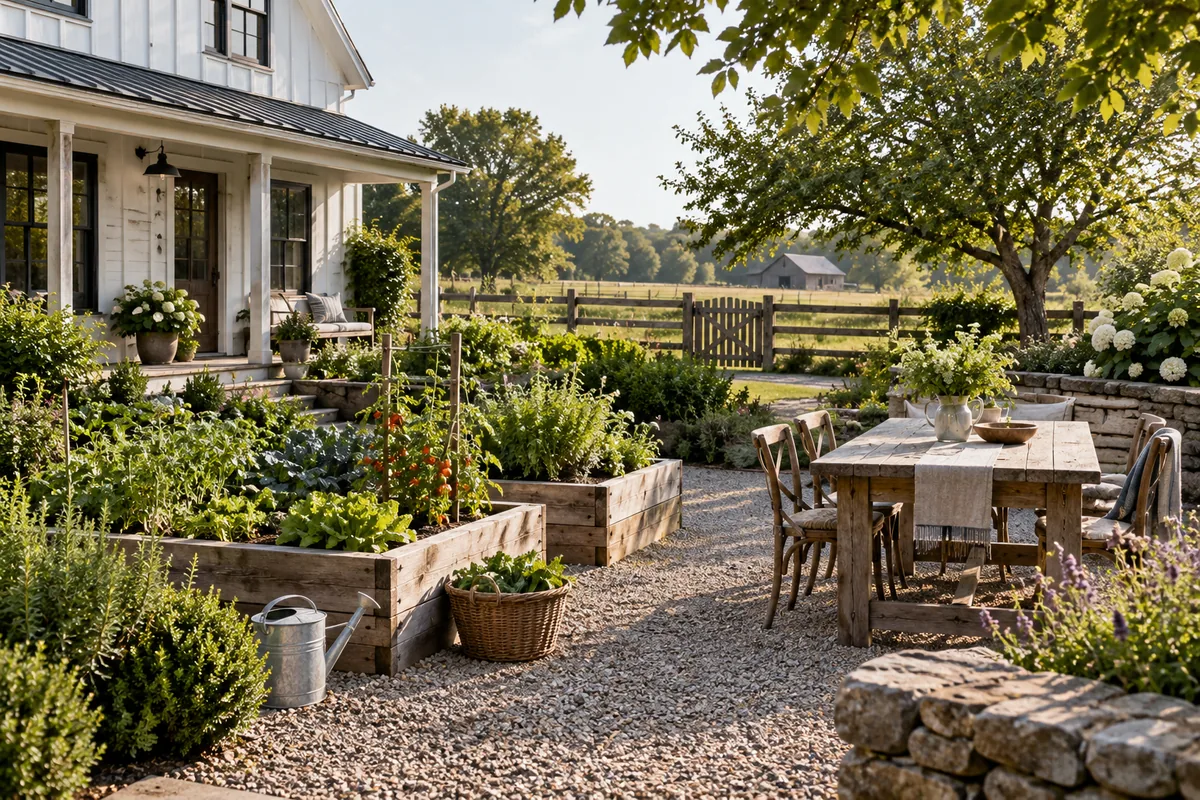
Farmhouse landscape style: useful spaces and honest materials
Discover farmhouse landscape style through practical fences, productive beds, wood and stone, and useful outdoor spaces that support everyday garden routines.
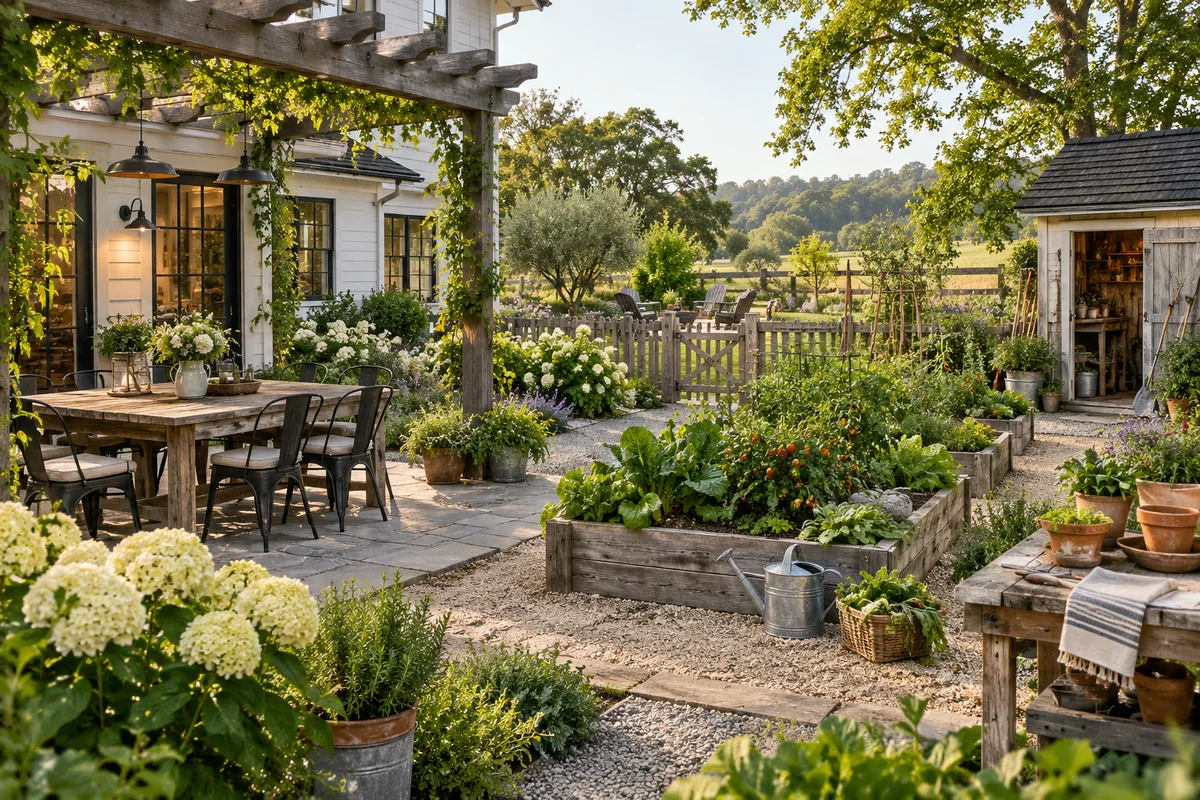
Farmhouse backyard ideas for growing, gathering, and work
Find farmhouse backyard ideas for productive beds, simple gathering spaces, working routes, sturdy materials, and practical storage connected to everyday use.
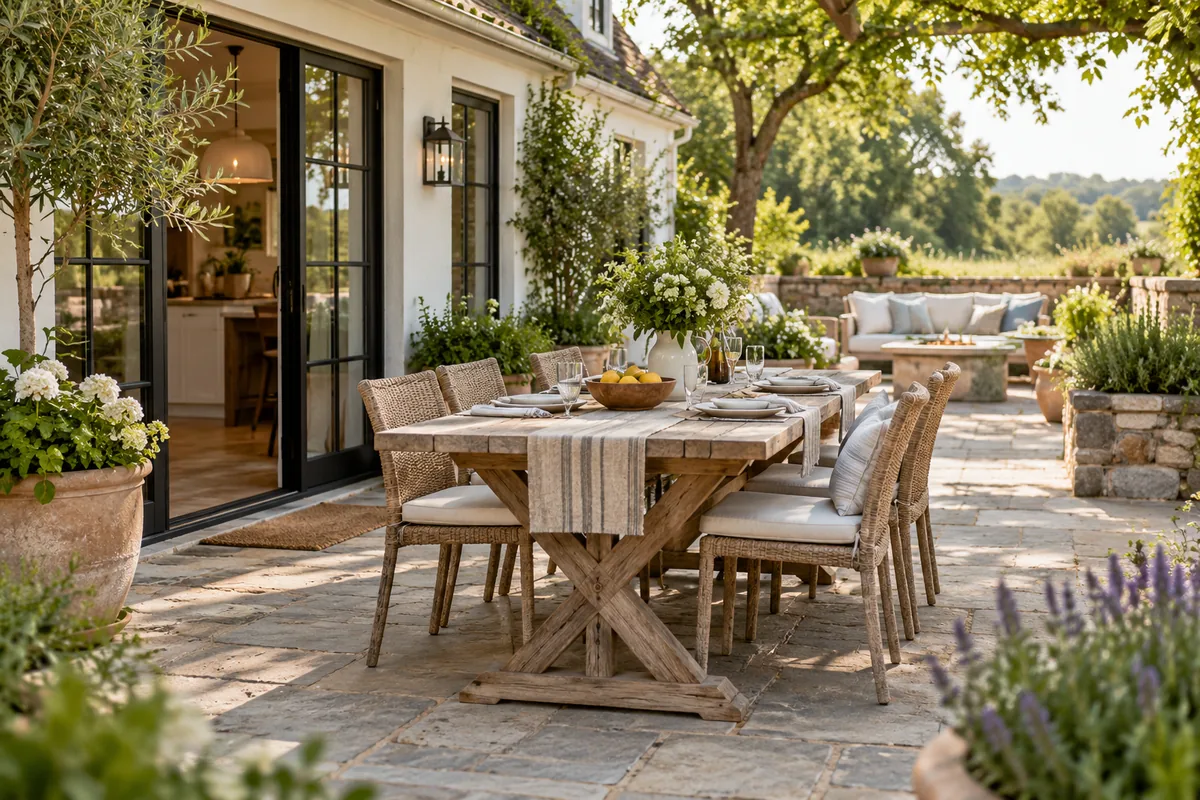
Farmhouse patio ideas for meals, useful pots, and simple materials
Discover farmhouse patio ideas for practical dining, sturdy furniture, warm surfaces, productive containers, and convenient storage without decorative clutter.
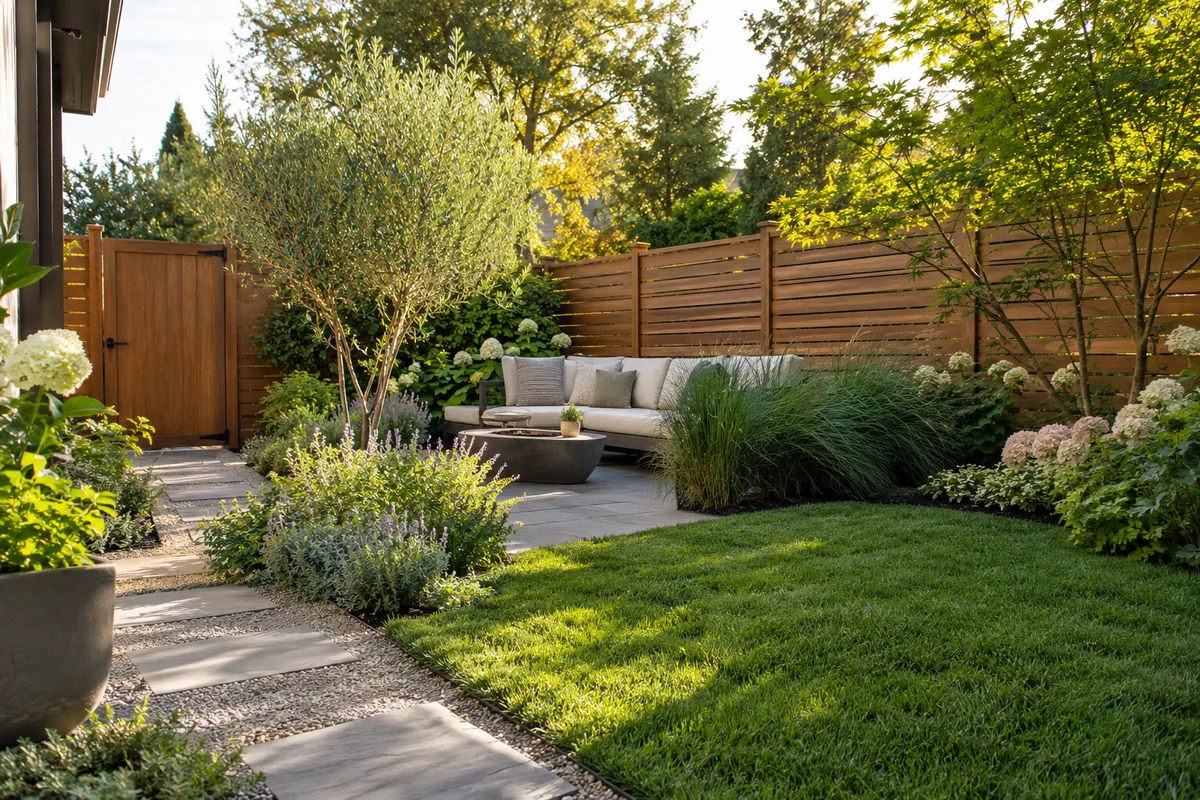
Garden Fence Ideas for Privacy and Practical Use
Learn how garden fence ideas fit your yard, with practical material, placement, upkeep, and safety questions to review before choosing a visual direction.
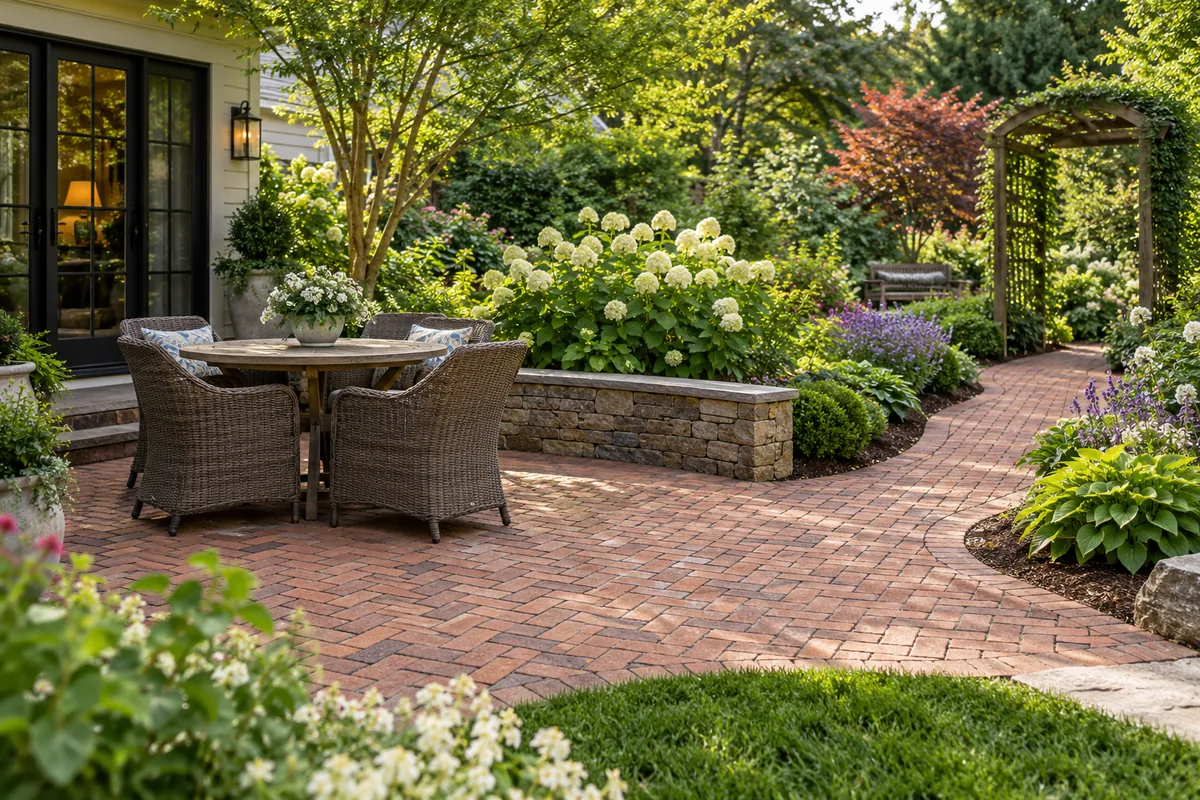
Brick Pavers for Useful Patios and Garden Paths
Brick Pavers for Patios and Paths: explore materials, placement, upkeep, and local safety questions before deciding how this feature fits your yard.
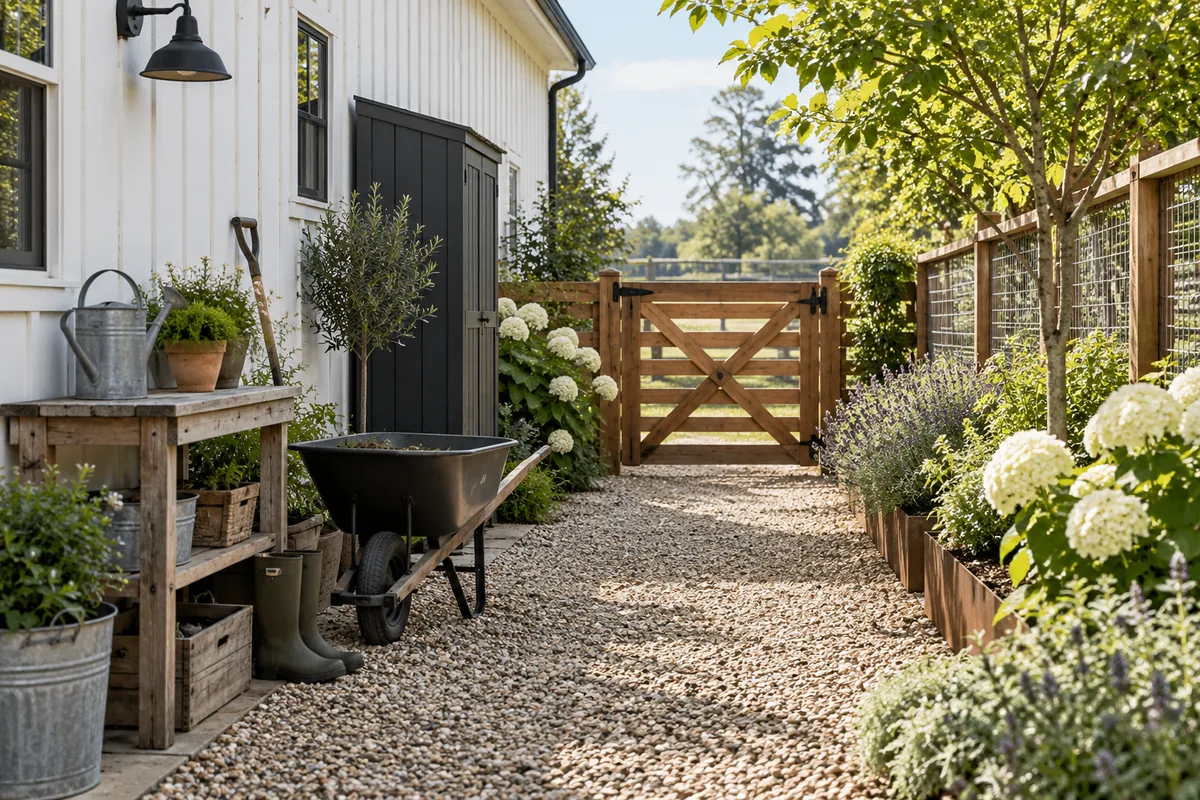
Farmhouse side yard ideas that give working space a purpose
Find farmhouse side yard ideas for reachable storage, working gates, coherent materials, manageable planting, and a useful connection between front and back.