
By AI Landscape Design Team · Editorial policy
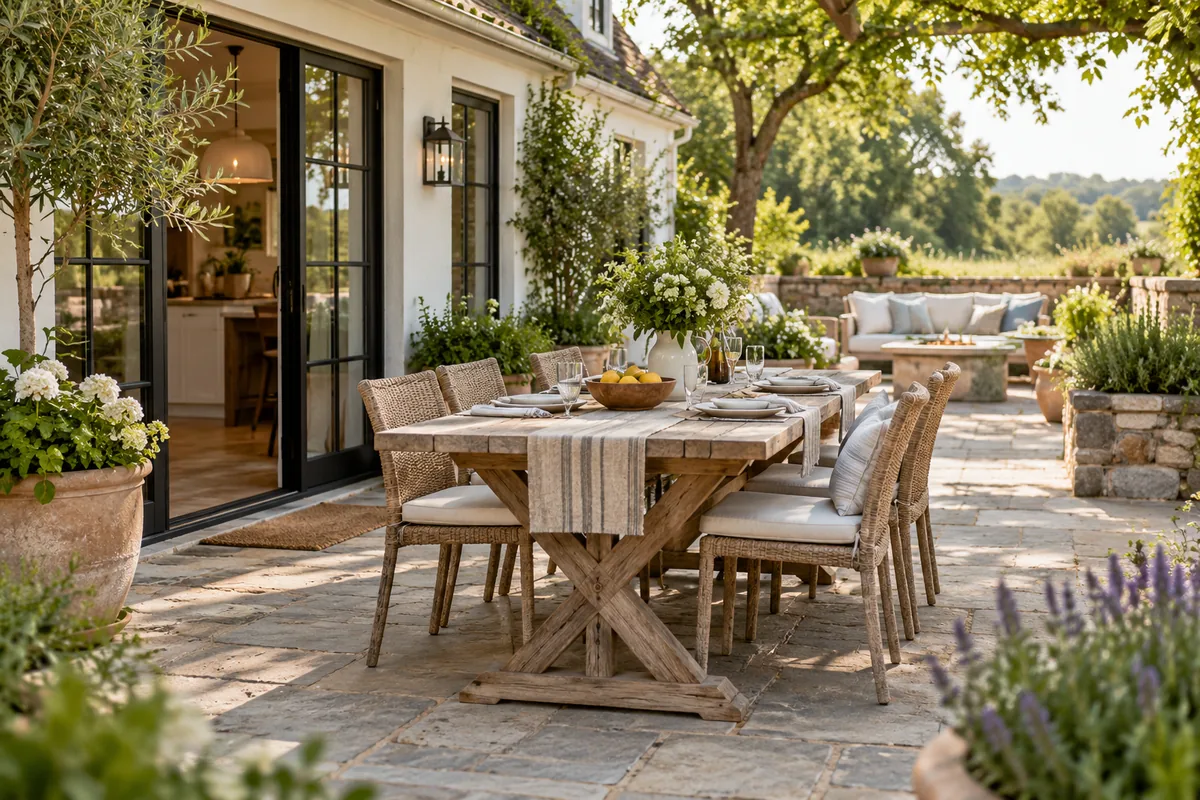
Farmhouse patio ideas for meals, useful pots, and simple materials
Farmhouse patio ideas should make meals, garden work, and relaxed sitting straightforward through simple furniture and familiar materials. Useful containers, a clear route from the house, and convenient storage can provide character without farm-themed accessories. Decide which activities the household actually wants before adding productive planting, shade, or an elaborate outdoor cooking feature.
Published · 6 min read
Key takeaways
- Let real meals and garden routines explain the room.
- Choose sound materials and useful furniture over artificial age.
- Keep productive containers manageable and clear of circulation.
Which ordinary tasks should shape the farmhouse terrace?
Set up the table and move between it and the house with the objects normally carried. Check chairs, doors, storage, and the route to the wider garden. The patio can connect working and social routines, but those activities should not compete for the same blocked corner. A practical plan supplies more convincing character than a staged group of rustic objects.
Relate materials to the existing house and retain sound surfaces where they work. Age alone does not establish grip, stability, or repairability. Roof and balcony terraces need professional loading and waterproofing review before heavy pots, furniture, or supports are selected. Decide how seasonal equipment and containers will be stored. A simple room remains useful when its work and care routes are apparent during ordinary conditions.
Eight practical details for a farmhouse patio
- Give the table a direct kitchen route. Position dining where food can arrive without crossing productive pots or a tool area. It suits a household that uses the terrace for meals. Test real chairs before placing fixed planting edges. A large table that leaves no service route does not become appropriate merely because its timber finish fits the style.
- Choose furniture for actual comfort and repair. A straightforward dining set or bench can carry the room without numerous accessories. This works where the patio needs a durable everyday center. Inspect condition and product suitability, especially for reclaimed pieces. Artificial distress is optional; stable components and a manageable footprint matter more than a rustic appearance.
- Use a warm surface connection. Appropriate stone, brick, or decking can relate the room to the house. It fits a facade with existing familiar materials. Get qualified advice on grip, levels, cleaning, repair, and water movement. Uneven aged-looking surfaces are not a requirement and may be unsuitable for the users who carry food or move furniture across them.
- Add a productive pot only where it will be tended. A verified growing role near convenient water access can connect daily meals with garden work. It suits an owner interested in actual care and harvest. Check local exposure, soil, and plant requirements rather than assuming any edible plant works. Keep the pot outside chair and door movement and plan seasonal changes.
- Create a clear storage position. Place covers, frequently used items, and care equipment where they can be reached without cluttering the occupied room. This works where loose objects currently accumulate around the table. Choose weather-appropriate storage and verify opening space. A decorative crate with no practical protection is not automatically a useful farmhouse solution.
- Frame one edge with simple planting. A locally suitable shrub, perennial, or container role can connect the terrace to the garden without enclosing every side. It fits a room that needs softer boundaries. Verify mature growth and care access. Productive and ornamental plants should not shade or crowd one another accidentally because their pots looked compatible when first purchased.
- Provide shade for the activity. An appropriate umbrella or professionally reviewed structure can make meals and sitting more comfortable. It suits a regularly occupied exposed area. Assess anchoring, wind, foundations, and elevated conditions locally. The plain practical visual language does not make shade installation exempt from structural or local requirements.
- Keep evening movement uncomplicated. Give useful light to the house connection and occupied activity areas before decorative accents. It works when the patio is used after dusk. Licensed professionals must assess electricity and any supports. Check glare from seated positions and keep equipment serviceable. Simple fixtures still need actual product and installation review rather than assumptions from appearance.
Which planting and installation questions need evidence?
Use regional horticultural advice on USDA hardiness zone, light, soil, moisture, mature size, and invasive information for actual plants. Productive containers need a realistic seasonal plan as well as convenient access. Consult ASPCA toxicity information where pets reach planting and assess sharp forms or unstable objects near children. Edible use and plant safety are not interchangeable labels.
The farmhouse style guide explains practical emphasis, and dining-set considerations frame room-use questions. Licensed local specialists should assess levels, drainage, foundations, structures, gas, electrical work, elevated loading, and waterproofing. Contact 811 before US excavation and clarify private service locating where needed. A visual terrace idea cannot establish safe construction or crop performance. Those matters need direct measurements and appropriate local expertise.
How does practical character stay free of clutter?
Return ordinary objects to their defined storage, keep latches and furniture sound, and review the productive pots after the main growing period. A simple edge can make seasonal changes readable without insisting that every container remains decorative. If watering or storage access requires constant rearrangement of the table, change the room rather than adding another accessory to hide the problem.
AILandscape's patio tool can compare farmhouse visual concepts on your property photo. Discuss the relationship between meals, planted edges, and storage using the result, then confirm actual dimensions, plants, water behavior, structural limits, and construction locally. It is an appearance reference. Reject changes that hide doors or remove needed working space. The room's practical daily use should remain visible, because that usefulness is the strongest source of farmhouse character.
Frequently asked questions
Does a farmhouse patio need an outdoor kitchen?
Only add cooking features when the household wants them and the site supports a reviewed installation. A clear table and convenient indoor kitchen route can be sufficient. Gas, electrical, structural, and permit matters need professional assessment before an image is treated as a construction proposal.
Can new furniture fit the farmhouse style?
Sound new furniture can express the practical character through simple form, useful proportions, and a material connection to the house. Reclaimed pieces are optional and need condition review. Comfort, stability, maintenance, and actual circulation matter more than making every component appear old.
Should productive containers be next to the table?
They can be nearby where light, care, and mature growth permit, but keep service movement and chairs clear. Verify actual plants and container conditions with local advice. A convenient harvesting idea should not become an obstacle or an unmanaged seasonal display.
Sources
Related reading
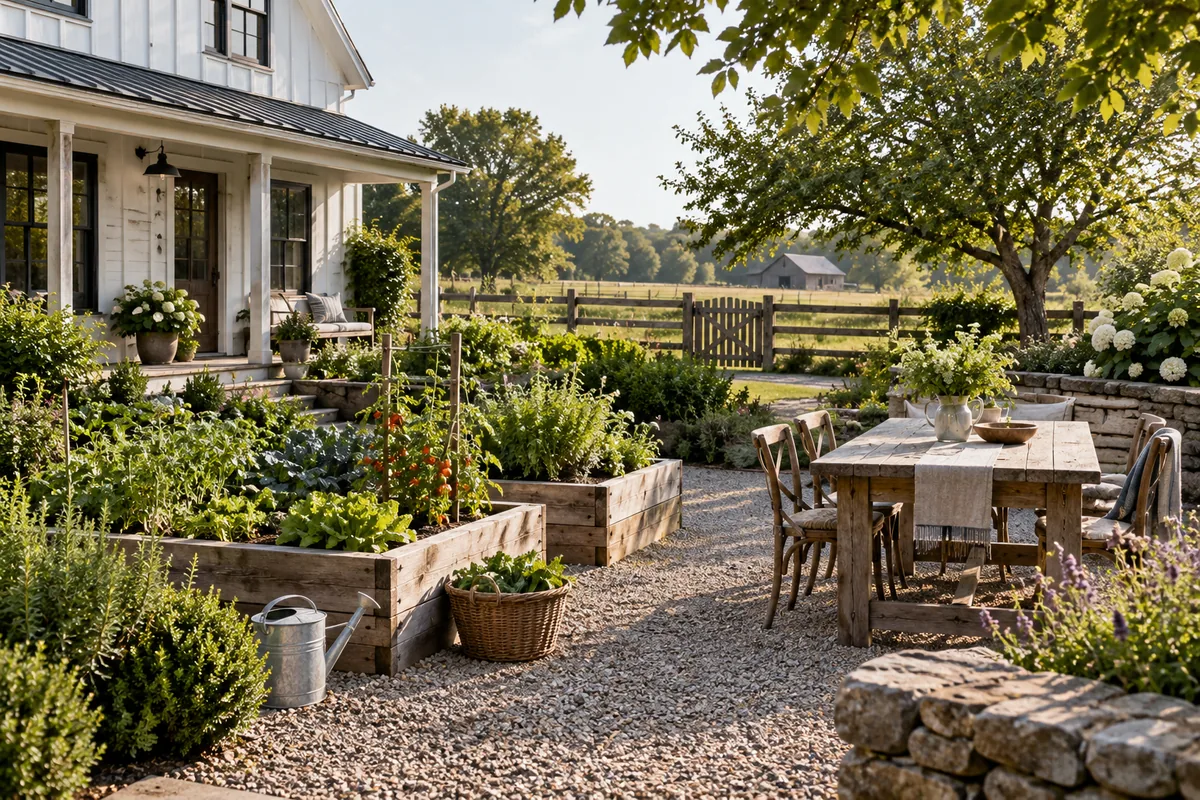
Farmhouse landscape style: useful spaces and honest materials
Discover farmhouse landscape style through practical fences, productive beds, wood and stone, and useful outdoor spaces that support everyday garden routines.
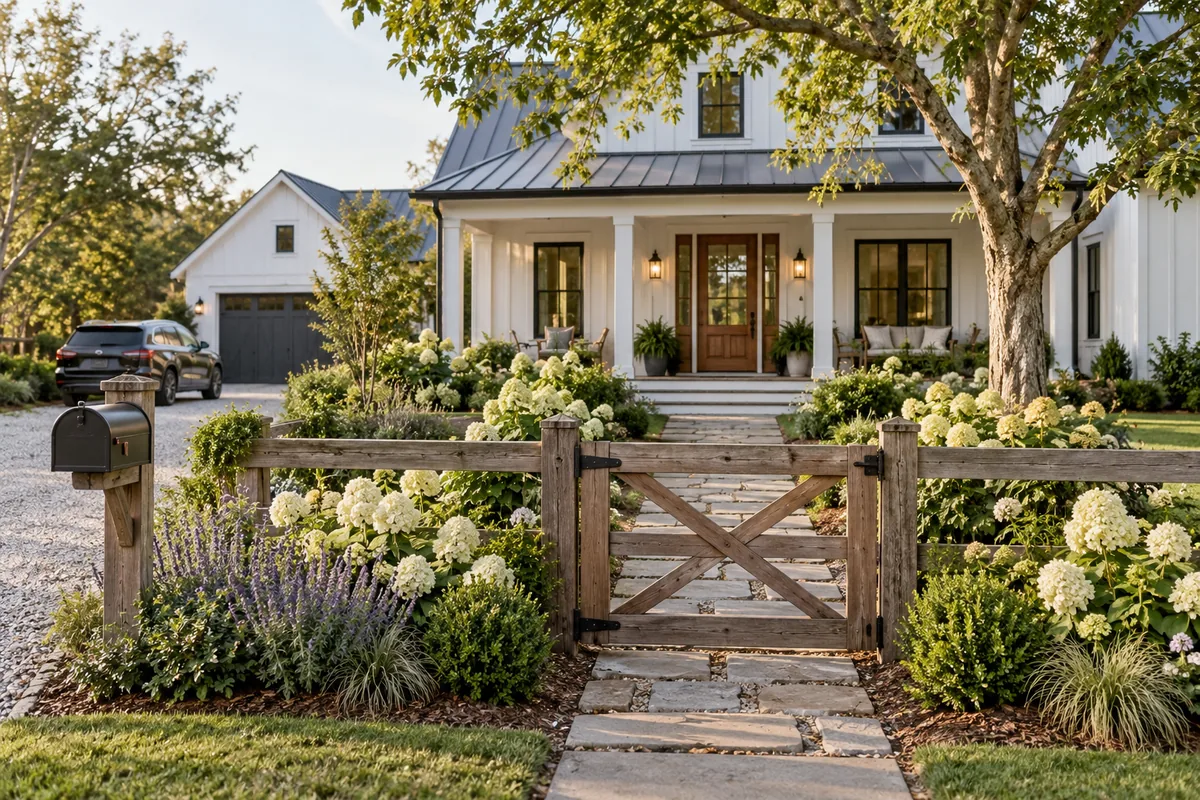
Farmhouse front yard ideas with a useful, welcoming framework
Discover farmhouse front yard ideas for working gates, sturdy boundaries, warm materials, practical planting, and an entrance that supports everyday arrivals.
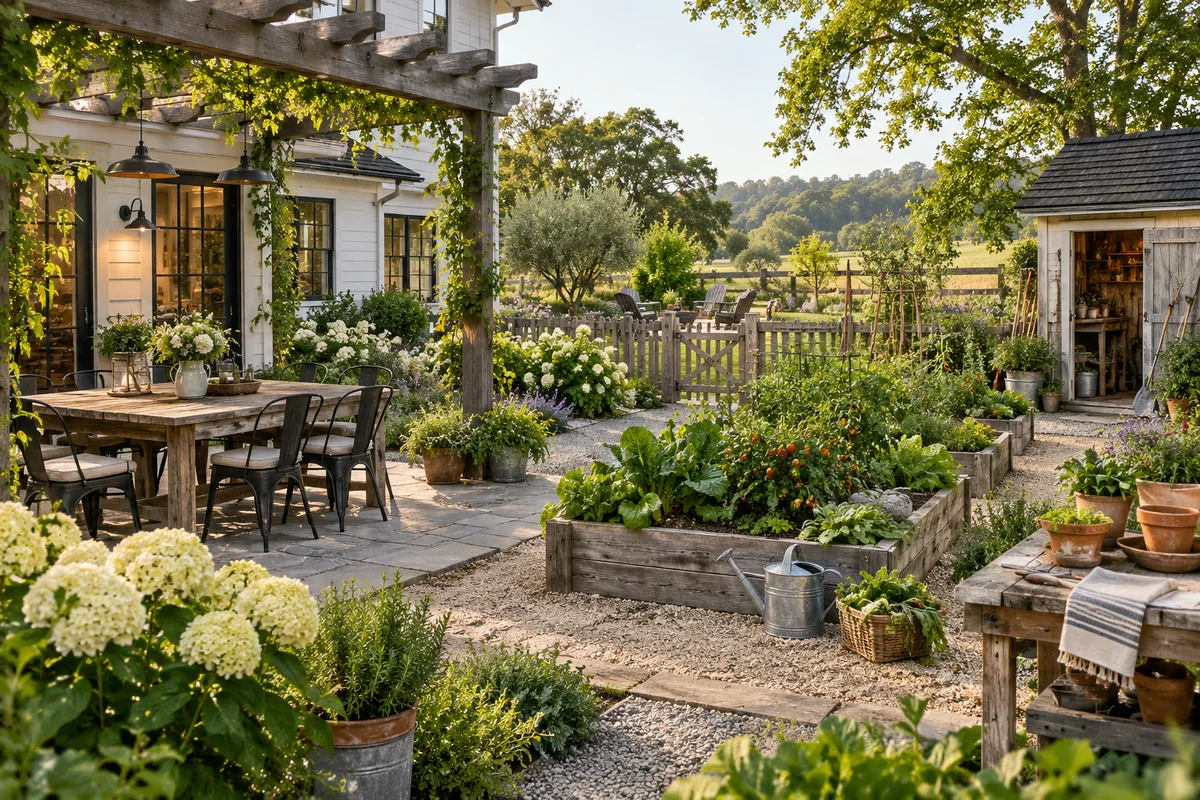
Farmhouse backyard ideas for growing, gathering, and work
Find farmhouse backyard ideas for productive beds, simple gathering spaces, working routes, sturdy materials, and practical storage connected to everyday use.
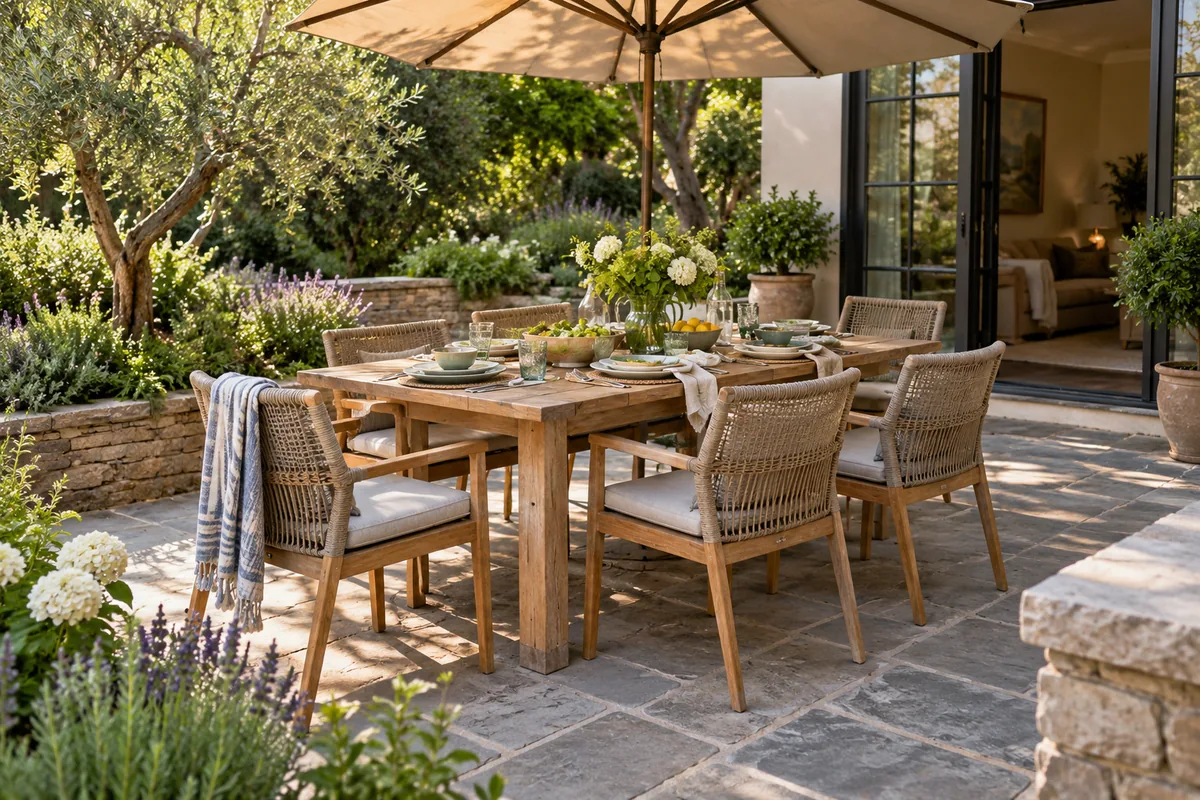
Outdoor Dining Set Ideas Based on the Occupied Table
Choose outdoor dining sets using table shape, real chair movement, serving routes, shade, material care, and the usable patio area rather than empty furniture.
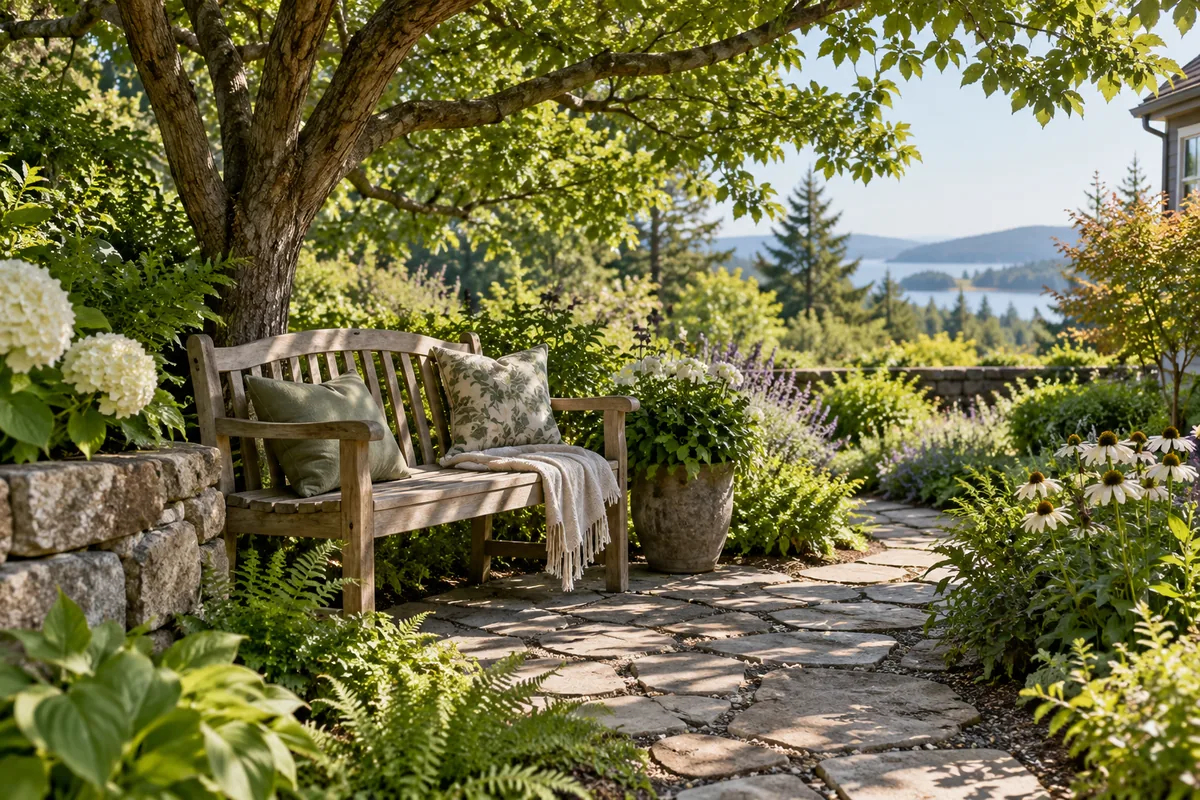
Garden Bench Ideas That Give People a Reason to Sit
Find garden bench ideas for shade, views, and everyday pauses, with practical guidance on seat fit, materials, access, maintenance, and stable placement.
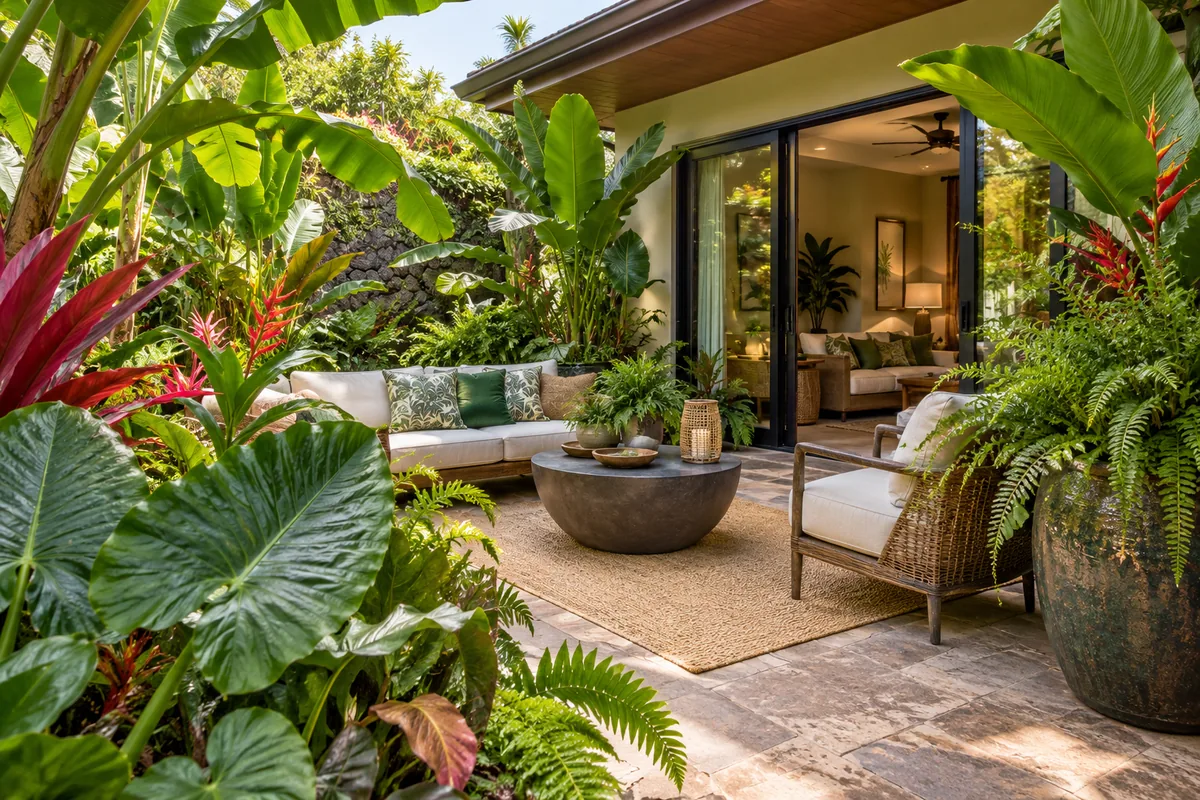
Tropical patio ideas for bold foliage around a useful room
Explore tropical patio ideas for large-leaf views, layered containers, usable furniture, seasonal handling, and safe shade around an everyday outdoor room.