
By AI Landscape Design Team · Editorial policy
Farmhouse backyard ideas for growing, gathering, and work
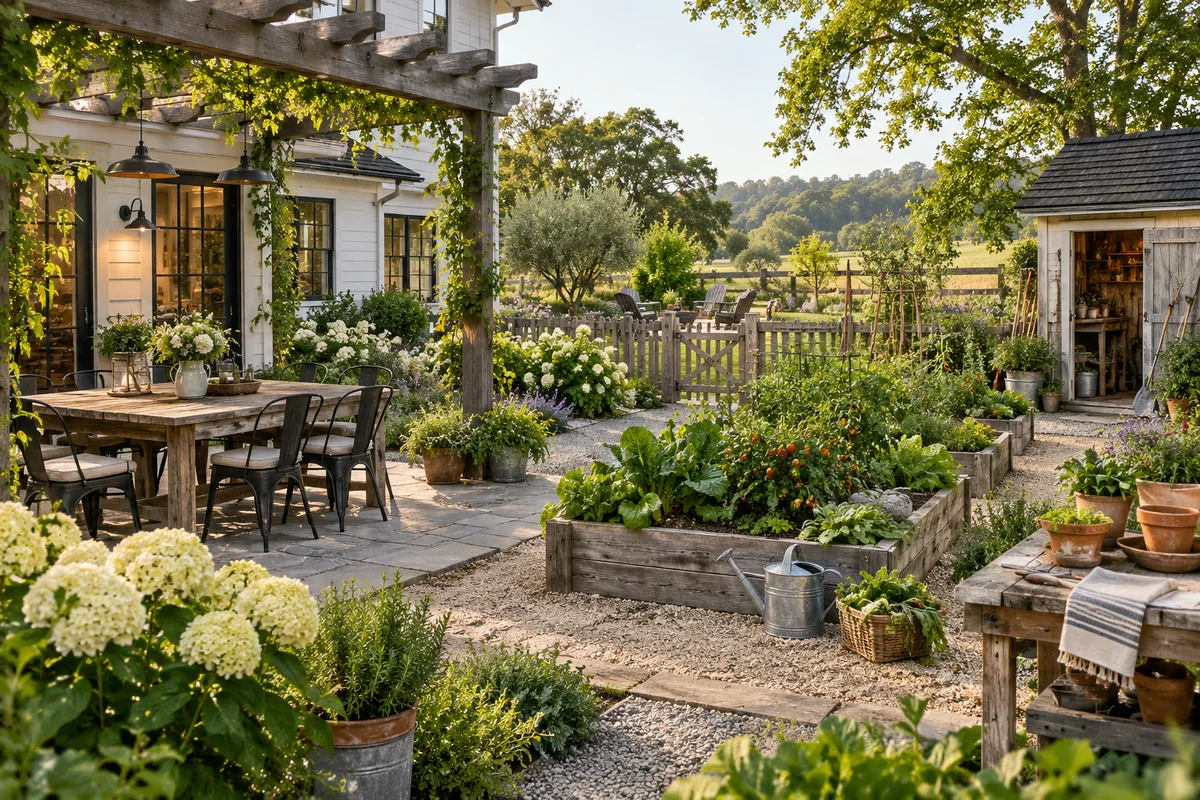
Farmhouse backyard ideas should connect productive planting, outdoor meals, storage, and ordinary garden work through a straightforward layout. Use familiar materials and a few durable plant roles to relate those activities to the house. Practical character comes from features the household actually uses, not from a collection of rural-looking objects placed around an otherwise unresolved yard.
Published · 6 min read
Key takeaways
- Link growing, storage, and gathering with useful routes.
- Begin productive planting at a scale the household will tend.
- Choose materials for repair and use as well as appearance.
Which routines should establish the backyard framework?
List the work and leisure that will actually happen outside. Carrying tools, watering vegetables, preparing a meal, and storing furniture need different routes and surfaces. Locate the productive area according to sunlight and care rather than placing it where a symmetrical sketch looks most attractive. The outdoor table should not interrupt the route used to move compost or equipment.
Check how the working garden appears from frequently used windows. A productive patch has seasonal changes and may be bare at some times, so plan a coherent edge and background. Preserve useful existing surfaces and trees when local assessment supports them. New boundaries, structures, and level changes need rule and professional review. Farmhouse simplicity should make the daily garden clearer, not hide its physical constraints.
Eight practical backyard ideas with farmhouse character
- Connect tools to the productive area. Put frequently used equipment where it can be reached without crossing dining furniture. It suits a household that tends vegetables or other productive planting regularly. Keep storage weather-appropriate and manageable. An enclosure that is attractive from the house but inconvenient to open may encourage tools to accumulate on the terrace instead.
- Start with a modest growing patch. Use a defined bed or suitable container area where sunlight, water access, and actual care support it. This fits owners learning their seasonal workload. Maintain room to inspect and harvest plants from useful positions. Raised beds are one option, not an automatic improvement, and their materials and soil need review for the intended use.
- Place the table beside a direct house route. A plain outdoor dining set can provide a gathering center without elaborate decoration. It works for households that carry meals from the kitchen. Test chairs and service movement before fixing bed edges. Keep work routes related but distinct so a meal and routine garden maintenance do not require crossing the same cramped corner.
- Let wood and stone connect the rooms. Choose a restrained material relationship informed by the existing house. This suits yards with several disconnected finishes. Inspect condition, repair access, and actual performance before selecting reclaimed-looking pieces. A rustic appearance does not establish safety or make foundations, installation, and drainage less important than in any other construction style.
- Make a boundary do real work. Use a gate or fence to define access or containment where that function is needed. It fits a garden with productive and gathering zones that benefit from separation. Check rules and practical barrier requirements locally. Avoid inserting decorative fence fragments across movement simply to imitate a rural scene without a corresponding purpose.
- Frame work areas with repeated planting. A locally suitable shrub or perennial role can tie productive beds to the rest of the garden. It works when the vegetable patch currently appears detached. Check sunlight so ornamentals do not unintentionally shade the growing area. Keep mature growth clear of access, and select plants by their actual requirements rather than farmhouse association alone.
- Use a seat where the work can be enjoyed. A durable bench beside an appropriate view can offer a pause point without competing with the dining area. It suits someone who spends time tending the garden. Leave the seat reachable and avoid placing it where fallen fruit or service equipment causes recurring problems. Comfort and use matter more than an aged decorative finish.
- Plan useful shade and evening access. An appropriate tree canopy or professionally reviewed structure can make gathering more comfortable, with light on necessary routes after dark. This fits regular outdoor use. Verify roots, foundations, wind, wiring, and local requirements with qualified professionals. The simple visual style cannot determine structural adequacy or whether the area will be sheltered when people need it.
What should productive plants and construction trigger?
Get regional advice on actual crops, ornamental roles, and permanent fruiting plants. Check USDA hardiness zone, sunlight, soil, moisture, mature form, and local invasive information. A productive label does not mean all planting is safe around animals; consult ASPCA toxicity information for pets and assess children's contact and access separately. Plan seasonal care and harvesting space before buying unfamiliar plants.
The farmhouse style guide gives the overall emphasis, and storage considerations can support practical layout questions. Raised elements, grade changes, retaining work, structures, gas, and electrical installation need licensed local review. Before digging in the United States, contact 811 and assess private utility locating requirements. Do not infer construction details or productive performance from an attractive image. The useful garden relies on verified conditions and real household routines.
How does a working backyard avoid accumulating clutter?
Set a place for each ordinary object: hose, tools, garden waste, furniture covers, and spare containers. Keep routes functioning and repair latches or surfaces before adding decorative accessories. Observe the garden during periods when productive beds are not full. A maintained outline and repeated background can make seasonal work readable without pretending every area stays ornamental year-round.
AILandscape's backyard tool can help compare farmhouse visual arrangements on your property photo. Review the relationship between productive beds, gathering, and storage using the concept, then verify measurements, local plants, drainage, and construction independently. The image cannot settle yields, soil suitability, or installation costs. A proposal that erases storage or creates unreachable beds is incomplete even if it looks appealing. Farmhouse character becomes convincing when useful everyday work and comfortable gathering fit the same garden.
Frequently asked questions
Should productive beds be the center of a farmhouse backyard?
They can lead the layout if growing is a real household activity and site conditions support it. Otherwise, gathering and practical routes may be more important. Choose the emphasis from use rather than installing beds solely to create a farmhouse appearance.
Can the dining area sit near garden storage?
Related positions can be convenient if the routes stay distinct and storage remains contained. Keep furniture circulation clear and allow equipment to move without passing through the table area. A useful screen may help the view, but it should not make opening or servicing storage difficult.
Does rustic style mean using reclaimed materials?
Reclaimed materials are optional. Assess condition, repair, safe installation, and suitability for the intended use before choosing them. Straightforward new materials can express the practical character equally well when they relate to the house and support ordinary garden routines.
Sources
Related reading
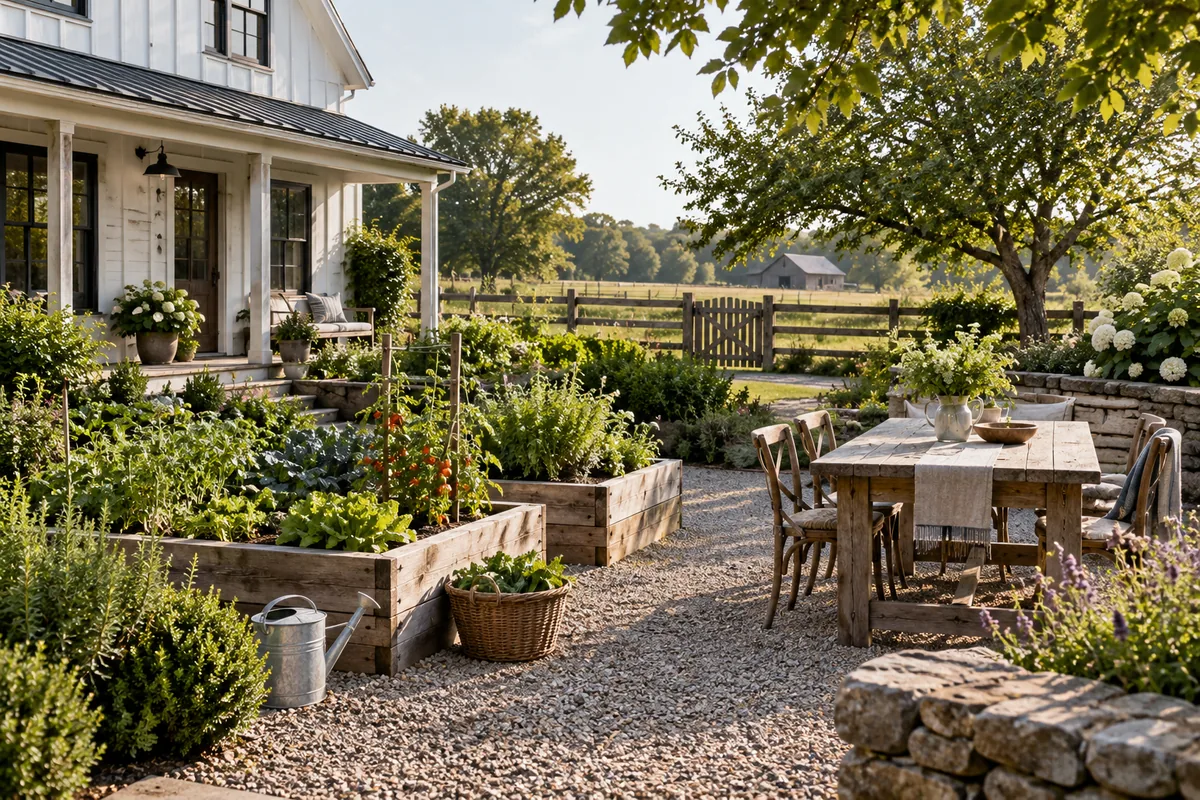
Farmhouse landscape style: useful spaces and honest materials
Discover farmhouse landscape style through practical fences, productive beds, wood and stone, and useful outdoor spaces that support everyday garden routines.
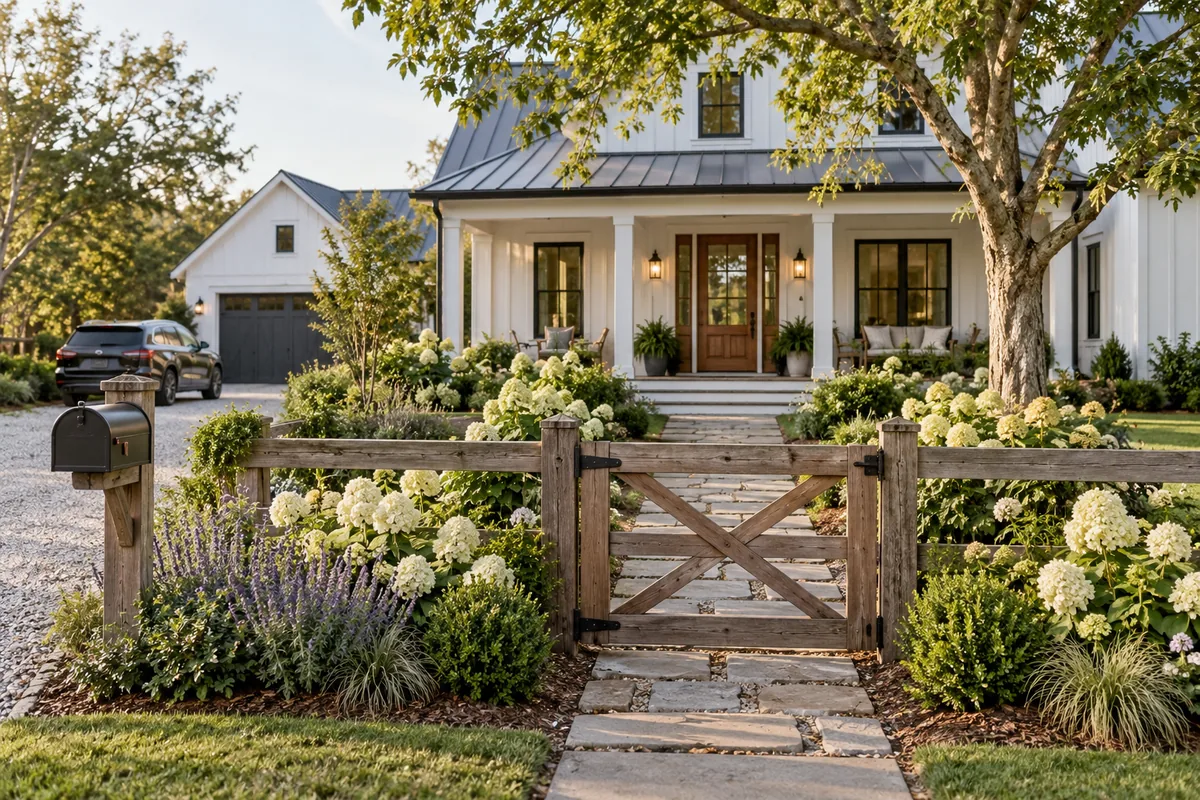
Farmhouse front yard ideas with a useful, welcoming framework
Discover farmhouse front yard ideas for working gates, sturdy boundaries, warm materials, practical planting, and an entrance that supports everyday arrivals.
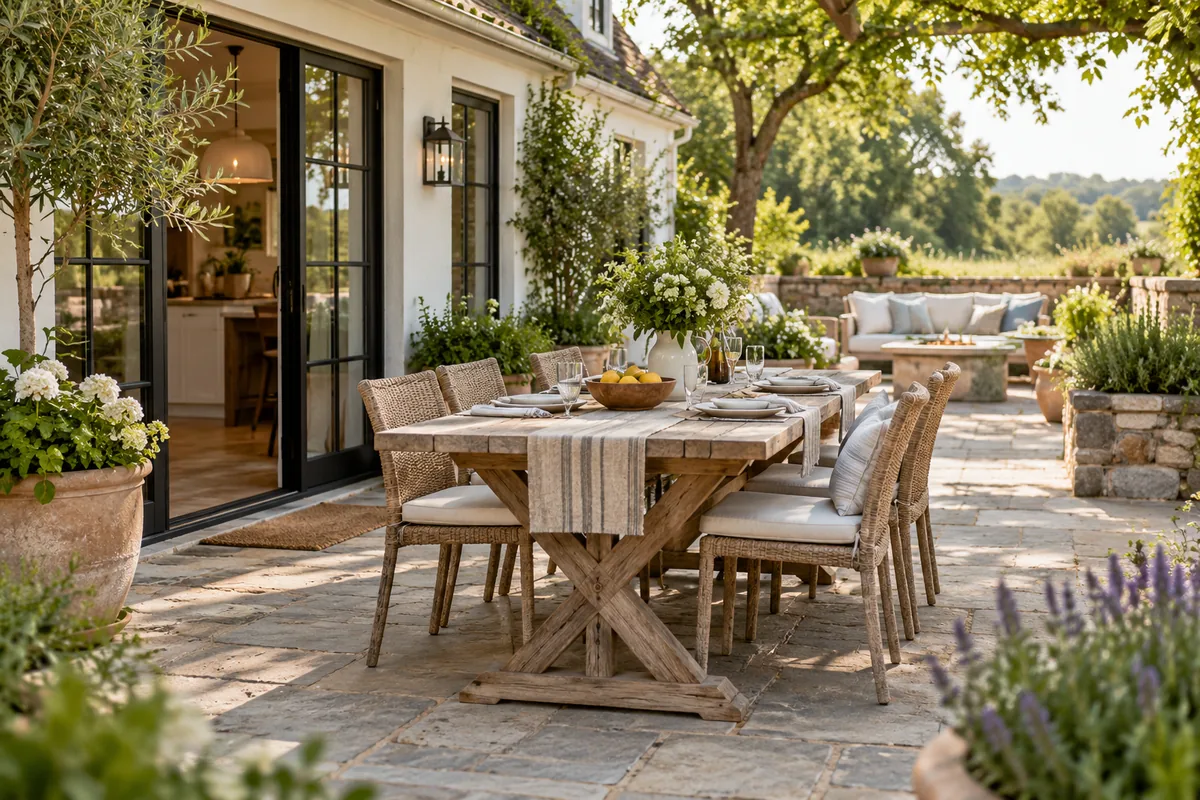
Farmhouse patio ideas for meals, useful pots, and simple materials
Discover farmhouse patio ideas for practical dining, sturdy furniture, warm surfaces, productive containers, and convenient storage without decorative clutter.
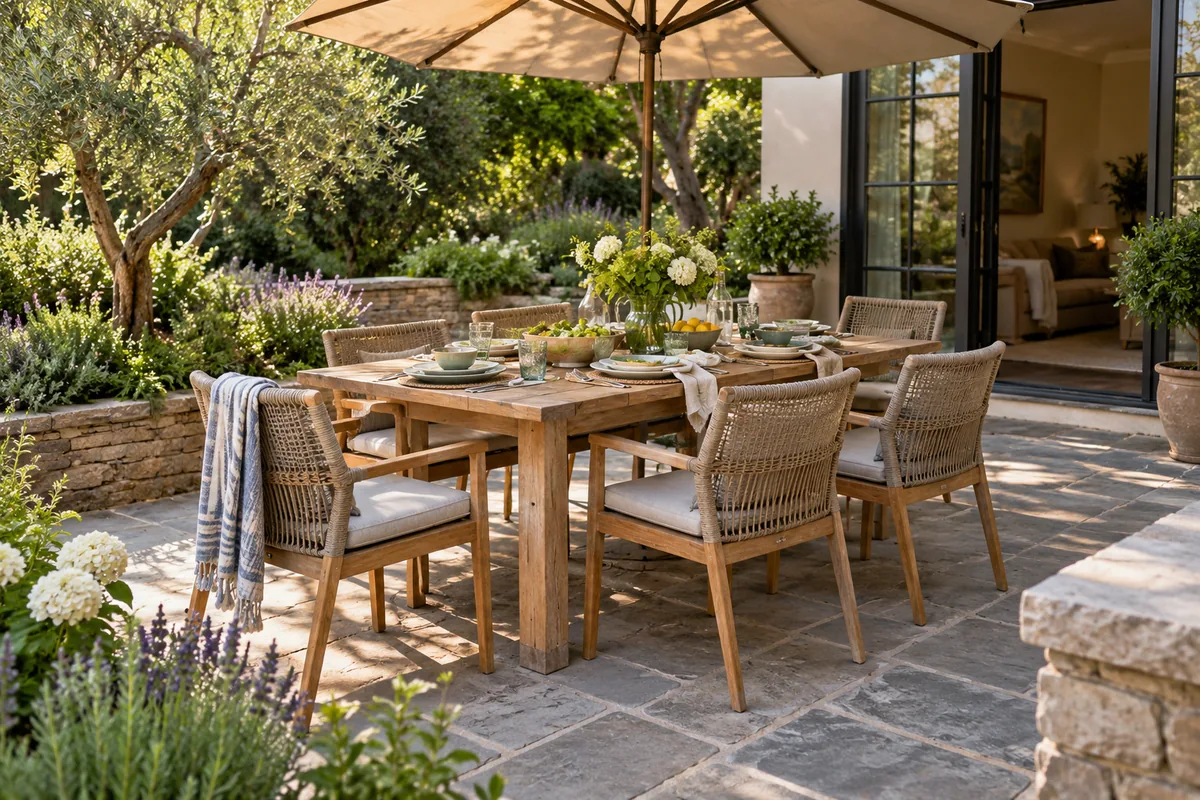
Outdoor Dining Set Ideas Based on the Occupied Table
Choose outdoor dining sets using table shape, real chair movement, serving routes, shade, material care, and the usable patio area rather than empty furniture.
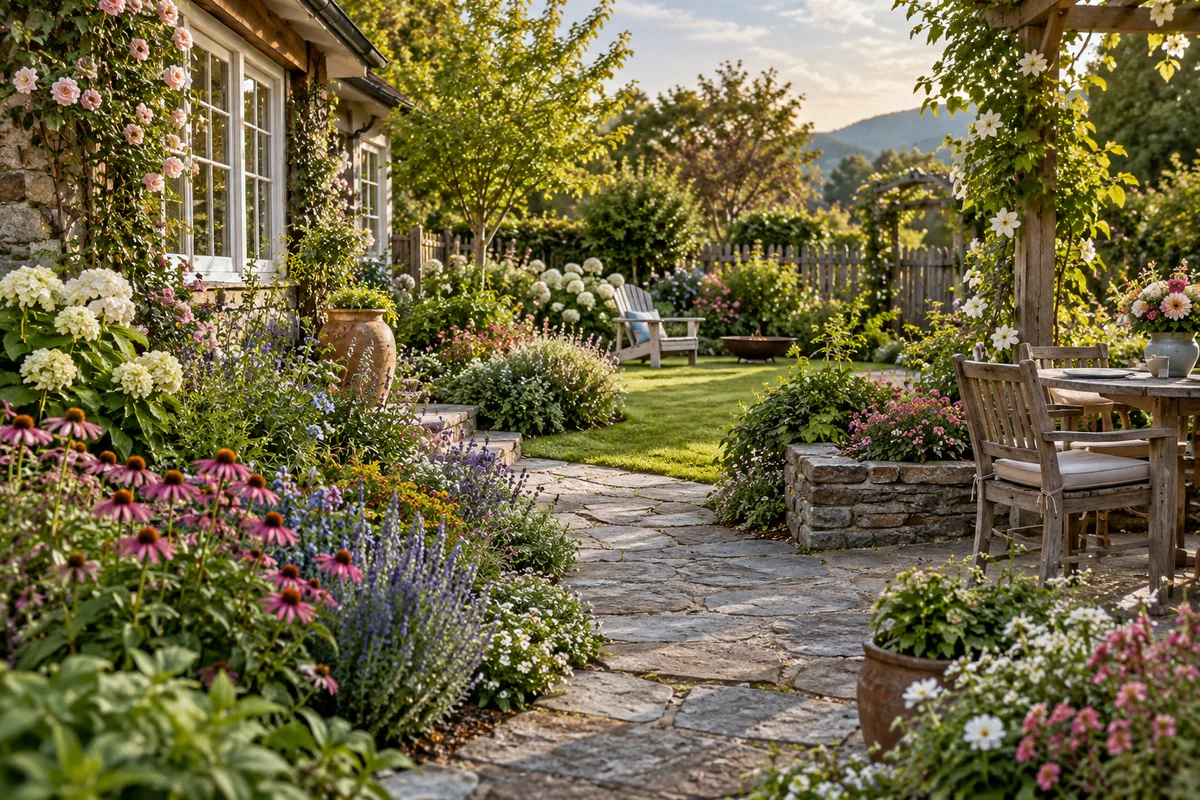
Cottage backyard ideas for flowers, seats, and seasonal life
Explore cottage backyard ideas for layered flowers, comfortable seats, connected borders, productive corners, and practical access through seasonal planting.
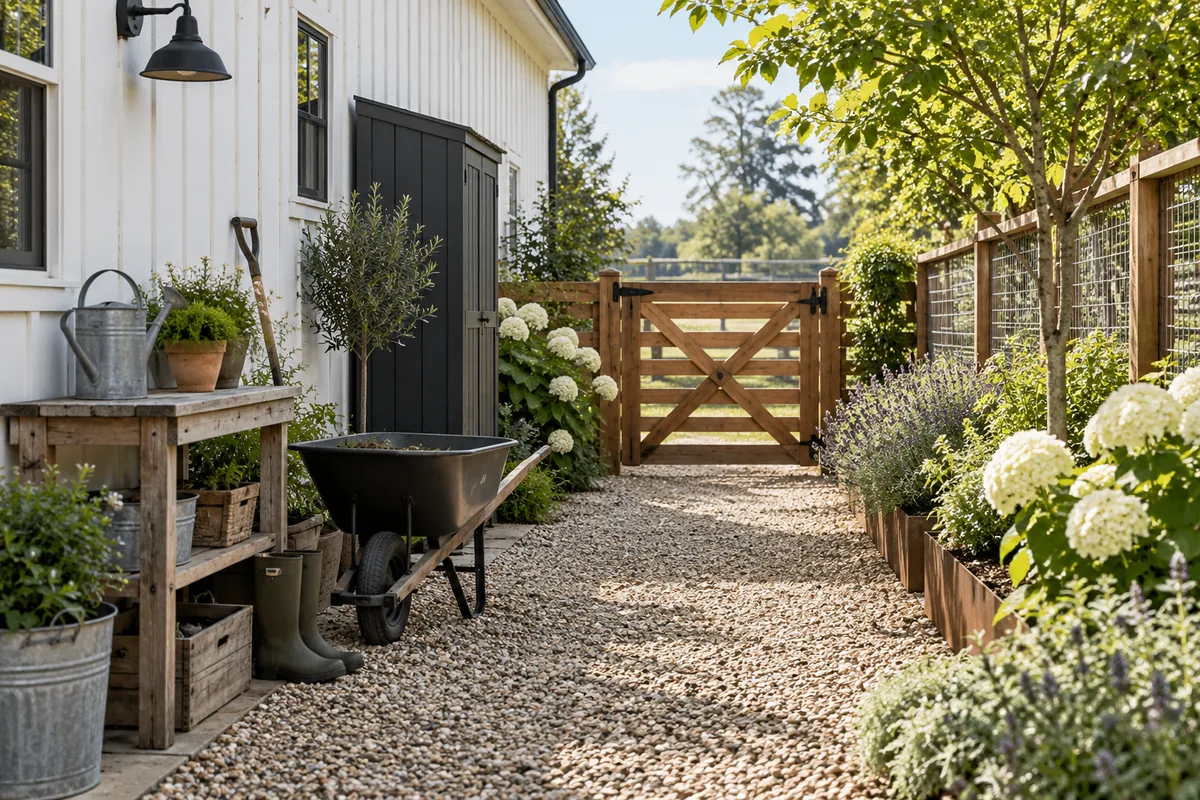
Farmhouse side yard ideas that give working space a purpose
Find farmhouse side yard ideas for reachable storage, working gates, coherent materials, manageable planting, and a useful connection between front and back.