
By AI Landscape Design Team · Editorial policy
Landscaping for Hot Dry Climates: Planning Priorities
Landscaping for hot dry climates should begin with the site’s exposure, soil, water constraints, and actual outdoor uses, then select locally suitable planting and surfaces around those conditions. Useful shade and compatible irrigation needs matter more than reproducing a desert-looking image. Plant categories provide visual possibilities, not a guaranteed suitability list; confirm the USDA hardiness zone and local extension advice before choosing species, irrigation, or construction details.
Published · 6 min read
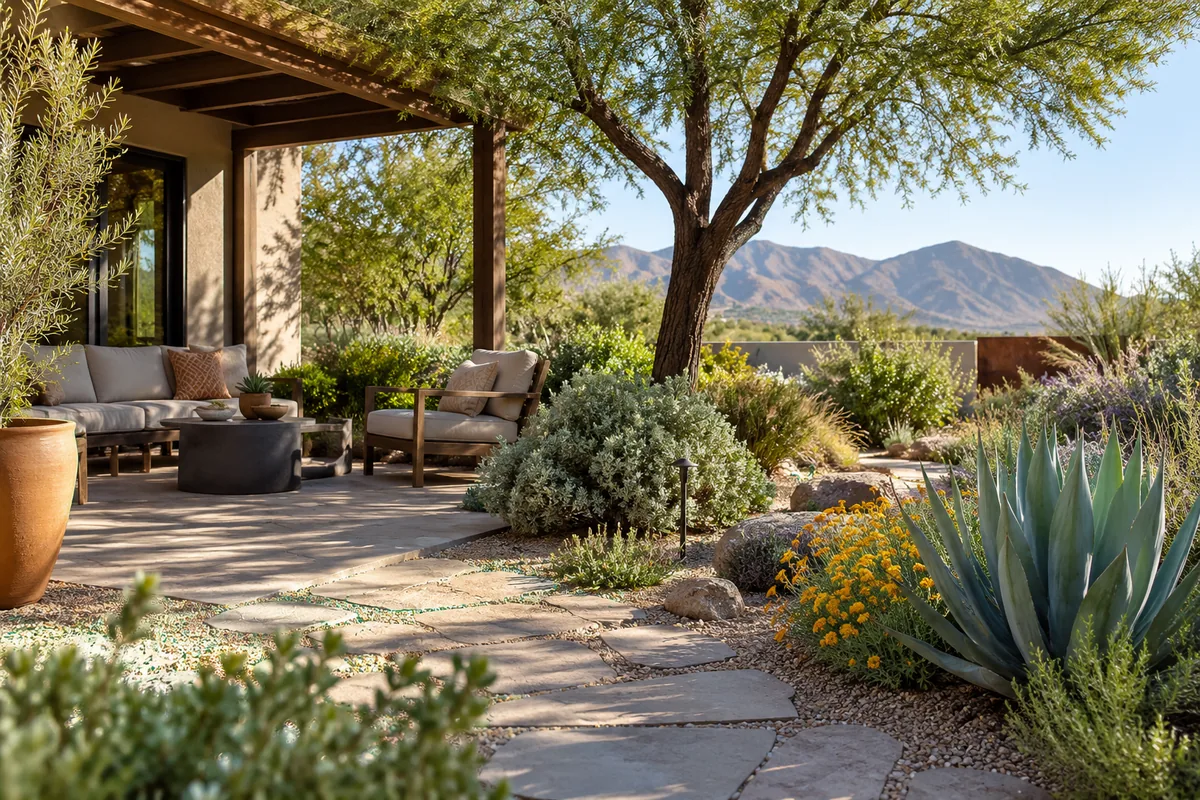
Key takeaways
- Assess actual exposure and available water first.
- Group compatible plant needs rather than choosing a look alone.
- Verify shade, irrigation, and construction locally.
What conditions should be recorded first?
Confirm the location and USDA hardiness zone, then observe how the site behaves during the times people use it. Hot and dry describes a broad climate pattern, not the light, soil, or moisture of every bed. Areas beside walls, under existing trees, and near exposed paving may offer different conditions. Record those differences before selecting a single palette for the whole yard.
Identify any water restrictions or local requirements through the appropriate local sources. This guide does not prescribe a universal watering schedule or claim that a planting category needs no irrigation. Existing drainage, roots, and structural conditions require assessment independently from the visual style. Keep a clear list of retained features and unresolved questions. A yard in a broadly dry region can still have a wet or poorly drained area, and that problem should not be hidden beneath stone or a drought-labeled plant. Qualified local professionals can assess the actual water movement, soil, and safe destinations before changes to ground levels or built surfaces are considered.
How should outdoor use and shade shape the layout?
Identify where people sit, eat, walk, and work outside, then check those positions at relevant times of day. A decorative seating area is not useful if its actual exposure conflicts with the intended activity. Existing shade may be valuable, but tree health, root conditions, and mature growth require appropriate arborist advice. Do not assume that moving a seat or planting a tree guarantees the desired shade throughout the year.
Overhead structures introduce support and permit questions, so discuss them with qualified local professionals. A concept can show a possible relationship between shade and circulation without establishing the construction. Keep essential routes clear and avoid surrounding every activity with visually dense planting. Consider a restrained surface palette and a limited number of sheltered destinations rather than extending paving into all available space. Review desert style and native style as different visual languages, not universal climate prescriptions. The preferred direction should remain adaptable when actual shade, access, or structural information rules out a depicted feature.
Which plant selection principles are useful?
Choose plant roles before species: a background form, a repeated middle layer, and a lower edge where the space supports them. Locally suitable shrubs, grasses, perennials, or other groups may contribute those roles, but no category is a verified list. Cold tolerance, heat exposure, soil, moisture, mature size, invasive status, and toxicity all need real confirmation. A drought-tolerant label does not remove establishment or maintenance questions.
Use local extension or nursery expertise for the confirmed region and actual bed. Plants native to different habitats can have different water requirements, so native origin is not the same as low irrigation need. If pets or children can reach the planting, review toxicity and physical hazards separately. Favor a manageable palette whose roles can be repeated where growing conditions match. Avoid buying a collection of plants that share a dry-looking aesthetic but need incompatible care. The ornamental grass guide can help frame visual and maintenance questions while leaving species selection to appropriate local verification.
How can water and surfaces be discussed responsibly?
According to EPA WaterSense, water-smart landscaping relates plant choices and irrigation to regional and site conditions. Use that principle to group compatible needs and ask qualified professionals about an appropriate system. Do not provide fixed savings, emitter quantities, or operating times from a garden image. Inspection, establishment care, local rules, and changing conditions remain part of the discussion.
Compare built surfaces for actual use, maintenance, and their relation to planting. A granular appearance does not prove permeability, comfort, or accessibility. Stone-covered ground is not automatically the best way to reduce water demand, and paving does not eliminate drainage assessment. Discuss the complete installed system with the appropriate professionals. Before excavation in the United States, use 811 and arrange private-service locating where needed. Xeriscaping explains the broader approach without turning it into a single stone-and-cactus look. Keep the visual decision separate from verified irrigation and construction requirements so the project can respond to real conditions.
What should be checked before committing to the concept?
Prepare a short record of exposure, intended activities, retained features, researched planting roles, and unanswered site questions. Compare the preferred visual direction against that record. Remove details that depend on unverified species or construction rather than trying to preserve every attractive element. AILandscape can explore broad visual ideas from a photo, but AI concepts do not confirm local suitability, water use, measurements, or installation.
Ask local professionals to review real plants, irrigation, shade structures, soil, and drainage before purchase or work. Keep maintenance access and the expected care visible in the brief. A simplified palette with appropriate conditions may be more workable than an elaborate concept assembled from unrelated dry-climate references. Revisit the plan after a season of observation where practical instead of promising immediate permanent performance. The outcome should be a landscape that supports actual use and can be cared for under local conditions. Its dry-climate identity comes from informed choices, not from a visual label or a promise that every depicted plant will thrive.
Frequently asked questions
Does hot dry landscaping mean using only gravel?
Gravel is one surface option, not the definition of a water-conscious landscape. Consider planting, shade, actual use, and locally appropriate irrigation together. The complete site and maintenance conditions need assessment before replacing living areas with a granular surface.
Are drought-tolerant plants suitable everywhere in a dry region?
Drought tolerance does not establish cold tolerance, soil compatibility, mature fit, or performance in every bed. Confirm the USDA hardiness zone and local conditions with suitable expertise. Establishment care, invasive status, and pet toxicity also need independent consideration.
Can AI show a landscape’s water needs?
An AI concept can depict a visual direction but cannot verify species, soil, irrigation, or actual water performance. Use it to discuss arrangement and appearance. Local professionals and reliable plant information must confirm the real watering and installation decisions separately.
Sources
Related reading
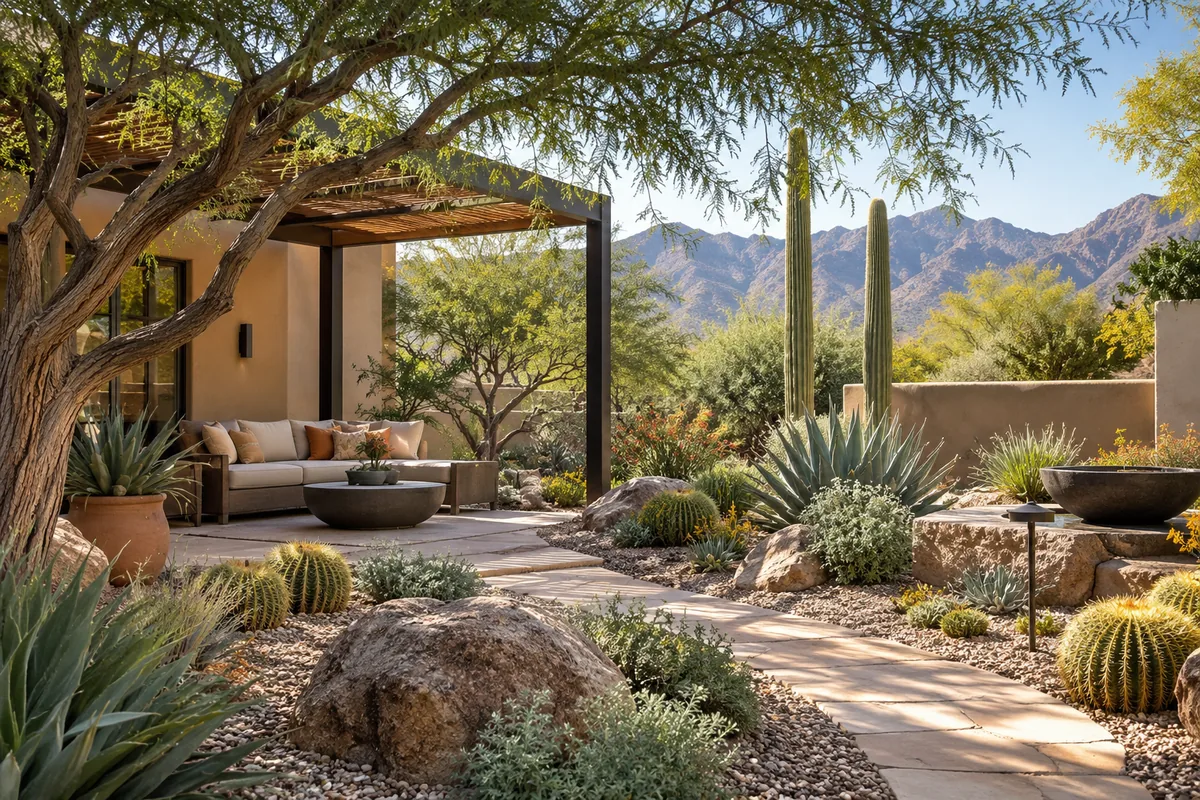
Desert landscape style: shade, stone, and plant form
Understand desert landscape style through plant form, mineral surfaces, useful shade, and heat-aware layouts, while separating its appearance from xeriscaping.
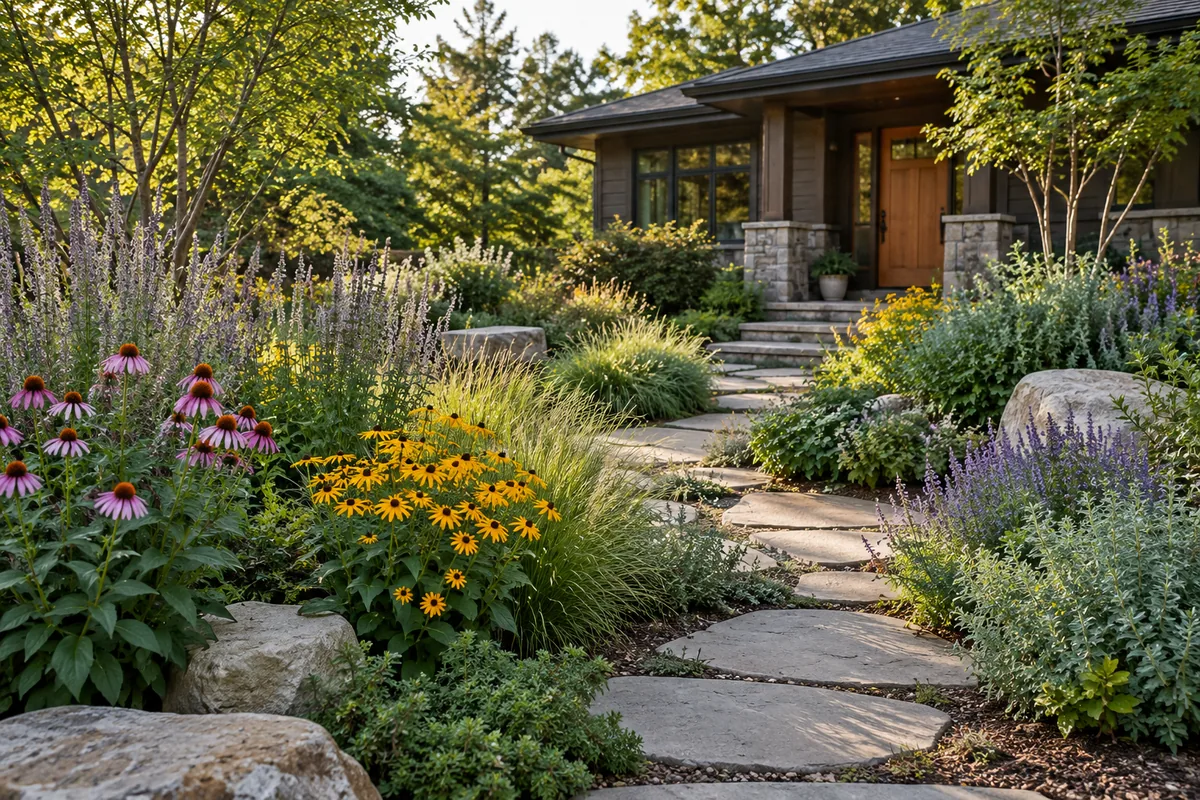
Native plant landscape style: regional plants with structure
Learn how native plant landscape style combines regional plant choices, seasonal change, and clear garden structure with practical care and neighborhood views.
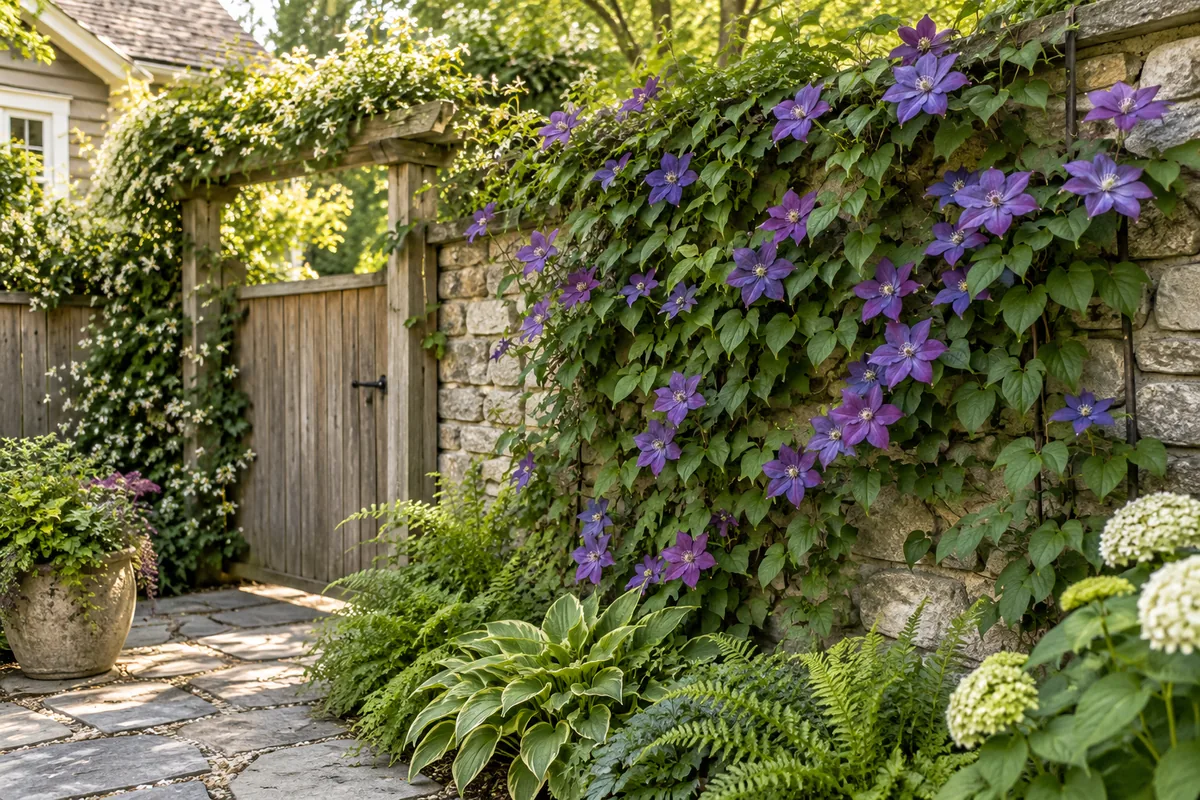
Climbing Vines for Fences and Walls with Suitable Supports
Climbing Vines: Support, Walls, and Local Fit: explore placement, upkeep, and local safety questions before deciding how this feature fits your yard.
Concrete Pavers for Patios, Paths, and Yard Routes
Learn how concrete pavers fit your yard, with practical material, placement, upkeep, and safety questions to review before choosing a visual direction.
Deciduous Trees for Landscaping and Seasonal Views
Deciduous Trees: Shade, Space, and Local Fit: explore placement, upkeep, and local safety questions before deciding how this feature fits your yard.
Desert landscaping vs Xeriscaping: Which Fits Your Yard?
Compare desert landscaping and xeriscaping for your yard. Review layout, materials, upkeep, and practical trade-offs before choosing a direction.