
By AI Landscape Design Team · Editorial policy
Native plant landscape style: regional plants with structure
Native plant landscape style organizes plants indigenous to a region into a usable, intentional garden. It can appear formal or naturalistic: native status describes a regional relationship of a plant, not a required shape for the garden. The strongest design combines locally verified plant choices with clear routes, repeated groups, and a maintenance approach that accommodates seasonal growth without abandoning everyday access.
Last updated · 8 min read
Key takeaways
- Verify native status for the actual region before selecting species.
- Use clear edges and repeated groups to show intentional care.
- Balance habitat opportunities with safe and usable household routes.
- Expect establishment work and ongoing seasonal decisions.
What does native mean in a designed garden?
Native status is geographically specific. A plant described as native somewhere in the United States is not automatically native to every state, watershed, or local habitat. Ask for regional information rather than relying on a nursery label that only says native. A plant's indigenous relationship also does not establish whether the conditions in a particular suburban bed meet its needs.
The design style can be quiet and geometric or loose and meadow-like. A clipped-looking route beside repeated locally appropriate plant groups can be as deliberate as a broad naturalistic border. Decide what the property should support and how it will be used, then organize suitable planting accordingly. Avoid presenting native gardening as a single appearance that every household must adopt. Regional knowledge is the starting point; readable structure makes that knowledge useful in a residential setting.
How do you verify regional plant choices?
Use regional resources to build a shortlist, then evaluate the shortlist against the actual site. According to the National Wildlife Federation, its Native Plant Finder provides a location-based way to explore native plants and their wildlife relationships. The Lady Bird Johnson Wildflower Center is another resource to consult for native plant information. Neither a search result nor a style label should substitute for checking exposure, moisture, soil, and mature growth.
Review the USDA hardiness zone as one part of the local assessment, together with summer conditions and the bed's microclimate. Ask a regional nursery or extension office to clarify uncertainty and check current invasive guidance. Cultivars may differ from the species in size or other traits, so verify what is actually being sold. Write the confirmed botanical name on the plan to reduce confusion from shared common names.
What framework makes a native garden look intentional?
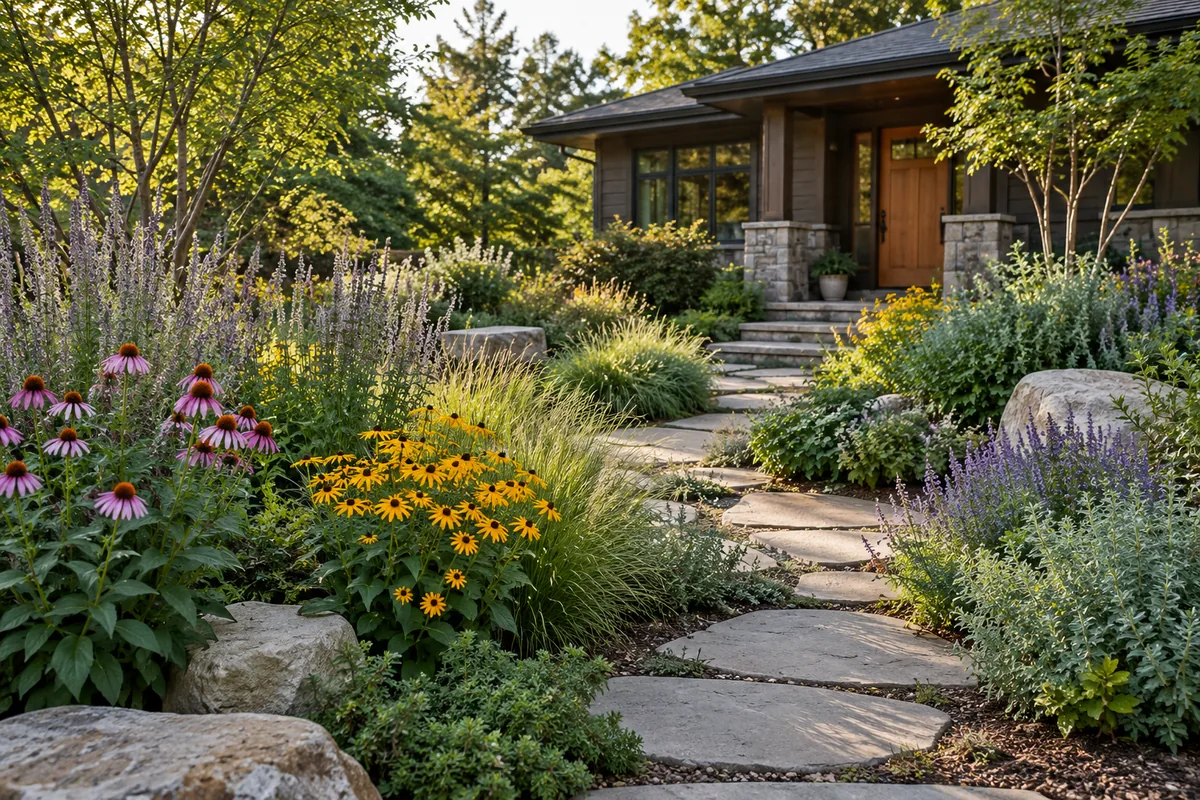
Give the garden clear boundaries that people can understand. A maintained path, an orderly bed edge, or repeated plant groups can show that seasonal growth is being managed. Keep entrances legible and preserve visibility where vehicles meet pedestrians. A naturalistic planting inside a strong outline can communicate care without requiring every stem to be clipped to the same height.
Place the most structured areas nearest the routes seen and used frequently. Farther from the door, a larger patch can accommodate a looser seasonal pattern if site rules and household needs allow it. Check neighborhood requirements before making major changes, and explain the intended maintenance approach when shared boundaries are involved. Avoid using decorative signage as the only evidence of care. Visible access, containment, and thoughtful placement do more to establish an understandable garden.
How should plant groups relate to habitat and everyday use?
Think in functional layers: canopy where appropriate, shrubs, herbaceous planting, and a lower ground layer. Different forms can provide a varied garden while repeated groups make the arrangement legible. Consider flowering periods, foliage, and seed heads without promising a continuous sequence or quantified wildlife outcome. Record what actually develops after planting so later changes respond to the site.
Keep a practical route through or beside the planting. A habitat-oriented bed should not block a gate or place dense stems where children routinely walk. Screen plant toxicity independently for pets, including the ASPCA list; regional native status is not a safety certification. Avoid thorny or rigid forms beside occupied routes unless their mature growth remains safely separated. Decide where seasonal leaf litter is acceptable and where it would create a slipping or access problem.
Which materials support regional planting?
Hardscape should make the planted landscape easier to use. Existing sound paving may be retained, while a restrained new edge can organize the border. Stone, timber, or another locally familiar finish can connect the design to the house, but their sourcing and performance should be assessed rather than assumed from appearance. The main walking surface needs to fit the users and weather conditions.
Do not use habitat language to justify unreviewed drainage changes. A rain garden, swale, or altered slope requires a site-specific assessment of water movement and relevant local rules. Consult licensed professionals before changing grades or building retaining elements. Before US excavation, contact 811 and check separate private utility locating needs. A natural-looking planted depression in a photograph cannot establish that water will enter, infiltrate, or leave safely on the actual property.
How do seasonal changes affect the design?
A native plant garden may show flowering peaks, dry stems, winter silhouettes, and temporary gaps. Those phases can be part of the intended composition when the layout remains understandable. Study the border from the house after the most colorful period has passed. Repeat durable foliage forms or a clear edge where the seasonal change otherwise makes the garden look unfinished.
Decide which stems and leaves can remain and which need removal for access or plant care. Local horticultural advice can help balance plant health, habitat intentions, and household use. Avoid a universal instruction to clear everything or leave everything. A patch away from the path may support a different maintenance standard from the entrance bed. Keep records of dominant growth and unwanted spread so the composition can be adjusted before one vigorous plant overwhelms slower neighbors.
What maintenance does establishment require?
The initial period can involve careful weed identification, watering according to actual needs, and monitoring losses. Native plants are not automatically free from establishment work. Make the first phase small enough to observe and maintain, then expand after learning how selected plants behave in the site. Clearly label new plant groups if distinguishing them from unwanted seedlings is difficult.
Ongoing tasks may include selective removal, division, pruning, and keeping the route open. Use the mature-size information to avoid repeatedly forcing large plants into narrow strips. Do not promise water savings without understanding the actual planting and watering regime. Access to hoses, tools, and green-waste handling should be planned along with the beds. A regionally appropriate palette can still be difficult to manage if those practical routes were omitted from the design.
How to use native style in a front yard, backyard, side yard, or patio
A native front yard benefits from especially clear edges and an obvious entrance, allowing seasonal planting to read as intentional. A native backyard can combine a usable sitting area with a larger regionally informed planting patch and a workable maintenance route.
In a native side yard, choose plants for the actual exposure and available mature width, not merely for native status. A native patio may use containers with locally appropriate plants, but container culture differs from growing in the ground and needs separate advice. Connect each interpretation to the same verified regional shortlist while adapting the arrangement to its use. The garden should remain accessible and coherent through seasonal change in every space.
How can you review the concept before committing?
Ask what the concept communicates and what remains unverified. A drawing or image can show a repeated plant mass, a clean boundary, or the amount of open space. It cannot identify a depicted plant reliably or confirm native status from its appearance. Build a separate, named shortlist with local evidence before treating the planting arrangement as a purchase list.
AILandscape can explore the visual character of a native-style garden from a property photo. Use the output to compare structure and seasonal density, while verifying plant identities, regional suitability, drainage, and construction with local specialists. Do not assume that every plant shown is native or supports a particular ecological function. A successful residential interpretation makes regional planting decisions visible through a layout people understand and can care for, rather than relying on a persuasive label alone.
Frequently asked questions
Does native planting have to look like a meadow?
No. Native plants can be organized into repeated groups, clear borders, and formal or informal layouts. Native status concerns a regional relationship of a plant, while the arrangement is a design choice. Pick a structure that fits access, local rules, and the household maintenance routine.
Are all US-native plants suitable for my garden?
A plant native to one part of the country may not be native or suitable in another. Verify the actual region and assess soil, sunlight, moisture, winter conditions, and mature size. Use regional resources and local horticultural advice before buying from a general native label.
Is a native plant garden maintenance-free?
Establishment can require weed identification, watering, and monitoring, followed by seasonal editing and access maintenance. Work varies with the site and chosen plants. Start with a manageable area, record how it develops, and expand only when the actual care routine is understood.
Sources
Related reading
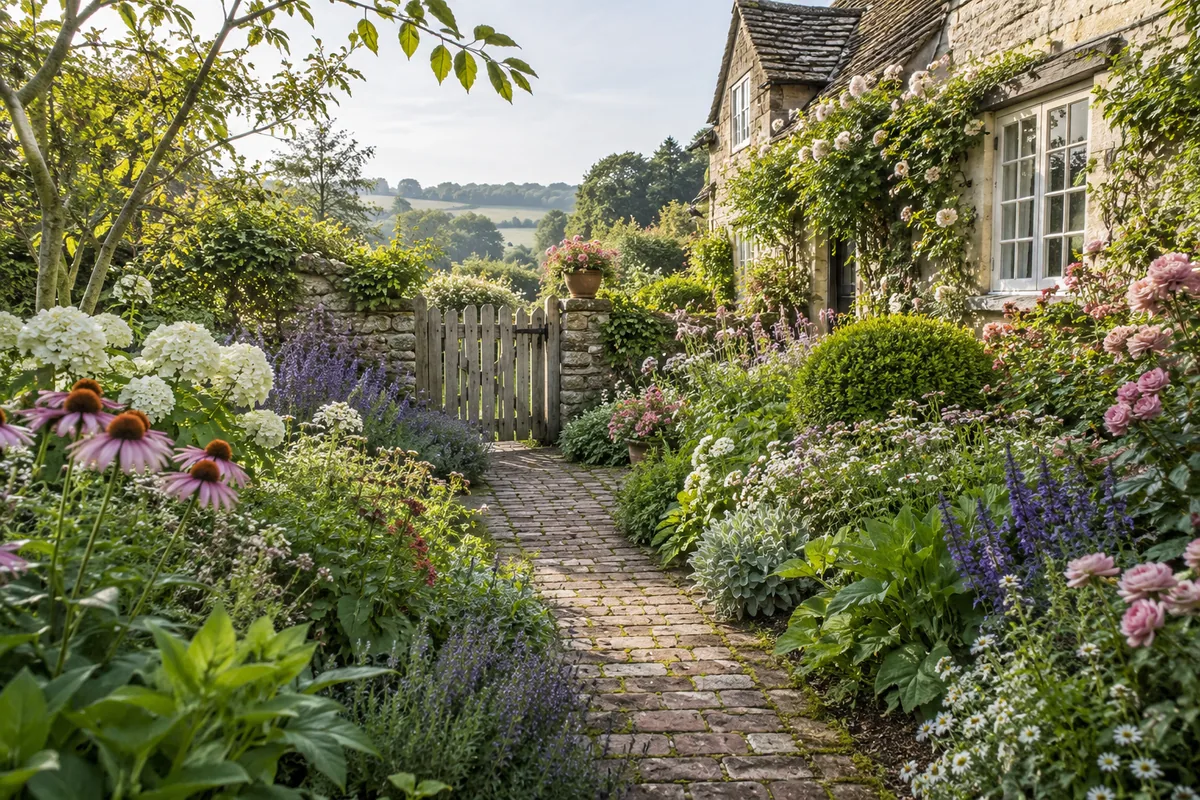
Cottage garden style: flowers with a working framework
Explore cottage garden style through layered flowers, selective self-seeding, clear paths, seasonal care, and the framework that makes informal planting usable.
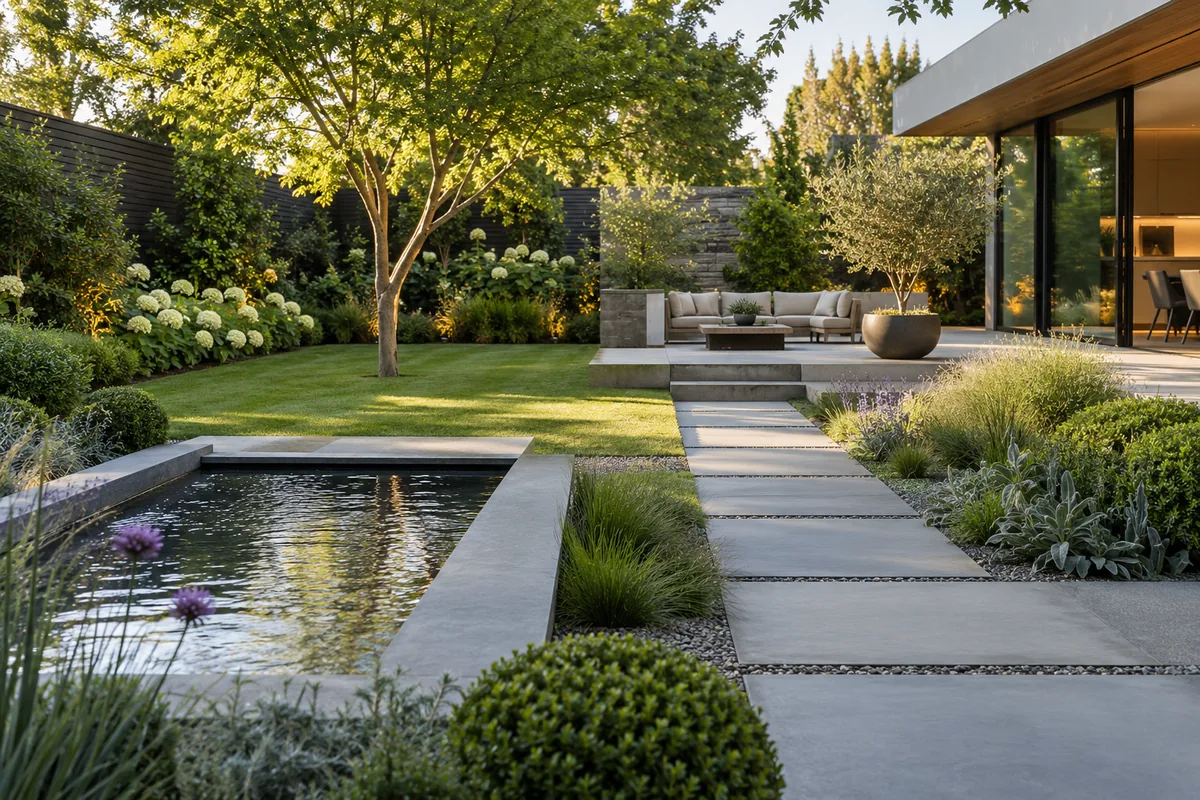
Modern landscape style: lines, space, and materials
Understand modern landscape style through clean lines, restrained materials, planting structure, and practical connections to contemporary architecture.
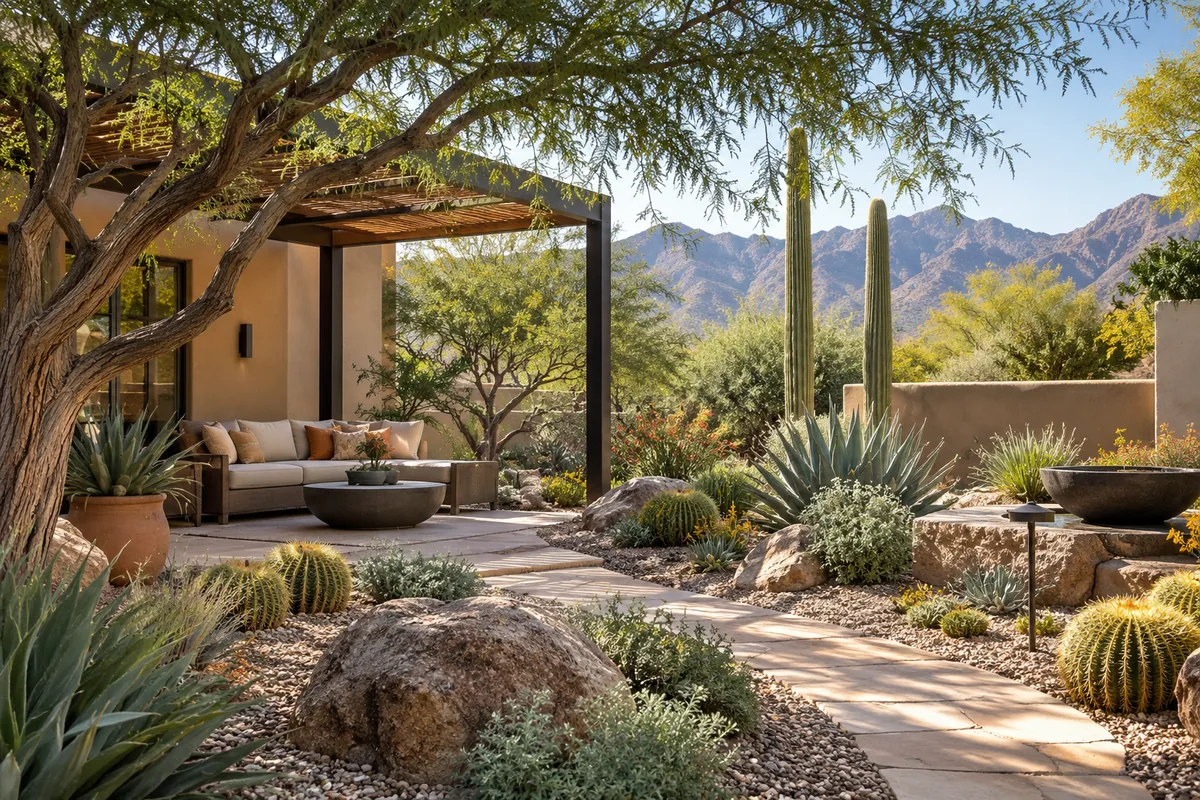
Desert landscape style: shade, stone, and plant form
Understand desert landscape style through plant form, mineral surfaces, useful shade, and heat-aware layouts, while separating its appearance from xeriscaping.
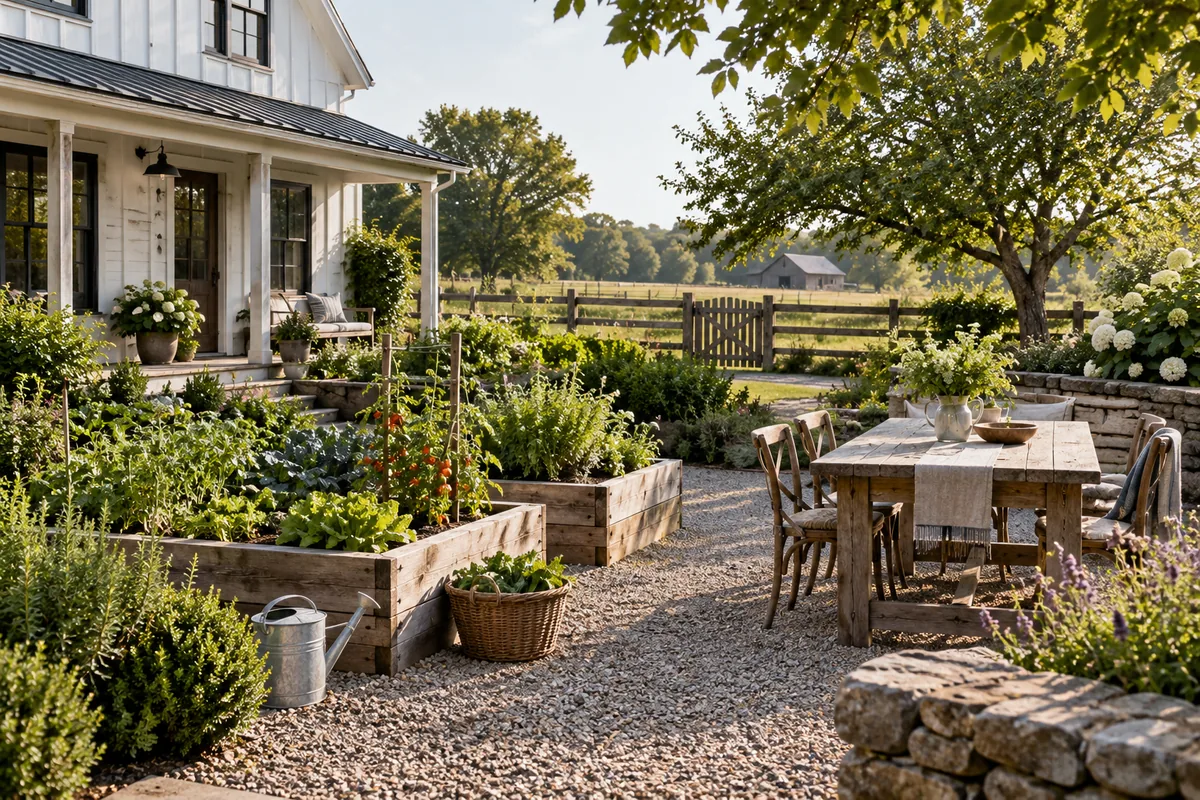
Farmhouse landscape style: useful spaces and honest materials
Discover farmhouse landscape style through practical fences, productive beds, wood and stone, and useful outdoor spaces that support everyday garden routines.
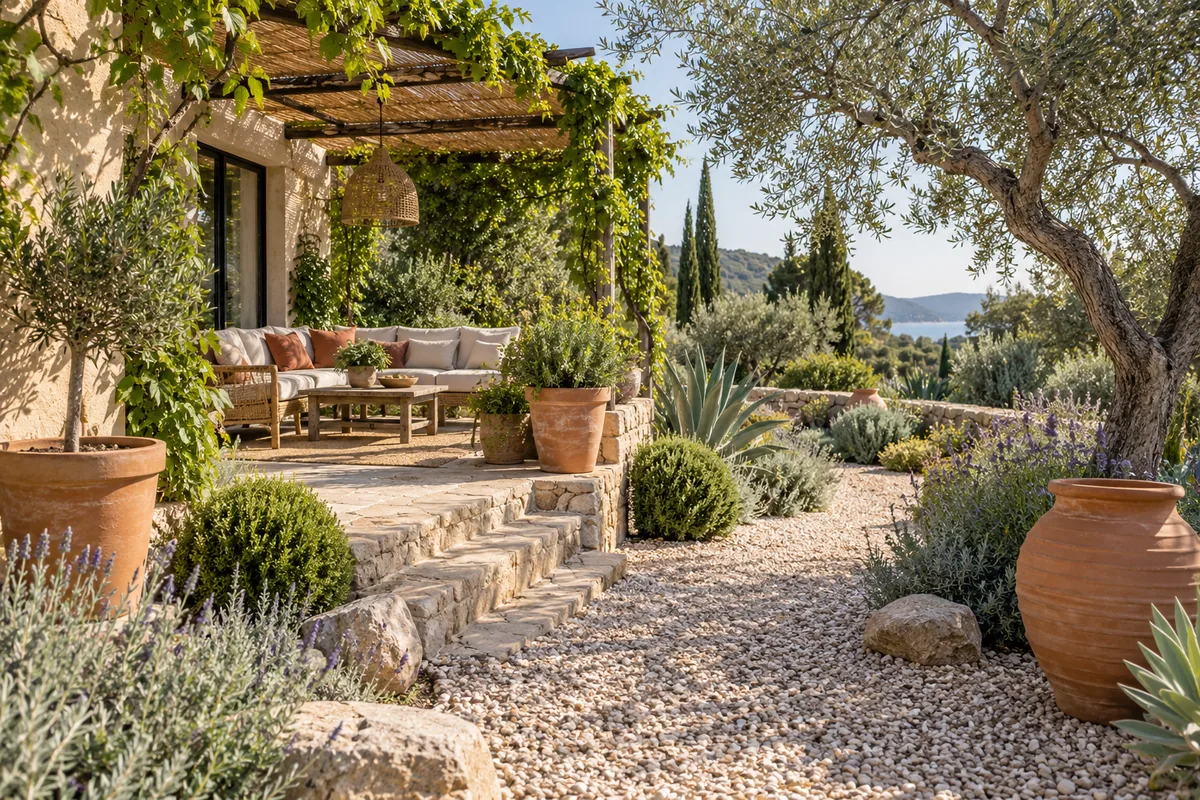
Mediterranean garden style: shade, gravel, and warm color
Understand Mediterranean garden style through shade, gravel, clay pots, and silver foliage, with practical ways to adapt the visual language to local climates.
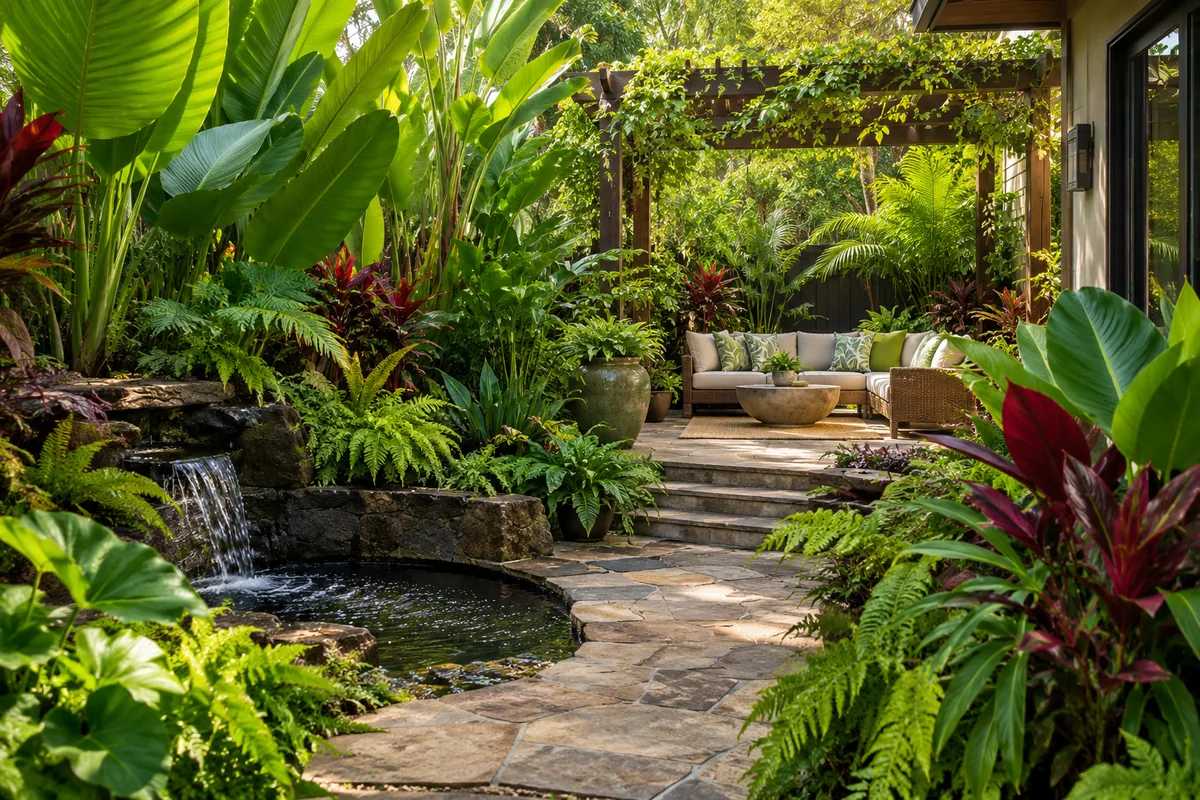
Tropical landscape style: foliage, layers, and shelter
Explore tropical landscape style using large leaves, layered greenery, sheltered seating, and container strategies adapted to local weather and care routines.