
By AI Landscape Design Team · Editorial policy
Native patio ideas for regional planting around everyday seats
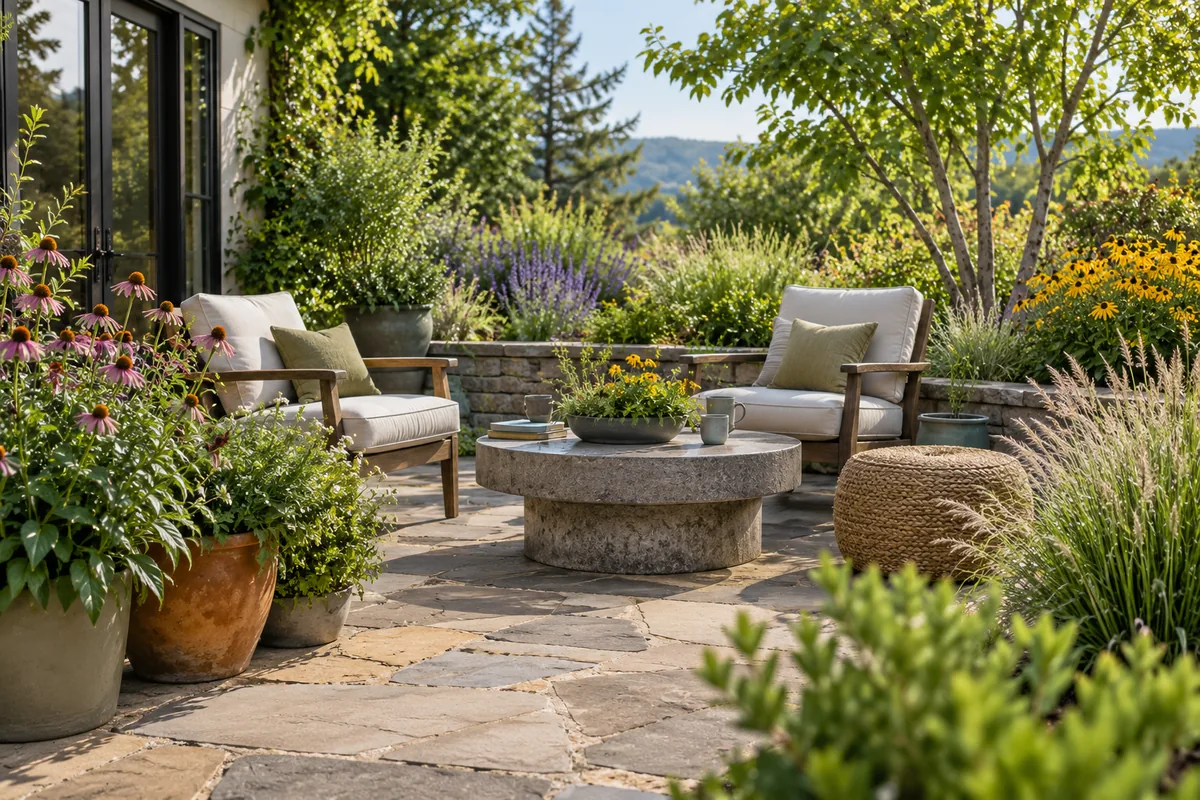
Native patio ideas should place regionally verified plant roles around furniture that remains easy to use. Containers and adjacent beds can bring seasonal foliage and flowers to the room, but local origin does not establish container suitability, toxicity, or a required naturalistic layout. Keep doors, chair movement, watering, and structural limits in the decision alongside the intended planted view.
Published · 6 min read
Key takeaways
- Verify regional plant status and container requirements separately.
- Use a readable room edge to make seasonal change intentional.
- Keep furniture, care access, and elevated loads in the review.
How can regional planting become part of an occupied terrace?
Start with where people sit and how they move from the house, then identify the planted edge that can be enjoyed from those positions. A close seasonal view may need only a modest container group or adjacent border. Avoid treating every open surface as space to fill. Native planting can support a formal or naturalistic room without prescribing one furniture arrangement.
Check the actual light, moisture, and wind on the terrace. Container conditions differ from the ground and may require different candidates or care. A roof or balcony needs professional structural and waterproofing assessment before substantial filled pots or support fixtures are proposed. Keep drainage access and door movement visible in the layout. Local plant knowledge and a functioning patio room should develop together rather than compete for the same footprint.
Eight ideas for a regionally informed patio edge
- Choose a verified plant role near the seat. Position locally appropriate foliage or seasonal flowers where the occupied chair can enjoy them without contact problems. It fits a terrace with usable room outside circulation. Confirm the actual species or cultivar and mature form. A regional label alone does not tell you whether the plant will behave appropriately in the chosen container.
- Connect containers through repeated groups. A coherent role can link the terrace to planted areas elsewhere on the property. This works when a collection currently looks unrelated. Review real care requirements and container conditions rather than grouping solely by flower color. Plants native to the same region may still prefer different moisture or exposure on the actual terrace.
- Use a clear edge beside seasonal growth. A readable boundary can make changing stems and flowers intentional near everyday activity. It suits a room where the planted edge appears unfinished outside bloom. Keep the detail compatible with access and water behavior. The design should not create a trip or obstruct a drainage opening simply to signal order.
- Retain practical dining circulation. Place the table and chairs before deciding how closely planting can approach. This fits households using the patio for meals. Review mature growth and service movement. A complete ring of habitat-oriented pots is a counterexample if chairs cannot move or a person carrying food has to push through foliage to reach the table.
- Give seasonal texture a deliberate position. Use locally suitable foliage or seed-head roles where they can be observed away from essential contact routes. It works for a room seen through the year. Decide cleanup by plant health, local guidance, and household use. A universal leave-everything rule may be inappropriate beside a door even if it suits a more distant bed.
- Choose a quiet supporting surface. Retain sound appropriate paving or select a related finish after practical review. This suits a terrace where the plants should provide the main visual variation. Ask about grip, levels, maintenance, repair, and drainage. Native planting does not establish that any particular aggregate or paver treatment is appropriate for the occupied room.
- Plan container care where it can happen. Keep watering supplies and inspection access convenient without rearranging furniture. It fits a collection that will be observed during establishment. Verify planted weight, winter behavior, and drainage. An attractive elevated arrangement is not evidence that the actual loading or waterproofing can support it, so obtain the appropriate professional assessment first.
- Keep useful evening cues modest. Make the door and circulation legible before considering plant accents. This works for a terrace used after sunset. Licensed professionals should review electrical installation and requirements. Examine glare from seats and neighboring windows, and preserve service access. A planted-room intention cannot replace safe installation or appropriate product selection.
How do you establish the real regional shortlist?
Explore regional resources and location-based tools such as the National Wildlife Federation Native Plant Finder, with further information from sources including the Lady Bird Johnson Wildflower Center. Then check actual container candidates through local horticultural advice. USDA hardiness zone, light, soil, moisture, mature size, and invasive information remain relevant. Confirm what is being sold rather than assuming a broad native label provides the necessary identification.
Consult ASPCA toxicity information for pet-accessible plants and assess thorns, rigid growth, and unstable pots around children separately. The native style guide explains regional selection, while planter considerations support container review. Licensed local experts should assess drainage, levels, foundations, supports, electricity, elevated loading, and waterproofing. Contact 811 before US excavation and clarify private locating as required. The visual palette cannot establish species, habitat performance, dimensions, or safe construction.
What care keeps the room intentional throughout the year?
Inspect growth and adjust plants that crowd the actual furniture footprint. Keep edges, drainage openings, and the house connection clear. Establishment may involve watering, weed identification, and monitoring rather than a single planting visit. Review the view after bloom and decide where seasonal material contributes and where it interferes with use. A modest verified group can offer more value than an unmanaged collection.
AILandscape's patio tool can compare native-style visual concepts using your own photo. Discuss the planted edge and room arrangement with the image, then verify regional origin, actual plant identity, container care, measurements, water behavior, and structural conditions locally. The result is for visual exploration and cannot establish an ecological outcome. Reject versions that obscure doors or invent heavy fixtures without review. Appropriate regional planting should enrich an everyday terrace while preserving the access and care that make it usable.
Frequently asked questions
Can regionally native plants grow in patio containers?
Some candidates may suit container culture, but local origin does not establish that. Assess the actual plant, soil, exposure, drainage, mature form, and winter conditions with horticultural advice. Select the container role independently from assuming all regional plants behave the same in pots.
Does a native patio need informal furniture and paving?
Plant origin does not prescribe the layout or material style of the room. Clear edges, repeated groups, and practical furniture can support a formal or relaxed arrangement. Choose according to household use and actual site conditions rather than an assumed naturalistic appearance.
Should all seasonal stems remain near the chairs?
Decide by access, plant health, local guidance, and the intended seasonal view. Material that belongs in an adjacent bed may interfere with contact or service near chairs. Keep occupied routes useful and evaluate care by position rather than applying a universal cleanup rule.
Sources
Related reading
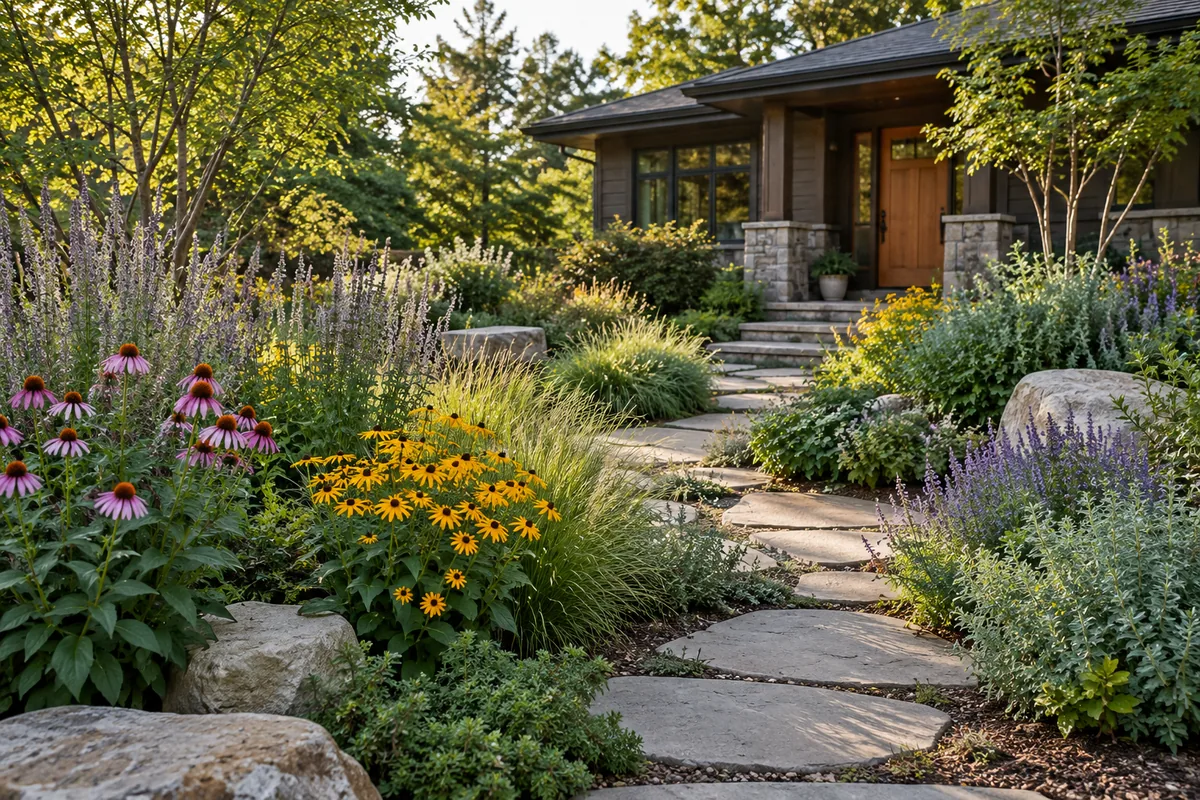
Native plant landscape style: regional plants with structure
Learn how native plant landscape style combines regional plant choices, seasonal change, and clear garden structure with practical care and neighborhood views.
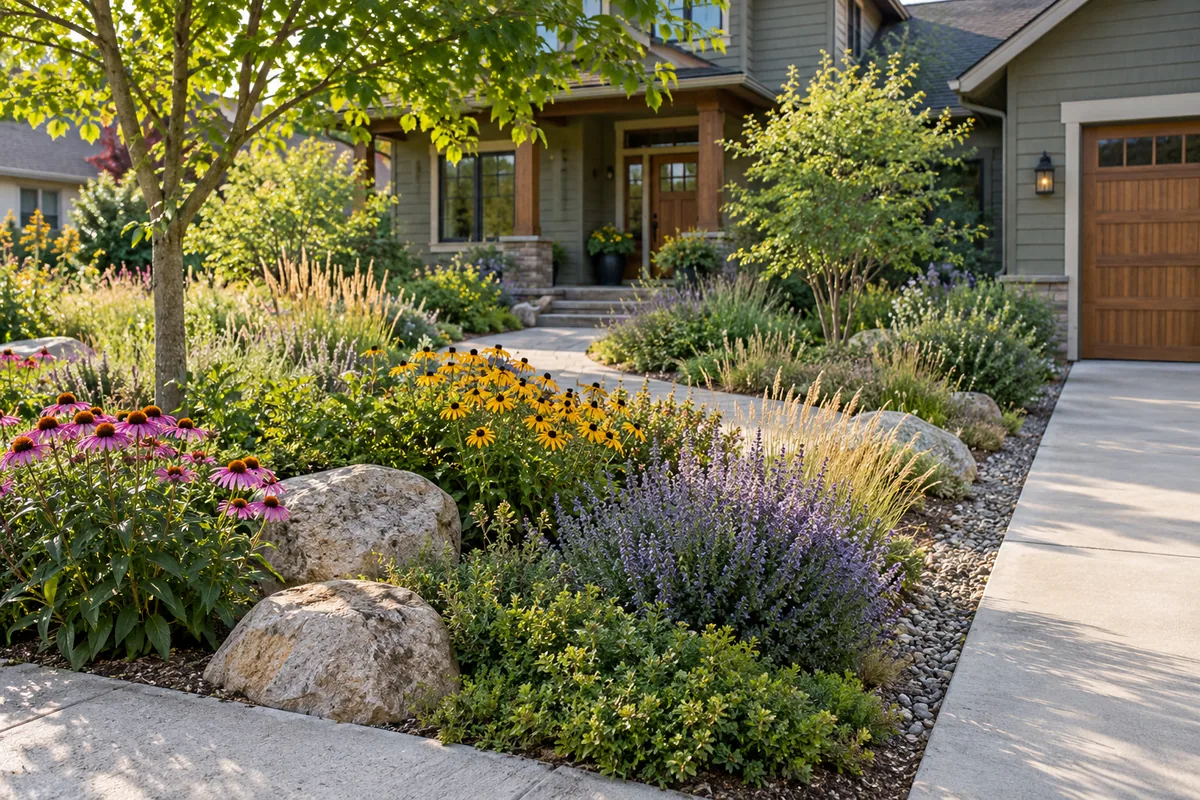
Native front yard ideas that make seasonal planting intentional
Find native front yard ideas for regional plant groups, legible borders, seasonal texture, visible entrances, and practical care in a publicly viewed garden.
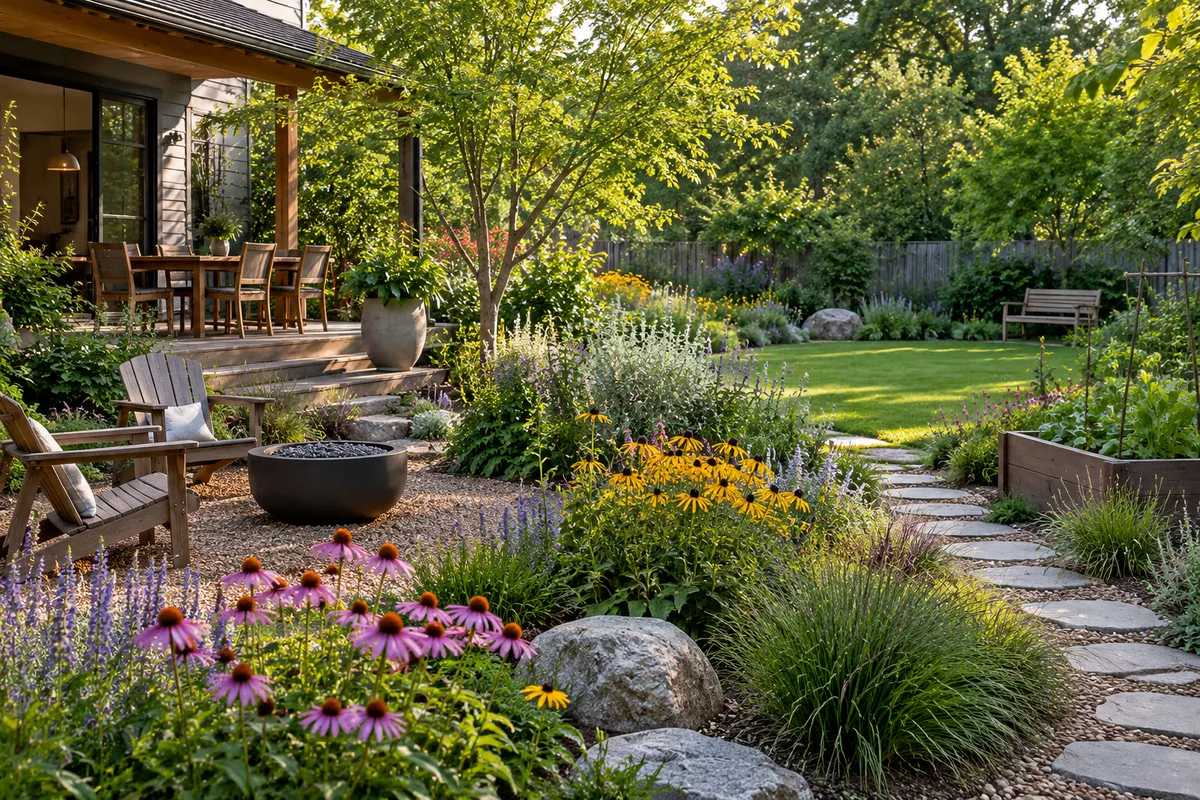
Native backyard ideas for seasonal planting and daily life
Find native backyard ideas for regional plant groups, seasonal texture, clear activity areas, useful access, and locally verified choices around the house.
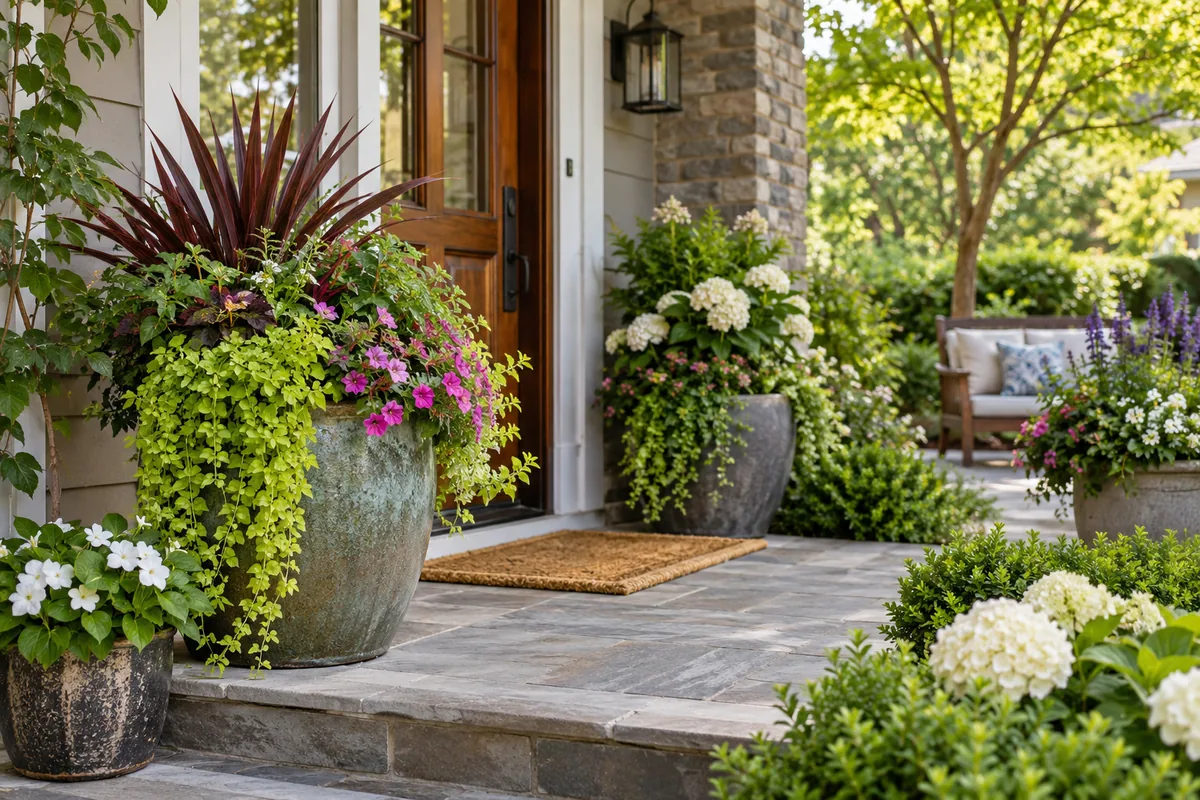
Garden Planters for Useful and Manageable Planting
Learn how garden planters fit your yard, with practical material, placement, upkeep, and safety questions to review before choosing a visual direction.
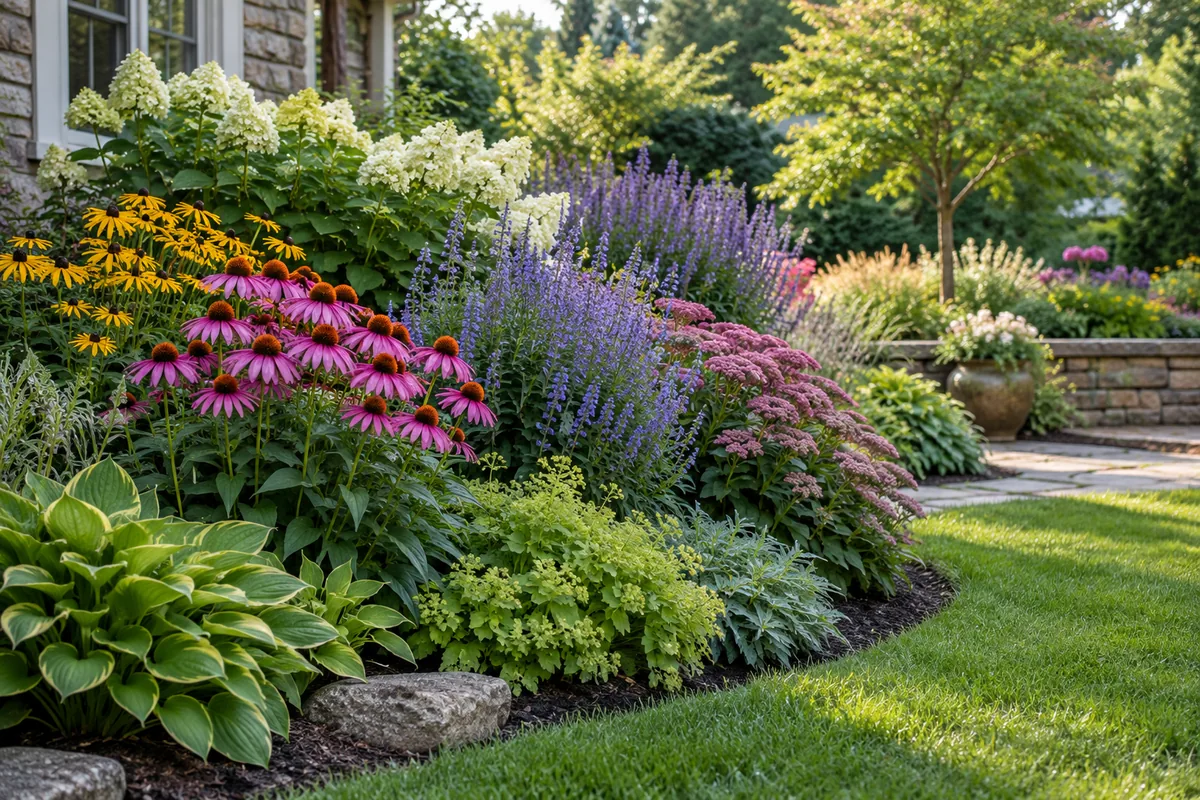
Perennial Flowers for Seasonal Roles and a Readable Border
Learn how perennial flowers fit your yard, with practical material, placement, upkeep, and safety questions to review before choosing a visual direction.
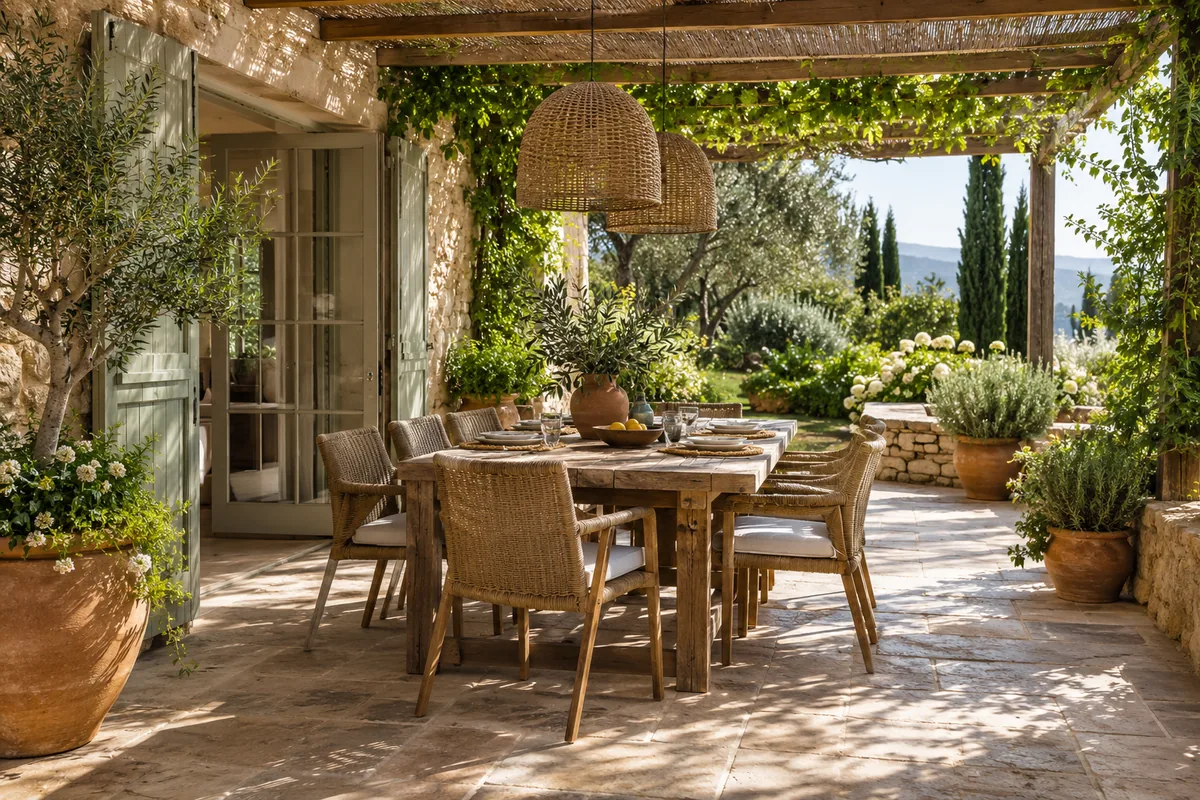
Mediterranean patio ideas for shaded meals and warm materials
Find Mediterranean patio ideas for clay pots, quiet stone colors, useful shade, comfortable dining, and locally suitable container planting around the room.