
By AI Landscape Design Team · Editorial policy
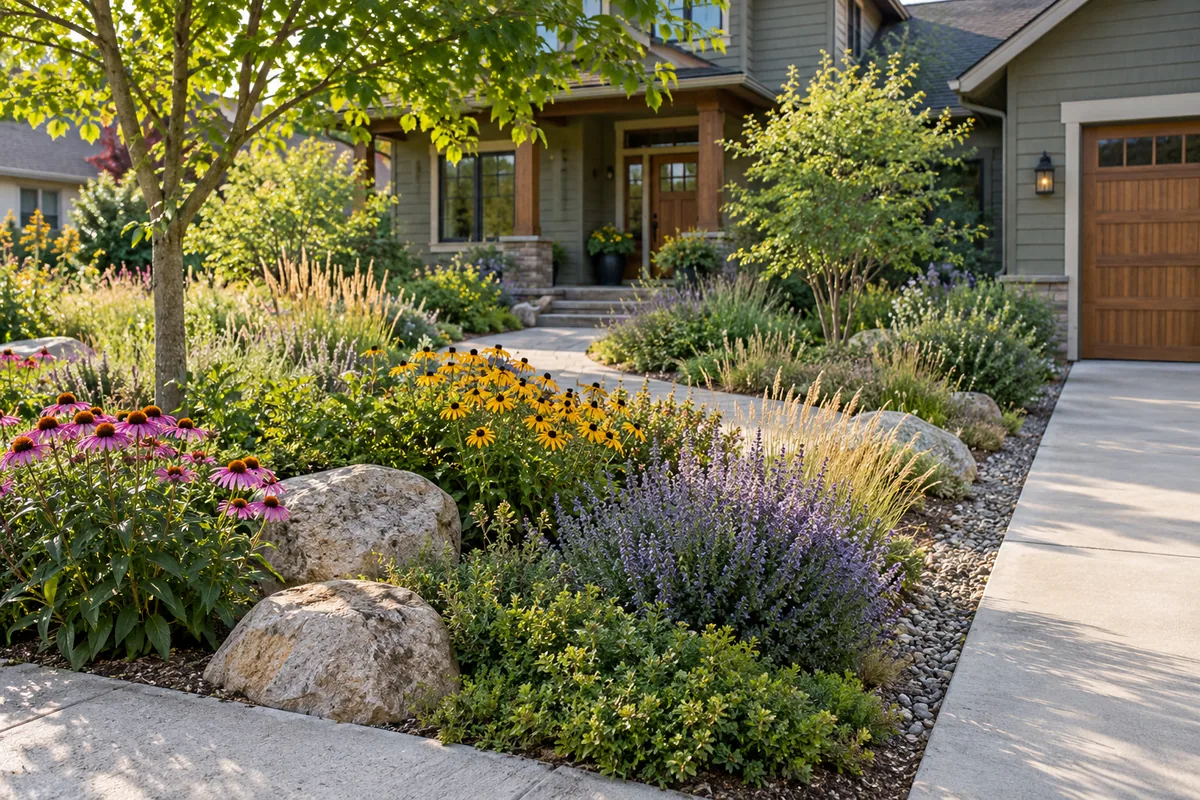
Native front yard ideas that make seasonal planting intentional
Native front yard ideas should make regionally verified planting easy to understand from the street while keeping the entrance and driveway usable. Clear edges, repeated groups, and deliberate seasonal care help naturalistic growth look intentional. Native status is local, not a guarantee of suitability or safety, so verify actual species and site conditions before adopting a planting palette.
Published · 6 min read
Key takeaways
- Verify regional native status before organizing the plant groups.
- Use legible edges to communicate care during seasonal change.
- Balance habitat intentions with the public and practical roles of the frontage.
Why does the public view need its own structure?
A native planting bed may change strongly through the year, while people judge the frontage from quick views at the street. Provide cues that explain the intention: an obvious entrance, a maintained edge, and related plant groups. Those cues can allow seasonal stems or irregular growth to belong without requiring every plant to look clipped.
Record the actual arrival routes and driveway views before planning habitat-oriented areas. Review neighborhood rules and local restrictions, and consider how the bed relates to shared boundaries. The door, mailbox, and house number should stay legible after plants mature. Native gardening can be formal or naturalistic; do not assume the whole front yard needs a meadow-like appearance when a more structured arrangement would fit the house and household better.
Eight ways to show regional planting with care
- Give the border an understandable outline. Maintain a clear edge beside the approach so seasonal growth has a defined place. This suits a frontage where the planting is otherwise difficult to distinguish from unmanaged ground. Choose an edge detail appropriate to access and maintenance. The outline should not trap water or introduce a tripping feature without professional site review.
- Repeat verified regional groups. Use connected groups from a locally checked plant shortlist rather than buying one of every plant carrying a native label. This fits a house that needs a coherent planted base. Native status must be assessed for the actual region, and growing requirements still matter. Repetition makes seasonal variation more readable without dictating a fixed number of species.
- Keep the entrance bed especially legible. Use the most structured arrangement near the door and allow looser growth farther from the daily route where appropriate. It suits a frontage with varied depth. Maintain access for deliveries and inspect mature width. A habitat intention should not make people push through foliage or obscure service equipment that needs regular attention.
- Plan for stems outside peak bloom. Select locally suitable plant roles with useful foliage or winter structure rather than judging only flowers. This works where the garden is seen from inside throughout the year. Decide which seasonal material can remain and which needs removal for access or plant health. Obtain local advice rather than applying one cleanup rule to every planting area.
- Protect a clear driveway view. Put lower mature forms where cars and pedestrians need visibility, following local requirements. It suits frontages with broad parking areas. Verify actual mature dimensions instead of relying on newly planted height. Larger groups can occupy positions farther from the movement edge where they can contribute enclosure without compromising the arrival view.
- Connect a retained tree to the planting. A suitable existing canopy can provide a visual anchor if its health and root conditions support the change. This fits a frontage with established vegetation worth preserving. Have significant root disturbance or construction assessed by appropriate professionals. Do not assume that every plant beneath the tree suits its shade or water conditions merely because it is native somewhere.
- Explain the layout through maintenance access. Leave a way to identify weeds, inspect planting, and reach the back of the border. It works for naturalistic groups that would otherwise become difficult to manage. An invisible working gap can be more useful than another decorative plant. Keep hoses and equipment accessible while avoiding a permanent collection of tools at the entrance.
- Use one seasonal container for a deliberate arrival accent. A locally suitable plant group in a stable pot can connect the porch to the larger border. It suits a frontage needing emphasis near the door. Container conditions differ from ground planting, so check watering, soil, winter behavior, and planted weight. Do not assume native status makes a pot self-sufficient or safe for pets.
What should regional verification involve?
Use the National Wildlife Federation Native Plant Finder and regional resources such as the Lady Bird Johnson Wildflower Center to identify candidates, then check the actual site with local horticultural advice. USDA hardiness zone, light, soil, moisture, mature size, and current invasive information remain relevant. A US-native label alone is insufficient for a specific garden. Consult ASPCA toxicity information separately where animals can reach the border.
The native style guide explains why plant origin does not dictate garden shape. Wildflower considerations help organize questions about a seasonal planting role. Any rain-garden, grading, or retaining proposal needs site-specific review by licensed local professionals rather than a general habitat label. Contact 811 before digging in the United States and review private utility locating. Keep the plant list and construction assessment distinct from the visual arrangement.
How can the frontage communicate ongoing care?
Watch which plants dominate, keep edges readable, and clear the actual walking route as growth develops. Establishment may require weed identification and appropriate watering rather than simply waiting for the garden to fill. Record the frontage outside its most colorful period and decide whether the outline still makes the planting understandable. Change the arrangement where ordinary maintenance becomes difficult.
AILandscape's front yard tool can compare native-style visual concepts on your own photograph. Use it to discuss border structure and seasonal density; a generated image cannot identify species or verify regional native status, habitat performance, drainage, or construction. Confirm those details with local evidence and measured site information. A proposal that looks natural but hides the address or blocks the gate needs revision. Intentional regional planting should remain legible as part of a functioning everyday entrance.
Frequently asked questions
Must native frontage planting look informal?
Native plants can be arranged in formal groups, naturalistic borders, or a mix of both. Their regional relationship does not prescribe the garden shape. Choose clear structure according to the house, local rules, access, and the maintenance approach the household can support.
Can I use any plant described as native to the United States?
Native status needs a more specific regional check. A plant indigenous elsewhere in the country may be unsuitable or inappropriate for your site. Verify the actual location, soil, exposure, moisture, and mature growth with regional resources and local horticultural advice before buying.
How do I manage winter stems near the entrance?
Decide by plant health, habitat intentions, access, and local guidance rather than a single universal cleanup rule. Some material may remain in a distant bed while stems beside an essential route need editing. Keep the outline readable and review the actual winter view from the house and street.
Sources
Related reading
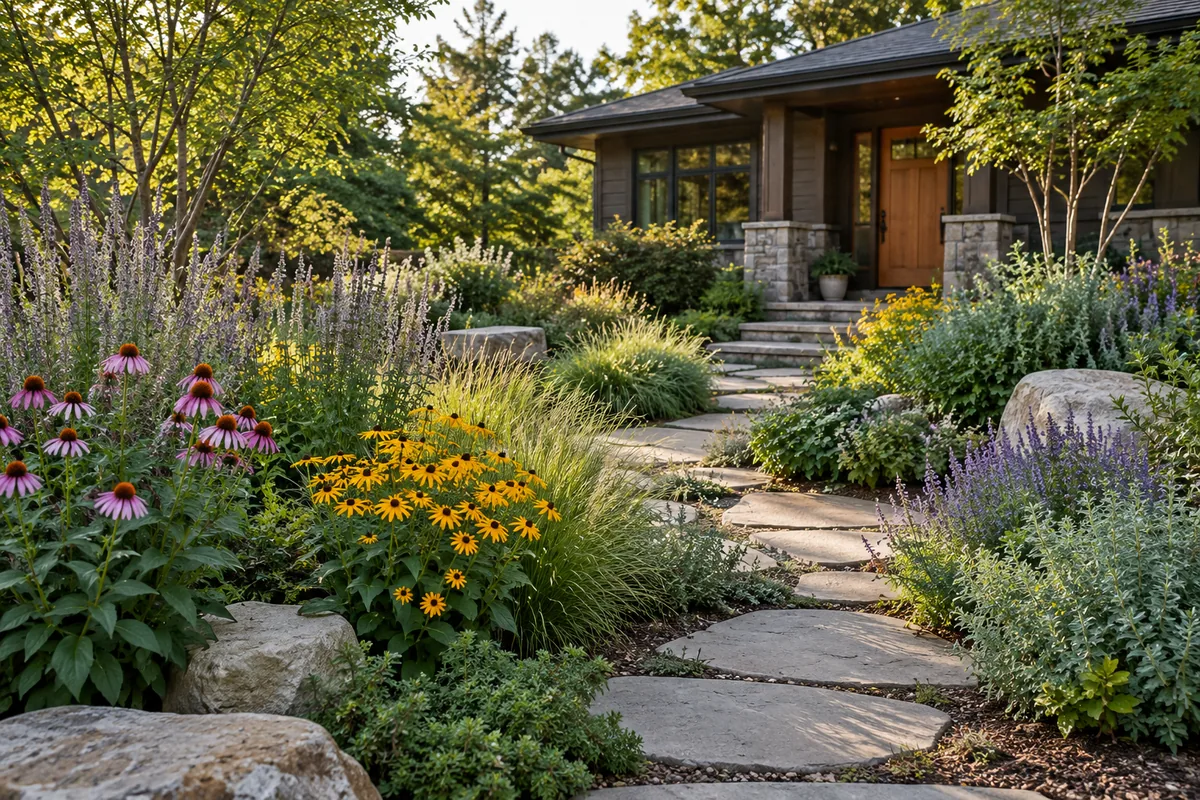
Native plant landscape style: regional plants with structure
Learn how native plant landscape style combines regional plant choices, seasonal change, and clear garden structure with practical care and neighborhood views.
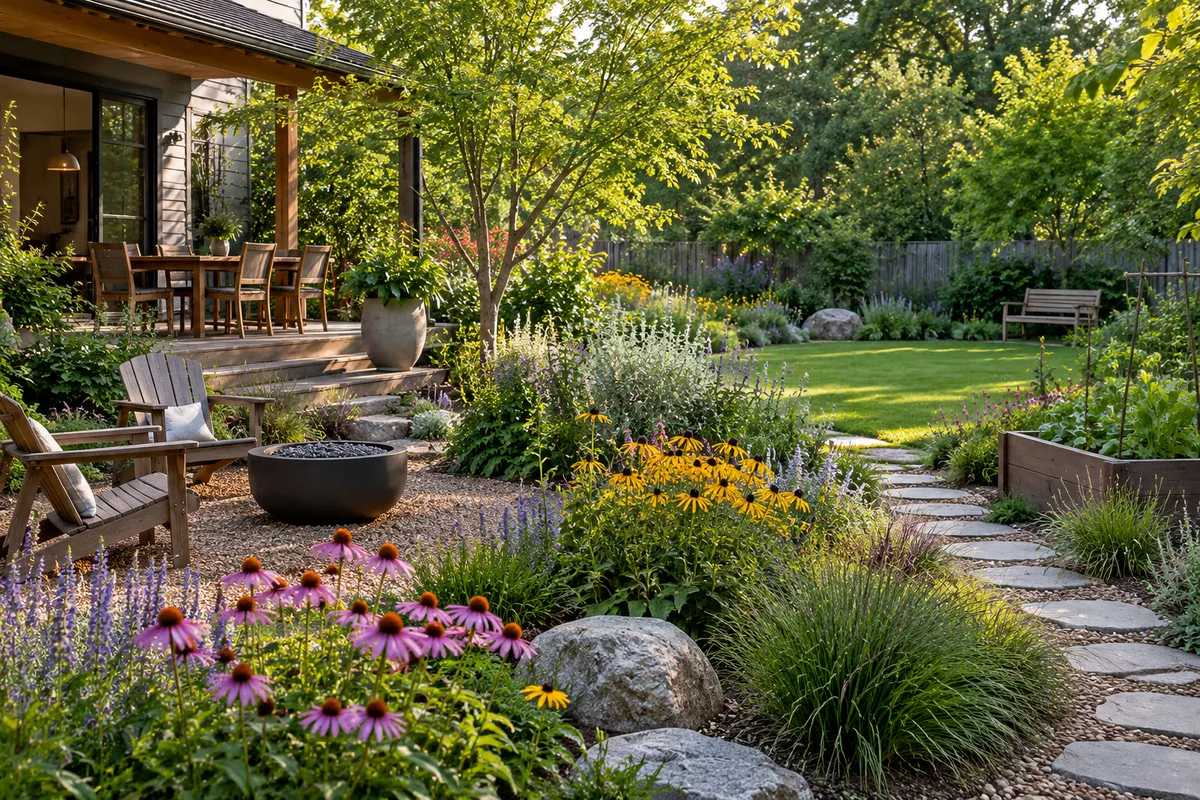
Native backyard ideas for seasonal planting and daily life
Find native backyard ideas for regional plant groups, seasonal texture, clear activity areas, useful access, and locally verified choices around the house.
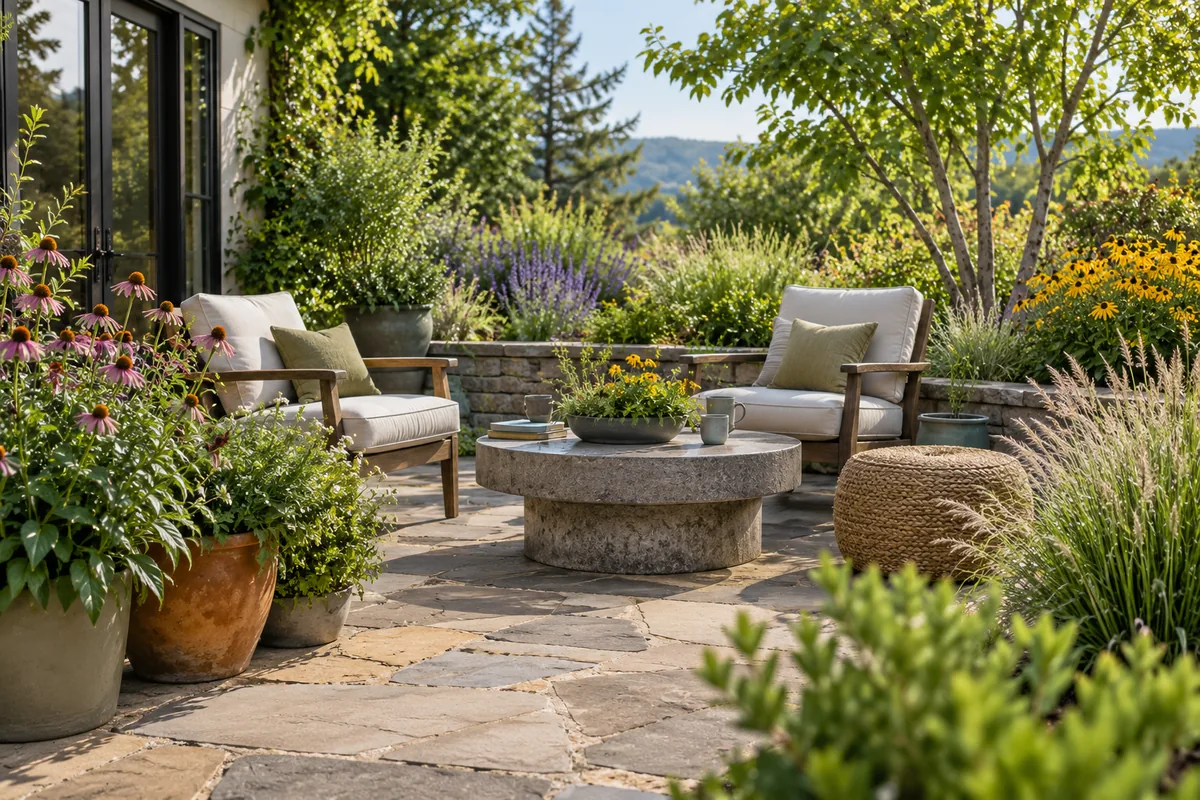
Native patio ideas for regional planting around everyday seats
Find native patio ideas for locally verified containers, seasonal foliage, readable edges, useful furniture, and practical care around the outdoor room.
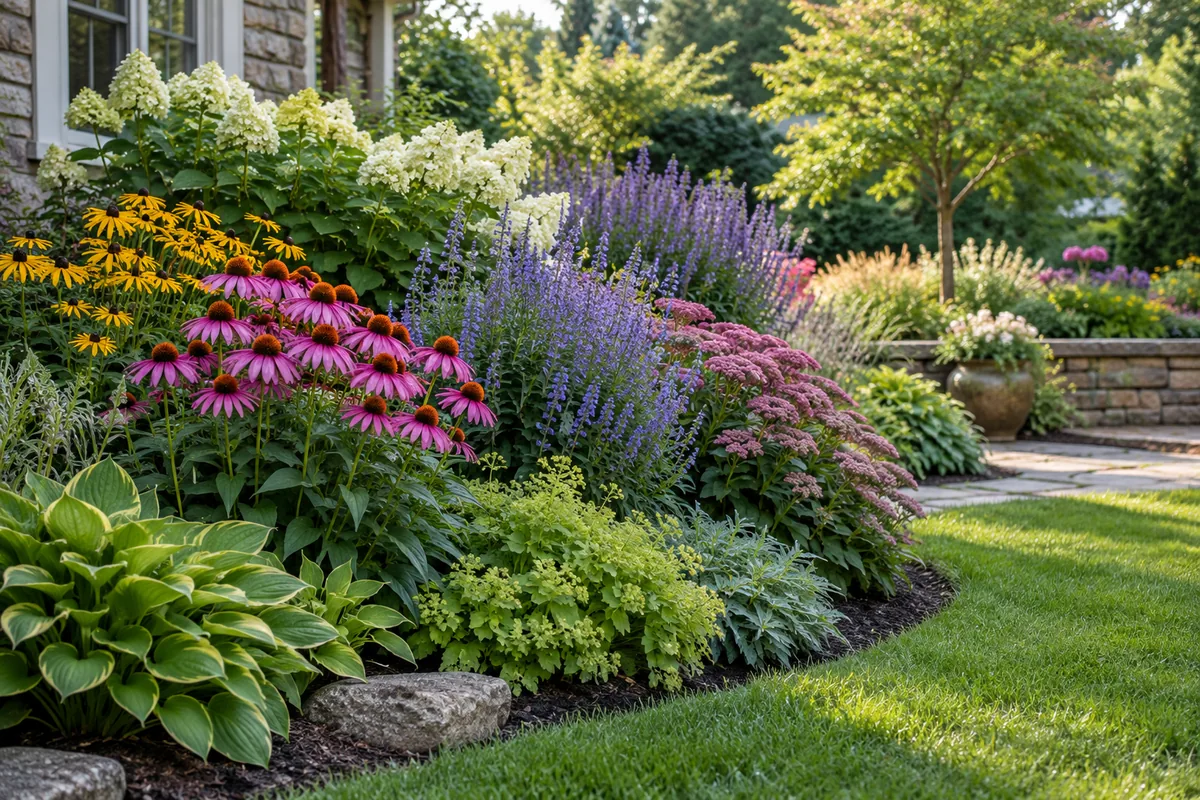
Perennial Flowers for Seasonal Roles and a Readable Border
Learn how perennial flowers fit your yard, with practical material, placement, upkeep, and safety questions to review before choosing a visual direction.
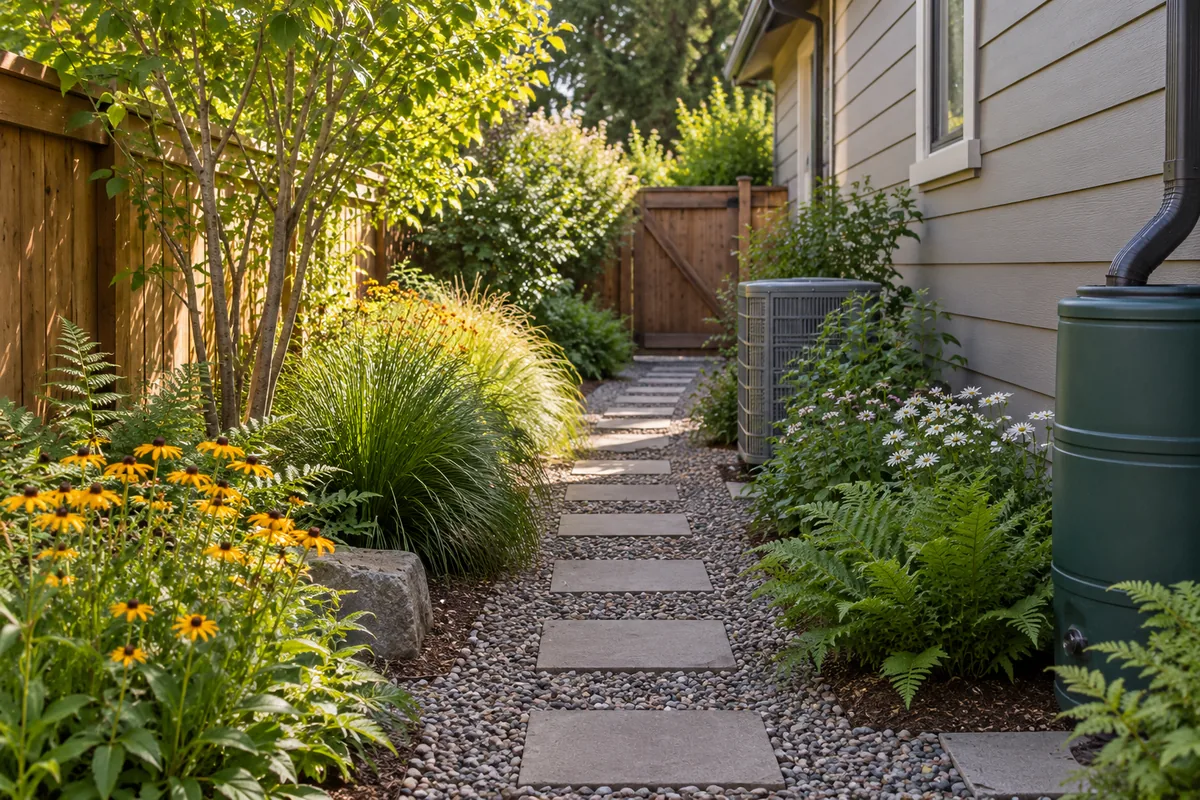
Native side yard ideas for regional planting beside access
Find native side yard ideas for regional plant groups, readable boundaries, seasonal texture, reachable equipment, and a practical connection around the house.
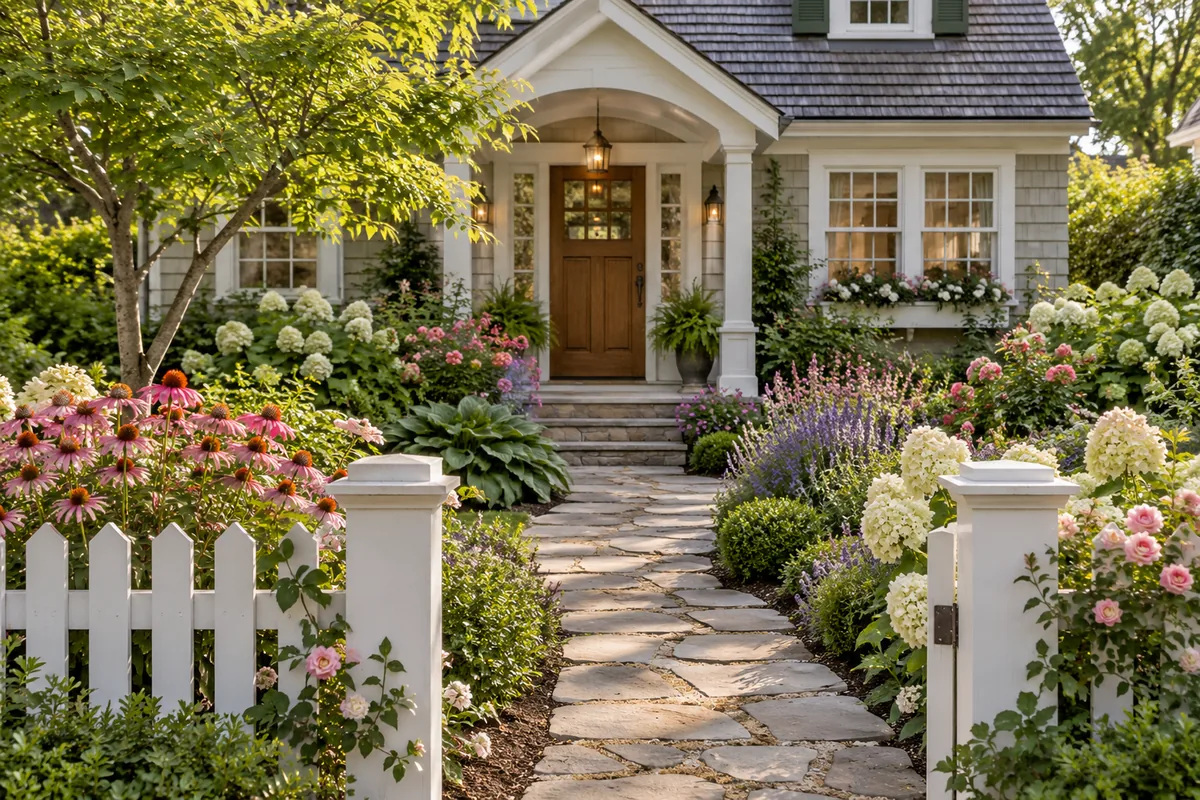
Cottage front yard ideas that welcome visitors through flowers
Find cottage front yard ideas for layered borders, useful gates, brick details, seasonal flower groups, and a welcoming entrance that stays easy to reach.