
By AI Landscape Design Team · Editorial policy
Pergola Ideas for Shade, Routes, and Outdoor Use
A pergola defines an outdoor area through a supported overhead framework, commonly with an open top or a specified cover. Its value depends on the relationship between shade, routes, furniture, and the house. An open framework does not guarantee protection from sun or rain. Assess orientation, anchoring, loads, permits, drainage, and any added planting or electrical features with qualified local professionals before building.
Published · 6 min read
Key takeaways
- Define the intended shade or shelter function before choosing a cover.
- Posts and anchoring need local structural assessment.
- Keep routes, furniture movement, and maintenance access clear.
Which activity should the pergola support?
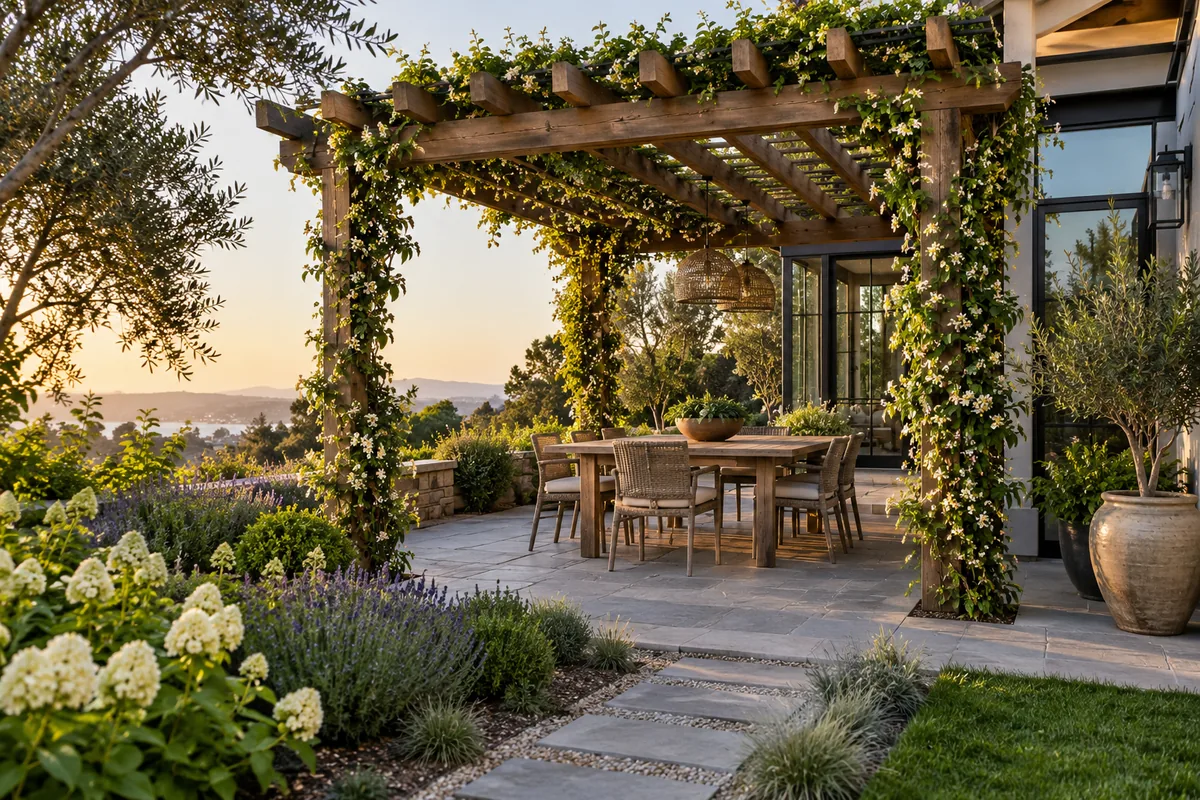
Start with a dining area, a sitting place, or a route that benefits from overhead definition. A framework with no clear use can consume ground and interrupt views without improving comfort. Mark the actual furniture and movement near the house. Posts should not be positioned by visual symmetry alone if they interfere with pulling a chair out or carrying food through the door. Consider the pergola from the main windows too. The homeowner's brief should describe what it needs to make easier or more pleasant. The structural design and dimensions then need appropriate site information and professional assessment rather than inference from the concept image.
How much shade will an open top provide?
Shade depends on orientation, spacing, the sun path, and any actual cover or planting. An open pergola can leave much of its area exposed at certain times. Observe when the chosen sitting area needs relief and discuss that requirement with a qualified designer. Do not promise a fixed amount of shade from the label alone. A louvered system or shade fabric introduces specific product, movement, maintenance, and support questions. Keep those decisions explicit rather than adding panels after a framework has been selected. The intended comfort should be investigated under the site's actual exposure, not assumed from a photograph taken at a favorable hour.
What changes when fabric or louvers are added?
The complete system needs to account for the proposed cover, its operation, water behavior, wind exposure, and maintenance. Ask the supplier and appropriate licensed local professionals about compatibility and support. An open framework should not be assumed to accept any later roof or hanging load. Fabric may need handling or replacement, and moving components need service access. Where rain protection is required, establish how the actual design manages it rather than assuming any cover provides the required shelter. Keep operating and storage needs in the plan. A useful product selection includes what happens when weather changes or the system needs repair, not only its closed appearance.
Which materials fit the surrounding garden?
Timber can offer grain and warmth, metal can provide a particular profile and finish, and manufactured systems may combine materials. Compare actual products and their exposure guidance rather than broad claims that one lasts forever. Let the material connect with the house and terrace without adding an unrelated visual language. A modern pergola can be restrained, a farmhouse one can relate to porch use, and a Mediterranean interpretation can emphasize a comfortable outdoor sitting area. The form should not depend on collecting decorative accessories. Examine how posts and overhead members appear from the seat, doorway, and garden route as well as from a distant image.
What is needed for anchoring and permissions?
Foundations, supports, attachments, connections, loads, and local permit requirements need appropriate licensed assessment for the actual site. Verify the relevant rules with the local authority before ordering. A light-looking structure in a rendering does not establish safe anchoring, and a prefabricated product does not demonstrate approval at your property. Contact 811 before digging in the United States and clarify private utility locating. If the pergola attaches to a building, that connection requires specific review. Ask who takes responsibility for each part of the design and installation so the decorative decision does not conceal unresolved structural assumptions.
Can climbing plants be included?
A climber can add seasonal texture or cover, but mature weight, growth, maintenance, and support compatibility must be considered. Choose plants using local guidance on USDA hardiness zone, light, soil, mature dimensions, and invasive status. Do not recommend an invasive vine simply because it covers a frame quickly. Pets may reach nearby planting, so use the ASPCA toxicity list where relevant. Keep inspection and pruning access realistic. The pergola should remain understandable before the plant fills it and when foliage changes seasonally. A concept showing dense growth cannot verify that the pictured species is suitable or that the framework can carry it.
What maintenance and costs deserve attention?
Inspect finishes and connections as advised for the actual system, and keep cover mechanisms, drains, or electrical features serviceable. Electrical installations should be completed by appropriate licensed professionals. Costs depend on material, support, access, cover, customization, permissions, and any technical work. Do not compare a plain open frame with a fully specified covered product as equivalent scope. Furniture and adjacent surfaces may also need changes, so account for the complete useful area. A pergola can be worthwhile where it addresses comfort and organization, but it should come with a credible care and service plan rather than a promise of maintenance-free shelter.
How can the idea be tested visually?
Compare the same furniture area with and without the framework, then explore the actual intended cover character. AILandscape offers photo-based visual concepts; local assessment must verify plants, support, shade assumptions, drainage, permits, and construction. Use the image to describe the desired atmosphere and views, not as an assembly specification. If posts interrupt the everyday route or the form blocks a useful window view, revise the placement. The related gazebo comparison can help clarify whether a distinct roofed destination is what you really need. A successful pergola idea answers a specific outdoor-use question while keeping its structural and maintenance responsibilities explicit.
Frequently asked questions
Does an open pergola keep rain off a table?
Not reliably by its name alone. An open framework and a specified covered system are different proposals. If rain protection matters, state it in the brief and have the actual cover, water movement, and structure assessed before purchase.
Can I attach any shade fabric to an existing pergola?
Do not assume every framework accepts the same added cover or loading. Confirm compatibility, wind exposure, connections, and any relevant local requirements with the supplier and qualified professionals. A decorative addition can change the responsibilities of the whole assembly.
How is a pergola different from a gazebo?
A pergola commonly defines space with an open or specifically covered framework, while a gazebo commonly creates a more distinctly roofed destination. Actual designs vary, so compare the intended shade, shelter, use, support, and maintenance rather than relying only on the names.
Sources
Related reading
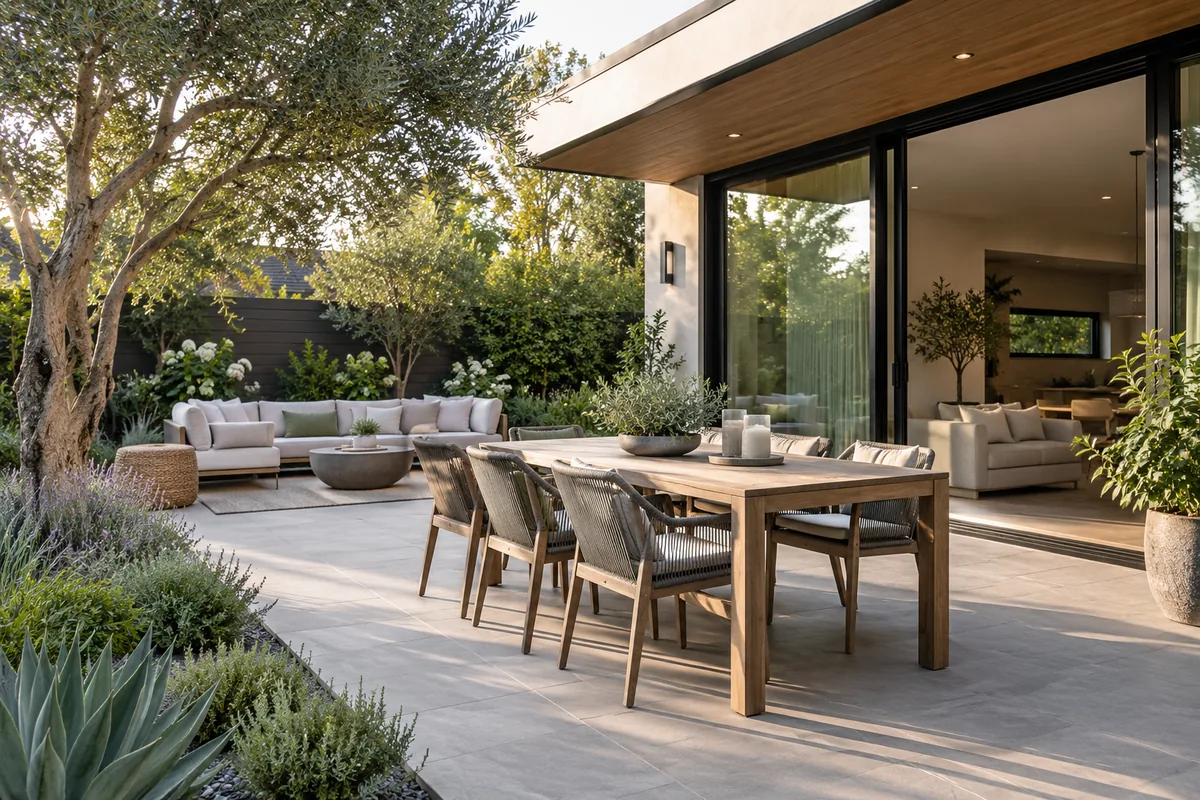
Modern patio ideas for clear furniture layouts and calm materials
Explore modern patio ideas for restrained surfaces, usable furniture, clear door connections, suitable containers, and deliberate shade and evening light.
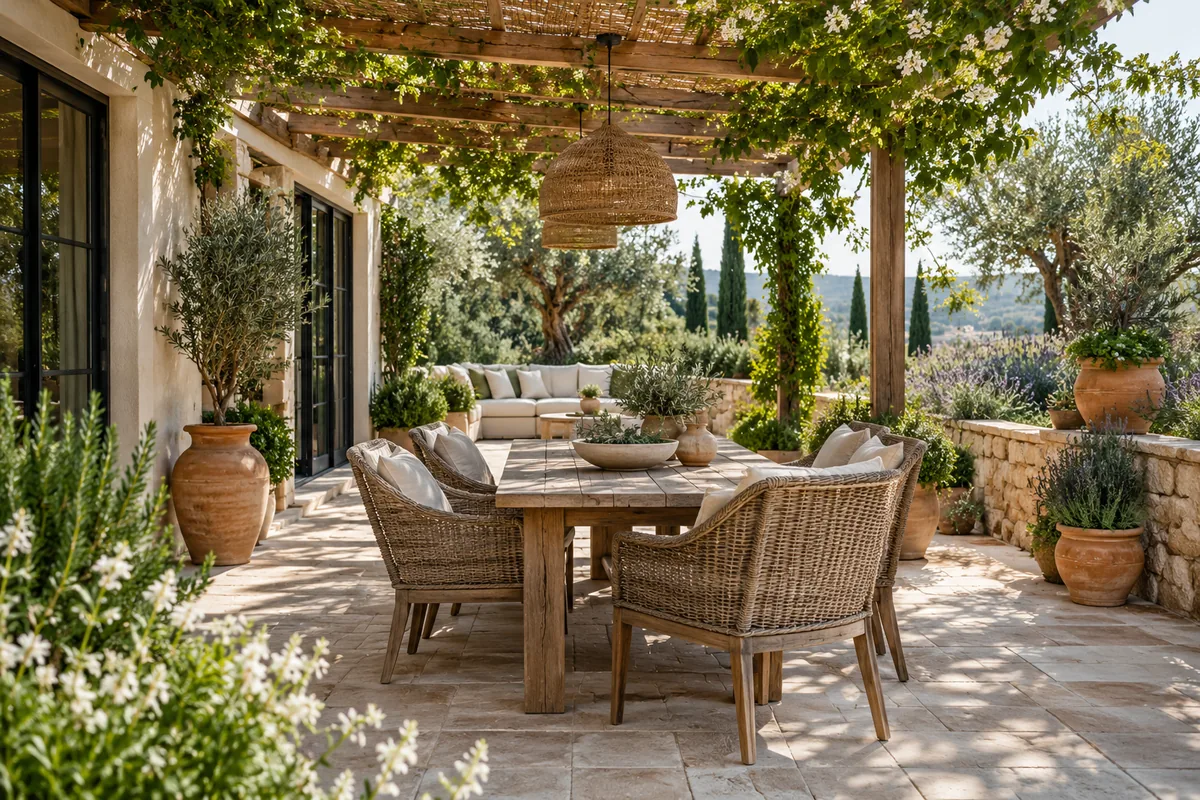
Mediterranean backyard ideas for shaded outdoor living
Find Mediterranean backyard ideas for shaded meals, clay containers, mineral surfaces, textured planting, and comfortable garden rooms adapted to local weather.
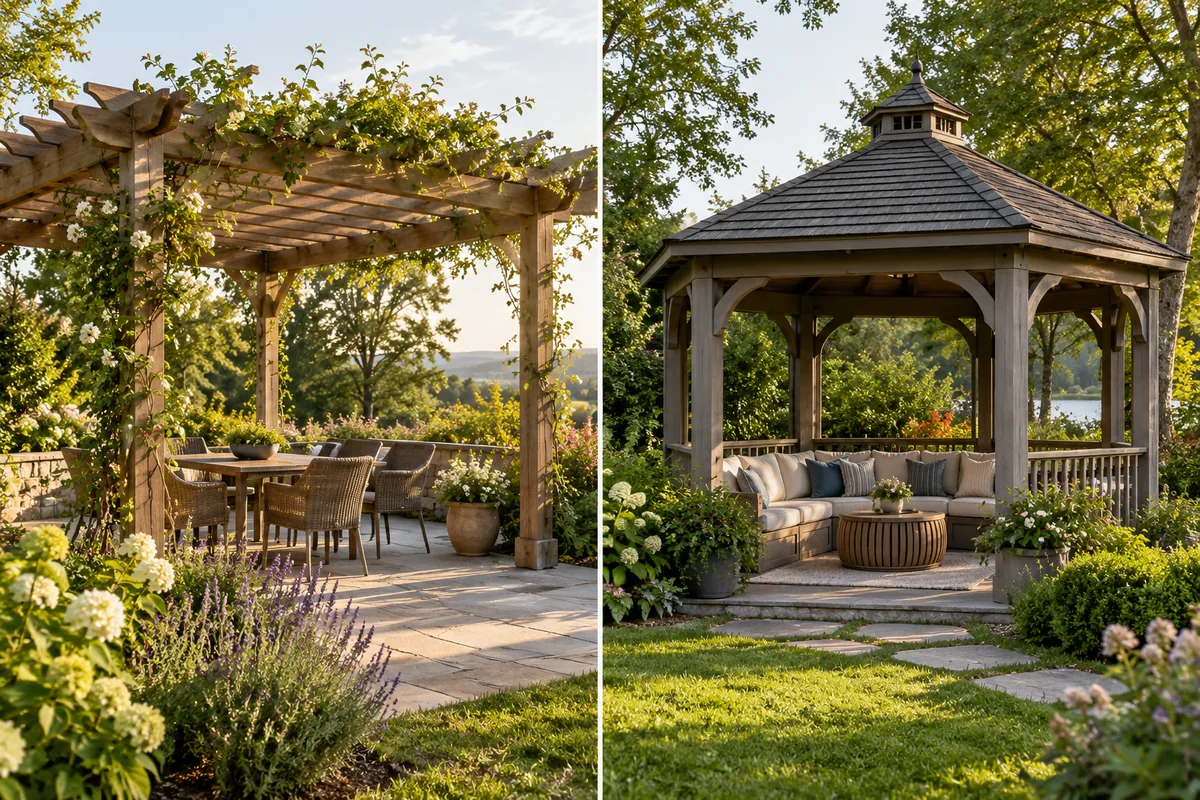
Pergola structure vs Gazebo structure: Which Fits Your Yard?
Compare pergola structure and gazebo structure for your yard. Review layout, materials, upkeep, and practical trade-offs before choosing a direction.
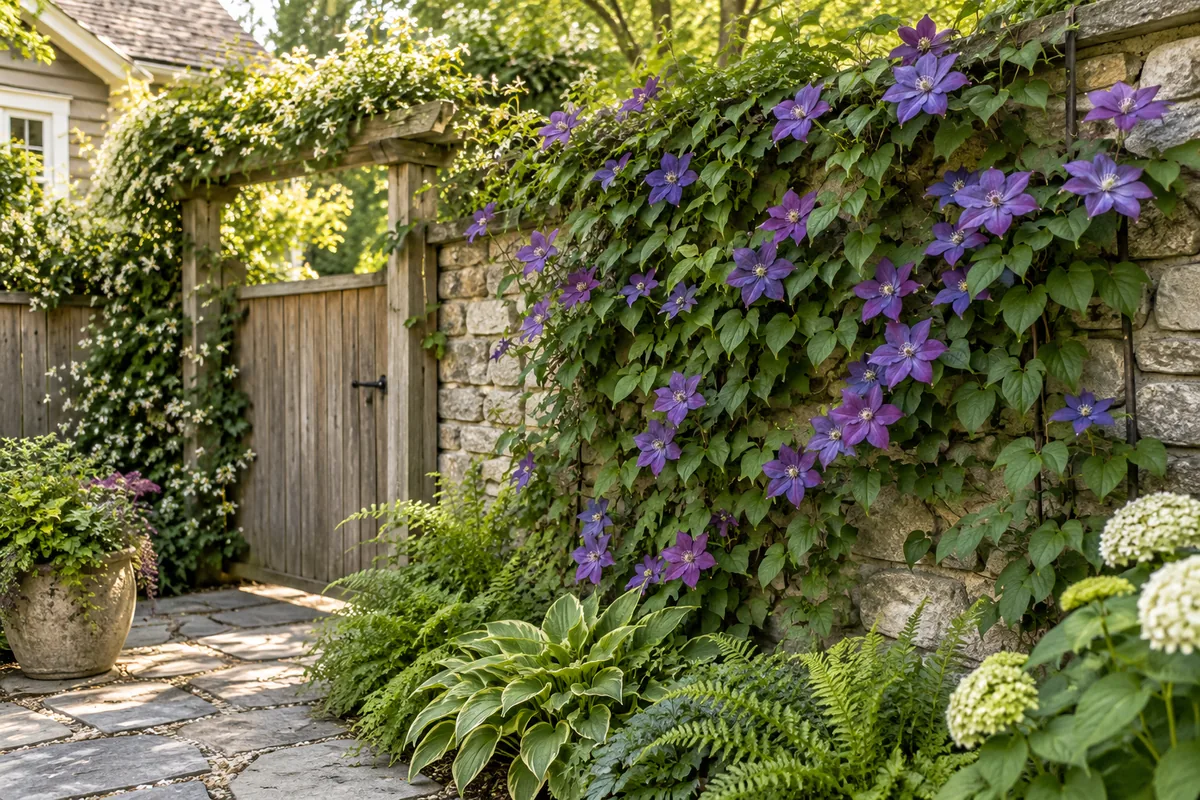
Climbing Vines for Fences and Walls with Suitable Supports
Climbing Vines: Support, Walls, and Local Fit: explore placement, upkeep, and local safety questions before deciding how this feature fits your yard.
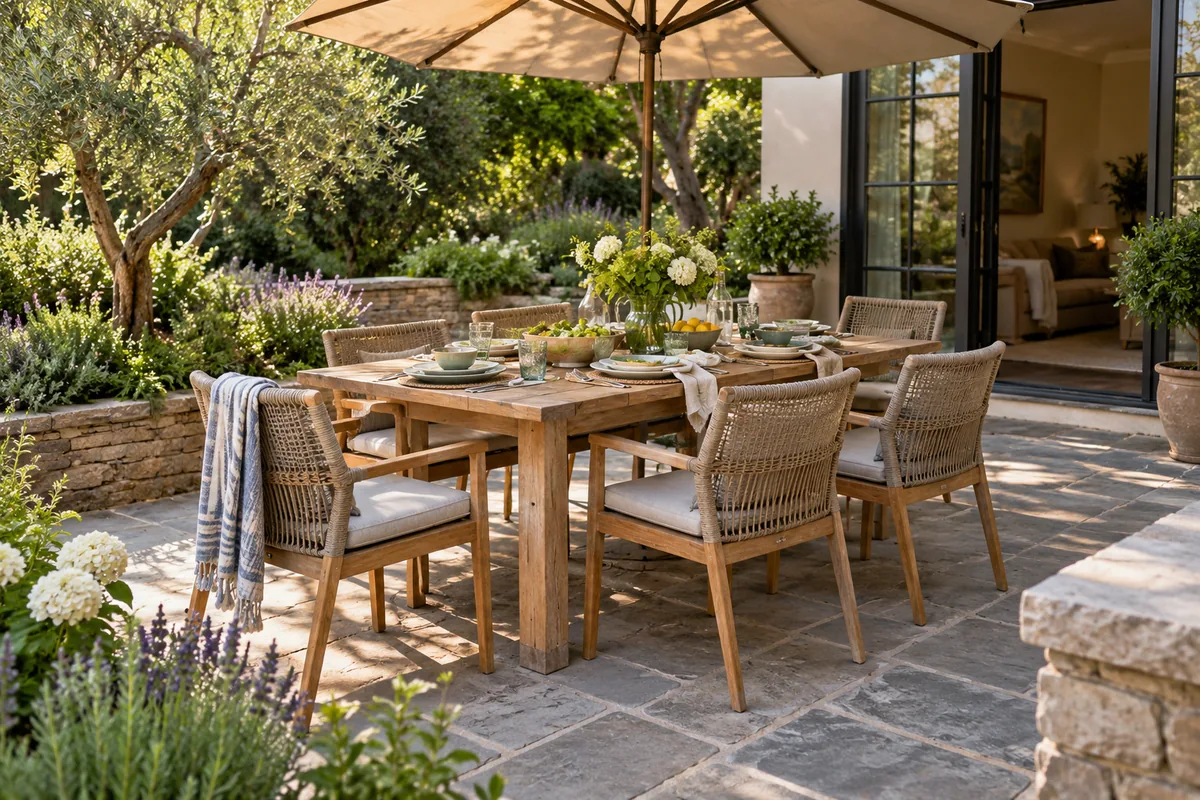
Outdoor Dining Set Ideas Based on the Occupied Table
Choose outdoor dining sets using table shape, real chair movement, serving routes, shade, material care, and the usable patio area rather than empty furniture.
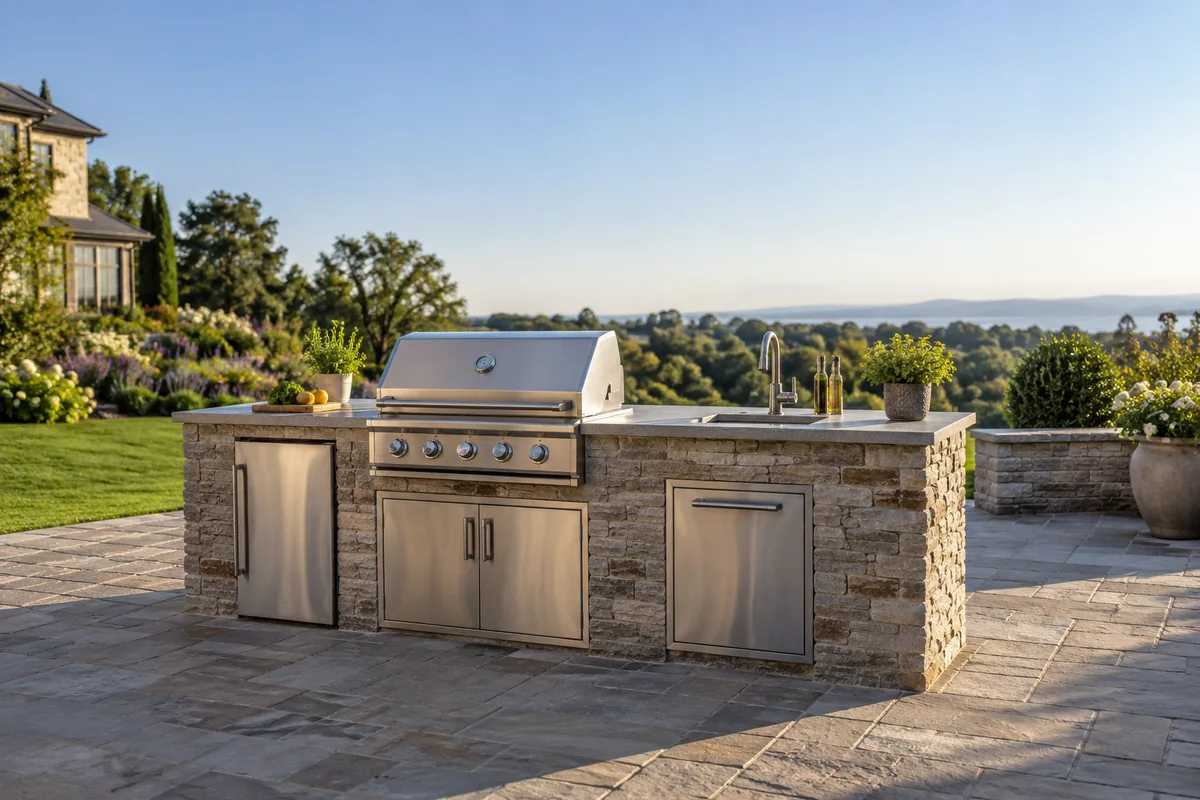
Outdoor Kitchen Design That Follows Real Use
Learn how outdoor kitchen design fit your yard, with practical material, placement, upkeep, and safety questions to review before choosing a visual direction.