
By AI Landscape Design Team · Editorial policy
Pergola structure vs Gazebo structure: Which Fits Your Yard?
Choose a pergola when an open overhead framework suits the desired light and garden relationship; choose a gazebo when a more enclosed, roofed outdoor destination is the priority. Actual shade and weather protection depend on the selected design, not the name alone. Both introduce structural, site, access, and permit questions that require local assessment before construction.
Published · 6 min read
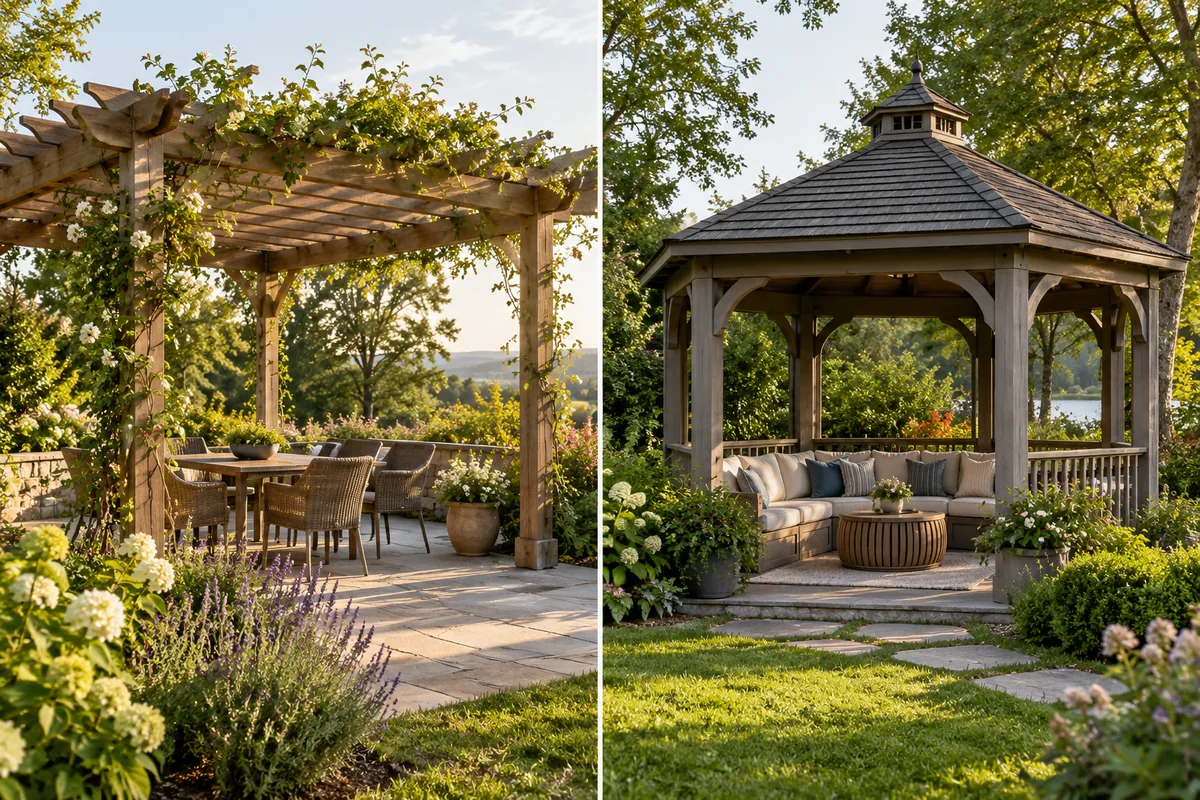
Key takeaways
- Relative cost: Lower to Higher; Moderate to Higher.
- Maintenance: Framework finishes and any cover or planting; Roof finishes and sheltered-area care.
- Lifespan factors: Material connections exposure and support; Roof material connections and support.
| Dimension | Pergola structure | Gazebo structure |
|---|---|---|
| Relative cost | Lower to Higher | Moderate to Higher |
| Maintenance | Framework finishes and any cover or planting | Roof finishes and sheltered-area care |
| Lifespan factors | Material connections exposure and support | Roof material connections and support |
| DIY difficulty | Higher with structural and site requirements | Higher with roof and structural requirements |
| Best for | Open definition and assessed shade | A distinct roofed garden destination |
| Weather protection | Depends on any actual cover | Depends on roof sides and exposure |
| Permits | Confirm locally for the actual design | Confirm locally for the actual design |
How much enclosure do you want?
A pergola typically uses an open framework to define space without forming the same kind of roofed room as a gazebo. A gazebo commonly creates a distinct sheltered destination, although its sides and roof designs vary. Decide whether the sitting area should remain closely connected with the surrounding sky and planting or feel more like a separate outdoor room. The household's use matters: a sunny lunch terrace and a place for sitting during uncertain weather may call for different levels of cover. Sketch the relationship with the house windows before selecting the structure. Additional enclosure can provide comfort while also changing views, light, and the apparent size of the garden.
Does a pergola always provide shade?
The amount and timing of shade depend on orientation, spacing, any added cover, and the sun path at the site. An open framework can leave much of the area exposed during parts of the day. Do not infer reliable shade from the word pergola or from a photograph taken at a favorable hour. Observe when the intended sitting place is uncomfortable and ask a qualified designer how the proposed arrangement responds. Added fabrics, panels, or planting can alter loading and maintenance requirements, so they need assessment as part of the system. Shade should be a verified use requirement rather than a decorative assumption added after the structure is chosen.
What weather protection is actually included?
A gazebo's roof can provide more overhead cover than an open pergola, but wind-driven rain and the design of the sides still matter. A pergola with a specified cover is different from an uncovered framework and should be evaluated on its actual product and structure. Ask where water goes from the roof or cover and whether runoff affects adjacent surfaces. Neither category guarantees a dry or comfortable space under every condition. Inspect connections with routes and furniture so the sheltered area is genuinely usable. If the main goal is reliable weather protection, state that clearly in the brief and have the responsible professionals verify how the proposed construction addresses it.
Where should the structure sit?
Place it where its destination makes sense, not where it merely balances a photograph. A gazebo at the far end of the garden needs a dependable route and an activity worth the journey. A pergola adjacent to a terrace may connect more directly with the house, but it can also change daylight and views through nearby windows. Consider utilities, retained trees, boundaries, and maintenance access before deciding on a footprint. Mark the actual furniture and circulation space on site. A visually attractive structure can be impractical if posts interrupt chair movement or the roof overhang conflicts with a route. Local setback and permit questions should be checked with the relevant authorities.
What is involved in structural review?
Posts, foundations, roof or cover loads, wind exposure, attachments, and connections must be assessed for the actual design and site. Seek appropriate licensed local professional advice instead of treating a light-looking framework as automatically safe for casual installation. Adding climbing plants, hanging objects, or later roof panels can change what the structure must support. Ask what modifications the selected product permits. Contact 811 before excavation in the United States and review private-service locating. Do not assume that a concept showing a pergola attached to a wall establishes the suitability of that connection. Structural review belongs before material purchase and before the surrounding terrace is arranged around unverified supports.
How should plants and lighting be integrated?
A climber can soften a pergola or gazebo, but the choice must fit the support, maintenance access, and local growing conditions. Check USDA hardiness zone, light, soil, mature size, and invasive status; avoid defaulting to an invasive vine because it appears in a reference. Where pets reach planting, consult the ASPCA toxicity list. Electrical lighting needs appropriate licensed installation and a plan for inspection and replacement. Keep cables, switches, and hose access compatible with ordinary use. The structure should not depend on rapid plant coverage to become attractive if that growth would be unsuitable or difficult to maintain. Plan the appearance before and after seasonal foliage changes.
What changes the relative cost?
Material, size, foundation requirements, access, roofing, finish detail, and electrical work can affect the budget. A simple open pergola may be less involved than a roofed gazebo, but customized or covered pergolas can change that comparison. Use broad relative categories and obtain quotes for the specific function you require. Compare the same level of preparation, permits, professional review, and restoration of disturbed ground. Ongoing care includes finishes, roof or cover inspection, planting management, and cleaning where relevant. The least expensive structure is not an equivalent alternative if it cannot provide the shade or shelter in the brief. Decide what the space must do before comparing prices.
How can visual concepts support the choice?
Compare both options in the same location with identical furniture and retained garden features. Observe how roof mass, posts, and openness affect the view from the house. AILandscape provides visual concepts from a yard photo; local assessment must confirm structures, plants, drainage, permits, and construction details. Treat the image as a discussion reference rather than a verified assembly. If the gazebo dominates a small site, consider a simpler destination; if an open pergola fails the shelter goal, do not select it only because it looks lighter. The final choice should explain enclosure, access, care, and verified site fit as well as the atmosphere you prefer.
Frequently asked questions
Will an uncovered pergola keep furniture dry?
Do not assume it will. An open framework can leave furniture exposed, and actual protection depends on the design and weather. If keeping rain off the seating is a requirement, specify that function and have the proposed cover and drainage assessed.
Does a gazebo need a permit?
Requirements depend on the jurisdiction, size, location, and construction. Check with the relevant local authority and qualified professionals before ordering or building. A prefabricated product or attractive reference photo does not establish that a particular site is approved.
Can I add a roof to a pergola later?
Only after the structure and proposed modification have been appropriately assessed. A new cover can change loads, wind behavior, drainage, and permit requirements. Ask the product supplier and responsible licensed professionals rather than assuming an open framework can accept any roof.
Sources
Related reading
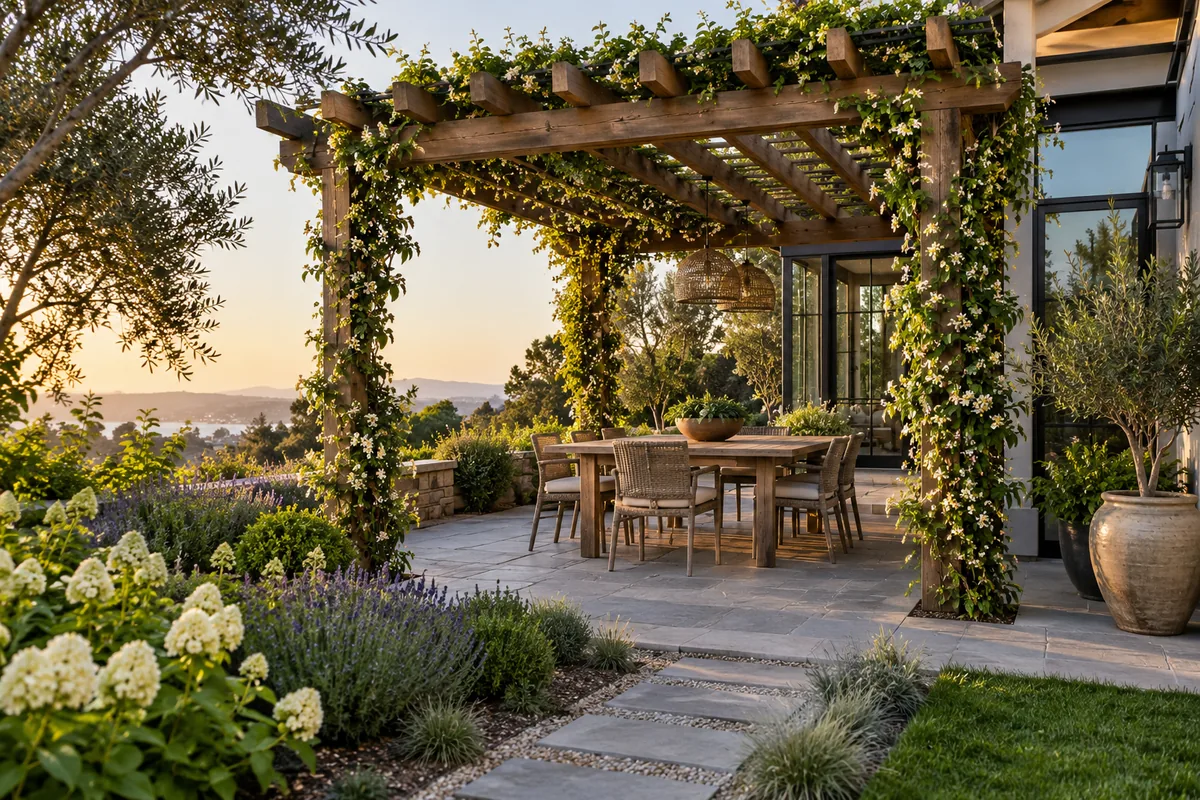
Pergola Ideas for Shade, Routes, and Outdoor Use
Learn how pergola ideas fit your yard, with practical material, placement, upkeep, and safety questions to review before choosing a visual direction.
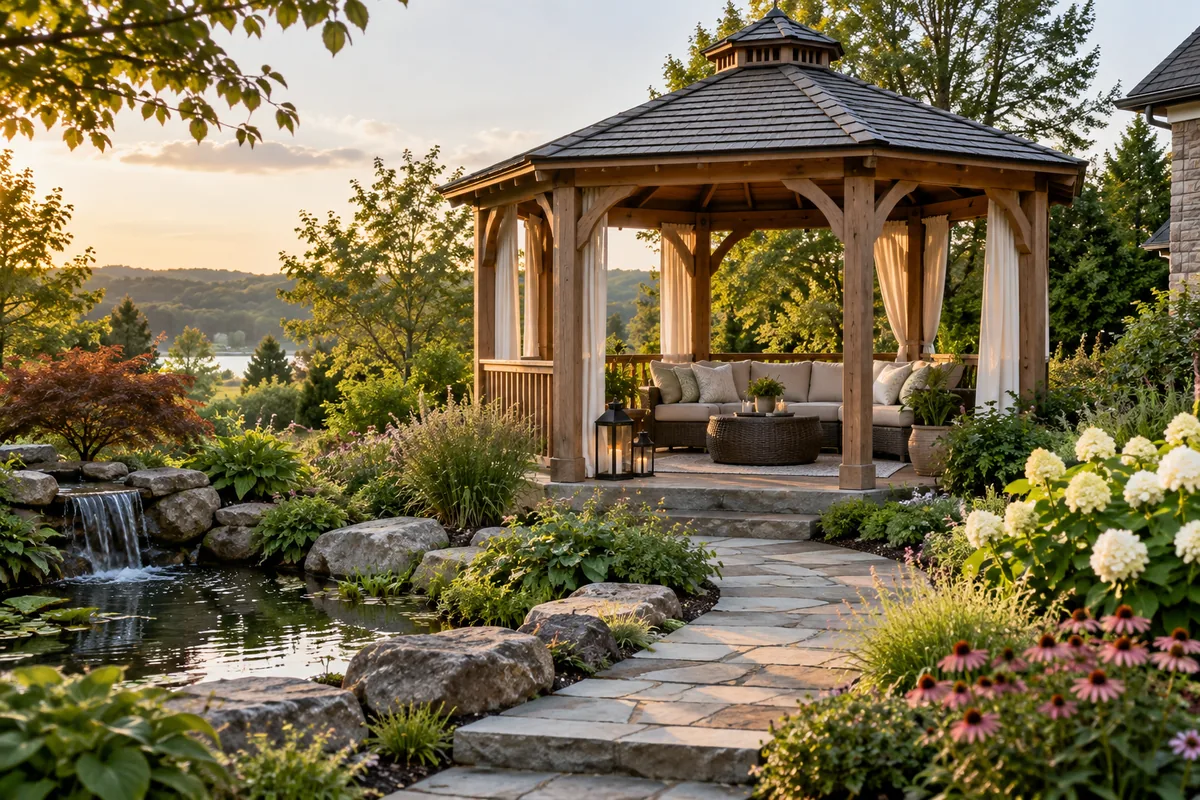
Gazebo Ideas for a Useful Roofed Garden Destination
Learn how gazebo ideas fit your yard, with practical material, placement, upkeep, and safety questions to review before choosing a visual direction.
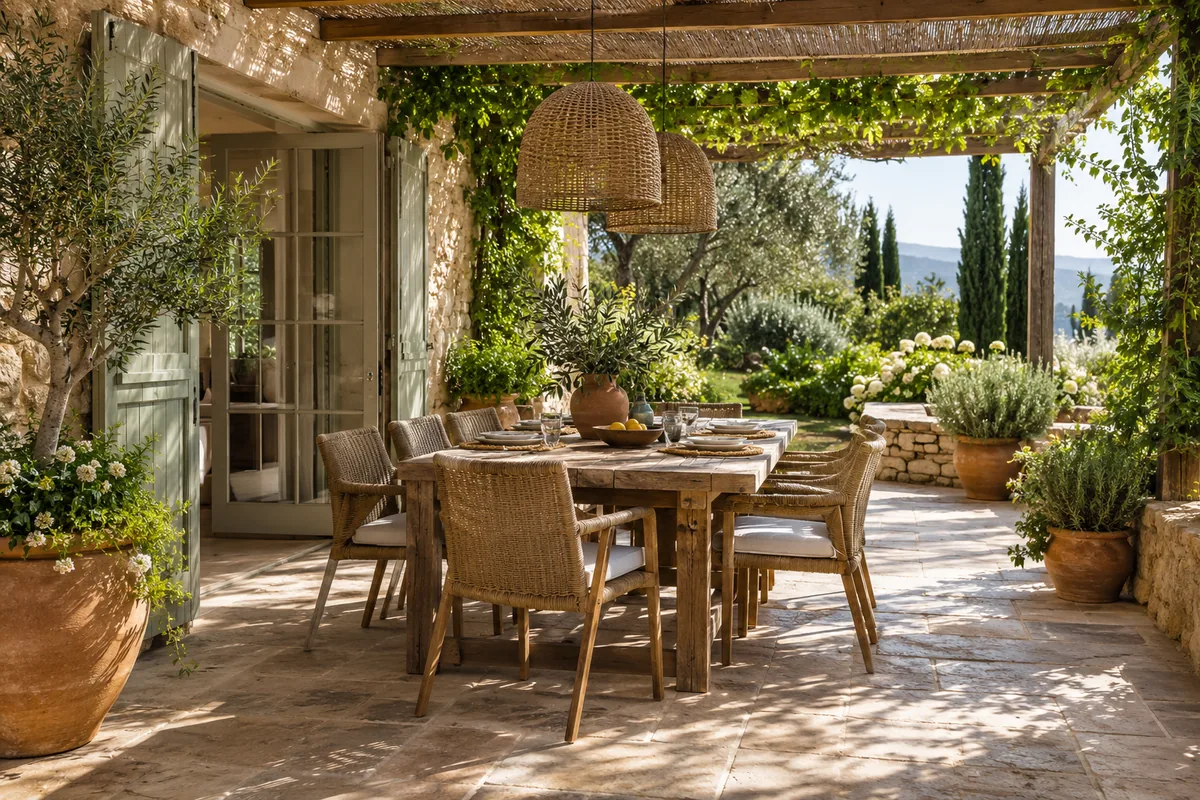
Mediterranean patio ideas for shaded meals and warm materials
Find Mediterranean patio ideas for clay pots, quiet stone colors, useful shade, comfortable dining, and locally suitable container planting around the room.
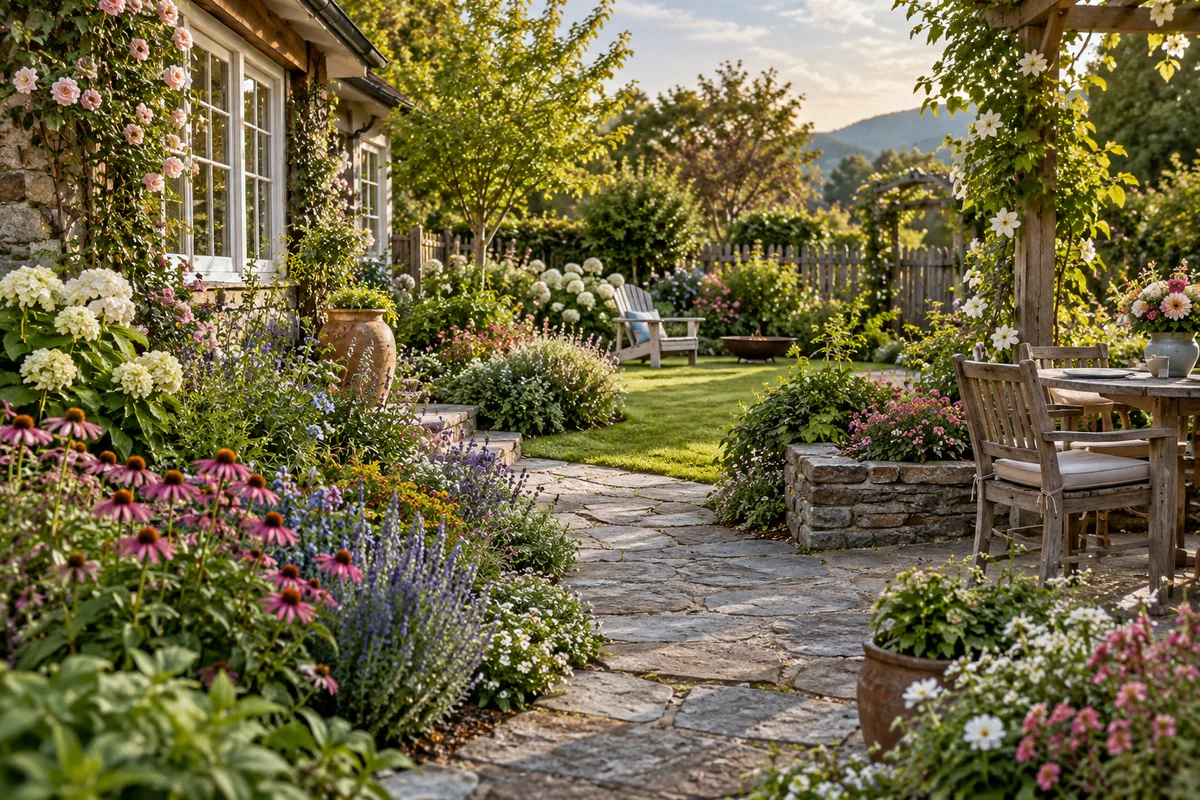
Cottage backyard ideas for flowers, seats, and seasonal life
Explore cottage backyard ideas for layered flowers, comfortable seats, connected borders, productive corners, and practical access through seasonal planting.
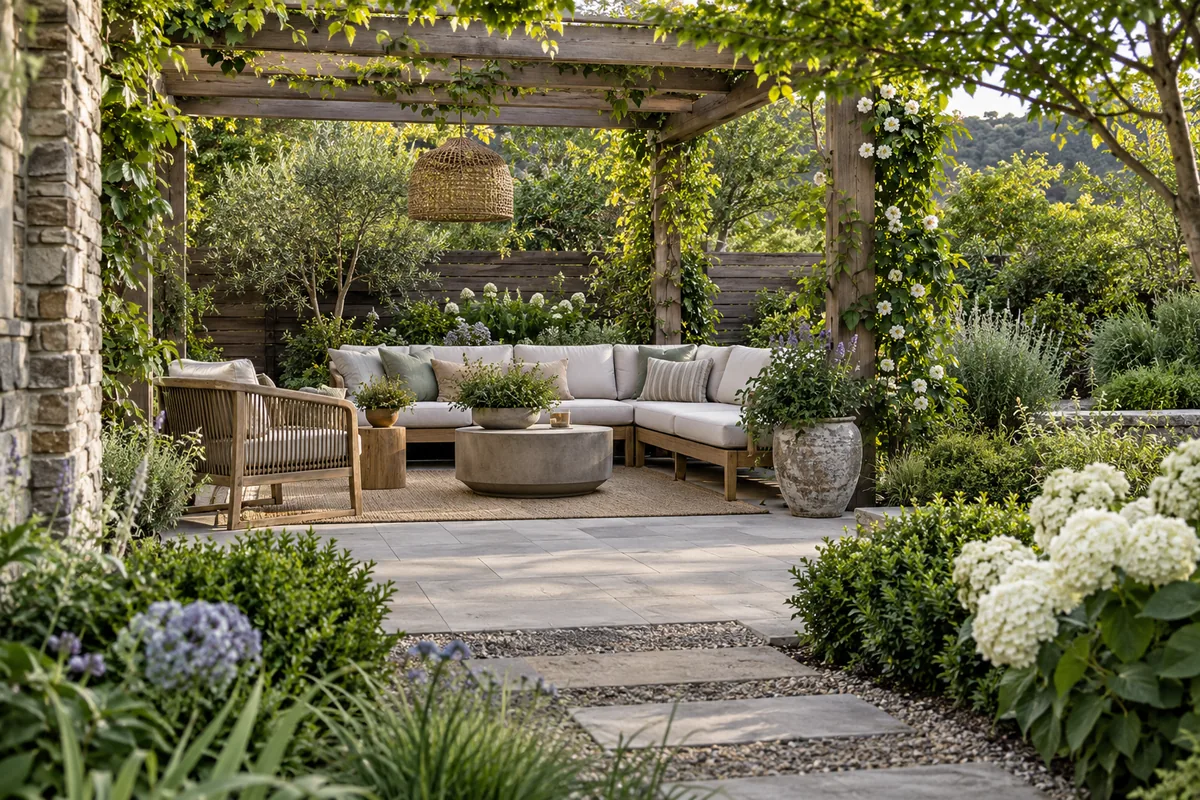
What Is Outdoor Room in Landscape Design?
Learn what outdoor room means in landscape design, with a practical yard example, related terms, and the site decisions to check before making changes.
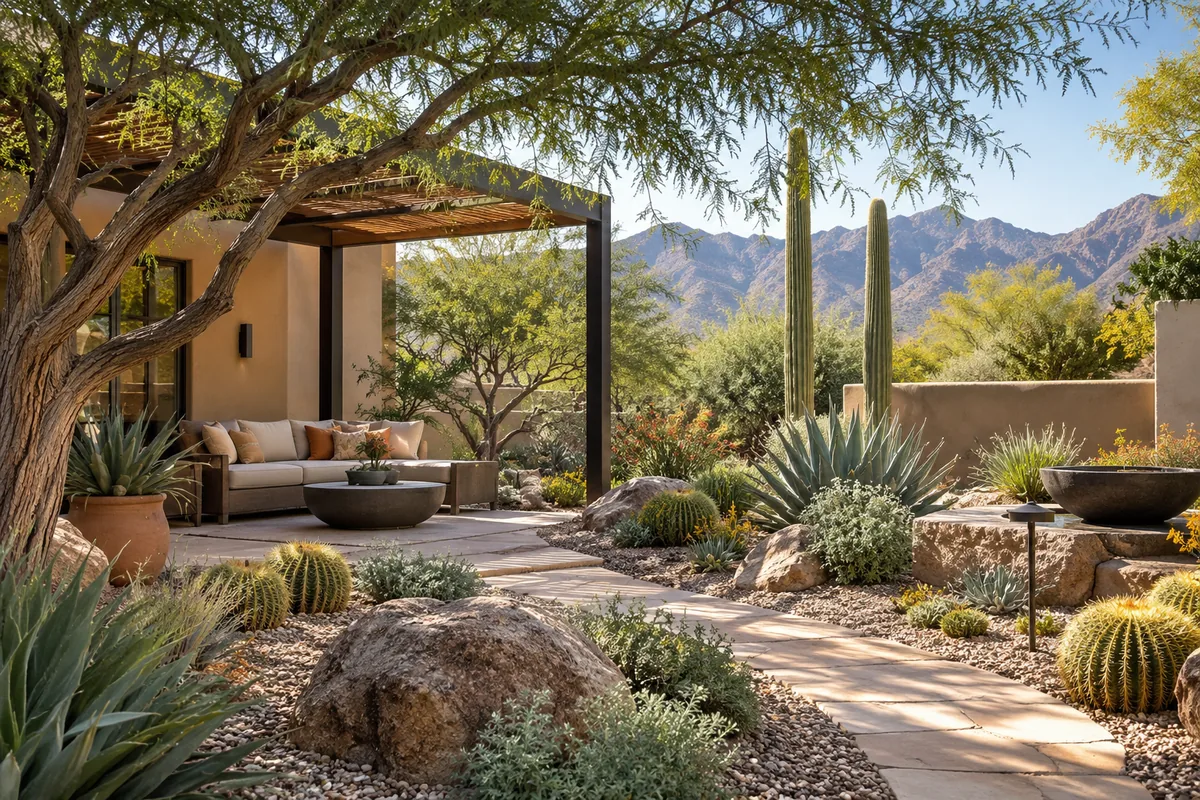
Desert landscape style: shade, stone, and plant form
Understand desert landscape style through plant form, mineral surfaces, useful shade, and heat-aware layouts, while separating its appearance from xeriscaping.