
By AI Landscape Design Team · Editorial policy
Outdoor Lounge Furniture for the Way You Actually Rest
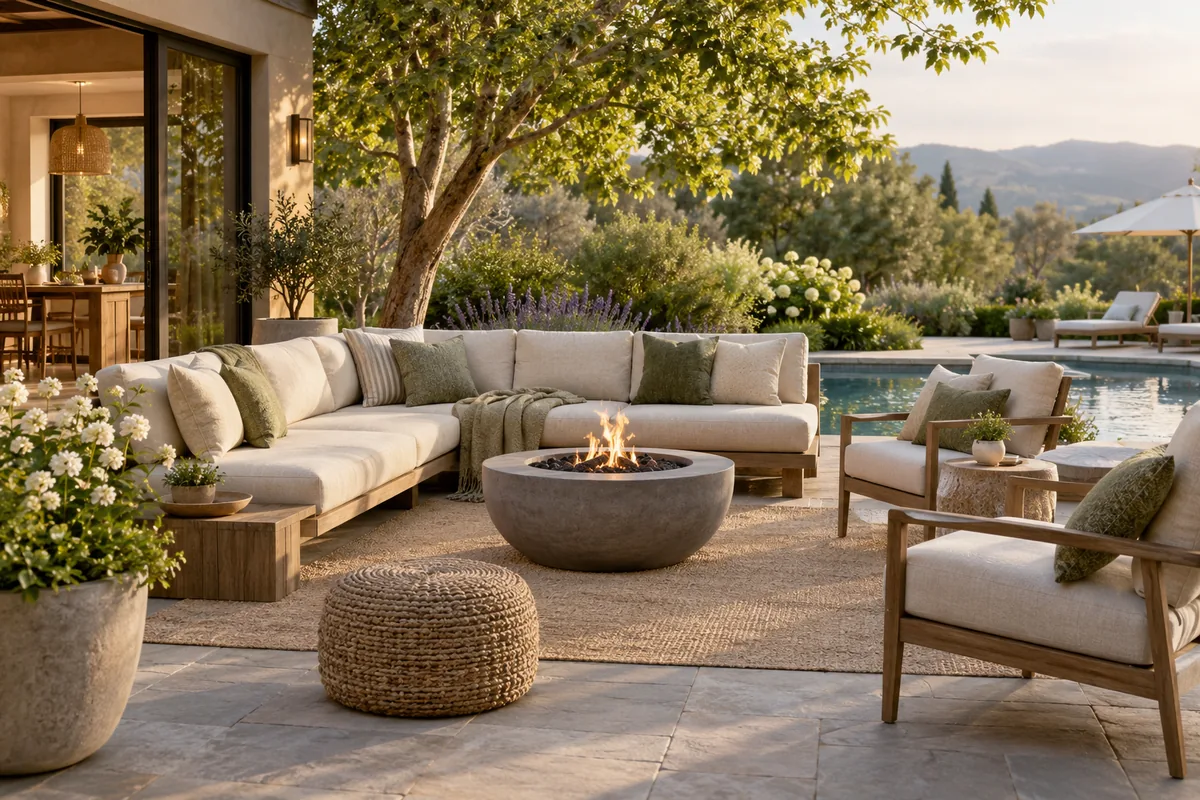
Outdoor lounge furniture should support the way people actually rest, whether that means conversation, reading, or reclining. Compare a modular sofa with separate chairs or loungers using the occupied layout and local exposure. Plan cushion care, storage, and usable routes before choosing a large set. Where seating shares a space with fire equipment, have qualified professionals confirm the complete arrangement and required separation.
Published · 6 min read
Key takeaways
- Choose the resting activity before selecting a furniture system.
- Test occupied movement and storage for cushions and modules.
- Keep fire equipment and site performance under independent review.
Which kind of resting does the space need?
A conversation group benefits from people facing one another without repeatedly turning their chairs. Reading may favor an individual seat with appropriate light and a usable surface for a drink. Reclining needs a longer occupied footprint and can make the same terrace behave differently. Choose the activities the household expects most often rather than buying a set because it fills the photograph neatly.
Try existing chairs in the proposed positions and spend time there. Check the view from seated height, the route back to the house, and the effect of nearby windows or equipment. Comfort includes exposure and ordinary movement, not just cushion depth. A large sofa can be an impressive visual anchor while leaving an awkward place to stand, carry a tray, or join the conversation.
How do modular sofas and separate seats compare?
Modular furniture can adjust a group arrangement, but every module needs a workable position and a suitable connecting system. Check how pieces move, how joins behave, and whether rearrangement requires more effort than the household will realistically make. A spare module should not become permanent storage in the route because the advertised layout does not fit.
Separate chairs can be easier to redirect toward shade or conversation, while loungers suit a more individual reclining activity. Compare them with people occupying the seats rather than placing empty outlines on a plan. Include side tables and any reclining motion in the trial. The useful configuration is the one that supports the actual activity with clear circulation, not the one offering the highest nominal seat count.
Where will people want to sit through the day?
Observe the terrace at the times it is normally used. An afternoon reading position and an evening conversation group may need different relationships to sun, wind, and house access. Move temporary seats between the candidate spots rather than judging comfort from a daytime image taken once. Keep views and privacy in the comparison without placing furniture directly against a boundary that needs maintenance access.
Shade products and structures require their own suitability and support checks. A cushion color cannot resolve an exposed site, and a pergola outline does not establish shelter. Ask appropriate professionals to assess structural proposals or changes near trees. Record where the trial succeeds, then consider whether a movable arrangement offers more useful flexibility than a large fixed group.
What should fabric selection include?
Review the selected product's outdoor use, cleaning, drying, and storage instructions. Different fabrics, fillings, and constructions can need different care, even when their colors appear similar. Ask whether covers are removable, which cleaning products are appropriate, and how replacement cushions are obtained. Do not assume an outdoor label means cushions can remain neglected in every weather condition.
Measure the storage you actually have and test moving the items into it. A deep modular group can generate a substantial collection of cushions or covers. Avoid relying on an improvised container that traps damp items or occupies the walking route. Keep the maintenance plan visible in the purchase comparison, because furniture that requires an inconvenient daily routine may soon stop being used as intended.
How much movement should the layout preserve?
Mark the furniture and side-table positions on the actual surface, then walk through with seats occupied. Check door openings, reclining backs, people standing to leave, and the route used to collect covers. Empty furniture photographs often hide these competing movements. Keep a clear relationship between the lounge area and connecting garden routes instead of allowing a sofa corner to determine an accidental detour.
Relevant accessibility, surface support, levels, and drainage need qualified site assessment. A simple tape outline cannot establish compliance or identify concealed conditions. Heavy products may also require a delivery and lifting plan. Ask how furniture reaches the terrace before selecting a system whose largest pieces cannot pass through the available access without changing or damaging the property.
Can a lounge group face a fire feature?
A fire feature can influence the seating view, but its product requirements and site conditions must determine the safe arrangement. Have qualified local professionals review separation, combustibility, ventilation, fuel systems where relevant, structural support, and applicable rules. Never read a permissible distance from the scale of a concept image or move seats inward merely to create a closer-looking circle.
Use the intended occupied layout in that review, including cushions, covers, side tables, and circulation. Children, pets, and people moving between chairs affect the practical setting. Keep operating instructions and supervision needs separate from the decorative mood. Backyard fire-pit ideas can help frame the visual questions, while the installer and actual equipment documentation establish what is appropriate at the property.
Which appearance and cost trade-offs matter?
A quieter furniture profile can fit modern backyard ideas, while a warm woven-looking or timber character may relate to other garden settings. Compare actual frame construction and finish rather than assuming a style label predicts durability. Nearby plants need USDA hardiness, regional suitability, mature-growth, and invasive-status checks; their future size should leave access behind the seating.
The cost comparison includes the whole set, cushions, tables, covers, storage, delivery, and any site work needed. Ask how frames, connectors, and finishes are repaired. Follow product-specific cleaning and inspection guidance rather than combining incompatible care methods. If site work includes excavation in the United States, contact 811 and arrange appropriate private-service locating before any digging begins.
How can a visual concept help the final choice?
Review how to size a patio alongside the physical furniture trial. Compare the lounge area with the outdoor-room definition and note which routes must stay usable. Bring the preferred setting, local exposure observations, and storage measurements to the supplier or designer rather than asking them to infer everything from one furnished image.
AILandscape can suggest a lounge arrangement on a garden photo. The output cannot verify furniture fit, fabric performance, surface capacity, fire separation, or accessible circulation. Use it to compare broad relationships between the seats and the landscape, then review real products against measured conditions and qualified advice. A successful purchase supports ordinary rest and manageable care, rather than only creating a convincing composition on screen.
Frequently asked questions
Is modular outdoor furniture always the most flexible option?
Only when the modules can be moved and connected conveniently in the actual space. Test the configurations with occupied seats, side tables, and circulation. Consider storage and the effort of rearranging them rather than assuming the number of possible layouts guarantees practical flexibility.
Can outdoor cushions stay outside through any weather?
Follow the actual product instructions for exposure, cleaning, drying, and storage. Outdoor fabrics and fillings differ, and local conditions matter. Make room for the cushions and covers you need to handle so the furniture does not depend on an inconvenient improvised storage routine.
How close should lounge furniture sit to a fire feature?
Have the exact equipment and site arrangement reviewed by qualified local professionals using the manufacturer instructions and applicable requirements. Include cushions, movement, and other combustible items. A generated image or a layout from another property cannot establish an appropriate separation.
Sources
Related reading
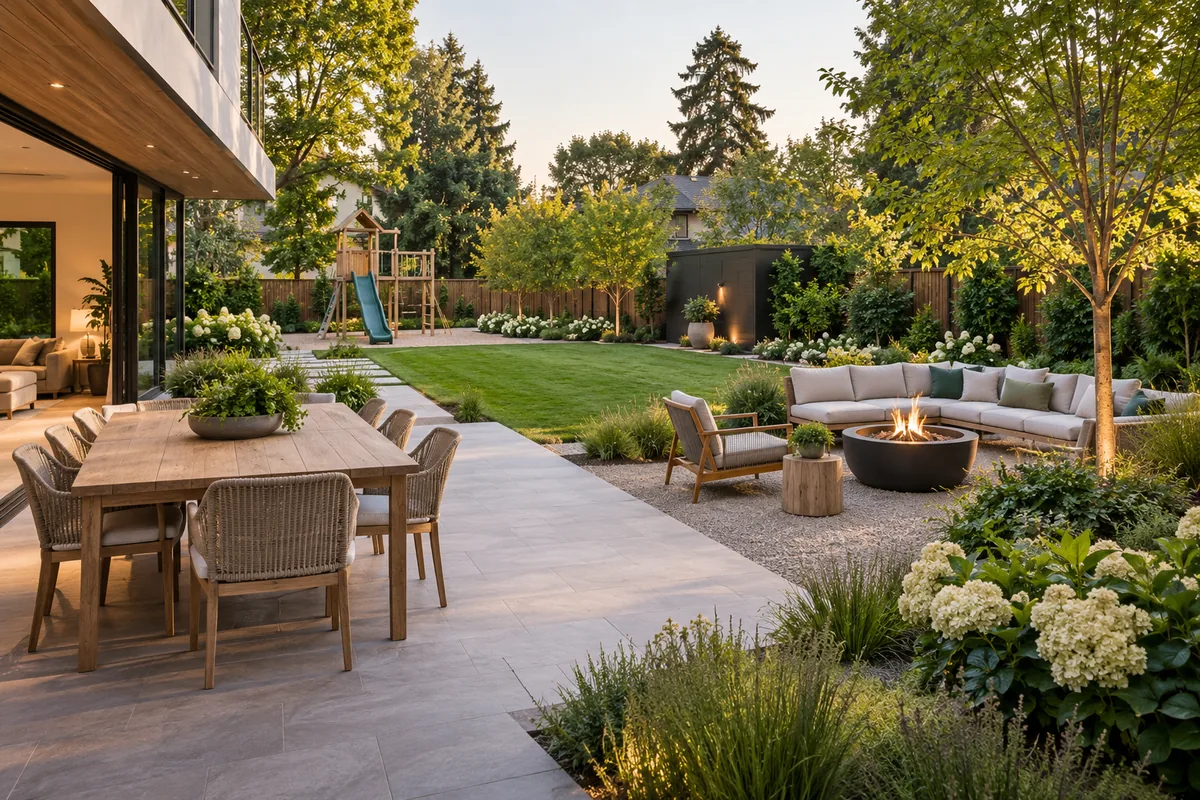
Modern backyard ideas organized around the way you live
Explore modern backyard ideas for activity zones, clean material connections, repeated planting, usable furniture layouts, and careful evening lighting.
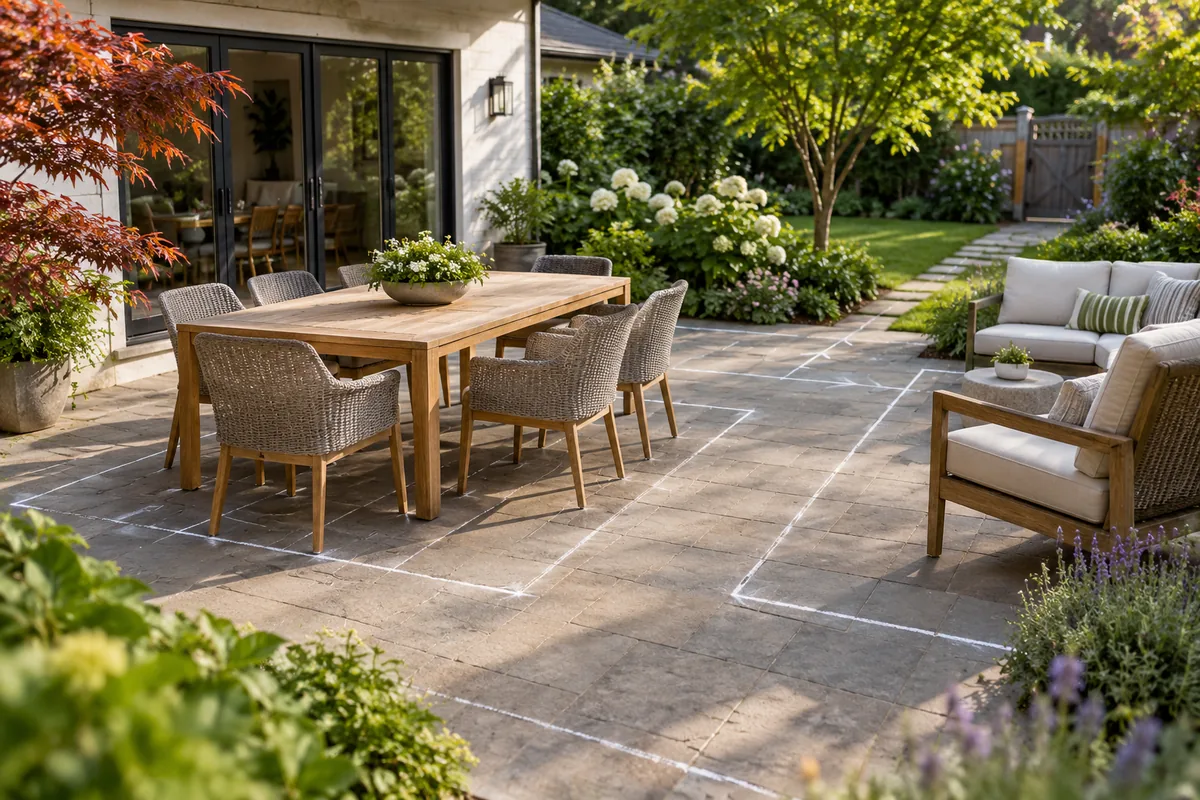
How to Size a Patio Around Furniture and Circulation
Size a patio with actual furniture footprints, chair movement, circulation, and site constraints before professionally confirming the final dimensions.
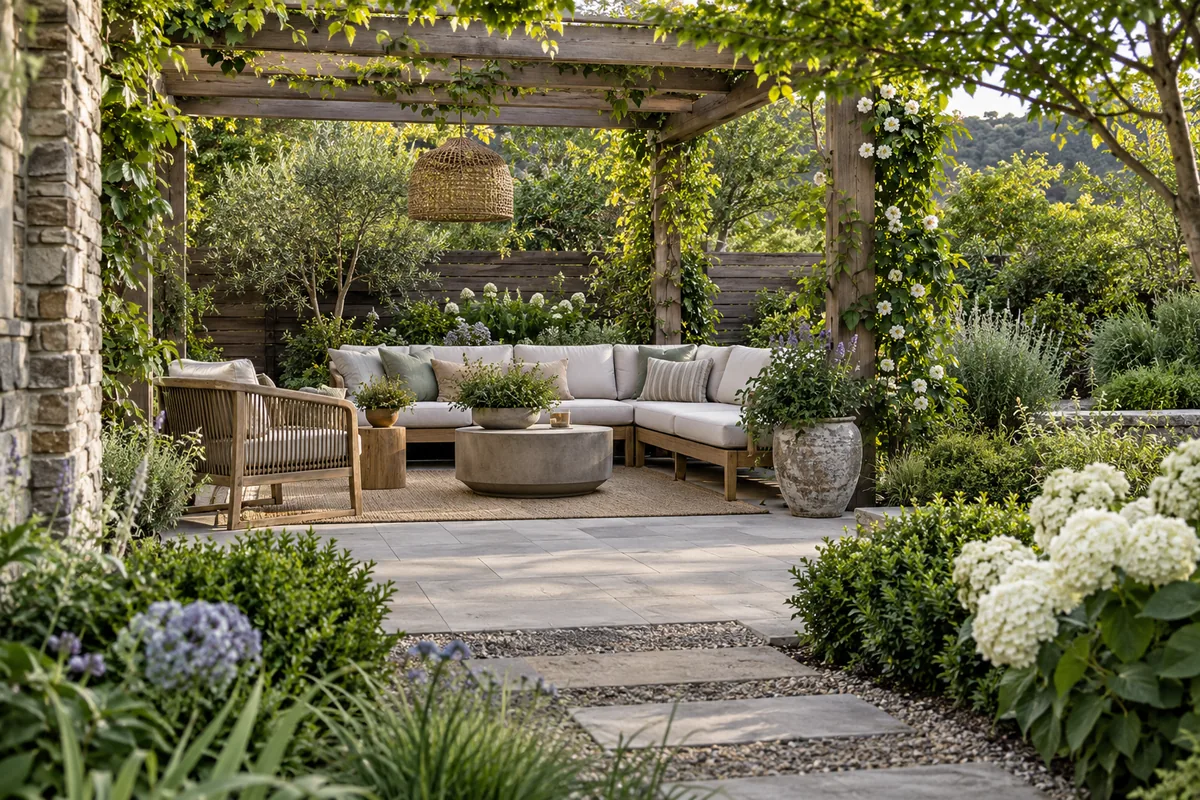
What Is Outdoor Room in Landscape Design?
Learn what outdoor room means in landscape design, with a practical yard example, related terms, and the site decisions to check before making changes.
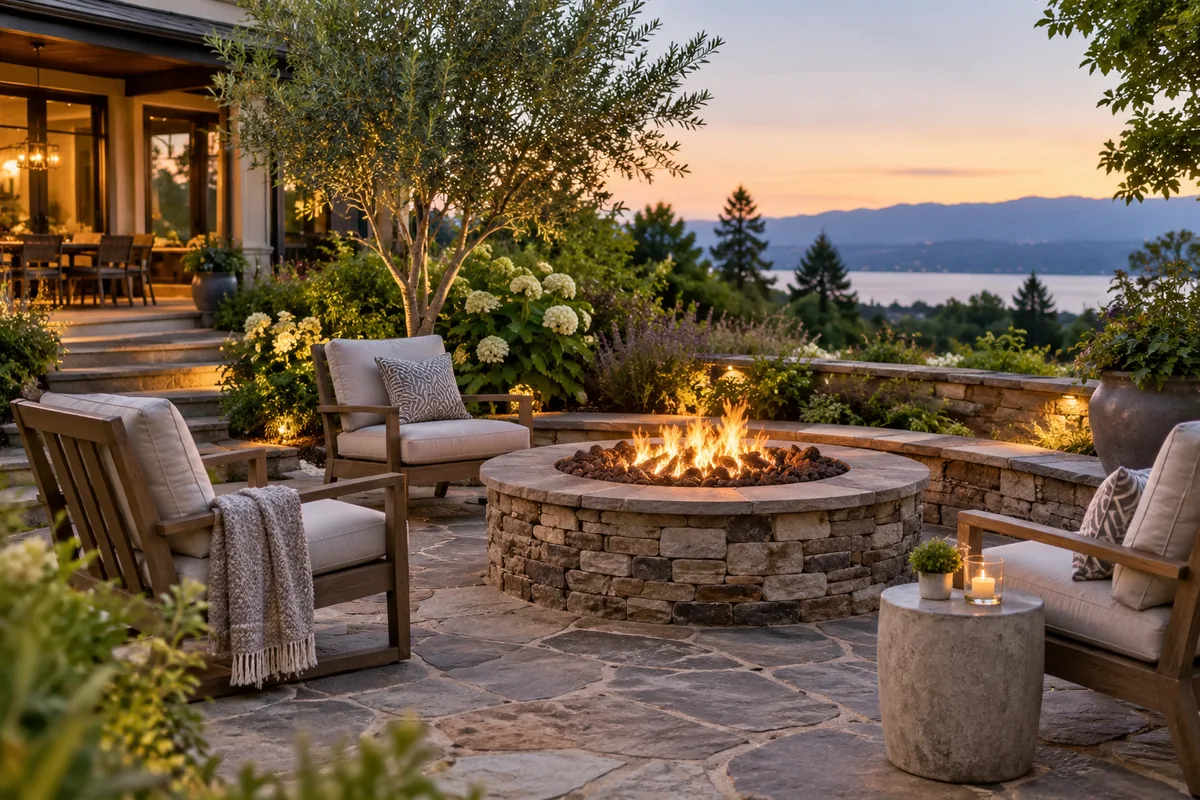
Fire Pit and Fire Feature Ideas for Outdoor Use
Fire Features: Fuel, Use, and Local Safety: explore materials, placement, upkeep, and local safety questions before deciding how this feature fits your yard.
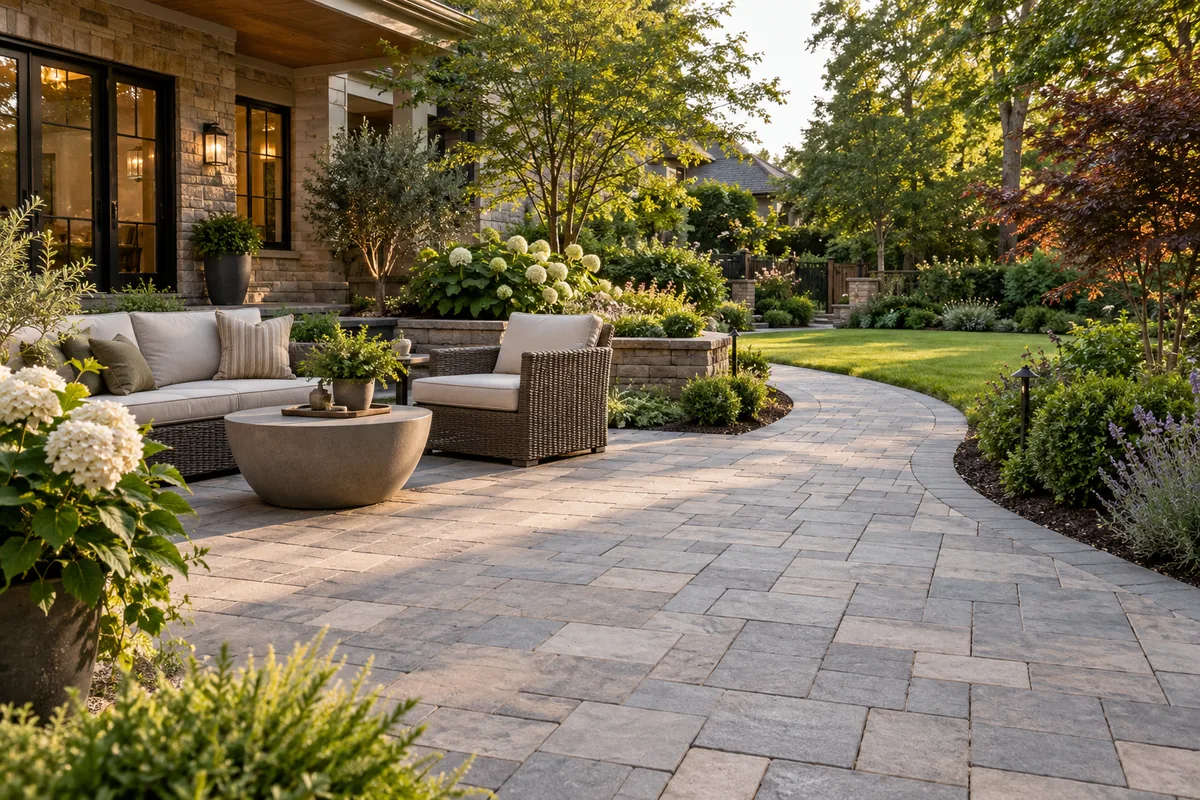
Concrete Pavers for Patios, Paths, and Yard Routes
Learn how concrete pavers fit your yard, with practical material, placement, upkeep, and safety questions to review before choosing a visual direction.
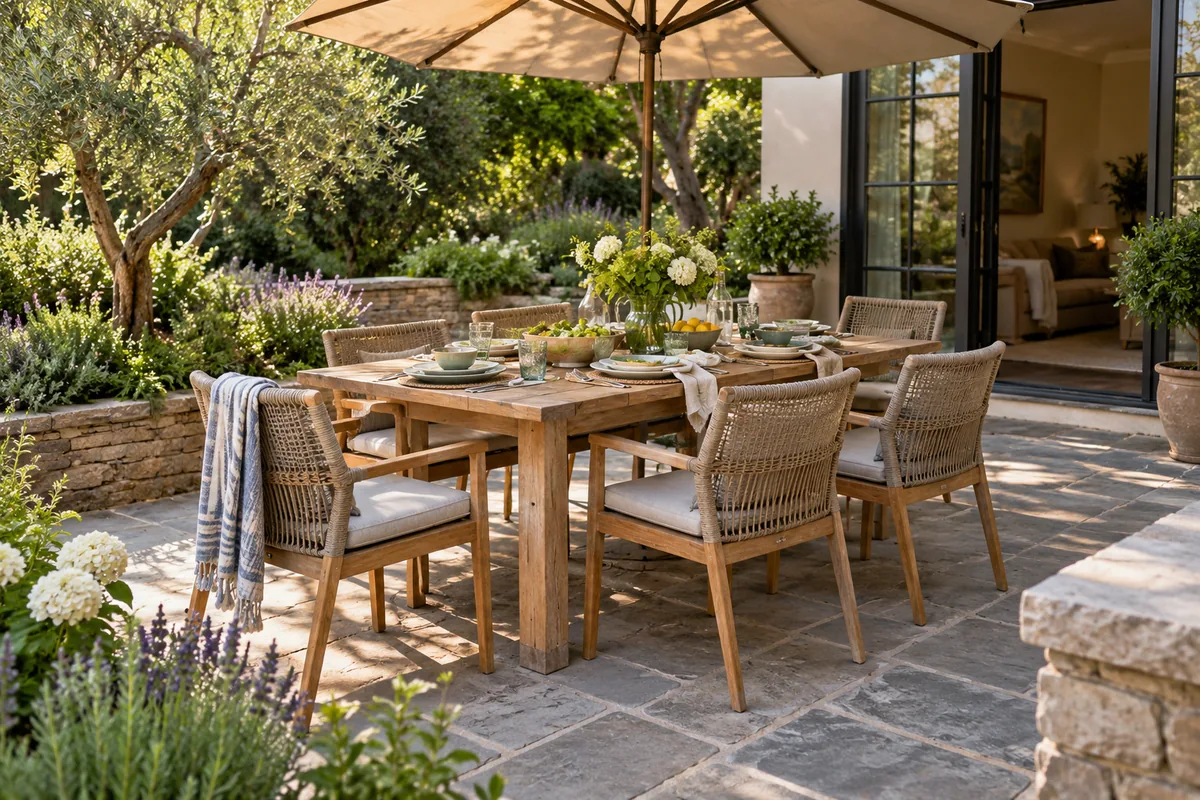
Outdoor Dining Set Ideas Based on the Occupied Table
Choose outdoor dining sets using table shape, real chair movement, serving routes, shade, material care, and the usable patio area rather than empty furniture.