
By AI Landscape Design Team · Editorial policy
Evergreen Shrubs for Foundations and Winter Structure
Evergreen shrubs can provide winter structure, foundation planting, and hedges when their adult dimensions and conditions fit the site. Plan the eventual mass around windows, routes, and maintenance access. Species availability and suitability change by region: consult your USDA hardiness zone and local extension service. Exclude Japanese barberry from recommendations because of its invasive status, and check local alternatives carefully.
Published · 6 min read
Key takeaways
- Leave foundation and window access around mature shrubs.
- Choose a hedge form that matches the available maintenance.
- Check regional invasive status and household toxicity before purchase.
What should the year-round shrub framework do?
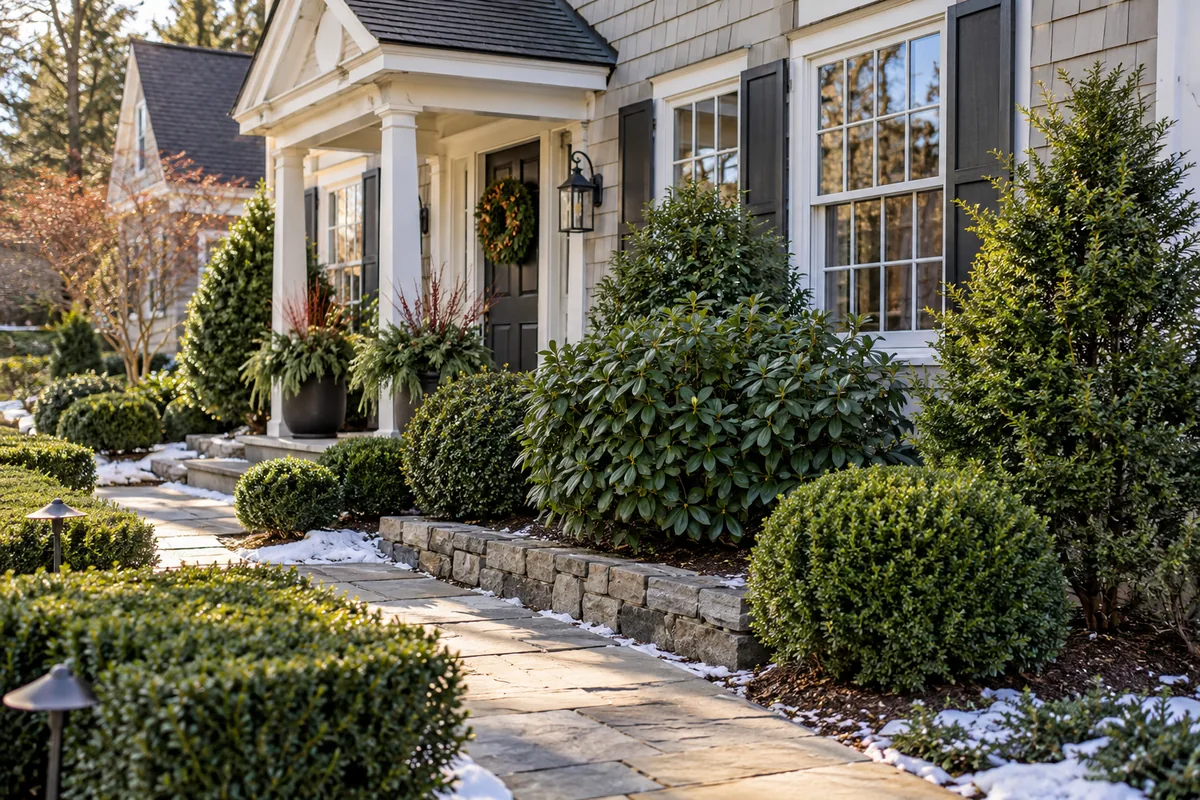
Give each evergreen mass a clear purpose before choosing a leaf texture. It might connect the house to a border, define the edge of a seating area, or support an entrance composition during winter. Think about what it will hide as well as what it will frame. Covering a low window, equipment, or a useful view is not an improvement merely because the foliage remains green. Lay out the intended adult forms on the site and view them from inside the house. The framework should make ordinary routes and architectural relationships more readable while allowing seasonal plants to add variety around it.
Which examples introduce different shrub roles?
Consider these as starting points for regional discussion. The exact species and cultivar determine whether an evergreen role applies and whether the plant belongs in your site.
- Inkberry holly: a broadleaf framework or informal mass where locally appropriate.
- Mountain laurel: a flowering broadleaf shrub for verified growing conditions.
- Rhododendron: a substantial leaf-and-flower presence with selection-specific requirements.
- Boxwood: a defined evergreen shape when local health and care considerations allow.
- Yew: a needle-textured shrub form requiring careful household toxicity review.
- Leucothoe: a foliage layer suited to an assessed location.
- Juniper: a needle or scale-textured option with mature spread checked.
- Shrub-form arborvitae: a repeated evergreen mass only if its adult dimensions fit.
Ask an adviser to identify each actual selection rather than assuming every member of a genus behaves identically.
How should foundation planting leave the house usable?
Treat foundation planting as a relationship between vegetation and a building that needs inspection and maintenance. Preserve access to utilities, vents, doors, and relevant building elements. Place shrubs according to verified mature width rather than the nursery container. An evenly spaced row can become a continuous barrier if adult foliage fills every gap. Check how windows open and what rooms will see through them. Local professionals should review any foundation, moisture, drainage, or utility concern; a generic shrub diagram cannot certify that relationship. If the composition needs constant reduction to expose the house again, choose a more appropriate mature form or rearrange the border.
What separates a practical hedge from a pruning project?
Decide whether you want a formal clipped outline or an informal sequence of suitable shrubs. Those approaches ask for different visual expectations and care. Ask whether the exact selection responds appropriately to the intended treatment and whether the household can maintain it. Do not buy an oversized plant solely because it can be cut smaller in a showroom display. Allow working space along the hedge within your property. A looser arrangement may fit a cottage or native-led garden, while a restrained repeat can suit a modern frontage. The design should make its maintenance demands visible before planting, not assume endless clipping will solve mature-size conflicts.
Why exclude Japanese barberry and review other invasives?
Japanese barberry appears in USDA National Invasive Species Information Center resources and is not recommended here. Although it is generally deciduous rather than an evergreen framework plant, shoppers comparing shrubs may encounter it as a foliage-color suggestion. A different leaf color or nursery label does not establish that the selection avoids ecological concerns or local restrictions. Seek appropriate alternatives through extension guidance, including shrubs that perform the intended role without the same issue. USDA profiles provide context; regional rules and conditions still need checking. Also review every other proposed species rather than assuming that excluding one familiar invasive makes the entire palette suitable.
Which site and household factors narrow the list?
Your USDA zone gives a winter-temperature starting point, not a complete evaluation of light, soil, moisture, exposure, or disease pressures. Compare those conditions with local guidance for the exact shrub. If pets can reach the foliage or fallen material, consult ASPCA resources and veterinary advice rather than treating year-round greenery as safe. Several familiar evergreen plants require deliberate toxicity consideration. Make identification part of the purchase record. Check visibility beside drives and entrances, especially where dense foliage may conceal approaching movement. An evergreen mass should support the household's use of the garden as well as provide a consistent decorative backdrop.
How can texture and repetition keep the border clear?
Choose a limited set of verified forms and repeat them where the architecture benefits from rhythm. Large leaves, fine needles, and dense clipped surfaces create different impressions. Compare them against wall materials and the plants already retained. Too many small specimen shrubs can make a foundation border feel scattered without offering useful variety at its main viewing distance. Keep seasonal accents separate enough to be understood. Contact 811 before US digging and arrange private-service locating when necessary. Protect existing roots and obtain professional review of nearby construction. A coherent evergreen plan is based on mature relationships, rather than arranging miniature plants as if their purchase size were permanent.
What does visual exploration contribute?
A yard concept can compare an open foundation border, a repeated hedge, and a layered winter backdrop. AILandscape helps explore those visual directions but does not validate species, toxicity, adult spread, drainage, or building clearance. Describe the purpose of each shrub group and take it to a qualified local adviser for actual selection. Change the concept if the appropriate plants need more room. Keep a record of the verified palette and its care assumptions. The goal is a durable framework that fits both the building and the people maintaining it, rather than a rendering whose dense foliage obscures essential parts of the site.
Frequently asked questions
Are foundation shrubs meant to touch the house?
They should be positioned around verified mature dimensions and building-access needs. Review windows, utilities, inspection, and moisture or drainage concerns locally. A decorative line along a wall is not proof that dense adult shrubs belong against that wall.
Is Japanese barberry recommended for colorful contrast?
No. USDA invasive-species resources identify Japanese barberry as a concern, and it is excluded from this palette. Ask for locally appropriate shrubs that supply the desired color or structure while meeting regional ecological and horticultural guidance.
Are evergreen shrubs safe for pets?
Evergreen foliage is not a toxicity classification. Identify the actual plant and consult ASPCA resources and veterinary advice for accessible foliage, fruit, and other parts. Choose the palette around household needs instead of assuming a familiar hedge plant is harmless.
Sources
Related reading
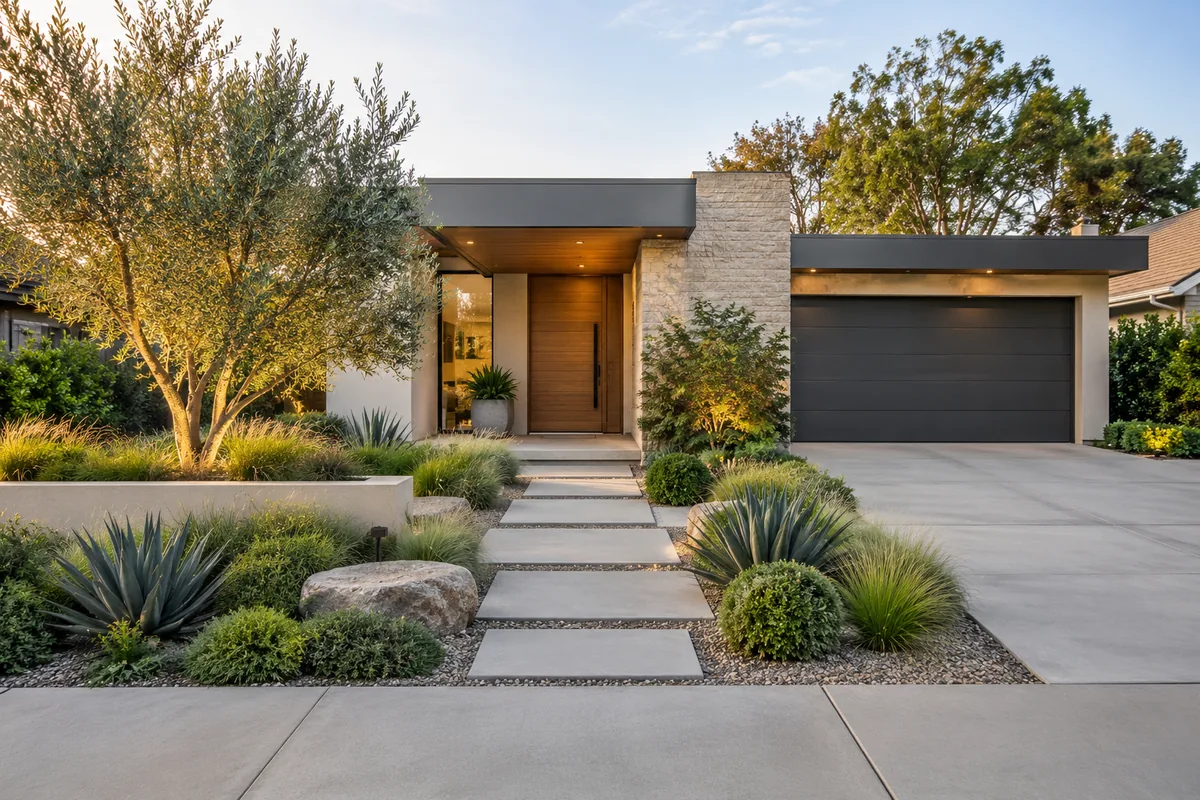
Modern front yard ideas for a clear, composed entrance
Explore modern front yard ideas for clear entrances, repeated planting, restrained materials, readable house numbers, and practical maintenance from the street.
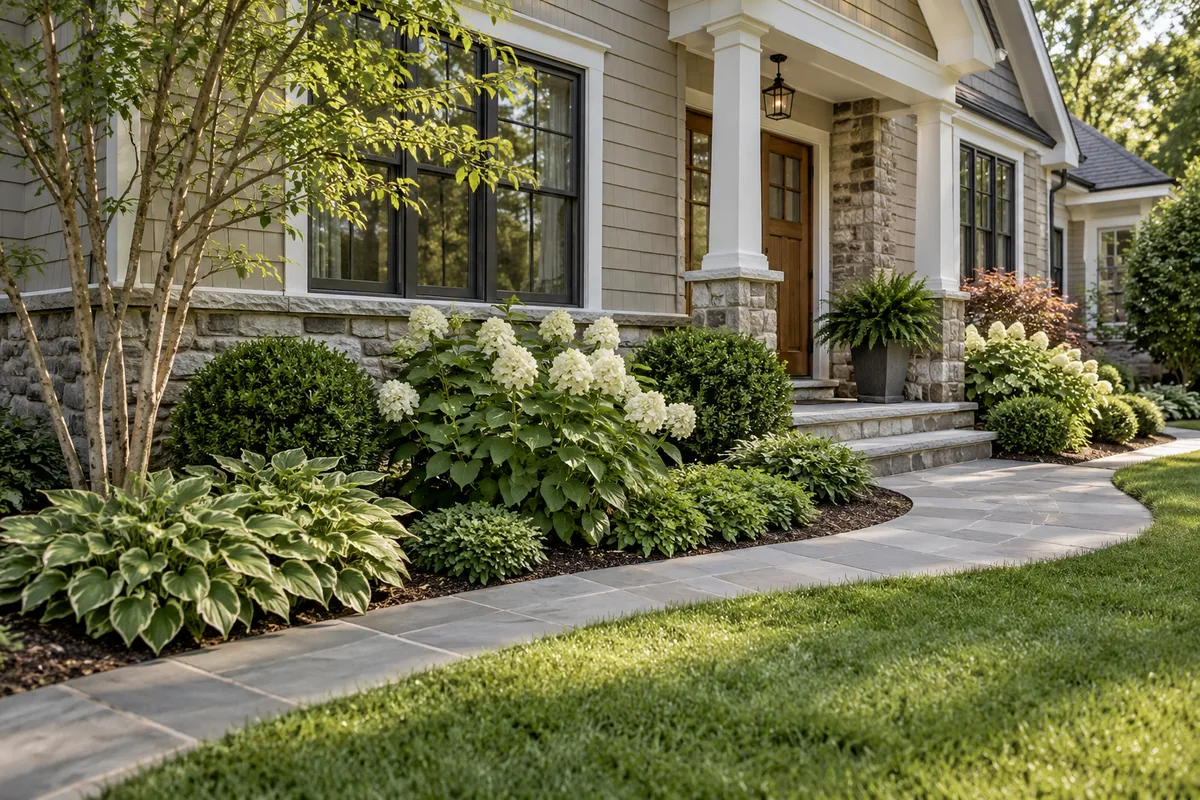
What Is Foundation Planting in Landscape Design?
Learn what foundation planting means in landscape design, with a practical yard example, related terms, and the site decisions to check before making changes.
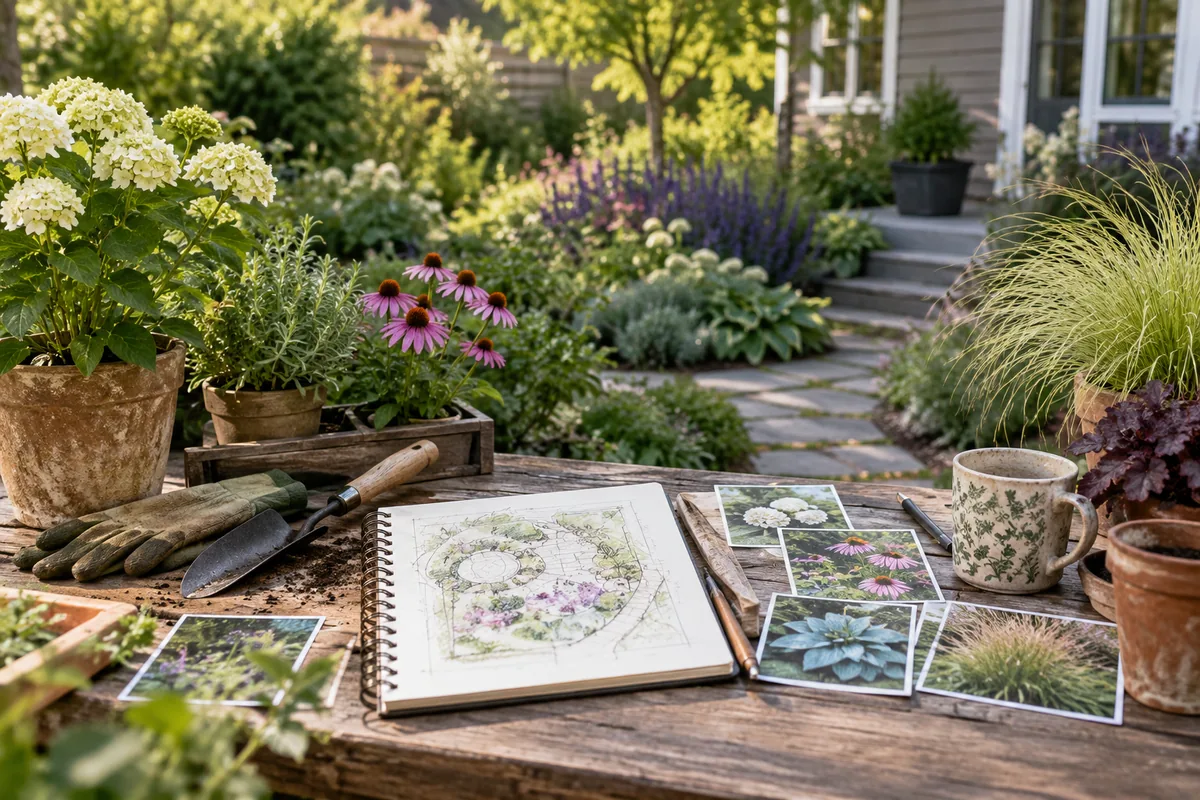
How to Plan a Planting Palette for Your Garden
Plan a planting palette around structure, repeated groups, seasonal interest, and confirmed regional conditions rather than copying species from a garden image.
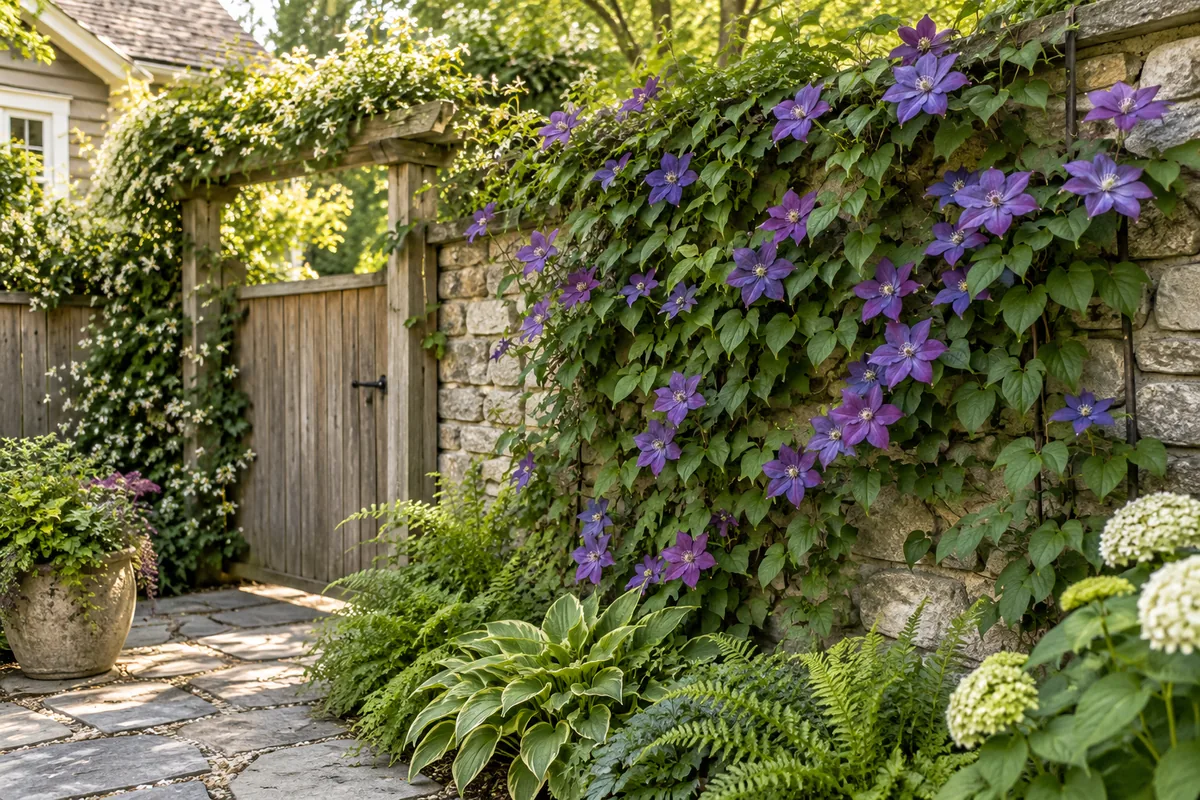
Climbing Vines for Fences and Walls with Suitable Supports
Climbing Vines: Support, Walls, and Local Fit: explore placement, upkeep, and local safety questions before deciding how this feature fits your yard.
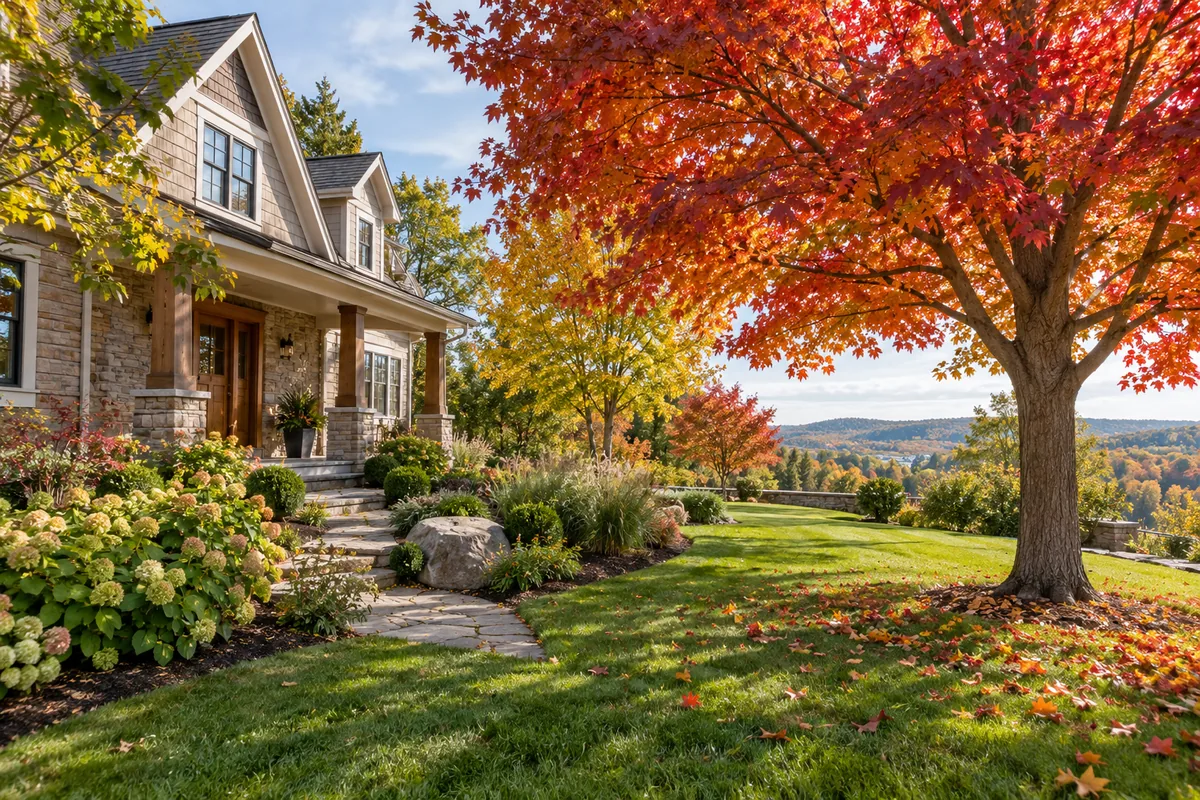
Deciduous Trees for Landscaping and Seasonal Views
Deciduous Trees: Shade, Space, and Local Fit: explore placement, upkeep, and local safety questions before deciding how this feature fits your yard.
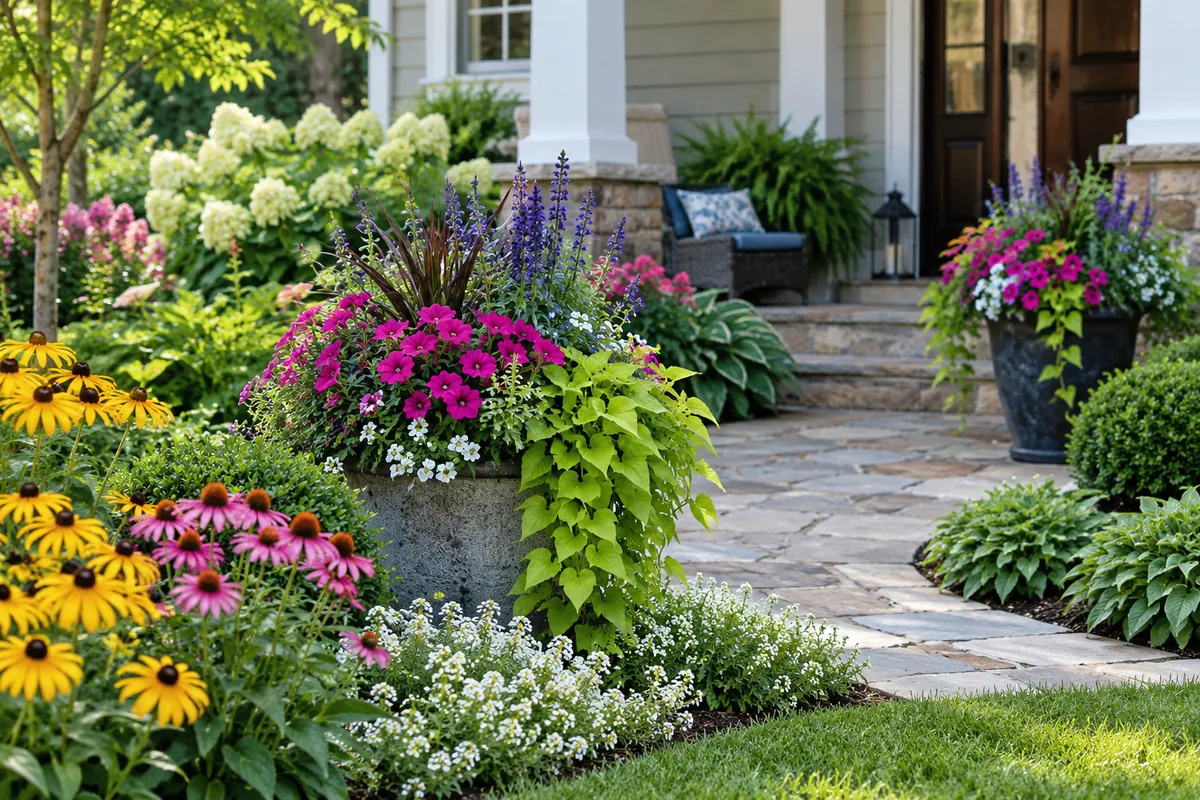
Annual Flowers for Seasonal Borders and Garden Containers
Annual Flowers: Seasonal Color and Containers: explore placement, upkeep, and local safety questions before deciding how this feature fits your yard.