
By AI Landscape Design Team · Editorial policy
What Is Foundation Planting in Landscape Design?
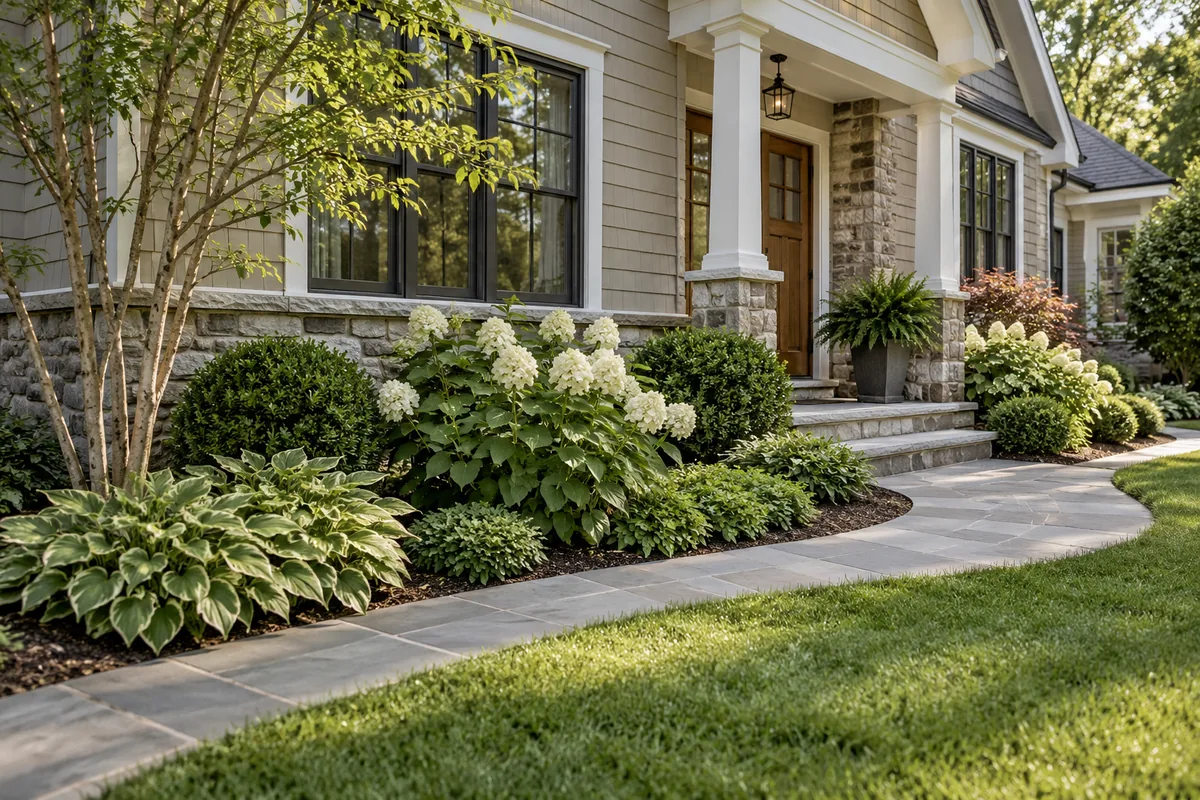
Foundation planting is planting placed near a building’s base to relate the structure visually to its surroundings while preserving access to the building and its services. The term describes location and design purpose, not a requirement to cover every wall. A suitable bed responds to windows, entrances, drainage, and mature growth. Plant placement should follow actual site conditions rather than hiding practical features beneath a continuous row.
Published · 2 min read
Key takeaways
- Foundation planting is a location and design role.
- Protect windows, services, and building access.
- Assess mature growth and local conditions.
How is foundation planting used in landscape design?
Inspect the wall before drawing a planting outline. Doorways, vents, utility equipment, roof drainage, and maintenance access all affect where growth can fit. Choose plants by mature spread and locally verified suitability, including the USDA hardiness zone and actual light. Avoid adding soil or changing grades around the building without appropriate professional assessment of moisture and construction concerns.
What does foundation planting look like in a yard?
A front border beside a low window may need a lower planting role than a bed beside a blank wall. Repeating one shrub everywhere could obstruct the window while leaving the wall visually unresolved. Compare the different parts of the frontage individually. Allow for inspection and upkeep around the house rather than using current nursery sizes as the final planting footprint.
Which terms help explain foundation planting?
Curb appeal describes the street impression, while layered planting explains height relationships. A transition zone can link the doorstep with the garden. Image generation supports visual exploration only; building clearances, drainage, plant suitability, and installation must be checked locally. Consult the 811 process before excavating near buried services in the United States.
Frequently asked questions
Must foundation planting be evergreen?
Evergreen plants are one option, but a foundation bed can use other suitable planting when seasonal change is acceptable. Consider the appearance of the wall throughout the year. Local conditions, mature spread, and maintenance determine the appropriate choice.
Should plants touch the house wall?
A planting layout needs room for mature growth and access to the building. Required clearances depend on the plants, construction, and site conditions. Ask qualified local professionals about moisture, services, and maintenance rather than using a photograph to establish spacing.
Can containers replace a foundation bed?
Containers can provide a visual connection near an entrance where they fit safely, but they still need suitable plants, watering, and drainage. Keep doors and maintenance access clear. They do not resolve underlying grading or building moisture problems.
Sources
Related reading
What Is Curb Appeal in Landscape Design?
Learn what curb appeal means in landscape design, with a practical yard example, related terms, and the site decisions to check before making changes.
How to Plan a Planting Palette for Your Garden
Plan a planting palette around structure, repeated groups, seasonal interest, and confirmed regional conditions rather than copying species from a garden image.