
By AI Landscape Design Team · Editorial policy
How to Plan a Planting Palette for Your Garden
Plan a planting palette by assigning structural, filling, and seasonal roles, then selecting a limited set of plants whose real growing needs fit the site. Compare foliage and mature form as well as flowers, use deliberate repetition, and review the scheme outside its best season. Verify exact species, regional suitability, invasive status, and toxicity separately before buying; a coordinated visual palette is not a confirmed horticultural recommendation.
Last updated · 6 min read
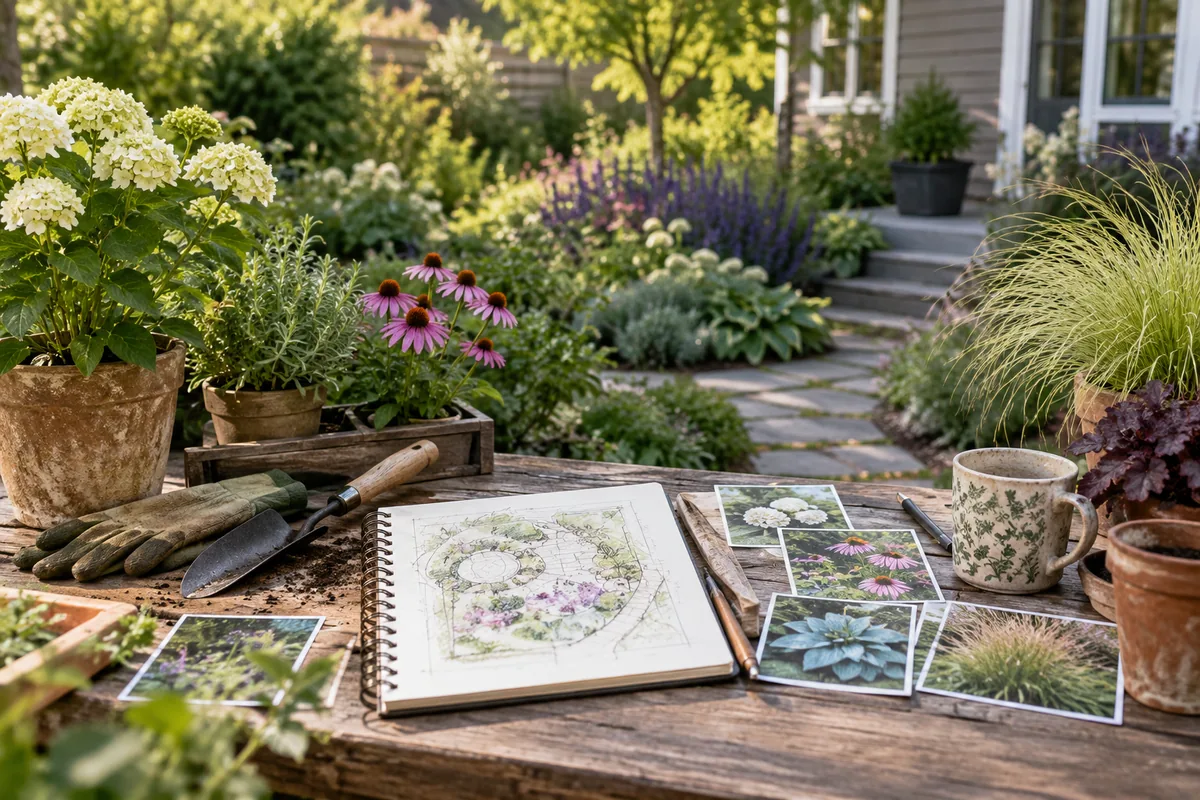
Key takeaways
- Select plant roles before varieties.
- Use mature form and foliage to connect the palette.
- Verify each real plant for regional and site conditions.
Planning steps
Record the growing conditions for each area
Start with confirmed location, USDA hardiness, and direct observation of light, soil, moisture, and exposure. Beds in one yard may offer different conditions even when the regional zone is the same. Note existing trees, root space, and places that must remain accessible. Suitable local testing or horticultural advice can help clarify uncertainties.
Assign structure and supporting roles
Identify the plants that would establish the persistent visual outline, those that fill the middle layer, and those that provide seasonal changes. Structure can come from foliage or branching form rather than permanent flowers. The roles depend on the site and desired care, not on a mandatory shopping list of trees, shrubs, and perennials.
Limit colors and compare textures
Choose a restrained set of visual relationships that suit the house and existing materials. Foliage size, branching form, and texture can connect plants even when they flower at different times. Do not ask every candidate to contribute a different bright color. Compare a smaller set first and note which contrast actually improves the layout instead of adding variety simply because it is available.
Repeat compatible groups and check care
Repetition gives the palette a recognizable rhythm, but repeated plants still need the right conditions. Group compatible moisture and light requirements where appropriate rather than scattering plants with conflicting needs into the same care area. Choose quantities after the actual layout and mature growth are reviewed, not from the number of plants visible in a concept.
Review seasonal gaps and finalize a shortlist
Walk through the palette at different times of year on paper using reliable information about the actual plants. Consider where foliage persists, where growth dies back, and which spaces remain visually open. Make room for future adjustment instead of filling every gap before the planting develops.
Record the growing conditions for each area
Start with confirmed location, USDA hardiness, and direct observation of light, soil, moisture, and exposure. Beds in one yard may offer different conditions even when the regional zone is the same. Note existing trees, root space, and places that must remain accessible. Suitable local testing or horticultural advice can help clarify uncertainties. Do not treat a photograph as a measurement of the growing environment.
Create a separate entry for each meaningful location instead of assuming every candidate plant belongs everywhere. This lets you compare compatible needs and identify where a proposed visual repetition might be impractical. A plant that supports the desired appearance in one bed may not suit another. Record mature-space constraints and whether pets or children can reach the area. The palette is a planning tool for real selection, not simply a color chart. Keep unresolved drainage or structural questions with the site notes and ask qualified professionals to assess those conditions before the planting is used to conceal them.
Assign structure and supporting roles
Identify the plants that would establish the persistent visual outline, those that fill the middle layer, and those that provide seasonal changes. Structure can come from foliage or branching form rather than permanent flowers. The roles depend on the site and desired care, not on a mandatory shopping list of trees, shrubs, and perennials. Leave a role unfilled if the available space does not support it.
Use mature size to compare eventual height and spread. A compact-looking nursery plant may occupy much more of the border later. Assess whether its form fits near windows, circulation, or other retained features. Review evergreen shrubs and perennial flowers as different visual possibilities, not species guarantees. A locally suitable deciduous plant may provide structure during a leafless period too. Explain the purpose of each candidate so it can be replaced sensibly when local advice rules out an attractive but unsuitable choice.
Limit colors and compare textures
Choose a restrained set of visual relationships that suit the house and existing materials. Foliage size, branching form, and texture can connect plants even when they flower at different times. Do not ask every candidate to contribute a different bright color. Compare a smaller set first and note which contrast actually improves the layout instead of adding variety simply because it is available.
Evaluate the palette from the views used in daily life. Close-up flower images may emphasize details that barely register from a window or seat. A broader foliage relationship can be more useful at that distance. Keep seasonal absence in mind: a palette built only around simultaneous bloom may look unrelated during other periods. Avoid promising continuous color without real evidence about selected plants and local performance. Visual concepts can help test the broad appearance, but generated plant forms may be invented or altered. Confirm actual species and expected behavior independently before attaching them to the color or texture preference.
Repeat compatible groups and check care
Repetition gives the palette a recognizable rhythm, but repeated plants still need the right conditions. Group compatible moisture and light requirements where appropriate rather than scattering plants with conflicting needs into the same care area. Choose quantities after the actual layout and mature growth are reviewed, not from the number of plants visible in a concept. Local nursery or extension advice can help assess the candidates.
Write down the care expected for each role: watering during establishment, seasonal cutting back, pruning, or other tasks relevant to the selected plant. Check whether the whole scheme matches the owner’s available effort or professional support. Native origin and a drought-tolerant description do not eliminate that review. Confirm local invasive status and consult ASPCA for plants within pets’ reach; child access and physical hazards also need attention. Remove candidates whose practical needs conflict with the priorities, even when their flowers complete the color collection. A palette should remain understandable after those necessary substitutions rather than depend on one exact inspiration image.
Review seasonal gaps and finalize a shortlist
Walk through the palette at different times of year on paper using reliable information about the actual plants. Consider where foliage persists, where growth dies back, and which spaces remain visually open. Make room for future adjustment instead of filling every gap before the planting develops. A healthy border can change; the aim is a coherent layout rather than an unchanged image.
Prepare a shortlist with exact names, intended roles, growing conditions, expected mature size, and questions for local confirmation. The list should distinguish researched candidates from decorative references. AI-generated concepts are for visual exploration and cannot verify species, regional suitability, or a planting plan. Use how to design a garden bed to relate the palette to the actual shape and access. Before purchasing, confirm the selected plants and sourcing with appropriate local expertise. If a candidate is unavailable or unsuitable, replace its design role with a verified alternative rather than substituting any plant with a similar flower color.
Frequently asked questions
How many different plants should a palette contain?
There is no universal count for every garden. The useful number depends on available space, intended roles, mature growth, and care. Start with a manageable shortlist and deliberate repetition, then add variety only when it solves a specific visual or practical need.
Should flower color be the first selection criterion?
Color is one part of a palette, but suitability, mature form, foliage, and maintenance need earlier consideration. A coordinated flower collection can still fail to fit the site. Select real plants for confirmed conditions and compare colors among the suitable options.
Can a native palette ignore site conditions?
Regional origin does not establish compatibility with every bed. Native plants have different light, soil, moisture, and space requirements, and toxicity needs separate review. Confirm exact species with local resources rather than interpreting a native-looking image as a verified planting recommendation.
Sources
Related reading
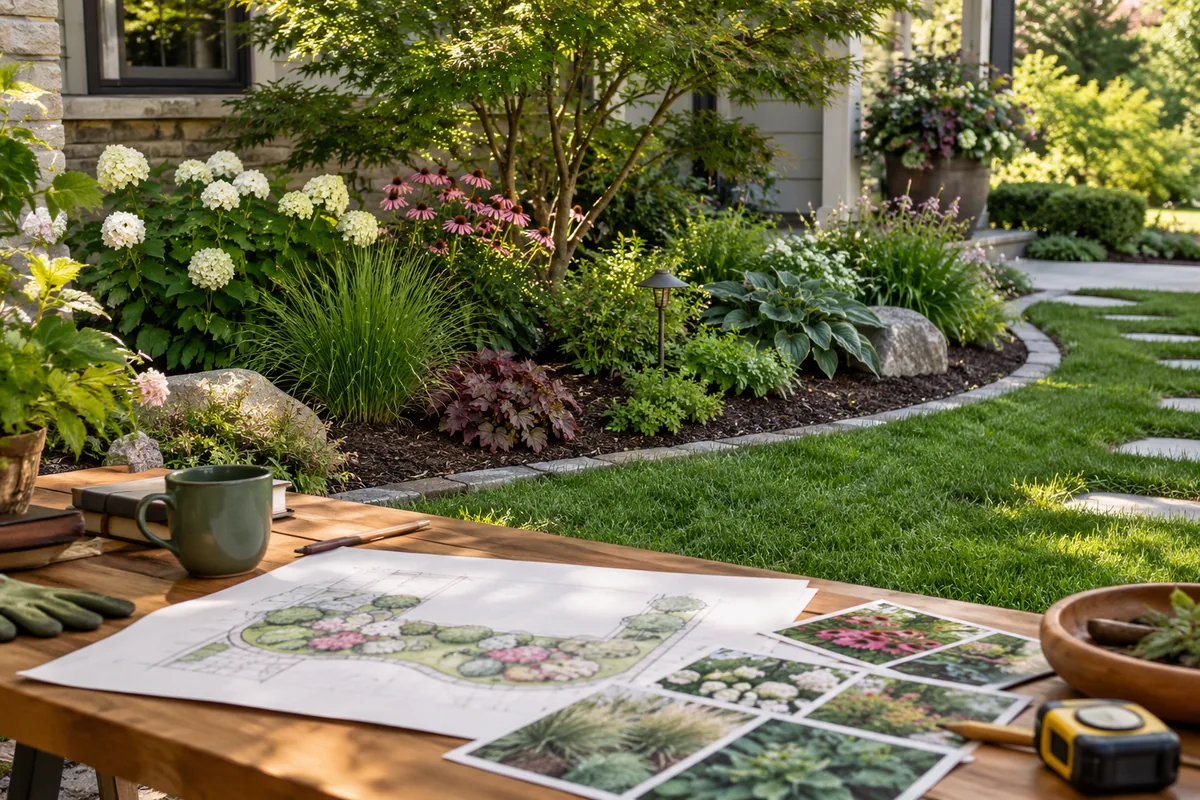
How to Design a Garden Bed Around Real Site Conditions
Design a garden bed by testing its outline, planting roles, mature growth, and maintenance access before selecting locally suitable plants and edging.
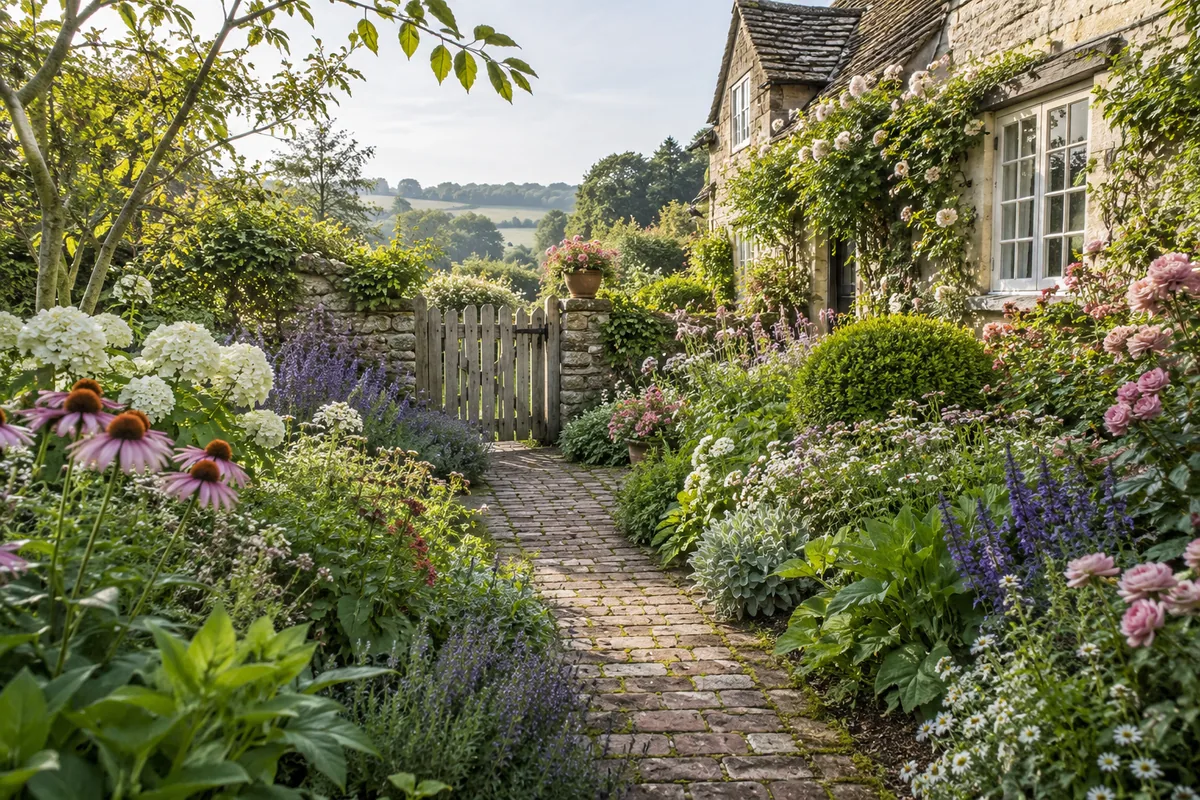
Cottage garden style: flowers with a working framework
Explore cottage garden style through layered flowers, selective self-seeding, clear paths, seasonal care, and the framework that makes informal planting usable.
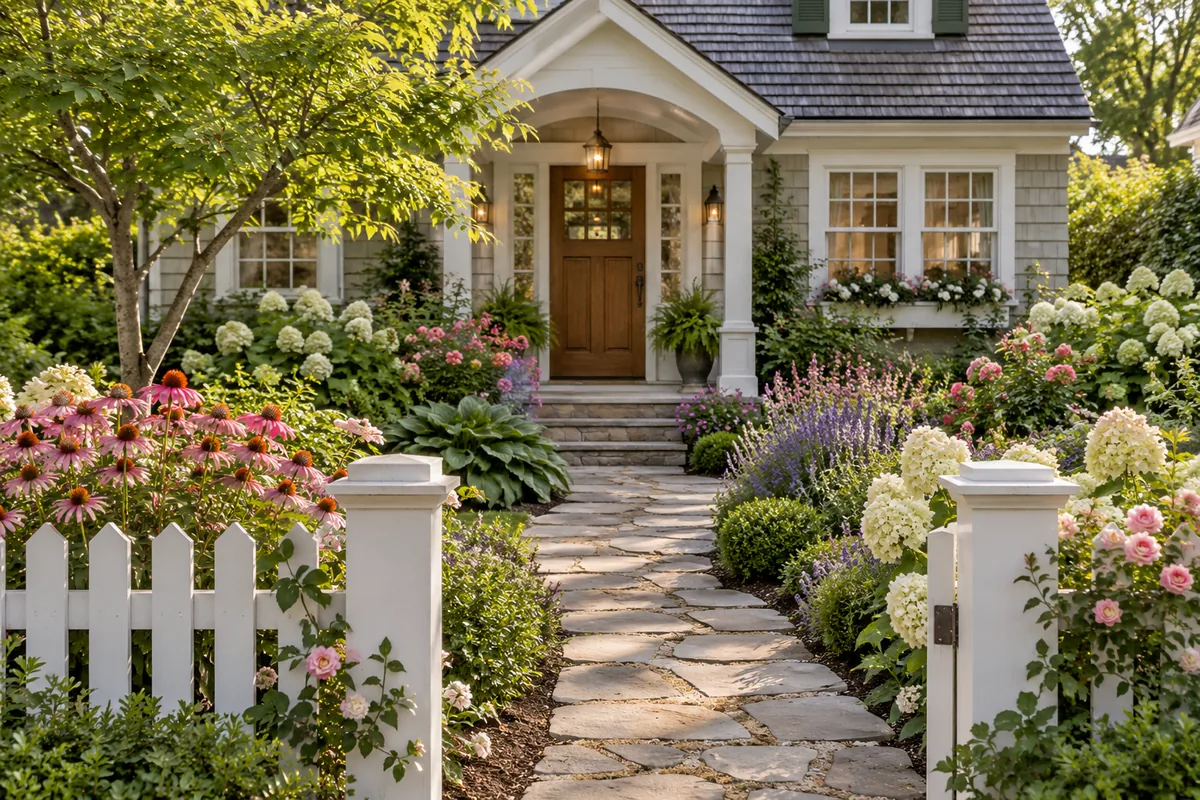
Cottage front yard ideas that welcome visitors through flowers
Find cottage front yard ideas for layered borders, useful gates, brick details, seasonal flower groups, and a welcoming entrance that stays easy to reach.
How to Set a Landscaping Budget Without Guessing Costs
Set a landscaping budget with a defined scope, separate cost categories, clear unknowns, and practical phases before comparing quotes for the actual project.
Native plant landscape style: regional plants with structure
Learn how native plant landscape style combines regional plant choices, seasonal change, and clear garden structure with practical care and neighborhood views.