
By AI Landscape Design Team · Editorial policy
How to Set a Landscaping Budget Without Guessing Costs
Set a landscaping budget by defining the work you need, separating design, site preparation, materials, labor, permits, and contingency, then deciding which features can be phased. Use local project information and comparable written scopes rather than a generic price per yard. Keep unresolved site conditions visible in the budget, and revise the plan when professional assessment or quotations reveal what the actual work requires.
Last updated · 6 min read
Key takeaways
- Define scope before discussing totals.
- Compare equivalent inclusions and exclusions.
- Keep contingency and future phases explicit.
Planning steps
Write a scope before choosing a total
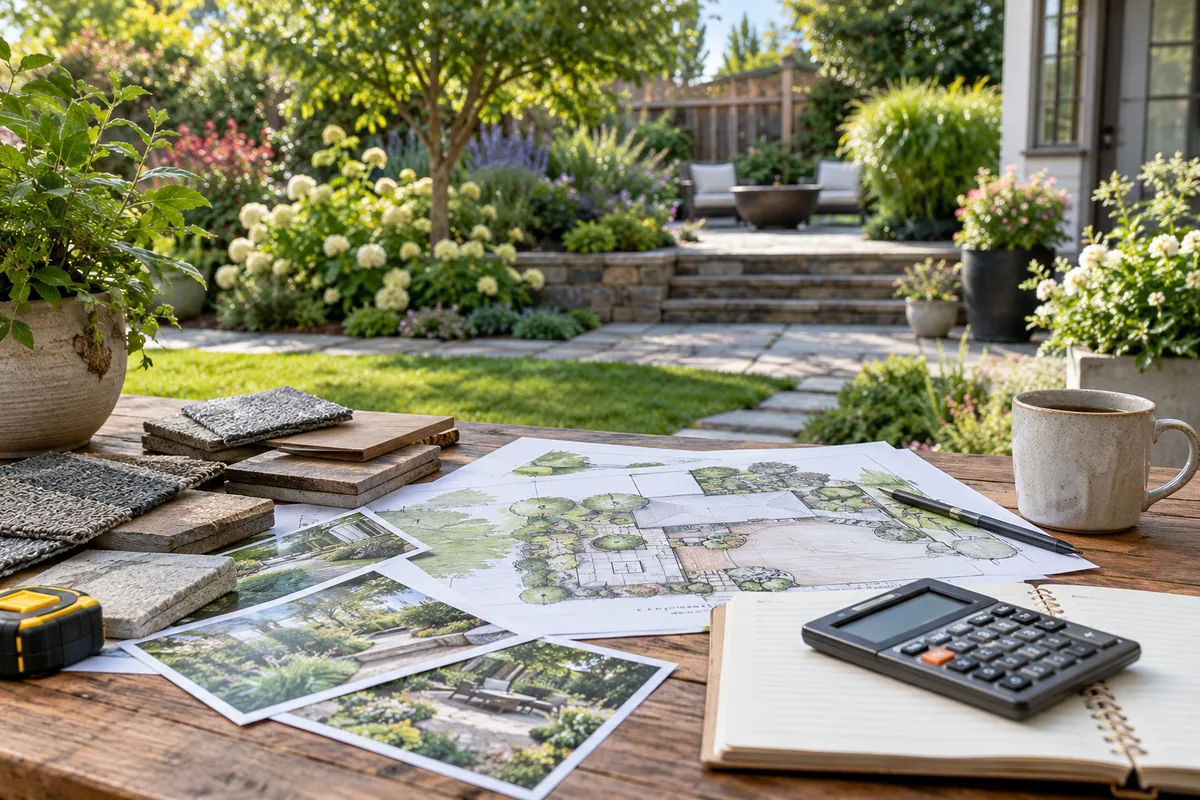
List the actual outcomes the project needs to deliver. Separate a usable route, a dining area, planting changes, and repairs instead of combining them under a vague garden makeover label. Identify existing features you intend to keep. A budget discussion becomes more useful when each item has a reason and a location, rather than starting with a collection of expensive-looking references.
Separate the major budget categories
Create distinct categories for design and investigation, removals or preparation, hardscape materials, planting, labor, delivery, permits, and ongoing care. Add other categories when the actual scope requires them. Separation helps reveal where a material change affects more than the purchase itself. Replacing paving, for example, can involve disposal, support, levels, access, and drainage rather than just buying a different surface.
Investigate unknowns and contingency
Write down conditions that could change the scope: drainage, hidden services, difficult access, tree constraints, retained structures, or uncertain soil. Ask qualified local professionals what investigations are appropriate. Contingency should reflect discussion of those uncertainties and the stage of information available, not a universal rule applied to every yard.
Compare quotations for equivalent work
Ask for written scopes that make inclusions, exclusions, assumptions, and the work stage understandable. Compare like with like rather than selecting the lowest headline figure from different projects. One proposal may include preparation or aftercare that another omits. Clarify product quality and installation responsibility with the relevant professionals without treating a generic material name as a complete specification.
Phase optional work and review the plan
Identify features that can wait without disrupting essential work or creating avoidable rework. A simpler first phase might retain sound existing surfaces while completing necessary investigations and selected improvements. Do not assume that every decorative feature can be installed independently: utilities, structures, access, and planting timing may interact.
Write a scope before choosing a total
List the actual outcomes the project needs to deliver. Separate a usable route, a dining area, planting changes, and repairs instead of combining them under a vague garden makeover label. Identify existing features you intend to keep. A budget discussion becomes more useful when each item has a reason and a location, rather than starting with a collection of expensive-looking references.
Mark essential work, desirable additions, and optional decorative details. The labels express priorities, not a construction order. Unsafe or unresolved site conditions may change what is essential after professional assessment. Record assumptions about access, disposal, existing structures, and services so they can be checked. Avoid setting a total by comparing a photograph with an unrelated project; scale, preparation, and local requirements can differ. A clear initial scope does not have to be technically complete, but it should tell a professional what you want to achieve and what information is still missing.
Separate the major budget categories
Create distinct categories for design and investigation, removals or preparation, hardscape materials, planting, labor, delivery, permits, and ongoing care. Add other categories when the actual scope requires them. Separation helps reveal where a material change affects more than the purchase itself. Replacing paving, for example, can involve disposal, support, levels, access, and drainage rather than just buying a different surface.
Discuss relative allocation rather than inventing fixed percentages for every property. A planting-focused project and one requiring structural work can have very different cost patterns. Keep tax, fees, and exclusions clear in the documents you receive. Guides to stone paving and perennial planting can help identify questions, but they do not quote the local project. Ask the relevant professionals what is included in their scope and which items are outside it. The budget needs to describe actual work rather than simply mirror the visual emphasis of the design.
Investigate unknowns and contingency
Write down conditions that could change the scope: drainage, hidden services, difficult access, tree constraints, retained structures, or uncertain soil. Ask qualified local professionals what investigations are appropriate. Contingency should reflect discussion of those uncertainties and the stage of information available, not a universal rule applied to every yard. Keep it visible rather than disguising uncertain costs as settled estimates.
Clarify who will be responsible for unexpected conditions and how decisions will be approved under the actual agreements. This planning guide does not provide legal terms or financial advice for a particular contract. Seek the appropriate professional input where needed. Before excavation in the United States, use 811 and arrange private-service locating separately. A concept image cannot reveal buried utilities or prove that existing structures can be retained. Addressing unknowns early may change the visual plan, but that is better information for decision-making than a deceptively precise total based on incomplete assumptions.
Compare quotations for equivalent work
Ask for written scopes that make inclusions, exclusions, assumptions, and the work stage understandable. Compare like with like rather than selecting the lowest headline figure from different projects. One proposal may include preparation or aftercare that another omits. Clarify product quality and installation responsibility with the relevant professionals without treating a generic material name as a complete specification.
Record questions in a comparison sheet and resolve them before revising the design merely to fit a number. Distinguish an initial allowance, an estimate, and the actual agreed project terms as explained by the provider. Do not turn a generated image into a quantity or price calculation. Visual concepts are for appearance exploration; site measurements, material decisions, and real costs need independent local verification. A hardscape overview can clarify which built features need separate discussion. Keep the budget tied to the defined scope so later choices have visible consequences instead of producing unexplained additions.
Phase optional work and review the plan
Identify features that can wait without disrupting essential work or creating avoidable rework. A simpler first phase might retain sound existing surfaces while completing necessary investigations and selected improvements. Do not assume that every decorative feature can be installed independently: utilities, structures, access, and planting timing may interact. Ask the project professionals to confirm an appropriate sequence for the actual site.
Use how to phase a landscaping project to organize those discussions. Keep a record of deferred work, its intended role, and any preparations that must happen earlier. Review ongoing maintenance as well as installation expenditure; a visually appealing detail can create a long-term care obligation. Revise the budget whenever scope, quotations, or site information changes. The result should be a transparent planning document that supports choices, not a promise that a garden concept will be built for a fixed amount. Product visualization can help discuss preferences but does not provide a verified project quote. Keep a dated revision record showing why each allocation changed. When an optional detail is removed, check whether its supporting preparation is still required for another feature. This makes the consequences of deferral visible and helps avoid counting the same future work twice. Review the document with the people responsible for the project before treating it as the current scope.
Frequently asked questions
Can one price per square foot set my budget?
A generic area-based figure can conceal major differences in preparation, access, labor, structures, planting, and local requirements. Define the actual scope and obtain appropriate local information. Compare equivalent written work descriptions rather than assuming one rate predicts every garden project.
How should contingency be chosen?
Contingency needs to respond to the project’s uncertainties and the information available at its current stage. Discuss unresolved conditions with appropriate professionals. Avoid presenting a universal percentage as sufficient for every site or treating hidden work as already priced.
Can an AI landscape image produce a reliable quote?
A visual concept does not establish quantities, measurements, preparation, specifications, or local labor costs. Use it to explain preferences, then obtain real site information and suitable professional quotations. Keep assumptions and exclusions visible when comparing the actual proposed work.
Sources
Related reading
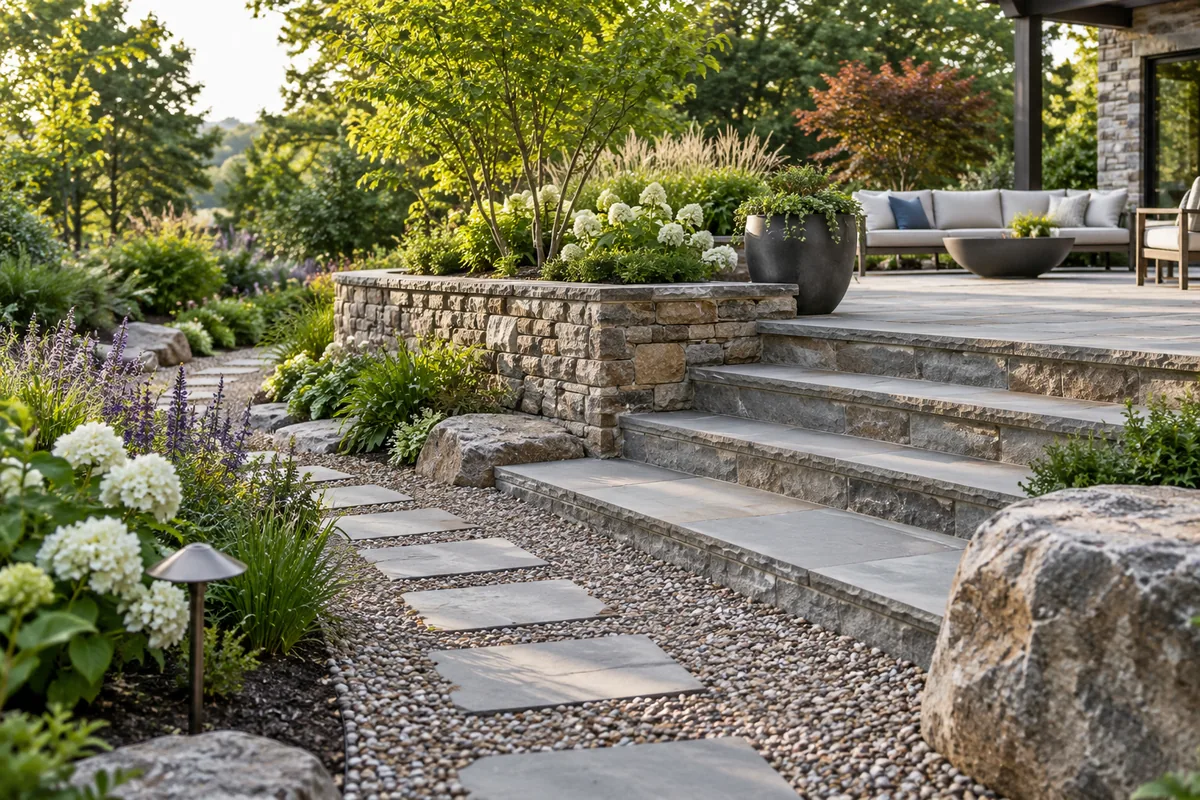
What Is Hardscape in Landscape Design?
Learn what hardscape means in landscape design, with a practical yard example, related terms, and the site decisions to check before making changes.
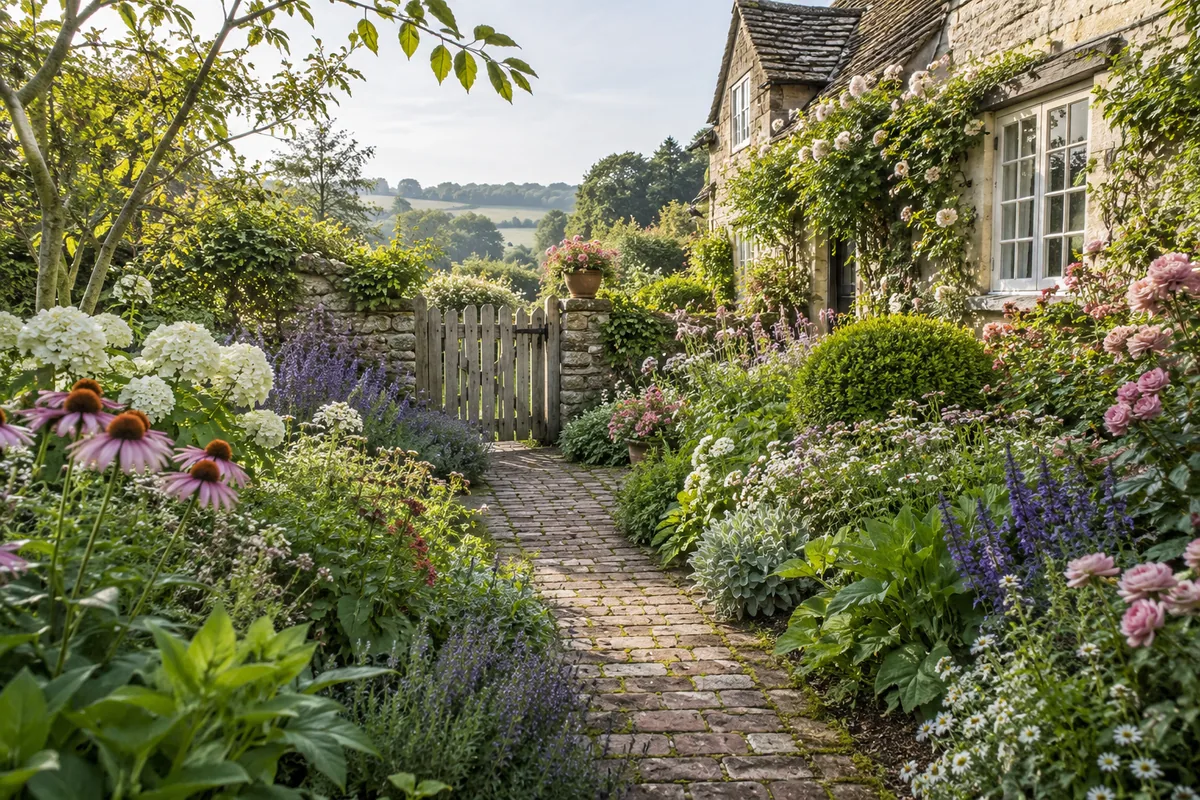
Cottage garden style: flowers with a working framework
Explore cottage garden style through layered flowers, selective self-seeding, clear paths, seasonal care, and the framework that makes informal planting usable.
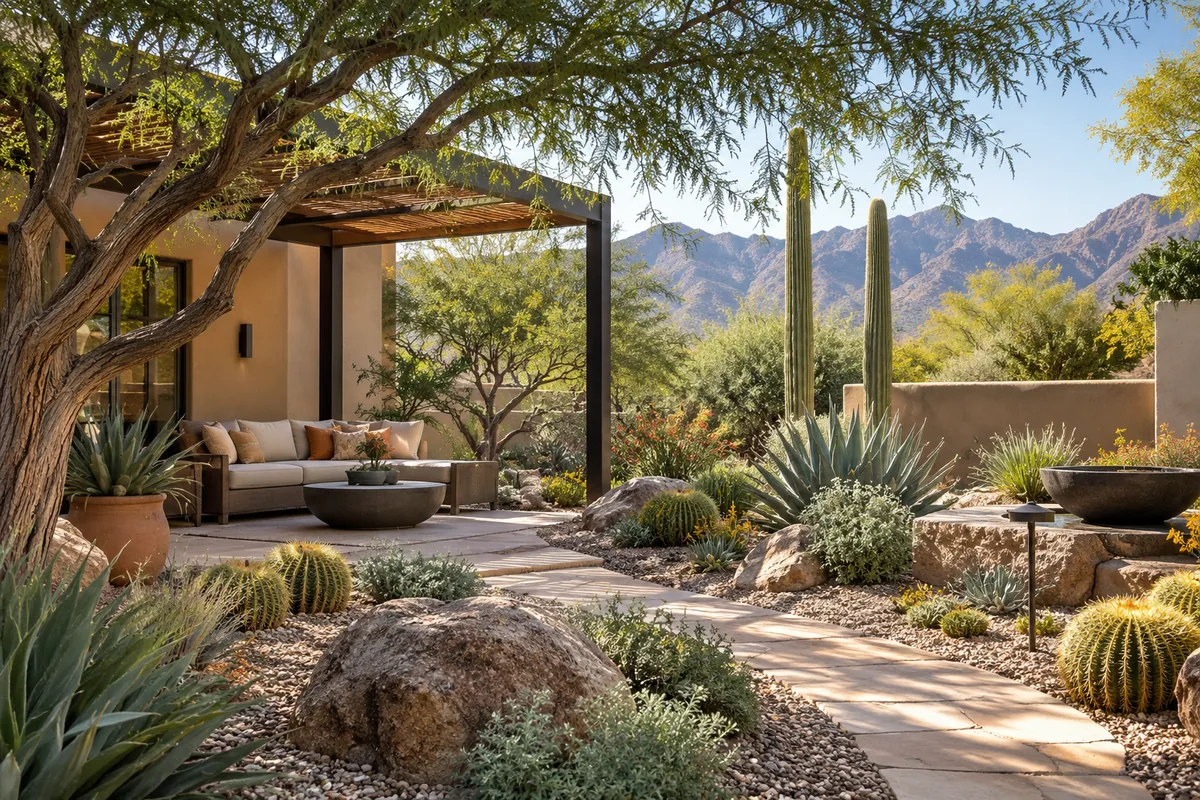
Desert landscape style: shade, stone, and plant form
Understand desert landscape style through plant form, mineral surfaces, useful shade, and heat-aware layouts, while separating its appearance from xeriscaping.
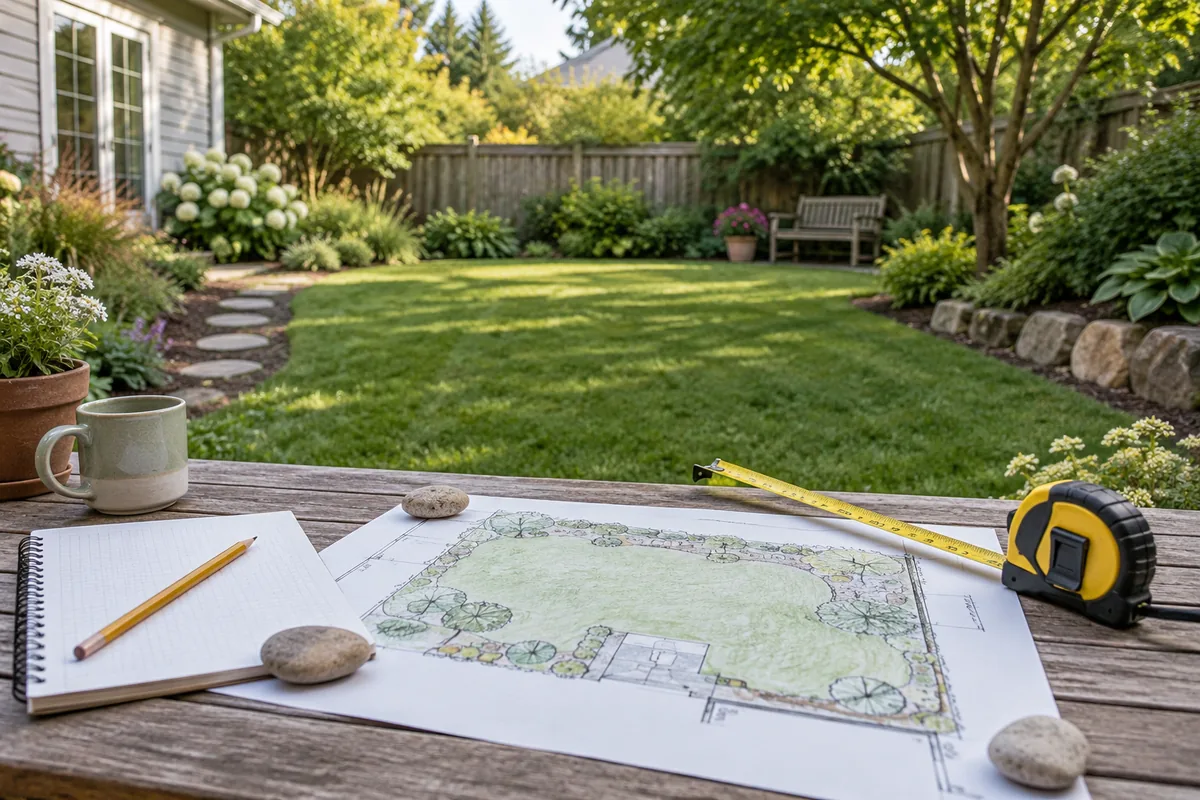
How to Measure Your Yard for Landscape Planning
Measure your yard for an initial planning sketch using clear reference points, recorded dimensions, and fixed-feature notes before seeking professional surveys.
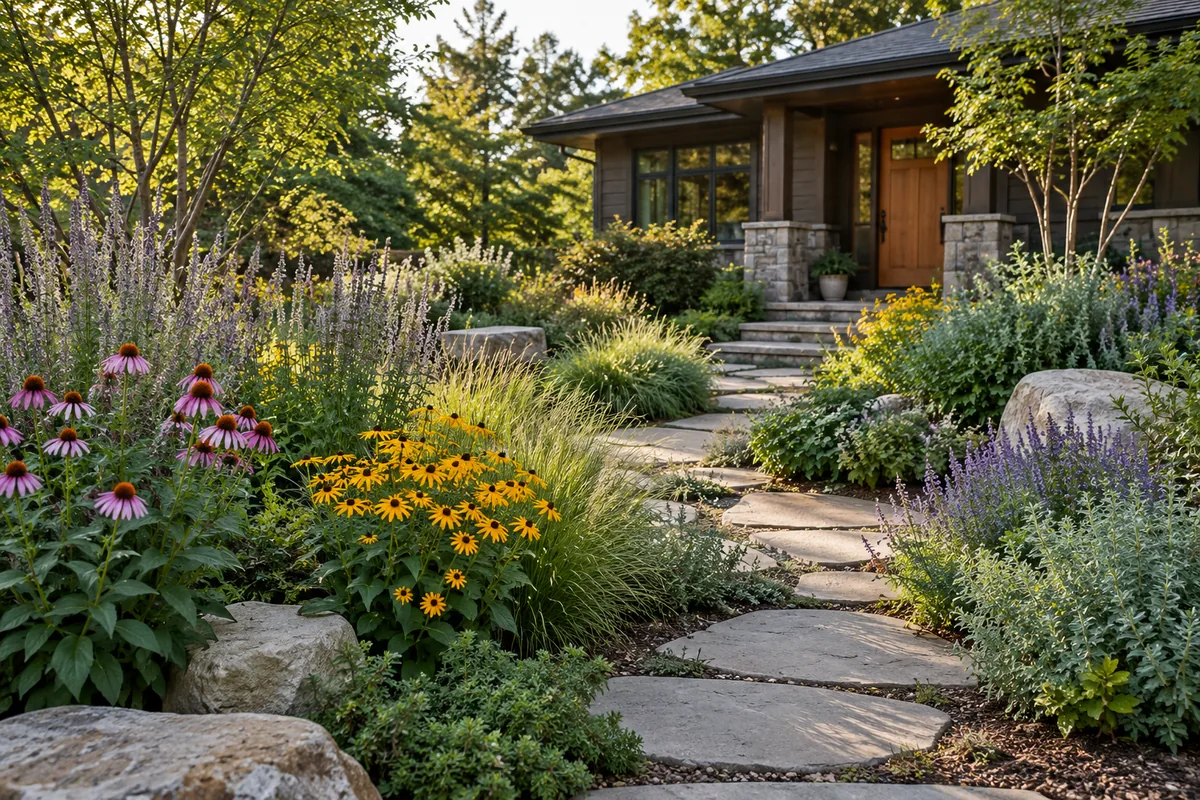
Native plant landscape style: regional plants with structure
Learn how native plant landscape style combines regional plant choices, seasonal change, and clear garden structure with practical care and neighborhood views.