
By AI Landscape Design Team · Editorial policy
What Is Axis in Landscape Design?
An axis is an organizing line in a landscape composition along which paths, openings, or features are aligned to establish direction and relationships between different parts. The line can be physical, such as a straight path, or implied by the alignment of objects. It often helps a formal arrangement remain legible. A garden does not need symmetry on both sides for an axis to guide attention.
Published · 2 min read

Key takeaways
- An axis organizes alignment between features.
- Symmetry is optional.
- Protect circulation when emphasizing a visual line.
How is axis used in landscape design?
Identify the two or more features that make the line meaningful. Aligning a gate with a seat can establish a clear visual relationship, while extending a path without a destination may simply consume space. Work with existing levels and circulation. Any physical changes to paving, steps, or drainage need site assessment rather than being driven solely by the drawn alignment.
What does axis look like in a yard?
In a front yard, a path may align the entry gate with the front door. The planting on either side can differ without losing that directional relationship. Check the actual walking route and door operation before adding a central object. A decorative feature placed on the line can interrupt access even if it looks balanced from the street.
Which terms help explain axis?
A sightline describes what can be seen along the alignment; a focal point may mark its end. An allée can reinforce a route with repeated planting. AI concepts can help compare alignments, but use measured information and qualified local advice for the layout and installation of built features.
Frequently asked questions
Does an axis require symmetry?
An axis establishes alignment rather than requiring identical planting on both sides. Symmetry can reinforce the line, but an asymmetrical garden may still use it. Check whether the relationship between features is clear from the intended viewpoint.
Can a curved garden have an axis?
A garden with curved paths can contain an implied axis between visible features. The route someone walks need not match the line of view. Keep visual alignment and practical circulation separate when evaluating the layout.
Must an axis end at an ornament?
The destination could be a doorway, opening, plant, seat, or view rather than an ornament. Choose something that makes sense in the garden. Do not add an object simply because the alignment seems to need a decorative endpoint.
Related reading

What Is Sightline in Landscape Design?
Learn what sightline means in landscape design, with a practical yard example, related terms, and the site decisions to check before making changes.
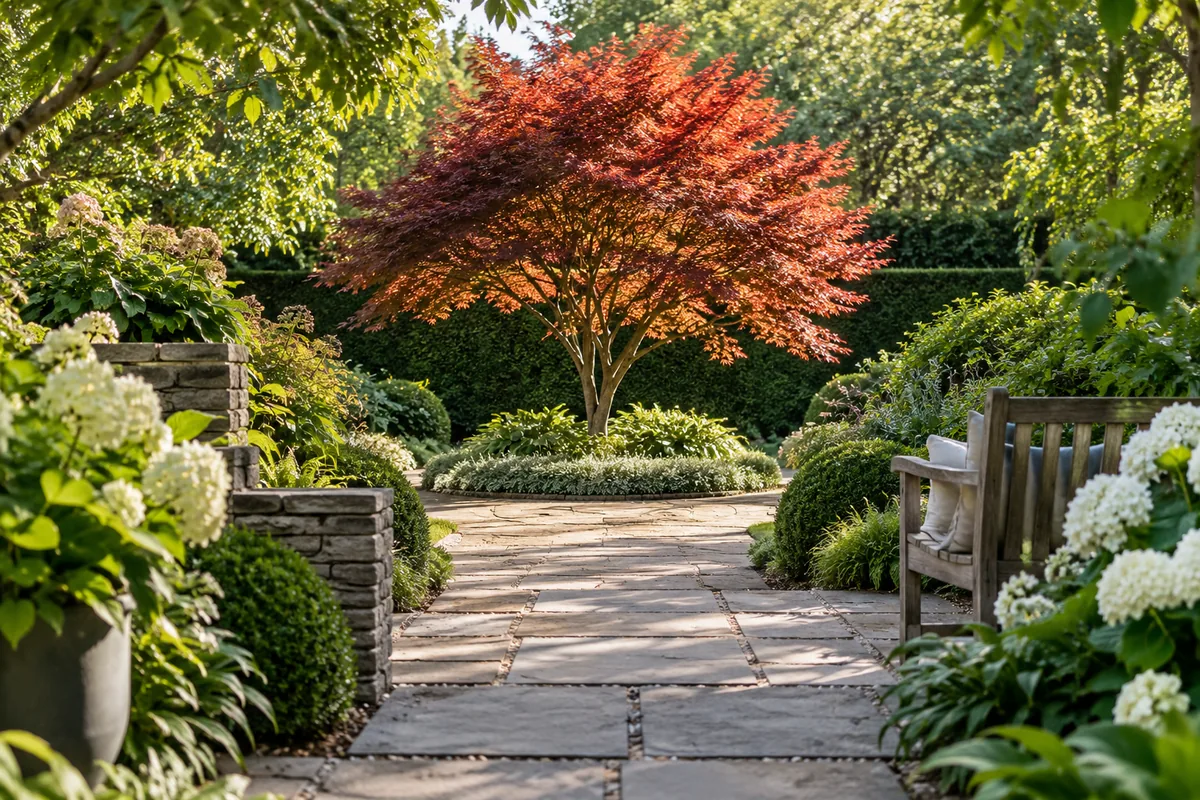
What Is Focal Point in Landscape Design?
Learn what focal point means in landscape design, with a practical yard example, related terms, and the site decisions to check before making changes.
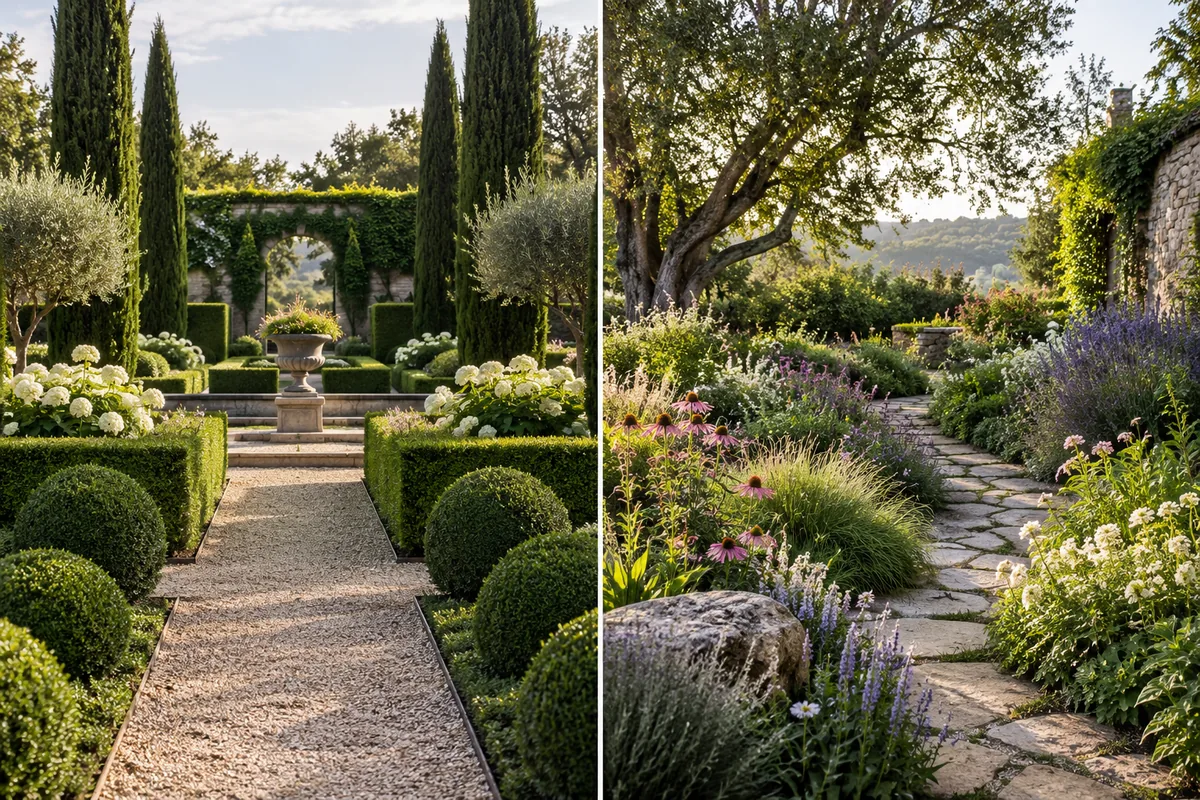
Formal garden vs Informal garden: Which Fits Your Yard?
Compare formal garden and informal garden for your yard. Review layout, materials, upkeep, and practical trade-offs before choosing a direction.

Desert landscape style: shade, stone, and plant form
Understand desert landscape style through plant form, mineral surfaces, useful shade, and heat-aware layouts, while separating its appearance from xeriscaping.
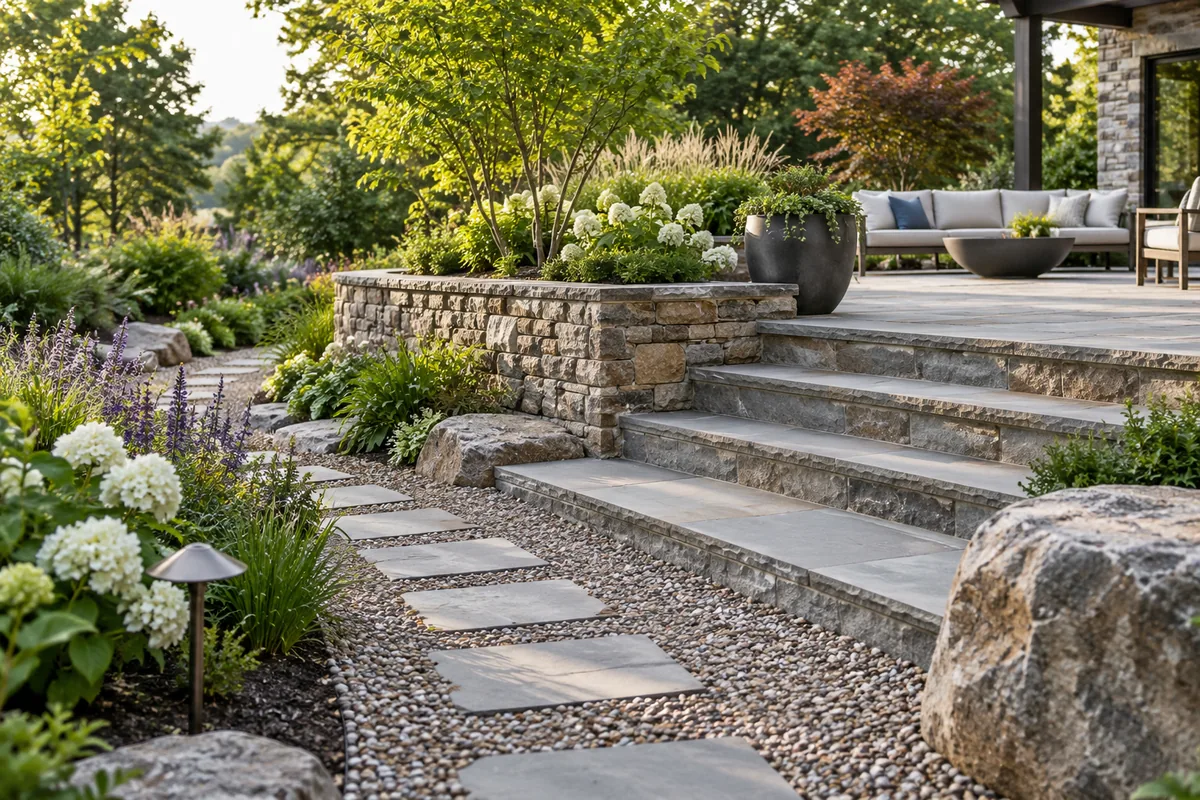
What Is Hardscape in Landscape Design?
Learn what hardscape means in landscape design, with a practical yard example, related terms, and the site decisions to check before making changes.

How to Create a Landscape Mood Board with a Clear Purpose
Create a landscape mood board with annotated material, planting, and activity references, then reduce the collection to one clear visual direction.