
By AI Landscape Design Team · Editorial policy
Formal garden vs Informal garden: Which Fits Your Yard?
Choose a formal garden when symmetry, axes, and repeated shapes should make the space easy to read; choose an informal garden when routes and planting should respond more freely to site conditions and changing views. Formality concerns organization, not plant quantity. Informal planting can sit inside a formal framework, and a curved path is useful only when it serves the garden.
Published · 6 min read
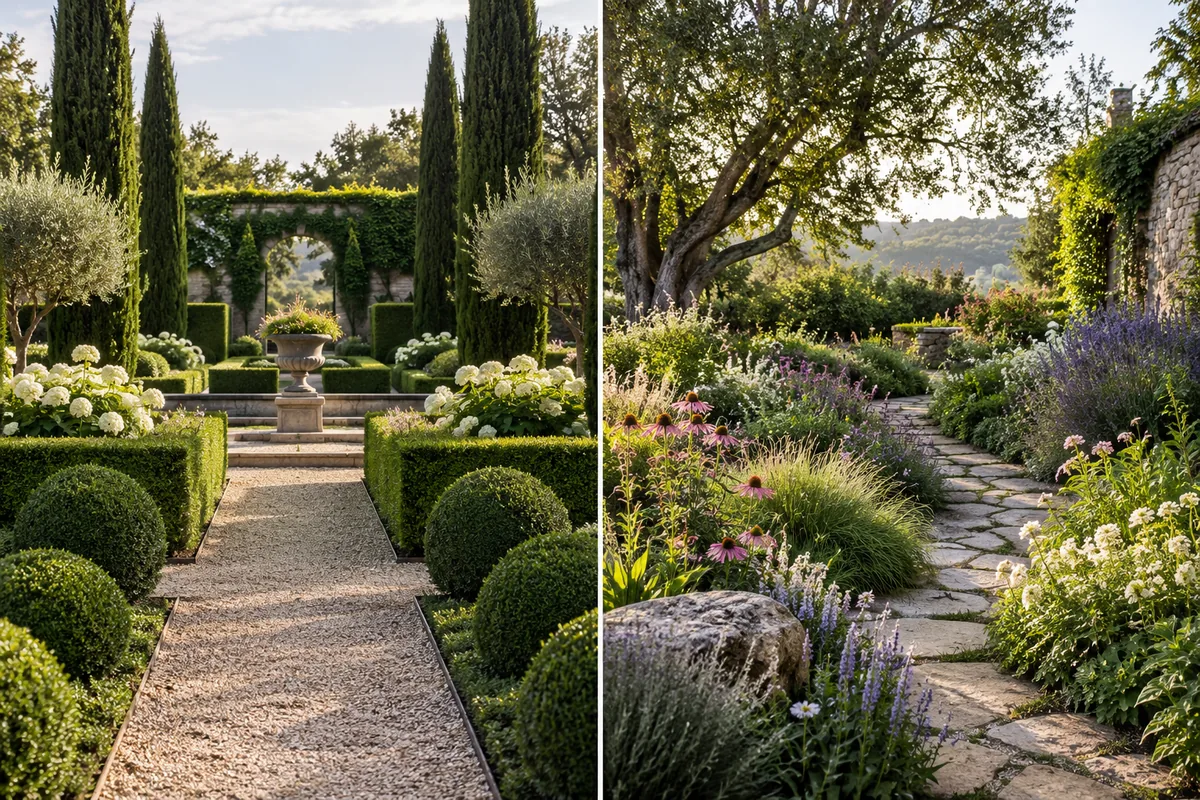
Key takeaways
- Organization: Symmetry axes and repeated forms; Site-responsive routes and groups.
- Edges: Clearly defined relationships; Softer changing outlines.
- Planting: Repeated roles and visible balance; Overlapping masses with structure.
| Dimension | Formal garden | Informal garden |
|---|---|---|
| Organization | Symmetry axes and repeated forms | Site-responsive routes and groups |
| Edges | Clearly defined relationships | Softer changing outlines |
| Planting | Repeated roles and visible balance | Overlapping masses with structure |
| Site fit | Strong framework in selected zones | Flexible response to irregular ground |
| Maintenance | Differences in matched forms stand out | Seasonal change still needs attention |
| Hybrid | Geometric paths and beds | Loose planting within the framework |
What makes a garden formal?
A formal garden expresses relationships visibly: a central route, balanced sides, repeated forms, or a focal point aligned with a doorway. According to the Royal Horticultural Society, formal garden design uses balance, symmetry, straight lines, and geometric shapes. Those principles can work in a modest courtyard without elaborate topiary. Choose one organizing relationship and make it clear before adding more. A pair of planting beds beside a path may be enough. The position of the house entrance and the site boundaries should inform the axis; imposing symmetry on an off-center door can create awkward leftover spaces that are difficult to use or maintain.
How does an informal layout stay purposeful?
Informality does not require random curves or scattered objects. Let the route connect real destinations while planting groups respond to light, existing trees, and useful views. A bend can reveal a seat or pass around a retained tree; a bend with no reason simply lengthens the journey. Use consistent path materials and recurring plant forms to prevent the composition from dissolving into unrelated corners. Walk the proposed route in both directions and imagine carrying gardening equipment. The route needs a practical width and stable surface, with measurements and local requirements checked before installation. A softer outline is valuable when it resolves a site condition, not merely because a straight line seems too formal.
Which planting roles suit each?
Formal planting can emphasize repeated shapes, clear edges, and matched groups, but it does not require a single hedge species. Informal planting may use overlapping masses and changing textures while retaining enough structure to make the border legible. In either version, check USDA hardiness zone, soil, light, mature spread, and regional invasive guidance before selecting plants. A plant that grows unevenly under different exposures may not deliver the paired appearance you expected. Likewise, a loose planting mass can become obstructive if mature size was ignored. Choose the maintenance style you can support rather than forcing a species to match a silhouette drawn on a plan.
What happens on an asymmetric site?
An irregular boundary, an off-center tree, or a sloping corner does not automatically rule out formal organization. You can apply a formal relationship to the terrace near the house and let the farther garden respond more loosely to the site. Avoid pretending that every boundary must mirror another. An informal layout may make more direct use of the irregular area, but it still needs clear circulation and a coherent edge. Identify the part of the site where order is most useful, such as the entrance, and distinguish it from the part where flexibility is helpful. This reduces the pressure to redesign sound existing features solely to create a diagrammatic balance.
How should paving and focal points be chosen?
A formal layout can use aligned paving joints or repeated panels to reinforce its main direction. Too many competing patterns can weaken that relationship. An informal layout may rely on a continuous path with a quieter edge so changing planting carries attention. Position any focal object where it can be seen from an intended place, and avoid putting it in the everyday walking corridor. A bench can serve as a destination rather than decoration alone. Examine the proportions using actual furniture and material samples. A concept image can make a focal feature appear well placed while concealing insufficient space to sit, pass, or service the adjacent planting.
Which maintenance pattern will remain acceptable?
Formal compositions can make uneven growth and damaged edges conspicuous because the intended relationship is easy to compare. If a matched group fails, its absence may affect the whole scene. Informal compositions can absorb some seasonal change visually, but they still need weeding, access, and decisions about crowded plants. Neither is automatically low maintenance. Consider whether regular shape management is enjoyable or burdensome. A simple formal path with loose borders may be easier to sustain than an elaborate hedge pattern; a large informal mixed border may demand more plant knowledge than either. Choose the actual tasks and the tolerance for seasonal variation rather than assigning upkeep by label.
Can a formal framework carry informal planting?
Yes. A straight entrance path and simple symmetrical beds can hold flowering groups that vary within each side. Keep the framework readable while allowing plant behavior to be less rigid. Alternatively, an informal path can arrive at a clearly shaped terrace where furniture and surfaces provide order. Separate the visual choice from work affecting the site. Licensed local professionals should review grading, retaining walls, electrical changes, and structural supports. Contact 811 before digging in the United States and check private utility locating needs. A hedge or path drawn as a clean line does not demonstrate safe excavation, adequate drainage, or appropriate construction at the property.
How should the final comparison be made?
Compare the same activities under different organizing principles. Keep the dining set, gate route, existing tree, and storage requirement constant; change the balance, edge treatment, and planting arrangement. AILandscape can help explore visual concepts from a photo, but local assessment must establish planting suitability, drainage, and construction details. Check the preferred view against how the yard works when occupied. A formal scheme may be more comfortable because the routes are clear, while an informal one may fit a retained tree better. Choose the relationship that solves those specific conditions rather than treating order and informality as opposing values that cannot share a useful garden.
Frequently asked questions
Does a formal garden need topiary?
No. Formality can come from a straight route, balanced beds, repeated paving, or an aligned focal point. Topiary is one possible expression, with its own care requirements. A simpler framework may provide the same clear organization without frequent clipping.
Is an informal garden easier to maintain?
Not by definition. A large mixed border can require considerable seasonal attention, while a simple formal layout may have few recurring tasks. Compare the proposed plants, surfaces, and access for maintenance instead of assuming that loose shapes mean less work.
Can formal and informal areas share a small yard?
Yes. The entrance or terrace can provide a clear geometric framework while nearby planting responds more freely to the site. Keep the transition understandable through a consistent material or recurring plant form, rather than adding several unrelated boundaries and patterns.
Sources
Related reading
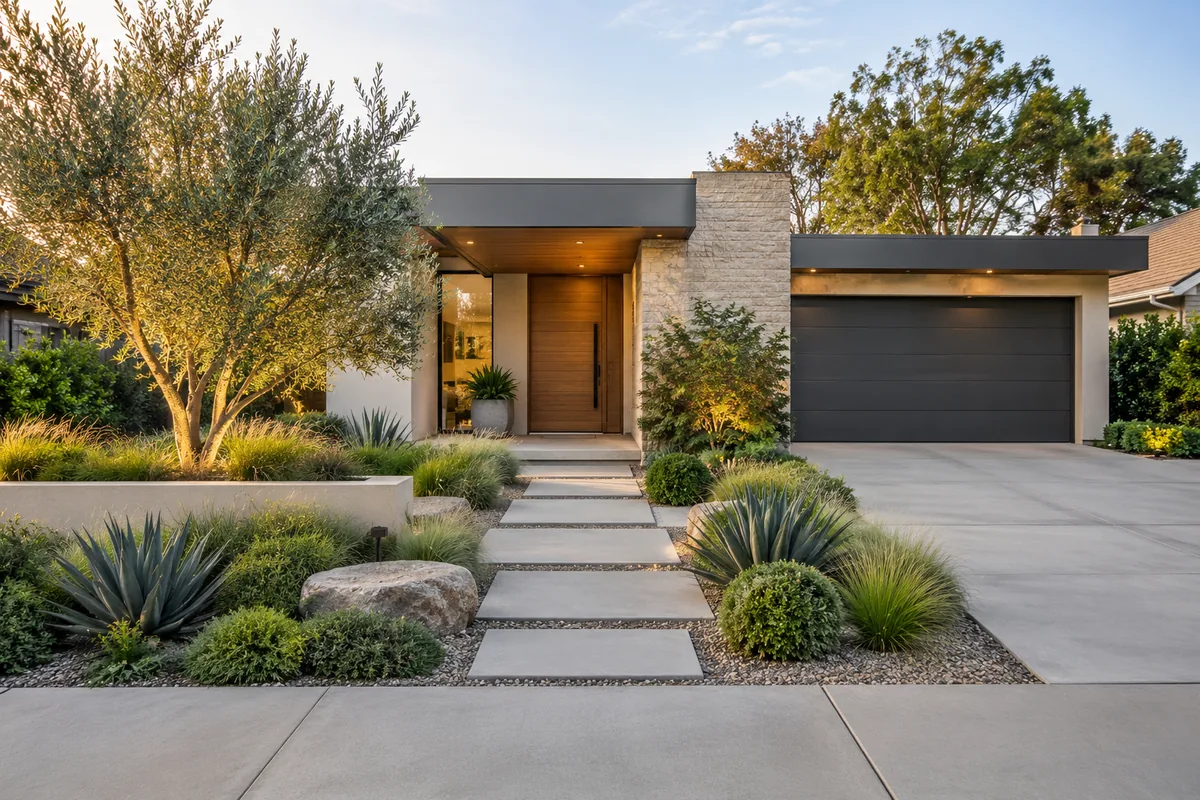
Modern front yard ideas for a clear, composed entrance
Explore modern front yard ideas for clear entrances, repeated planting, restrained materials, readable house numbers, and practical maintenance from the street.
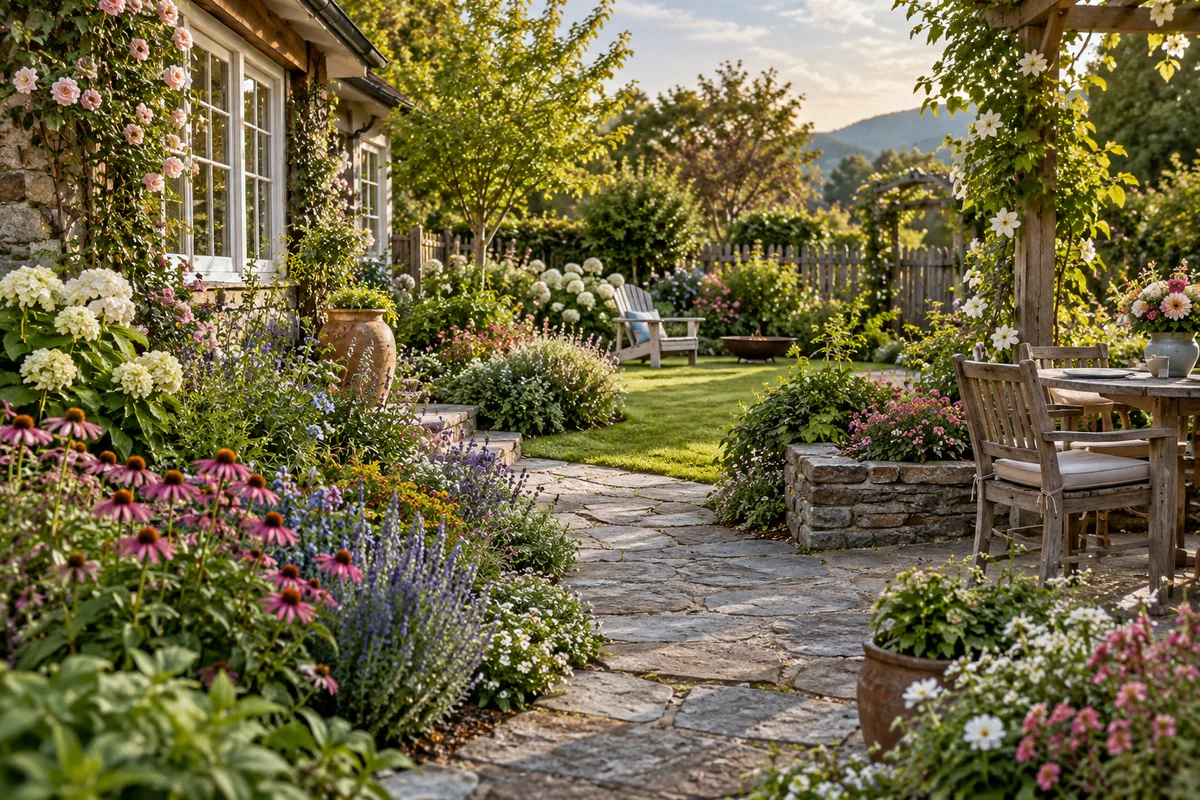
Cottage backyard ideas for flowers, seats, and seasonal life
Explore cottage backyard ideas for layered flowers, comfortable seats, connected borders, productive corners, and practical access through seasonal planting.
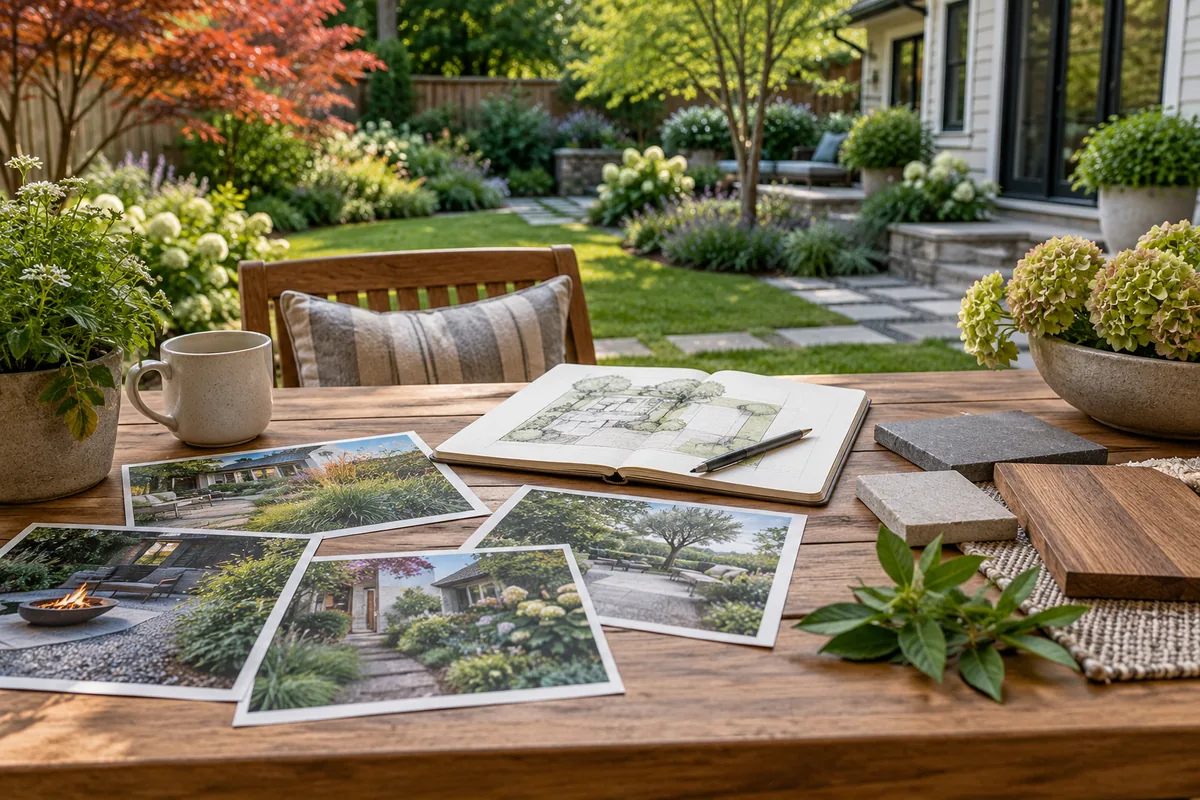
How to Choose a Landscape Style That Fits Your Yard
Choose a landscape style by comparing house lines, everyday uses, maintenance preferences, and local conditions before testing a few visual directions.