
By AI Landscape Design Team · Editorial policy
Wood decking vs Composite decking: Which Fits Your Yard?
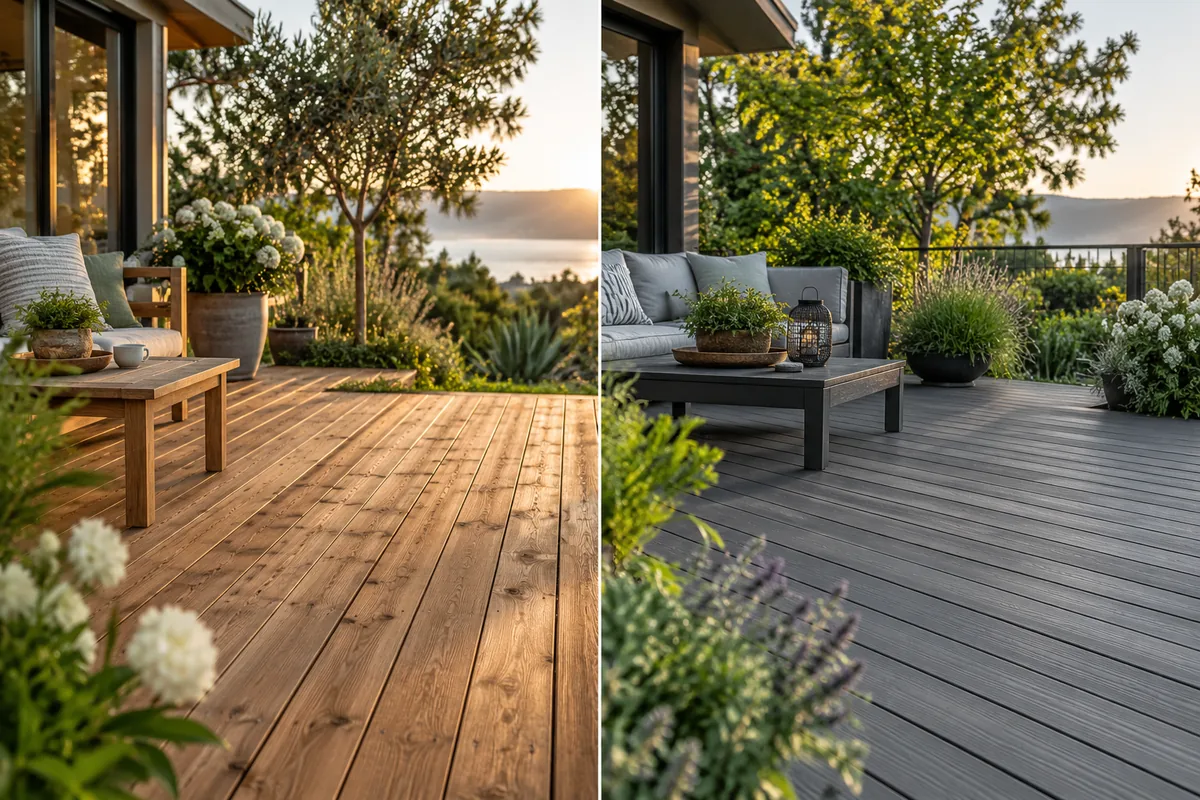
Choose wood decking when the particular timber appearance and its planned finish care fit your priorities; choose composite decking when a selected manufactured board and its product-specific maintenance requirements fit better. Neither option makes the structure beneath it optional. Compare sunlight comfort, cleaning, replacement, support requirements, and end-of-life arrangements before assuming that one surface is universally easier or more durable.
Published · 6 min read
Key takeaways
- Relative cost: Lower to Higher; Moderate to Higher.
- Maintenance: Timber and finish-specific care; Product-compatible cleaning.
- Lifespan factors: Species treatment exposure and structure; Board system exposure and structure.
| Dimension | Wood decking | Composite decking |
|---|---|---|
| Relative cost | Lower to Higher | Moderate to Higher |
| Maintenance | Timber and finish-specific care | Product-compatible cleaning |
| Lifespan factors | Species treatment exposure and structure | Board system exposure and structure |
| DIY difficulty | Higher where structural work is involved | Higher with structural and product requirements |
| Best for | Selected natural grain and accepted finish care | Selected manufactured texture and care routine |
| Heat | Check actual color exposure and shade | Check actual color exposure and shade |
| End of life | Verify treatment and local disposal options | Verify product and local recycling options |
What belongs in the material comparison?
Wood decking covers different timber species, treatments, and finishes. Composite decking covers different manufactured products and constructions, so neither side should be treated as one identical board. Ask the supplier to identify the exact product, intended application, and care guidance. The deck's substructure, connections, stairs, and guards are separate components with their own assessment requirements. Replacing the visible boards does not establish that an existing structure is sound. Have a qualified local professional inspect what is being retained before selecting a new surface. A product sample answers some appearance questions, but it cannot determine the condition or capacity of the structure beneath the finished deck.
Which appearance matters after weathering?
Wood can display grain and changes associated with the particular timber and finish. Composite can offer a manufactured texture and color range that varies by product. Inspect both new samples and established installations where possible. Decide whether natural variation is desirable or whether a more controlled surface appearance supports the house better. Neither expectation should become a promise that the deck will always look like a fresh sample. Furniture marks, cleaning, weather, and replacements can alter the overall view. Choose a finish you are prepared to care for and ask what happens when one board must be replaced. A precise color match later may be harder than the initial selection suggests.
How should heat and barefoot comfort be checked?
Sun exposure, board color, product construction, and surrounding shade can influence how a deck surface feels. Avoid universal temperature claims such as all composite being hotter than all wood. Ask about the selected product's guidance and examine samples under representative sunlight, while recognizing that a small sample is not a complete field test. Plan useful shade if the household expects barefoot use or prolonged sitting in strong sun. Review pet and child access with the actual surface and conditions in mind. A photo can show a pleasant shaded deck at one hour while hiding the exposure it receives later. Comfort should be investigated before appearance is finalized.
What care routine can you sustain?
Wood finish care depends on the timber, treatment, exposure, and the appearance you want to maintain. Composite boards still need cleaning and product-compatible treatment of stains or debris. Follow the manufacturer's instructions rather than applying an aggressive pressure washer or chemical by habit. Identify where food, plant litter, and water accumulate and keep access for cleaning behind furniture. Composite should not be described as maintenance-free, and wood should not be assigned a fixed annual routine without checking the chosen product. Compare the actual work over the seasons. A surface that matches your preferred care pattern may be a better choice than one selected from a broad reputation for convenience.
Which lifespan factors should be discussed?
Board quality, exposure, drainage around the assembly, ventilation, fasteners, structure, and maintenance can all affect service. Ask the professional to explain the relevant factors for the proposed system without offering an unsupported universal lifespan. A surface board can fail while other components remain usable, or a concealed structural issue can matter before the surface looks worn. Review replacement access and inspection opportunities. Product warranties describe particular conditions and exclusions; they are not evidence that every site or installation will achieve an identical result. Keep installation and care records so later decisions can use the actual system information rather than trying to identify it from an old photo.
How should costs and end-of-life choices be compared?
Compare the full proposal, including preparation, substructure work, fastening, stairs, trim, delivery, and future care. Initial board price alone can distort the decision. Wood disposal or reuse depends on treatment, condition, and local facilities. Composite recycling or disposal also depends on the particular product and available local arrangements; do not assume a recycled-content claim means your old boards can readily be recycled nearby. Ask suppliers what is actually accepted and document the route before ordering. The relative cost labels in the table are broad prompts. Choose a scope that meets the use requirements and a material whose likely care and replacement obligations you understand.
What professional checks belong before installation?
Structural supports, attachments, stair and guard requirements, drainage effects, and any electrical or gas features require appropriate licensed local review. Ask the responsible professional to verify product compatibility with the proposed assembly, including movement and fastening requirements. Contact 811 before excavation in the United States and investigate private services where relevant. Do not add a fire feature or heavy container because it appears in a deck concept without having its compatibility assessed. Nearby plants should be selected for verified local conditions and mature size. The material comparison cannot establish that an existing deck can safely carry every object or alteration shown in an appealing image.
How can photo concepts help without overstating them?
Keep the deck footprint, shade assumptions, and furniture constant while comparing timber character with the manufactured board direction. AILandscape can generate visual concepts from your photo; these are exploratory references and do not verify structural support, plant choices, or construction details. Use the image to discuss tone, texture, and the relationship with the house, then review real boards and a technical proposal. If changing the material also requires new levels, stairs, or supports, treat that as a wider project rather than a surface swap. The stronger choice balances appearance with sunlight comfort, realistic cleaning, and a credible plan for inspecting and maintaining the whole assembly.
Frequently asked questions
Is composite decking maintenance-free?
No. It still needs cleaning and care compatible with the particular board. Product types differ, so follow the selected manufacturer's instructions. Compare the actual upkeep routine with the wood option rather than assuming a manufactured surface never requires attention.
Can new boards make an old deck safe?
New surface boards do not establish the condition or capacity of the underlying structure. Have the retained supports, connections, stairs, and guards assessed by an appropriate qualified professional. A surface replacement and a structural repair are different parts of the project.
Which board stays coolest in sun?
There is no useful universal answer across every timber and composite product. Color, construction, exposure, and shade matter. Investigate the selected boards under representative conditions and plan shade where comfort requires it rather than relying on a material category alone.
Related reading
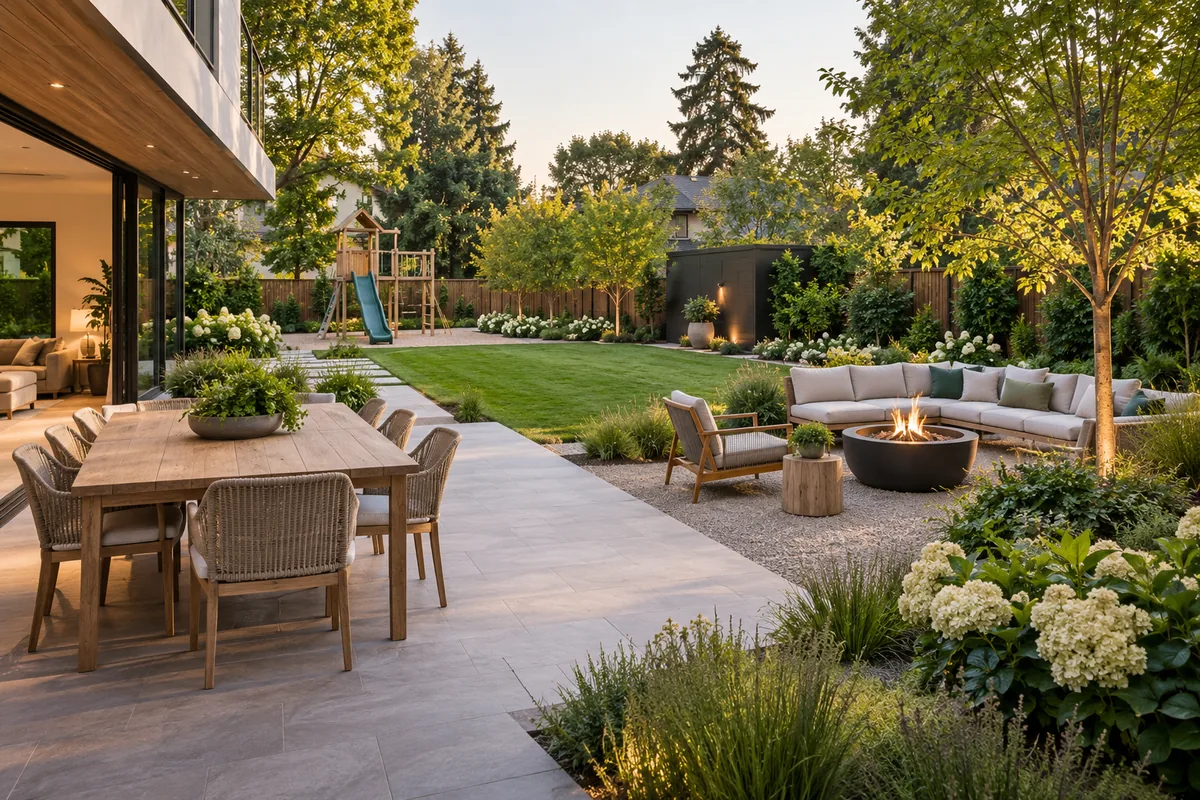
Modern backyard ideas organized around the way you live
Explore modern backyard ideas for activity zones, clean material connections, repeated planting, usable furniture layouts, and careful evening lighting.
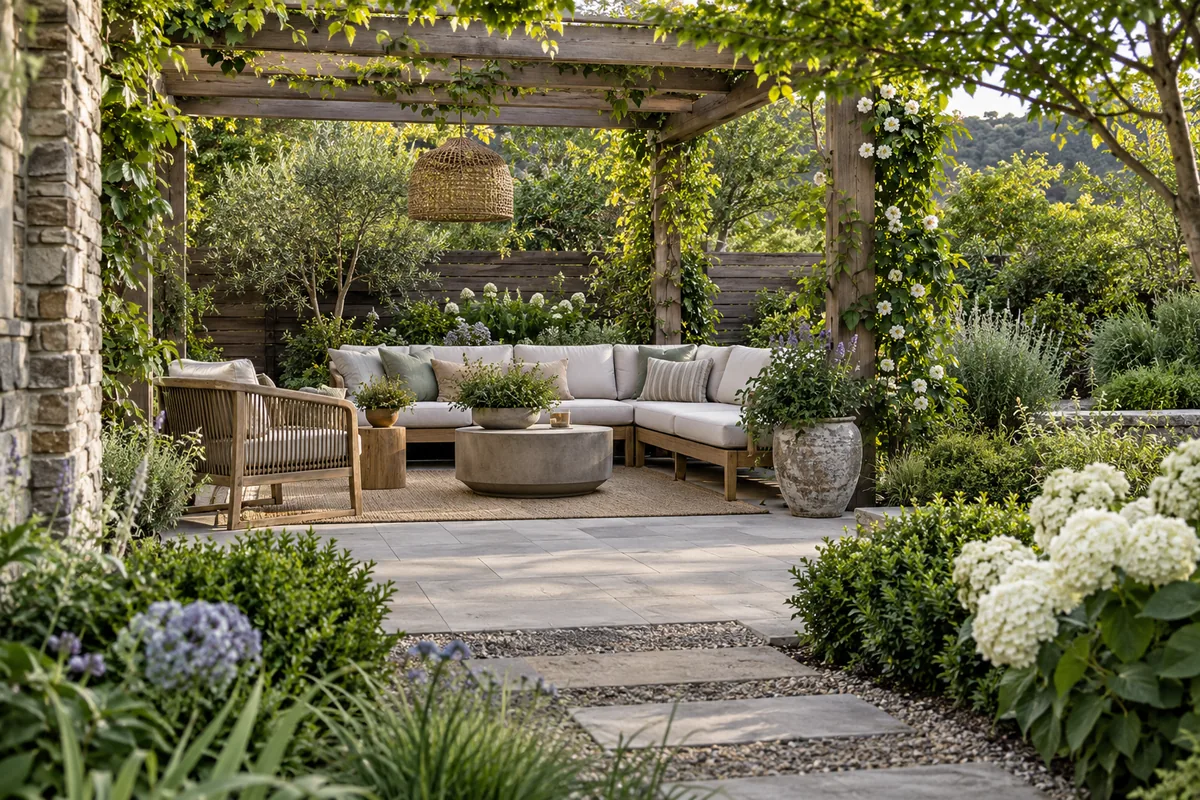
What Is Outdoor Room in Landscape Design?
Learn what outdoor room means in landscape design, with a practical yard example, related terms, and the site decisions to check before making changes.

Tropical backyard ideas for leafy rooms and everyday use
Explore tropical backyard ideas for layered foliage, usable seating, sheltered containers, clear garden routes, and realistic care through seasonal changes.
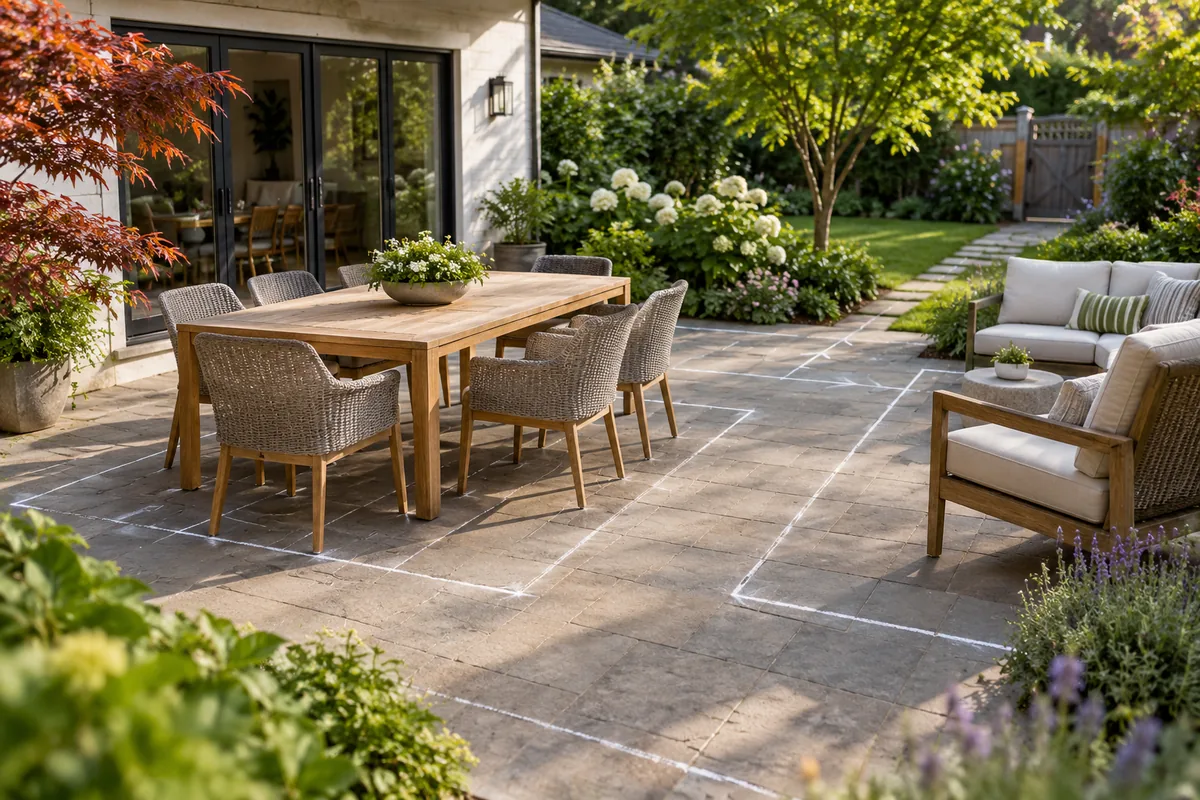
How to Size a Patio Around Furniture and Circulation
Size a patio with actual furniture footprints, chair movement, circulation, and site constraints before professionally confirming the final dimensions.
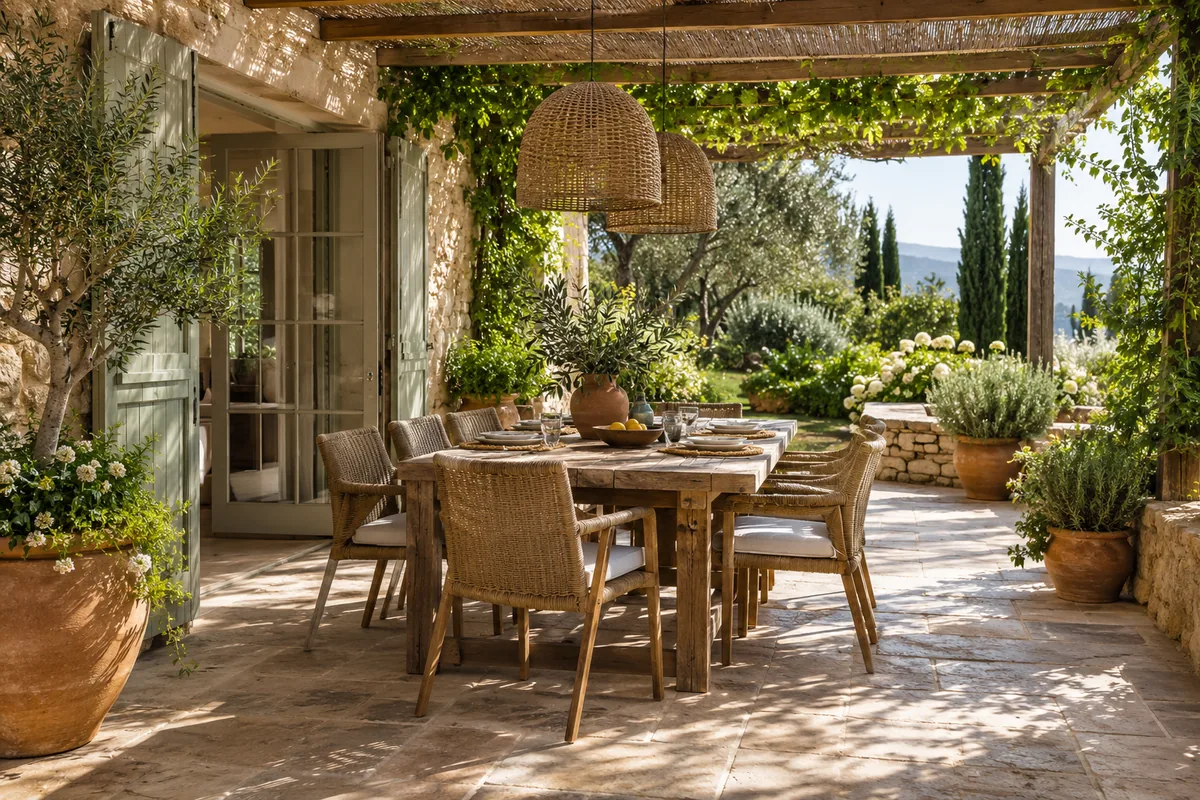
Mediterranean patio ideas for shaded meals and warm materials
Find Mediterranean patio ideas for clay pots, quiet stone colors, useful shade, comfortable dining, and locally suitable container planting around the room.
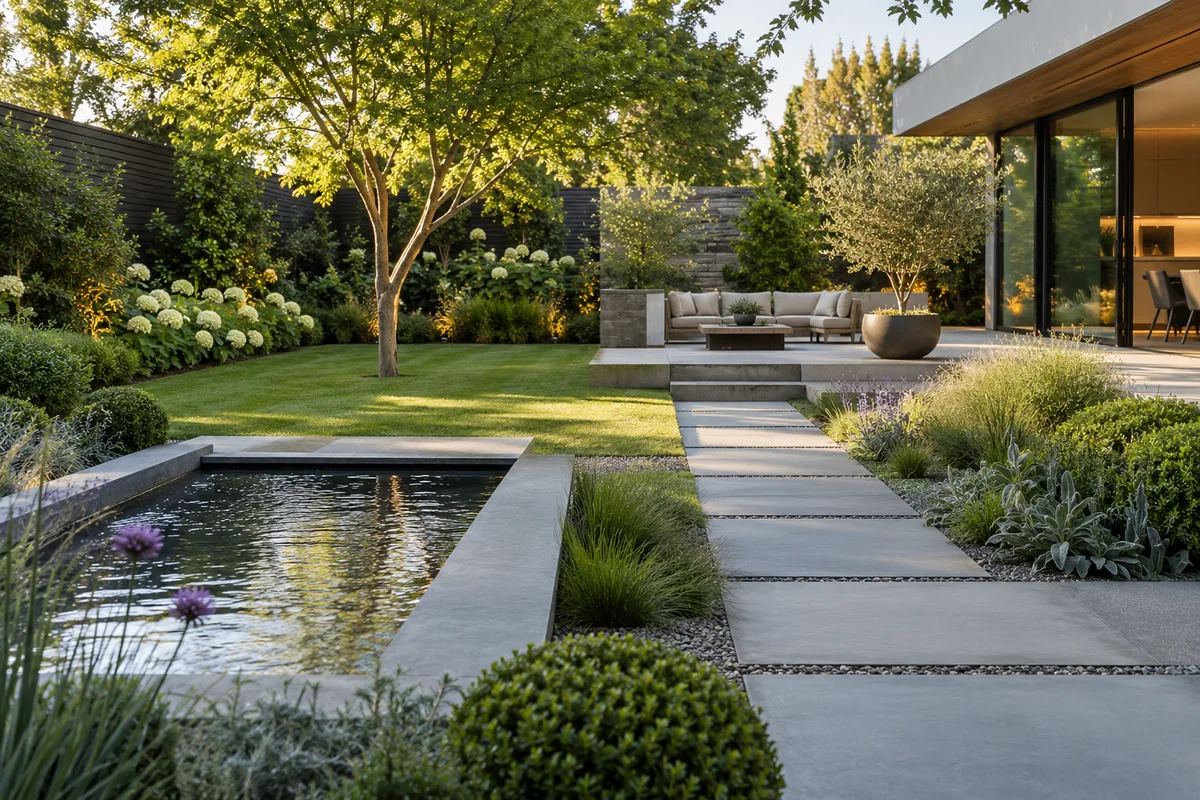
Modern landscape style: lines, space, and materials
Understand modern landscape style through clean lines, restrained materials, planting structure, and practical connections to contemporary architecture.