
By AI Landscape Design Team · Editorial policy
Pavers vs Stamped concrete: Which Fits Your Yard?
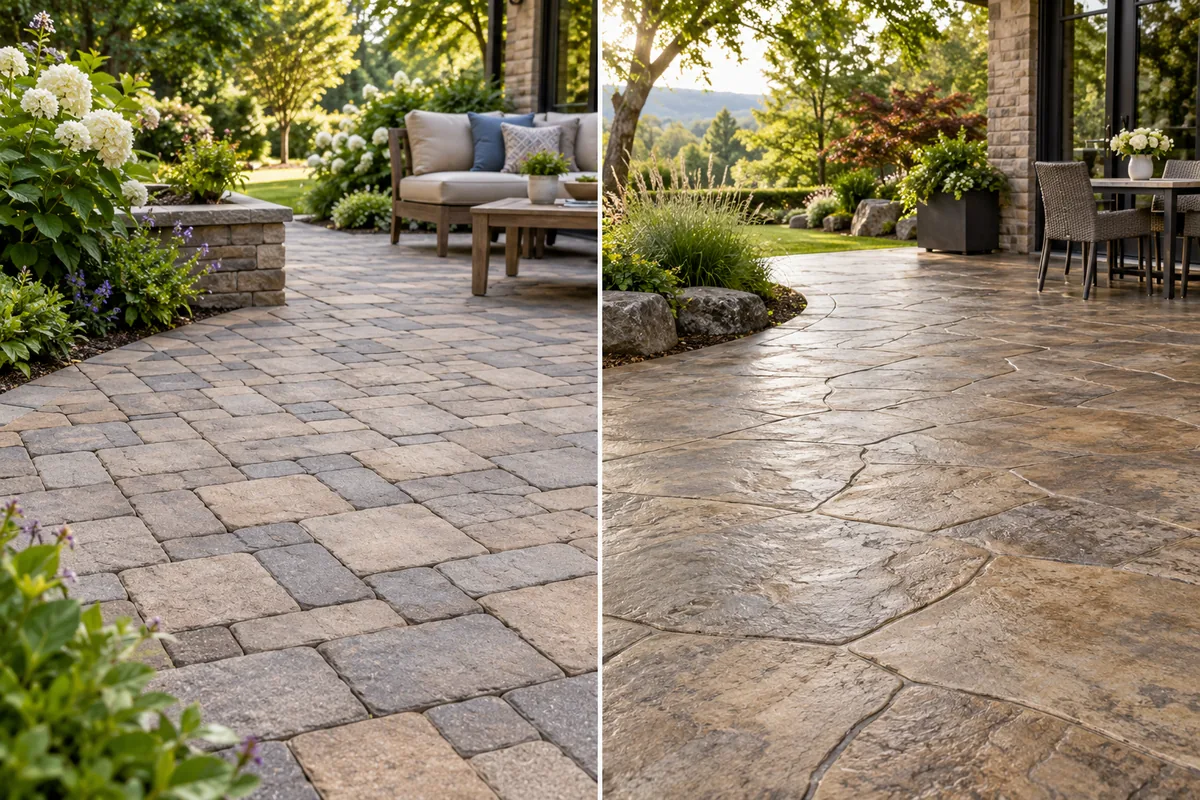
Choose pavers when actual unit joints and localized replacement matter; choose stamped concrete when you want an imprinted pattern across a cast surface and accept the care and repair implications of its finish. Stamping creates the appearance of units or texture rather than a removable unit system. Evaluate wet footing, repair visibility, and sealing guidance before choosing from a pattern photograph.
Published · 6 min read
Key takeaways
- Relative cost: Moderate to Higher; Moderate to Higher.
- Maintenance: Joint and surface care; Finish and sealer-specific care.
- Lifespan factors: Supporting layers unit quality and exposure; Slab preparation curing and finish.
| Dimension | Pavers | Stamped concrete |
|---|---|---|
| Relative cost | Moderate to Higher | Moderate to Higher |
| Maintenance | Joint and surface care | Finish and sealer-specific care |
| Lifespan factors | Supporting layers unit quality and exposure | Slab preparation curing and finish |
| DIY difficulty | Higher for reliable full installation | Higher for timely pattern finishing |
| Best for | True units and localized replacement | Imprinted pattern across a cast surface |
| Repair appearance | Replacement units may differ | Patch pattern and color may differ |
| Footing | Assess actual texture and wet conditions | Assess actual texture sealer and wet conditions |
Are the patterns made in the same way?
Pavers create a pattern through separate units assembled into a surface. Stamped concrete creates an impression in the concrete finish, sometimes with color treatments that strengthen the visual resemblance to another material. The distinction matters when a future repair is needed: an imprinted line is not automatically a removable joint. Examine a real completed installation rather than only a close image of a stamp pattern. Ask how the functional joints will relate to the decorative pattern, since they may not be identical. A surface can look like stone or brick from a distance while behaving as a concrete slab when movement, cutting, or repairs are considered.
How should wet footing be evaluated?
Texture, sealers, maintenance, water, and the way the patio is used can affect footing. Do not assume that every stamped pattern is slippery or that every paver is safe under every condition. Ask the supplier and installer about the actual finish and relevant local access requirements. Inspect samples wet and consider the route people take from the house, especially where shoes may be damp. A strongly textured pattern can also complicate chair movement or cleaning. Discuss those trade-offs before prioritizing decorative depth. The appropriate surface should support ordinary use and maintenance rather than relying on a general material reputation to settle the practical question.
What happens when part of the patio is damaged?
With pavers, a localized area may be lifted and reset or replaced, provided matching units and appropriate repair methods are available. With stamped concrete, restoring both the underlying section and the imprinted finish can be more involved, and the replacement may remain visible. Ask who would perform that work and what information must be retained about the original color and pattern. Neither option offers automatic invisible repairs. Inspect where furniture, gates, or equipment could damage the surface in ordinary use. If access beneath the patio is likely to matter later, discuss that possibility now rather than discovering that the visual pattern has concealed an inconvenient service route.
How much finish care is involved?
Stamped concrete may involve sealer and color-care requirements specific to the chosen system. Confirm those instructions with the installer rather than adopting a generic maintenance interval. Pavers also need appropriate cleaning and attention to joints, with additional finish care where particular products require it. Compare the work necessary to keep the intended appearance, not just the work necessary to keep the surface usable. Leaves, grease, and irrigation overspray can affect either patio. Keep cleaning equipment within reach and avoid unapproved chemicals or pressure settings. A decorative finish that you cannot reasonably maintain may lose the visual advantage that led you to choose it in the first place.
Which pattern scale is appropriate?
A large stamp pattern can make a small patio look busy if it competes with furniture, house siding, and planting edges. Paver layouts can be restrained or elaborate depending on the units and arrangement. Select a main visual role before adding borders or contrasting colors. If planting should be the focus, a quieter pattern may serve better than an imitation stone texture with many tones. Look at the whole facade and the patio together, not only the paving swatch. The joint pattern should support how the space is read from the doorway. Decorative complexity is a choice, not evidence of better durability or more comfortable daily use.
What determines relative cost?
Installation access, preparation, site shape, pattern complexity, color work, and labor all affect cost. Stamped concrete is not simply ordinary concrete with a negligible decorative addition, and paver costs vary with material and detailing. Compare the same patio boundaries and transitions in each proposal. Ask whether surface preparation, drainage decisions, finish care instructions, and restoration of adjacent ground are included. The broad cost labels in the table cannot predict a quote. Repairs and recurring care may also matter to the comparison over time. Choose a scope you can implement and maintain rather than treating a promotional example as the expected cost or performance of your own site.
What technical review is needed?
The decorative pattern comes after site assessment. Have licensed local professionals review water movement, changes in grade, retaining elements, and connections with the building. For pavers, ask about supporting layers and restraints; for stamped concrete, ask about slab design, joints, curing, and finish suitability. Where freezing conditions apply, confirm that the actual products and installation address them. Contact 811 before excavation in the United States and identify any private-service locating needs. Do not read structural assumptions from the image of a pattern. A well-chosen surface finish still depends on the less visible work that allows it to function at the property.
How can you make the final visual decision?
Set up a comparison that keeps furniture, planting positions, and viewing angle identical while changing the paving. Look for excessive pattern competition, glare, and the strength of the patio edge against the house. AILandscape offers visual exploration through photo concepts, while local review must establish materials, drainage, and construction details. Save the image with a note that the texture is illustrative until actual products are selected. Then compare a real sample and ask for care and repair explanations. The stronger choice is the one whose appearance and maintenance obligations you understand, including how a future damaged section would affect the overall pattern.
Frequently asked questions
Can stamping imitate pavers exactly?
Stamping can suggest the appearance of unit paving, but the surface remains a cast concrete system with its own joints and repair implications. Evaluate a real sample and the complete joint layout. The visual resemblance does not make individual imprinted shapes removable units.
Will stamped concrete need sealing?
The requirements depend on the selected finish and system. Ask the installer for written care instructions and compatible products rather than applying a universal schedule. Consider the time, cost, and effect on footing of the actual maintenance approach before committing.
Are pavers always easier to repair?
Localized unit replacement can be useful, but the outcome depends on access, matching units, and restoring the supporting installation. A repair can still be visible or involved. Compare the actual repair procedure for the proposed surfaces instead of assuming either one has no future complications.
Related reading
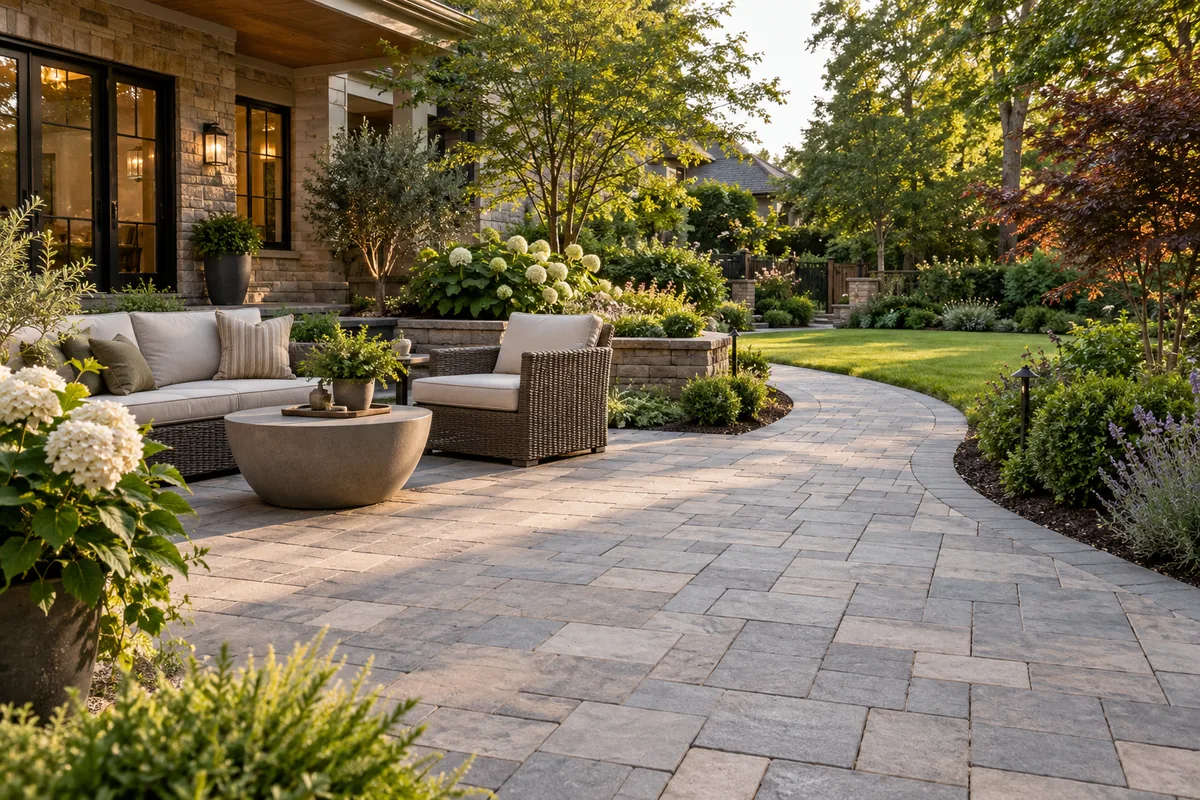
Concrete Pavers for Patios, Paths, and Yard Routes
Learn how concrete pavers fit your yard, with practical material, placement, upkeep, and safety questions to review before choosing a visual direction.
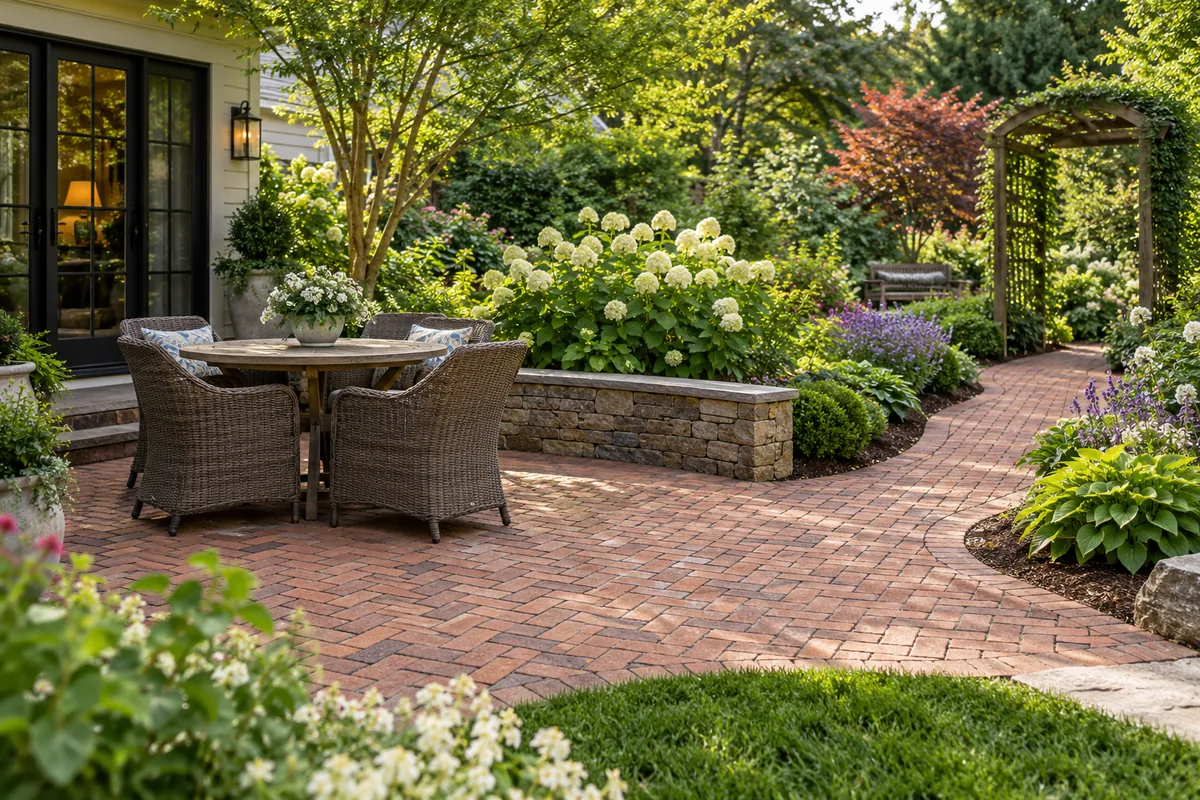
Brick Pavers for Useful Patios and Garden Paths
Brick Pavers for Patios and Paths: explore materials, placement, upkeep, and local safety questions before deciding how this feature fits your yard.

Modern patio ideas for clear furniture layouts and calm materials
Explore modern patio ideas for restrained surfaces, usable furniture, clear door connections, suitable containers, and deliberate shade and evening light.

Cottage garden style: flowers with a working framework
Explore cottage garden style through layered flowers, selective self-seeding, clear paths, seasonal care, and the framework that makes informal planting usable.
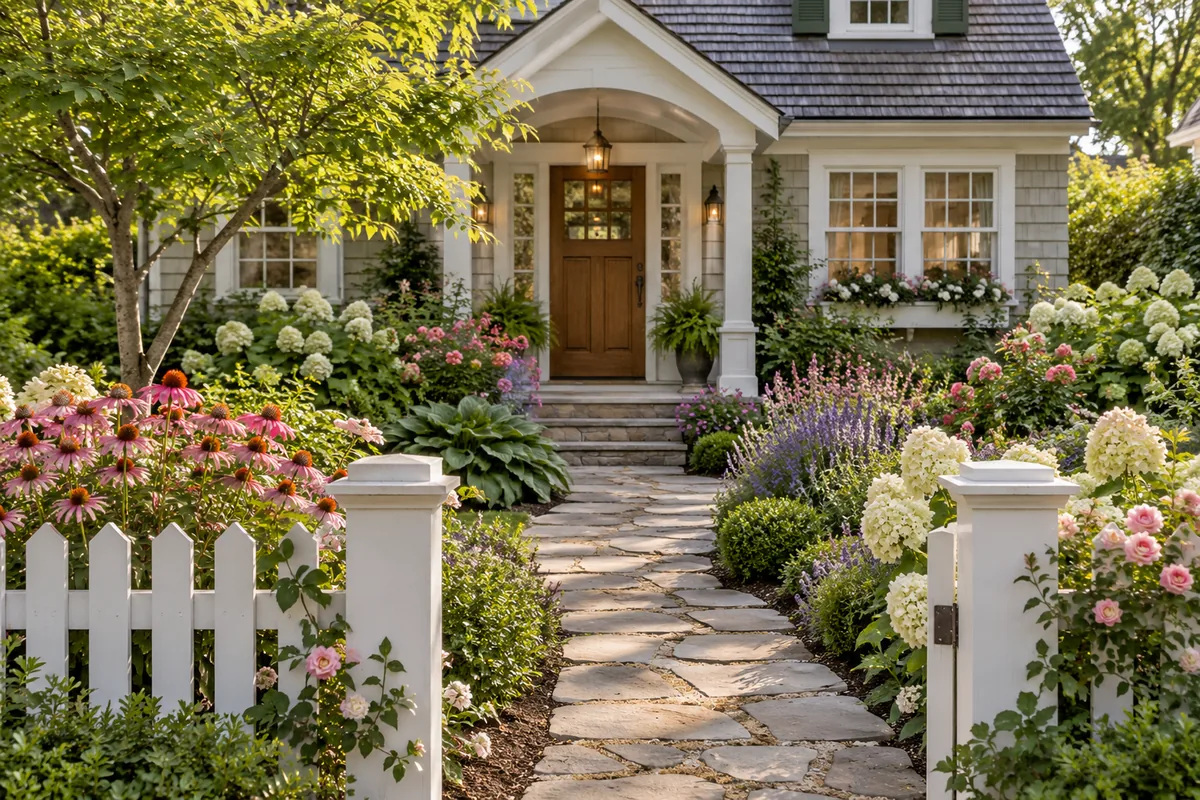
Cottage front yard ideas that welcome visitors through flowers
Find cottage front yard ideas for layered borders, useful gates, brick details, seasonal flower groups, and a welcoming entrance that stays easy to reach.
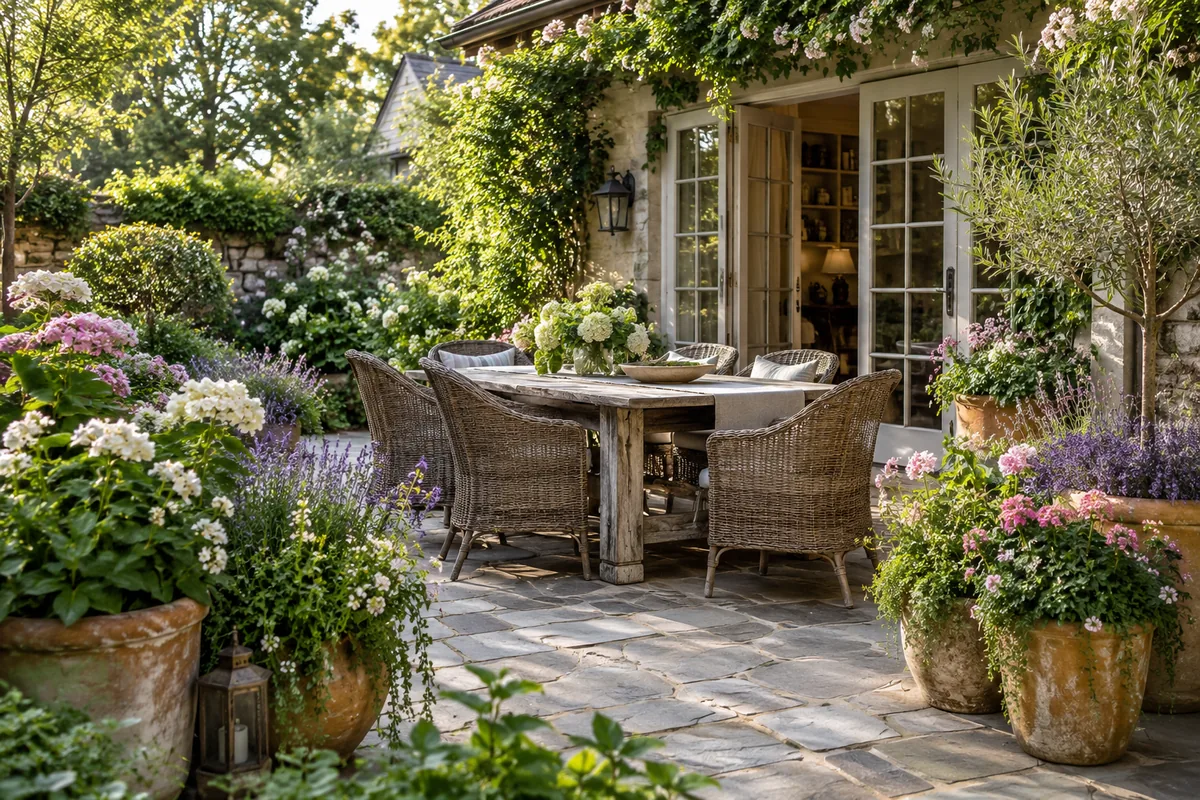
Cottage patio ideas that place flowers around a usable room
Find cottage patio ideas for grouped flowers, stable containers, appropriate climbers, warm materials, and a clear outdoor room that stays comfortable to use.