
By AI Landscape Design Team · Editorial policy
Pavers vs Poured concrete patio: Which Fits Your Yard?
Choose pavers when replaceable units, visible joints, and flexibility around future repairs matter most; choose poured concrete for a continuous patio surface with a finish and joint layout you prefer. Both need appropriate ground preparation and water management. Neither material guarantees freedom from cracking or movement, and the installed system matters more than a color sample alone.
Published · 6 min read
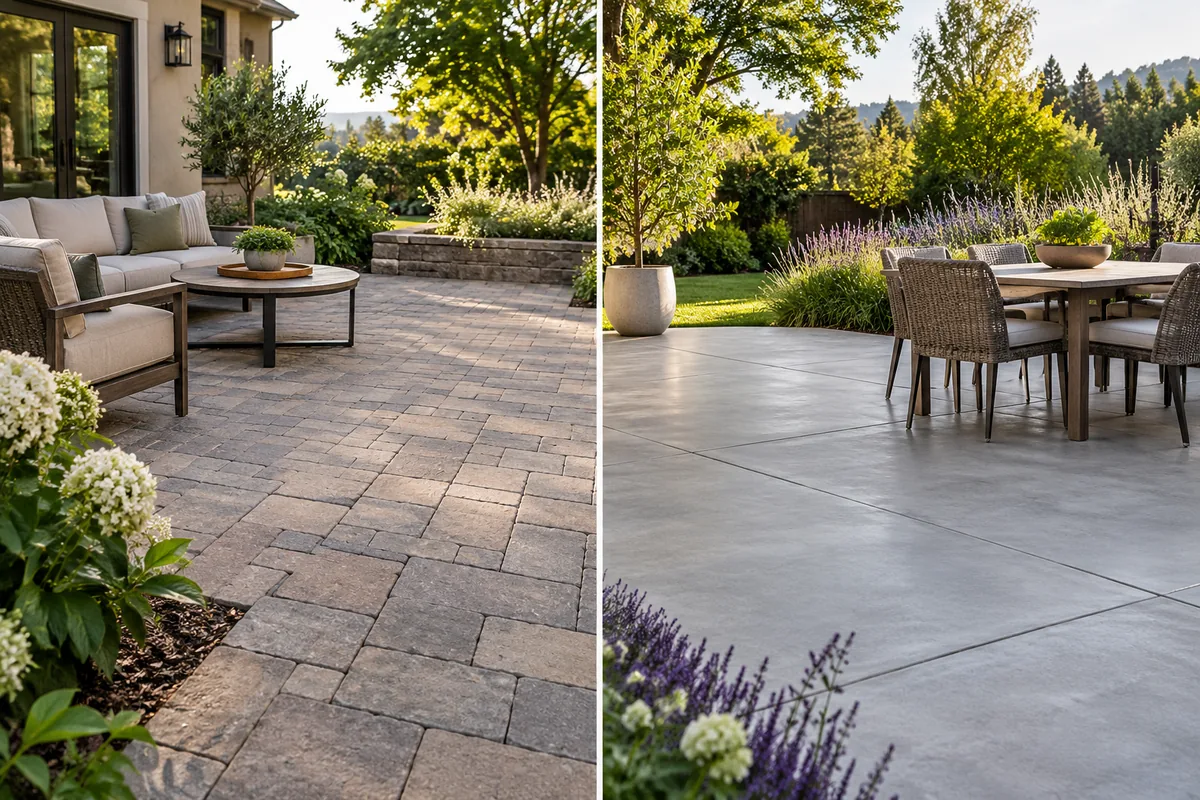
Key takeaways
- Relative cost: Moderate to Higher; Lower to Moderate.
- Maintenance: Joints restraints and unit movement; Surface joints and finish care.
- Lifespan factors: Base units restraints and site exposure; Preparation mix curing and exposure.
| Dimension | Pavers | Poured concrete patio |
|---|---|---|
| Relative cost | Moderate to Higher | Lower to Moderate |
| Maintenance | Joints restraints and unit movement | Surface joints and finish care |
| Lifespan factors | Base units restraints and site exposure | Preparation mix curing and exposure |
| DIY difficulty | Higher for a complete patio system | Higher for placement and finishing |
| Best for | Localized repair and unit patterns | Continuous surface and restrained field |
| Repairs | Individual units may be lifted | Sections may require cutting or patching |
| Freeze-thaw | Verify product and installation suitability | Verify mix finish and installation suitability |
How will the patio be used?
Begin with the movements the surface must support: carrying food through the door, pulling a chair away from a table, and reaching the gate without crossing furniture. Pavers can express boundaries through unit patterns, while poured concrete can make the same area read as a continuous surface. Neither should be selected before the layout is tested with the actual furniture. Mark the usable area and inspect the connection with thresholds and existing paths. A paver border does not compensate for an awkward step, and a broad slab does not create clearance that the site lacks. Ask the responsible professional to verify dimensions and access requirements before selecting the decorative finish.
What is different about repairs?
Individual pavers can be removed and replaced within an appropriately installed unit system, making localized repairs or access beneath a particular area possible. Matching replacement units and restoring the surrounding setting still require planning. With poured concrete, a repair may involve patching, cutting, or replacing a section, and the visual match can be difficult to predict. Ask the installer to explain the likely repair process for the actual design rather than promising invisible fixes. Keep records of products and finishes, and consider retaining appropriate spare units where practical. The useful comparison is how a future problem would be reached and corrected, not whether either choice is expected never to develop one.
How should cracking and movement be discussed?
Concrete slabs can crack, and paver systems can settle or move. Neither possibility should be dismissed through a sales promise. For concrete, ask about the proposed joint arrangement, ground preparation, mix suitability, and curing process. For pavers, discuss the supporting layers, edge restraint, unit suitability, and how movement would be addressed. A licensed local professional should review site-specific drainage, grading, and any nearby structures. Do not choose a system from a photograph of another property whose soil and exposure are unknown. If freeze-thaw conditions are relevant, ask how the products and installation are suited to that environment instead of assuming the material category settles durability.
What does maintenance actually include?
A paver patio may require clearing joints, inspecting edge restraints, and addressing local displacement. A concrete patio needs cleaning and inspection of its surface and joints, with any sealing care depending on the selected finish and product guidance. Ask for written care instructions for the specific installation. Cleaning methods should be compatible with the finish; stronger pressure or chemicals are not automatically better. Consider whether nearby trees will drop leaves or fruit onto the surface and how furniture is moved during cleaning. A restrained pale patio may show stains differently from a varied unit pattern. Neither approach should be described as maintenance-free simply because it contains no living planting.
Which appearance will work with the house?
Pavers introduce a repeatable scale through the individual units and their joints. A quiet pattern can support the house, while a complicated border can compete with brick siding or an already busy terrace edge. Poured concrete can provide a simpler field, although its joint layout and finish remain part of the visual composition. View samples next to the building at several times of day and after wetting them. Check glare and the appearance of cleaning marks as well as color. Material photographs cannot show all those conditions. Choose a surface that supports the main uses and lets planting or furniture carry attention where that is the intended priority.
How should relative costs be compared?
The table's cost categories are broad starting points, not estimates for a particular patio. Preparation, access, demolition, disposal, site geometry, finishing detail, and labor can change the comparison. Pavers may involve more unit placement and edge work; concrete may involve access and finishing demands that are easily overlooked. Compare written proposals for the same footprint and water-management requirements. Ask what each quote includes for preparation, transitions, and restoration of disturbed areas. A less expensive finish can become an expensive project if it requires major site changes. Reusing a sound existing surface should also be considered when appearance is the main reason for replacement.
Can the surfaces be combined?
A paver accent beside concrete can work if the relationship has a practical or visual purpose and the transition is appropriately designed. Avoid treating the junction as decoration alone: different systems can need different support and movement details. Keep the route comfortable and have the responsible professional address levels and runoff at the meeting point. Contact 811 before digging in the United States, and review private utility locating for the project. New electrical fittings, retaining edges, and altered drainage call for relevant licensed expertise. If planting borders are changed too, verify plant suitability locally rather than using the patio style as the basis for choosing species.
What should a photo comparison help decide?
Keep the same table, doors, and retained garden features in both versions, then compare joint scale, surface continuity, and the relationship with the house. AILandscape can provide visual yard concepts; those images do not confirm base preparation, drainage, plant choices, or construction details. Note what you prefer visually and ask the installer how it would be achieved at the site. The image cannot establish quantities or detect buried conflicts. Favor the version whose repair plan and upkeep you understand as well as its appearance. A material decision is more durable when it includes how the patio will be used, maintained, and corrected if conditions change.
Frequently asked questions
Are pavers immune to cracking?
No. Units can be damaged and the installed surface can move or settle. The value of a unit system is often the potential for localized repair, not immunity from problems. Product suitability, supporting layers, restraints, and maintenance all affect performance.
Can poured concrete be repaired invisibly?
A patch or replacement section may differ in color or texture from the existing surface. Ask the installer to explain the repair options for the selected finish. Do not base the choice on a guarantee that every future repair will disappear visually.
Does a paver patio automatically drain through its joints?
No. Standard pavers and a deliberately designed permeable paving system are different arrangements. Ask how the entire installation manages water, including joints, supporting layers, soil, and overflow. Local professional assessment is needed to verify drainage rather than inferring it from visible gaps.
Related reading
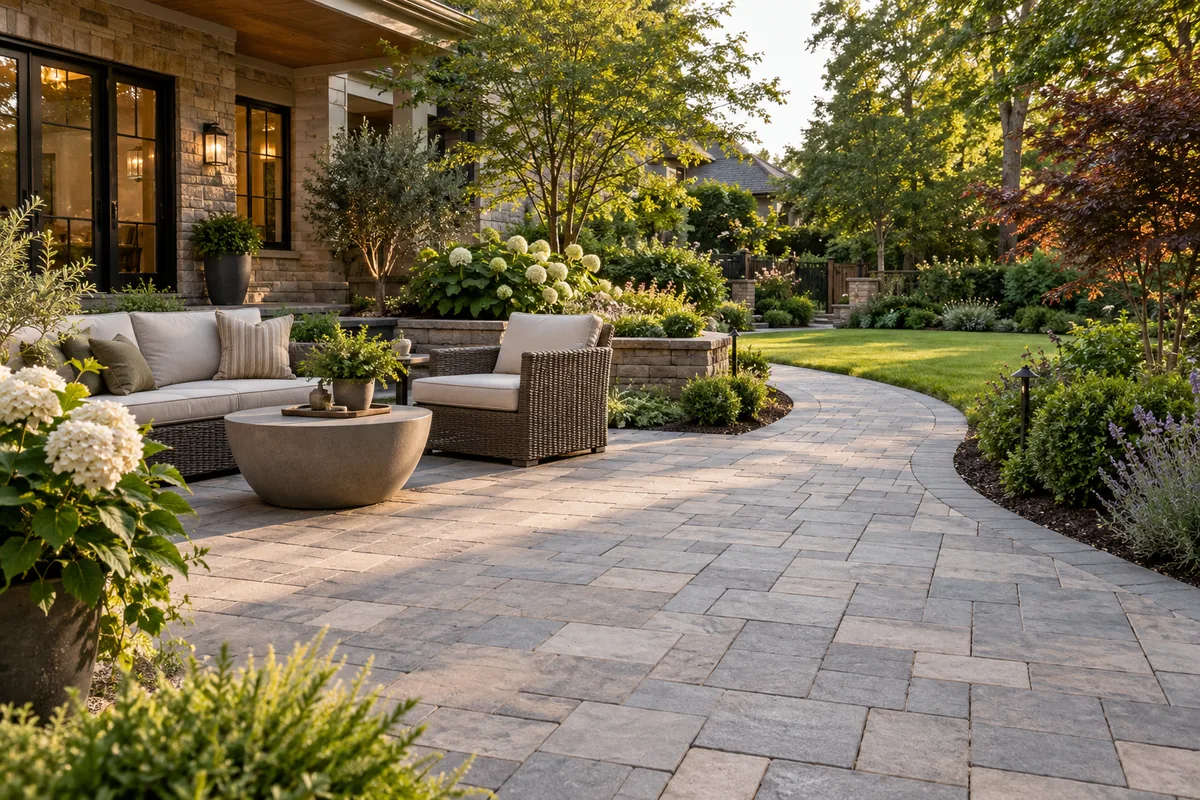
Concrete Pavers for Patios, Paths, and Yard Routes
Learn how concrete pavers fit your yard, with practical material, placement, upkeep, and safety questions to review before choosing a visual direction.

Modern patio ideas for clear furniture layouts and calm materials
Explore modern patio ideas for restrained surfaces, usable furniture, clear door connections, suitable containers, and deliberate shade and evening light.
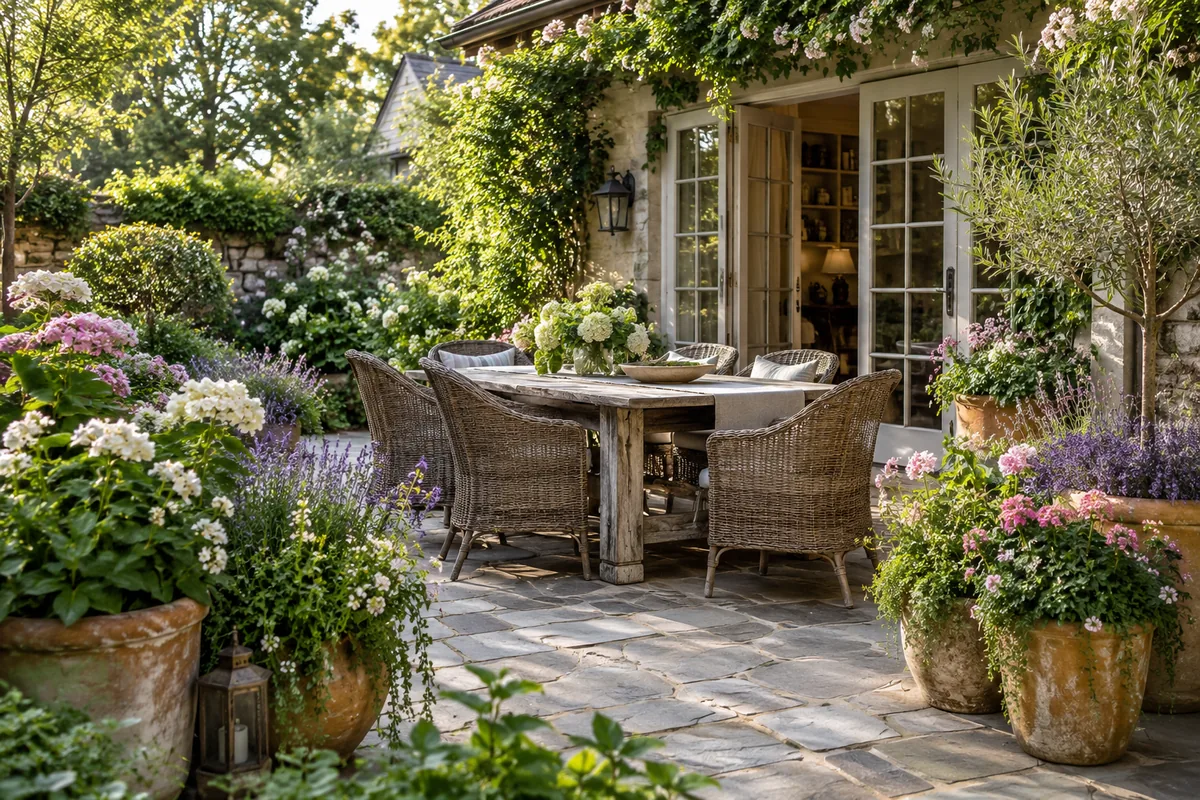
Cottage patio ideas that place flowers around a usable room
Find cottage patio ideas for grouped flowers, stable containers, appropriate climbers, warm materials, and a clear outdoor room that stays comfortable to use.
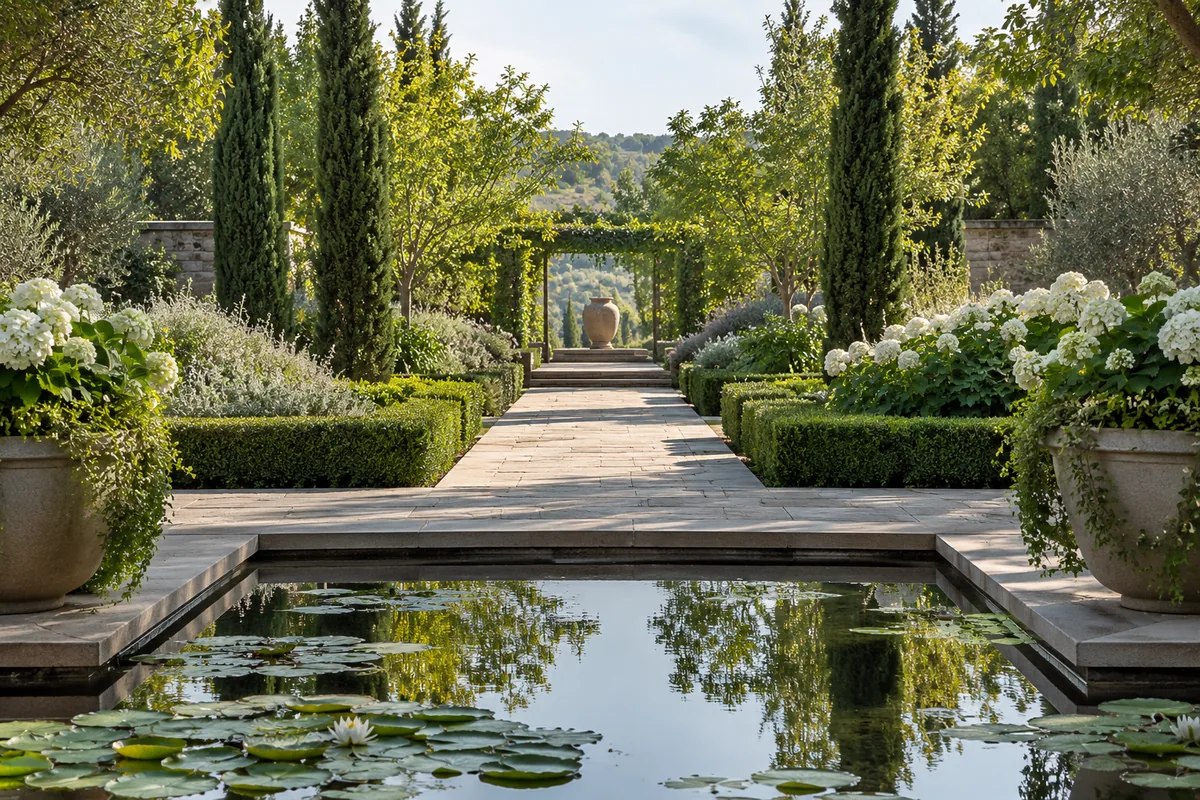
What Is Axis in Landscape Design?
Learn what axis means in landscape design, with a practical yard example, related terms, and the site decisions to check before making changes.

Desert landscape style: shade, stone, and plant form
Understand desert landscape style through plant form, mineral surfaces, useful shade, and heat-aware layouts, while separating its appearance from xeriscaping.
What Is Hardscape in Landscape Design?
Learn what hardscape means in landscape design, with a practical yard example, related terms, and the site decisions to check before making changes.