
By AI Landscape Design Team · Editorial policy
Modern landscape vs Minimalist landscape: Which Fits Your Yard?
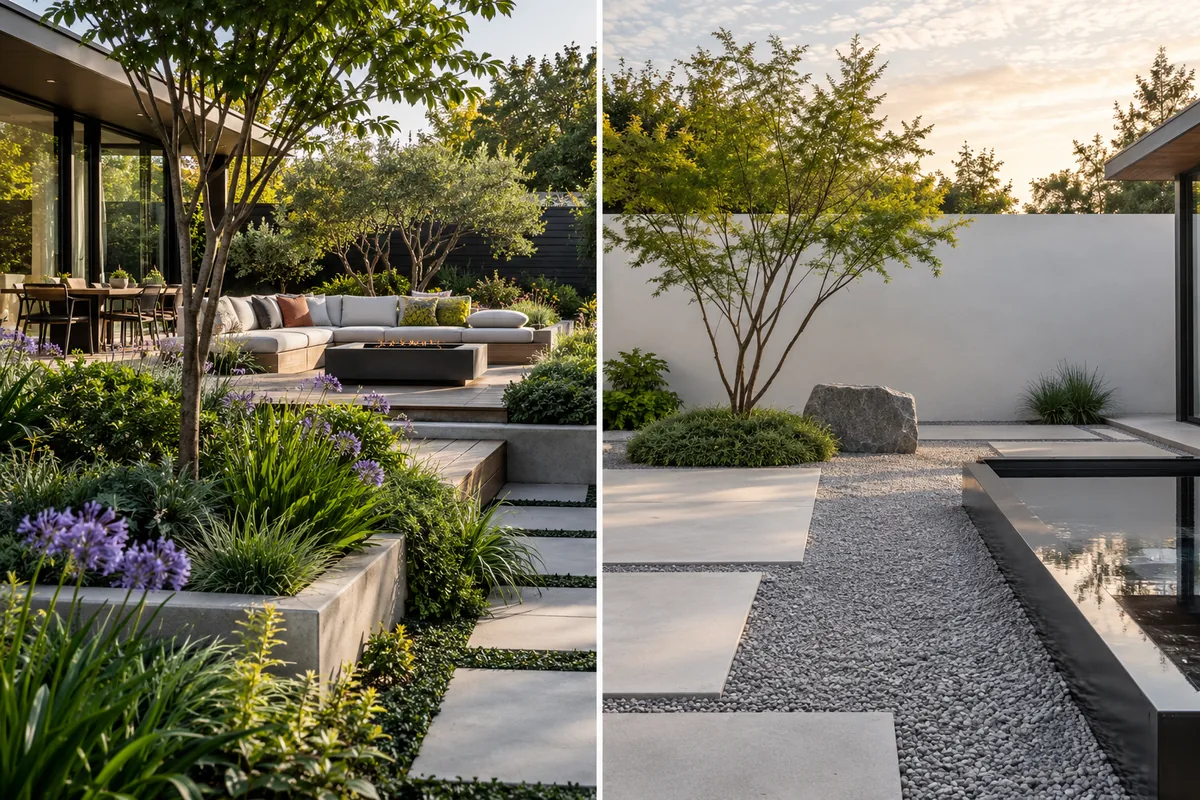
Choose a modern landscape when contemporary geometry, materials, and useful outdoor rooms should organize the yard; choose a minimalist landscape when reducing the number of forms, finishes, and visual interruptions is the central discipline. The approaches overlap, but modern design can be richly planted or expressive. Minimalism asks every retained element to justify its presence.
Published · 6 min read
Key takeaways
- Design focus: Contemporary organized outdoor rooms; Reduction of competing elements.
- Geometry: Can combine several clear forms; Few strong related forms.
- Planting: Generous repeated groups possible; Limited roles rather than bare ground.
| Dimension | Modern landscape | Minimalist landscape |
|---|---|---|
| Design focus | Contemporary organized outdoor rooms | Reduction of competing elements |
| Geometry | Can combine several clear forms | Few strong related forms |
| Planting | Generous repeated groups possible | Limited roles rather than bare ground |
| Materials | Deliberate contrasts allowed | Small palette with visible detailing |
| Daily use | Multiple activities expressed clearly | Functions combined where useful |
| Maintenance | Depends on the actual features | Visible order may require attention |
What is being simplified?
Modern design can use strong geometry while accommodating several activities, planting textures, or sculptural features. Minimalist design puts greater pressure on the number of elements and the relationship between them. A modern terrace might include distinct dining, lounging, and planted zones; a minimalist interpretation may make those activities share a simpler continuous setting. Start by listing the actual uses rather than deleting useful functions to obtain a spare picture. The garden still needs storage, access, and a place for equipment. The meaningful reduction is in competing forms and unnecessary decisions, not in the household's ability to live comfortably outdoors.
How should the ground be organized?
A modern plan can draw clear rectangles, repeated bands, or deliberate changes in level where they support use. A minimalist plan may retain one principal surface and use planting or furniture placement to distinguish activities without adding another paving pattern. Neither direction requires a completely bare site. Trace the route between doors and boundaries, then remove shapes that do not help people move or settle. Keep any changes in elevation justified by the actual ground rather than adding steps as decoration. A simple plan on paper can conceal difficult drainage; have a qualified local professional assess the water movement before treating a continuous surface as a straightforward construction choice.
What happens when the material count is reduced?
Fewer finishes make the condition of each finish more visible. A single pale paving surface can create a calm backdrop, but stains, joint alignment, and repairs may stand out more than they would in a busier composition. Modern design can accommodate a deliberate contrast between timber and pavers or metal and planting. Minimalist design may ask whether that contrast earns its place. Compare full-size samples where possible and inspect wet appearance, glare, and cleaning requirements. Reusing a sound existing surface can be more coherent than replacing it just to satisfy an image. The quietest visual choice is not automatically the least disruptive or least expensive construction choice.
Can the planting still be generous?
A modern landscape can be generously planted through repeated masses and a clear relationship with the built surfaces. A minimalist landscape can also have substantial planting, provided a small number of roles carries the composition. One continuous border of suitable forms may be more disciplined than many isolated pots, even though it contains more living material. Check USDA hardiness zone, light, soil moisture, mature size, and local invasive status before choosing plants. Avoid selecting a species solely because its silhouette looks architectural. The plant must fit its location and leave room for care; a crisp border in a rendering does not guarantee that mature growth will remain within that line.
Which everyday objects should be visible?
A hose, recycling container, bicycle, and outdoor cushions do not disappear because a garden is called minimalist. Decide where they go and how easily they can be reached. Concealed storage can help if the screen or cabinet fits the composition, but it should not block utility access or create an inconvenient detour. Modern design may permit more visible functional objects if their positions are organized. Minimalist design often benefits from a smaller set of multipurpose furnishings. Test the layout with the actual furniture before buying a coordinated collection. The yard should remain readable when occupied, not only when every ordinary sign of household use has been removed for a photograph.
Does minimal appearance reduce maintenance?
It can reduce the number of different tasks, but it can also raise the standard of visible order. A gravel field requires debris removal; a straight hedge requires appropriate care; a broad terrace needs cleaning. Write down the maintenance events for the actual proposal rather than judging complexity by the number of objects in an image. If you dislike precise clipping, avoid a design whose entire identity depends on perfectly clipped plants. A looser repeated planting mass may preserve restraint with more tolerance for seasonal change. Account for winter appearance and equipment storage so the garden does not depend on constant rearrangement to keep its intended character.
What is worth retaining from an existing yard?
A mature tree, a comfortable shade pattern, and a reliable route may be more valuable than visual consistency. Use those fixed features as the starting point and simplify around them. Do not remove a useful tree simply because it interrupts a geometric diagram; obtain appropriate local advice about tree condition and root protection. Licensed professionals should assess structural supports, retaining work, drainage alterations, and electrical installation. Contact 811 before excavation in the United States and clarify private-service locating. The reduction of visual clutter should not become a reason to conceal technical questions. Good restraint acknowledges the site rather than pretending that it is an empty surface.
How do you choose between the two briefs?
Compare a modern scheme that clearly organizes several activities with a minimalist scheme that combines them through fewer visible moves. Ask what has actually been lost or gained. AILandscape can provide visual concepts from a photograph, but its images do not confirm dimensions, plants, drainage, or construction feasibility. Take the chosen image back to a measured site sketch and verify that storage, routes, and furniture still fit. The minimalist version wins only if the reduction improves daily use or the intended experience. If adding a planted zone makes the garden more comfortable and maintainable, contemporary design does not require rejecting it for the sake of a label.
Frequently asked questions
Can a minimalist garden have lots of plants?
Yes. Minimalism concerns the organization and number of competing visual ideas, not simply the amount of vegetation. A substantial repeated border can read more quietly than scattered pots and isolated specimens. Check the planting's actual space and care requirements before making the choice.
Is minimalism less expensive than modern landscaping?
Not necessarily. Fewer materials can still involve demanding detailing, demolition, or careful installation. Compare the scope and local quotes rather than inferring cost from a sparse image. Reusing sound existing surfaces may matter more than the number of objects shown.
What is the first useful simplification?
Remove a visual move that has no practical role: an unnecessary paving change, a redundant planter, or a decorative bend in a direct route. Keep access, shade, and storage functional. Simplification should make the space clearer without hiding ordinary household needs.
Related reading
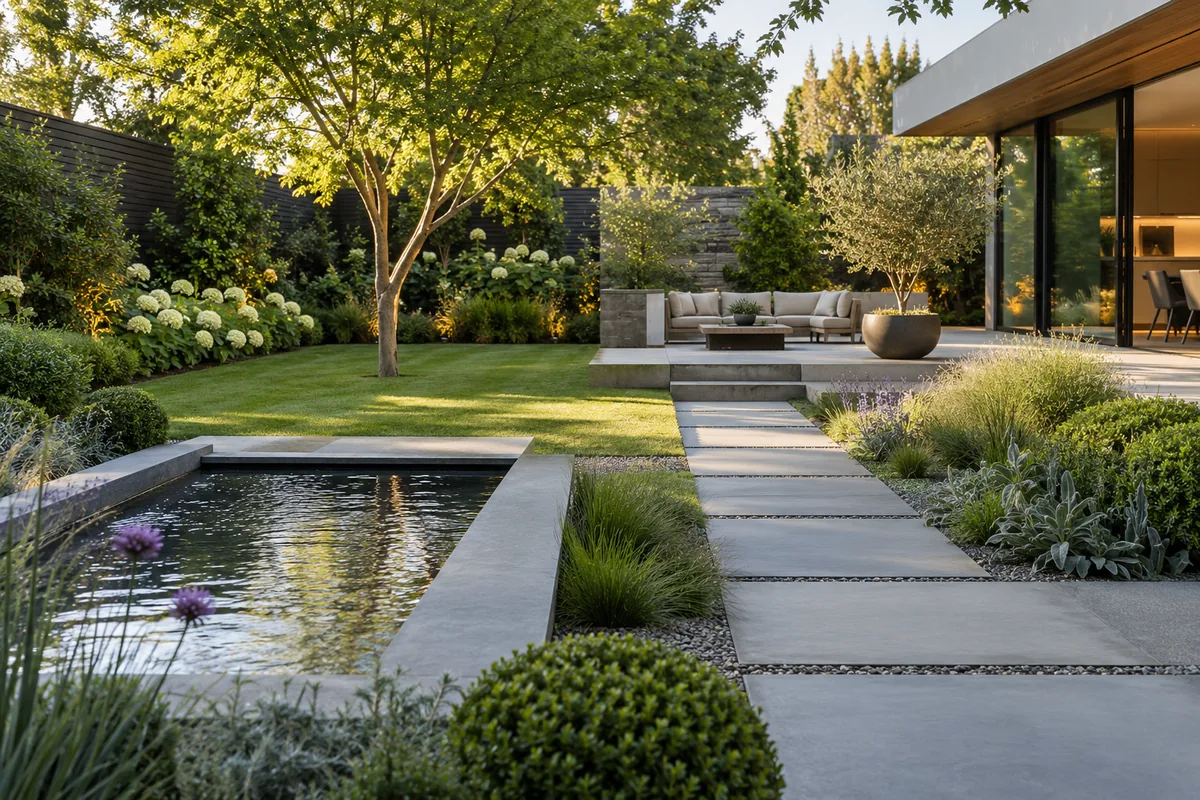
Modern landscape style: lines, space, and materials
Understand modern landscape style through clean lines, restrained materials, planting structure, and practical connections to contemporary architecture.
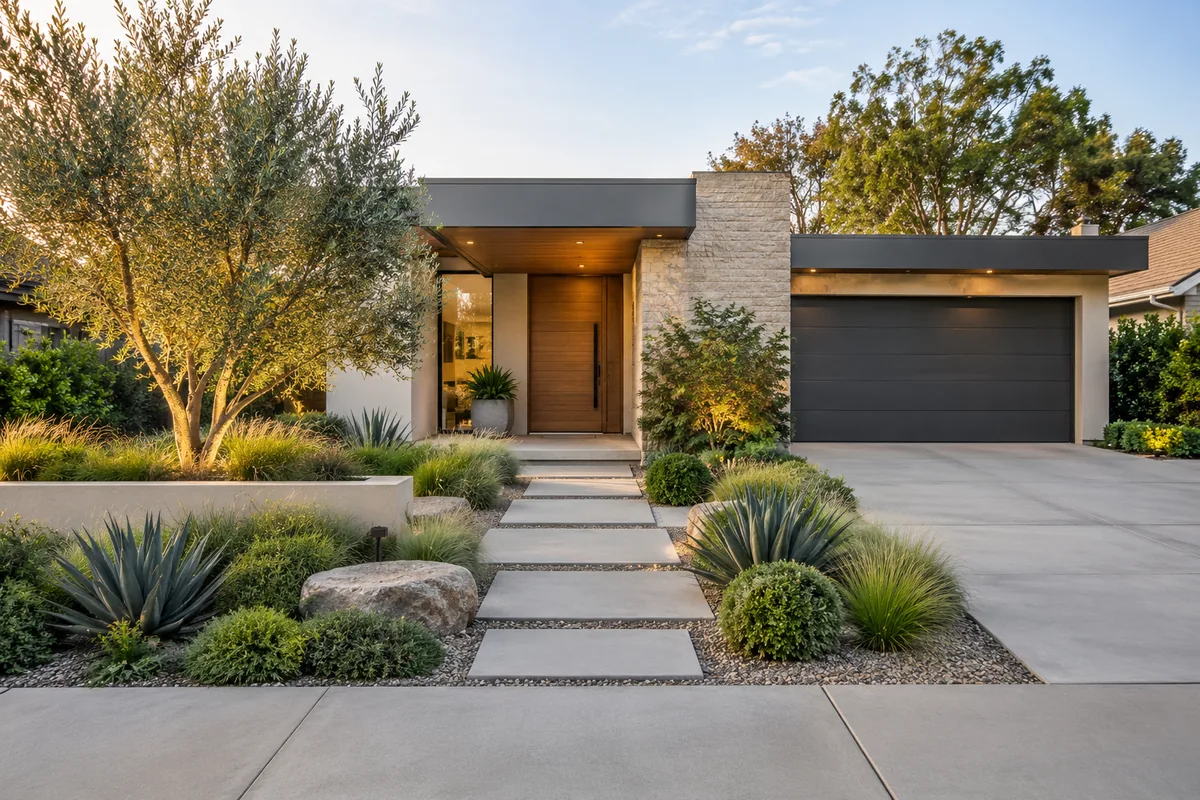
Modern front yard ideas for a clear, composed entrance
Explore modern front yard ideas for clear entrances, repeated planting, restrained materials, readable house numbers, and practical maintenance from the street.
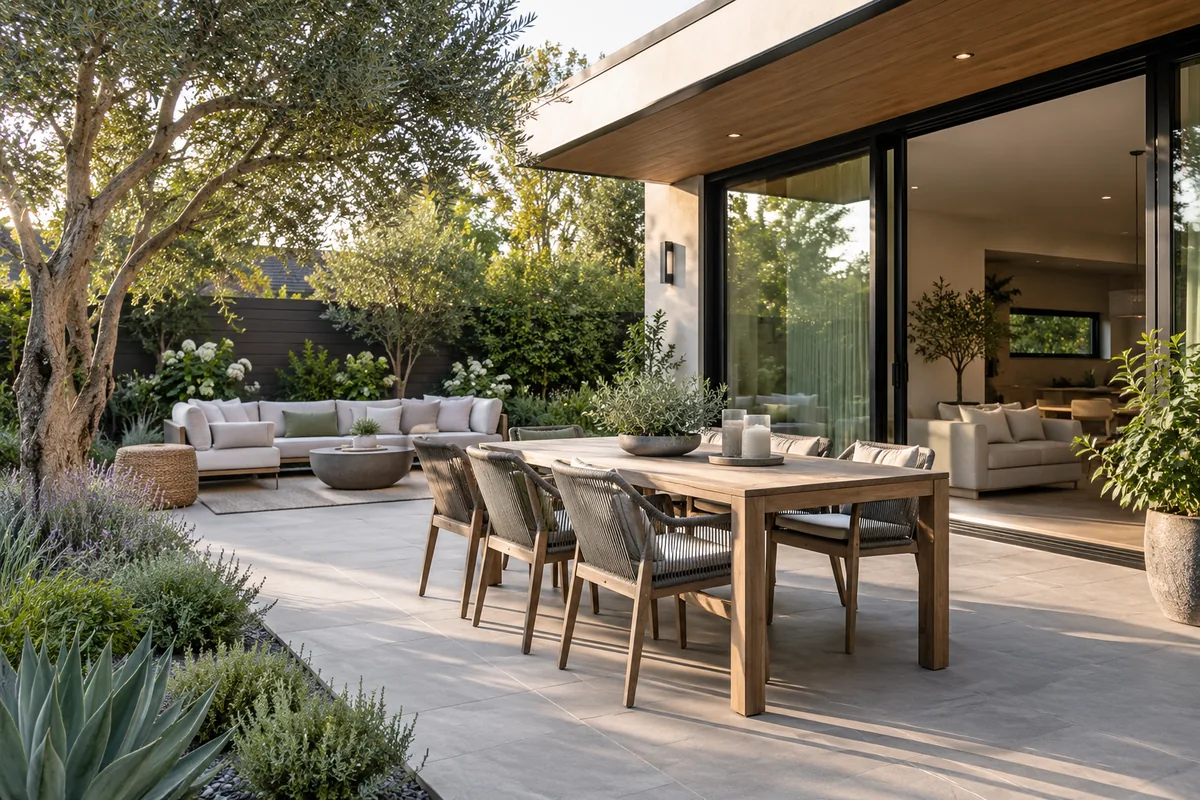
Modern patio ideas for clear furniture layouts and calm materials
Explore modern patio ideas for restrained surfaces, usable furniture, clear door connections, suitable containers, and deliberate shade and evening light.
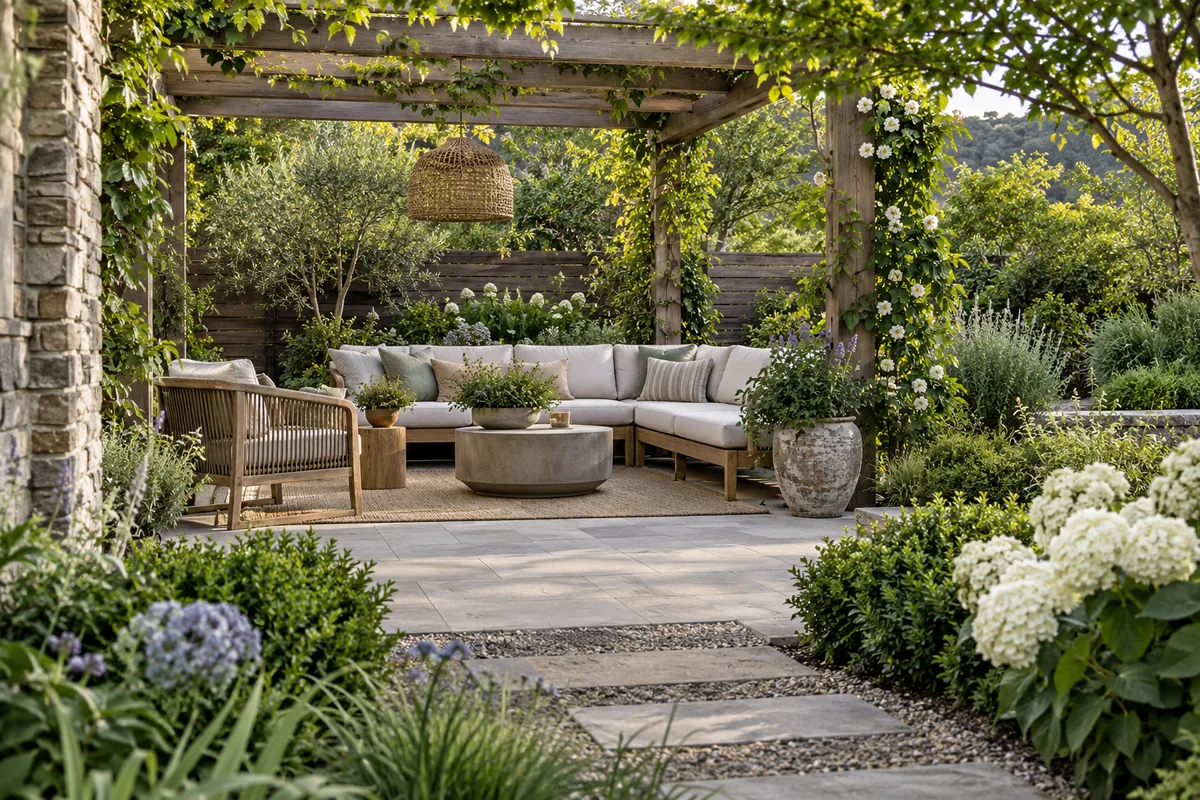
What Is Outdoor Room in Landscape Design?
Learn what outdoor room means in landscape design, with a practical yard example, related terms, and the site decisions to check before making changes.
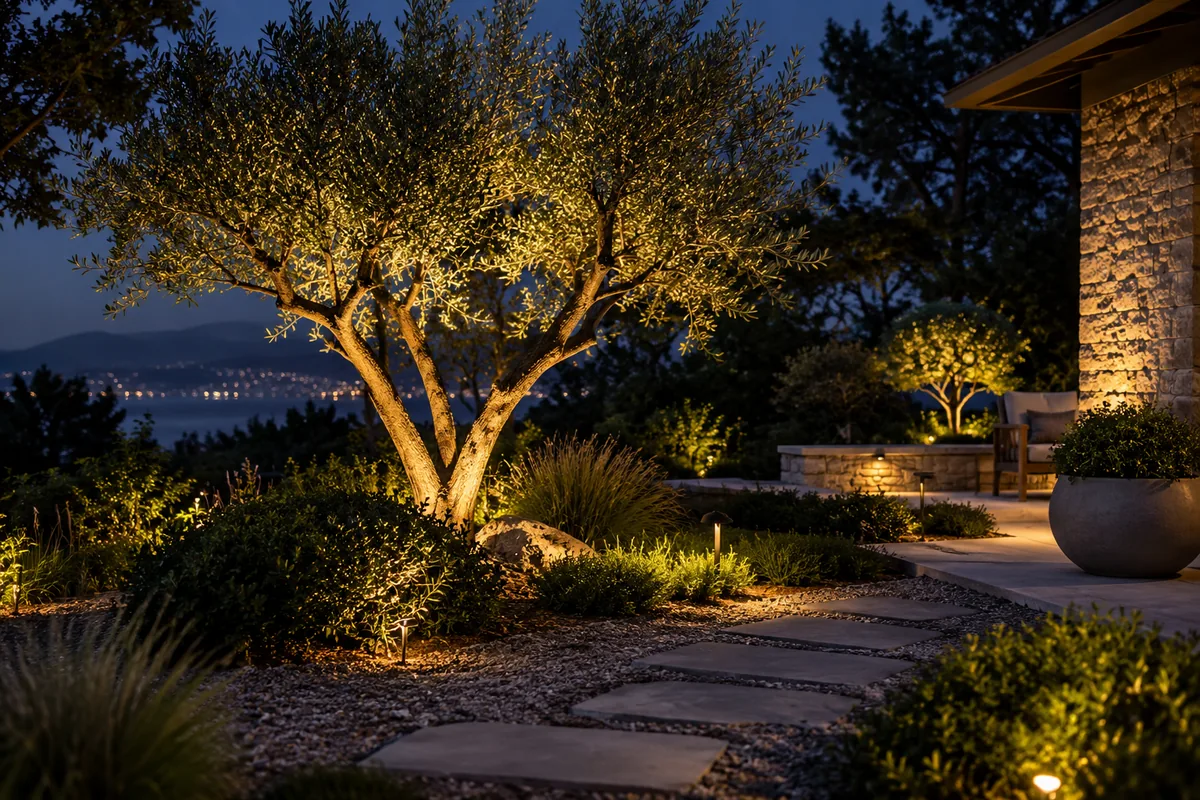
Landscape Accent Lighting That Respects the Night View
Plan landscape accent lighting around selected features, controlled glare, useful viewing positions, appropriate fixtures, and professional electrical review.
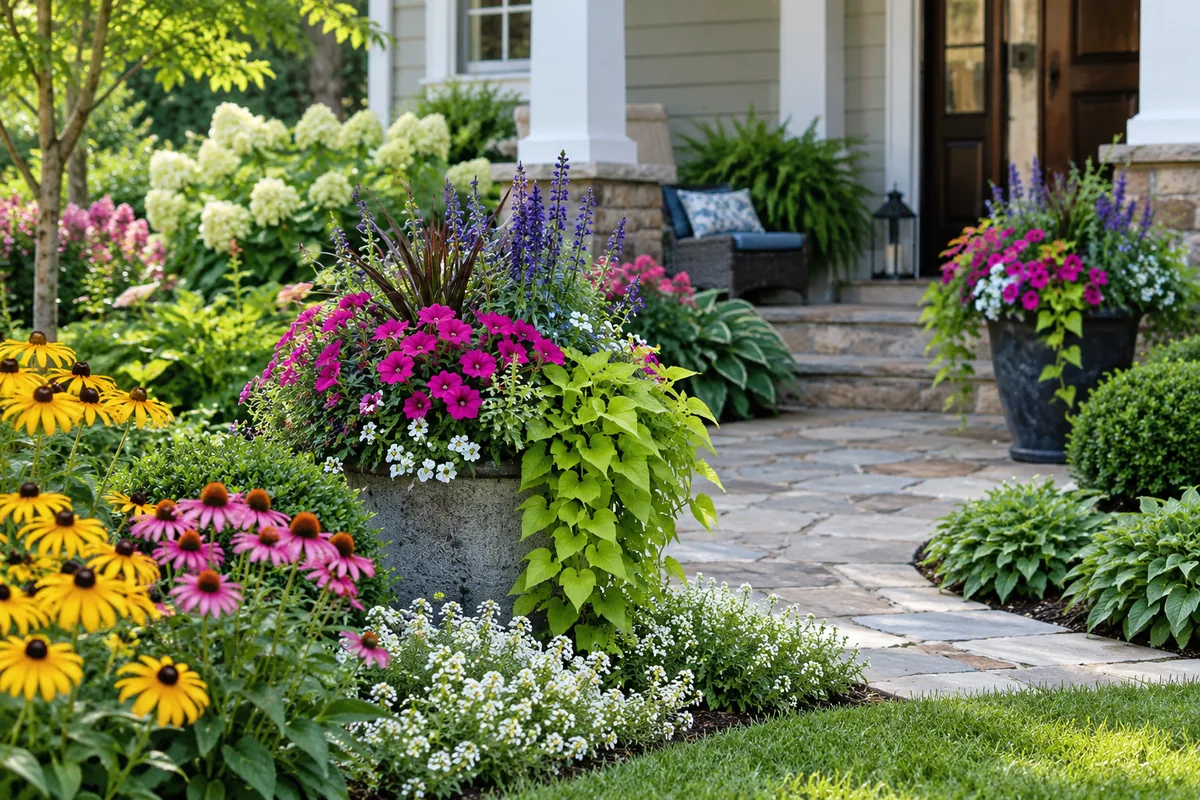
Annual Flowers for Seasonal Borders and Garden Containers
Annual Flowers: Seasonal Color and Containers: explore placement, upkeep, and local safety questions before deciding how this feature fits your yard.