
By AI Landscape Design Team · Editorial policy
Modern landscaping vs Farmhouse landscaping: Which Fits Your Yard?
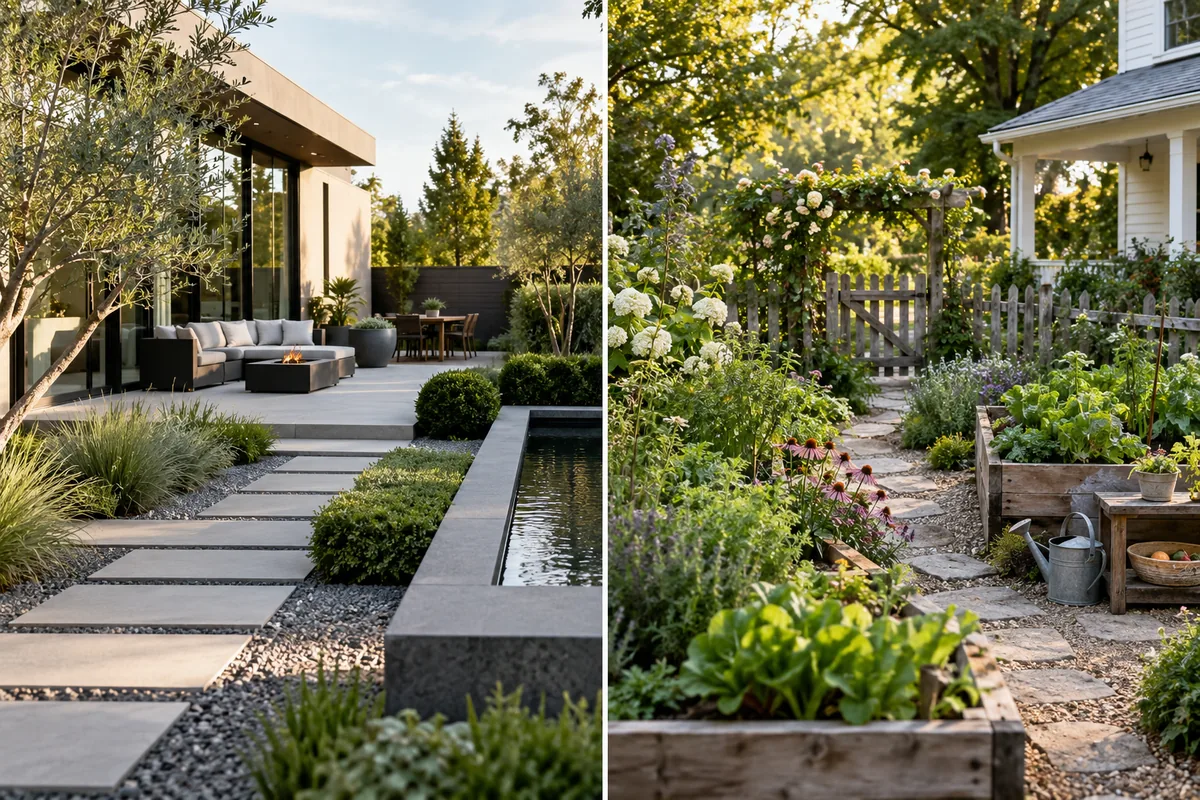
Choose modern landscaping for a yard organized by clear lines and a restrained material palette; choose farmhouse landscaping when useful garden spaces and familiar, weathered textures should lead. Neither choice requires a particular house age. The useful distinction is how paving, planting, and everyday objects work together, rather than buying decorative items labeled modern or farmhouse.
Last updated · 6 min read
Key takeaways
- Layout: Clear geometric organization; Porch and working destinations.
- Materials: Restrained repeated finishes; Brick timber and gravel accents.
- Planting: Distinct repeated groups; Fuller practical mixed borders.
| Dimension | Modern landscaping | Farmhouse landscaping |
|---|---|---|
| Layout | Clear geometric organization | Porch and working destinations |
| Materials | Restrained repeated finishes | Brick timber and gravel accents |
| Planting | Distinct repeated groups | Fuller practical mixed borders |
| House relationship | Echo strong facade lines | Connect everyday working spaces |
| Upkeep | Visible edge and joint care | Seasonal mixed-bed tasks |
| Relative cost | Varies with detailing | Varies with reuse and labor |
Which layout makes sense beside the house?
A modern layout can echo a flat porch roof, a long window, or a straight boundary through a rectangular sitting area and repeated planting bands. Start with the route to the door, then place any strong line where it helps that route read clearly. A farmhouse arrangement can instead make the porch, vegetable patch, side gate, and potting area feel connected through modest paths and working edges. Neither approach excuses an awkward turn or blocked gate. Draw the actual destinations before choosing paving shapes. A wide picture window might benefit from a quiet modern foreground, while a frequently used service door may call for a more practical working courtyard.
What should the material palette do?
Modern landscaping often looks coherent when one paving material does most of the work and another appears only as a deliberate accent. For example, a pale paver terrace with a dark metal edging detail can make planting texture easier to see. Farmhouse landscaping can use brick, timber, and gravel without requiring every item to match exactly. The connections still need care: a gravel edge against a busy brick pattern may compete with the house facade. Place samples beside existing siding and examine them when wet as well as dry. Select surfaces for stability and cleaning access before deciding that a rustic finish or sharp edge belongs in the picture.
How much planting density is appropriate?
Use plant density to decide what deserves attention. A modern front border might repeat a limited set of upright forms with enough space to distinguish individual groups. A farmhouse border may support a fuller mix beside an open path, particularly near a porch where flowers and edible planting relate to daily use. Dense growth is useful only where its mature spread leaves room for maintenance. Verify USDA hardiness zone, sunlight, soil, and local invasive status for every proposed plant rather than assuming a style establishes suitability. Keep branches out of gate swings and hose access. A photograph of a lush border cannot reveal whether the plants will crowd each other at your site.
Where do useful objects belong?
Farmhouse character can come from work rather than props: a washable potting bench near water, orderly tool storage, and reachable containers can say more than a collection of decorative signs. Decide which objects you actually use and keep their walking surfaces clear. Modern landscaping may conceal storage behind a simple screen or integrate it with a boundary, but hiding equipment must not make repairs difficult. Leave access to meters and outdoor taps in both versions. At a side entrance, a plain storage cabinet and a planted edge can suit either language. Choose its position from everyday tasks first and its finish from the broader material palette second.
Which maintenance burden is easier to accept?
A spare modern layout can reveal displaced gravel, untidy joints, or a broken line of shrubs quickly because fewer details share attention. Farmhouse planting can tolerate some seasonal variation visually, yet a mixed bed may require more decisions about cutting back, harvesting, and replacing short-lived plants. Write down the work you enjoy. If tending vegetables is attractive but clipping a hedge is not, protect space for the vegetable area and use another boundary treatment. Neither style is maintenance-free. The relevant comparison is the type of labor and how easy it is to reach the work, rather than a general claim that clean lines are always simpler.
Can modern and farmhouse details coexist?
They can coexist when one provides the organizing structure. A rectangular paver terrace may remain modern while a timber dining table and edible containers introduce farmhouse warmth. Alternatively, a porch-centered working garden can use a restrained metal fence without becoming a different style. Try to identify which element governs the composition before adding accents. Limit the number of competing paving patterns, then repeat one finish between the porch and sitting area. A combination becomes confusing when every corner introduces an unrelated shape and texture. Keep the entrance legible and judge the mixture from the normal approach to the house, not only from a close photograph of individual objects.
What should be checked before construction?
A decorative choice can hide consequential work. New edging may require excavation; a pergola or fence can introduce foundation and permit questions; moving a patio can change water movement beside the house. Have a licensed local professional review drainage, retaining structures, electrical work, and structural supports. Contact 811 before digging in the United States and ask about separately locating private services. The modern or farmhouse label does not resolve any of those questions. Retaining a sound existing surface may be the most useful starting point. Compare the improvement gained by replacing it with the disruption, disposal, and site repairs that replacement would require.
How can you choose without buying everything?
Create a short brief with fixed constraints: the doors stay accessible, the existing tree remains, and the terrace must support the furniture you already own. Compare a version organized by modern lines with another built around farmhouse working spaces while keeping those constraints identical. AILandscape offers visual exploration from a yard photo; its concepts do not verify plants, drainage, or construction details. Save the image with your written observations rather than reading dimensions from it. Then revisit the site with material samples and measured clearances. The preferred direction should still make sense when the decorative accessories are removed and the ordinary routines of the household return.
Frequently asked questions
Does farmhouse landscaping require a farmhouse?
No. Farmhouse landscaping can work beside another house type when it reflects real uses such as porch seating, edible beds, and practical storage. Reuse the existing building materials as a guide instead of adding unrelated rustic decorations everywhere.
Is modern landscaping always low maintenance?
Modern landscaping can reduce the number of plant varieties or finishes, but a restrained layout also makes disorder easier to notice. Compare pruning, joint cleaning, and edge repair tasks separately. Maintenance depends on the chosen plants and construction, not the name of the style.
What is the easiest way to mix both looks?
Let one style determine the layout and introduce the other through a limited set of details. A modern terrace can carry a timber table and useful containers, while a porch garden can use simple modern edging without changing its practical organization.
Related reading
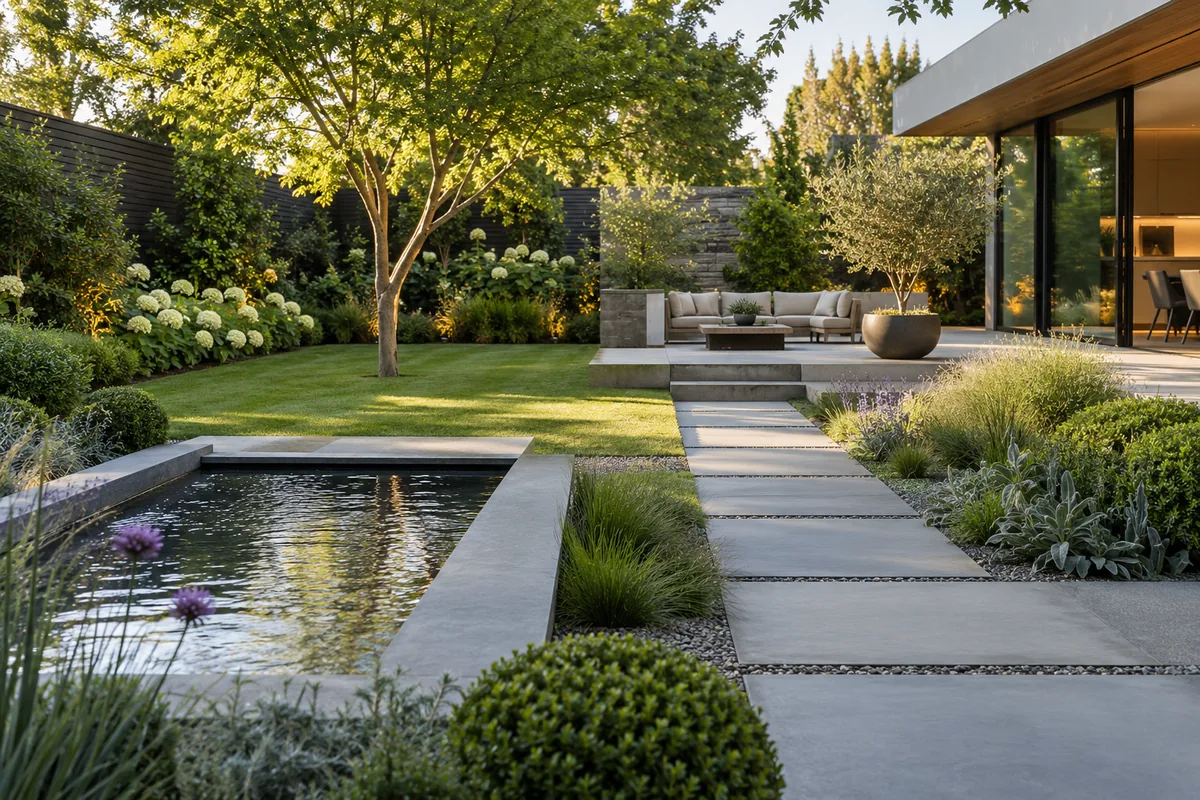
Modern landscape style: lines, space, and materials
Understand modern landscape style through clean lines, restrained materials, planting structure, and practical connections to contemporary architecture.
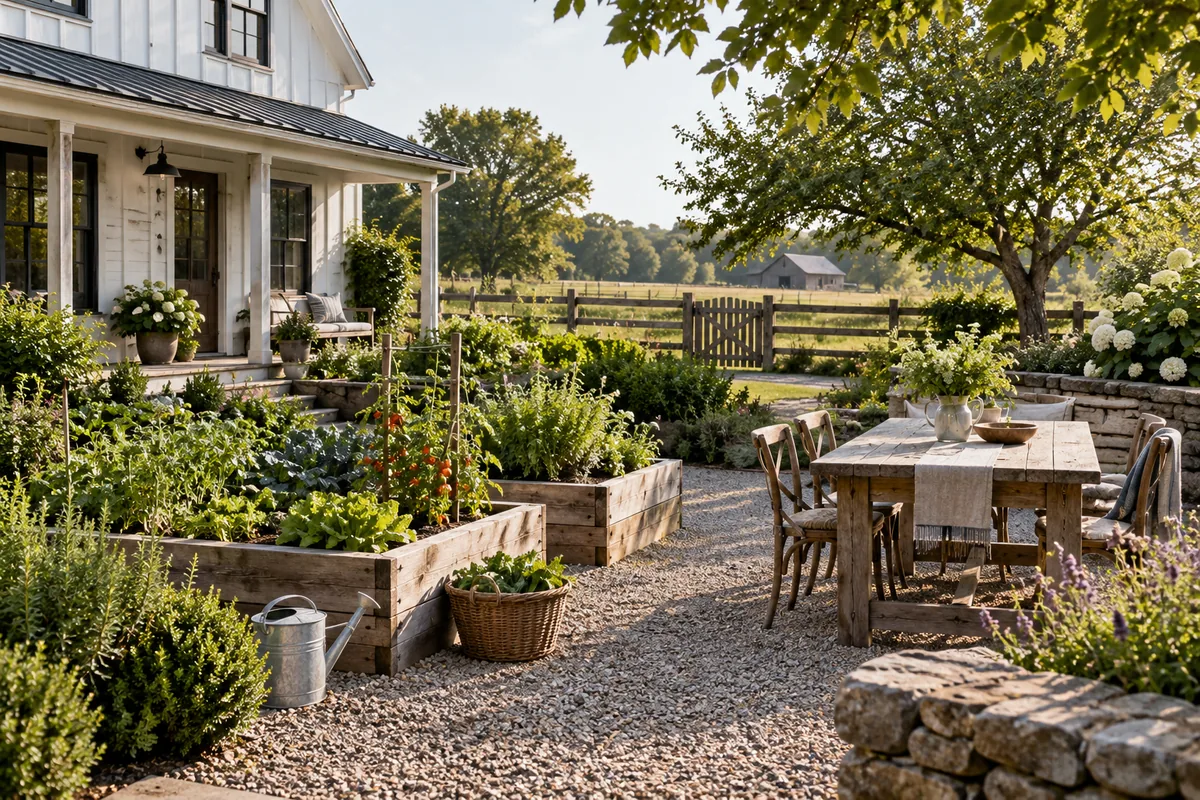
Farmhouse landscape style: useful spaces and honest materials
Discover farmhouse landscape style through practical fences, productive beds, wood and stone, and useful outdoor spaces that support everyday garden routines.
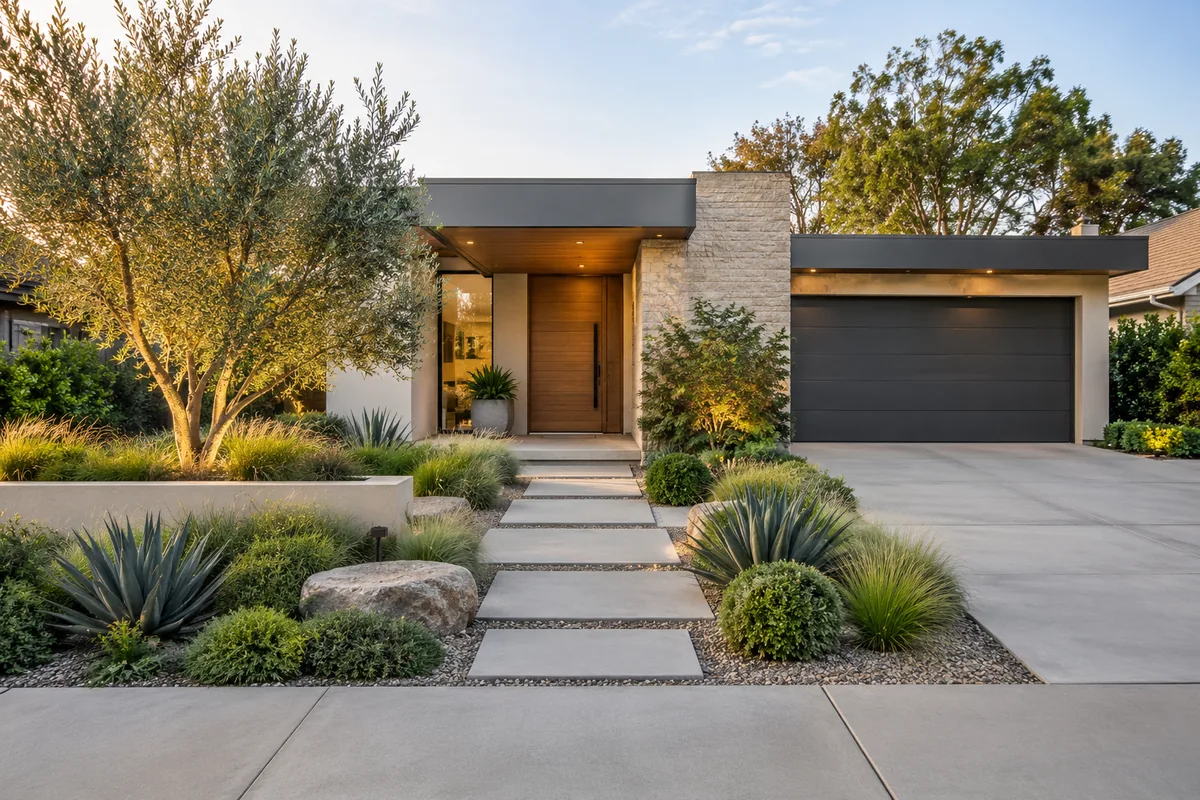
Modern front yard ideas for a clear, composed entrance
Explore modern front yard ideas for clear entrances, repeated planting, restrained materials, readable house numbers, and practical maintenance from the street.
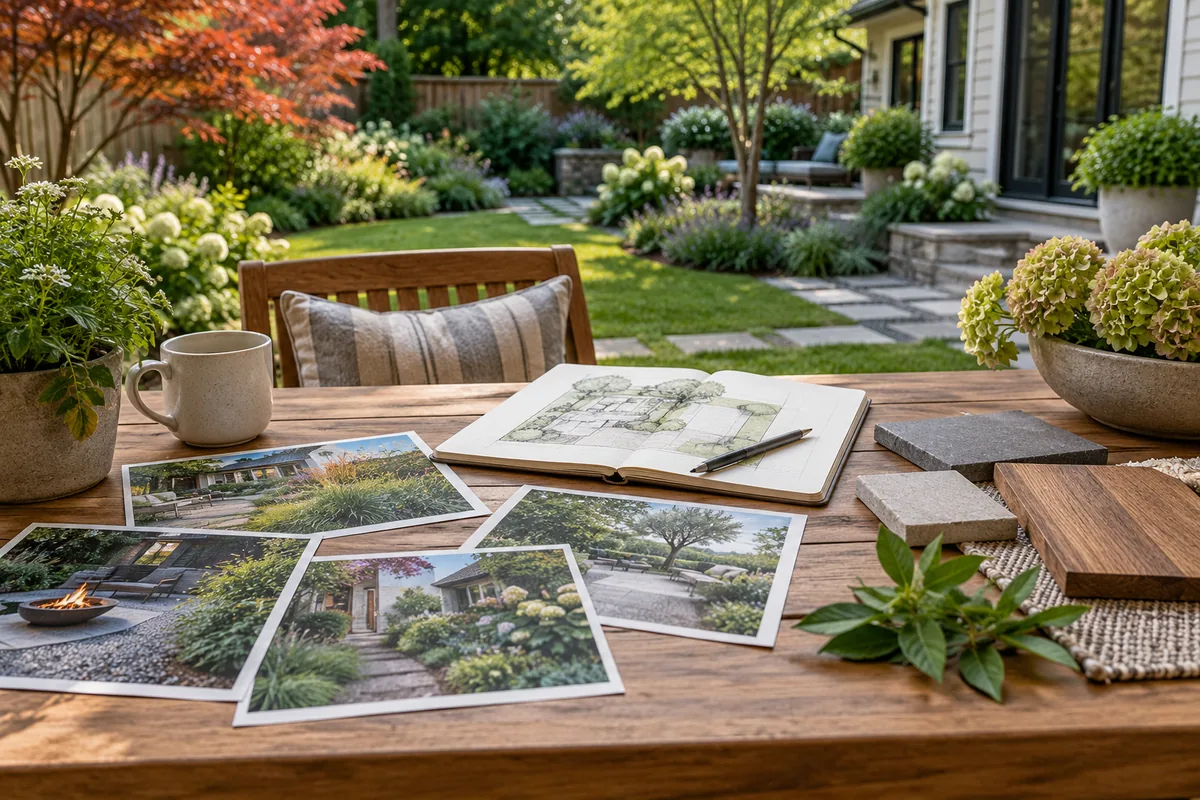
How to Choose a Landscape Style That Fits Your Yard
Choose a landscape style by comparing house lines, everyday uses, maintenance preferences, and local conditions before testing a few visual directions.
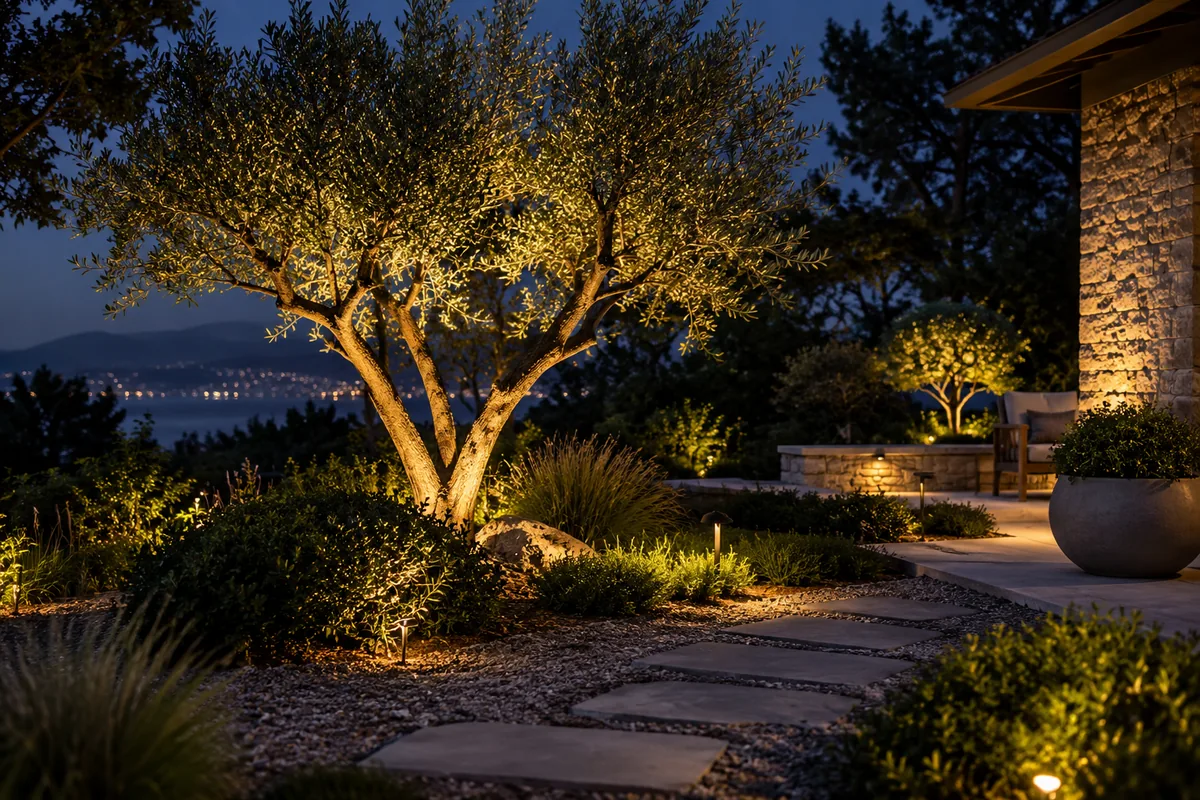
Landscape Accent Lighting That Respects the Night View
Plan landscape accent lighting around selected features, controlled glare, useful viewing positions, appropriate fixtures, and professional electrical review.
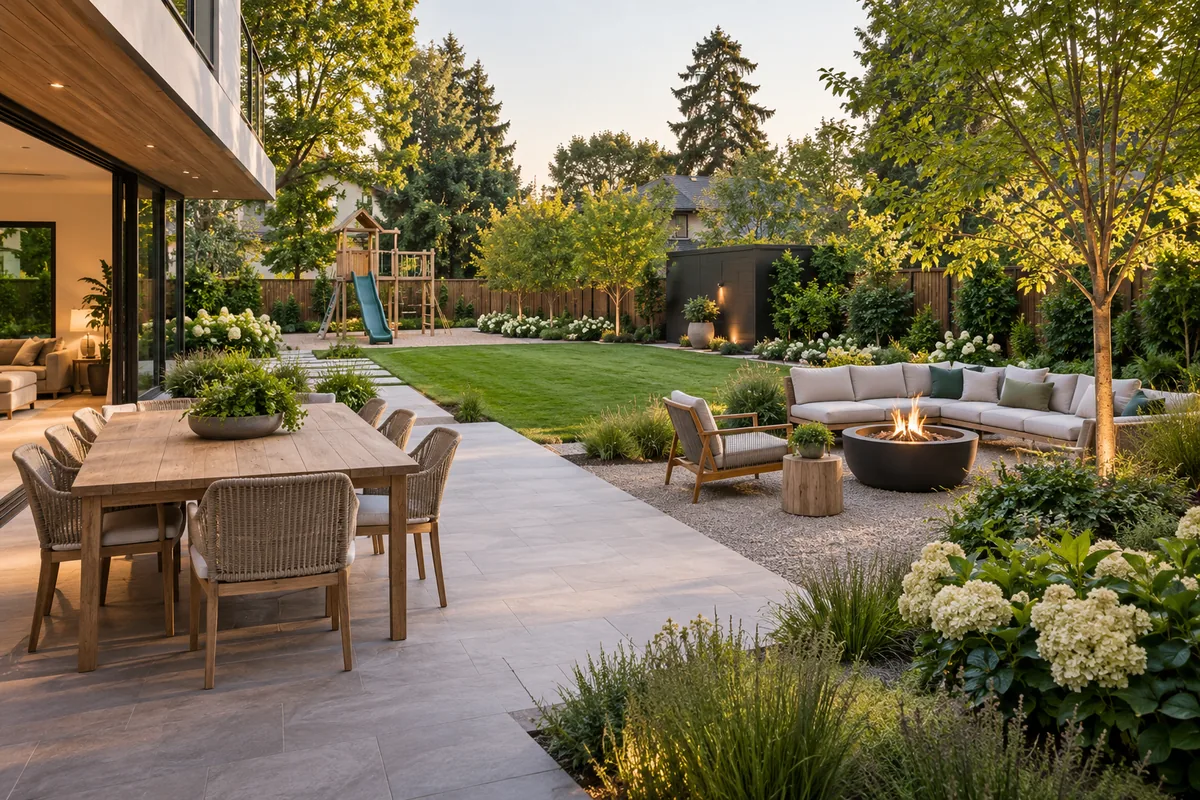
Modern backyard ideas organized around the way you live
Explore modern backyard ideas for activity zones, clean material connections, repeated planting, usable furniture layouts, and careful evening lighting.