
By AI Landscape Design Team · Editorial policy
Gravel surfaces vs Paver surfaces: Which Fits Your Yard?
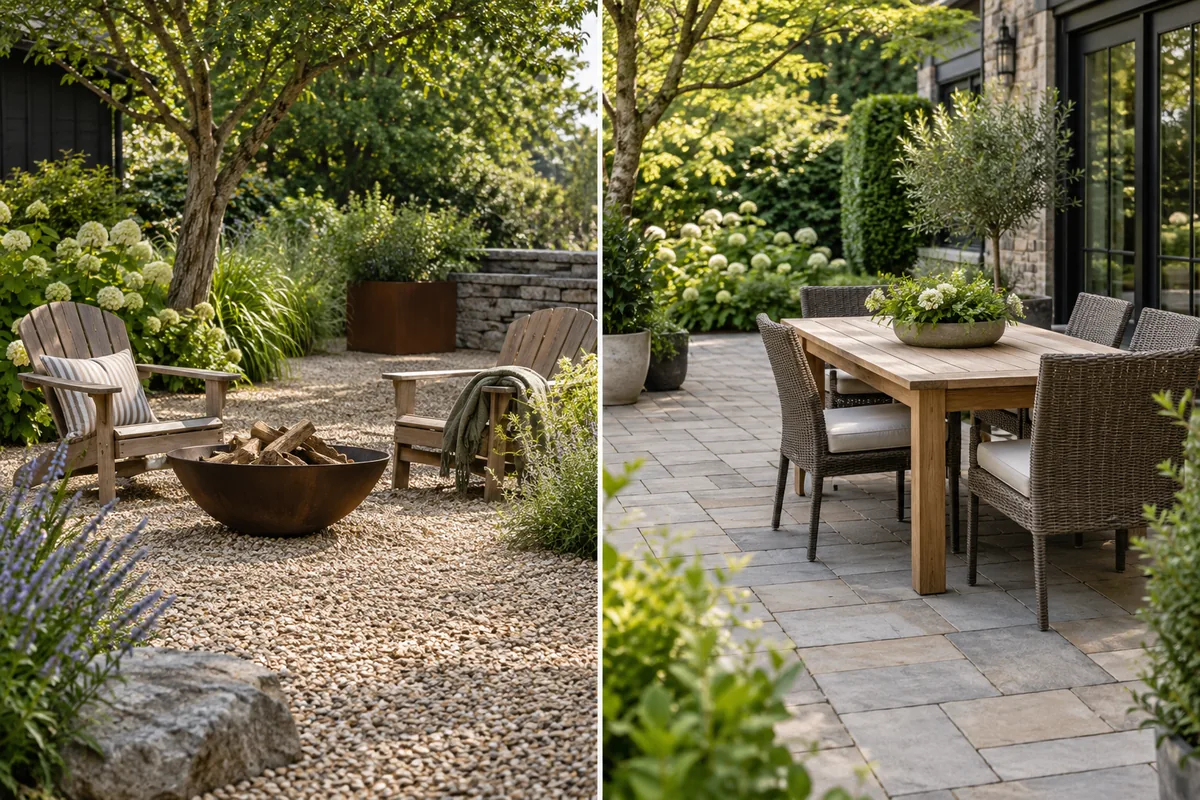
Choose gravel for a contained informal surface where loose aggregate fits the use; choose pavers when a more stable, defined route or furniture area is the priority. Gravel can reduce some material and installation costs, but containment, maintenance, and access can change the comparison. For wheelchairs, strollers, or frequent chair movement, assess the complete surface rather than its appearance.
Published · 6 min read
Key takeaways
- Relative cost: Lower to Moderate; Moderate to Higher.
- Maintenance: Debris weeding and redistribution; Joints cleaning and movement checks.
- Lifespan factors: Containment base and aggregate migration; Base restraint and unit condition.
| Dimension | Gravel surfaces | Paver surfaces |
|---|---|---|
| Relative cost | Lower to Moderate | Moderate to Higher |
| Maintenance | Debris weeding and redistribution | Joints cleaning and movement checks |
| Lifespan factors | Containment base and aggregate migration | Base restraint and unit condition |
| DIY difficulty | Moderate depending on preparation | Higher for complete reliable installation |
| Best for | Contained informal secondary areas | Defined circulation and furniture zones |
| Wheel movement | Loose material may resist wheels | Verify joints levels and access needs |
| Drainage | Assess full system beneath aggregate | Permeable performance needs system design |
Where is a dependable route essential?
Map the journeys that cannot be inconvenient: the entrance, the gate, the route to storage, and any path used by someone with mobility needs. Loose gravel can shift under wheels, feet, or narrow chair legs, depending on the aggregate and installed system. Pavers can provide a more defined surface, but joints, levels, and installation quality still affect access. Seek qualified local advice about the actual accessibility requirements rather than deciding that a material label guarantees compliance. A secondary sitting nook may tolerate a different surface from the main approach. Separating those uses can avoid expecting one material to perform equally well in every part of the yard.
How will furniture behave on the surface?
Put the actual chair and table type into the comparison. A narrow chair foot on loose aggregate can behave differently from a broad outdoor base, and moving a chair backward may disturb the surface. Pavers provide individual rigid units, though an uneven installation or unsuitable joint arrangement can still interrupt movement. Test furniture on a representative sample area where possible. Consider how dining chairs are used when several people sit down together, not only how an empty table looks. Keep the furniture area separate from a necessary through-route so another person does not have to cross behind moving chairs. The most attractive informal surface may suit a quieter corner better than the main dining terrace.
Does gravel automatically resolve drainage?
A loose aggregate surface can allow water through at the top, but the underlying layers, soil, grade, and overflow still determine what happens next. According to the Royal Horticultural Society, permeable materials can contribute to more water-conscious garden surfaces; that does not establish the performance of a particular installation. Ordinary pavers are also different from a deliberately designed permeable paving system. Ask a licensed local professional how the whole proposal manages rain and runoff, especially near buildings or low areas. Do not use a gravel label as a substitute for drainage assessment. A surface that looks porous can still sit over compacted or unsuitable conditions that need investigation.
What keeps gravel where it belongs?
Edge containment and the connection to adjacent surfaces deserve attention early. Loose material may migrate onto paving, into a lawn, or across a doorway where it becomes a nuisance. Ask how the selected aggregate will be retained, replenished, and cleared after heavy use. For pavers, edge restraints and the supporting installation serve another role in holding the arrangement together. Neither edge should be placed where it creates a trip or prevents equipment access. Inspect the proposed boundary from the position where people turn or move a wheelbarrow. A thin line on a visual concept cannot explain its stability, height, or maintenance requirements at the real property.
What is the realistic weeding and cleaning plan?
Gravel is not weed-proof. Windblown seed and accumulated organic debris can create ongoing tasks even where the original preparation was appropriate. Leaves can be more awkward to collect without also moving aggregate. Paver joints likewise need attention, and cleaning may affect joint material if performed improperly. Ask for the care instructions suited to the selected system and plan tool access. A gravel area beneath a deciduous tree may carry different labor from one in an open location. The useful question is how the material will be maintained in its actual surroundings, rather than assuming that replacing a planted surface eliminates all work connected with growth and debris.
How should the relative cost be read?
Gravel may have a lower initial cost for some uncomplicated areas, while paver installation can involve more unit handling and detailed preparation. Yet ground correction, containment, delivery access, and disposal can narrow or change that difference. Compare the same intended use and specification rather than a casual layer of gravel against a complete paver system. A surface that fails to meet the access requirement is not a cheaper equivalent. Include ongoing redistribution or replenishment where relevant and ask what future changes would involve. The table uses broad relative categories only. Actual budgets should come from a defined project scope and local quotations, without extracting amounts from a concept photograph.
Is a combination more practical?
A stable paver route through a contained gravel sitting area can separate circulation from the looser visual field. Make the connection clear and check the levels, edges, and intended movement with the responsible professional. Avoid isolated stepping units where the everyday route needs dependable continuous footing. Contact 811 before excavation in the United States, and obtain licensed local advice for drainage changes, retaining edges, and electrical features. Nearby planting needs its own local suitability check, including USDA hardiness zone and invasive status. The surface combination should serve the household's activities rather than merely making the image appear more varied.
How do you review a gravel concept honestly?
Imagine the surface after use: a chair has moved, leaves have fallen, and someone is carrying a tray from the door. Compare that with the paver version under the same conditions. AILandscape can produce visual references from a yard photo; the result does not verify accessibility, aggregate stability, drainage, or construction details. Use it to discuss where a softer material character is worthwhile and where reliability matters more. Then choose actual products and have the installation assessed for the site. A gravel area can be an intentional choice without becoming the answer to every route, and a paver path can remain simple without making the garden feel entirely formal.
Frequently asked questions
Is gravel suitable for wheelchairs?
Suitability depends on the aggregate, containment, installation, and applicable access requirements. Loose surfaces can make movement difficult, so do not infer accessibility from a photograph. Ask a qualified local professional to assess the essential route and consider a more stable continuous surface where needed.
Do paver joints prevent weeds?
No joint arrangement should be assumed to eliminate every weed. Product and installation choices affect care, but debris and seeds can still accumulate. Follow the system's maintenance guidance and preserve access for inspection rather than selecting pavers on a maintenance-free claim.
Can I use gravel around a paved dining area?
Yes, when the paved area supports furniture use and the gravel is properly contained outside the main route. Review levels, edging, and material migration at the transition. The combination is most useful when each surface has a clear role.
Sources
Related reading
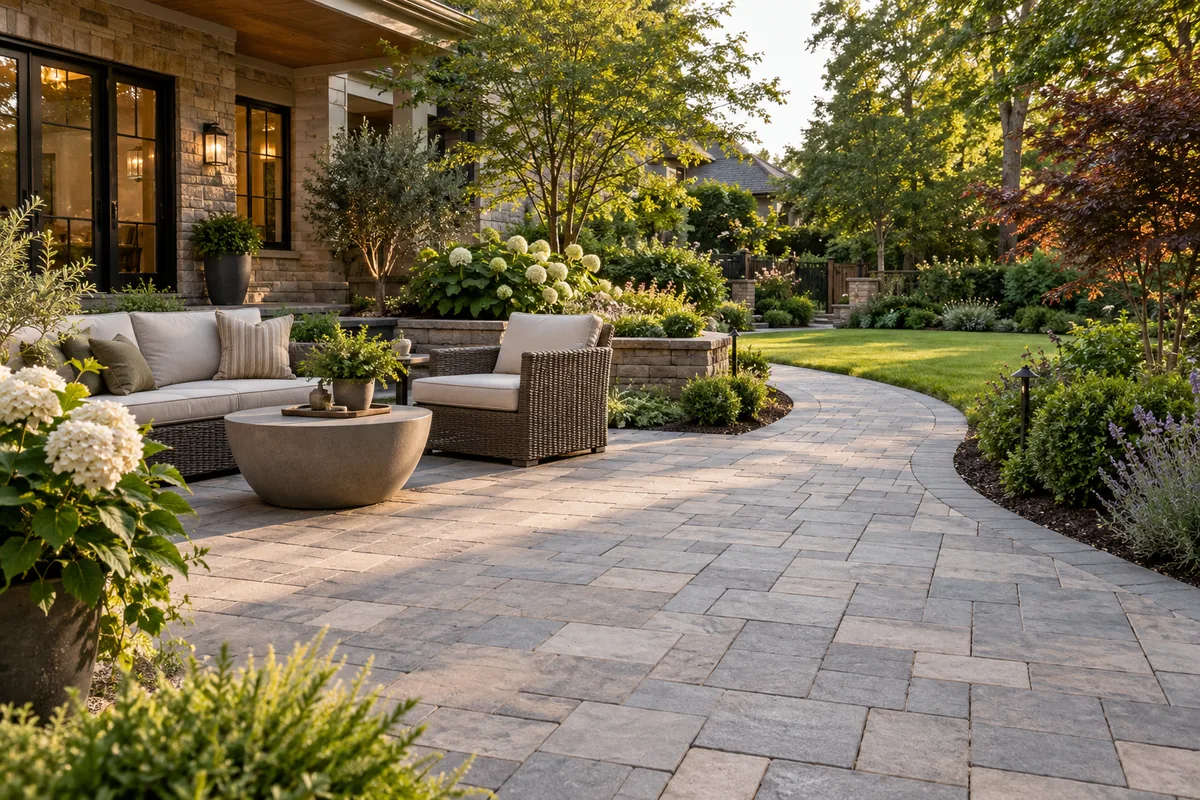
Concrete Pavers for Patios, Paths, and Yard Routes
Learn how concrete pavers fit your yard, with practical material, placement, upkeep, and safety questions to review before choosing a visual direction.
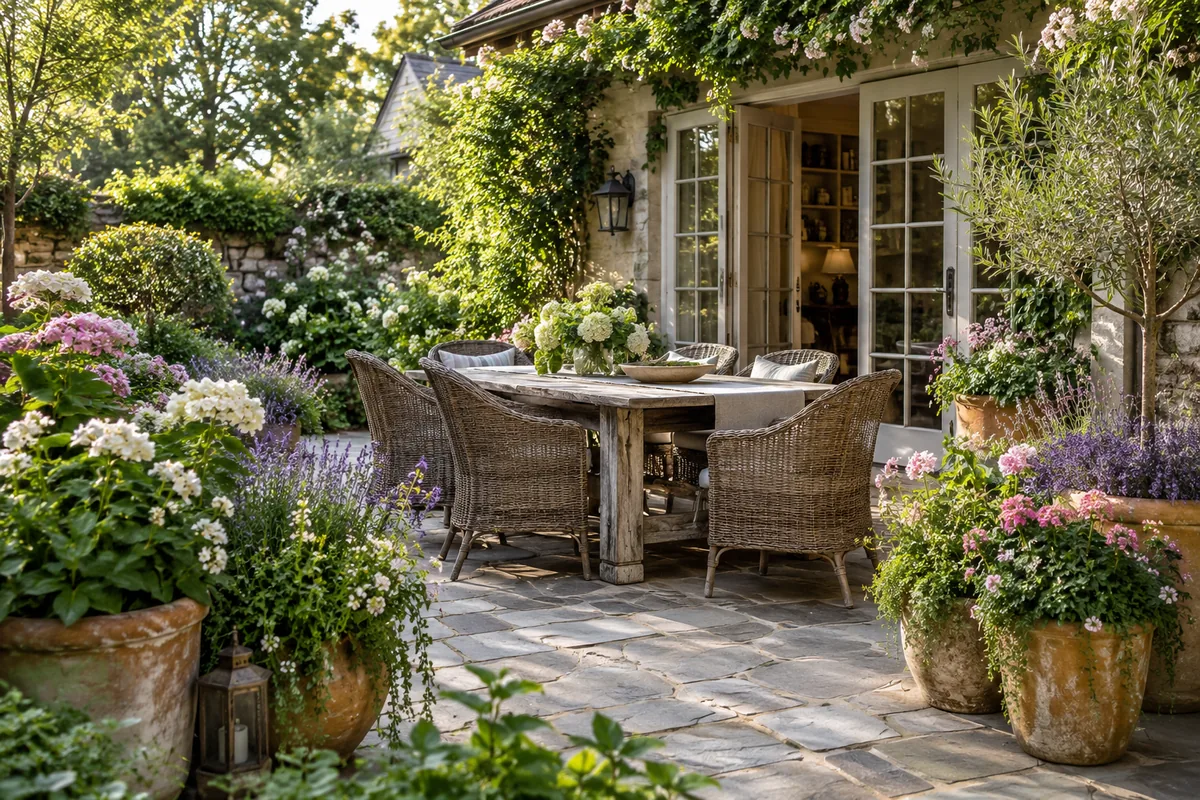
Cottage patio ideas that place flowers around a usable room
Find cottage patio ideas for grouped flowers, stable containers, appropriate climbers, warm materials, and a clear outdoor room that stays comfortable to use.
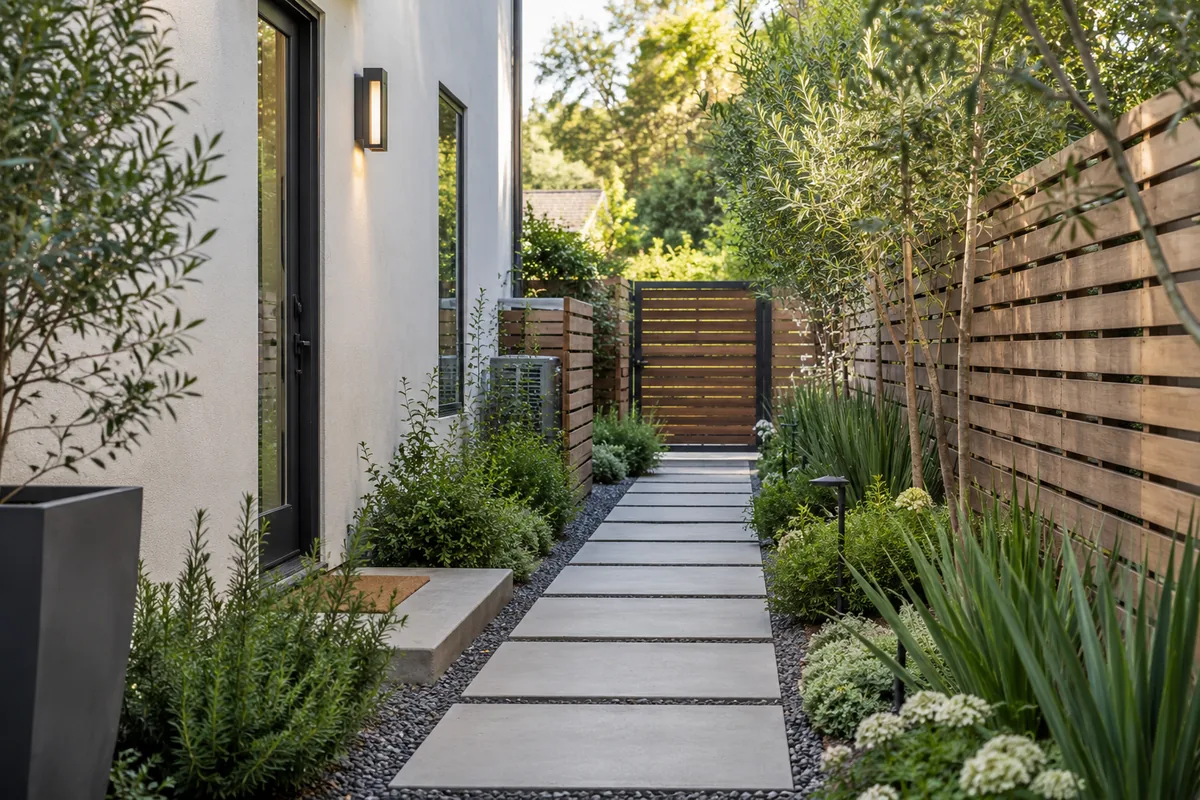
Modern side yard ideas that make service space deliberate
Explore modern side yard ideas for coherent surfaces, reachable equipment, restrained planting, practical storage, and a clear passage between garden spaces.
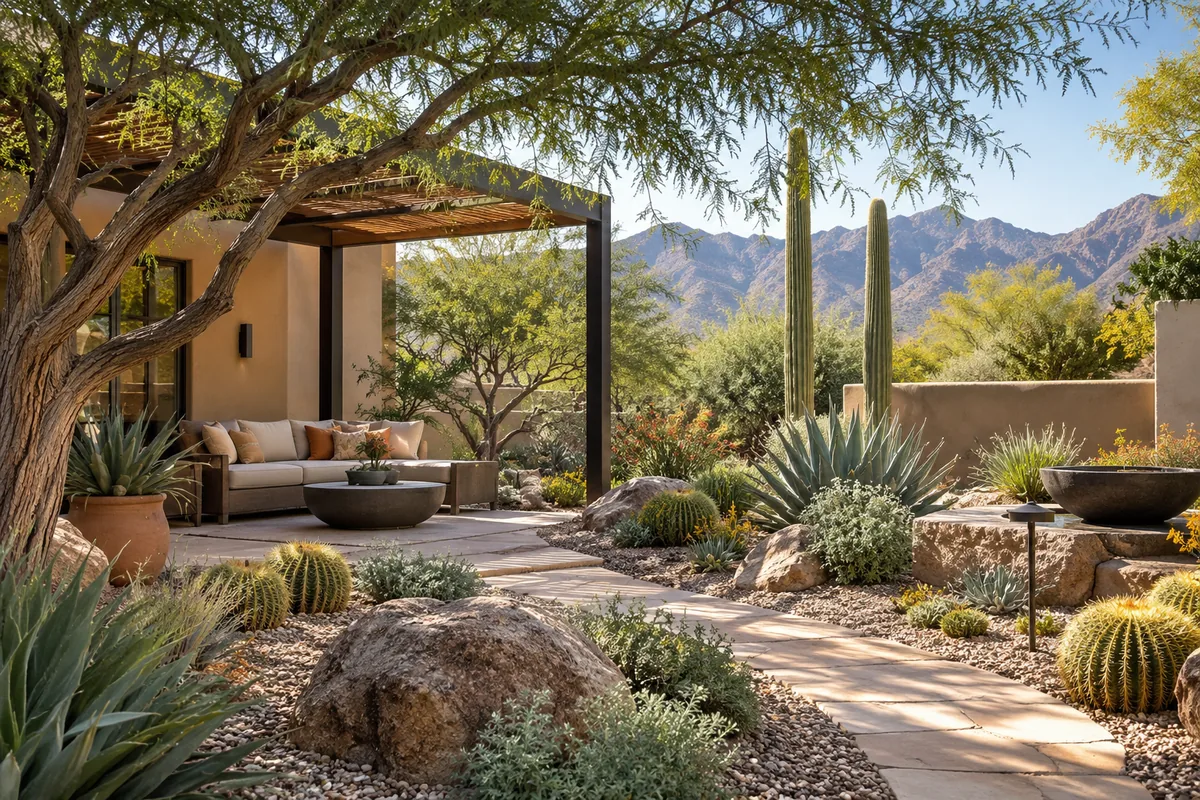
Desert landscape style: shade, stone, and plant form
Understand desert landscape style through plant form, mineral surfaces, useful shade, and heat-aware layouts, while separating its appearance from xeriscaping.
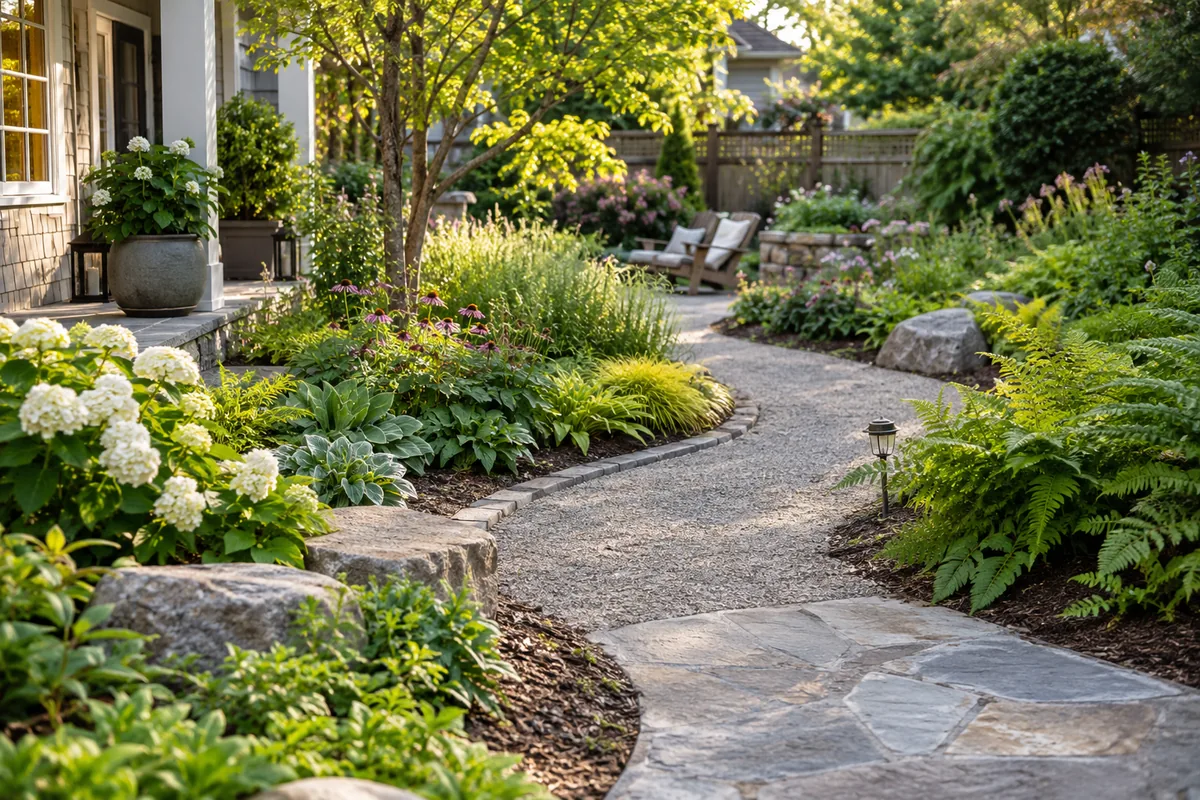
How to Plan Garden Paths Around Real Movement
Plan garden paths with observed routes, tested circulation, practical surface choices, and professional drainage and lighting review before installation.
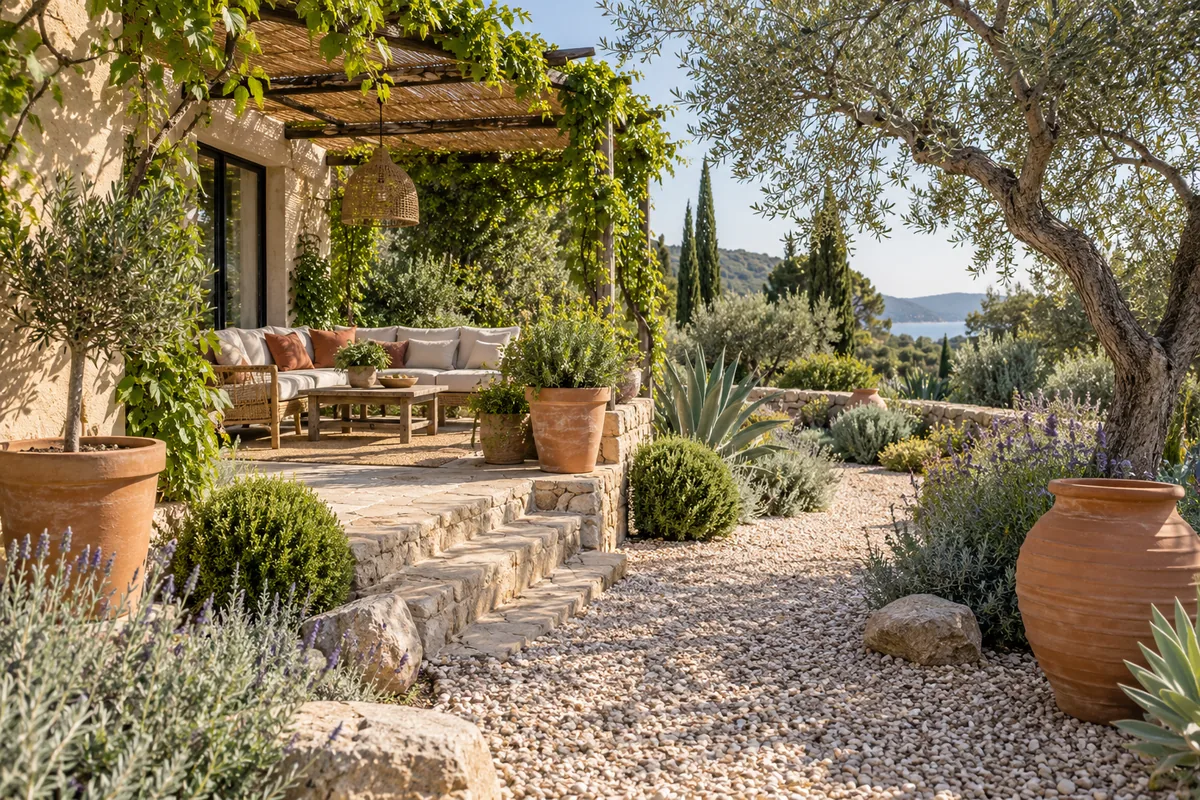
Mediterranean garden style: shade, gravel, and warm color
Understand Mediterranean garden style through shade, gravel, clay pots, and silver foliage, with practical ways to adapt the visual language to local climates.