
By AI Landscape Design Team · Editorial policy
Flagstone paving vs Manufactured pavers: Which Fits Your Yard?
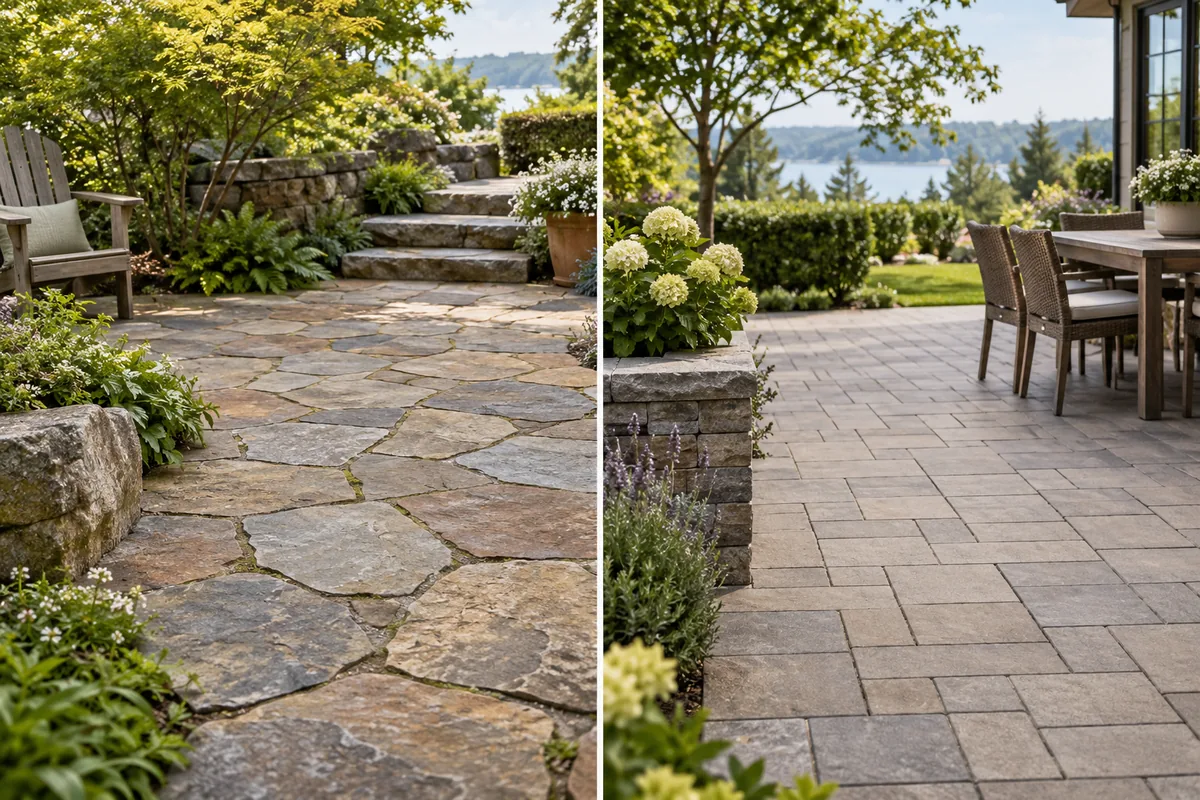
Choose flagstone for natural stone variation and a layout that accommodates its character; choose manufactured pavers for a more repeatable unit system and controlled pattern. Flagstone can itself be used as paving, so this comparison concerns natural slabs versus manufactured units. Ask how each installation will achieve comfortable levels, appropriate joints, water management, and repair access at your site.
Published · 6 min read
Key takeaways
- Relative cost: Moderate to Higher; Moderate to Higher.
- Maintenance: Stone-specific surface and joint care; Product-specific surface and joint care.
- Lifespan factors: Stone setting and site conditions; Units supporting layers and restraint.
| Dimension | Flagstone paving | Manufactured pavers |
|---|---|---|
| Relative cost | Moderate to Higher | Moderate to Higher |
| Maintenance | Stone-specific surface and joint care | Product-specific surface and joint care |
| Lifespan factors | Stone setting and site conditions | Units supporting layers and restraint |
| DIY difficulty | Higher with irregular fitting or rigid setting | Higher for preparation and reliable levels |
| Best for | Natural variation and selected stone character | Repeated patterns and controlled unit scale |
| Flatness | Accommodate thickness and texture variation | Accommodate setting and joint requirements |
| Repair | Match stone and restore setting system | Replace units and restore support |
What exactly is being compared?
Flagstone describes relatively flat natural stone used in paving, with characteristics that vary by the particular stone and product. Pavers is a broader term, so specify whether the alternative is manufactured concrete or another unit. An irregular flagstone layout and a regular concrete paver layout offer an obvious visual contrast, but cut stone can also form a geometric pattern. Do not reduce the decision to natural versus formal. Ask to see the actual stone or unit selections, including thickness and surface variation. A sample photograph may show a carefully chosen area rather than the range in a delivery. The product definition should be clear before comparing installation proposals or maintenance expectations.
How does the pattern change the yard?
Irregular stone outlines can create an organic rhythm beside a loose planting border, while repeated manufactured units can reinforce a straightforward route or terrace shape. Either can be visually quiet if color and joints are restrained. Compare the scale of the pattern with the house facade and furniture rather than selecting by close-up texture alone. A busy stone field can compete with detailed brickwork; a bold paver border can create the same problem. Keep the desired focal point in mind. If the garden should emphasize planting, the surface may work best as a supporting field rather than another collection of strong contrasting shapes.
What needs checking about flatness?
Natural variation in slab thickness and surface texture must be accommodated by a suitable installation. Manufactured units also need correct preparation and setting to avoid unevenness. Ask how the final levels and joints will support walking, chair movement, and any relevant accessibility requirements. Inspect representative surfaces in person where possible and do not assume natural cleft texture will be comfortable for every use. A dining chair or stroller may reveal issues that a photograph conceals. Let a qualified local professional evaluate the essential routes and transitions. The appeal of a varied stone surface should not override the need for a dependable path between a door and a gate.
What is different about dry and wet setting?
Flagstone may be used in different installation systems, including appropriately designed dry-laid or mortar-based arrangements. Their suitability depends on the stone, ground, use, and local conditions. Manufactured pavers also belong to specified systems rather than a single generic method. Discuss supporting layers, movement, joint treatment, and water management with the installer and relevant licensed professionals. Do not choose a setting method merely because a tutorial makes it look simple. A rigid and a flexible surface can have different repair and movement implications. The proposal should state the actual system so a material comparison does not hide two very different construction scopes beneath similar-looking top surfaces.
How will cleaning and seasonal care work?
Ask for care guidance specific to the stone or paver product, including compatible cleaning methods and any finish treatment. Natural stone does not have one universal resistance to stains, weather, or chemicals. Manufactured products differ too. Examine where leaf litter, food spills, or irrigation water will reach the terrace and how equipment can get around the furniture. Stronger cleaning methods can create new problems if unsuitable for the selected surface or joints. Seasonal exposure matters, particularly where freezing conditions apply, so confirm product and installation suitability locally. Avoid quoting a generic lifespan based on the category. Maintenance and exposure influence the result alongside the original material choice.
How should costs and repairs be evaluated?
Flagstone can require careful selection and fitting, while repeated units can simplify some layout decisions. Product price, transport, site access, preparation, cuts, and installation method all affect the project. Obtain quotations for the same usable area and technical requirements. Ask how a damaged or displaced section would be repaired and whether replacement material could differ from the original. Natural variation may help a new piece blend, but it can also make matching unpredictable. Retaining appropriate spare material may be useful where practical. Broad relative cost labels cannot establish which proposal is better value unless their supporting work and future care have also been compared.
Can the materials share a route?
They can, although the transition should earn its place. A manufactured unit edge around a stone area may provide a visual frame, or a stable paver approach may lead to a stone sitting zone. The responsible professional should resolve levels, joint relationships, movement, and runoff between the systems. Contact 811 before excavation in the United States and consider private utilities separately. Obtain licensed advice for drainage alterations, retaining work, and structural or electrical features. If the project includes planting pockets, confirm the actual growing conditions and locally appropriate plants; a decorative gap between slabs is not automatically a suitable location for a species shown in a reference image.
How do you make a choice beyond the sample board?
Compare the full patio or path from the doorway and the intended seated position. Look at joints, edge scale, and the relationship with the house, then consider how it will feel to use. AILandscape concepts can support visual exploration from your photo, while stone selection, levels, drainage, and installation require local confirmation. Treat any irregular pattern in the image as illustrative rather than a cutting diagram. The preferred surface should offer an appearance you like and a credible plan for flatness, care, and repairs. Choose natural variation deliberately, or choose repetition deliberately; neither is an automatic upgrade if it makes the everyday route less practical.
Frequently asked questions
Is flagstone different from all pavers?
Flagstone is itself used as paving, so the terms can overlap. In this comparison, flagstone means natural slabs and pavers means manufactured units. Clarify the exact products before comparing cost, flatness, maintenance, or installation methods.
Can flagstone be laid without mortar?
Some flagstone installations use appropriate dry-laid systems, but suitability depends on the stone, ground, intended use, and local conditions. Ask a qualified professional to assess the system. The possibility of dry setting does not make every slab or site suitable for the same method.
Which is better for a dining patio?
Choose the actual surface that can provide comfortable furniture movement, dependable levels, and appropriate joints for your site. Either natural stone or manufactured units may work when properly specified. Test representative samples and discuss access requirements rather than ranking by material name alone.
Related reading
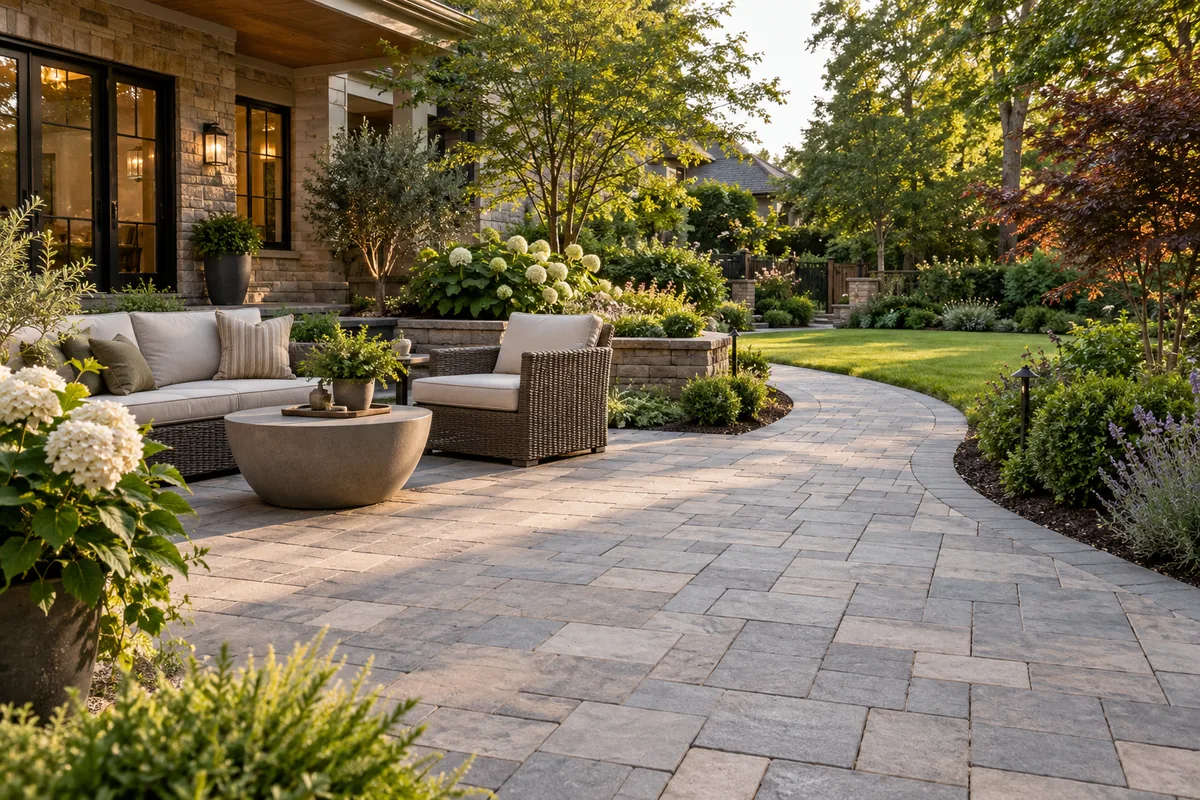
Concrete Pavers for Patios, Paths, and Yard Routes
Learn how concrete pavers fit your yard, with practical material, placement, upkeep, and safety questions to review before choosing a visual direction.
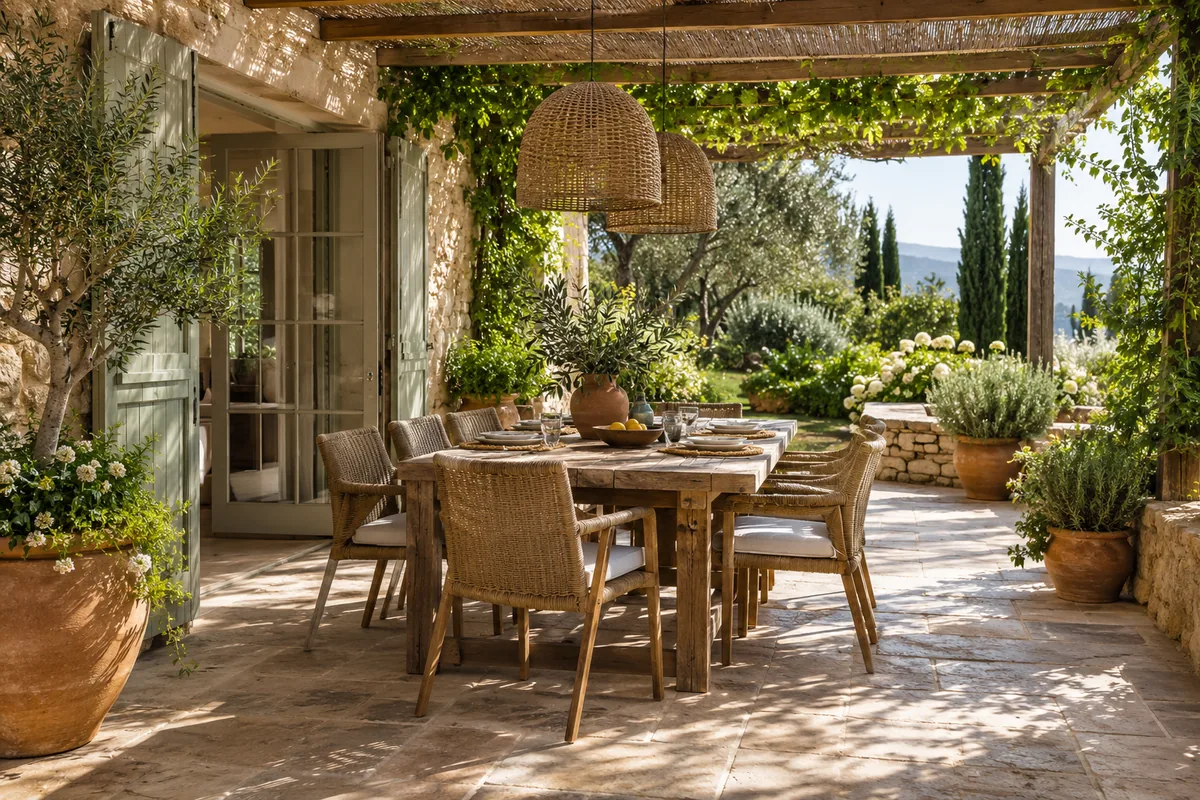
Mediterranean patio ideas for shaded meals and warm materials
Find Mediterranean patio ideas for clay pots, quiet stone colors, useful shade, comfortable dining, and locally suitable container planting around the room.
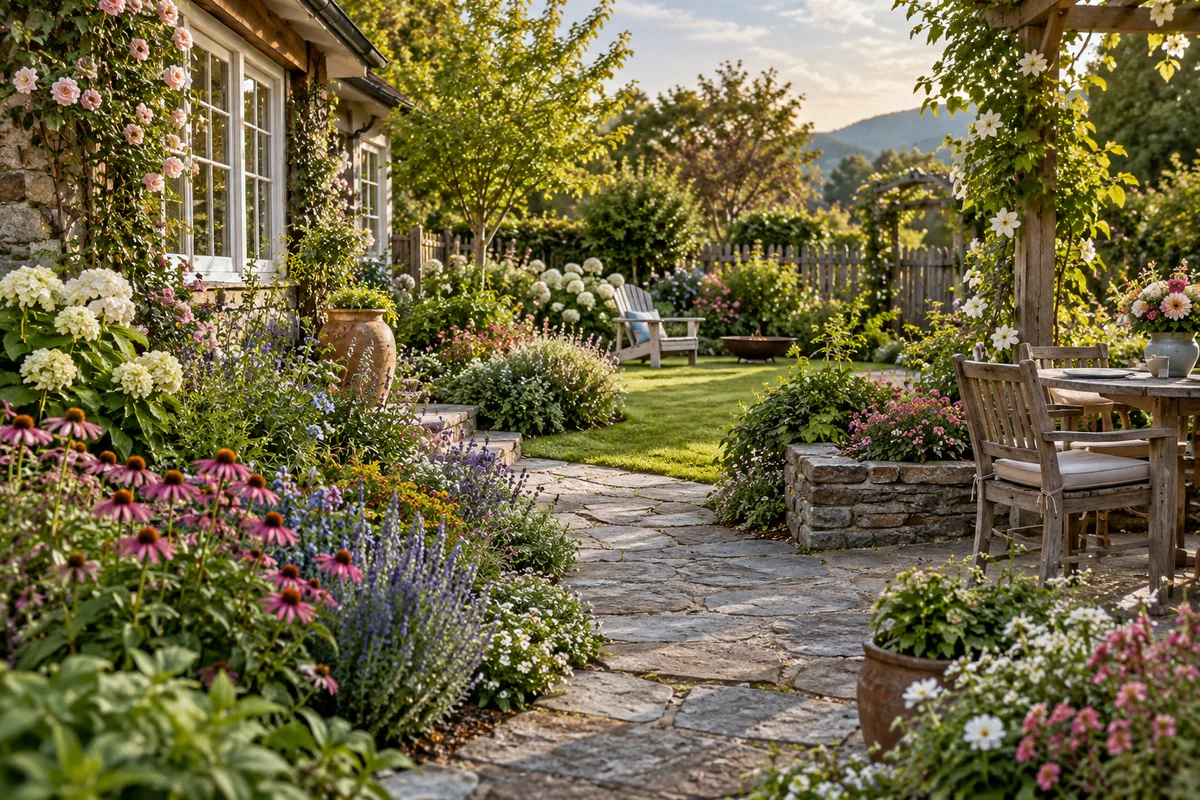
Cottage backyard ideas for flowers, seats, and seasonal life
Explore cottage backyard ideas for layered flowers, comfortable seats, connected borders, productive corners, and practical access through seasonal planting.
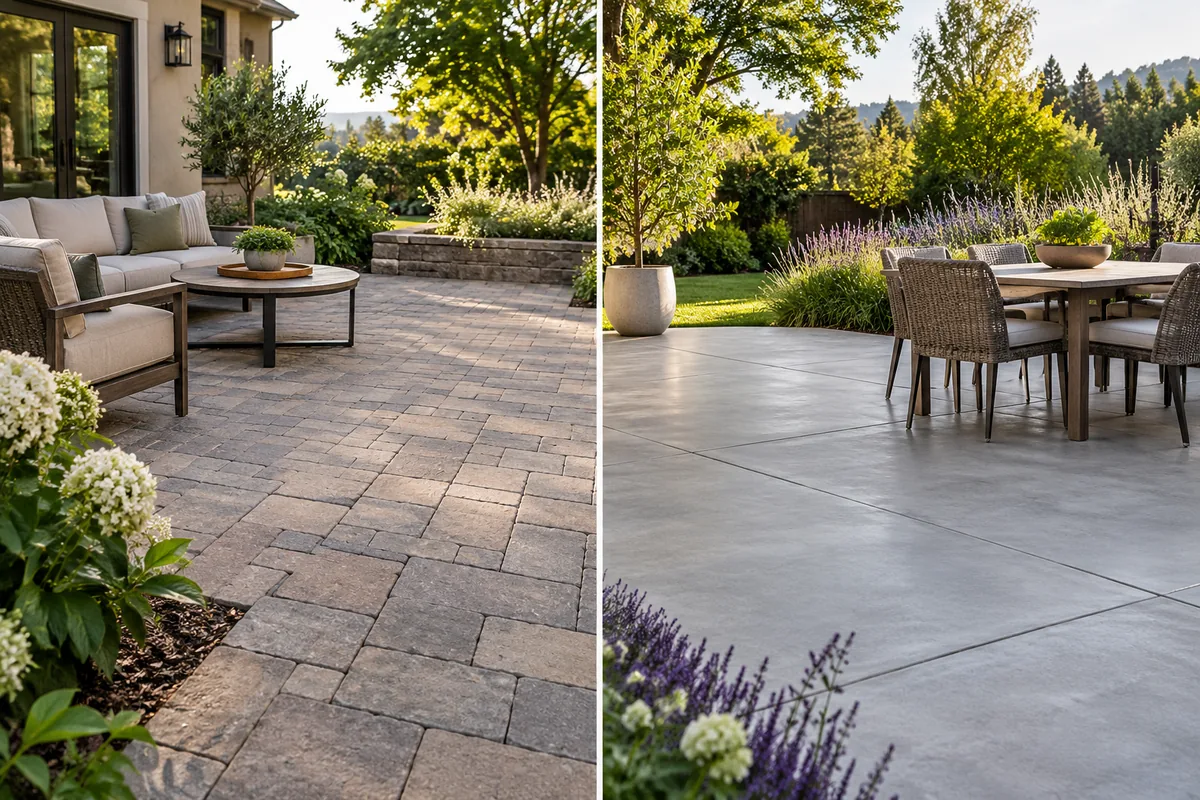
Pavers vs Poured concrete patio: Which Fits Your Yard?
Compare pavers and poured concrete patio for your yard. Review layout, materials, upkeep, and practical trade-offs before choosing a direction.
What Is Axis in Landscape Design?
Learn what axis means in landscape design, with a practical yard example, related terms, and the site decisions to check before making changes.
Desert landscape style: shade, stone, and plant form
Understand desert landscape style through plant form, mineral surfaces, useful shade, and heat-aware layouts, while separating its appearance from xeriscaping.