
By AI Landscape Design Team · Editorial policy
Brick pavers vs Concrete pavers: Which Fits Your Yard?
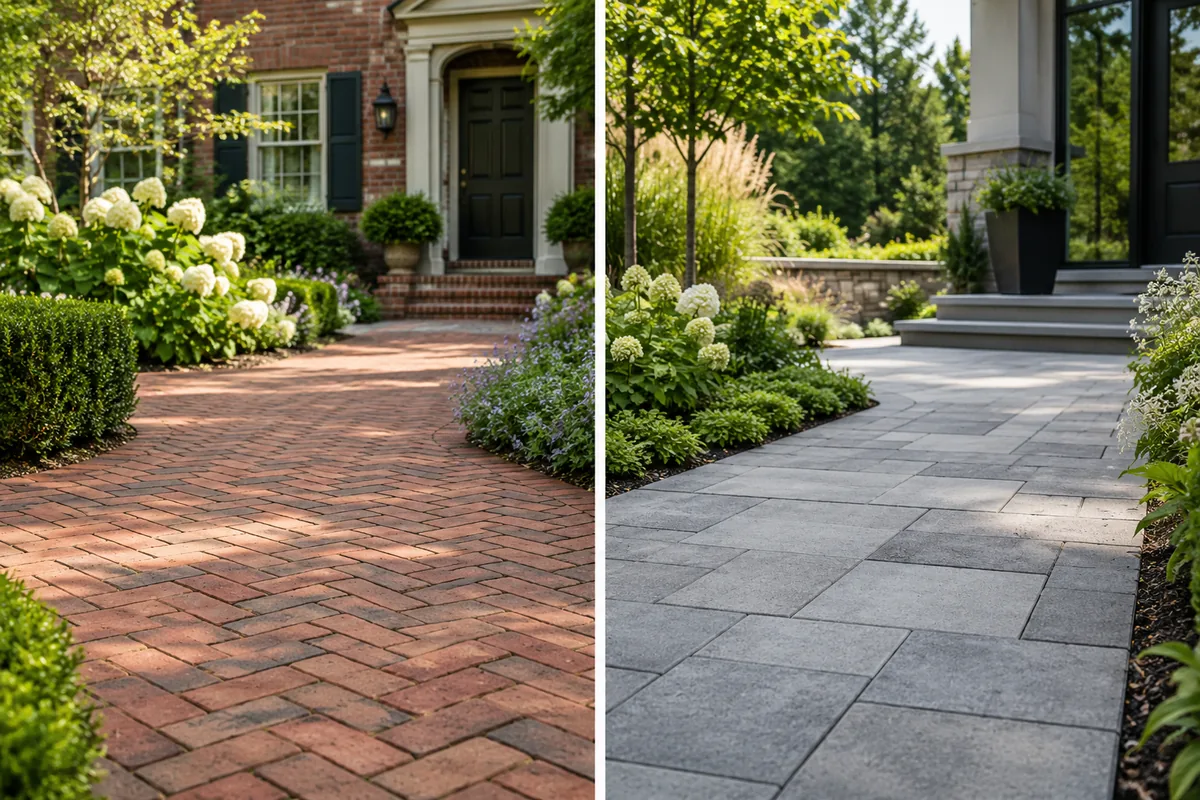
Choose paving brick when the particular clay color and familiar unit scale fit the house; choose concrete pavers when their available shapes, sizes, and finishes better support the layout. Compare exterior paving products rather than assuming all bricks or concrete units are interchangeable. Durability, color behavior, and installation suitability depend on the actual product and its conditions of use.
Published · 6 min read
Key takeaways
- Relative cost: Moderate to Higher; Moderate to Higher.
- Maintenance: Product-specific joint and surface care; Product-specific joint and surface care.
- Lifespan factors: Paving suitability condition and exposure; Unit quality base and exposure.
| Dimension | Brick pavers | Concrete pavers |
|---|---|---|
| Relative cost | Moderate to Higher | Moderate to Higher |
| Maintenance | Product-specific joint and surface care | Product-specific joint and surface care |
| Lifespan factors | Paving suitability condition and exposure | Unit quality base and exposure |
| DIY difficulty | Higher for preparation and fitted patterns | Higher for levels restraint and pattern |
| Best for | Selected clay texture and familiar scale | Choice of repeated shapes and finishes |
| Color | Verify clay product and finish behavior | Verify pigment and finish behavior |
| Reclaimed use | Assess each product and condition | Assess each product and condition |
What product should be specified?
Start by distinguishing paving brick from a brick selected for another building use. Ask the supplier to identify the product's intended exterior paving application and relevant performance information. Concrete pavers likewise come in different products and systems, not one universal block. The comparison should name the units being considered and the installation each requires. Reclaimed material can offer appealing texture, but its suitability and condition must be assessed before treating it as a saving. A charming old brick may not be appropriate for the exposure or traffic at your site. Ask the responsible installer what information is needed to use either option rather than substituting appearance for product verification.
How will the surface relate to an older house?
Brick paving can connect visually with a house that already uses related masonry, though an exact match is not always the quietest choice. A nearly matching color can make small differences conspicuous. Concrete pavers can support an older building through restrained color and scale without pretending to be the same material. Put full samples beside the actual facade and compare them in ordinary daylight. Examine whether the path should blend into the building or form a separate foreground. Avoid adding several border patterns just to emphasize that the project is new. The useful relationship is between the whole surface and the house, not between isolated units on a display board.
What should be asked about color?
Clay paving brick and concrete pavers can have different color sources and finish characteristics, but neither category has a single predictable appearance over time. Ask how the specific product's color is produced, whether a surface treatment is involved, and what changes are covered in its guidance. Inspect an established installation as well as a new sample where possible. Dirt, weather, cleaning, and replacement pieces can affect the visible match. Do not promise permanent color based on the material name. A varied color range may accommodate changes more comfortably than a single uniform field, but that visual preference should not replace verification of the product and its intended use.
Does unit consistency make installation easier?
A repeatable size can support a controlled pattern, while variation in reclaimed or particular clay products may need accommodation. Concrete products can also differ in tolerance, shape, and surface texture. Ask how joints, cuts, and the chosen pattern will handle the actual units delivered. A precise layout on paper may require substantial cutting near an irregular boundary. Consider a simpler pattern if the house or planting already provides visual detail. Installation quality depends on supporting layers, restraints, levels, and appropriate joint treatment as well as unit dimensions. Consistency can help organize the work, but it does not remove the need for a suitable system at the site.
Which ongoing care should be expected?
Plan to clear debris, inspect joints, and address any movement or damaged units using the guidance appropriate to the product. Ask about compatible cleaning methods, especially where color treatments or surface finishes are involved. Leaves from adjacent planting and soil washed from a border can affect either material. Provide a clear edge and maintenance access rather than relying on aggressive cleaning to compensate for a poor arrangement. Sealing is a product-specific decision, not an automatic requirement or universal benefit. Review the surface wet and consider any access requirements that matter to the household. A visually traditional brick route still needs dependable levels and appropriate footing.
What do the cost categories leave out?
Material costs are only part of the project. Delivery, access, demolition, supporting work, cuts, edge restraints, and labor can alter the comparison between brick and concrete products. Reclaimed brick may need sorting and assessment that is not visible in a low purchase price. Elaborate concrete patterns can involve more work than a simple brick arrangement. Obtain quotes for the same route or terrace and ask what happens if the delivered product differs from the sample. Keep the comparison at the level of scope rather than assigning universal prices. Broad Moderate or Higher labels are prompts to investigate, not estimates for your property or guarantees of long-term value.
What needs checking in freezing conditions?
Ask whether the units, supporting system, and maintenance guidance are appropriate for the actual climate, including any relevant freeze-thaw or deicing exposure. Do not assume that every brick is frost-resistant or every concrete paver behaves the same way. Licensed local professionals should review drainage and grading so water movement is considered alongside the surface selection. Contact 811 before excavation in the United States and clarify private utility locating requirements. If the route crosses near trees, obtain appropriate advice about roots and protection. The visual compatibility with a historic facade does not establish the safety or technical suitability of the ground work.
How can you choose a pattern with confidence?
Hold the path position and width requirements constant while comparing a restrained brick pattern with the concrete product you actually intend to use. AILandscape provides visual exploration from a yard photo; local assessment must verify the products, levels, drainage, and construction details. Use the concept to evaluate how the surface reads from the street and entrance, then return to samples and installer guidance. Keep a record of selected units for future maintenance. The best choice is one whose visual scale fits the house and whose care and installation are understood, rather than one chosen solely because brick sounds traditional or concrete sounds contemporary.
Frequently asked questions
Can any old brick be reused as paving?
No. The intended application, condition, and exposure suitability need assessment. Reclaimed appearance alone does not establish performance for an outdoor path or terrace. Ask the supplier and responsible installer to verify whether the particular brick is appropriate for the project.
Do concrete pavers always fade?
Appearance depends on the specific product, color method, finish, exposure, and care. Ask for product guidance and inspect established examples rather than using a universal claim about fading. Replacement units may also differ from an aged installation, whatever the material.
Which fits a brick house better?
Either can fit if color, scale, and pattern are considered with the actual facade. Matching brick exactly is not always necessary or desirable. Compare full samples outdoors and favor a coherent foreground rather than several competing borders or nearly matching tones.
Related reading
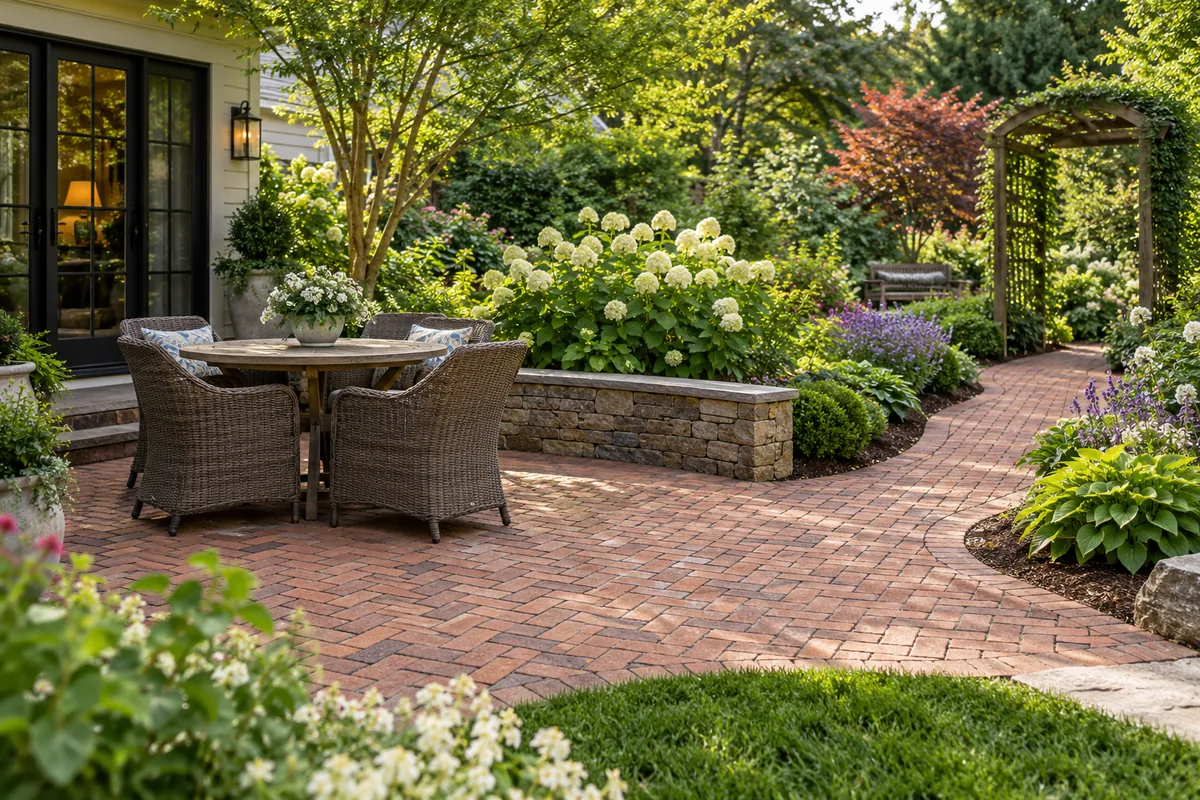
Brick Pavers for Useful Patios and Garden Paths
Brick Pavers for Patios and Paths: explore materials, placement, upkeep, and local safety questions before deciding how this feature fits your yard.
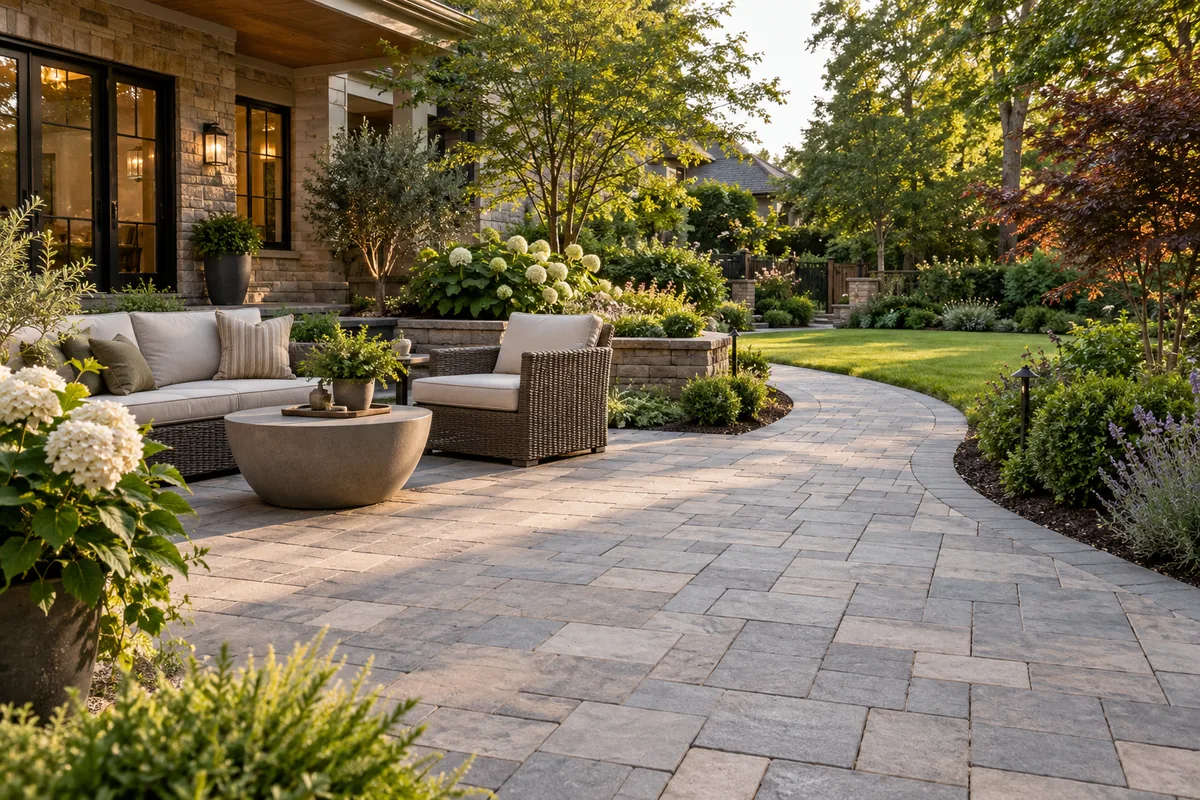
Concrete Pavers for Patios, Paths, and Yard Routes
Learn how concrete pavers fit your yard, with practical material, placement, upkeep, and safety questions to review before choosing a visual direction.
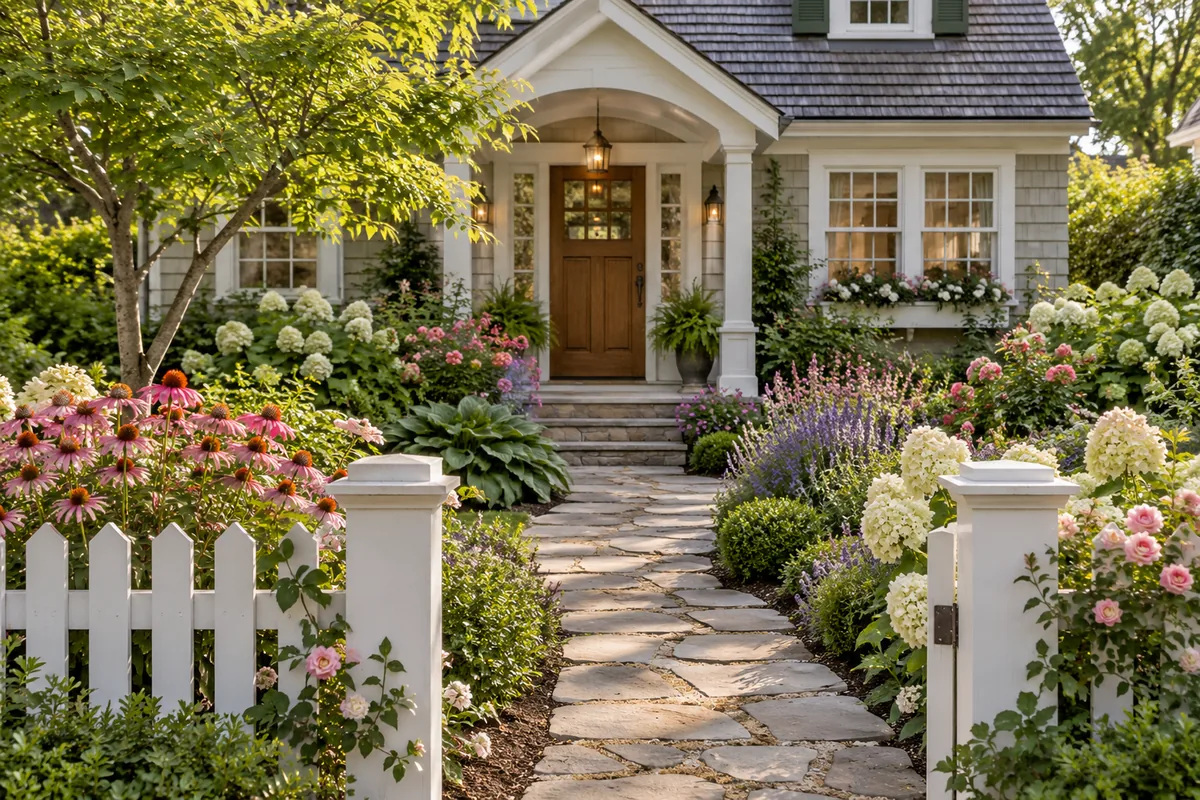
Cottage front yard ideas that welcome visitors through flowers
Find cottage front yard ideas for layered borders, useful gates, brick details, seasonal flower groups, and a welcoming entrance that stays easy to reach.
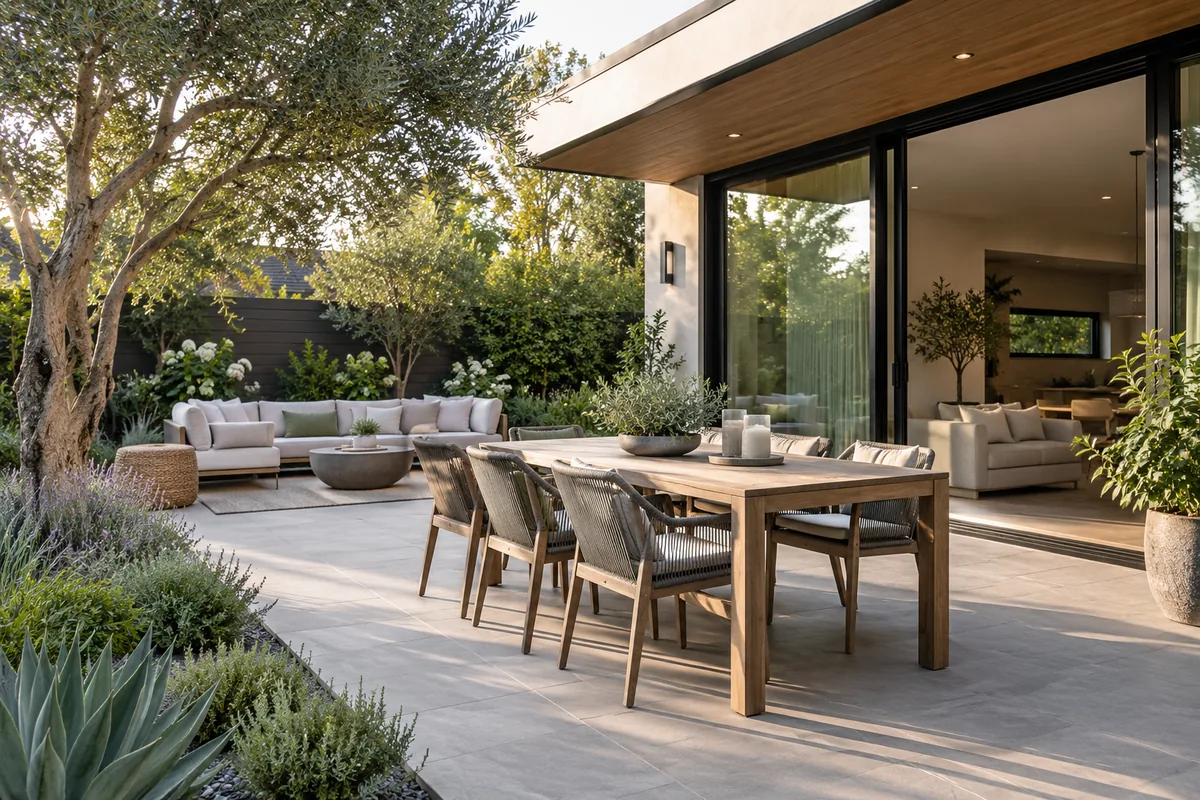
Modern patio ideas for clear furniture layouts and calm materials
Explore modern patio ideas for restrained surfaces, usable furniture, clear door connections, suitable containers, and deliberate shade and evening light.
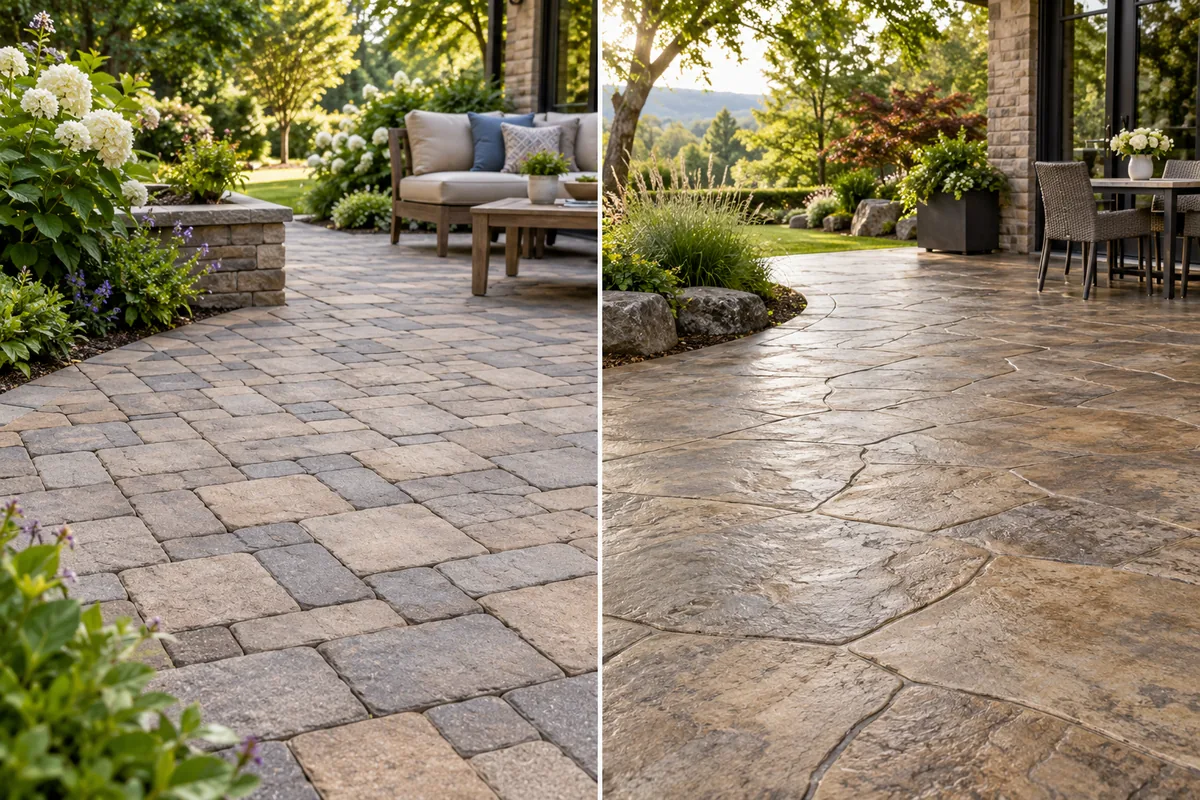
Pavers vs Stamped concrete: Which Fits Your Yard?
Compare pavers and stamped concrete for your yard. Review layout, materials, upkeep, and practical trade-offs before choosing a direction.
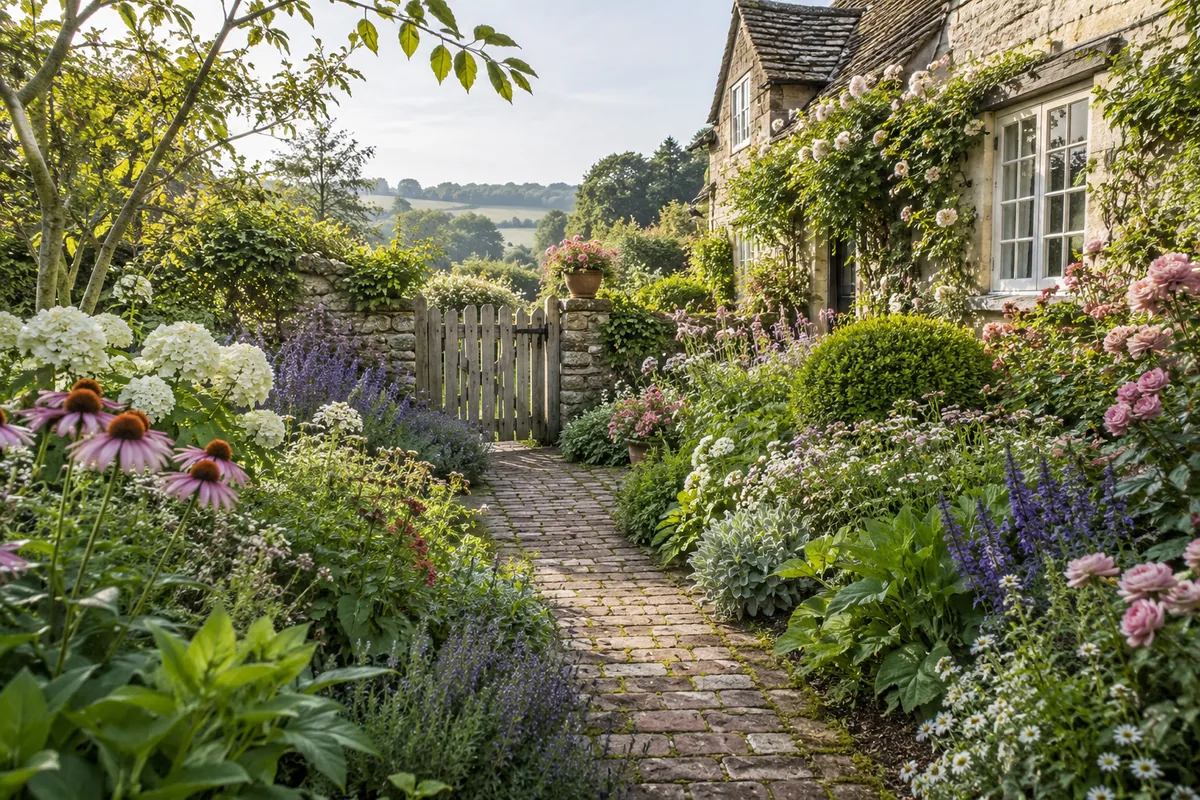
Cottage garden style: flowers with a working framework
Explore cottage garden style through layered flowers, selective self-seeding, clear paths, seasonal care, and the framework that makes informal planting usable.