
By AI Landscape Design Team · Editorial policy
What Is Softscape in Landscape Design?
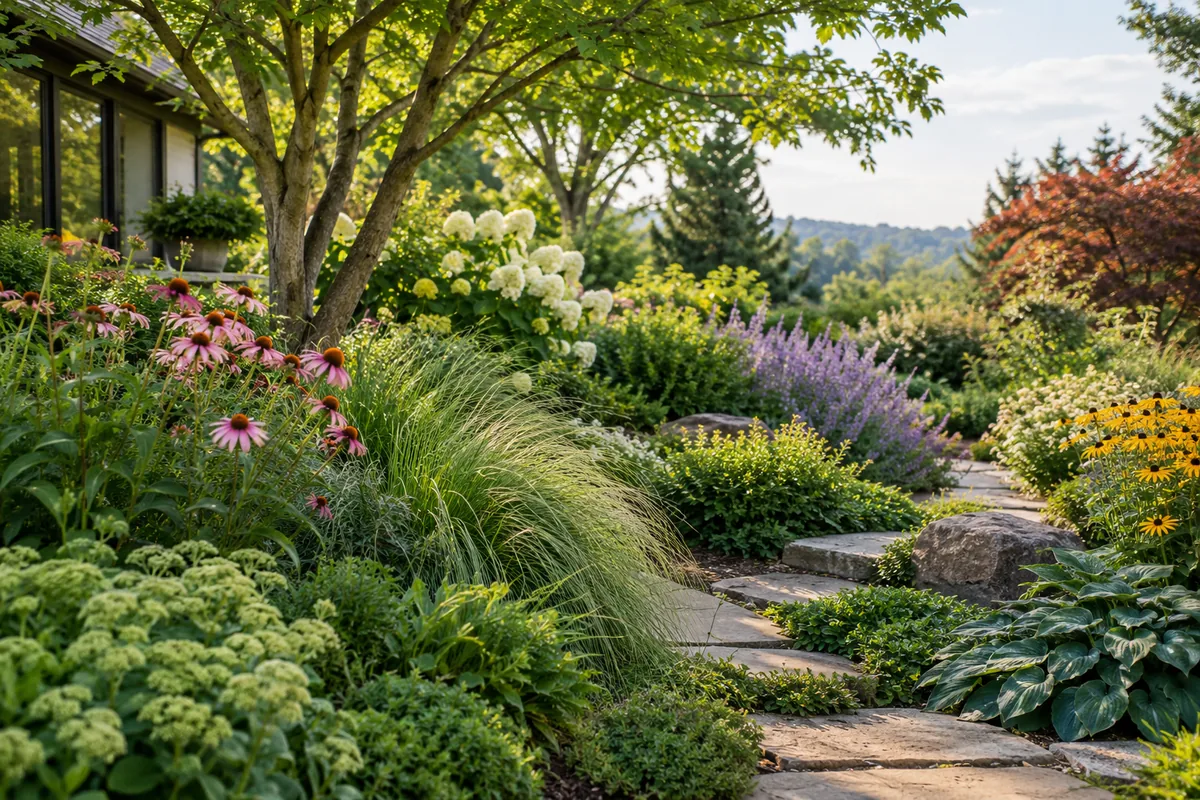
Softscape is the living planting in a landscape, including trees, shrubs, flowers, grasses, and ground cover that changes as plants grow and seasons pass. Planting brings movement, texture, and seasonal variation to an outdoor layout. Unlike paving, the eventual outline cannot be judged only from installation day. Mature spread, light, soil, and regional suitability shape how that planting will function.
Last updated · 2 min read
Key takeaways
- Softscape means living vegetation.
- Mature growth shapes the final planting outline.
- Plant roles do not establish local suitability.
How is softscape used in landscape design?
Choose planting roles before choosing individual varieties. A canopy may provide a visual ceiling, shrubs may establish a background, and low growth may mark the foreground. These are design roles rather than a verified plant list. Check the USDA hardiness zone and actual light, soil, and moisture conditions with local advice before buying. Local invasive status matters separately from appearance.
What does softscape look like in a yard?
In a front yard, a low border beside the entrance can show the walking route while a taller group near a wall balances the house visually. Leave room for mature growth instead of using nursery pot sizes to judge spacing. Avoid hiding vents, utility access, or steps. If pets can reach the bed, consult the ASPCA toxicity list before selecting plants.
Which terms help explain softscape?
The distinction from hardscape makes it easier to discuss living and constructed parts together. Layered planting describes their vertical arrangement; mass planting describes repeated groups. A visual concept can suggest these relationships, while local verification remains necessary for plant selection, maintenance, and any changes affecting drainage.
Frequently asked questions
Is lawn part of softscape?
Lawn is softscape because it is living vegetation. Its intended use and maintenance need separate consideration from the surrounding beds. A grass surface and a flower border can share a design without having the same care requirements.
Does softscape always mean flowers?
Flowers are only one part of softscape. Trees, foliage shrubs, ornamental grasses, and ground cover can provide most of a garden’s structure. Consider how those plants look and fit when they are not flowering.
Can softscape improve an existing patio?
Planting can change how the edge of an existing patio feels, provided there is suitable growing space. Confirm mature spread, root behavior, and local conditions first. Containers may offer another visual option but still require watering and suitable drainage.
Sources
Related reading
What Is Hardscape in Landscape Design?
Learn what hardscape means in landscape design, with a practical yard example, related terms, and the site decisions to check before making changes.
Zen garden style: stones, gravel, and deliberate space
Learn how zen garden style uses composed stones, raked gravel, restrained planting, and a chosen viewpoint, with practical limits for residential gardens.