
By AI Landscape Design Team · Editorial policy
What Is Knot Garden in Landscape Design?
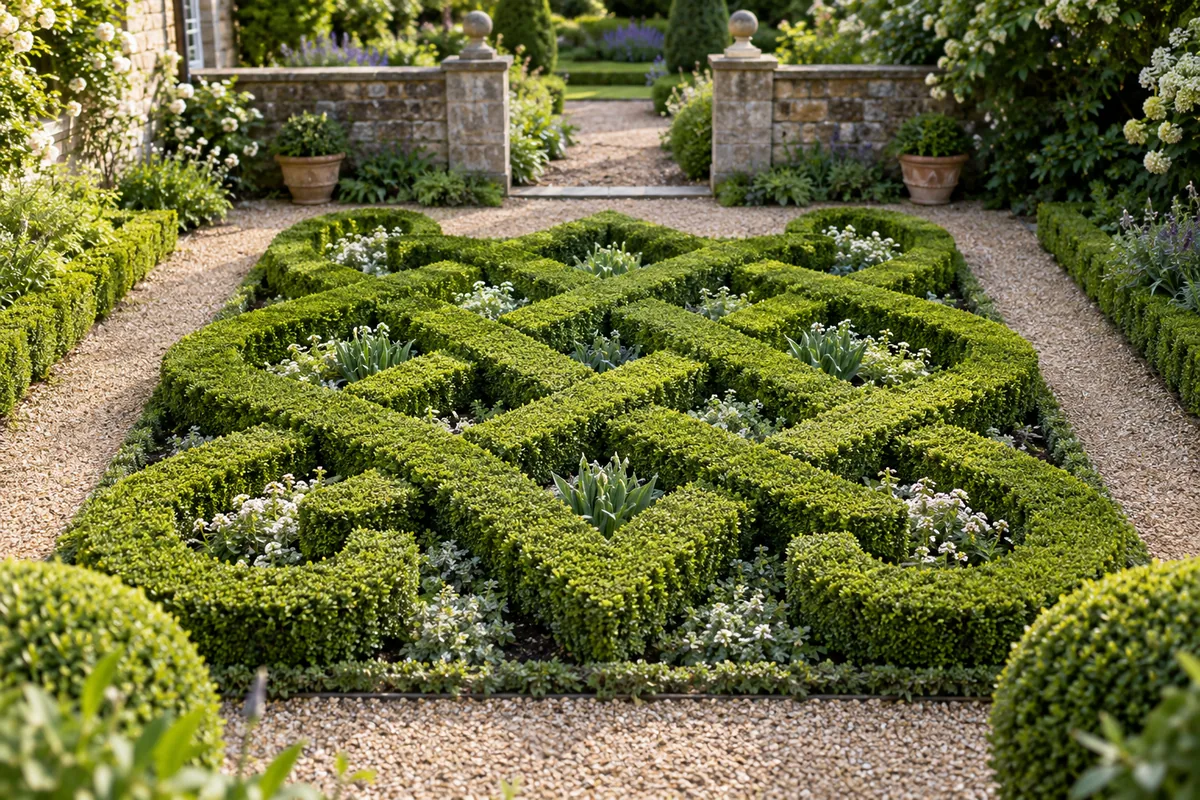
A knot garden is a formal planted pattern whose low outlines create the appearance of interlacing ribbons, usually arranged so the design can be appreciated from above. The visual effect comes from the relationship between the outlines rather than an abundance of separate flowers. A simple knot may be more workable than a complex pattern in a home garden. Its repeated trimming and access needs deserve attention before planting begins.
Published · 2 min read
Key takeaways
- The knot effect depends on interlaced outlines.
- Plan access around the pattern.
- Historical planting examples need local verification.
How is knot garden used in landscape design?
Draw the pattern and its maintenance access together. The outlines should remain distinct, but an intricate design can leave awkward places to reach. According to the Royal Horticultural Society, knot gardens use contrasting planted lines to suggest tied or interwoven ribbons. That description is a visual principle, not a recommendation to use a particular edging species in every region.
What does knot garden look like in a yard?
A garden bed viewed from an upstairs window might accommodate a modest interlaced pattern with open access around it. The pattern should not displace the front entrance route or utility access. Test how it reads from ground level as well. Verify any plant choice against local hardiness, pests, mature size, invasive status, and toxicity instead of assuming historical examples provide a suitable palette.
Which terms help explain knot garden?
A parterre is the wider family of formal patterned beds; a hedge may supply the living lines. An axis can establish their alignment. AI concepts can compare pattern clarity, while actual bed dimensions, plant health, and ongoing care must be checked independently before the design becomes a planting project.
Frequently asked questions
Does a knot garden need boxwood?
Boxwood appears in many reference gardens, but that does not make it the right choice for every site. Confirm local suitability and pest issues, and consider other locally appropriate edging. The interlaced pattern is the design idea, not a universal species prescription.
Can the knot pattern be seen from ground level?
Parts of the pattern may be visible from a path, but a raised viewpoint often makes the overall arrangement clearer. Evaluate the actual viewing positions available at home. An intricate design may offer little benefit when its shape cannot be appreciated.
Is a knot garden a low-maintenance option?
Keeping the outlines crisp can involve regular care and close attention to plant condition. Maintenance depends on the selected edging and site. Choose a manageable pattern rather than assuming a formal garden becomes easy once the initial layout is installed.
Sources
Related reading

What Is Parterre in Landscape Design?
Learn what parterre means in landscape design, with a practical yard example, related terms, and the site decisions to check before making changes.
What Is Hedge in Landscape Design?
Learn what hedge means in landscape design, with a practical yard example, related terms, and the site decisions to check before making changes.
What Is Axis in Landscape Design?
Learn what axis means in landscape design, with a practical yard example, related terms, and the site decisions to check before making changes.
Mediterranean front yard ideas with clay, shade, and texture
Find Mediterranean front yard ideas using clay pots, muted foliage, pale materials, sheltered entry details, and suitable planting beside a clear approach.
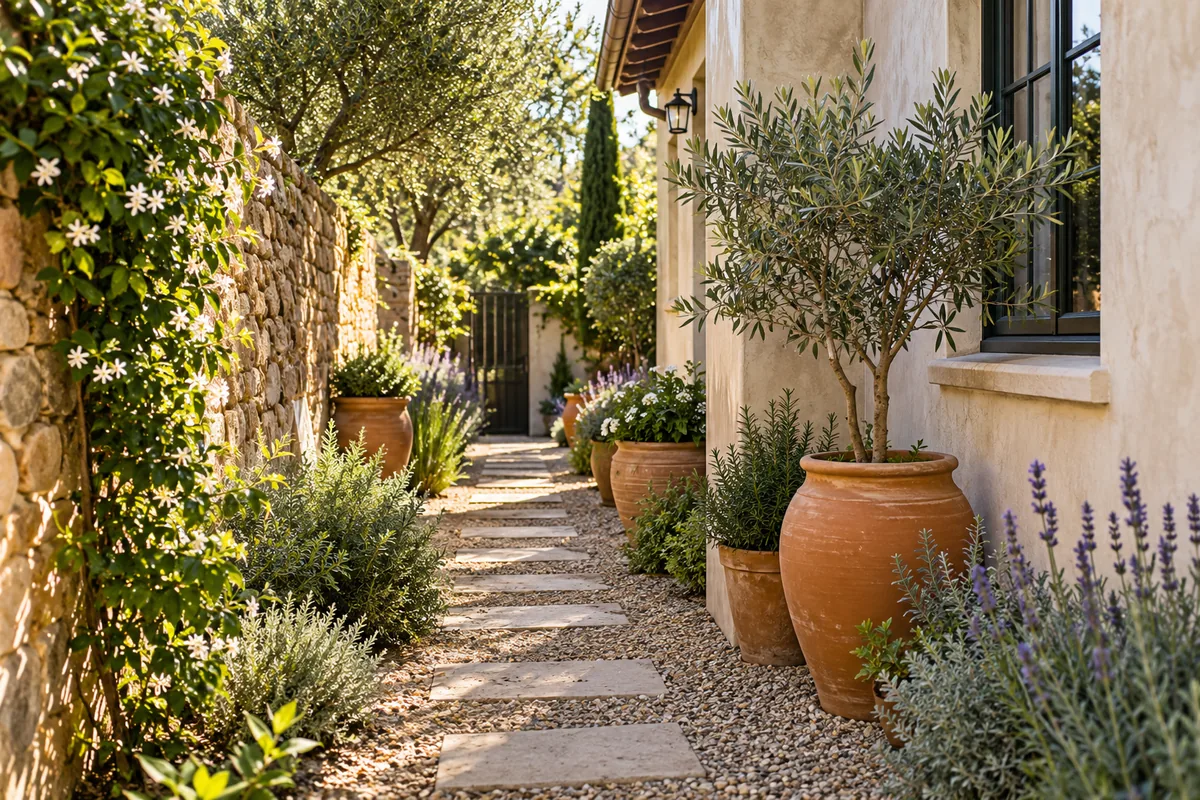
Mediterranean side yard ideas using clay, texture, and light
Find Mediterranean side yard ideas for warm material links, manageable clay pots, locally suitable foliage, clear gates, and practical passage maintenance.

Tropical landscape style: foliage, layers, and shelter
Explore tropical landscape style using large leaves, layered greenery, sheltered seating, and container strategies adapted to local weather and care routines.