
By AI Landscape Design Team · Editorial policy
Garden Pond Ideas With Practical Care and Safety
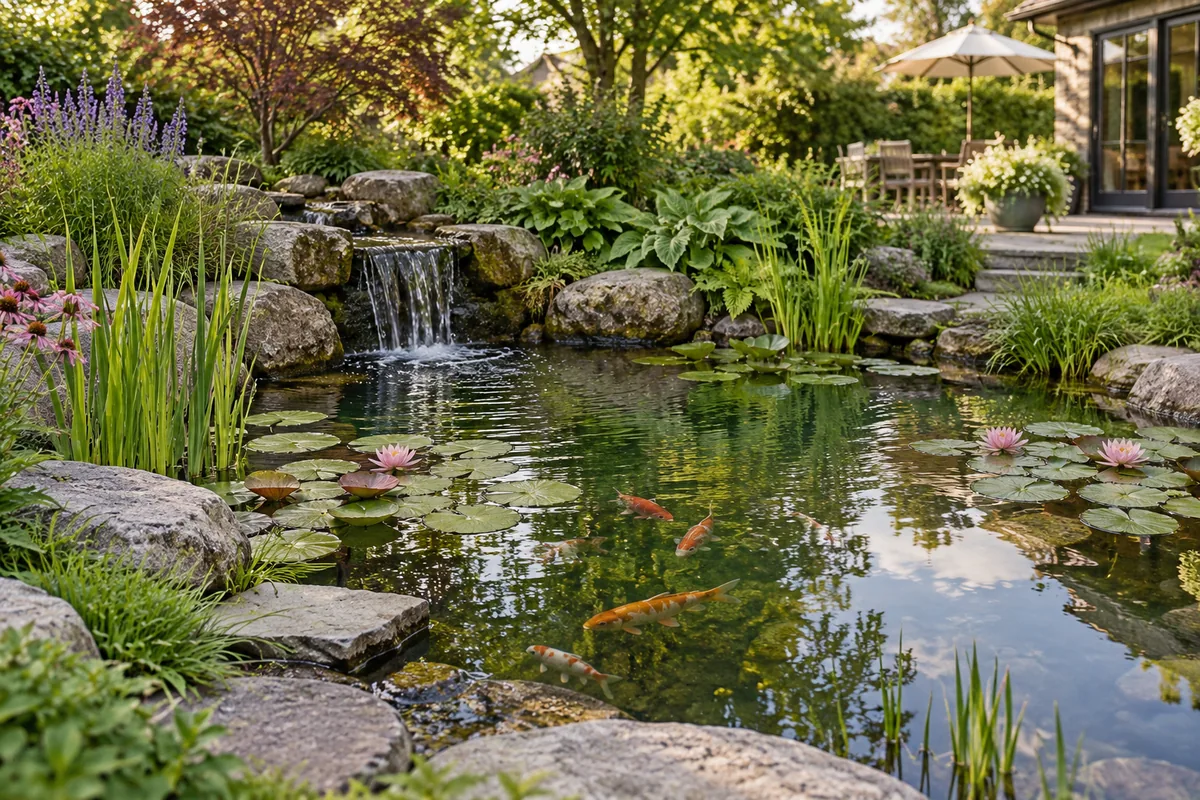
A garden pond is a deliberately managed water feature whose location, construction, plants, access, and care should suit its intended role. Choose between a wildlife-focused setting, a viewed water surface, or another specified use before selecting shape. Depth, edges, child supervision, barriers, water management, and services need local assessment; a clear-water concept image does not establish ecological balance or safe construction.
Published · 5 min read
Key takeaways
- Define the pond's role and upkeep before choosing its outline.
- Safety and local barrier requirements need specific review.
- Plant and equipment choices must be appropriate to the actual system.
What role should the pond serve?
A pond can provide a viewed water surface, a wildlife-oriented feature, or another carefully planned use. Those aims should not be combined casually without understanding the care and system requirements. Decide where it will be seen and how people reach it, then discuss the necessary site information with qualified advisers. A pond placed for a distant photograph may be hard to inspect or maintain. Keep a route for tools and any required servicing. The visual outline is only one part of the idea. The homeowner should be able to explain what makes the feature worthwhile and who will care for it throughout the year.
How do liner and prefabricated options differ?
A liner-based arrangement can allow particular shapes, while a prefabricated basin offers a defined form and product requirements. Both need suitable preparation, support, edge treatment, and site assessment. Ask the responsible professional what the selected system requires and how repairs or replacement would be handled. Do not infer installation simplicity from a small basin or a flexible-looking liner. Compare equivalent water use, access, and safety arrangements rather than only the purchase price of a component. A custom outline may be visually appealing but harder to reach or maintain. A fixed product can also be unsuitable if its shape conflicts with the garden's practical movement.
What should be checked about depth and edges?
Actual geometry must be assessed for the intended use, construction, local conditions, and safety requirements. Do not prescribe a universal depth from a decorative reference. Edges influence visibility, access, and maintenance, and changes in nearby level can introduce other responsibilities. Qualified local professionals should review the proposal and any applicable barrier or fence requirements. Where children may be present, supervision and access control need deliberate planning; do not assume a shallow-looking pond is harmless. The household should understand how the area is used when the feature is unattended as well as during a supervised visit.
How should ecological balance be discussed?
Plants, water conditions, organic inputs, and the actual intended use influence the pond's behavior. According to the Royal Horticultural Society, aquatic plants can provide habitat roles as well as visual interest. That does not mean any plant list will automatically produce clear water or a self-maintaining ecosystem. Obtain locally appropriate aquatic-gardening advice and avoid overpromising outcomes from a new installation. If fish or other managed uses are considered, investigate their specific responsibilities separately rather than adding them because they appear in a photograph. A useful plan explains monitoring and intervention as well as the desired appearance.
Which plants should be investigated?
Consider the roles of marginal, emergent, floating-leaved, and submerged planting, then verify species and cultivars for the actual site. Check regional restrictions and invasive status; do not recommend water hyacinth or another restricted plant as a default decorative choice. USDA hardiness zone and local conditions matter, but aquatic suitability involves additional system-specific needs. Where pets can reach planting, consult the ASPCA toxicity list and relevant advisers. Buy from reliable sources and never release unwanted aquatic plants into natural waterways. A picture cannot reliably identify a species or establish that it belongs in your region or pond system.
What maintenance and mosquito questions belong in the brief?
Debris, plant growth, water conditions, and any equipment require observation and appropriate care. Ask local aquatic-gardening and public-health advisers about mosquito concerns and the actual system; do not promise that a pump, fish, or plant will universally solve them. According to the Royal Horticultural Society, pond care involves monitoring and selective maintenance rather than treating the feature as a finished ornament. Keep access to remove or tend appropriate material without unsafe reaching. Follow relevant product guidance for equipment. Avoid casual chemical recipes in a homeowner design guide. The maintenance plan should fit the site's conditions and the household's available attention.
Who should handle construction and services?
Drainage, structural edges, electrical equipment, water connections, and other regulated work need appropriate licensed local professionals. Contact 811 before excavation in the United States and investigate separately locating private services. Verify any local permissions and responsibilities before purchasing equipment or a basin. The site assessment should address what happens during rain, servicing, and unexpected conditions. Costs depend on preparation, system, access, planting, services, and ongoing care, not only pond size. A small water feature can still introduce technical and safety responsibilities. Keep those obligations explicit rather than allowing the outline and decorative stone to dominate the entire conversation.
How should a concept be evaluated?
Compare the pond's view and route with another focal feature under the same garden-use brief. AILandscape provides visual concepts; it does not verify pond safety, ecological balance, plant identity, drainage, equipment, or construction. Take the preferred direction to qualified local advisers with actual site information. Revise the shape or location when access and safety require it. A clear water surface in the image should not be treated as a guaranteed everyday condition. A successful pond idea balances the desired experience with credible supervision, plant screening, inspection, and a realistic plan for maintaining the actual water system.
Frequently asked questions
Is a shallow pond automatically safe for children?
Do not assume it is. Supervision, access control, edge design, and applicable local barrier requirements need deliberate assessment. A shallow appearance in a photograph is not a safety finding. Review the actual proposal with appropriate local professionals and advisers.
Will aquatic plants guarantee clear water?
No. Plants can contribute roles within a pond, but water conditions and balance depend on the whole system and its care. Seek locally appropriate advice and monitor the feature. Avoid treating an attractive planting list as a guarantee of clarity or maintenance-free behavior.
Can unwanted pond plants be released nearby?
No. Do not release garden aquatic plants into natural waterways. Check regional invasive restrictions before purchase and obtain appropriate disposal guidance. A species suitable for one managed feature can still cause ecological problems outside that setting or in another region.
Sources
Related reading
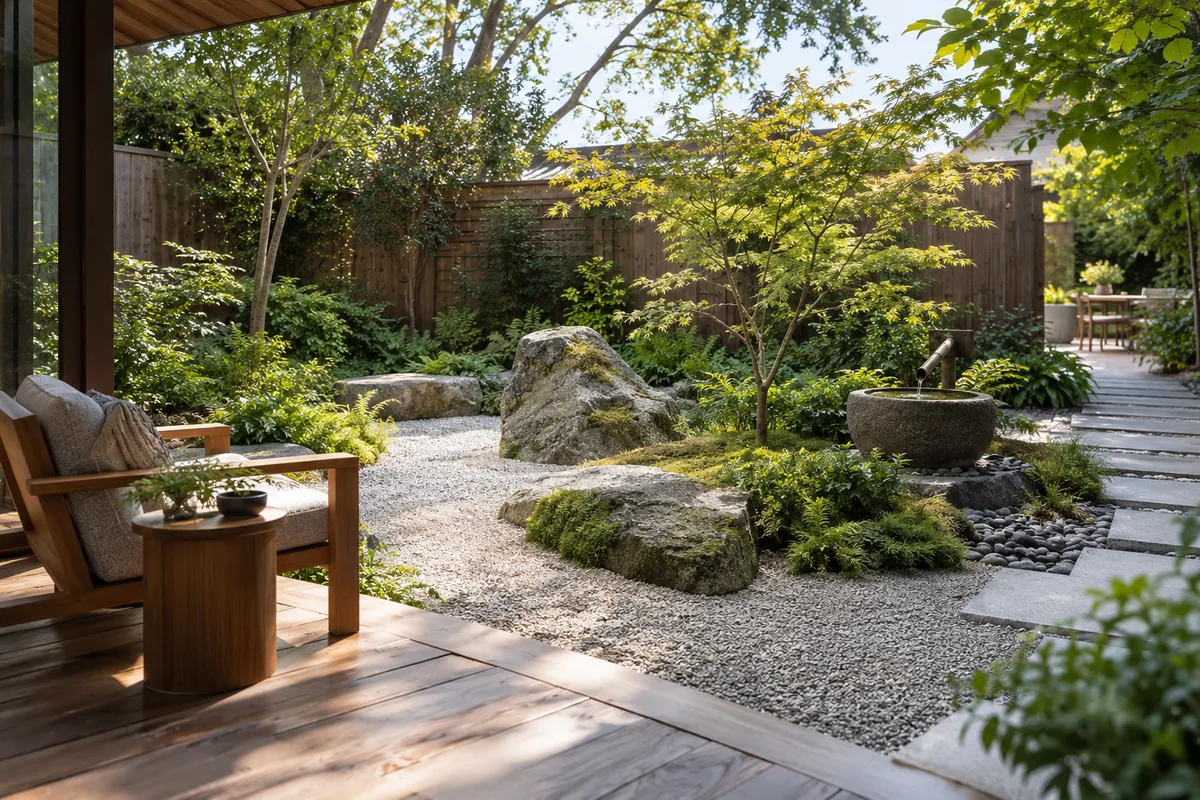
Zen backyard ideas that reserve a quiet place to look
Explore zen backyard ideas for a chosen viewpoint, contained gravel, composed stones, quiet planting, and separation from dining, play, and service routes.
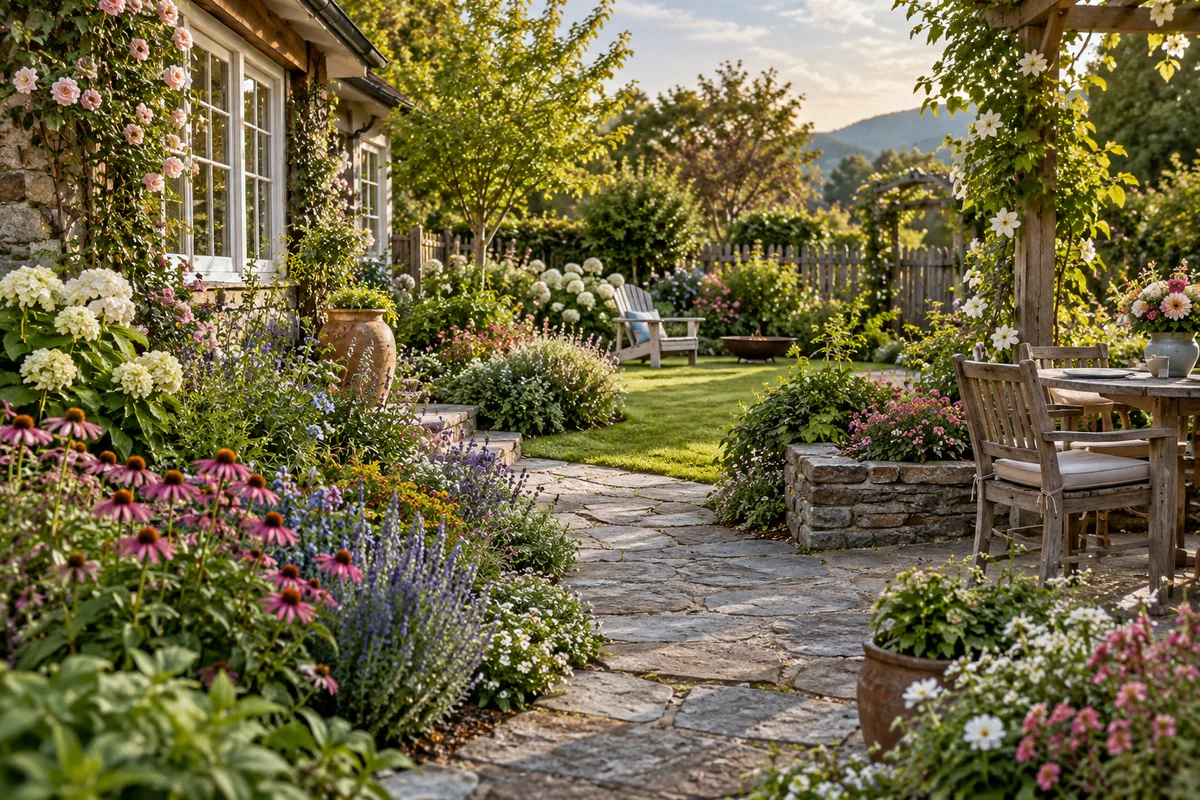
Cottage backyard ideas for flowers, seats, and seasonal life
Explore cottage backyard ideas for layered flowers, comfortable seats, connected borders, productive corners, and practical access through seasonal planting.
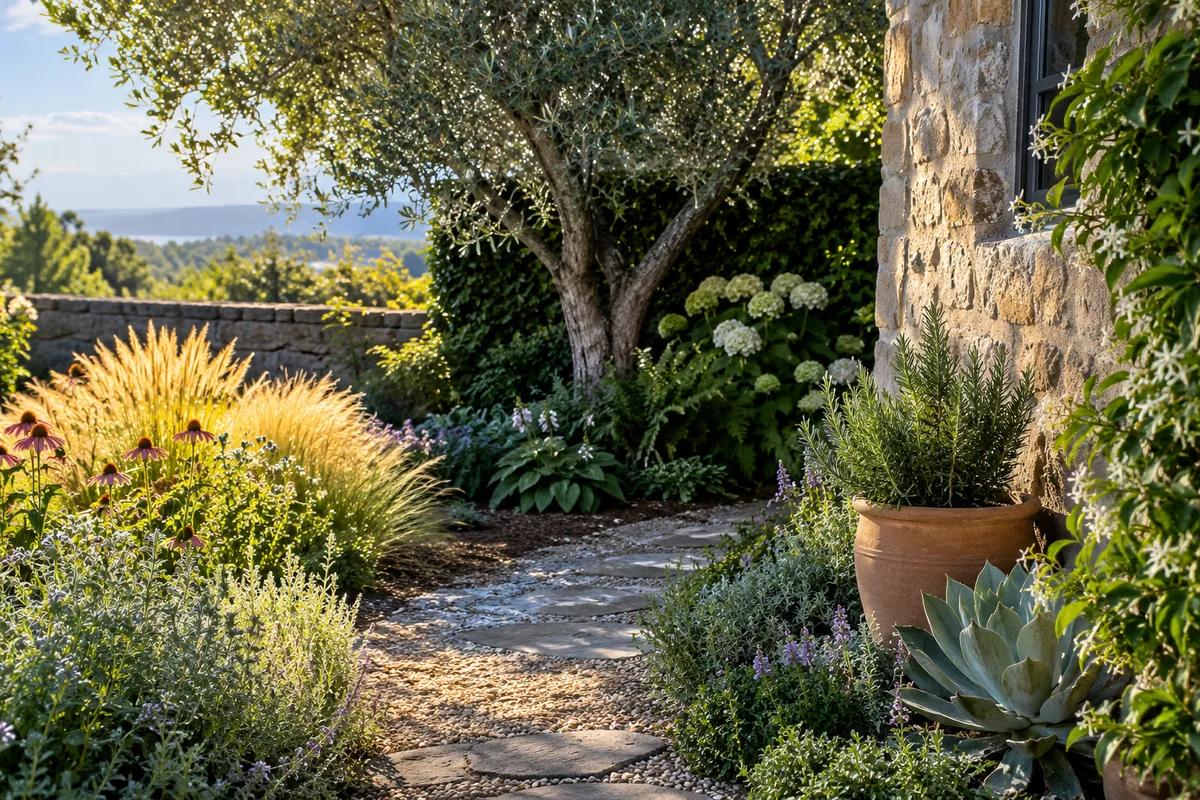
What Is Microclimate in Landscape Design?
Learn what microclimate means in landscape design, with a practical yard example, related terms, and the site decisions to check before making changes.
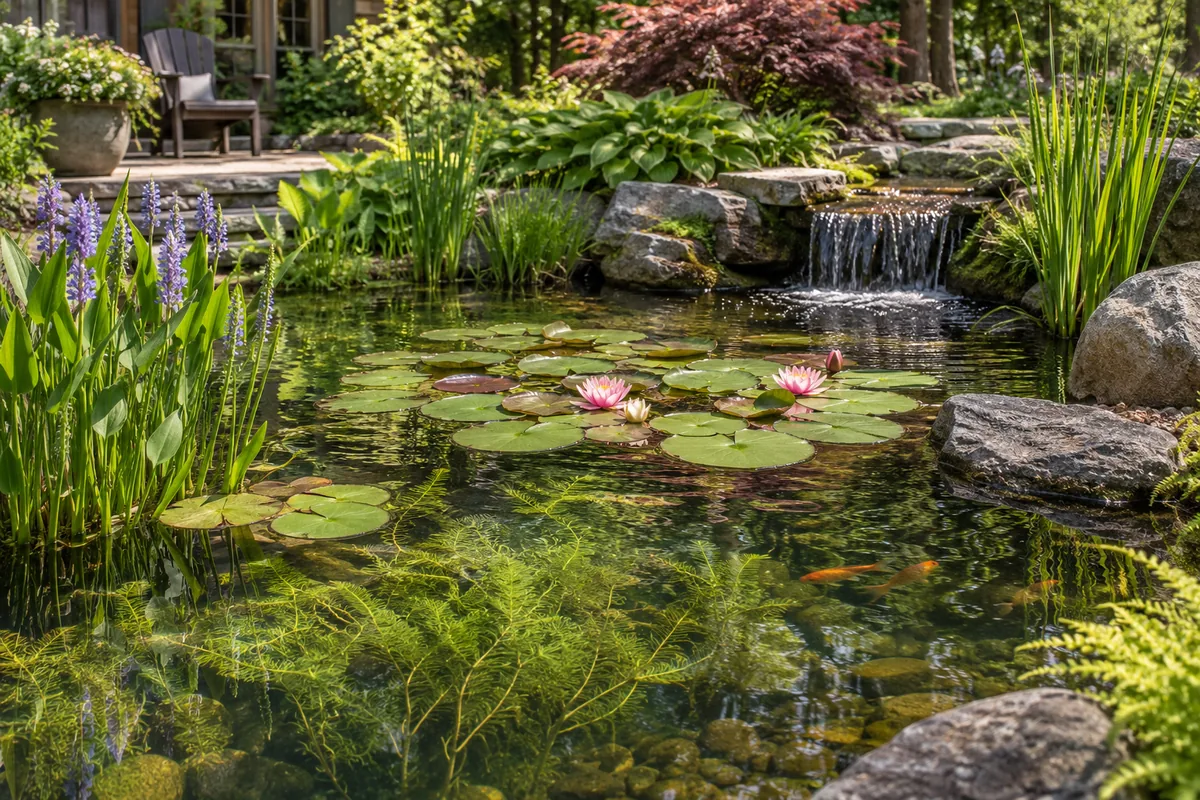
Pond Plants Selected for Roles and Local Conditions
Learn how pond plants fit your yard, with practical material, placement, upkeep, and safety questions to review before choosing a visual direction.
Gazebo Ideas for a Useful Roofed Garden Destination
Learn how gazebo ideas fit your yard, with practical material, placement, upkeep, and safety questions to review before choosing a visual direction.
Garden Bench Ideas That Give People a Reason to Sit
Find garden bench ideas for shade, views, and everyday pauses, with practical guidance on seat fit, materials, access, maintenance, and stable placement.