
By AI Landscape Design Team · Editorial policy
Wood fence vs Vinyl fence: Which Fits Your Yard?
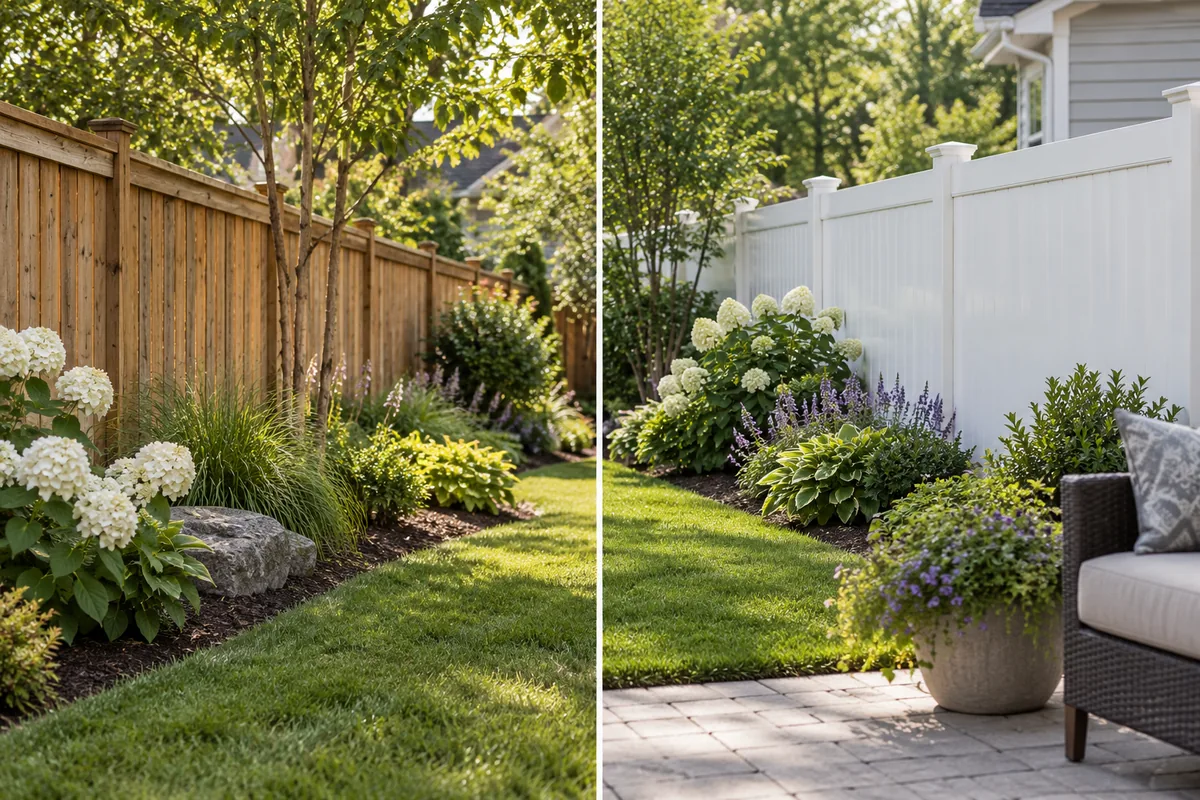
Choose wood fencing when the selected timber appearance and accepted finish care suit the property; choose vinyl fencing when a particular manufactured system and its cleaning, repair, and style options fit better. Neither material guarantees privacy, durability, or approval. Compare the complete posts, panels, gates, site exposure, local rules, and maintenance plan before treating the visible infill as the whole fence.
Published · 6 min read
Key takeaways
- Relative cost: Lower to Higher; Moderate to Higher.
- Maintenance: Timber and finish-specific care; Product-compatible cleaning and inspection.
- Lifespan factors: Wood treatment exposure and assembly; Product exposure connections and assembly.
| Dimension | Wood fence | Vinyl fence |
|---|---|---|
| Relative cost | Lower to Higher | Moderate to Higher |
| Maintenance | Timber and finish-specific care | Product-compatible cleaning and inspection |
| Lifespan factors | Wood treatment exposure and assembly | Product exposure connections and assembly |
| DIY difficulty | Higher with posts gates and site constraints | Higher with system posts and gate requirements |
| Best for | Natural grain or an accepted finish routine | Selected manufactured profiles and care routine |
| Repairs | Assess board and connection replacement | Assess available matching system components |
| Rules | Check current local and covenant requirements | Check current local and covenant requirements |
Which boundary function comes first?
A fence may mark a boundary, provide privacy, contain a pet, or support a particular garden relationship. Write down those functions before comparing surface materials. An open wood pattern and a solid vinyl panel are not equivalent privacy proposals, while gates and the ground beneath them can determine containment. Clarify where the property boundary lies through appropriate information rather than inferring it from existing planting. Ask the relevant local authorities and advisers about height, setbacks, and other requirements. The material choice is only one part of a boundary system. A good comparison starts with the same intended function and location so one attractive panel does not win by solving a different problem.
How does the fence relate to the house?
Wood can offer natural grain or a chosen painted finish depending on the timber and care plan. Vinyl products offer particular manufactured profiles, colors, and textures that vary by system. Compare samples beside the facade and planting rather than choosing from the product label alone. A strongly detailed fence can compete with an already busy house, while a simple boundary may let planting carry the view. Examine both sides where they are visible, and consider how a gate will interrupt the rhythm. Neither material needs to imitate another. Select a coherent boundary character that remains understandable when furniture, plants, and household objects are present.
What should be checked about local rules?
Municipal requirements, neighborhood covenants, homeowners-association rules, and any relevant historic or planning controls can affect the proposal. Verify the current rules for the actual location before purchase; do not assume that a neighbor's existing fence is proof of approval for a new one. Ask who submits information or obtains permissions when a professional is involved. The material, height, openness, location, and gate arrangement may each matter. This page offers a comparison framework rather than jurisdiction-specific legal advice. Keep written records of the requirements and approved decisions so later changes to finish or panels do not rely on informal recollections.
Which structural factors matter more than infill?
Posts, connections, foundations, wind exposure, ground conditions, and gate loads influence the complete assembly. Seek appropriate licensed local assessment for the proposed installation and site, especially where retaining ground or structural complications are involved. A flexible-looking panel should not be treated as a retaining wall, and a heavy gate needs its own support review. Before fence-post work begins in a US yard, contact 811 and determine whether private lines need separate locating. The appearance of a straight fence in a concept image cannot identify underground utilities or establish foundation details. Compare a complete specified system rather than just the square footage of visible boards or panels.
What upkeep can you realistically do?
Wood care varies by timber, treatment, exposure, and whether a painted, stained, or weathered appearance is intended. Vinyl still needs cleaning and inspection, with methods appropriate to the selected product. Ask for product-specific instructions and avoid assuming aggressive pressure or chemicals are harmless. Keep space to reach the boundary rather than planting immediately against it without a maintenance plan. A climber may complicate inspection and later repairs; check local plant suitability, invasive status, and mature growth before using one. The care comparison should describe the tasks you can actually undertake. A boundary that requires inaccessible work is inconvenient regardless of whether its infill is wood or vinyl.
How are damage and replacement handled?
Ask how a damaged board, panel, connection, or gate component would be repaired. Wood can permit some localized replacement depending on the construction, while vinyl repair depends on the product system and available matching components. Neither category guarantees that replacements will blend perfectly with an aged fence. Retain product records and ask about availability before selecting an unusual profile. Consider whether the installer can access both sides later and how established planting will be protected. A small visible failure may involve more work if the system must be disassembled or if matching material is no longer available. Repairability should be discussed as a specific procedure, not a generic promise of durability.
What do cost and environmental claims leave out?
Quotes should include preparation, posts, foundations, gates, site access, removal, finish work where relevant, and restoration of disturbed ground. A low panel price does not represent the whole boundary project. Wood sourcing, treatments, longevity factors, and disposal need product-specific review; vinyl sourcing and local recycling or disposal arrangements also need verification. Avoid claiming that either material is universally greener without appropriate evidence. Ask what local facilities accept when components eventually need replacement. The table's relative cost categories are broad starting points. Compare the same functional requirements and future care so an initially cheaper fence is not selected for a scope it cannot actually provide.
How should concepts support the final choice?
Explore both materials using the same boundary position, height assumptions, and gate function, then inspect their relationship with the house and garden. AILandscape creates visual concepts from photos; local review must confirm property information, permissions, foundations, drainage, and construction details. Its images cannot verify pet containment or structural performance. Use the preferred view to discuss color and openness, not to establish legal or technical facts. Then review real products and a complete installation proposal. The better fence is the one that serves the boundary's purpose with a manageable care and repair plan, rather than the one that appears newest or most uniform in a rendering.
Frequently asked questions
Is vinyl fencing maintenance-free?
No. It still needs suitable cleaning and inspection, and components can need repair or replacement. Follow the selected product's instructions. Compare the actual tasks with the wood finish plan rather than treating a manufactured panel as something that can never require attention.
Can I copy my neighbor's fence height and material?
Not as a substitute for checking current requirements. Local rules, covenants, property information, and approvals can differ or change. Verify the requirements for your own proposal with the appropriate authorities and advisers before ordering a new boundary system.
Which fence is easier to repair?
It depends on the construction and availability of matching components. Ask how boards, panels, gates, and connections would be replaced in the actual system. Keep product records and preserve access rather than relying on a universal ranking between wood and vinyl.
Sources
Related reading
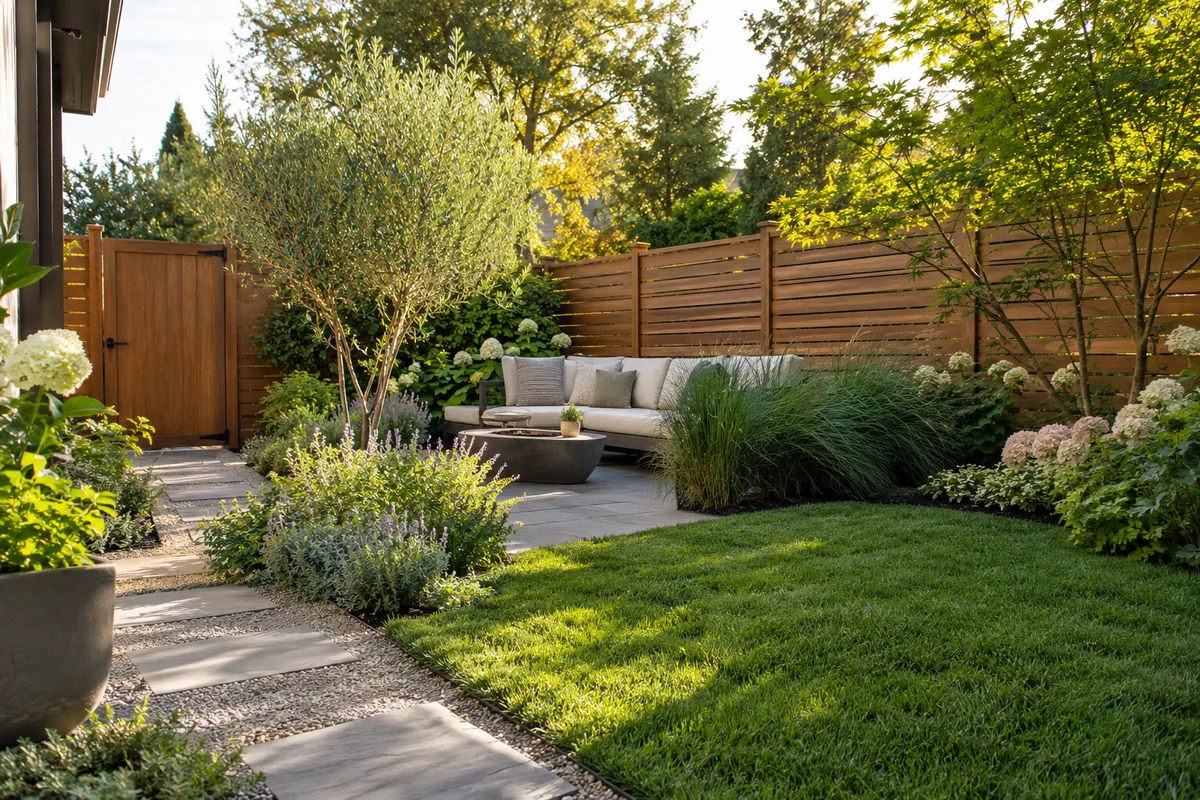
Garden Fence Ideas for Privacy and Practical Use
Learn how garden fence ideas fit your yard, with practical material, placement, upkeep, and safety questions to review before choosing a visual direction.
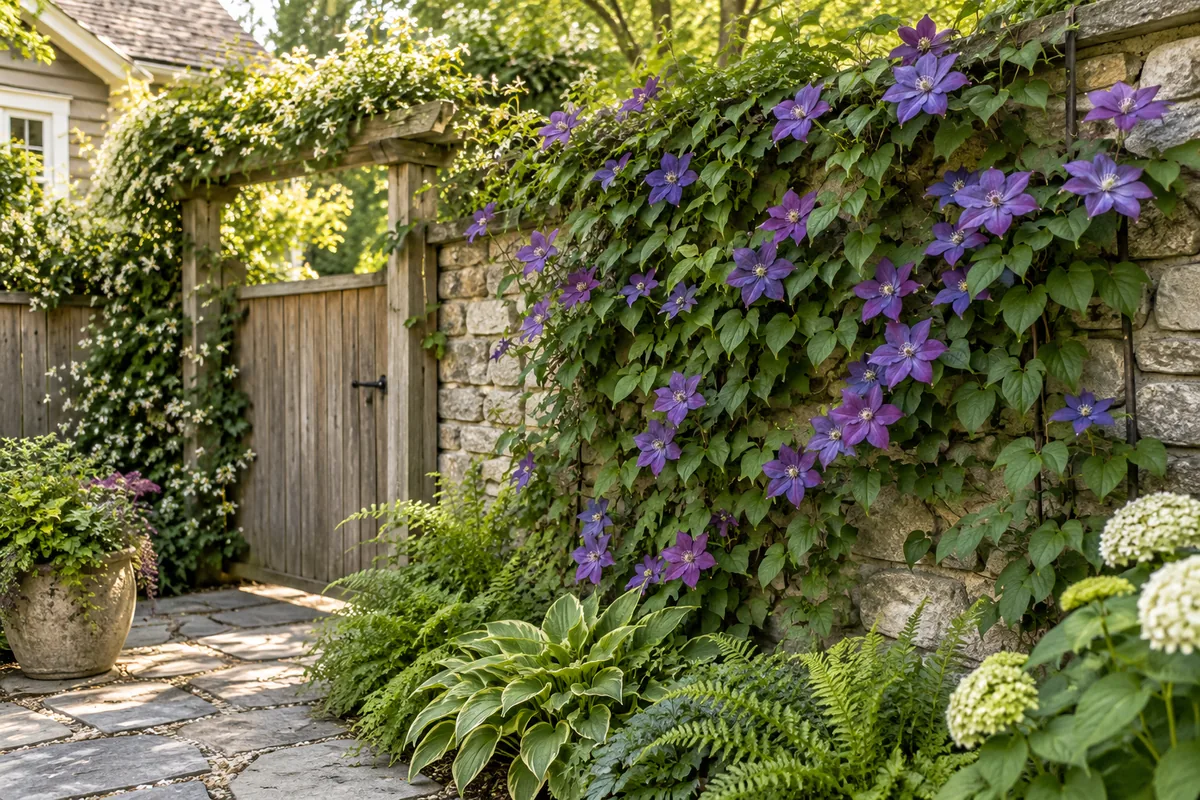
Climbing Vines for Fences and Walls with Suitable Supports
Climbing Vines: Support, Walls, and Local Fit: explore placement, upkeep, and local safety questions before deciding how this feature fits your yard.
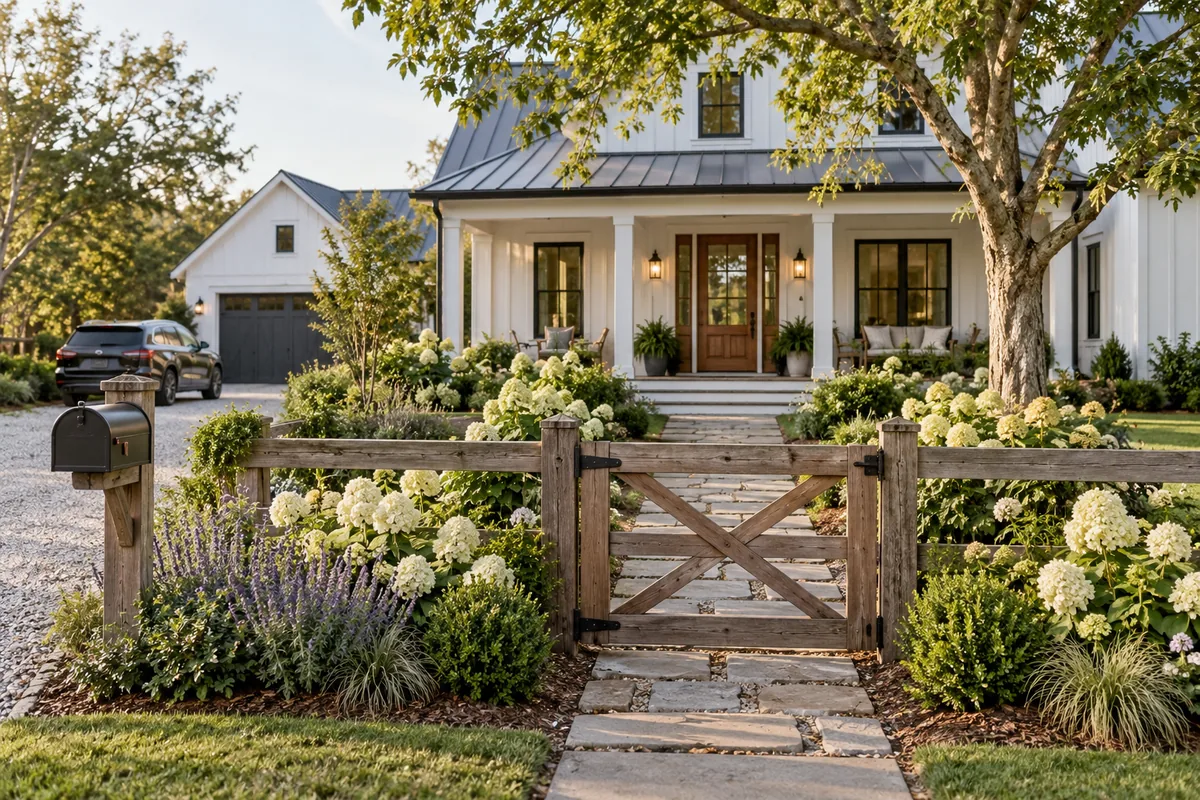
Farmhouse front yard ideas with a useful, welcoming framework
Discover farmhouse front yard ideas for working gates, sturdy boundaries, warm materials, practical planting, and an entrance that supports everyday arrivals.
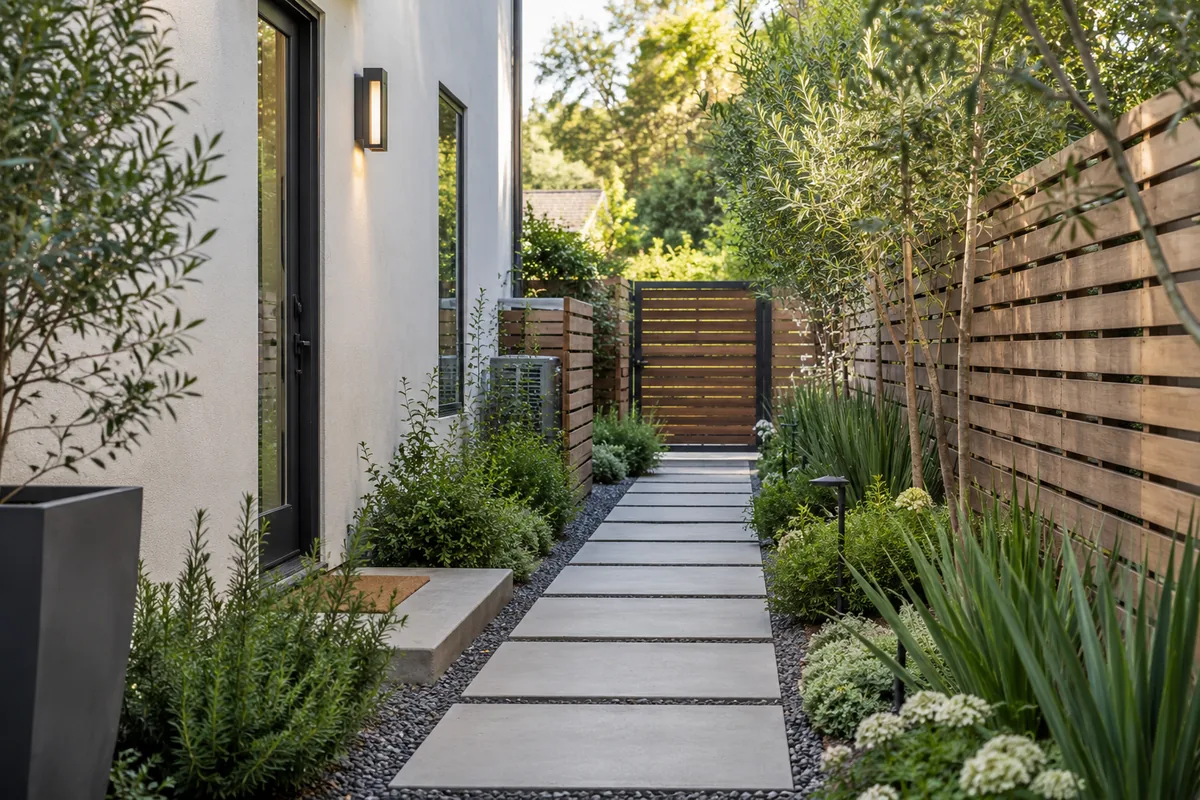
Modern side yard ideas that make service space deliberate
Explore modern side yard ideas for coherent surfaces, reachable equipment, restrained planting, practical storage, and a clear passage between garden spaces.
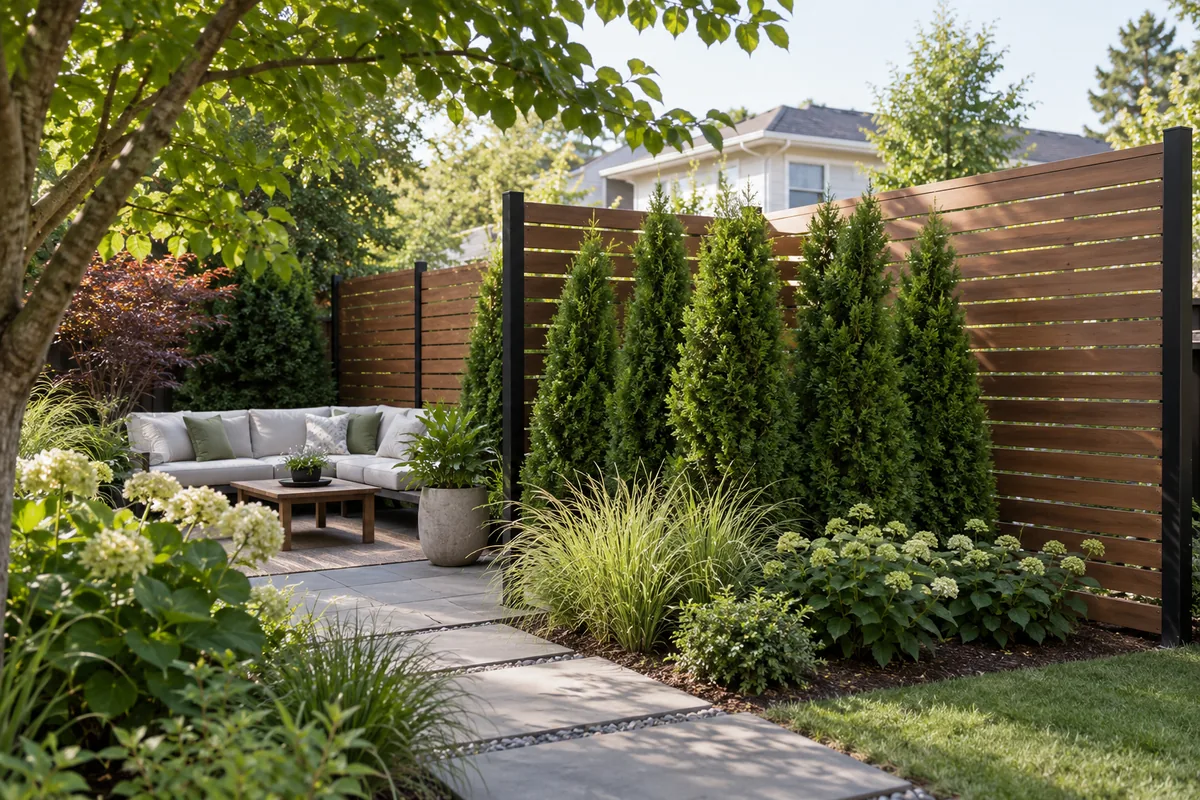
What Is Privacy Screen in Landscape Design?
Learn what privacy screen means in landscape design, with a practical yard example, related terms, and the site decisions to check before making changes.

Cottage garden style: flowers with a working framework
Explore cottage garden style through layered flowers, selective self-seeding, clear paths, seasonal care, and the framework that makes informal planting usable.