
By AI Landscape Design Team · Editorial policy
Desert side yard ideas for clear access and plant silhouettes
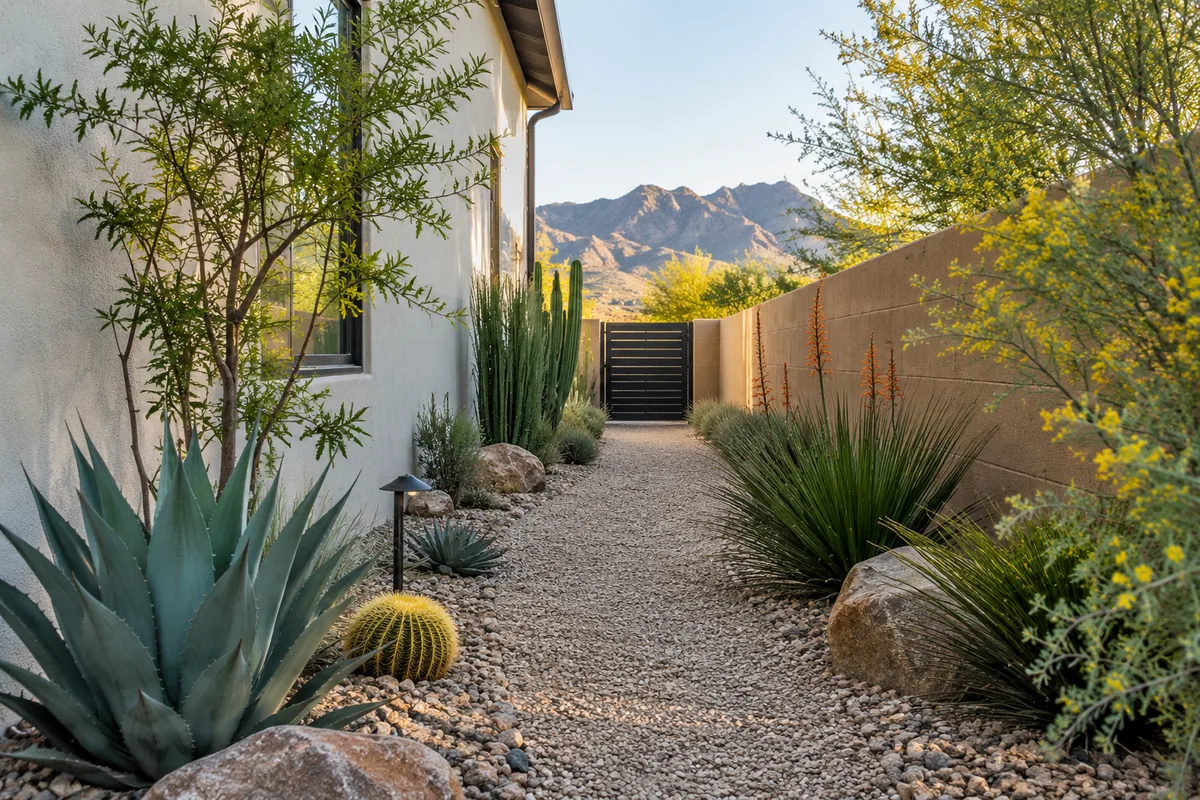
Desert side yard ideas should keep access dependable while using mineral colors and suitable plant silhouettes beside the route. Assess building exposure, glare, service needs, and mature sharp growth before choosing the palette. Open gravel and sparse planting describe an appearance, not verified water efficiency or a solution to drainage problems beside the house.
Published · 6 min read
Key takeaways
- Keep essential access separate from ornamental mineral ground.
- Locate sharp plant forms outside contact and service areas.
- Evaluate exposure and glare rather than assuming a desert look is comfortable.
How do buildings change the arid-looking reference?
A side passage may alternate between deep shade and strong reflected exposure. Observe the actual light where each plant role would sit rather than assuming the whole space resembles an open desert. Check the route with normal equipment and open every gate or door. Utility, manufacturer, and local requirements determine actual inspection space and machinery access.
Consider whether there is any meaningful destination or whether the side yard primarily connects larger garden areas. Shared boundaries and neighboring windows may limit screens or lighting. Existing water or grade concerns need licensed local assessment. A dry-looking surface in a concept does not establish how water moves against the building. The design task here is organizing appearance around a functioning passage, not providing a generalized construction remedy.
Eight mineral-and-plant ideas that preserve service use
- Give movement an appropriate surface. Separate the main working route from ornamental loose material when users and conditions need that distinction. It suits a side yard used for bins and tools. Discuss grip, access, levels, and drainage professionally. A field of decorative aggregate may look cohesive while making regular equipment trips difficult, which is a practical counterexample.
- Use contained gravel as an edge. A modest mineral area can relate suitable planting to the route without occupying all the ground. This fits a passage where debris and migration can be managed. Check glare in real light and keep aggregate clear of gates and equipment. The material should not be presented as a fix for water problems that require site assessment.
- Place sculptural plants only where mature room exists. A verified upright or rounded role can provide emphasis at a genuine opening. It works where the plant can remain outside contact routes. Keep spines and rigid leaves away from gates, doors, and technician access. Choosing a sharp accent for the narrowest section solely for its desert appearance fails the side yard's useful role.
- Repeat low forms along a quiet boundary. Locally suitable planting can connect the passage without a collection of unrelated specimens. It suits areas with adequate mature width and compatible conditions. Building shade may rule out familiar arid-region references. Review actual species, care, and seasonal growth rather than assuming a sparse-looking plant remains small.
- Preserve useful shelter. Retain appropriate existing shade where it improves actual movement or a permitted pause point. It fits exposed side spaces that are uncomfortable during use. Have tree or structural conflicts assessed locally. Do not remove a valuable canopy just to create a continuous mineral field in an image, and do not assume a decorative overhead pattern supplies needed protection.
- Keep equipment visibly reachable. Use open service space as a deliberate part of the layout, not a gap to fill with rocks. This works beside meters or machinery. Verify required clearances before any screen or plant placement. A large stone or dense plant group hiding the unit is a counterexample when it restricts repair, inspection, or airflow.
- Limit containers to a useful transition. A stable pot with a verified plant role can mark the end of the passage where movement permits it. It suits an owner who will provide actual care. Check weight, drainage, toxicity, and sharp growth. Desert imagery does not make containers self-sufficient, and a row of heavy pots can create recurring access problems.
- Light openings without creating glare. Support the gate, door, and essential transition after dark. This fits a passage used in the evening. Licensed professionals should assess electricity and requirements, with fixtures kept serviceable. Check nearby windows and eye-level views; dramatic illumination on pale aggregate may be less comfortable than a simpler practical cue.
What evidence should determine planting and construction?
Obtain local horticultural advice on USDA hardiness zone, exposure, soil, moisture, mature form, and invasive status. Cold or persistent wetness may matter even when the intended character is arid. Consult ASPCA toxicity information for pet-accessible planting and keep hazardous contact forms outside children's routes. A plant silhouette does not identify its requirements or establish regional safety.
The desert style guide distinguishes appearance from xeriscaping, and gravel path considerations help compare aggregate roles. Drainage, grades, retaining work, foundations, electrical installation, and structures need licensed local review. Contact 811 before US excavation and use additional private locating where required. A concept cannot establish equipment clearance, slopes, or safe construction. Those practical findings should inform the mineral palette rather than being concealed by it.
How can the passage remain orderly with ordinary use?
Inspect mineral edges for debris, clear migrated material from working surfaces, and review plant growth beside the route. Keep irrigation and maintenance equipment reachable. A sparse view makes unwanted growth and access problems conspicuous, so plan actual care instead of describing the style as maintenance-free. If a sharp plant repeatedly conflicts with movement, reconsider its role or position.
AILandscape's side yard tool can explore desert visual concepts using your photo. Compare open ground and plant form while checking that existing gates, doors, and equipment remain represented. Confirm dimensions, actual species, utility needs, water movement, and construction locally. The result is a visual exploration, not proof of comfort or watering performance. Reject an attractive mineral treatment that compromises service use. The useful interpretation makes the working connection coherent while respecting the conditions beside the real house.
Frequently asked questions
Is a desert appearance suitable beside a shaded building?
The material and form relationships can be borrowed, but actual plants need regional exposure and climate assessment. Familiar sun-loving references may be inappropriate. Observe the specific positions and choose suitable roles rather than treating the entire passage as an open arid landscape.
Can sharp plant forms go beside a gate?
Only where verified mature growth remains safely outside contact, swing, and service requirements. Assess actual use by residents, technicians, pets, and children. If the available space is insufficient, use a different locally suitable form rather than relying on repeated cutting or warnings.
Will gravel improve a side-yard drainage problem?
A decorative surface does not establish where water goes or correct an unassessed site problem. Have licensed local professionals review conditions and any proposed changes. Keep the visual material choice separate from drainage diagnosis and construction decisions.
Sources
Related reading
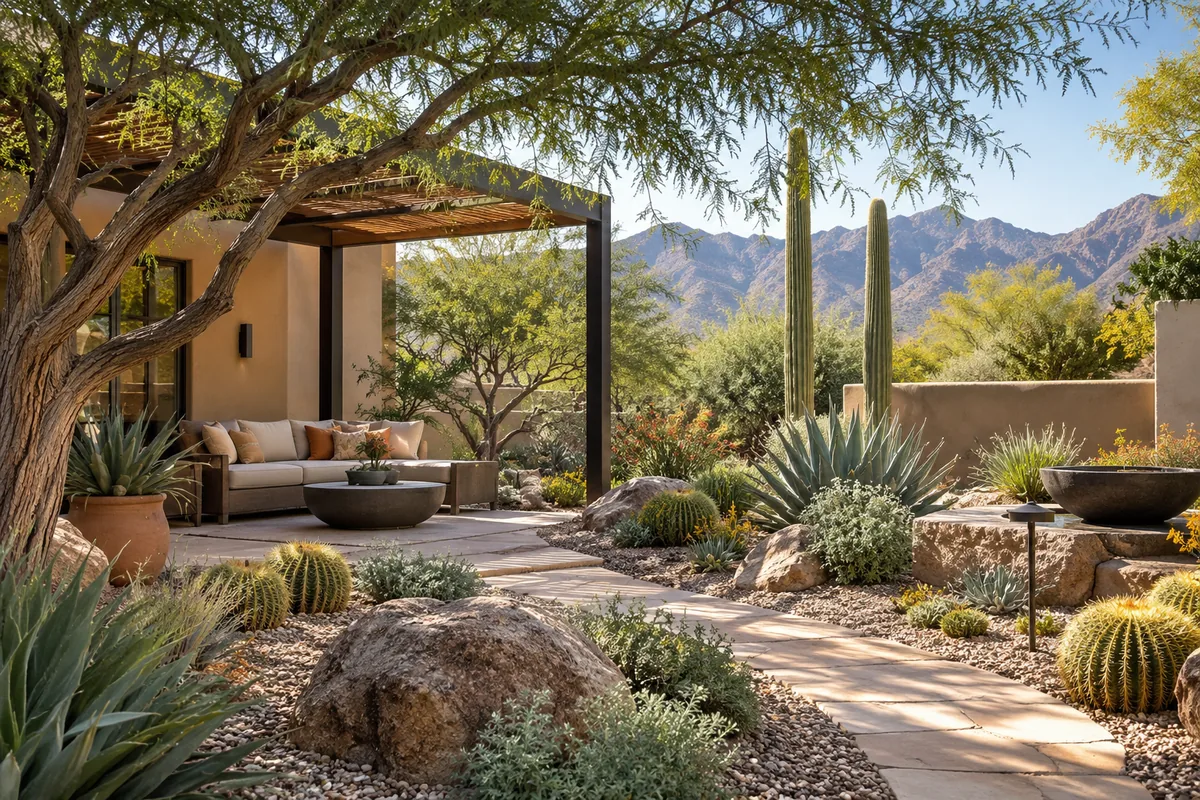
Desert landscape style: shade, stone, and plant form
Understand desert landscape style through plant form, mineral surfaces, useful shade, and heat-aware layouts, while separating its appearance from xeriscaping.
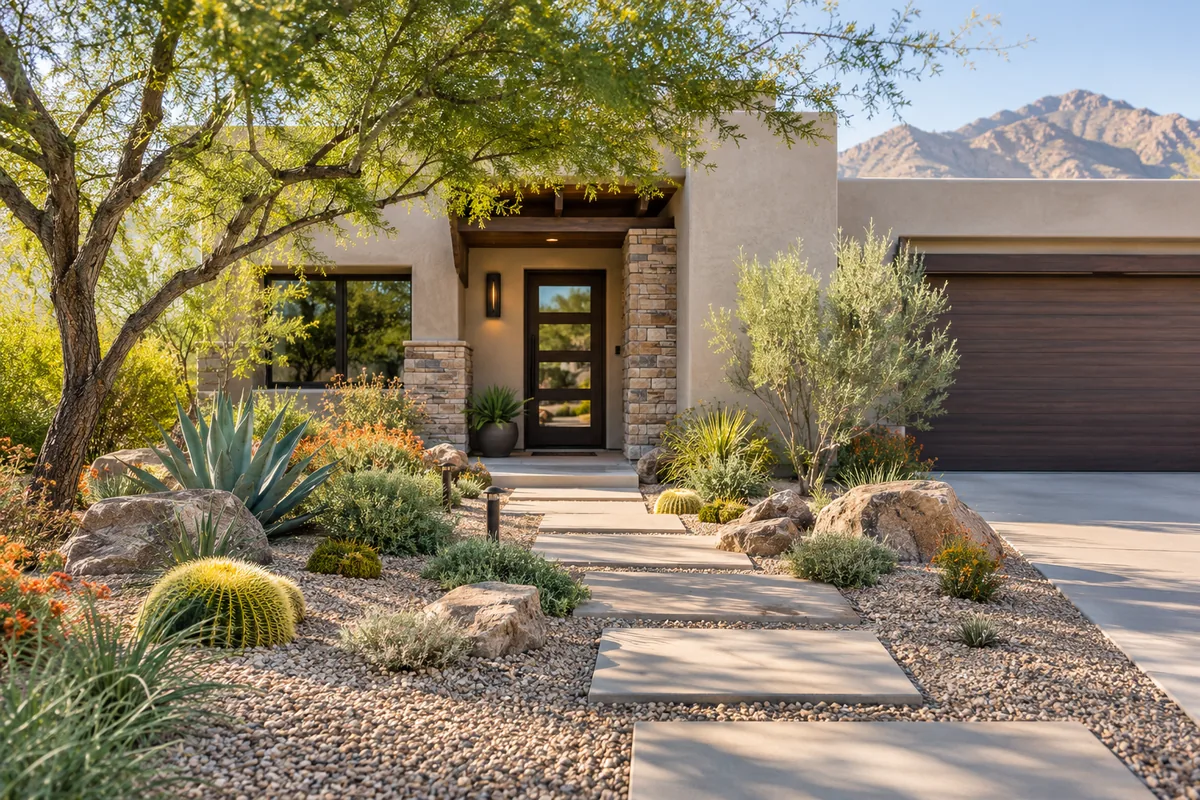
Desert front yard ideas for a comfortable, readable arrival
Explore desert front yard ideas with useful shade, sculptural plants, mineral surfaces, visible addresses, and safe access beside driveways and doors.
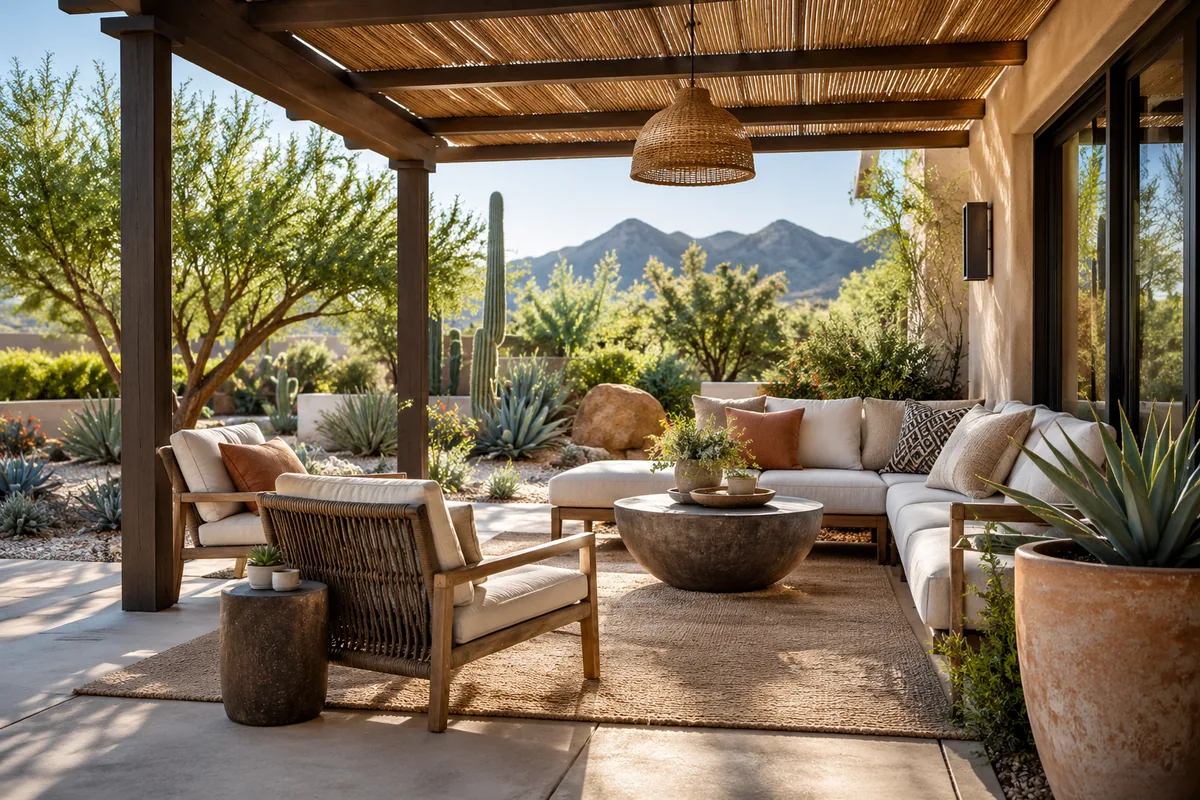
Desert patio ideas that put shade and comfort around the seats
Explore desert patio ideas for usable shade, quiet mineral surfaces, appropriate plant forms, stable containers, and clear movement around outdoor furniture.
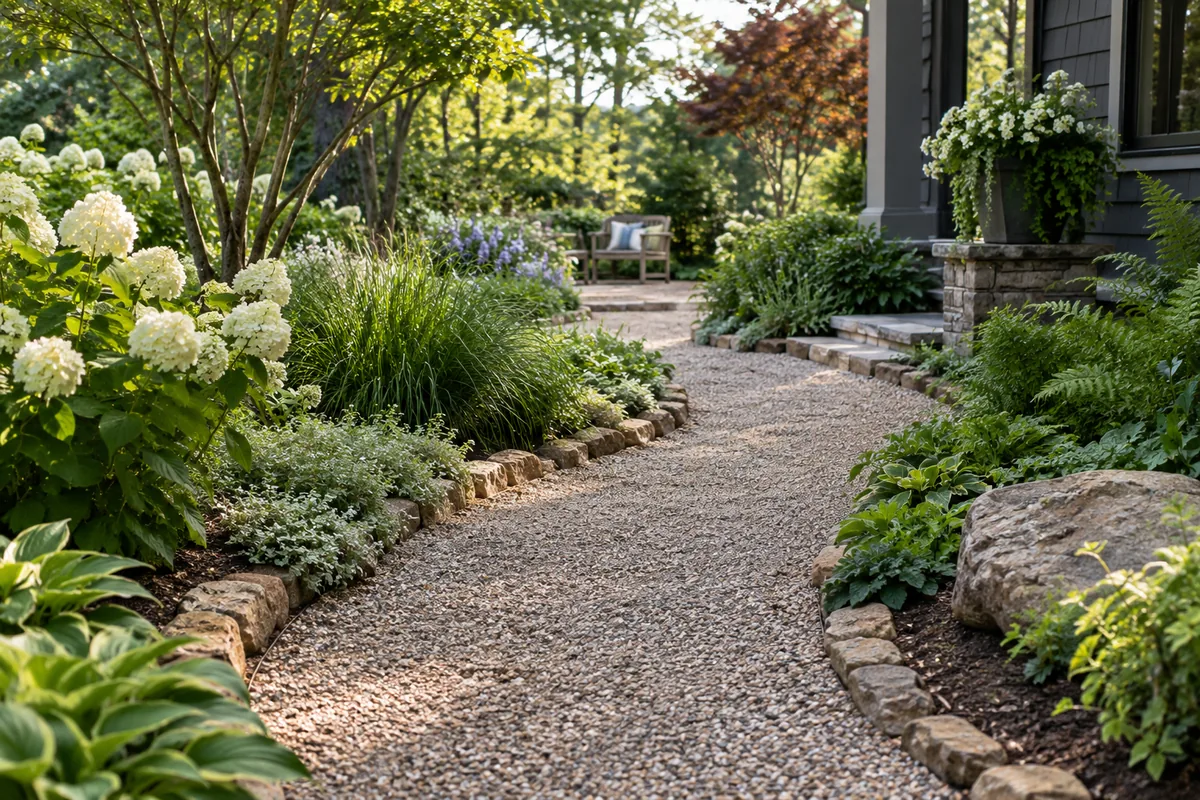
Gravel Paths That Fit Real Garden Movement
Learn how gravel path ideas fit your yard, with practical material, placement, upkeep, and safety questions to review before choosing a visual direction.
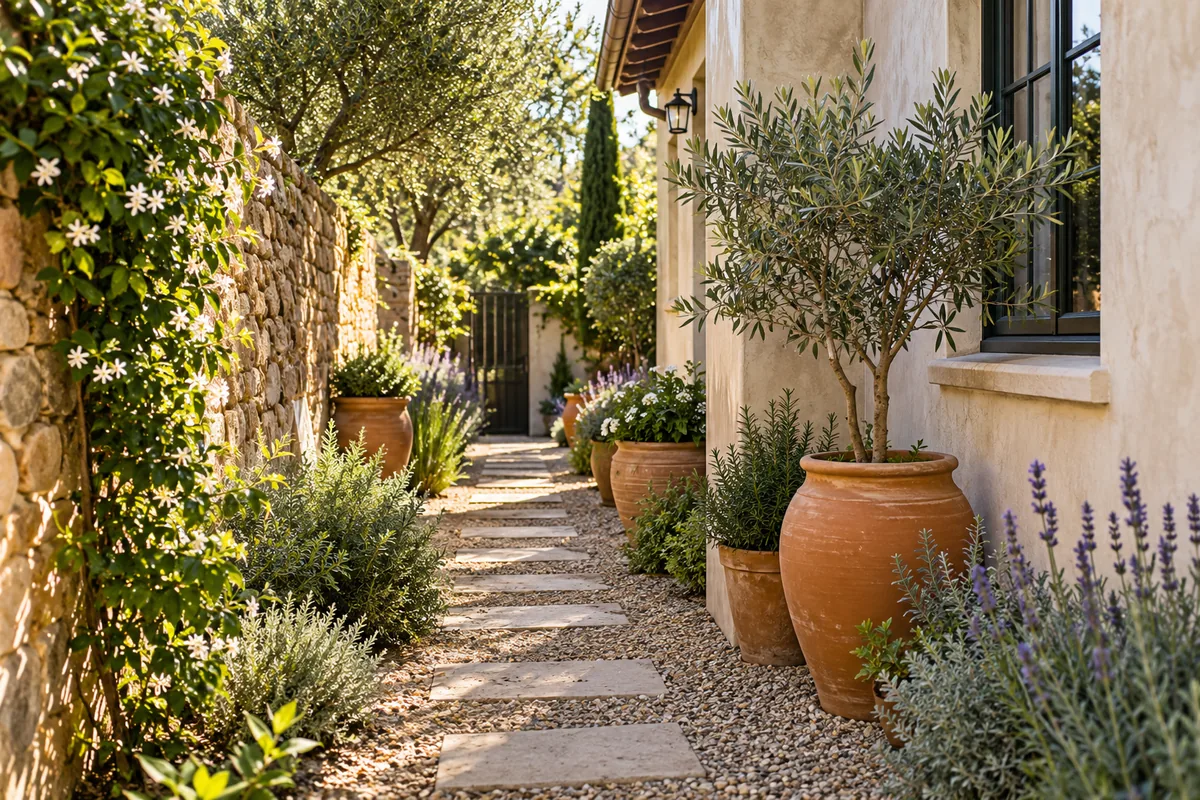
Mediterranean side yard ideas using clay, texture, and light
Find Mediterranean side yard ideas for warm material links, manageable clay pots, locally suitable foliage, clear gates, and practical passage maintenance.
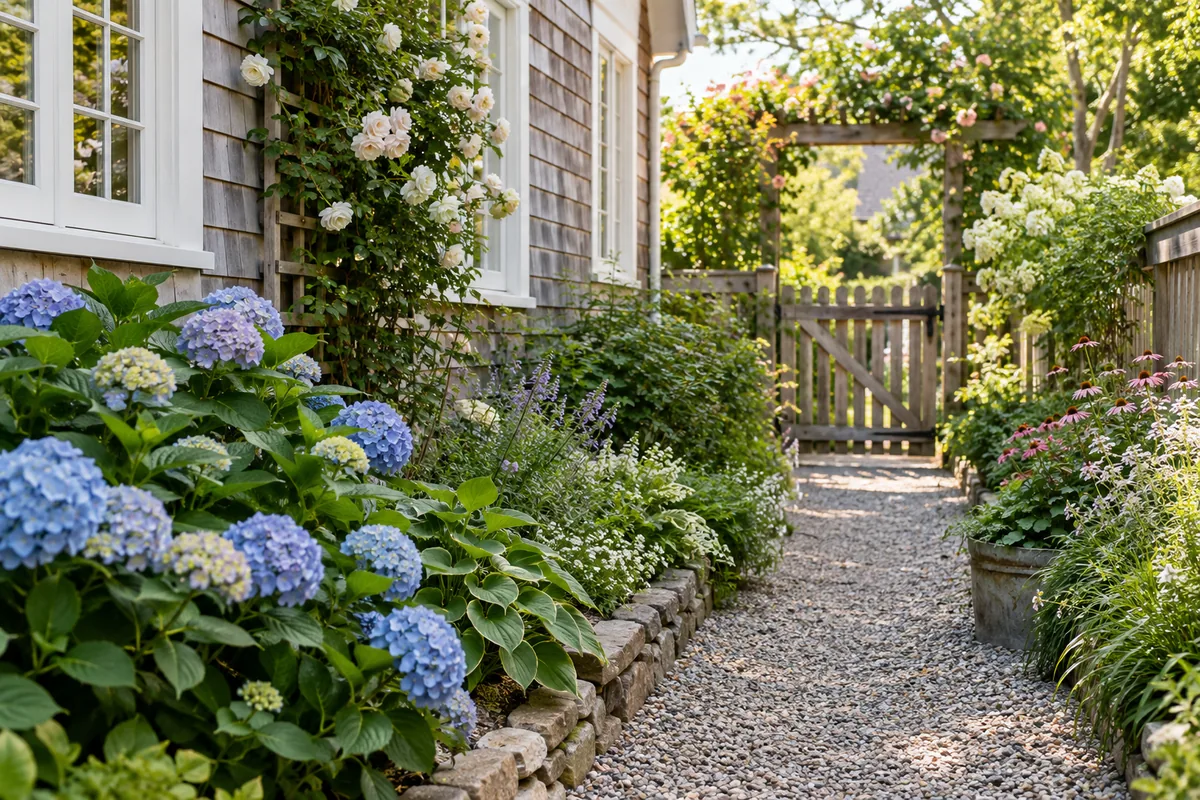
Cottage side yard ideas for flowers beside a working route
Find cottage side yard ideas for connected flowers, appropriate climbers, stable pots, readable gates, and a working route that stays comfortable to use.