
By AI Landscape Design Team · Editorial policy
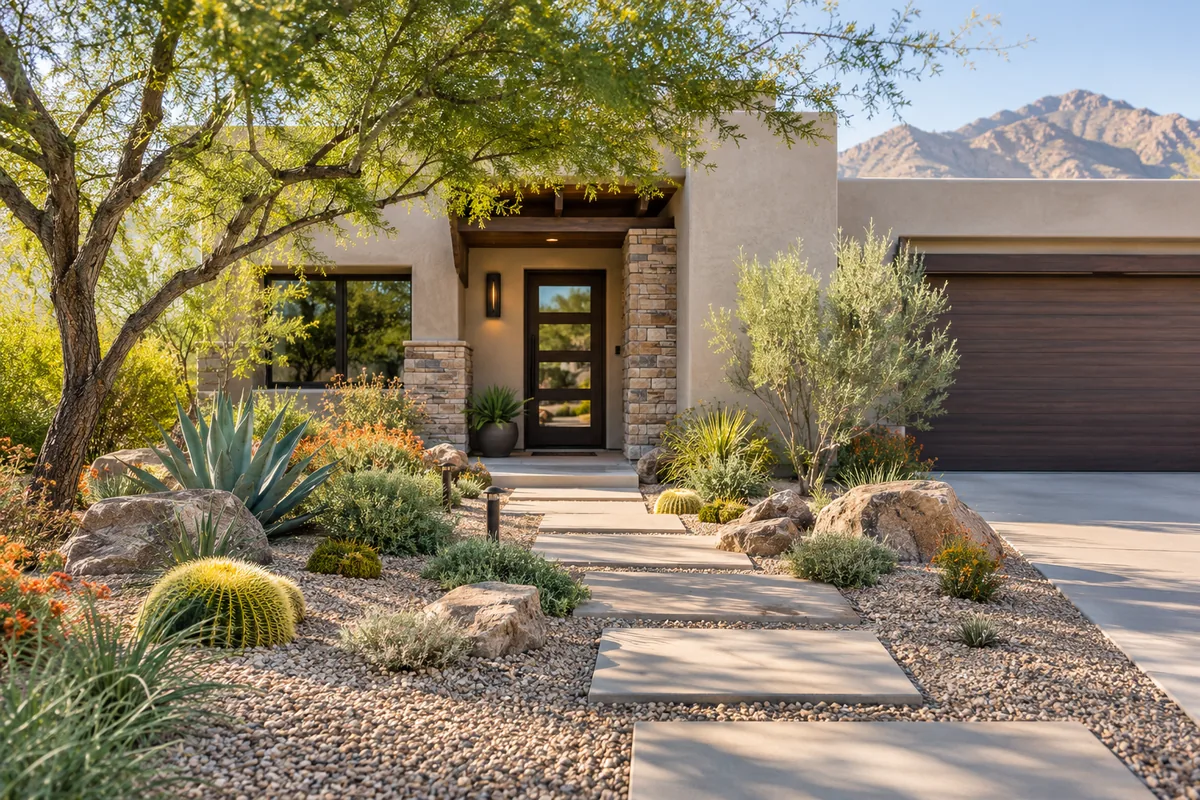
Desert front yard ideas for a comfortable, readable arrival
Desert front yard ideas should balance sculptural plants and mineral surfaces with a comfortable route to the door. Keep sharp growth outside occupied areas, choose shade for actual arrival times, and preserve driveway visibility. The desert appearance is a visual direction; it does not prove low water use, suitable plants, or a successful response to the property's heat and drainage conditions.
Published · 6 min read
Key takeaways
- Make arrival comfort part of the mineral-and-plant composition.
- Keep sharp or rigid growth clear of doors and vehicle movement.
- Evaluate watering separately from the amount of gravel.
Which frontage problems deserve attention before the palette?
A large driveway, exposed facade, and afternoon arrival route can dominate the experience of the front garden. Observe the real conditions rather than assuming that a desert look makes them comfortable. Existing shade may be one of the most valuable features to retain. A reference image that removes it should be questioned before any surface or plant decision.
Check the approach with a car in place and preserve required visibility near the street. Review local rules before installing walls, screens, or new structures. Keep service covers, the mailbox, and address information accessible. The frontage may borrow open ground and plant silhouettes from arid landscapes, but it still has to handle ordinary arrivals, watering access, and maintenance without relying on the visual label to solve practical constraints.
Eight heat-aware ideas for the front garden
- Preserve a useful existing shade source. Organize planted edges around a sound tree or existing shelter when professional assessment supports retention. This suits a frontage where the route becomes exposed at arrival time. Have roots, branches, and nearby construction reviewed locally. Do not remove mature shade solely to create an uninterrupted gravel pattern in a concept image.
- Give the route its own dependable surface. Separate essential access from ornamental aggregate using a finish appropriate to its users. It works where loose gravel currently migrates across the entrance. A restrained stone-paver or existing surface may connect to the house visually. Ask qualified professionals about grip, grades, drainage, and edge details rather than treating all mineral surfaces as interchangeable.
- Use one upright plant role away from the doorway. A sculptural form can establish emphasis when it has room for mature growth and is verified locally. This fits a facade needing a clear accent. Keep rigid or spiny leaves outside door swings and occupied routes. Shape alone is not enough reason to purchase an unfamiliar desert-associated species.
- Connect lower planting in readable groups. Group suitable low forms near the driveway where visibility must remain open. It suits a frontage with parking as a major visual element. Confirm mature dimensions and local requirements before locating the bed. Avoid scattering a large number of small unrelated specimens that become difficult to weed around and do little to organize the view.
- Choose quiet aggregate rather than a busy pattern. A consistent contained gravel area can support plant silhouettes. This works when its size fits maintenance access and the glare has been checked outdoors. Ask where windblown leaves will collect. Decorative stone colors cannot replace a functioning layout, and a loose surface should not be treated as a drainage solution without site assessment.
- Make a boulder group a deliberate view. Position ornamental stones where they can be seen without obstructing cars, deliveries, or emergency access. It suits a frontage with enough open ground to read the grouping. Heavy handling and stable placement need experienced professional review. Ornamental rocks are not an alternative to properly designed retaining structures on a changing slope.
- Use a sheltered container only where it earns its care. A stable planter beside a protected porch can soften the entrance without spreading pots across an exposed route. This fits a household willing to inspect and water containers. Check plant needs, drainage, and planted weight. A desert-styled pot can still require attentive care and should not be assumed to reduce water demand.
- Keep numbers and lighting direct. Give the address a readable position and illuminate useful arrival cues rather than every rock. It suits a restrained night view where visitors still need orientation. Licensed professionals should review electrical work and permits. Assess glare from the driveway and street, and leave fixtures accessible when plants reach mature size.
How do you verify the arid-looking plant roles?
Choose candidates through regional horticultural advice, then check the USDA hardiness zone, soil, sun, moisture, and invasive status. Cold weather and persistent wetness can be relevant even when the intended appearance is dry and open. Verify mature plant forms before reserving narrow pockets beside paving. Use the ASPCA toxicity list for plants within pets' reach; desert association does not establish safety.
The desert style guide distinguishes appearance from xeriscaping, while stone paver considerations explain material questions to raise. Licensed local professionals must assess drainage, grades, walls, and structural work. Contact 811 before US excavation and identify private service lines through the relevant locating process. Keep water-use claims separate from the concept: actual planting, establishment, irrigation, and weather determine the watering needs.
What maintenance should the public view reveal?
Inspect plant growth near doors and the drive, contain migrated aggregate, and remove debris where it accumulates. Open mineral surfaces can make weeds and damaged edges conspicuous. Place irrigation equipment where it can be checked without moving heavy stones. A sparse composition still needs routine care and may become visually awkward when one large accent fails.
AILandscape's front yard tool can compare a desert-style visual arrangement using your property photo. Check the result for retained shade, access, and unchanged building features before considering its decorative balance. It is an appearance concept, not proof of regional plant performance, comfortable temperatures, workable drainage, or feasible installation. Confirm those matters locally and measure independently. The useful goal is an entrance whose visual restraint supports actual arrival comfort, not a frontage reduced to an attractive rock pattern.
Frequently asked questions
Does a desert front yard need to be mostly gravel?
Gravel is optional and should have a defined role. A usable arrival surface, appropriate planting, and shade may matter more than the area covered by aggregate. Assess glare, access, debris, and drainage locally before expanding a mineral surface across the frontage.
Are sharp plants appropriate near the front door?
Only where their mature form remains safely separated from door movement and occupied routes. Keep rigid or spiny growth outside areas where visitors pause, children pass, or parcels are carried. Verify the actual species and consider a different plant role if the available space is insufficient.
Will desert-style planting automatically use less water?
The appearance does not establish watering demand. Actual species, establishment, soil, exposure, weather, and irrigation practice determine care needs. Select plants through regional advice and assess watering separately instead of promising savings because the frontage has fewer plants or more stone.
Sources
Related reading
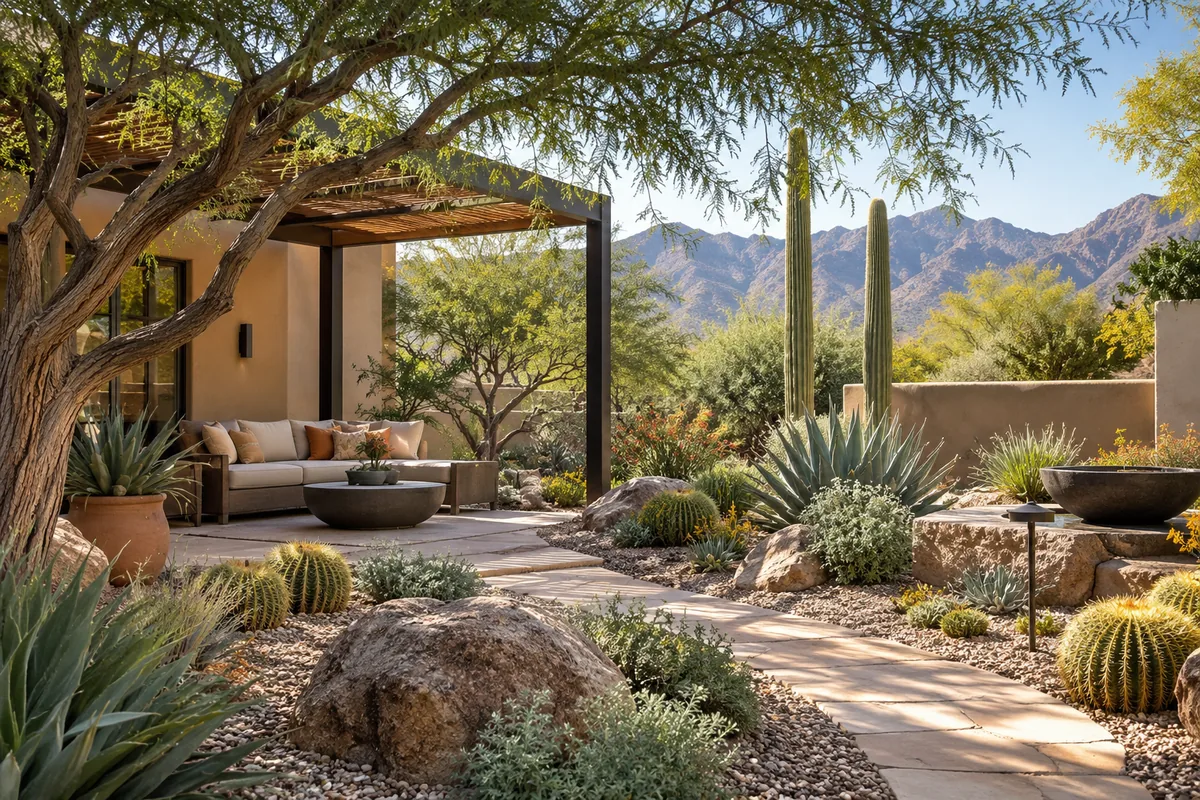
Desert landscape style: shade, stone, and plant form
Understand desert landscape style through plant form, mineral surfaces, useful shade, and heat-aware layouts, while separating its appearance from xeriscaping.
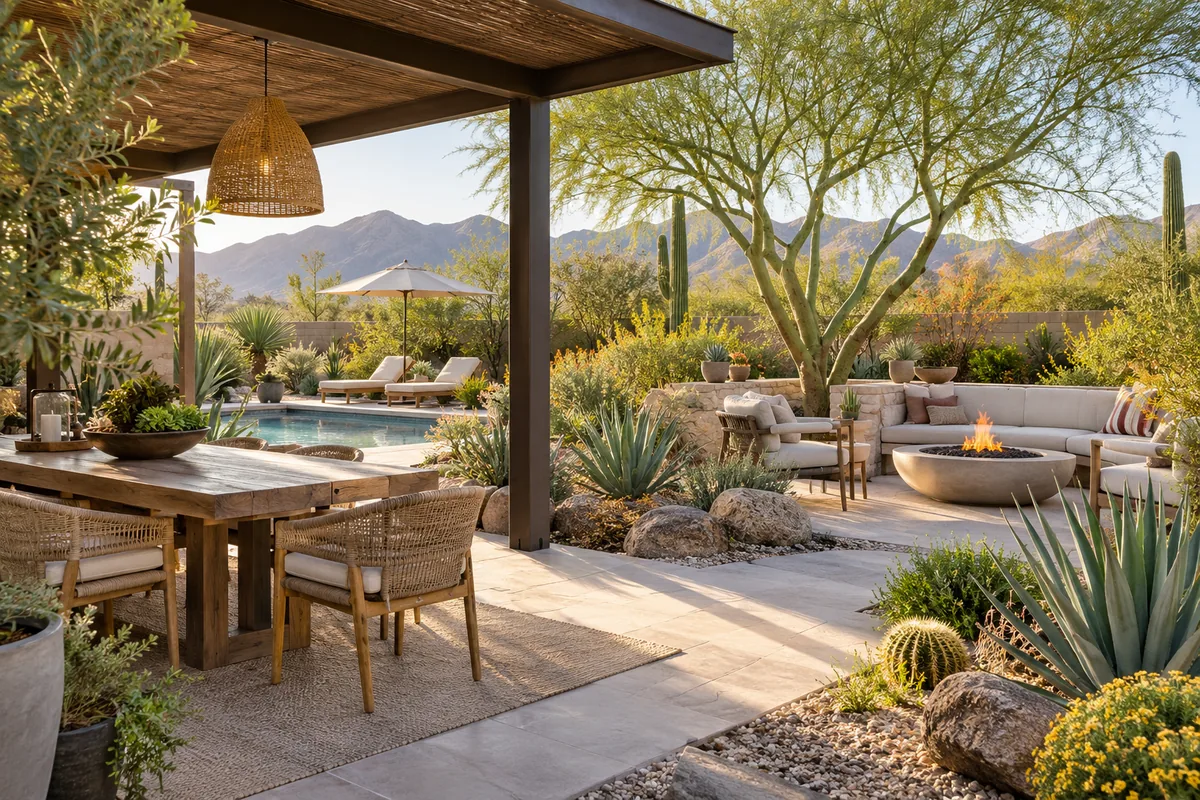
Desert backyard ideas that make room for comfortable living
Explore desert backyard ideas for useful shade, open plant forms, mineral surfaces, flexible activity space, and practical care around seats and dining areas.
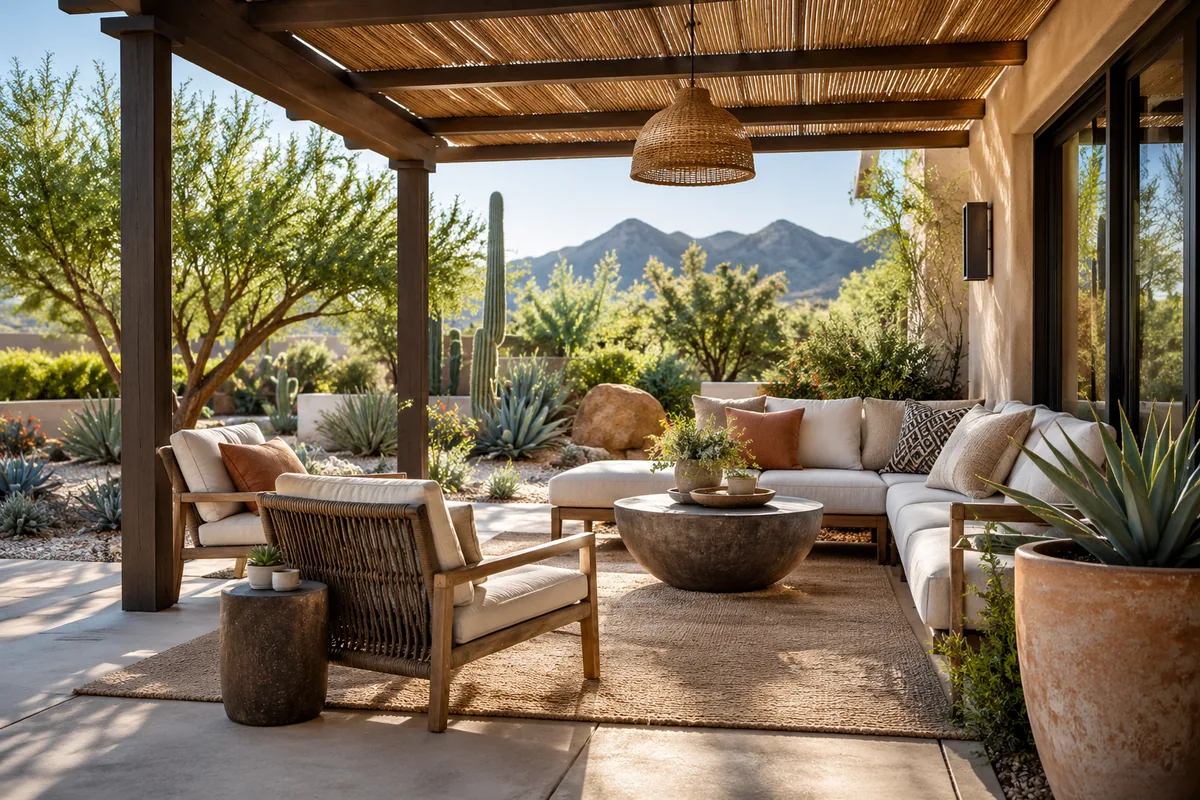
Desert patio ideas that put shade and comfort around the seats
Explore desert patio ideas for usable shade, quiet mineral surfaces, appropriate plant forms, stable containers, and clear movement around outdoor furniture.
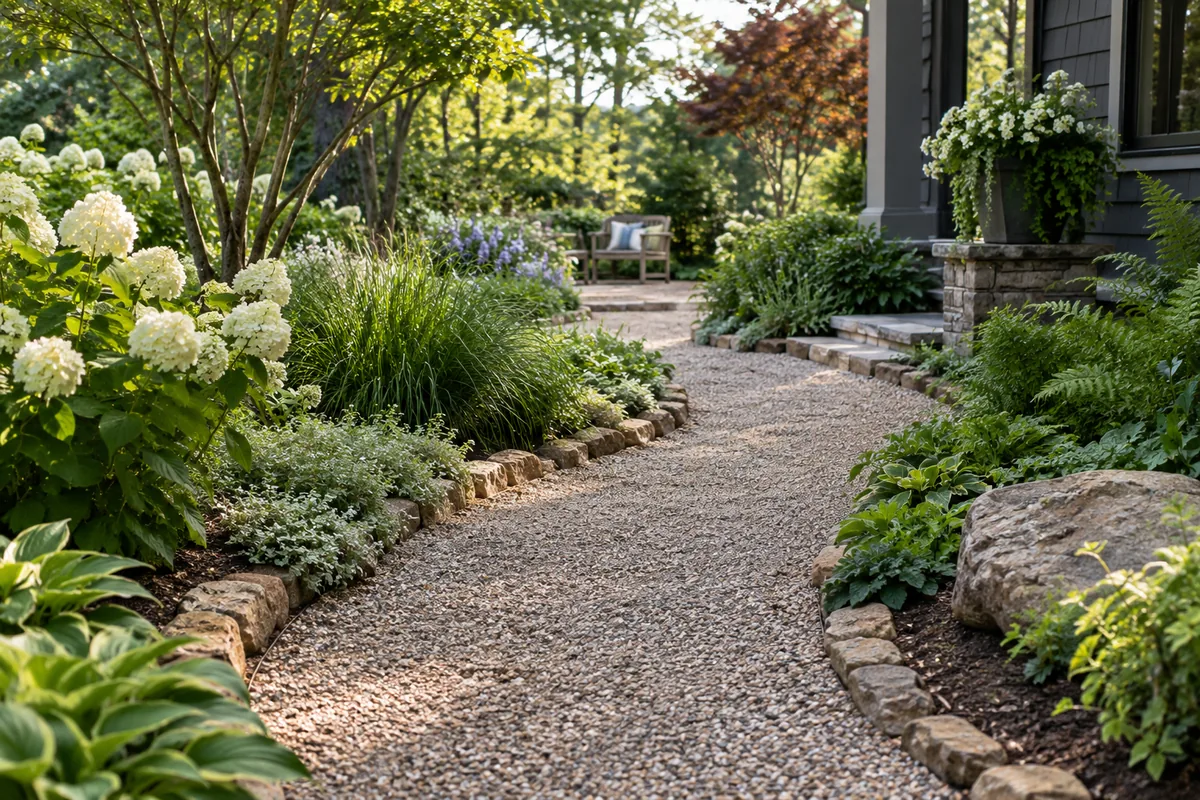
Gravel Paths That Fit Real Garden Movement
Learn how gravel path ideas fit your yard, with practical material, placement, upkeep, and safety questions to review before choosing a visual direction.
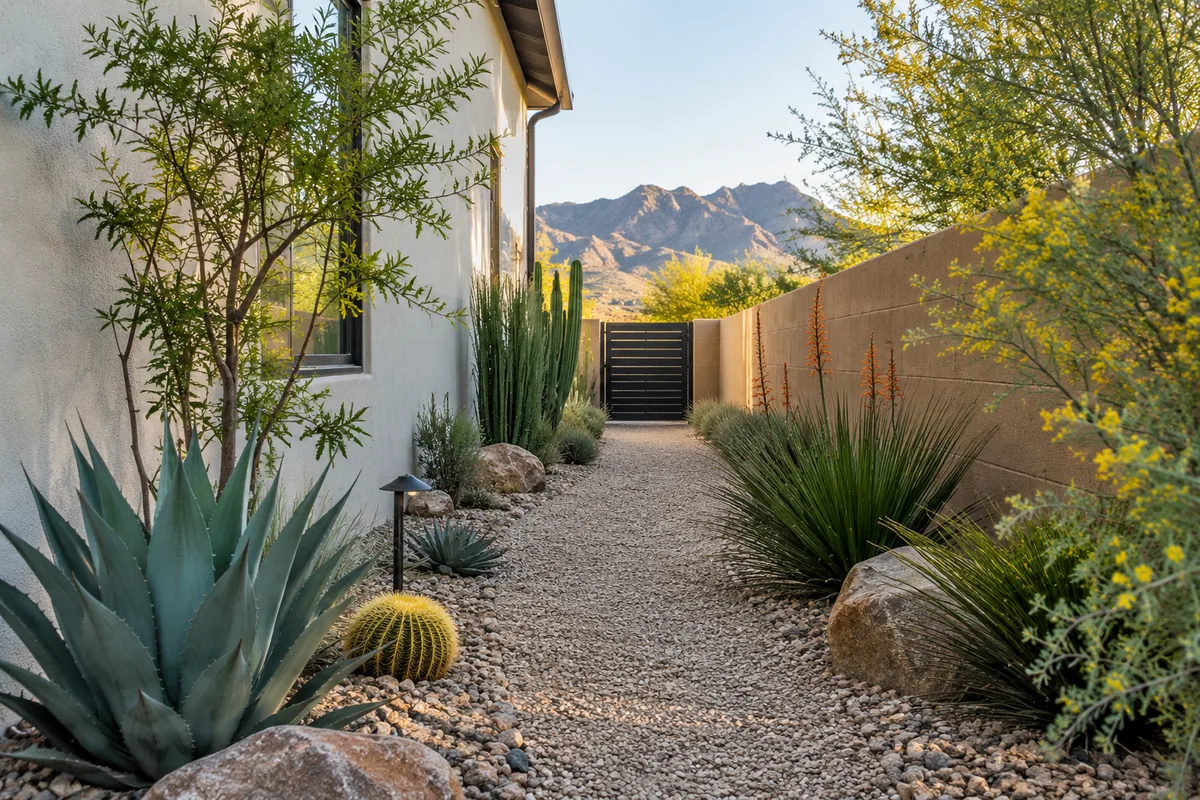
Desert side yard ideas for clear access and plant silhouettes
Explore desert side yard ideas for contained mineral edges, suitable plant forms, useful shade, reachable equipment, and a dependable working passage.
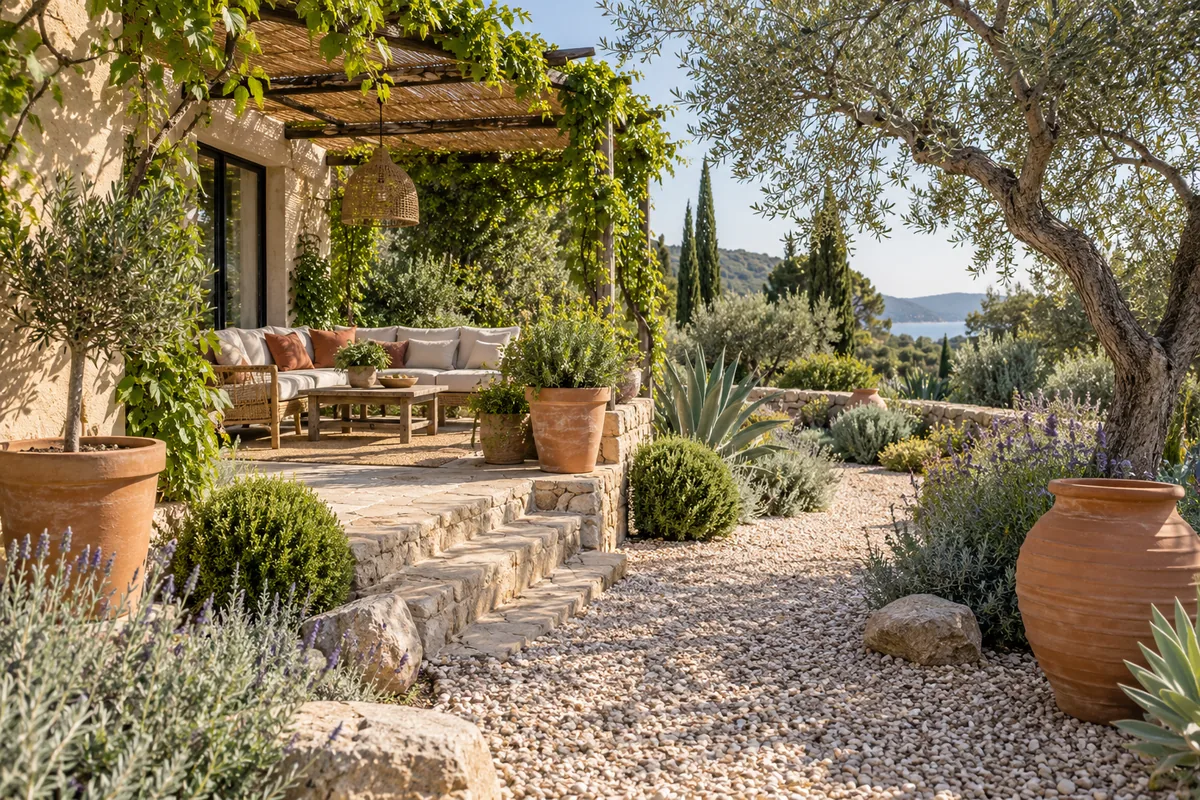
Mediterranean garden style: shade, gravel, and warm color
Understand Mediterranean garden style through shade, gravel, clay pots, and silver foliage, with practical ways to adapt the visual language to local climates.