
By AI Landscape Design Team · Editorial policy
What Is Positive Drainage in Landscape Design?
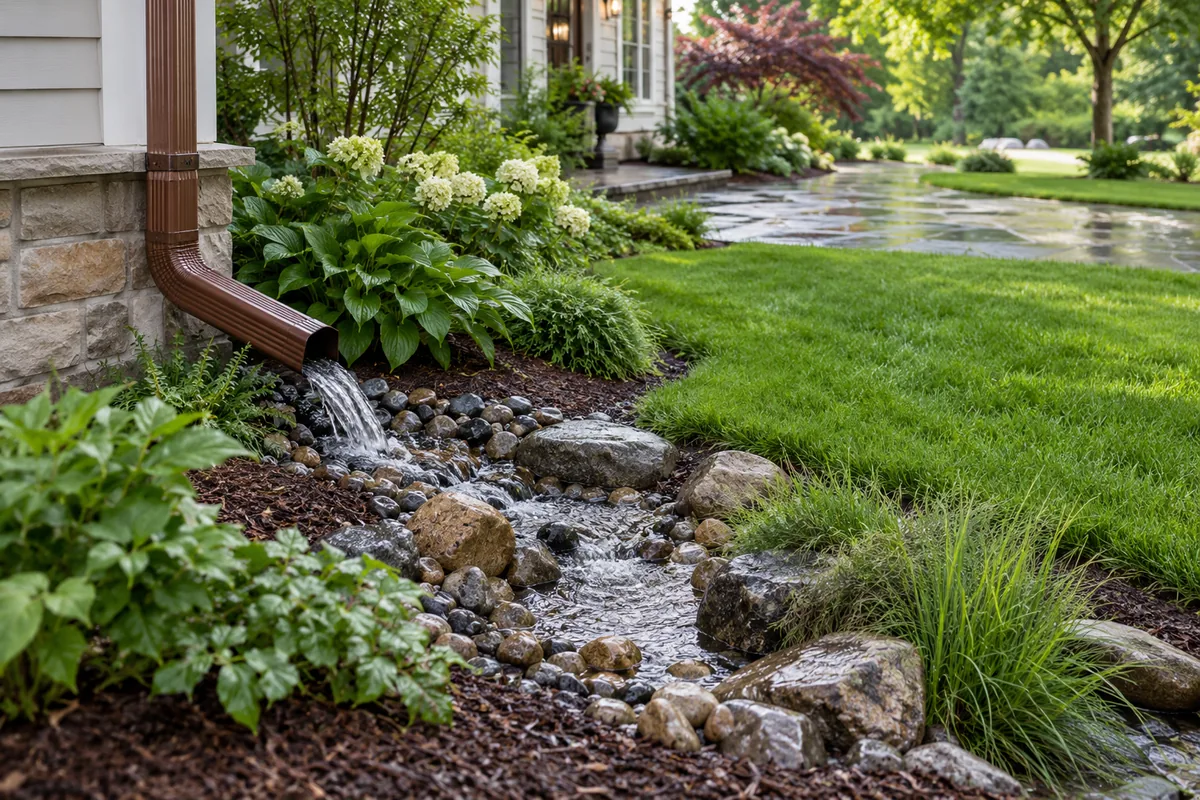
Positive drainage describes an arrangement intended to move water toward an appropriate destination rather than allowing it to collect in places where it may cause problems. The phrase expresses a site-management objective rather than a complete construction detail. The suitable direction and destination depend on real levels, soil, structures, and local requirements. A visible slope in a photograph cannot demonstrate that the objective is met.
Published · 2 min read
Key takeaways
- Drainage has a source, route, and destination.
- Moving a problem elsewhere is not a solution.
- Appearance alone cannot verify water behavior.
How is positive drainage used in landscape design?
Ask where the water originates and where it can safely and lawfully go. Those questions require professional assessment of slopes, soil, runoff, and building conditions. Moving water away from one location is not enough if it creates a problem elsewhere. Do not substitute a generic slope number or drain product for an investigation of the actual site.
What does positive drainage look like in a yard?
At a patio beside a house, a proposal may aim to avoid water collecting at the building edge. The existing levels and possible destinations need to be checked by qualified local professionals. A generated surface that appears to tilt outward does not prove safe drainage. Before excavation in the United States, contact 811 and clarify any private utility locating requirements.
Which terms help explain positive drainage?
Grading can influence the direction of movement; a French drain is one possible system type; a swale is another landform concept. These terms do not prescribe a solution. AI images can communicate appearance, while drainage performance, discharge, and installation remain matters for independent site-specific professional verification.
Frequently asked questions
Does positive drainage mean water leaves the property?
An appropriate destination must be established under the actual site conditions and local rules. Simply sending water off the property can create problems elsewhere. A professional assessment should consider the source, route, and destination together rather than assuming outward movement is acceptable.
Can paving appearance confirm positive drainage?
Paving may look sloped in an image without providing dependable information about its levels or water behavior. Measurements and site inspection are necessary. A qualified professional can evaluate whether the proposed surface and destination meet the actual drainage needs.
Is positive drainage a particular drain product?
The phrase describes an intended result, not one specific product. Several different approaches may be considered depending on the site. Understand the diagnosis and requirements before selecting materials or agreeing to a particular installation.
Sources
Related reading
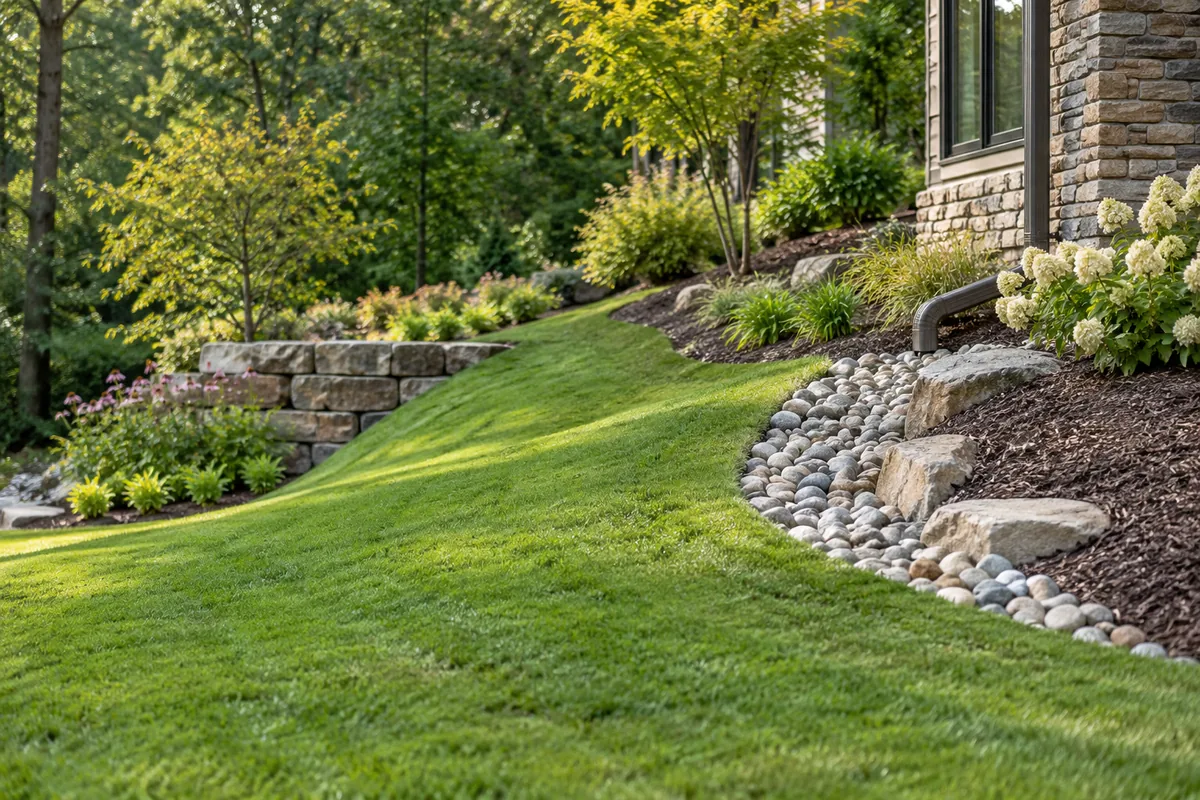
What Is Grading in Landscape Design?
Learn what grading means in landscape design, with a practical yard example, related terms, and the site decisions to check before making changes.
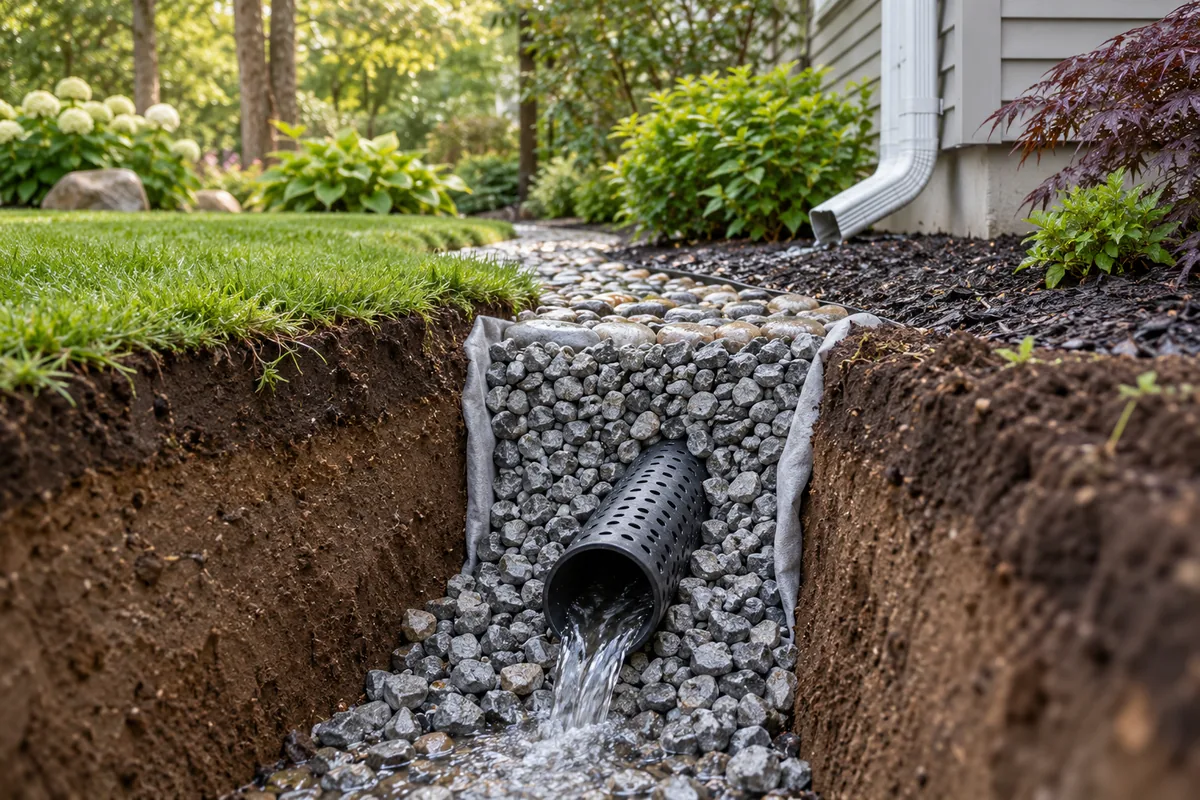
What Is French Drain in Landscape Design?
Learn what french drain means in landscape design, with a practical yard example, related terms, and the site decisions to check before making changes.
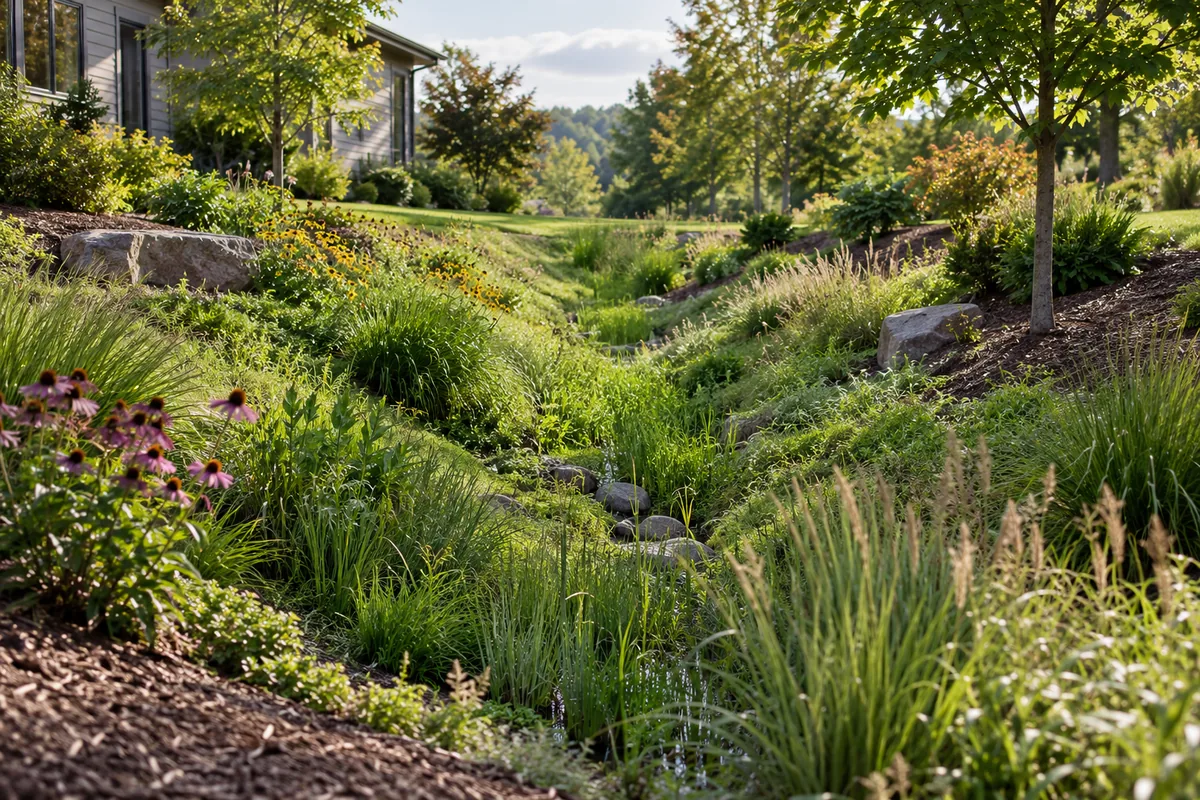
What Is Swale in Landscape Design?
Learn what swale means in landscape design, with a practical yard example, related terms, and the site decisions to check before making changes.
Concrete Pavers for Patios, Paths, and Yard Routes
Learn how concrete pavers fit your yard, with practical material, placement, upkeep, and safety questions to review before choosing a visual direction.
Brick pavers vs Concrete pavers: Which Fits Your Yard?
Compare brick pavers and concrete pavers for your yard. Review layout, materials, upkeep, and practical trade-offs before choosing a direction.
Flagstone paving vs Manufactured pavers: Which Fits Your Yard?
Compare flagstone paving and manufactured pavers for your yard. Review layout, materials, upkeep, and practical trade-offs before choosing a direction.